Archives

Fighting yesterday’s Jew-hatred

Fighting yesterday’s Jew-hatred

Daniel Krygier
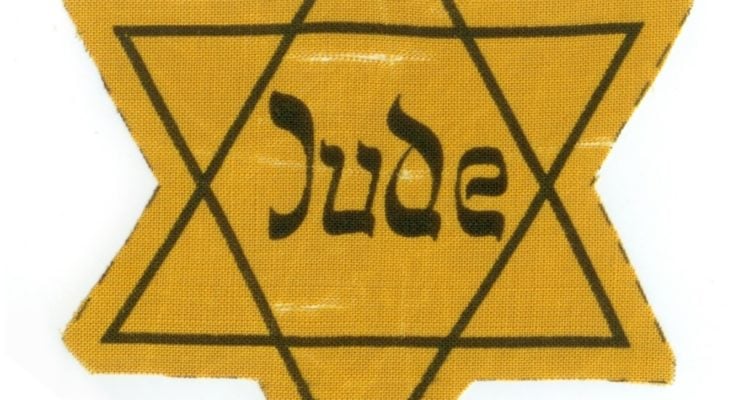


While the official purpose of a conference on anti-Semitism was to discuss current and future challenges, much of the expert panel appeared to be mentally stuck in the past.

A high-profile conference on anti-Semitism was recently held in Vienna, Austria. While the official purpose of the conference was to discuss current and future challenges, much of the expert panel appeared to be mentally stuck in the past. Disproportionate energy and time was focused on populist right-wing governments in Europe instead of the threat emanating from militant Islam that seeks Israel’s destruction and terrorizes Jews and non-Jews in Europe and beyond.

A conference on Jew-hatred in Vienna undoubtedly brings images of the city’s troubled Nazi past. However, we live in 2018 and not 1938. While many people have reservations regarding the populist right-wing governments in countries like Austria, Poland or Hungary, none of them have policies that threaten the Jewish state or European Jews. Quite the contrary. Despite the controversial Holocaust legislation issue, Poland and countries like Hungary remain some of Israel’s staunchest supporters in the European Union.

A large protest banner at the anti-Semitism conference stated, “Mr. Kurz! Your government is not kosher!” However, there were no banners decrying the explicitly anti-Semitic regimes in Gaza, Ramallah, Damascus or Teheran.

Yes, it is true that the current Austrian government includes the controversial populist Freedom Party of Austria (FPÖ), with its troublesome past Nazi links. However, Chancellor Sebastian Kurz is certainly not an anti-Semite and supports strong ties with Israel and the Jewish world. The current FPÖ chairman, Heinz-Christian Strache, has abandoned the anti-Israel position advocated by his predecessor Jorg Haider and supports moving the Austrian embassy from Tel Aviv to Jerusalem.

Epicenter of Jew-hatred has clearly moved
Some observers suggest that FPÖ’s warming towards the Jewish state is part of the populist right-wing party’s strategy to cultivate a new image of political moderation. Whether true or not, none of the governments in Vienna, Warsaw or Budapest advocate the destruction of Israel or threaten the Jewish people.

While right-wing extremism remains a problem in much of the West, the epicenter of Jew-hatred has clearly moved from Christian Europe to the Islamic Middle East. The star of the conference, French-Jewish philosopher Bernard-Henri Levy, did admit that Nazism has been exported to the Arab world. However, Levy failed to recognize that indigenous Middle Eastern Islamo-fascism is no less lethal than imported Nazism from the West.

Like Hitler, Islamists have imperial ambitions and are driven by an obsessive genocidal Jew-hatred. Iran, Hezbollah and Hamas do not merely oppose specific Israeli policies, but explicitly seek the destruction of the Jewish people. Islamists also do not make a distinction between Israel and Jews living in the Diaspora. Iran’s terrorist proxy Hezbollah has, over the years, carried deadly attacks on Jewish targets abroad, such as the Jewish community center in Buenos Aires, the Israel embassy in Argentina and Israeli tourists in Bulgaria.

So why is the threat from fringe far-right movements exaggerated while the much more serious threat from Islamists is largely ignored or understated? Unfortunately, the answer is political correctness, post-colonial guilt and the racism of low expectations towards the epicenter of current Jew-hatred: the Muslim and Arab world. As long as there is no international pressure on the Islamic world to moderate, the menacing challenges affecting Jews and non-Jews alike will only continue to grow in the future.


Daniel Krygier is Political Analyst, World Israel News


Zawartość publikowanych artykułów i materiałów nie reprezentuje poglądów ani opinii Reunion’68,
ani też webmastera Blogu Reunion’68, chyba ze jest to wyraźnie zaznaczone.
Twoje uwagi, linki, własne artykuły lub wiadomości prześlij na adres:
webmaster@reunion68.com



BDS Suffers Another Defeat in Spanish Court

BDS Suffers Another Defeat in Spanish Court

United with Israel Staff


Another victory was scored against BDS in a Spanish court, which ruled that a pro-boycott resolution violates the constitutional principle of equality before the law. A court in Las Palmas, Spain dealt another legal defeat to the anti-Israel BDS (Boycott, Divestment and Sanctions) campaign when it nullified the boycott decision of the City Council of Telde, an Atlantic town of 100,000 residents in the east of the island of Gran Canary.

On November 27, 2015, the City Council of Telde passed a decision committing itself to refrain from signing any political, institutional, commercial, agricultural, educational, cultural, sporting, or security agreement, contract, or covenant with Israeli public bodies, companies and organizations.

According to the Council’s declaration, targeted Israeli entities could be exempted from the boycott if they formally expressed their recognition of the “inalienable rights of the Palestinians” by agreeing and supporting the campaign’s three objectives: (1) the end of the “occupation” and “colonization” of the disputed territories; (2) the right of the Palestinian people to self-determination; and (3) the right of return of Palestinians.

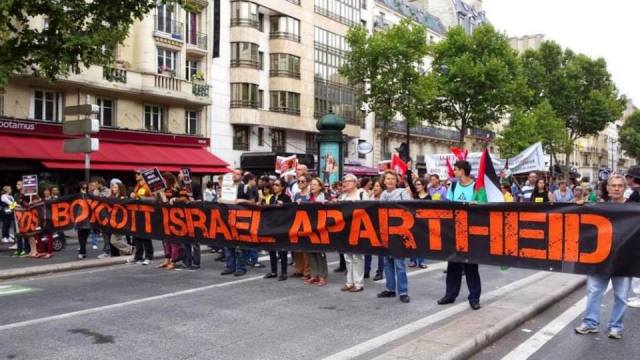
As in other cities in Spain, the City Council was granted the BDS-approved seal that distinguished the town as a “Free Space of Israeli Apartheid,” under the condition that the seal to be displayed in the city’s website and in its publications. In return the City Council agreed to publicize the boycott campaign among residents and local businesses.

Further, the City Council agreed to engage in and promote an active policy of cooperation with the BDS movement in order to ensure the proper implementation of the boycott decision.

On Sunday, a Las Palmas court published a decision that annulled the boycott. The Magistrate accepted the reasoning of the Lawfare Project, which stressed that even in the absence of its enforcement, the boycott violates the constitutional principle of equality before the law.

The Las Palmas decision closely preceded two other victories against the boycott campaign: a successful suit concerning the second boycott decision passed by the City Council of Castrillón, and a judgment issued on Sunday against the boycott of the City Council of Montcada i Reixac.

These victories are part of an ongoing initiative to eliminate BDS from Spain, while the Lawfare Project’s Spanish Counsel, Ignacio Wenley Palacios, has secured his 52nd legal victory.

The Lawfare Project is a legal think tank and litigation fund that files cases against anti-Jewish and anti-Israeli discrimination around the world.

Palacios, who led the case, said that “there is, in the law, a clear separation between politics and public office where the latter is not to be converted into an instrument at the service of the former. This is especially the case when — as here and with other city council boycotts — the objective is to exclude the adversary, in a clear abuse of power that aspires to place public offices at the service of political ideas that are discriminatory and contrary to the civil rights of every citizen, while simultaneously attempting to deprive others of their freedom to hold their own personal beliefs and opinions.”

Anti-BDS and Israel advocacy organizations have seen success after success in their legal battle against the anti-Israel elements.

In the last 10 months alone, the Lawfare Project has secured some 20 writs of injunction and favorable court decisions, establishing a Spanish legal doctrine against boycotts by transnational corporations purportedly instituted to comply with international law and human rights mandates.


Zawartość publikowanych artykułów i materiałów nie reprezentuje poglądów ani opinii Reunion’68,
ani też webmastera Blogu Reunion’68, chyba ze jest to wyraźnie zaznaczone.
Twoje uwagi, linki, własne artykuły lub wiadomości prześlij na adres:
webmaster@reunion68.com



Mossad chief ‘100 percent certain’ Iran still seeks nuclear bomb

Mossad chief ‘100 percent certain’ Iran still seeks nuclear bomb

JOSEF FEDERMAN


In closed security meeting, Yossi Cohen says nuke deal a ‘terrible mistake,’ must be ‘completely changed or scrapped’
Yossi Cohen, the head of the Mossad, is seen in a committee meeting at the Israeli parliament on December 8, 2015. (Yonatan Sindel/Flash90)

AP — The head of Israel’s Mossad intelligence agency is “100 percent certain” that Iran remains committed to developing a nuclear bomb and believes the international community must change or scrap its nuclear deal with the Islamic Republic.

Yossi Cohen, who leads the shadowy spy agency, has been holding discussions about the Iranian nuclear program and delivered his assessment in a recent closed meeting with senior officials, according to a person who attended the meeting.

Cohen called the nuclear deal a “terrible mistake,” saying it allows Iran to keep key elements of its nuclear program intact and will remove other restraints in a few years.

“Then Iran will be able to enrich enough uranium for an arsenal of nuclear bombs,” Cohen said, according to the meeting participant, who spoke on condition of anonymity because he was discussing a classified security matter.

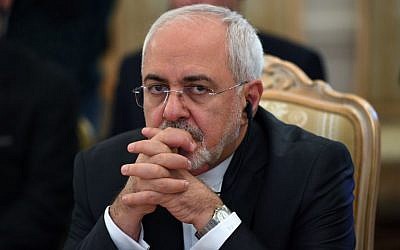
Iran’s Foreign Minister Mohammad Javad Zarif attends a meeting of foreign ministers of the Caspian Sea littoral states in Moscow on December 5, 2017. (AFP/Kirill Kudryavtsev)

Cohen also criticized the decision to lift sanctions on Iran, saying it has resulted in “significantly increased” aggression by Iran, and noted Iran’s continued development of long-range ballistic missiles.

“As head of the Mossad, I am 100 percent certain that Iran has never abandoned its military nuclear vision for a single instant. This deal enables Iran to achieve that vision,” Cohen said. “That is why I believe the deal must be completely changed or scrapped. The failure to do so would be a grave threat to Israel’s security.”

Cohen’s comments come amid an intense international discussion about the future of the 2015 nuclear deal, in which Iran agreed to curbs and inspections on its nuclear program in exchange for relief from international sanctions.

His analysis aligns closely with that of Prime Minister Benjamin Netanyahu at a time the Israeli leader is hopeful that President Donald Trump can negotiate changes to the deal. The issue has sparked some debate inside Israel’s security community, with some voices pointing to positive aspects of the deal in that it has delayed Iran’s nuclear development.

Trump has set a mid-May deadline for changes while also threatening to withdraw from the deal. However, it remains unclear whether a compromise can be reached, and how Iran would react.

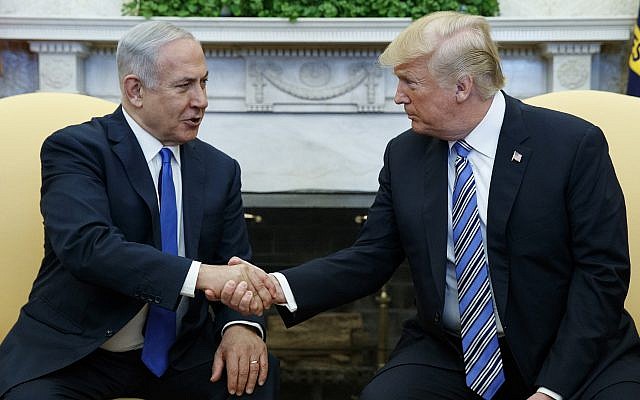
US President Donald Trump meets with Israeli Prime Minister Benjamin Netanyahu in the Oval Office of the White House, March 5, 2018, in Washington. (AP Photo/Evan Vucci)

Trump’s disdain for the deal has been a welcome development for Netanyahu. The Israeli leader was a leading opponent of the deal, saying it did not contain sufficient safeguards to prevent Iran from reaching the capability to develop nuclear weapons as the agreement’s restrictions expire.

Israel and Iran are arch enemies, and Israel has identified Iran as its top threat, citing the nuclear program, its hostile rhetoric, support for Hezbollah and its development of long-range missiles.

Yet the deal has also set off debate within Israel’s security ranks. As head of a powerful agency and a close aide to Netanyahu, Cohen is an influential voice.

Yet other officials, both active and former, have taken a more nuanced approach by focusing on the positive aspects of the deal.

In a recent interview, Lt. Gen. Gadi Eisenkot told the Haaretz newspaper that he knows of no violations of the nuclear deal by Iran, though he said Israel is closely watching and assuming Iran can operate secretly.

“If its intentions change, we will know. Right now the agreement, with all its faults, is working and is putting off realization of the Iranian nuclear vision by 10 to 15 years,” he was quoted as saying.

Times of Israel staff contributed to this report.


Zawartość publikowanych artykułów i materiałów nie reprezentuje poglądów ani opinii Reunion’68,
ani też webmastera Blogu Reunion’68, chyba ze jest to wyraźnie zaznaczone.
Twoje uwagi, linki, własne artykuły lub wiadomości prześlij na adres:
webmaster@reunion68.com



Israeli medical center cohosts health forum in Palo Alto

Israel21cIsraeli medical center cohosts health forum in Palo Alto

Rebecca Stadlen Amir


Medical experts from Rambam Health Care Campus and Stanford University Medicine will discuss latest technology and developments in medicine.

Image via Shutterstock.com

A joint symposium by Israel’s Rambam Health Care Campus and Stanford University Medicine is being held today on the Stanford campus in Palo Alto, California, with the aim of exploring best practices and the latest developments in clinical medicine, research and the use of technology in medicine.
The symposium will explore topics such as “Innovation and Technology in Health Care Management,” “Scaling Personalized Medicine towards Precision Health,” and “Health in Israel – Lessons Learned and Yet to be Learned for the Health of Nations.”

Among the featured speakers are director and CEO of Rambam Prof. Rafael Beyar; dean of Stanford University School of Medicine Prof. Lloyd Minor; Director of Medical and Research Development at Rambam Prof. Karl Skorecki; and Richard Horton, editor in chief of The Lancet, one of the world’s oldest and most well-known medical journals. Last year, the prestigious UK-based journal devoted an entire issue to health in Israel.

Israel has one of the most cost-efficient health care systems in the world, Beyar noted, spending about eight percent of its GDP on healthcare — about half that of the United States — while delivering high quality and nearly comprehensive medical care to the population.

“As the largest hospital in Israel’s north, and with the Technion-Israel Institute of Technology Medical School on our campus, Rambam can provide our American colleagues insights into Israeli healthcare, innovation, and applied research in medicine,” said Beyar.


Zawartość publikowanych artykułów i materiałów nie reprezentuje poglądów ani opinii Reunion’68,
ani też webmastera Blogu Reunion’68, chyba ze jest to wyraźnie zaznaczone.
Twoje uwagi, linki, własne artykuły lub wiadomości prześlij na adres:
webmaster@reunion68.com


IDF WARNS OF LARGER MILITARY RESPONSE TO GAZA PROTEST

IDF WARNS OF LARGER MILITARY RESPONSE TO GAZA PROTEST

TOVAH LAZAROFF, REUTERS


Israeli military spokesman Brigadier-General Ronen Manelis said Hamas, which controls Gaza, was using the protests as a guise to launch attacks against Israel.

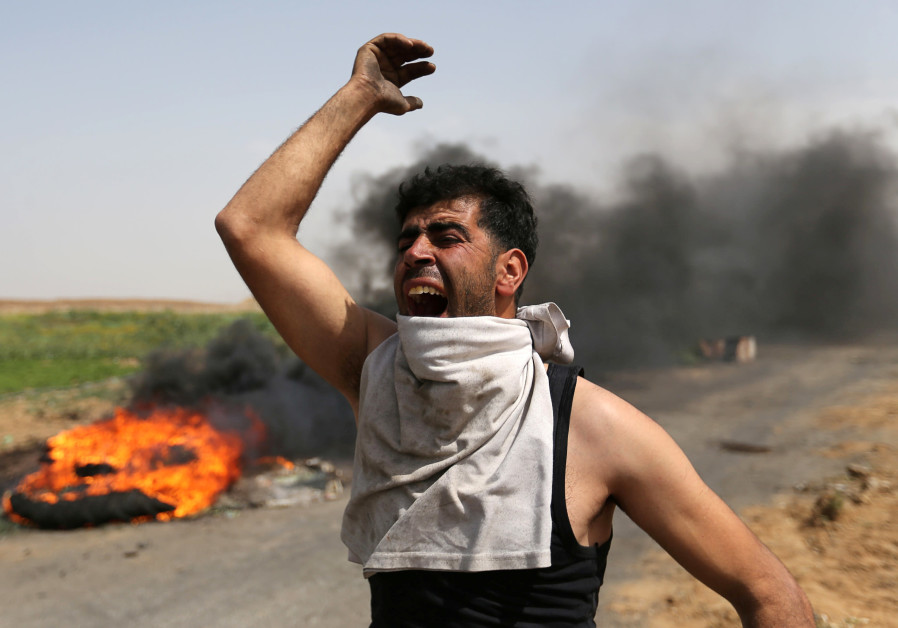
A Palestinian shouts during clashes along the Israel border with Gaza ahead of a protest in the southern Gaza Strip March 29, 2018.. (photo credit: REUTERS/IBRAHEEM ABU MUSTAFA)

The IDF warned that it could widen its military response to the protest that Palestinians launched Friday against the Gaza border fence, that left 16 Palestinians dead and upwards of 1,400 wounded on the first day of what is billed as a sixweek event. ID F Spokesman Brig.-Gen. Ronen Manelis said Hamas, which controls Gaza, was using the protests as a guise to launch attacks against Israel and ignite the area. He said violence would likely continue along the border until May 15.

“We won’t let this turn into a ping-pong zone where they perpetrate a terrorist act and we respond with pinpoint action. If this continues we will have no choice but to respond inside the Gaza Strip,” Manelis told reporters in a phone briefing.

Palestinian Authority President Mahmoud Abbas declared Saturday a national day of mourning and a general strike was called across the West Bank. Thousands in Gaza marched through the streets at funerals for those killed.

Hamas’s armed wing, the Izzadin Kassam Brigades, announced that five of the Palestinians, killed were Kassam members, while the IDF said that at least 10 of those killed were affiliated with terrorist organizations

Riot in Gaza on 3.30.2018

Hamas has everything to gain and Palestinian civilians have everything to lose in riots like the one that happened yesterday

Publicerat av Israel Defense Forces den 31 mars 2018

Riot in Gaza on 3.30.2018 (IDF Spokesperson’s Office)


The protest continued on Saturday, but on a much smaller scale. According to the Hamas-run Health Ministry, some 49 people were injured.

On Friday, over 30,000 Palestinians gathered along the 65-km. Gaza border fence. Tents were erected for a planned six-week protest pressing for the “right of return” for refugees and their descendants to what is now Israel.

Families brought their children to the encampments just a few hundred meters from the fence. The protest, organized by Hamas and other Palestinian factions, is scheduled to culminate on May 15, the day Palestinians commemorate what they call the Nakba or “Catastrophe” when hundreds of thousands fled or were driven out of their homes in 1948 when the State of Israel was created.

In Gaza, the protest was dubbed “The March of Return” and some of the tents bore names of the refugees’ original villages, written in Arabic and Hebrew alike.

Abbas’s spokesman, Nabil Abu Rudaineh, said: “The message of the Palestinian people is clear. The Palestinian land will always belong to its legitimate owners and the occupation will be removed.”

In a statement, the IDF accused Hamas of “cynically exploiting women and children [by] sending them to the security fence and endangering their lives”.

The military said that more than 100 army sharpshooters were deployed in the area to prevent any protesters from infiltrating into Israel.

The IDF said its troops had used live fire only against people trying to sabotage the security fence, some of them rolling burning tires and throwing rocks.

It provided the media with videos that showed violence and attempted infiltration. It added that two of the Palestinians who tried to break through the fence also fired on IDF soldiers who responded with tank fire. According to Gazan health officials, the two Palestinians were killed.

The health officials also said Israeli forces mostly used gunfire against the protesters, as well as to tear gas and rubber bullets. Witnesses said the military had deployed a drone over at least one location to drop tear gas.

The officials said one of the dead was aged 16 and at least 400 people were wounded by live gunfire, while others were struck by rubber bullets or treated for tear gas inhalation.

The protest presented a rare show of unity among rival Palestinian factions in the impoverished Gaza Strip, where pressure has been building on Hamas and Abbas’s Fatah movement to end a decade-old rift. Reconciliation efforts to end the feud have been faltering for months.

The demonstration was launched on Land Day, an annual commemoration of the deaths of six Arab citizens of Israel killed by security forces during demonstrations over government land confiscations in the Galilee in 1976.

Clashes erupted between Palestinian protesters and Israeli forces on Friday across the West Bank.

Israeli forces dispersed Palestinians with dispersal means in the Jericho, Bethlehem, El-Bireh and near Nablus.


Zawartość publikowanych artykułów i materiałów nie reprezentuje poglądów ani opinii Reunion’68,
ani też webmastera Blogu Reunion’68, chyba ze jest to wyraźnie zaznaczone.
Twoje uwagi, linki, własne artykuły lub wiadomości prześlij na adres:
webmaster@reunion68.com