Archives

Everything you need to know about the riots in Gaza today


Everything you need to know about the riots in Gaza today, explained by Maj. Keren Hajioff

Maj. Keren Hajioff


Publicerat av Wieslaw Kochanski den 31 mars 2018


Zawartość publikowanych artykułów i materiałów nie reprezentuje poglądów ani opinii Reunion’68,
ani też webmastera Blogu Reunion’68, chyba ze jest to wyraźnie zaznaczone.
Twoje uwagi, linki, własne artykuły lub wiadomości prześlij na adres:
webmaster@reunion68.com


Dayenu, Coming Home – The Fountainheads Passover Song

Dayenu, Coming Home – The Fountainheads Passover Song

   einpratfountainheads


Zawartość publikowanych artykułów i materiałów nie reprezentuje poglądów ani opinii Reunion’68,
ani też webmastera Blogu Reunion’68, chyba ze jest to wyraźnie zaznaczone.
Twoje uwagi, linki, własne artykuły lub wiadomości prześlij na adres:
webmaster@reunion68.com


U.S. ORTHODOX JEWS ACCUSE LIBERAL STREAMS …

U.S. ORTHODOX JEWS ACCUSE LIBERAL STREAMS OF HIJACKING KOTEL DISCOURSE

TAMARA ZIEVE


“The liberal streams are putting in a lot of effort to convince Israeli politicians that they are the power to be in the US.”
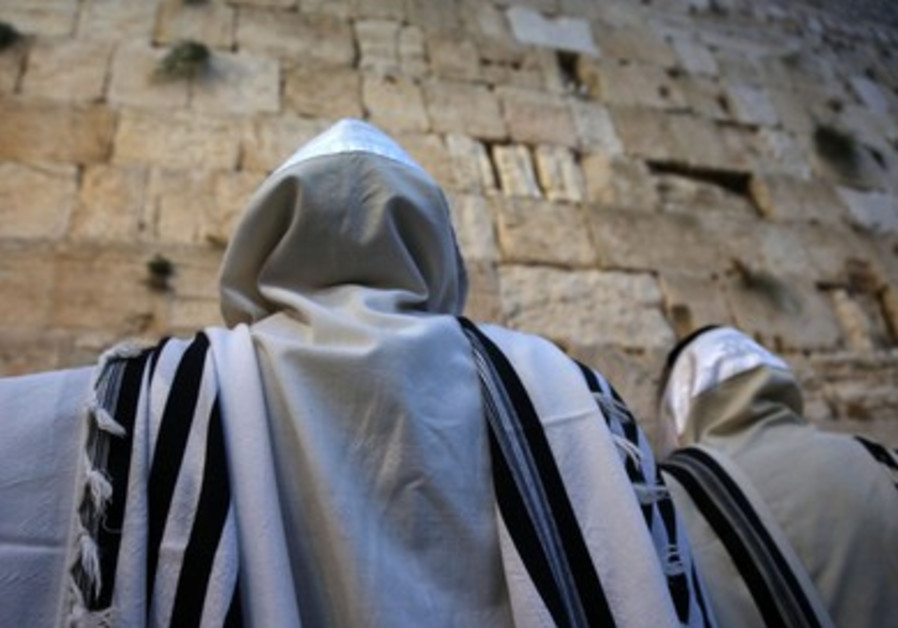
succot at the kotel 390 7. (photo credit: Marc Israel Sellem/The Jerusalem Post)

Some 40 Orthodox Jews from the US are in Israel in a bid to convince the government that the voice of the liberal Jewish streams in the US does not represent Jews in their country. In the fiery conversation, which has been conducted over the past year over the canceled agreement for an egalitarian section at the Western Wall, US Orthodox Jews have been left out, two of the members of the delegation explained to The Jerusalem Post in a meeting in Jerusalem on Sunday.

“The liberal streams are putting in a lot of effort to convince Israeli politicians that they are the power to be in the US,” Agudath Israel of America chairman Sol Werdiger said.

The delegation will come armed to its meetings with Prime Minister Benjamin Netanyahu, President Reuven Rivlin and an array of other high-level Israeli leaders with studies to show that the opposite is true.

The delegation comprises of a diverse group of Orthodox Jews, “who don’t usually sit together,” Agudath Israel of California chairman Dr. Irving Lebovics said.

A document put together for the mission, called “Am Echad” (“One People”), says that recent demographic surveys have begun to show that the Orthodox community is growing in numbers and strength, “and represents the Jewish future in America, the future of Jewish philanthropy and the future of American Jewish support for Israel.”

The mission cites a report by Research Professor Steven M. Cohen published in the Forward that used a 2013 survey, conducted by the Pew Research Center, on the US Jewish population to map the age distribution of US Jews according to the different streams.

Cohen found that, while the Orthodox population is “exploding,” the non-Orthodox population, which Pew found is currently the majority, are in sharp decline.

“We are growing and vibrant,” Lebovics said. “The percentages of Orthodox Jews under 40 are significantly higher than Orthodox Jews over 55.”

Cohen’s study found that only 5% of US Orthodox Jewry was between 56 to 73-years-old while 15% were 28 to 45-years-old and 27% 0 to 17.

“Don’t push us aside and make believe we don’t exist,” Lebovics said.

The Conservative and Reforms movements, he said, came to Israel and said they represent US Jewry.

“We believe in inclusiveness, and we don’t feel that what’s going on in Israel is right,” Lebovics said. “We say a large part of US Jews don’t care [about the Western Wall deal], a portion is what has been advocating, and a large vibrant growing part disagrees. Nobody consulted us.”

Saying that the Orthodox portion of the US Jewish community was “excluded for years,” he added that “the message is not to say they are bad people but if you represent something, this is another side of the coin.”

He said that the delegation does not plan to give its stance on the Kotel issue.

“We didn’t come here to say the new section shouldn’t be there. If I want to vote on policy here I’ll move here. but we have to set the record straight in terms of the message they got from America.”

Another point the delegation is keen to emphasize is the Orthodox community’s commitment to and investment in Israel.

“We all have family here, we are in Washington advocating all the time, we invested here in business and real estate, we come here often,” Werdiger said, listing the ways in which his community supports Israel and the hundreds of millions of dollars the delegation says Orthodox Jews invest in Israel in a multitude of ways.

Tourism, involvement in hi-tech businesses, support of their children who are living in Israel, and an array of charity projects in Israel are among those.

“So we are here to say we love every Jew and we are all-encompassing but if you’re looking to change things here because of the perception that’s what the Jews in America want – it’s not true,” Werdiger concluded.


Zawartość publikowanych artykułów i materiałów nie reprezentuje poglądów ani opinii Reunion’68,
ani też webmastera Blogu Reunion’68, chyba ze jest to wyraźnie zaznaczone.
Twoje uwagi, linki, własne artykuły lub wiadomości prześlij na adres:
webmaster@reunion68.com


Coins from revolt against Romans found near Temple Mount

Coins from revolt against Romans found near Temple Mount

Contact Editor Arutz Sheva Staff


Archaeologists discover dozens of ‘freedom coins’ from Jewish Revolt against Rome in cave near Temple Mount.

The ‘freedom coins’Dr. Eilat Mazar/ Hebrew University

Bronze coins, the last remnants of a four-year Jewish revolt against the Roman Empire, were found near the Temple Mount in Jerusalem.

These bronze coins were discovered by Hebrew University archaeologist Dr. Eilat Mazar during renewed excavations at the Ophel, located below the Temple Mount’s southern wall.

These 1.5cm bronze coins were left behind by Jewish residents who hid in a large cave (7×14 meters) for four years (66-70 C.E.) – from the Roman siege of Jerusalem, up until the destruction of the Second Temple and the city of Jerusalem.

While several of the coins date to the early years of the revolt, the great majority are from its final year, otherwise known as, “Year Four” (69-70 CE). Significantly, during the final year, the Hebrew inscription on the coins was changed from “For the Freedom of Zion” to “For the Redemption of Zion,” a shift which reflects the changing mood of the rebels during this period of horror and famine.

“A discovery like this – ancient coins bearing the words “Freedom” and “Redemption” – found right before the Jewish Festival of Freedom – Passover – begins is incredibly moving,” shared Dr. Mazar.

In addition to Hebrew inscriptions, the coins were decorated with Jewish symbols, such as the four Biblical plant species: palm, myrtle, citron and willow, and a picture of the goblet that was used in the Temple service.

Many broken pottery vessels, including jars and cooking pots, were also found in the cave. According to Mazar, it is remarkable that this cave was never discovered by subsequent residents of Jerusalem nor used again after the Second Temple period. As a result, the cave acts as a veritable time capsule of life in Jerusalem under the siege and during the four-year revolt against the Roman Empire.

The new finds all date back to the time of the rebellion and were found in the Ophel Cave directly above a Hasmonean Period layer that was situated at the base of the cave. A more complete report of these findings will be published in the third volume of the Ophel excavations; the second is being published this week.

According to Mazar, the coins were well preserved, probably because they were in use for such a short time. A similar number of “Year Four” coins were found near Robinson’s Arch, near the Western Wall, by Professor Benjamin Mazar, Eilat Mazar’s grandfather. He conducted the Temple Mount excavations right after Israel’s Six Day War, on behalf of Hebrew University’s Institute of Archaeology.

The Ophel excavations are situated within the Walls Around Jerusalem National Park, which is managed by the National Parks and Gardens Authority and the Eastern Jerusalem Development Company. Funding was generously provided by the Herbert W. Armstrong College of Edmond, Oklahoma, whose students participate in the digs.


Zawartość publikowanych artykułów i materiałów nie reprezentuje poglądów ani opinii Reunion’68,
ani też webmastera Blogu Reunion’68, chyba ze jest to wyraźnie zaznaczone.
Twoje uwagi, linki, własne artykuły lub wiadomości prześlij na adres:
webmaster@reunion68.com


The Untold Story: IAF Attack of Syrian Nuclear Reactor


The Untold Story: IAF Attack of Syrian Nuclear Reactor

Tal Giladi


Declassified: On September 2007, Israel destroyed the nuclear reactor in Dier ez-Zor, Syria as part of an operation named “Silent Tone”. The attack, performed by IAF “Ra’am” (F-15I) and “Sufa” (F-16I) fighter jets, became one of the most important military operations in the IDF’s history

The IAF attacked and destroyed the Syrian nuclear reactor in Dier ez-Zor in the night between September 5th and 6th, 2007, in operation “Silent Tone” – a historic operation of great significance for the IAF, IDF, State of Israel and Jewish People.

The Syrian nuclear reactor project operated under a heavy cloak of secrecy for about six years, and was exposed by the Israeli Intelligence Community in its final stages, a few months before its completion and operation. The premise that led Israel in its decision to attack it, was that the existence of an operational nuclear reactor in Syria would significantly impact the strategic reality in the Middle East and represent a potential existential threat to the State of Israel.

The First Priority

The Directorate of Military Intelligence and Mossad’s (Israel’s National Intelligence Agency) efforts bore fruit in late March, 2007, when the suspicions regarding a covert military nuclear program in Syria was verified. The information was relayed to Prime Minister, Ehud Olmert and Defense Minister, Amir Peretz, who instructed the IDF to prepare a number of optional aerial operation plans for the destruction of the reactor.

Two days after the verification of the intelligence, then IAF Commander, Maj. Gen. (Res’) Eliezer Shkedi, first consulted a small forum of senior commanders in order to formulate an operational plan for the destruction of the facility. The forum consisted of IAF Directorate Heads, Head of the IAF Operations Department and Military Intelligence Directorate representatives. Maj. Gen. Shkedi emphasized that the mission had become a first priority and stood above all other operations. He ordered the establishment of an operational intelligence planning team, with the mission of designing an operational plan for the attack of the Syrian reactor. By command of the Chief of IDF General Staff, the existence of the reactor was classified under the highest secrecy.

“I was in the second year of my tenure as Head of the Operations Department and the IDF was heavily debriefing the 2006 ‘Second Lebanon’ War. The intelligence was given to the IAF around March 2007, and the IAF Commander initiated a battle procedure that I was responsible for executing”, shared Maj. Gen. Amikam Norkin, today the Commander of the IAF.

“We met with Head of the Operations Department on April 10, at 07:00 AM, and he told us that there was a nuclear reactor in Syria. Just like that, very concretely. The command was that we needed to be able to attack the target in one month. We had to formulate an operational command, a model validating the attack plan and an operation plan for war, if it were to break out as a result”, recalled Lt. Col. (Res’) Shay, who headed the team that planned the operation. “I remember that I was supposed to be on call in my squadron that weekend, I called the deputy squadron commander and told him that I couldn’t make it, which was very unlike me. When he asked me why, I told him it was work matters. I need to know what it is, he asked. I told him that in due time, he will know. A few years later, he told me that that was the first clue to the fact that something special was happening in the IAF”.

“One day, a meeting with the Head of Air Division, appeared in my schedule. He said to me, this is the situation; the Syrians are building a reactor and the orders are to attack it”, recalled Col. (Res’) G’, who was chosen to serves as the “Red” (aggressor) force in the planning process of the attack. “That same night I entered a small side room in Operational HQ where the planning team was working. The existence of the reactor came as a big surprise; the IAF had dealt with the Syrian theatre and with its aerial defense division to a great extent, but it didn’t plan for this”.

Hit, Critical Hit and Destruction

“In the IAF – many people knew about the aerial operation, but not about the target, and in the Military Intelligence Directorate, many people knew about the target, but not about the operation”, shared Lt. Col. (Res’) S’. The first steps he took in planning the initial operation plan, which the team was asked to present in three days’ time, was to study the IAF attacks on the Iraqi nuclear reactor in 1981 and the PLO headquarters in Tunis in 1985. “Inside the planning team we defined three damage criteria – hit, critical hit and destruction. We analyzed the methods to achieve each one, and the consequences for the other side, how long will it take them to recover. Every type of armament we used in the operation corresponded with a different damage criterion. When choosing the munitions, besides the result they produced, we tested their credibility and conducted risk assessment. Armament can do a good job, but if you know that there is only a 70% chance it will work, you will reconsider. There were things we tested and did not succeed, and it goes to show that we were daring and tried many options”.

read more: The Untold Story: IAF Attack of Syrian Nuclear Reactor


Zawartość publikowanych artykułów i materiałów nie reprezentuje poglądów ani opinii Reunion’68,
ani też webmastera Blogu Reunion’68, chyba ze jest to wyraźnie zaznaczone.
Twoje uwagi, linki, własne artykuły lub wiadomości prześlij na adres:
webmaster@reunion68.com