Archives

Rabbi Michael Schudrich – Are Jews Overreacting To Poland’s Holocaust Law?

Are Jews Overreacting To Poland’s Holocaust Law? – An Exclusive Interview With Rabbi Michael Schudrich, Chief Rabbi Of Poland

Bennett Ruda
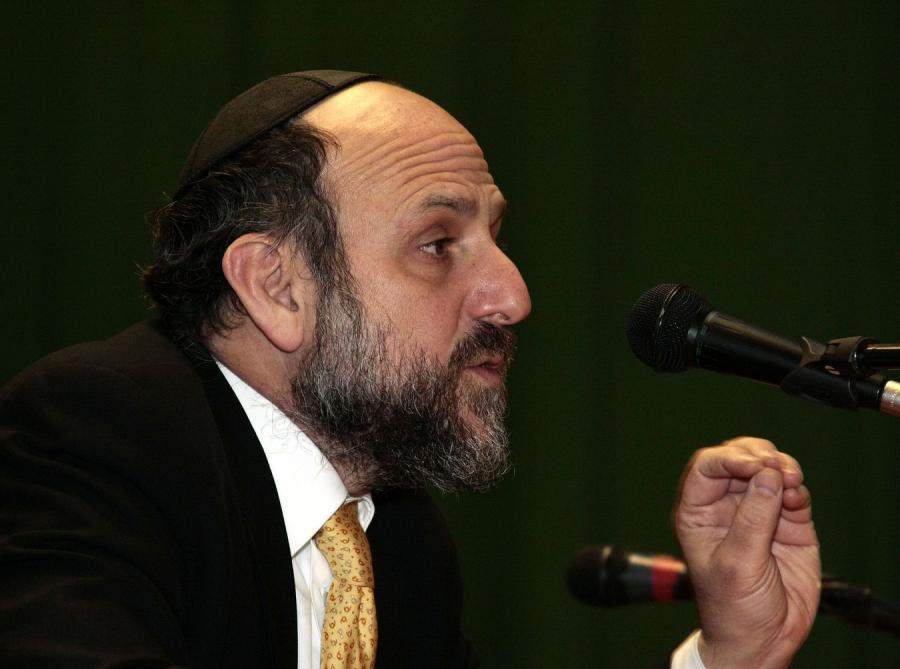

Naczelny Rabin Polski Michael Schudrich / Newspix / Michal GwozdzikAPP

Although several weeks have passed, indignation over Poland’s “Holocaust Law” still pervades the Jewish community. The law outlaws blaming Poland for crimes committed during the Holocaust, but it has been seen by many as an attempt to deny the Holocaust itself. In reaction, some have suggested boycotting Poland, including ending student trips to the country.

Rabbi Michael Schudrich, chief rabbi of Poland, sees matters in a very different light, arguing that much of the criticism of the new law is misplaced. He recently shared his perspective with The Jewish Press.

The Jewish Press: Before we address the new law, please provide a brief primer on the modern Jewish community of Poland?

Rabbi Schudrich: What’s important to know is that before the war there were 3.5 million Jews, who were murdered by the Germans and their accomplices. That still leaves 10 percent – 350,000 Polish Jews – survived the war. Most of the Jews left, but not all. Those that remained basically stayed in Communist Poland without being Jewish. Many did not even tell their children and grandchildren that they were Jewish.

It remained a deep dark secret from 1939 to 1989. In 1989, communism fell, at which point the not-so-young survivors were confronted with the question: Do I feel safe enough today to tell my children and grandchildren that I am really Jewish? Since 1989, thousands and thousands – perhaps even tens of thousands – of Poles have discovered their Jewish roots. That is the story of Polish Jewry today.

What’s your take on Poland’s new “Holocaust Law”?

The law was not written with the Holocaust as its main concern. It is designed to protect the good name of Poland from false accusations. There really is a fundamental misunderstanding of what the law is about. To say “Polish death camps” is not true, and it is very painful for Poles to hear it.

Now, the way they constructed the law, one could imagine that it speaks about Polish collaborators. But this law is not about the Holocaust directly; it’s about protecting the good name of Poland.

There is a growing number on the right that doesn’t like to talk about the bad things Poles did in the past. But it’s not about distorting the history of the Holocaust. It’s not anti-Semitic; it’s pro-Polish. In other words, it’s not that they don’t want to talk about the fact their grandfathers or uncles collaborated with the Germans because they don’t like Jews. Rather, they don’t want to talk about their grandfathers and uncles [having done something] bad.

Now, the problem is that the way they wrote this very poorly-written law may make it seem like I can be prosecuted if I say a Pole killed a Jew during the war. But fundamentally, this law is not about the tragedy of what happened to the Jews. It’s about hiding what the Poles did.

But isn’t hiding this history a distortion of history?

Yes, but on the other side, to say that all Poles are anti-Semites is also a distortion of history. When survivors say the Poles were worse than the Germans, that’s because the Germans could not tell a Jew from a non-Jew in Poland, and therefore Polish collaborators became very important because they could point out the Jews. The Jews were more threatened by their Polish neighbor than by the Germans who wouldn’t recognize them.

But people misunderstand today. They think the Polish government worked with the Germans. That is simply not true. Germans thought of the Holocaust, planned the Holocaust, and did the Holocaust with the help of collaborators in every country. But without the Germans, there would have been no Holocaust.

So there is a battle against stereotypes on both sides. Now I, personally, as a Jew, am far more offended by the false stereotypes that Poles say about Jews than I am by the false stereotypes Jews say about Poles. What I hear from the Polish side is more difficult than what I hear from the Jewish side. But that anti-Semitic things are said in Poland doesn’t mean we are permitted to say anti-Polish lies.

What does the average Pole on the street think of this law?

Poland was not really free until 1989. It was occupied by the Soviet Union. Poland has only been able to deal with its past since 1989, and this is coming up now because some Poles feel their name is being besmirched. Unfortunately, the way they reacted leaves them worse off than they were before, which is a great irony.

They are a certain segment of the population that likes the law very much. And there is a whole other bunch of people that really don’t get why it is necessary. I believe that certainly more than half the country is against the law.

Has Poland seen a rise in anti-Semitism since this controversy erupted?

For me the concern is not rising anti-Semitism, but that we have heard – because of this controversy – anti-Semitic statements that we have not heard in 25 years. That is the issue.

You have been quoted as saying that Jews should respond to this law by “looking for new ways to connect with the [Polish] Jewish community.” How should they go about doing that?

When people say, “Stop going to Poland,” who is that going to hurt? The Poles would actually be relieved not to have to confront Jewish visitors. And the truth is that right now is the most sensitive period we’ve lived through in 25 years, and all of a sudden we are left by ourselves.

[The boycott] isn’t happening – people have not stopped coming to visit Poland. But the concept is very flawed. So many tens of thousands of Jews visit today. We recently had the yahrzeit of Reb Elimelech of Lizhensk. Many Jews come for many different reasons. And when you come, you should make sure to stop by a living Jewish community such as Warsaw, Krakow, Lodz, Wroclaw, and Gdansk. Bring presents, even small things like your favorite Jewish book or favorite Jewish music tape.

People should write to the Polish embassies and consulates where they live and tell them they are concerned by what’s happening. Write also to your senator and congressman to keep the pressure on — about the law, but also about not allowing discussion of it to permit people to make anti-Semitic statements.

You have been in contact with members of the Polish government. What is your assessment of where they stand on this law?

The problem is no longer the law; the problem is the language and dialogue – or lack of dialogue – around the law. The government has to clearly state that the anti-Semitism we’ve heard is unacceptable. That has nothing to do with the law. People cannot say anti-Semitic things today and think it’s acceptable.

This is something the Polish government is trying to address, but so far has not done so very successfully. They are not sure how to do it. Of all the political leaders in Poland, the president has been the most forthcoming. He visited the JCC in Krakow and said there is no place for anti-Semitism in Poland today and that Poland wants its Jews to stay, which is important for a Polish leader to say. He also spoke on the 50th anniversary of the expulsion of Jews from Poland in 1968 and asked for forgiveness. Keep in mind that he was very young back then.

Where do you see the Jewish community in Poland 20 years down the road?

Twenty years from now? I can’t imagine because I couldn’t begin to imagine 20 years ago what would be today.


Zawartość publikowanych artykułów i materiałów nie reprezentuje poglądów ani opinii Reunion’68,
ani też webmastera Blogu Reunion’68, chyba ze jest to wyraźnie zaznaczone.
Twoje uwagi, linki, własne artykuły lub wiadomości prześlij na adres:
webmaster@reunion68.com




JEWISH WAS SENTENCED TO DEATH IN IRAN – Holland won’t grant her asylum.

THIS JEWISH GRANDMOTHER WAS SENTENCED TO DEATH IN IRAN

JTA


Holland won’t grant her asylum.
A window is pictured with the Star of David in a new synagogue in Cottbus, Germany. (photo credit: REUTERS)

UTRECHT, Netherlands — To the dozens of revelers of this city’s main Purim party, a Jewish grandmother who cooks the event’s annual Persia-themed holiday feast is a rare communal asset. Since she immigrated to the Netherlands in 2012 from her native Iran, the soft-spoken newcomer has been volunteering with the local Chabad House, preparing delicious traditional dishes with exotic spices, such as saffron-flavored yellow rice and chicken, for Utrecht’s celebration of the holiday.

Her contribution has added prestige to the event, which has been featured in regional and national media thanks to the authentic touch she adds. (After all, the story behind Purim is set in Persia, celebrating the rescue of that country’s Jews from a communal death sentence.)

But only a few of the locals who know Sipora (not her real name) are aware that she is both an illegal alien in the Netherlands and a refugee with a death sentence hanging over her own head in Iran for political offenses.

Sipora, 60, was sentenced in absentia to death by public execution in 2013 by a Tehran court that convicted her of “violating Islamic rules [of the] Islamic Revolution” and “anti-regime activity.” Her crime: running an underground organization that found housing solutions for women with abusive husbands who could not obtain a divorce.

Luckily for Sipora, she had already left Iran a year prior to her sentencing to help with the pregnancy of her daughter — herself a political refugee who has been living in the Netherlands since fleeing her native land in 2010. Sipora’s daughter, Rebecca, fled in connection with her involvement in the making of a documentary film about the fight for democracy in Iran.

“A few weeks after I came to Holland, I called my husband on the telephone. He asked me to go on Skype. I knew something was wrong,” Sipora recalled.

Sipora’s husband of over 40 years, a Jewish building contractor with a heart condition, told her online that Iran’s dreaded secret police were looking for her and other members of her group.

“In that moment I knew there is no going back,” Sipora recalled.

Unfortunately for her, Sipora’s legal troubles back home coincided with a toughening of immigration policies in the Netherlands, where the center-right ruling party is bleeding votes in favor of the anti-Islam Party for Freedom, which favors a shutdown of immigration from Muslim countries.

Rebecca received a temporary residency permit and later citizenship without delay even though she had no death sentence against her in Iran. Meanwhile, the Dutch Immigration and Naturalization Service has consistently declined requests by Sipora two years later. Instead, she is in legal limbo — neither granted asylum nor deported, despite her whereabouts being known to authorities.

The Dutch Immigration and Naturalization Service did not reply to a query from JTA about Sipora’s status.

A teacher of Persian who speaks neither Dutch nor English, Sipora lives with her daughter and grandson in relative social isolation and uncertainty. Her eyes well with tears as she explains through an interpreter that she is getting used to the thought of never again hugging her husband.

Yet Sipora has no regrets over helping the abused wives for whom she found shelter — sometimes inside nearly finished apartments constructed by her husband, a building contractor.

“I would do the same thing all over again,” Sipora said. “For all my problems now I have family who care for me. These women have no one, only enemies hounding them, and no rights before the law.”

Following the latest crackdown on alleged opposition activists in Iran, Sipora’s husband told her he is under close watch and unlikely to be allowed to leave the country. This is part of the reason that Sipora does not want to immigrate to Israel, or make aliyah, though she is eligible for it.

“I could leave for Israel tomorrow, but then my husband’s fate is sealed,” Sipora said. “For a Jewish family to flee for Holland is one thing, but if I go to Israel he will pay the price for what will be seen as collaboration with the enemy.”

Even her involvement with Chabad did not go unnoticed in Tehran, Sipora said.

Secret police in 2016 confronted Sipora’s husband with pictures featuring Sipora from the Chabad Purim feast, he told her. They demanded he explain why his wife is “working with a Zionist organization. He answered that she was representing Persian Jewish culture in Holland and that Iran should be proud of it.

Trapped in her predicament, Sipora’s only comfort is being with her 5-year-old grandson and her daughter. But this is no remedy against sleepless nights and a constant sense of foreboding, she said, especially before reporting to Dutch authorities as she must do periodically. She could be deported as an illegal alien at any moment. Sipora’s next appearance before an immigration service judge is scheduled for March 2.

Outwardly, though, Sipora puts on a brave face, according to Erik Veldhuizen, who also volunteers at the Chabad House where Sipora is preparing the annual feast.

“She’s a positive and polite person,” he told JTA. “A few of us are of course aware of her situation, but you’d never know that she’s in dire straits by her demeanor.”

Back home, Sipora is discussing her grandson’s Purim costume options with him as a welcome distraction from the fears and doubts surrounding her.

“Just like in Purim, it will all work out in the end,” her daughter tells her. “It just has to.”


Zawartość publikowanych artykułów i materiałów nie reprezentuje poglądów ani opinii Reunion’68,
ani też webmastera Blogu Reunion’68, chyba ze jest to wyraźnie zaznaczone.
Twoje uwagi, linki, własne artykuły lub wiadomości prześlij na adres:
webmaster@reunion68.com



Police detain 8 Palestinians for not intervening in Old City stabbing

Police detain 8 Palestinians for not intervening in Old City stabbing

SUE SURKES


Two released after questioning, six to appear in court on suspicion they did nothing to stop fatal knifing of Adiel Kolman in Jerusalem

Security forces at the scene of the fatal stabbing by a Palestinian terrorist of Adiel Kolman in the Old City of Jerusalem, March 18, 2018. (Yonatan Sindel/FLASH90)

Police on Tuesday arrested eight Palestinian residents of Jerusalem’s Old City on suspicion that they witnessed Sunday’s fatal stabbing of an Israeli by a Palestinian terrorist and did nothing to intervene.

“As part of the ongoing investigation into the stabbing attack at the beginning of the week, it was clear at the scene that the attacker had clear intentions to carry out the terror attack,” police said in a statement.

Adiel Kolman, 32, a father of four, died of his wounds several hours after he was knifed in the Old City’s Muslim Quarter by 28-year-old Abd al-Rahman Bani Fadel from Aqraba, near the West Bank city of Nablus. Fadel was shot dead at the scene by police.

Police detained the eight bystanders, aged 15 to 67, on suspicion that they “saw what was going on and did not act to prevent or minimize the injury to the murdered civilian.” Failing to prevent a crime is itself a misdemeanor, according to Israeli law.

Adiel Kolman, who was killed in a stabbing attack in Jerusalem’s Old city on March 19 2018 (Courtesy)

Two of the detainees were released after their interrogation and six others were to be brought to court for hearings on the extension of their remand.

Kolman was buried Monday in the central West Bank settlement of Kochav Hashachar, where he lived.

Once common in the Old City, stabbing attacks have waned in recent months. However, tensions have been on the rise around Jerusalem since US President Donald Trump recognized the city as Israel’s capital in December. This month, he also announced that the US Embassy would be moving from its current location in Tel Aviv to Jerusalem on May 14.


Zawartość publikowanych artykułów i materiałów nie reprezentuje poglądów ani opinii Reunion’68,
ani też webmastera Blogu Reunion’68, chyba ze jest to wyraźnie zaznaczone.
Twoje uwagi, linki, własne artykuły lub wiadomości prześlij na adres:
webmaster@reunion68.com


SOROS-FUNDED NGO LOBBIED ONE EU COUNTRY AGAINST ANOTHER

HOW A SOROS-FUNDED NGO LOBBIED ONE EU COUNTRY AGAINST ANOTHER

LAHAV HARKOV, JEREMY SHARON


Civil Liberties for Europe, spun off of Soros’ Open Society Foundation, tried to convince the German Foreign Ministry to intervene against a controversial Hungarian law targeting Soros’ NGO donations

George Soros.. (photo credit: PASCAL LAUENER / REUTERS)

Balázs Dénes, the head of a new organization directly funded by Hungarian-American billionaire George Soros, was recorded speaking about the organization’s method of leveraging foreign governments’ influence on other countries, in leaked materials from a meeting in Amsterdam in January.

Dénes is the Berlin-based executive director of the Civil Liberties Union for Europe, which was spun off of Soros’ Open Society Foundation (OSF) in January 2017.

In the recordings of Dénes’ meeting with a person, who he thought was a supporter, he talked about his organization’s work to pressure Hungary to overturn a law limiting foreign funding for NGOs, an attempt to limit Soros’ activities in the country. The European Commission had said previously that the law goes against EU values.

Dénes’ remarks show a focused effort to influence Hungarian law by leveraging German influence on the country. He detailed attempts to convince Germany to put heavy economic pressure on Budapest to revoke the NGO law, because German companies have invested heavily and are major employers in Hungary.

When it comes to the NGO law, Dénes said, “We work very hard. I’m having a meeting this week with a think tank, an organization which is influencing the German government, and the foreign ministry of Germany, and I’m bringing them copies of the law, just translated from Hungarian, and I’m explaining to them what they can do against it.”

Asked how Germany can fight a Hungarian law, Dénes pointed to Mercedes, Audi and electronics brand Bosch’s factories in Hungary.

“Germany, because of the German investors and German companies, is an influential player in Hungary, so if the German Foreign Ministry wants something, they can, they have means,” Dénes said.

The organization is also “creating a task force, a group of lawyers who know how to use EU law in Hungary and these countries to protect the rights of NGOs.”

Hungary’s nationalist government and many of its policies have been criticized by fellow EU countries and human rights groups. Jewish groups and others have protested the government’s moves to honor former Hungarian leader and Nazi collaborator Miklós Horthy, who oversaw the murder of over half a million Jews.

The Hungarian government sparked controversy last year with a campaign against Soros’ pro-migration stances. The campaign featured Soros’ smiling face with the words “let’s not leave Soros the last laugh,” and spurred incidents of antisemitic graffiti around the country.

Soros’ OSF is the main backer of Dénes’ organization, of which he said in the Amsterdam meeting: “We got a million dollars from the Open Society Foundations. Because it’s a OSF spinoff…It means that my project was running at OSF, and after four years, when we said, ‘Okay, now we’re ready, we can establish this thing,’ the OSF, Soros told me that, you know, we give you three million dollars, for the next three years.”

In the recording, Dénes also explained how the European Civil Liberties project in the OSF, which then became the separate organization funded by the OSF, came to be and what its goals were.

“The big reason why I was recruited five years ago by OSF was the recognition that at the moment in Europe, there is no human rights group which is able to control the EU,” he stated.

Control is the ability “to fight back on certain things, and, and that’s a very important ‘and,’ to organize people and launch public campaigns and mobilization,” he explained.

Soros, who is worth $8 billion according to Forbes’ 2018 billionaires list, is a Hungarian-born Holocaust survivor based in the US, who runs his own hedge fund, and is a prominent philanthropist supporting human rights and mostly left-wing causes. His philanthropy has turned him into a bogeyman for right-wing politicians in many countries. Some of the criticism of Soros has featured antisemitic themes, in the vein of conspiratorial libels about Jews trying to control the world.

Prime Minister Benjamin Netanyahu accused Soros of being responsible for a campaign against the government’s plan to deport Sudanese and Eritrean migrants to a third country in Africa. A 2016 leak of internal reports from Soros’ OSF on the now-defunct website “DC Leaks” showed that he donated to Breaking the Silence, which collects testimony from IDF veterans claiming war crimes, and Adalah, an Israeli-Arab legal aid organization, both of which have spoken out against Israeli actions in international forums.

Another of Soros’ grantees is the New Israel Fund, a clearinghouse for Israeli civil rights groups, which received $837,500 from 2002 to 2015. Soros is also a funder of J Street, which calls itself pro-Israel and lobbies in Washington DC against the current Israeli government’s policies.

Confirming his remarks in the recordings, Dénes told The Jerusalem Post that he was not suggesting German companies divest from Hungary, but that “if the German Foreign Ministry wants to achieve something in Hungary, their voice is probably strong enough to be taken seriously, because of the German investments in Hungary.”

As for whether it would be legitimate to push Germany to influence Hungarian laws, Dénes said “when those laws are not in line with the EU, and not in line with the Lisbon Treaty and the Fundamental values of the EU, I do think that is an option…The EU is seeking action at the moment because of the law I’m referring to. It’s not an innocent law regulating taxation or anything else, it’s a law limiting the rights of NGOs, because of which there are EU procedures at the moment.”

Dénes differentiated between expressing an opinion on legislation and influencing it: “We don’t influence legislation, we talk to decision-makers and the people directly, but we have no other means to influence legislation.”

When he said “control the EU,” Dénes explained that his remarks were meant “in the sense that what the EU does in terms of human rights should be watch-dogged by civil liberty organizations. Human rights NGOs should be able to exercise a watchdog function over any public institution…An international organization such as mine should be able to tell different foreign governments what could be their policy over another government’s policy. I see no problem with that.”


Zawartość publikowanych artykułów i materiałów nie reprezentuje poglądów ani opinii Reunion’68,
ani też webmastera Blogu Reunion’68, chyba ze jest to wyraźnie zaznaczone.
Twoje uwagi, linki, własne artykuły lub wiadomości prześlij na adres:
webmaster@reunion68.com


Alan Dershowitz – What Is a ‘Refugee’?

What Is a ‘Refugee’? The Jews From Morocco Versus the Palestinians From Israel

Alan Dershowitz


Moroccan Jews arriving in Israel. Photo: Wikimedia Commons.

This article was originally published by The Gatestone Institute.

A visit to Morocco shows that the claim of Palestinians to a “right of return” has little historic, moral or legal basis.

Jews lived in Morocco for centuries before Islam came to Casablanca, Fez and Marrakesh. The Jews, along with the Berbers, were the backbone of the economy and culture. Now their historic presence can be seen primarily in the hundreds of Jewish cemeteries and abandoned synagogues that are omnipresent in cities and towns throughout the Maghreb.

I visited Maimonides’s home, now a restaurant. The great Jewish philosopher and medical doctor taught at a university in Fez. Other Jewish intellectuals helped shape the culture of North Africa, from Morocco to Algeria to Tunisia to Egypt. In these countries, Jews were always a minority but their presence was felt in every area of life.

Now they are a remnant in Morocco and gone from the other counties. Some left voluntarily to move to Israel after 1948. Many were forced to flee by threats, pogroms and legal decrees, leaving behind billions of dollars in property and the graves of their ancestors.

Today, Morocco’s Jewish population is less than 5,000, as contrasted with 250,000 at its peak. To his credit, King Mohammad VI has made a point of preserving the Jewish heritage of Morocco, especially its cemeteries. He has better relations with Israel than other Muslim countries but still does not recognize Israel and have diplomatic relations with the nation state of the Jewish people. It is a work in progress. His relationship with his small Jewish community, most of whom are avid Zionists, is excellent. Many Moroccans realize that they lost a lot when the Jews of Morocco left. Some Israelis of Moroccan origin maintain close relations with their Moroccan heritage.

How does this all relate to the Palestinian claim of a right to return to their homes in what is now Israel? Quite directly. The Arab exodus from Israel in 1948 was the direct result of a genocidal war declared against the newly established Jewish state by all of its Arab neighbors, including the Arabs of Israel. If they had accepted the UN peace plan — two states for two people — there would be no Palestinian refugees. In the course of Israel’s fierce battle for its survival — a battle in which it lost one percent of its population, including many Holocaust survivors and civilians — approximately 700,000 local Arabs were displaced. Many left voluntarily, having been promised a glorious return after the inevitable Arab victory. Others were forced out. Some of these Arabs could trace their homes in what became Israel hundreds of years back. Others were relatively recent arrivals from Arab countries such as Syria, Egypt, and Jordan.

Approximately the same number of Jews were displaced from their Arab homelands during this period. Nearly all of them could trace their heritage back thousands of years, well before the Muslims and Arabs became the dominant population. Like the Palestinian Arabs, some left voluntarily, but many had no realistic choice. The similarities are striking, but so are the differences.

The most significant difference is between how Israel dealt with the Jews who were displaced and how the Arab and Muslim world dealt with the Palestinians who had been displaced by a war they started.

Israel integrated its brothers and sisters from the Arab and Muslim world. The Arab world put its Palestinian brothers and sisters in refugee camps, treating them as political pawns — and festering sores — in its persistent war against the Jewish state.

It has now been 70 years since this exchange of populations occurred. It is time to end the deadly charade of calling the displaced Palestinians “refugees.” Almost none of the nearly five million Arabs who now seek to claim the mantle of “Palestinian refugee” was ever actually in Israel. They are the descendants — some quite distant — of those who were actually displaced in 1948. The number of surviving Arabs who were personally forced out of Israel by the war started by their brethren is probably no more a few thousand, probably less. Perhaps they should be compensated, but not by Israel. The compensation should come from Arab countries that illegally seized the assets of their erstwhile Jewish residents whom they forced to leave. These few thousand Palestinians have no greater moral, historic or legal claim than the surviving Jewish individuals who were displaced during the same time period seven decades ago.

In life as in law there are statutes of limitations that recognize that history changes the status quo. The time has come — indeed it is long overdue — for the world to stop treating these Palestinians as refugees. That status ended decades ago. The Jews who came to Israel from Morocco many years ago are no longer refugees. Neither are the relatives of the Palestinians who have lived outside of Israel for nearly three quarters of a century.


Alan M. Dershowitz is the Felix Frankfurter Professor of Law Emeritus at Harvard Law School and author of “The Case Against BDS.”

The opinions presented by Algemeiner bloggers are solely theirs and do not represent those of The Algemeiner, its publishers or editors. If you would like to share your views with a blog post on The Algemeiner, please be in touch through our Contact page.


Zawartość publikowanych artykułów i materiałów nie reprezentuje poglądów ani opinii Reunion’68,
ani też webmastera Blogu Reunion’68, chyba ze jest to wyraźnie zaznaczone.
Twoje uwagi, linki, własne artykuły lub wiadomości prześlij na adres:
webmaster@reunion68.com
