Archives

TRUMP TEAM READY TO RELEASE PEACE PLAN

TRUMP TEAM READY TO RELEASE PEACE PLAN

JTA


The White House must now figure out how to present the plan so that it is not immediately rejected by the Palestinians, The New York Times reported Sunday.

Jason Greenblatt Meets PM Netanyahu. (photo credit: MATTY STERN, US EMBASSY TEL AVIV)

The Trump administration is finishing up its Middle East peace plan and intends to make it public soon, The New York Times reported Sunday.

The White House must now figure out how to present the plan so that it is not immediately rejected by the Palestinians, the newspaper reported, citing three unnamed senior administration officials.

An unnamed senior aide to President Donald Trump compared the plan to Waze, the Israeli-developed traffic navigation software.

According to the report, the officials said the plan does not have a set of guiding principles. It gives the outlines of a peace plan and leaves the Israelis and the Palestinians to fill in the details. Also, they said, the plan also does not specifically call for a two-state solution as a goal nor for a “fair and just solution” for Palestinian refugees, though it will offer suggestions on both points.

The aides told The Times that the document proposes solutions to all the key disputes: borders, security, refugees and the status of Jerusalem.

The Palestinians have said they will not consider a US-proposed peace plan due to their anger over Trump’s announcement recognizing Jerusalem as the capital of Israel and his intent to move the US. Embassy there from Tel Aviv in May. Netanyahu is less likely to be willing to make compromises, as he faces early elections due to coalition disputes and fears fallout from possible corruption charges. The plan also comes as Trump has begun the process of dealing with North Korea.

The report points out that no one outside of the Trump administration has seen the plan document, and that the people who wrote it — Jared Kushner, Jason Greenblatt and David Friedman – had no previous experience in diplomacy. But the three men reportedly met last week with Netanyahu for several hours while he was in Washington, D.C., to address the annual AIPAC policy conference and meet with Trump.


Zawartość publikowanych artykułów i materiałów nie reprezentuje poglądów ani opinii Reunion’68,
ani też webmastera Blogu Reunion’68, chyba ze jest to wyraźnie zaznaczone.
Twoje uwagi, linki, własne artykuły lub wiadomości prześlij na adres:
webmaster@reunion68.com


Crohn’s gene mutation identified in multinational study

Israel21cCrohn’s gene mutation identified in multinational study

ISRAEL21c Staff


Researchers surprised to discover that the same mutation has already been pinpointed as a factor in Parkinson’s disease risk.

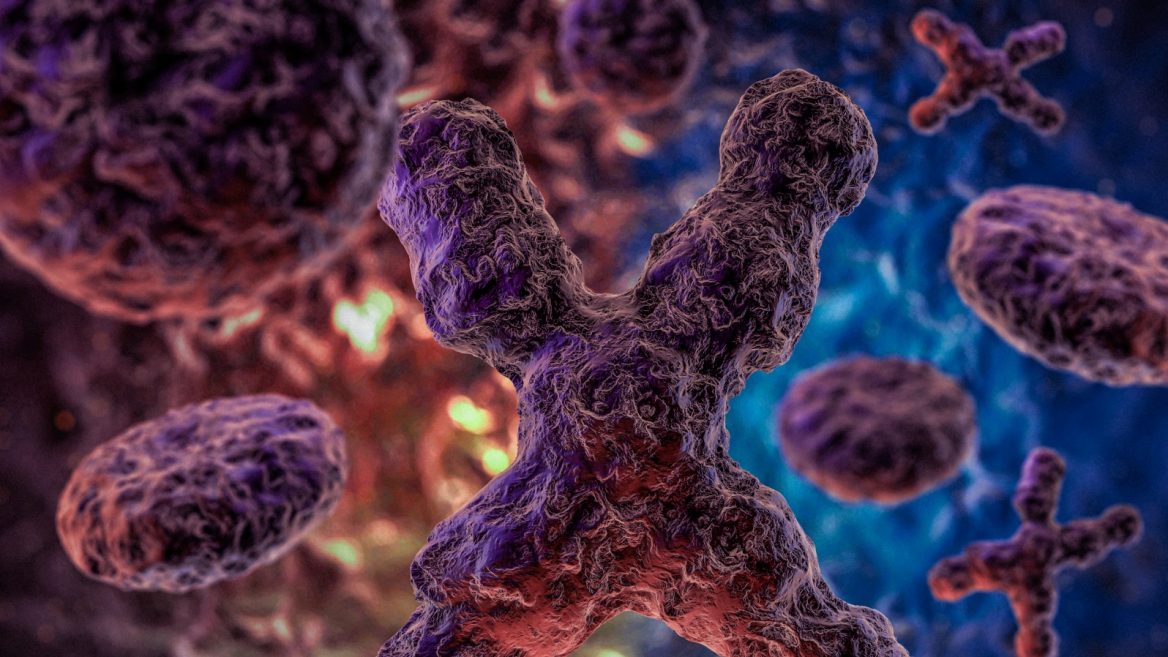
Image of DNA by Double Brain/Shutterstock.com

 A major international research group — including scientists from Israel’s Hebrew University of Jerusalem and University of Haifa — has discovered a genetic mutation associated with Crohn’s disease, an inflammatory bowel disease (IBD) that affects between three and 14 people out of every 100,000 in any given year.

The study, published in the journal Science Translational Medicine, shows that people who carry the mutation in the LRRK2 gene are at high risk of developing the disease.

Surprisingly, this mutation has already been identified in the past as a factor increasing the risk of developing Parkinson’s disease.

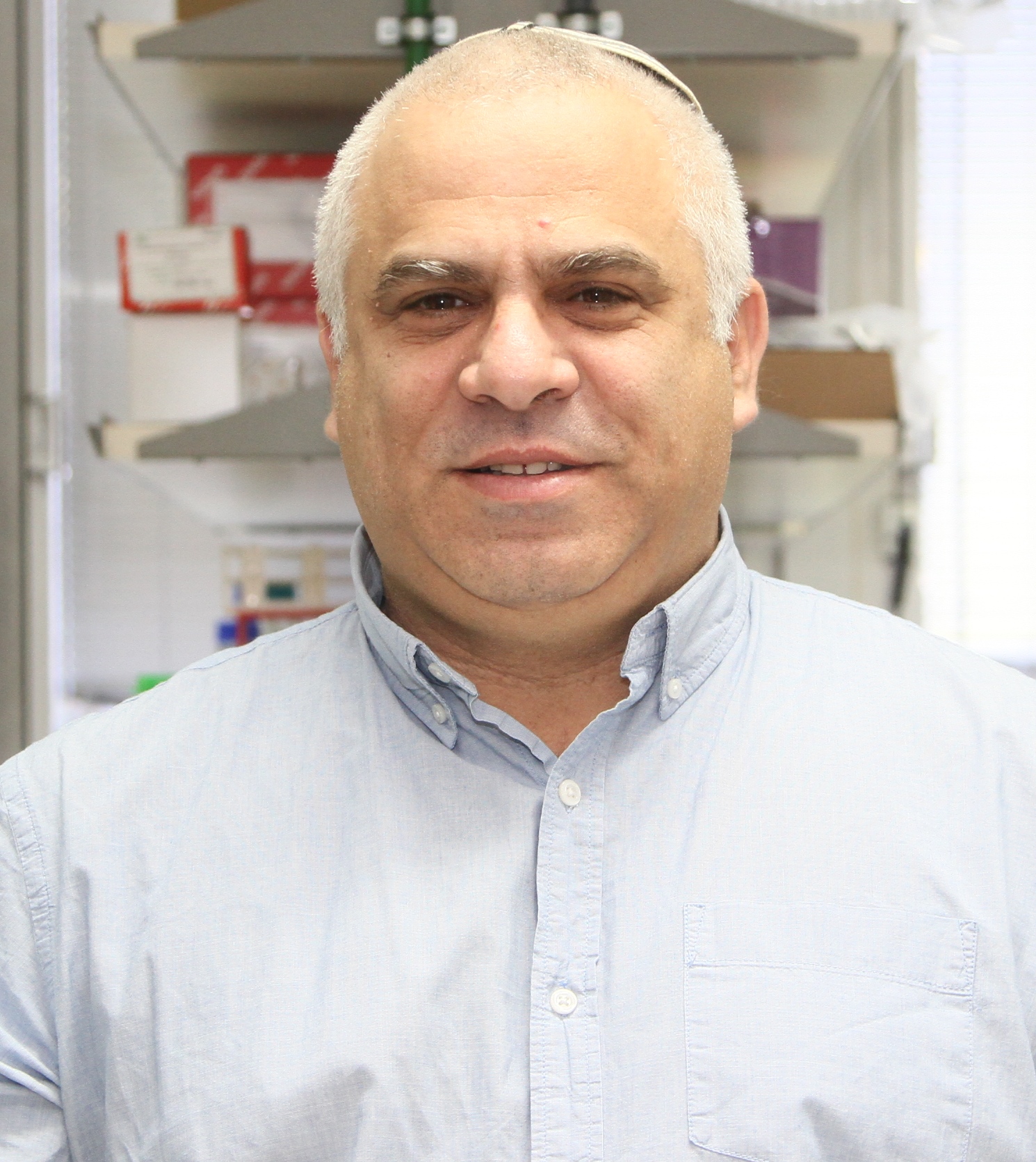
Prof. Gil Atzmon of the University of Haifa, one of the partners in the study, explains: “The practical significance is that we can already identify carriers of the gene at a young age and recognize that they are in a risk group and need constant monitoring and adjustment of lifestyle in the hope to lower the chance of disease outbreak.”

Prof. Gil Atzmon. Photo courtesy of the University of Haifa 

Crohn’s is particularly prevalent in two main age groups: 15 to 30 years and 60 to 80 years. The reasons for the development of the disease remain unclear, but may involve a combination of environmental, genetic and immune factors.

“The 1.6 million Americans who suffer from IBD have long been searching for answers when it comes to the painful and confounding conditions that afflict them, including Crohn’s disease,” said Karen Berman, CEO of American Society of the University of Haifa.

The study involving some 50 researchers from Israel, the United States, Canada and the UK sought to examine whether any mutations of specific genes are more common among Crohn’s patients. The initial examination related to 5,700 people of Ashkenazi Jewish origin, including both Crohn’s patients and those without the disease.

Atzmon explains that the genetic affinity among Ashkenazi Jews makes them a kind of “family” in genetic terms, thereby facilitating the identification of a clear association between gene mutations and the expression of the disease.

Moreover, Crohn’s disease is particularly prevalent among Ashkenazi Jews, and they are the ideal group to study the impact of genetic changes.

After the findings were obtained, the researchers examined the genetic association among a much larger group of some 25,000 subjects from around the world.

The findings showed that a specific mutation in the LRRK2 gene creates a statistically significant distinction between those with and without Crohn’s disease. The mutation is almost twice as prevalent among patients as among people without Crohn’s.

Atzmon suggests that since the mutation leads to functional changes in the coded protein, the probability that a carrier of the mutation will develop the disease is particularly high.

Connection between Crohn’s and Parkinson’s

The finding that the same mutation also increases the probability of developing Parkinson’s was unexpected, according to Atzmon, since to date researchers have not identified any similar or associated mechanisms involved in Crohn’s, a bowel disease, and Parkinson’s, a degenerative brain disease.

“One possibility is that there is no connection, and that this gene is responsible for different and unrelated functions in the body. Another possibility we examined is that the enhanced expression of an area in this gene encourages phosphorylation, influencing a cascade of events each of which leads in turn to the outbreak of either or both of these diseases,” said Atzmon.

The significance of the new finding is that it will be possible to use a relatively simple genetic test at a very young age to determine whether someone is a carrier of this genetic mutation. If they are, medical monitoring will enable intervention in the early stages of the development of Crohn’s disease.

Even more importantly, carriers will have the opportunity to adjust their lifestyle habits in order to reduce drastically the chance of an outbreak of Crohn’s – for example, by quitting smoking (or not starting to smoke), trying to reduce stress and emotional anguish, avoiding processed industrial food, and so forth.

“In the longer term,” Atzmon concluded, “the development of a drug that can respond both to the risk of Crohn’s and the risk of Parkinson’s could be a real breakthrough that will be beneficial for large numbers of people.”

The other Israeli researcher in the study was Shai Carmi of the Braun School of Public Health and Community Medicine, Hebrew University of Jerusalem.


Zawartość publikowanych artykułów i materiałów nie reprezentuje poglądów ani opinii Reunion’68,
ani też webmastera Blogu Reunion’68, chyba ze jest to wyraźnie zaznaczone.
Twoje uwagi, linki, własne artykuły lub wiadomości prześlij na adres:
webmaster@reunion68.com


Seal of Prophet Isaiah said found in Jerusalem

In find of biblical proportions, seal of Prophet Isaiah said found in Jerusalem

AMANDA BORSCHEL-DAN


Chanced upon near a seal identified with King Hezekiah, a tiny clay piece may be the first-ever proof of the prophet, though a missing letter leaves room for doubt

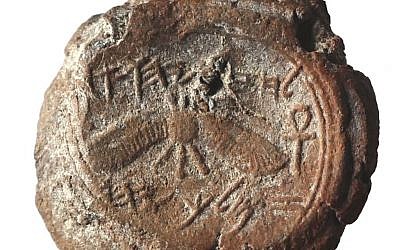
Drawing by Reut Livyatan Ben-Arie of the Isaiah Bulla, a 2,700-year-old clay seal impression which potentially belonged to the biblical prophet Isaiah. (Illustration: Reut Livyatan Ben-Arie/© Eilat Mazar; Photo by Ouria Tadmor/© Eilat Mazar)

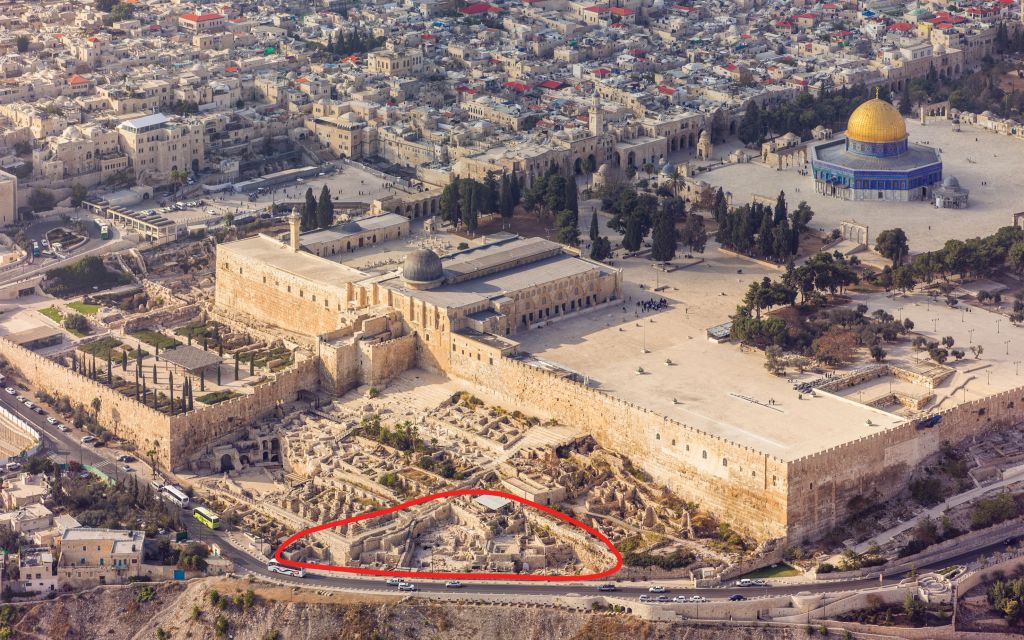
The hand of the Prophet Isaiah himself may have created an 8th century BCE seal impression discovered in First Temple remains near Jerusalem’s Temple Mount, according to Hebrew University archaeologist Dr. Eilat

“We appear to have discovered a seal impression, which may have belonged to the prophet Isaiah, in a scientific, archaeological excavation,” said Mazar this week in a press release announcing the breathtaking discovery.

Mazar’s team uncovered the minuscule bulla, or seal impression, during renewed excavations at the Ophel, located at the foot of the southern wall of the Temple Mount in Jerusalem. The discovery was published on Wednesday in an article, “Is This the Prophet Isaiah’s Signature?” as part of a massive March-June issue of the Biblical Archaeology Review dedicated to its recently retired founding editor, Hershel Shanks.

The clay impression is inscribed with letters and what appears to be a grazing doe, “a motif of blessing and protection found in Judah, particularly in Jerusalem,” according to the BAR article.

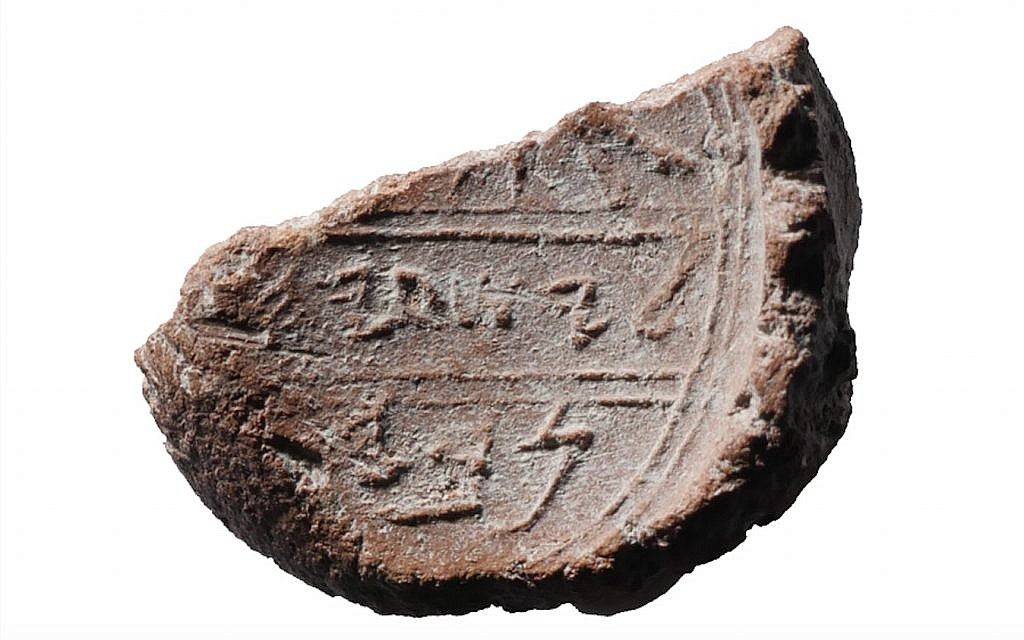
Isaiah Bulla, a 2,700-year-old clay seal impression which potentially belonged to the biblical prophet Isaiah. (Ouria Tadmor/© Eilat Mazar)

The oval-shaped bulla, however, is not intact. On its legible portion, there is an inscription with First Temple Hebrew letters that seem to spell out the name l’Yesha’yah[u] (Belonging to Isaiah). On a line below, there is the partial word nvy, which presumably spells out “prophet.”

“Because the bulla has been slightly damaged at the end of the word nvy, it is not known if it originally ended with the Hebrew letter aleph, which would have resulted in the Hebrew word for ‘prophet’ and would have definitively identified the seal as the signature of the prophet Isaiah,” Mazar said.

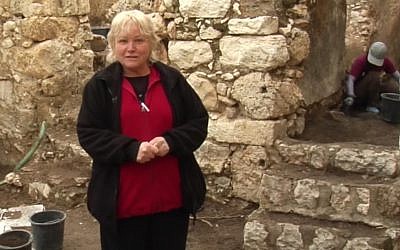
Archaeologist Eilat Mazar in the 2018 winter Ophel Excavations in Jerusalem. (YouTube screenshot)

In the BAR article, Mazar leaves room for the possibility that the inscription on the Isaiah bulla does not refer to the biblical prophet. “Without an aleph at the end, the word nvy is most likely just a personal name. Although it does not appear in the Bible, it does appear on seals and a seal impression on a jar handle, all from unprovenanced, private collections.”

“The name of Isaiah, however, is clear,” she said.

Millennia-old connections between a prophet and his king
The most well-known of the biblical prophets, Isaiah is thought by scholars to have been active circa in the late 8th century and early 7th century BCE.

The Isaiah bulla was discovered in wet-sifted material that was taken from an Iron Age layer close to bedrock that was near a foundation trench cut for a wall of a Herodian vault. The material was found close to a structure that was first discovered in 1986-87 and is today thought to have been a “royal bakery.”

The Ophel excavations at the foot of the southern wall of the Temple Mount in Jerusalem (courtesy of Andrew Shiva)

It was found only 10 feet away from where in 2015 Mazar’s team discovered an important, intact bulla with the inscription “of King Hezekiah of Judah.” The 12th king of the Kingdom of Judah, King Hezekiah ruled from circa 727 BCE-698 BCE, during the period in which the northern Kingdom of Israel fell to the Assyrians in 721 BCE. Some 20 years later, Hezekiah successfully fought off the Assyrian siege of Jerusalem, in part due to fortifications and a water channel which can still be seen today.

A seal impression of King Hezekiah unearthed in the Ophel excavations at the foot of the southern wall of the Temple Mount, conducted by the Hebrew University of Jerusalem’s Institute of Archaeology (ourtesy of Eilat Mazar; photo by Ouria Tadmor)

Upon the discovery of the Hezekiah bulla in 2015, Mazar called the artifact “the closest as ever that we can get to something that was most likely held by King Hezekiah himself.”

This week Mazar said in a press release released by BAR that it is logical that the Isaiah and Hezekiah bullae would be discovered in such close proximity.

“If it is the case that this bulla is indeed that of the prophet Isaiah, then it should not come as a surprise to discover this bulla next to one bearing King Hezekiah’s name given the symbiotic relationship of the prophet Isaiah and King Hezekiah described in the Bible,” said Mazar.

There are several biblical instances of interactions between Isaiah and Hezekiah which indicate the prophet was a spiritual advisor to the king. He consoled the ruler that the Israelites would survive the siege. In the BAR article, Mazar writes, “The names of King Hezekiah and the prophet Isaiah are mentioned in one breath 14 of the 29 times the name of Isaiah is recalled (2 Kings 19–20; Isaiah 37–39). No other figure was closer to King Hezekiah than the prophet Isaiah.”

The Hezekiah and Isaiah…..

read more: In find of biblical proportions, seal of Prophet Isaiah said found in Jerusalem


Zawartość publikowanych artykułów i materiałów nie reprezentuje poglądów ani opinii Reunion’68,
ani też webmastera Blogu Reunion’68, chyba ze jest to wyraźnie zaznaczone.
Twoje uwagi, linki, własne artykuły lub wiadomości prześlij na adres:
webmaster@reunion68.com


POLAND ON THE WRONG SIDE OF GLOBAL LEFT

HOLOCAUST REMEMBRANCE LAW PUTS POLAND ON THE WRONG SIDE OF GLOBAL LEFT

MATTHEW TYRMAND


No Polish family was left untouched by the Nazi death machine. As a result, when Poles hear the words “Polish death camps” or “Polish Holocaust” they bristle.
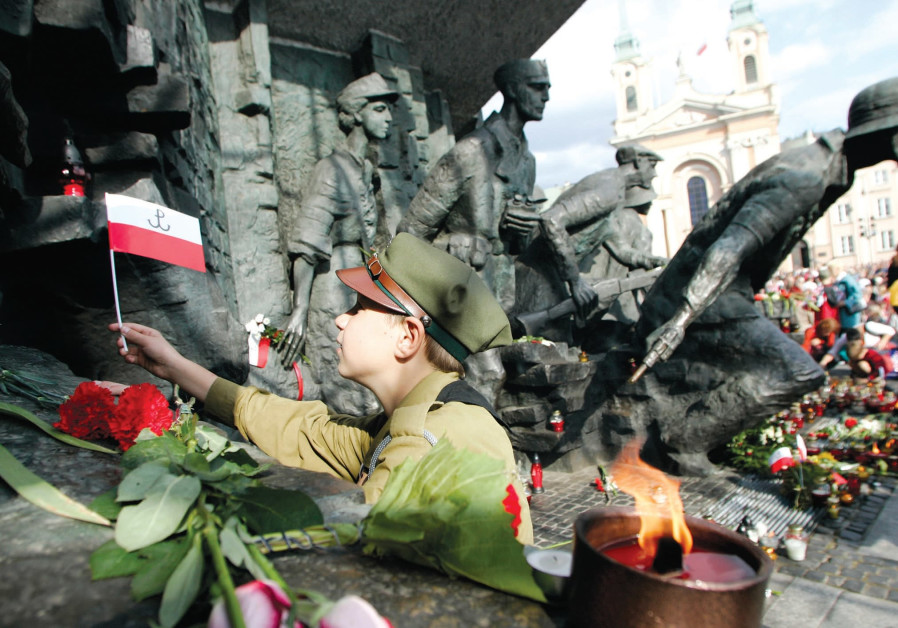
‘POLAND WAS literally the only country in German Nazi occupied Europe that NEVER demonstrated ANY complicity with the fascist Nazi occupiers. (photo credit: REUTERS)

As the global media has highlighted ad nauseam, Poland recently passed through the legislature a bill that seeks to criminalize the holding of the Polish state complicit for the German Nazi crimes of the Holocaust and the attendant German atrocities during WWII. Currently the bill is being looked at by Poland’s Constitutional Tribunal after Polish President Andrzej Duda sent it for review to make sure it complies with the Polish Constitution.

This bill, known as “Ustawa IPN” (“Institute of National Remembrance Law”), was motivated by Poles’ desire to correct historical inaccuracies regarding Poland’s image and the purported role Poland played during this dark time in history. Poland suffered more than any other country during this period as the Nazi plan was to extinguish Polish-ness and Poland from the map in the hegemonic expansion of the Third Reich, in addition to their “Final Solution” vis a vis European Jewry.

Widely accepted estimates of loss of life in Poland suggest six million Poles perished – three million Jewish and three million non-Jewish Poles. No Polish family was left untouched by the Nazi death machine. As a result, when Poles hear the words “Polish death camps” or “Polish Holocaust” they bristle. Only in recent years did the international media formally change their style guides to strike “Polish death camps” from the press lexicon (and in a fitting display of how widespread this ignorance was, even such a supposedly liberal, sensitive, worldly, cosmopolitan, nuanced ivory-tower academic elite as Barack Obama used the term, referencing Auschwitz in a speech in 2012, to such widespread consternation that it served as a final straw on this issue).

Poland was literally the only country in Nazi-occupied Europe that never demonstrated any complicity with the fascist Nazi occupiers (we all remember the Vichy regime in France and the Quisling one in Norway, which were closer to the norm than the exception in continental Europe). Poland operated a government in exile in London, never had a single SS volunteer, and saw penalties for hiding Jews more severe than anywhere else (whole families, such as the Ulma family in Markowa, Poland, were executed for doing the right and honorable thing).

The government in exile made it a crime for Poles to give up Jews to the Nazis, under penalty of death, and the “Council to Aid Jews” (Zegota) was set up by the Polish resistance in 1942. Poland had more “Righteous Among the Nations” than any other nation according to Yad Vashem – which makes sense as Poland was ground zero for European Jewry for many centuries, which in turn is why Hitler’s Final Solution was so predicated on a network of death camps being built in Poland. To this day there are more stories of the hiding and saving of Jews by Poles in Poland being continually unearthed and honored.

Poles valiantly kept fighting throughout the war, under the worst of circumstances, against the longest of odds (all should read about the legendary Warsaw Uprising, which US President Donald Trump spoke of eloquently in his July 2017 open-air Warsaw speech) and despite the largest loss of life nominally and on a per capita basis of any nation in Europe fighting to maintain its existence. What was the result of this unparalleled sacrifice? Despite an Allied victory, Poland lost its independence yet again when it was traded away to another tyrannical hegemony-seeking despot in Josef Stalin and the Russian Soviet communists by FDR at Yalta in 1945.

So while the German industrial machine was being rebuilt by American taxpayers, affording Germany the ability to pay reparations and reform its image as a bastion of cosmopolitan elitism (and a multi-generational proponent of Eurocentrism, globalism, progressive leftism, multiculturalism, cultural relativism and post-modernist social theories) Poland was suffering for five more decades under the jackboot of Iron Curtain Sovietism.

Fast-forward to 2015 when Poland elected, with an unprecedented-in-scale democratic mandate, its first purely conservative (and nationalist populist) government: Law & Justice (PiS). This party had no ties to the communists or the corrupt post-communist petty oligarchy that, fully amnestied by Lech Walesa, had successfully exploited the transition after 1989 for personal gain and to the detriment of the Polish people/nation, often allying with the EU in ceding Polish sovereignty to Brussels. The Law & Justice government, with its pro-nation state sovereignty mandate, found itself in direct opposition to the EU’s centralization of power project and its designs on introducing supranational governance to an open-border super-state. We have watched this nasty, ideologically-driven international media war play out for over two years.

Given this historical context, one can understand why this Polish government, with the paramount motivation to correct the historical record regarding Poland’s wartime history, would draft a bill such as “Ustawa IPN.” It was cronyist looting more than governing or correcting false historical narratives that took precedence for PiS’s Eurocentric predecessors, Civic Platform (PO), the party of Donald Tusk and Radoslaw Sikorski. When this was exposed during the infamous hidden tapes scandal Aferatasmowa (printed transcripts demonstrating the extent of PO’s brazen back-room corruption published in Polish news weekly Wprost) it led rightfully to its being ignominiously turfed out of power, much to their Brussels partners’ chagrin, and to Law & Justice receiving its overwhelming mandate from a fed-up Polish electorate.

That being said, Law & Justice has not made it easy on itself in the way this bill was constructed and with regard to utilizing the necessary diplomacy to communicate its goals while treading into this highly (and justly) sensitive topic.

The criminalization of speech, with the threat of up to three-year prison sentences for violating the proposed law’s rather vague precepts, for which the Polish government is currently under attack, does not deviate that greatly from similar pieces of established law in Germany, Scandinavia, France, the UK and Israel in their own treatments of Holocaust denial and that era’s tragic history.
(This author believe all these laws violate the fundamental human right to unfettered free speech, which is inextricably linked to the ability of free societies to remain optimally free and ultimately innovative and prosperous. Under the rubric of policing “hate speech” – which can never be fundamentally defined and as such offers a plethora of slippery slopes toward censorship and thought crime as per Orwell – there is a European societal standard applied in contravention of this natural right.)

In the case of the Polish law there exists a clear double standard. Moreover, there is massive disinformation circulating on what the law is actually meant to police – so massive in fact that it seems that this is being used as an opportunity to undermine the Polish good faith motivations behind this law’s support in order to coercively play politics.

The law explicitly states that the criminal action pertains exclusively to the allegation of Polish state complicity, not the complicity of individual Poles, some of whom, during wartime (and before and after, as any society will see) did atrocious things and are worthy of the historical condemnations that have been levied and will continue to be researched and highlighted.

The roll-out of the law, as with its wording and the communications that surrounded it, was particularly egregious. After sitting on it the entire first half of this government’s term, the Polish Justice Ministry pushed it to the Sejm (the lower house of Polish Parliament – the first stop for new legislation) for a vote on Friday January 26 – one day before International Holocaust Memorial Day. I have written in the past in about the rogue justice minister (Zbigniew Ziobro) with his own political agenda (factions exist in every political party and movement) and in this case the timing was too guaranteed to create a diplomatic crisis to be anything but an inside operation.

This came on the heels of newly elevated Prime Minister Mateusz Morawiecki’s successful trips to Brussels and Davos, where he handled himself with aplomb with Eurocrat Jean-Claude Juncker and the Davos international media elite. Morawiecki successfully put a new face of centrism, pragmatism, rationality, worldliness and reasonableness on this Polish government. The internal faction of hardline nationalists, which Justice Minister Ziobro founded and leads (Solidarna Polska) and its supporters were displeased to see Morawiecki’s collective Polish success abroad, which undermines their own electoral aspirations. Hence the deliberately provocative timing of this bill.

Not surprisingly, given the timing, and the fact that the coming Israeli electoral cycle is currently heating up, Israeli politicians flocked to this issue to paint this law as an example of legislating fallacious historical revisionism and a form of Holocaust denial (by shifting potential culpabilities), and thus a re-institutionalization of what they allege is Polish cultural antisemitism. This has now escalated with the entrance into the fray by the international media cohort, American legislators, the US State Department and many others of the global political classes who have since weighed in on this issue.

As with Ziobro’s botched initial judicial reform, put forward this past summer, he again, evidently not a believer in Harry S. Truman’s “the buck stops here” aphorism, went absolutely invisible for the month since the brouhaha commenced. Instead, as also had played out previously with this past summer’s judicial reform, he sent his lackey deputy minister, Patryk Jaki, to be the public face of the ministerial defense of this bill, its structure and wording, and its timing (all very tough to defend – especially given the diplomatic crisis that was birthed from its release… as outcomes in politics matter).

Morawiecki added fuel to the fire in Germany for the Munich Security Conference when he fielded a question from Ronen Bergman, an Israeli journalist (and a New York Times contributor), who seemed less interested in a breakdown of the actual mechanics of the law than in spinning a validation of his preferred depiction of it for his partisan readership and preening his own moral high ground against the Polish Prime Minister.

Bergman floridly emotes: “[Morawiecki] stares at me as if he is examining some kind of nuisance” in his accounting of the prime minister’s response to his question. Said response (using the word “perpetrators” to refer to other groups during the war, including Jews) was admittedly not well constructed to assuage legitimate sensitivities. As one who knows the Polish prime minister and his pragmatism personally, this was probably more owed to the nuance of linguistics in word choice than a desire to be malicious, which clearly does no good for anyone. Bergman continues: “These comments left me flabbergasted. My eyes were filled with tears of pain and rage. I was glad I had at least helped reveal his true colors with my question.”

Hardly the journalistic presentation of one who wants to report news.

(Lest this 100% Jewish author be labeled an antisemite, again, for not adhering to whatever the “acceptable” sensibilities might be in describing this above incident as prescribed by the global media elite, like Mr. Bergman’s family mine too was dramatically and forever impacted by the Holocaust, as my Polish father’s line was all but extinguished by the Nazis in the Warsaw ghetto and Majdanek death camp in Lublin, Poland. Moreover, these issues regarding Polish-Jewish relations and history are ones I have thought and exposited on deeply. N.B.)

One month after the initial vote, the justice minister came out of hiding to declare in an interview (and formally state on the ministry’s website) that with the bill passed there will be no freezing of its enforcement, in a direct move to undermine ongoing talks and the review to soften its language and structure and make it more palatable to critics. This was clearly an attempt to prevent diplomatic resolutions from being consummated and a sabotaging of the Polish-Israeli dialogue that was to commence in coming weeks.

THE GREAT and tragic irony of this diplomatic crisis – propelled further by those (internally and externally) who have a strong political interest in seeing Poland and this conservative nationalist populist government, not pliant to Brussels’ diktats, weakened – is that heretofore Polish-Israeli relations were the strongest of any EU nation’s relations with the Jewish state. These strong modern-era relations have been predicated on shared history and identity; hundreds of years of Polish-Jewish cohabitation; a large number of Polish Jews being instrumental in the creation of the Zionist state (with Polish one of the first languages utilized in the Knesset); existent strong contemporary trade ties with a material amount of modern Warsaw being developed by Israeli business concerns; congruent political alignments (especially now with both countries being governed by true conservative parties) on border security and the shared distrust and willingness to call out radical Islam (which clearly differs from the majority of the political classes of Western Europe); relatively few incidents of actual antisemitic violence in Poland (starkly juxtaposed with the regularity of such incidents in France, Germany, Scandinavia, and the rest of the progressive leftist Western continent which continues to appease Islamist political cohorts); and most recently, the abstention by Poland at the United Nations vote condemning the US in the moving of its embassy to Jerusalem (where predictably every EU nation from Germany westward voted to condemn President Trump’s action).
Also telling is that in 2008, on the fortieth anniversary of the 1968 university purges of Jewish students, president Lech Kaczynski (the president when Law & Justice last dominated Polish politics), led the initiative to symbolically restore Polish citizenship to those Jews who were ejected and consequently fled Poland.

It is clear, given the double standard on widespread pan-European laws censoring speech regarding these sensitive historical issues, that the politically oriented motivation for this dramatic attack on Poland’s iteration of this sort of law extends beyond European political actors.

Recently, the Los Angeles-based Simon Wiesenthal Center loudly and publicly issued a call for Jews to limit their travel to Poland, that reads: “In wake of the controversial new Holocaust Law in Poland and the anti-Semitism it has unleashed that has left the Jewish community shaken, the Simon Wiesenthal Center (SWC) is considering issuing a Travel Advisory for world Jewry.”

Despite such a dramatic statement there does not seem to be any evidence of this “unleashing” of antisemitism by any empirical metric. Can such “unleashed antisemitism” be similarly disproven against the empirical reality of seeing robust antisemitic activity in France, Germany, Sweden, the UK, Holland, Belgium, et al perpetrated by hostile third world migrants and refugees from the Islamic third world, many of whom stridently believe in theological diktats that include death by jihad to worldwide Jewry?

Polish synagogues, both actively attended ones and historical sites (frequently refurbished due to their cultural importance), do not need 24-hour armed protection. Can the same be said in Berlin, Germany? Or in Copenhagen, Denmark, or Gothenburg and Malmo, Sweden? The selection of Poland as a focus of consternation and intervention by organizations, foundations and advocacy groups reeks of this uber-politicization.

We have seen Poland under attack this way from the global elite time and again since this government took power. Recently, the annual march in Warsaw this past November 11 celebrating Polish Independence Day was painted by the global media as an assemblage of fascists and Nazis despite the fallacious manufacture of this allegation. It further indicated Poland is under attack for political reasons and held to a far different, and non-merit-based, standard by those coordinating the undermining campaign. When a far-left “charitable” foundation engages in provocations to drive negative media coverage and test the viability of enforcing this proposed law, and internal political opposition (such as Donald Tusk represents) can bludgeon externally from Brussels perches, then it also indicates the existence of such a campaign.

But outcomes do matter in geopolitics and as such it is worth reconsidering the negative diplomatic implications of following through with passage of this law in its current form. Diplomacy is built around getting the other side to see and understand your viewpoint and goals through dialogue and discourse. There needs to be a serious reworking of the structure of this bill, something that appears may be currently in the works (as long as the Polish justice minister is not able to quash such efforts), where the violations and the enforcement mechanisms are clearly delineated and communicated and found to be acceptable to more than just the far-right domestic Polish political base.

If this does not occur, then the globalist Left political cohort will have won (with some domestic assistance) in successfully driving a wedge in relations between Poland and its US and Israeli allies – all helmed by governments that share much in policy philosophy. This would be an unacceptable failure with long-term negative implications for Poland’s ascendant standing in the European political order along with a negation of the concomitant opportunities for the American and Israeli allies’ deeper engagement with Poland on a myriad of shared interests.


Matthew Tyrmand is a journalist and dual Polish and American citizen actively involved in commenting on politics across multiple media in both places. He writes a weekly column for Polish newsweekly Do Rzeczy and has contributed to Breitbart, Forbes, and other outlets in the English language.


Zawartość publikowanych artykułów i materiałów nie reprezentuje poglądów ani opinii Reunion’68,
ani też webmastera Blogu Reunion’68, chyba ze jest to wyraźnie zaznaczone.
Twoje uwagi, linki, własne artykuły lub wiadomości prześlij na adres:
webmaster@reunion68.com


Yad Vashem NewsLetter February

Yad VashemYad Vashem NewsLetter February

Yad Vashem


What’s New

New Exhibition – Flashes of Memory: Photography during the Holocaust

In January 2018, Yad Vashem inaugurated a new exhibition entitled “Flashes of Memory: Photography during the Holocaust.” The exhibition, housed in the Exhibitions Pavilion of Yad Vashem’s Museum Complex, presents a critical account of visual documentation – photographs and films – created during the Holocaust by German and Jewish photographers, as well as by members of the Allied forces during liberation. The exhibition focuses on the circumstances of the photograph and the worldview of the documenting photographer while emphasizing the unique viewpoint of the Jewish photographers as direct victims of the Holocaust. Displayed throughout this exhibition are some 1,500 photographs and 13 films, as well as original newspaper clippings, albums, diaries, and a number of original cameras from the period. Click here to view a promo for the exhibition.

Marking International Holocaust Remembrance Day in Israel and Abroad

Ahead of International Holocaust Remembrance Day, Yad Vashem Chairman Avner Shalev participated in a special Israeli Government Cabinet meeting dedicated to Holocaust commemoration where he presented the attending ministers and Prime Minister Benjamin Netanayhu with an overview of the current status of international Holocaust commemoration. Shalev’s appearance commenced the myriad commemorative activities in Israel and throughout the world through which Yad Vashem marked the UN-sanctioned International Day of Commemoration in Memory of Victims of the Holocaust. In addition, Yad Vashem hosted members of the international diplomatic community at its annual event, who were addressed by Israel’s President H.E. Mr. Reuven Rivlin and Yad Vashem Chairman Avner Shalev.

Spotlight on the Web

Online Commemoration Activities

Yad Vashem uploaded a mini-site marking International Holocaust Remembrance Day, featuring a variety of resources for the public to view, share and engage in, including online exhibitions, educational resources and the I Remember Wall. This annual social media campaign is a unique and meaningful opportunity for the public to participate in a commeorative activity to mark International Holocaust Remembrance Day. By joining the IRemember Wall, the participant’s Facebook profile is randomly linked to the name of a Holocaust victim from Yad Vashem’s Central Database of Shoah Victims’ Names. The IRemember Wall was promoted on Facebook, Instagram and Twitter. Some 8,000 people joined the IRemember Wall from 193 different countries.

New Online Exhibition – Last Letters from the Holocaust: 1943

Over the decades, Yad Vashem has collected thousands of personal letters that reveal the hardships of Jews surviving day by day during the Holocaust. A selection of this correspondence is featured in the third in a series of online exhibitions about last letters sent during the Shoah: “‘I Left Everyone at Home’: Last Letters from 1943”. Tragically, many of the letters contain optimistic messages and hope for reunion. These online exhibitions provide rare documentation of the stories of Holocaust victims through their manuscripts, photos, Pages of Testimony that were filled out in their memory, and excerpts of testimony from family members who survived.

Names Recovery

Page of Testimony Leads to Miraculous Family Reunion

The last time 102-year-old Holocaust survivor Eliahu Pietruszka saw his family was in Warsaw. All these years he believed that his entire family had been murdered during the Holocaust. But in November 2017, Eliahu met for the first time with his newly discovered nephew Alexandre, the son of a brother who, unbeknownst to him, had also survived. The emotional meeting took place thanks to information on Pages of Testimony recorded on Yad Vashem’s online Central Database of Shoah Victims’ Names. Alexandre was moved to tears when he saw a prewar family photograph, saying that it was the first time that he had seen a photograph of his grandparents. Alexandre recounted how his father Wolf always thought that he was alone in the world and, like Eliahu, believed that no-one from his family survived the war.

New Publications

I Am Writing These Words to You – The Original Diaries, Będzin 1943

By: Chajka Klinger | Editor: Avihu Ronen
I Am Writing These Words to You reveals Chajka Klingers’ soul-searching response to the existential conflicts that plagued her while writing her diaries. Chajka Klinger (1917–1958), who was born into a Hasidic family, joined Hashomer Hatzair and became a major activist in the Jewish Fighting Organization (ŻOB) in Będzin. She was chosen by her comrades to survive and to document their history to ensure their memory. “Condemned to live,” she fulfilled her obligation to them by writing her diaries while in hiding in 1943. Chajka Klinger’s diaries are among the earliest comprehensive documents to reach the Jewish public outside of occupied Poland during the war. The notebooks provide a window into the activities of the Jewish youth movements during the Holocaust, and convey vastly important information about the ŻOB in Będzin and in Warsaw, the relationships between the underground organizations and the Judenrat, the response of the Jewish public to the extermination, and about Mordechai Anielewicz. Available for purchase in Yad Vashem’s online store.

Denunciation and Rescue – Dutch Society and the Holocaust

By: Pinchas Bar-Efrat  
Denunciation and Rescue examines the attitude of the Dutch authorities toward the Jews during the Nazi occupation, the directors of the various government ministries, the ministers of the government-in-exile in London, and of Dutch society in general. Bar-Efrat probed thousands of files of postwar trials of war criminals in the Netherlands and found that the punishments imposed on those who denounced and betrayed Jews were often relatively lenient given the severity of their crimes. The author discusses the modus operandi of these war criminals and their motives for denouncing Jews, and activities of the Dutch police, and in contrast, the actions of the Dutch resistance and the Dutch individuals who concealed Jews and assisted them in obtaining false papers, or provided them with ration cards and money. Available for purchase in Yad Vashem’s online store.

News Highlights

Israel Slams ‘Baseless’ Holocaust Legislation in Poland, in the New York Times
New Israeli exhibit highlights power of photos in Holocaust , in Yahoo News
David Cesarani awarded posthumous honour, in the Jewish Chronicle
Pence wraps up Israel visit at Yad Vashem, in Ynet News
Jews who saved other Jews from Nazis faced dilemmas too difficult for Solomon, in the Times of Israel
102-year-old man who lost family in Holocaust meets nephew for the first time, in ABC News
Yad Vashem Uncovers 200,000 Previously Unknown Names of Hungarian Holocaust Victims, in the Times of Israel
Last letters from the Holocaust: Remembering the victims, in Deutsche Welle

With Your Support

Help Collect Missing Names of Shoah Victims

Each person comes into the world with his or her own personality and set of skills, hopes and fears, dreams and desires – an identity. Encompassing the essence of that identity is a name, embodying not only the unique attributes of the individual, but their heritage and a connection to their past and future. The Nazis attempted to take millions of individuals and eliminate them entirely, replacing names with numbers. For seven decades, Yad Vashem has been investing great efforts to uncover the names of every victim of the Shoah. Today, with much of the relevant information found only in the memories of ever-aging Holocaust survivors and relatives, the passing of time is working against us. To date, 4,700,000 names of Shoah victims have been recorded in Yad Vashem’s Central Database of Shoah Victims’ Names. Partner with us in this urgent mission to collect the missing names.


Zawartość publikowanych artykułów i materiałów nie reprezentuje poglądów ani opinii Reunion’68,
ani też webmastera Blogu Reunion’68, chyba ze jest to wyraźnie zaznaczone.
Twoje uwagi, linki, własne artykuły lub wiadomości prześlij na adres:
webmaster@reunion68.com