Archives

Israeli, Polish electric companies sign cybersecurity deal

Israel21cIsraeli, Polish electric companies sign cybersecurity deal

Abigail Klein Leichman


We gain an experienced partner, effective in fighting cybercrime,’ says head of Polish Electric Company about its new Israel ties.

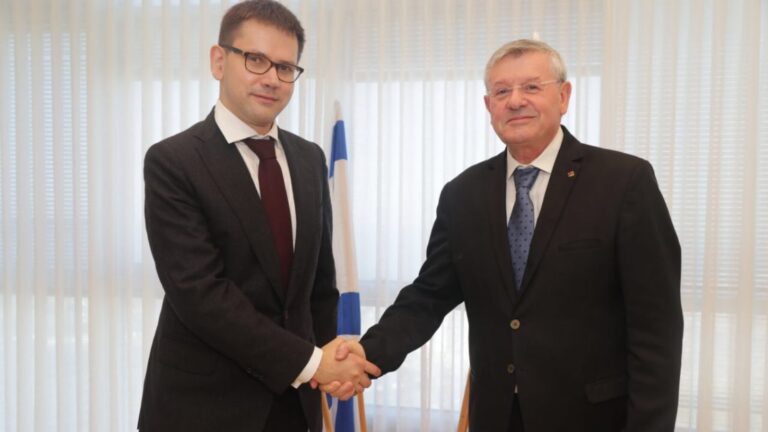
Polish Electric Company CEO Eryk Klossowski, left, and Israel Electric Company Vice President Yossi Shank. Photo by Yossi Weiss

The Israel Electric Company (IEC) signed a memorandum of understanding for cyber cooperation with the state-owned Polish Electricity Company (PSE) responsible for supplying electricity to Poland’s nearly 40 million people.

As a result of keen interest by PSE in Israeli cyber technologies, a delegation headed by CEO Eryk Kłossowski came to Israel at the end of January on a visit arranged by the commercial attaché of Israel’s Ministry of Economy and Industry in Poland and the cyber unit at the Israel Export Institute.

“We gain an experienced partner, effective in fighting cybercrime. This is extremely important at a time when cyber-criminals and cyber-terrorists develop cooperation among themselves and create more and more advanced tools of attacks,” said Klossowski.

Added IEC Vice President Yossi Shank: “Over the years we have accumulated extensive experience in critical infrastructure protection, and we will be happy to share this knowledge, mainly in the framework of business entrepreneurship abroad.”

The IEC successfully warded off a prolonged attempted cyber-attack from April 2016 until at least February 2017.

While in Israel, the PSE delegation visited the Cybertech conference in Tel Aviv, Israel’s National Cyber Bureau and the CyberBit simulator in Ra’anana, and met with about a dozen Israeli cybersecurity companies.

“In the past two years, we have witnessed an increase in requests from Polish and private companies for Israeli cyber technologies and cooperation on the subject,” said Shir Slutzky, commercial attaché of the Ministry of Economy and Industry in Poland.

“In the year 2017, together with the Israel Export Institute, we organized several visits and business delegations from Poland to Israel, and vice versa.” The ministry also handles requests from Israeli companies to make relevant connections in the Polish market.

PSE’s computer emergency response team, started at the end of 2016 to help maintain cybersecurity, cooperates with its counterparts in the United States and Norway.


Zawartość publikowanych artykułów i materiałów nie reprezentuje poglądów ani opinii Reunion’68,
ani też webmastera Blogu Reunion’68, chyba ze jest to wyraźnie zaznaczone.
Twoje uwagi, linki, własne artykuły lub wiadomości prześlij na adres:
webmaster@reunion68.com


HISTORY WILL JUDGE POLAND

HISTORY WILL JUDGE POLAND FOR COMPLICITY
IN THE HOLOCAUST AND ITS DENIAL ATTEMPTS

ITZIK SHMULI


Poland should know this: By passing this law, history will judge it twice – both for complicity in the crimes, and for institutional attempts to deny them.

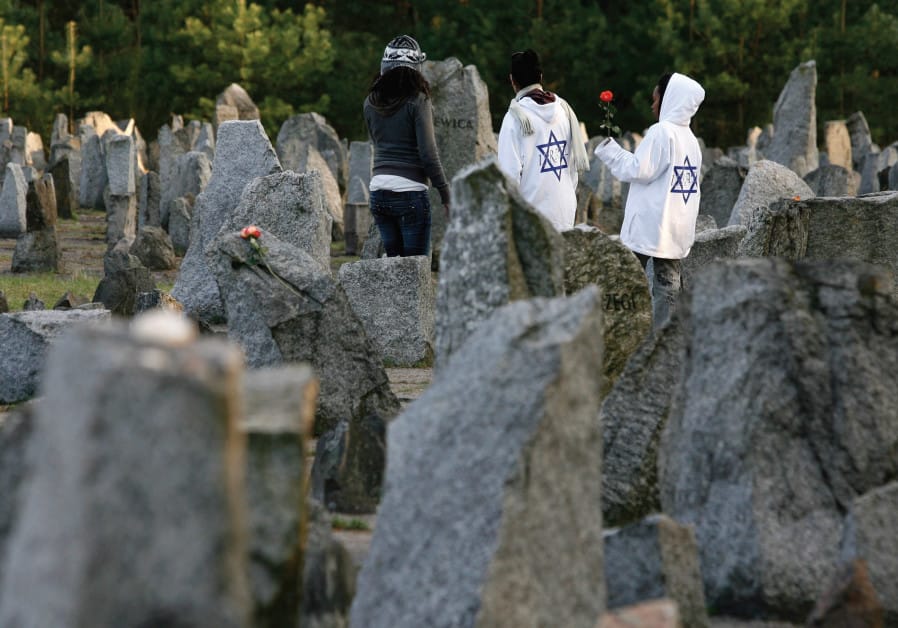
YOUTHS STAND among stones at Treblinka Nazi Death Camp memorial.. (photo credit: REUTERS)

Just as we thought we had seen everything from the Polish government, Prime Minister Mateusz Morawiecki introduced us to an upside down world. Upside down and infuriating: “There were Polish collaborators just as there were Jewish collaborators,” he argued outrageously.
We have entered yet another phase in the Polish government’s project to erase the crimes of its people. Blame is now being hurled at the Jews, suggesting that they were perpetrators in the mass slaughter of their own brethren whereas the Poles are disingenuously presented as mere victims of circumstance.

It is at this juncture that we should remind ourselves of the Polish law that says any recognition of Poland’s complicity, or the suggestion that Polish people acted on behalf of the Nazis, or even committed crimes during the Holocaust, will be seen to be guilty of a legal misdemeanor.

Moreover, it says that any person who publicly accuses the Polish nation of guilt or joint responsibility for crimes committed against humanity and/or against the Jewish people is committing a criminal offense punishable with a three-year prison term.

Free speech has been stifled by the Polish legislature, both for Polish citizens and for citizens of the entire world.

Holocaust survivors, tour guides to Poland and researchers at Yad Vashem will not be able to give witness, teach the next generation or leave testament for historical research.

Semantics has no place here, as the extermination camps were indeed German, and the sophisticated killing factories were purposely built by Germany; however, a part of the Polish people lost its humanity and actively complied with or instigated the horrors.

Many Poles heard, knew, betrayed and actively participated in the extermination, and we will not allow them to hide behind Nazi crimes.

True, there were others, including some 7,000 Polish Righteous Gentiles who saved Jews, but because the reality was complex, there is no logic or morality in the passing of a law that imposes its theory in a simplistic, partial and even false manner.

The Polish Senate has granted Poland the dubious and despicable gift of being the first country to uphold a law of Holocaust denial, but the blurring of history and the attempt to escape examining and investigating dark chapters in the past will not help any nation prevent the next human tragedy.

FROM NOW ON, history will judge Poland twice – for complicity in the heinous crime of the Holocaust and also for a shameful attempt to deny its existence The power of truth can prevail, however, and no law can silence the Holocaust survivors; no law will silence or hide the countless chilling testimonies from Auschwitz, Treblinka, Chelmno, and the other camps and death pits where millions of Jews were massacred through no fault of their own. Polish soil is soaked with blood and contaminated with the poison of the Polish souls who aided and abetted and sometimes instigated those actions.

Fascist Poland today chooses a false and belligerent path, and from here on Israel must draw two conclusions: No one has the right to compromise the memory of the past for the political interests of the present, and a broad diplomatic attack is necessary to demonstrate to Poland the gravity and folly of its actions.

Therefore, I will mention the law that I have submitted, together with the cross-parliamentary support of another 75 MKs, which states that denying or blurring the role of Nazi collaborators is to be viewed as the criminal offense of Holocaust denial.

Moreover, it is my opinion that Israeli rightwing parties and politicians must immediately stop their dangerous flirtation with nationalist, fascist and antisemitic political parties and politicians around the world as part of a misguided belief that a shared fear and hatred of common enemies will be ultimately beneficial to Israel’s cause.

Those who see others as inferior will, sooner or later, become inferior themselves, and we do not share those values.

Poland should know this: By passing this law, history will judge it twice – both for complicity in the crimes, and for institutional attempts to deny them.


The writer is the chairman for the Holocaust and Pensioners Caucus in the Knesset.


Zawartość publikowanych artykułów i materiałów nie reprezentuje poglądów ani opinii Reunion’68,
ani też webmastera Blogu Reunion’68, chyba ze jest to wyraźnie zaznaczone.
Twoje uwagi, linki, własne artykuły lub wiadomości prześlij na adres:
webmaster@reunion68.com


Possible hemophilia cure under study in Israeli hospital

Israel21cPossible hemophilia cure under study in Israeli hospital

Brian Blum


US biotech company BioMarin enlists aid of Sheba Medical Center to take part in international trials of a ‘magic bullet’ treatment for hemophilia A.

Image by Jarun Ontakrai/Shutterstock.com

Is a cure for hemophilia on the horizon? American biotechnology company BioMarin aims to find out with the help of Sheba Medical Center in Ramat Gan, Israel.

BioMarin has chosen Sheba to take part in the next phase of international trials for what’s being touted as a “magic bullet” cure for hemophilia A, a genetic blood-clotting deficiency that results in patients bleeding longer after an injury and more easily bruising. Hemophilia A, which affects mostly men, can be life-threatening.

BioMarin has developed a treatment using viruses to implant new genes into a patient’s cells; a single dose seems to be enough to stop or even cure the disease.

BioMarin has conducted an initial trial on nine patients – all stopped using clotting factor drugs to treat their hemophilia and their annualized bleeding rate fell from some 16 episodes a year to just one.

Prof. Gili Kenet will run the project in Israel. Kenet, the director of the National Hemophilia Center and Institute of Thrombosis and Hemostasis at Sheba Medical Center, is impressed by what she’s seen so far.

“People in the medical community are beginning to speak about curing hemophilia after a one-time treatment with this new drug,” she said.

Sheba’s National Hemophilia Center treats more than 700 hemophiliacs a year and has about 50 patients currently participating in clinical studies. Kenet, an internationally known expert on hemophilia, thrombosis and hemostasis, is the current co-chair of the scientific subcommittee dealing with hemophilia A for the International Society of Thrombosis and Hemostasis.

“These are exciting times, as there are options to cure hemophiliac patients,” Kenet said. “We are hoping that results of this trial at Sheba will be good enough that this will be the therapy of choice that will able to stop this dreaded disease once and for all.”

Pending approval by the Israeli Ministry of Health, Sheba expects to begin enrolling patients shortly.


Zawartość publikowanych artykułów i materiałów nie reprezentuje poglądów ani opinii Reunion’68,
ani też webmastera Blogu Reunion’68, chyba ze jest to wyraźnie zaznaczone.
Twoje uwagi, linki, własne artykuły lub wiadomości prześlij na adres:

webmaster@reunion68.com


Beersheba station bridge in Israel is shaped like a pair of eyes

Beersheba station bridge in Israel is shaped like a pair of eyes

Dezeen


Tel-Aviv firms Bar Orian Architects and Rokach Ashkenazi Engineers have built a bridge in the Israeli city of Beersheba, featuring arches that create the shape of two eyes.

The 210-metre-long bridge traverses a series of railway tracks, providing a link between the Beersheba North Railway Station and the Gav-Yam Negev Advanced Technologies Park.

Bar Orian and Rokach Ashkenazi won an invited competition for the project with their design for a curving structure intended as a new landmark in this fast-developing region to the north of the city centre.

Read more on Dezeen: http://www.dezeen.com/?p=964115


Zawartość publikowanych artykułów i materiałów nie reprezentuje poglądów ani opinii Reunion’68,
ani też webmastera Blogu Reunion’68, chyba ze jest to wyraźnie zaznaczone.
Twoje uwagi, linki, własne artykuły lub wiadomości prześlij na adres:
webmaster@reunion68.com


NO NEED TO SEPARATE RELIGION AND STATE, ALL WE NEED IS MUTUAL RESPECT

PLURALIST LEADER: NO NEED TO SEPARATE
RELIGION AND STATE,  ALL WE NEED IS MUTUAL RESPECT

JEREMY SHARON


Israel Hofsheet is one organization fighting on several of these fronts, advocating a pluralist vision for the Jewish state.
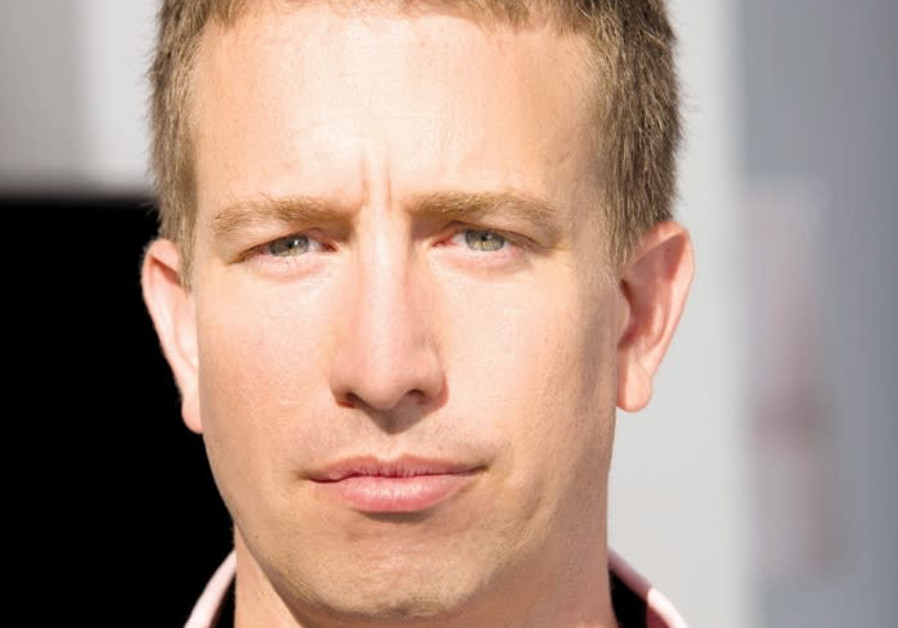
ISRAEL HOFSHEET executive director, Uri Keidar.. (photo credit: Courtesy)

Israeli society is witnessing times of unusual tumult surrounding the issue of Shabbat in the public domain. A government minister has quit his job to defend the honor of the Sabbath, and another minister deliberately transgressed the Sabbath to support the rights of the secular population.

At the same time, an ongoing battle, ideological, legal and at times physical, continues on its seemingly interminable course over the place of progressive Judaism in the Jewish state, most noticeably at the Western Wall, the site of intense spiritual and national meaning for the Jewish people.

And the myriad other concerns pertaining to the religion and state nexus are always bubbling close to the surface, be it ongoing demands for civil marriage, including gay marriage, the conversion imbroglio, or the kashrut supervision market.

Israel Hofsheet is one organization fighting on several of these fronts, advocating a pluralist vision for the Jewish state.

But, says Israel Hofsheet executive director Uri Keidar, the organization does not advocate an absolute separation of religion and state, but, rather, a framework that respects Israel’s nature as both a Jewish and democratic state, with the interpretation of “democratic” referring to the rights of nonreligious and non-Orthodox citizens.

“We don’t want a total separation of religion and state. Rather, we want to regulate how religion interacts with the state, so that there should be a place for everyone, and so that Judaism draws people in and doesn’t distance them,” says Keidar.
“There needs to be a place for more opinions, more variety – for example, by letting other groups enter the kashrut market, recognizing rabbis apart from those of the rabbinate, creating a civil marriage track, including for LGBT people, and allowing people in Israel to marry the way they want to,” he says.

THE ISSUE of Shabbat is one that Keidar points to as having a potentially explosive impact.

The recently approved mini-markets law, which will allow the interior minister to thwart any local authority passing a bylaw allowing shops to open on Shabbat, has sparked significant opposition, and led to several local authorities defying the new legislation and passing such bylaws.

And a recent crackdown in Ashdod against businesses, and restaurants that open on Shabbat has been strongly protested by furious city residents who see such measures as an illegitimate imposition on their life choices. Many residents also allege that the new legislation has emboldened Haredi activists to demand heightened enforcement measures.

Keidar says that Israel Hofsheet welcomes a debate about limiting commercial activity on Shabbat, saying that the Sabbath should not become like any other day of the week. At the same time, however, the discussion on the issue should make allowances for the religiously diverse nature of the country.

“I don’t care what happens in Bnei Brak on Shabbat, and people enjoy their religious Shabbat there and that’s fine. At the same time, why is it their business what I do at home and how I behave on Shabbat?

“Pushing the public on this issue is doing great damage and is being done by people who are doing the most to distance the public from Judaism. The attempt to make people do Shabbat like Bnei Brak doesn’t help Israel or Judaism.”
And Keidar believes that pressure on the secular and traditional public over what’s available for them on Shabbat is bringing about unseen political activism over this issue.

The bylaws passed in Rishon Lezion, Holon, Givatayim, Ramat Gan, Modi’in and Herzliya, says Keidar, are evidence of the backlash from the nonreligious public against the mini-markets law that was advanced at the behest of the Haredi parties under the threat that they could even topple the government if this demand were not met.

And, says Keidar, the demonstrations in Ashdod, Givatayim and Ramat Gan on this issue are almost unprecedented, and are evidence of the nonreligious community beginning to awaken on religion and state issues.

“They are trying to force the hand of the pluralist community, and they are responding. And it’s amazing, and it’s gladdening and it’s fun,” he says.

KEIDAR DOES NOT blame the Haredi politicians for the current state of affairs, and instead says that the focus should be on the nonreligious coalition parties Likud, Kulanu and Yisrael Beytenu.

“It doesn’t bother me that [Deputy Health Minister Ya’acov] Litzman and [Interior Minister Arye] Deri are Haredi and advance these policies. I’m interested in the non-Haredim and where they are, where [Prime Minister Benjamin] Netanyahu and [Finance Minister Moshe] Kahlon are. They are the story. They weren’t elected by Haredi votes. Likud and Kulanu voters are traditional voters who don’t have any problem going to synagogue in the morning and then going to the beach and a football match later on.

“So the story isn’t [about whether there is] religious coercion but about the cowardice of the non-Haredi politicians that bothers me.”
Questioned as to whether the dominance of the religious parties over religious affairs is simply a product of Israel’s electoral system and the necessity of coalition governments, Keidar argues that if the nonreligious parties want to take these issues seriously, they could do so, pointing out that all coalition parties right now have a veto over religion and state issues.

“There are 21 votes for religious parties, a sixth of the Knesset, and at the end of the day, the majority is the majority, he contends.

But he also acknowledges that despite the disagreement of many Israelis with government policy on Shabbat, marriage and the like, the public has not until now put much political emphasis on such issues.

“What’s sad is that no one says we have our redlines and that we’ll also determine what is Jewish and democratic, not just you [the religious], and that Judaism isn’t just yours, we have our own Judaism,” he says.

“But there is a significant public awakening on this issue. People are demonstrating outside their local municipal councils, and such protests traditionally have happened only in Tel Aviv and Jerusalem.

“The pluralist community needs to show that it can throw its weight about just like the Haredim. And alongside security and economic issues, they need to show that religion and state issues are important to them, too, and our identity.”

It is unclear where this activism will lead and what effect it will have, particularly regarding Shabbat. Some of the municipal bylaws allowing shops to open were passed before the Knesset legislation, meaning there will be legal challenges if their implementation is blocked. Others were passed afterward, meaning it will be easier for Shas leader Deri to block them.

But Keidar’s broader point remains valid. Although the general Jewish public has not placed much political emphasis on the legislative demands of the religious parties until now, it appears that the nonreligious public does indeed have some redlines of its own which it is unwilling to concede.

Whether that will translate into real change, a broader, franker, more honest debate on the place of religion in the public domain, and even political change, remains to be seen.


Zawartość publikowanych artykułów i materiałów nie reprezentuje poglądów ani opinii Reunion’68,
ani też webmastera Blogu Reunion’68, chyba ze jest to wyraźnie zaznaczone.
Twoje uwagi, linki, własne artykuły lub wiadomości prześlij na adres:
webmaster@reunion68.com