Archives

Archive of pre-state Jewish population offers glimpse of founding generation

Archive of pre-state Jewish population offers glimpse of founding generation

TOI STAFF


Collaboration between MyHeritage and Israel’s State Archives puts 67,000 British Mandatory citizenship requests online
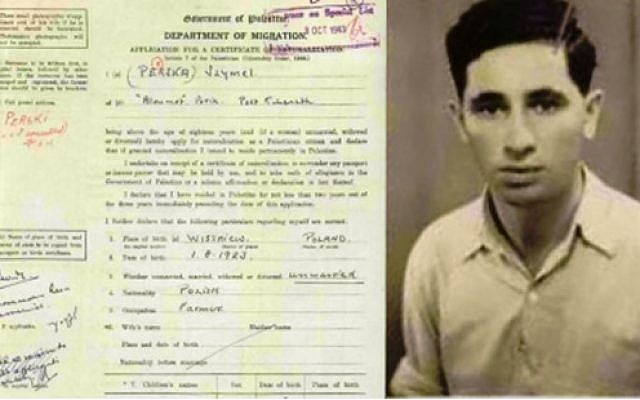
A scan of the citizenship request of 20-year-old Szymel Perski, later the Israeli statesman Shimon Peres, in the British Mandate of Palestine, stamped October 1943. (Israel State Archives)

A new archive made public and searchable online by the Israeli State Archives and MyHeritage.com brings to light the names of over 206,000 Jews who lived in the country before the founding of the State of Israel.

The archive spans 10 years, from 1937 to 1947, and is made up of about 67,000 requests for citizenship in British Mandatory Palestine. Some of the requests came from famous future Israelis like the late president Shimon Peres.

Each request includes the names of family members, dates and places of birth and a treasure trove of other information, including countless photographs. The requests, which could reach 20 pages apiece, also include the names of two sponsors for each aspiring citizen.

The file of 20-year-old Szymel Perski, later the statesman Shimon Peres, includes declarations in his handwriting that he worked in agriculture, and a request to change his first name to Shimon, with the explanation written in his own hand that “Szymel is a corrupted Polish version of the name Shimon.”
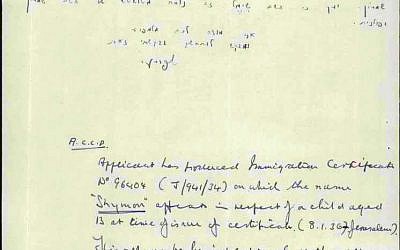
A request by future Israeli statesman Shimon Peres, then Szymel Perski, to have his first name changed to the Hebrew Shimon, “since ‘Szymel’ is a corrupted Polish version of the name ‘Shimon.’” Dated October 7, 1943. (Israel State Archives)

Similarly, among the sponsors for some aspiring citizens are famous future Israelis such as Golda Meir, who would go on to become prime minister, Shlomo Hillel, later a cabinet minister, the actress Hana Rubina and author Yehuda Burla.

The project is a collaboration of the State Archives and the ancestry startup MyHeritage, whose staff has worked for the past year to scan and index the 67,000 requests.

According to the State Archives, the cooperation with MyHeritage has enabled the aging archive, some of whose pages are already unreadable or beyond repair, to undergo digitization to ensure its survival and make it accessible to the public.

“This historic collection from [Israel’s] founding generation offers a peek at one of the most important chapters in the country’s history,” said statement from the archives and MyHeritage.

“Many of the requests for citizenship came from Jews who had managed to flee the Nazis at the very last minute, just before the fate of European Jewry was sealed, as well as survivors who arrived in the country after the Holocaust. Alongside them appear citizenship requests from Jews from Arab countries and around the world who arrived in the land of Israel to fulfill their Zionist dream, as well as Jews who were born in the land of Israel,” it said.

“After a comprehensive effort at digitization and development, we’re happy to add these profoundly significant historic records of the country’s annals to MyHeritage, and to make them accessible to our users,” MyHeritage CEO Gilad Japhet said of the project.
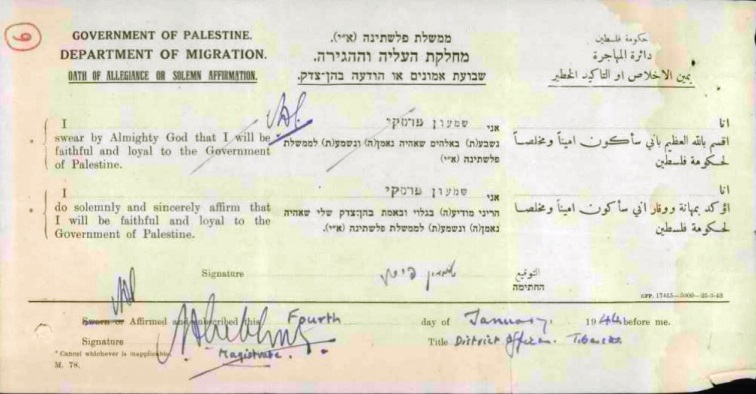
A record of the future Israeli statesman Shimon Peres’s aoth of allegiance to the government of British Mandatory Palestine upon receiving citizenship on January 4, 1944. (Israel State Archives)

The index is available at https://www.myheritage.co.il/israel. Viewing the scans and detailed records in the archive requires a membership in the site, which is a paid service after a 14-day free trial for new customers.

“Many of the residents of the country today, as well as Jews around the world with relatives in Israel, can find in the database documents and photographs of their beloved family members,” Japhet said.

MyHeritage allows users to research and track their family history in 42 languages, and includes over eight billion historical records.


twoje uwagi, linki, wlasne artykuly, lub wiadomosci przeslij do: webmaster@reunion68.com



On 3rd day of anti-regime protests, Iran blames US, Israel for stirring unrest

On 3rd day of anti-regime protests, Iran blames US, Israel for stirring unrest

TOI STAFF


As hardliners organize rallies in support of government, state media claims US, UK, Israel encouraging ‘dissidence’ after playing a ‘pivotal role’ in 2009 demos

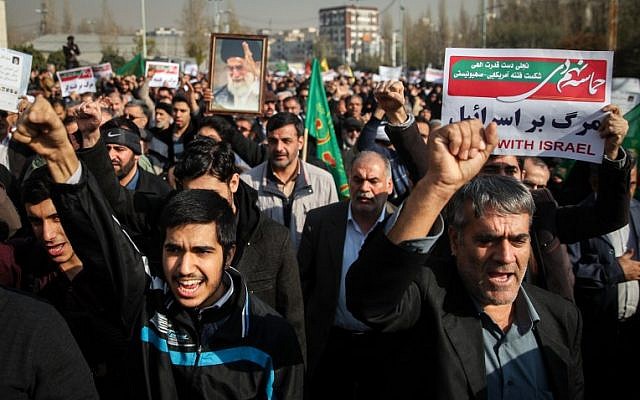
Iranians chant slogans as they march in support of the government near the Imam Khomeini grand mosque in the capital Tehran on December 30, 2017. (AFP PHOTO / TASNIM NEWS / HAMED MALEKPOUR)

Iranian state-controlled media on Saturday characterized the worst anti-regime protests in eight years as masterminded by American, British, and Israeli spies seeking “to stir unrest” in the Islamic republic.

The regime on Saturday warned protesters against holding fresh demonstrations, and organized rallies by hardline supporters, after protests spread Thursday and Friday into several cities including Tehran. State news channel IRINN said it had been banned from covering the protests.

The semi-official Fars News Agency said pro-regime demonstrators, in “resolutions” issued at the end of counter-rallies on Saturday, had warned against “any kind of move masterminded by the anti-revolutionary forces and the US, British, and Israeli spy agencies to stir unrest and dissidence in Iran.”

It claimed Washington, London, and Jerusalem played “pivotal roles” in the 2009 Green Movement protests against the reelection of president Mahmoud Ahmadinejad.

Fars said pro-regime protesters had “further reiterated their everlasting allegiance to Supreme Leader of the Islamic Revolution Ayatollah Seyed Ali Khamenei.”

Media coverage inside Iran focused almost exclusively on the pro-regime rallies held on Saturday to mark the defeat of the last major protest movement in 2009, which hardliners call “the sedition.”

On Friday evening, video footage on social media showed hundreds marching through the holy city of Qom, with people chanting “Death to the dictator,” and “Free political prisoners.”

There were even chants in favor of the monarchy toppled by the Islamic revolution of 1979, while others criticized the regime for supporting the Palestinians and other regional movements rather than focusing on problems at home.

Footage showed thousands gathered in the cities of Rasht, Hamedan, Kermanshah, Qazvin, and elsewhere, with police responding with water cannons.

Fars said “millions of Iranians across the country” gathered in the streets Saturday “to show allegiance to the Islamic Republic one day after tens of people staged economic protests in a few towns.”

The timing was coincidental, since the rallies are held every year on this day, but offered a handy show of strength to the regime as huge crowds of black-clad supporters gathered across the country.

“The enemy wants once again to create a new plot and use social media and economic issues to foment a new sedition,” Ayatollah Mohsen Araki told a crowd in Tehran, according to the conservative Fars news agency.

At the same time, however, students protested in Tehran in a third day of demonstrations sparked by anger over Iran’s economic problems.

The pro-regime students shouted “Death to the seditionists” as they seized back control of the entrance of the University of Tehran, videos published by several local news agencies showed.

This followed a relatively small protest by several dozen students, with videos on social media showing scuffles with police and chants against the regime.

“The opportunists who wanted to benefit from the situation have been dispersed with the arrival of [the other] students,” the conservative-linked Tasnim news agency reported.

The numbers at the anti-regime protests on Saturday appeared to be smaller than in demonstrations seen across other major towns and cities on Thursday and Friday, which had been sparked by high living costs but quickly turned against the Islamic regime as a whole.

Fars said “harsh chants” were heard at the Tehran protests and that riot police had been dispatched to the scene.

“Unlike other protests in various cities which were against the economic situation and high prices, the one in front of the University of Tehran was political,” Fars said.

The students repeated a popular chant of “Not Gaza, not Lebanon, my life for Iran” — an expression of anger over claims the government is focusing more on regional issues than problems at home.

Meanwhile Iran said US President Donald Trump’s support for protests in the country was “deceitful and opportunist.”

read more:  On 3rd day of anti-regime protests, Iran blames US, Israel for stirring unrest


twoje uwagi, linki, wlasne artykuly, lub wiadomosci przeslij do: webmaster@reunion68.com


Jerusalem Day Jubilee Celebrations

Jerusalem Day Jubilee Celebrations, Part III: Hallelujah!

The Temple Institute


Another feature of Sunday night’s light and sound show projected against the old city walls of Jerusalem, was the performing of Leonard Cohen’s beloved “Hallelujah.” The song, sung in both Hebrew and English, takes on new depths of meaning in this celebration of 50 years of Jerusalem’s liberation.

Hallelujah

Leonard Cohen

Now, I’ve heard there was a secret chord
That David played, and it pleased the Lord
But you don’t really care for music, do you?
It goes like this, the fourth, the fifth
The minor fall, the major lift
The baffled king composing hallelujah

Hallelujah
Hallelujah
Hallelujah
Hallelujah

Your faith was strong but you needed proof
You saw her bathing on the roof
Her beauty and the moonlight overthrew ya
She tied you to a kitchen chair
She broke your throne, and she cut your hair
And from your lips she drew the hallelujah

Hallelujah
Hallelujah
Hallelujah
Hallelujah

You say I took the name in vain
I don’t even know the name
But if I did, well really, what’s it to you?
There’s a blaze of light in every word
It doesn’t matter which you heard
The holy or the broken hallelujah

Hallelujah
Hallelujah
Hallelujah
Hallelujah

I did my best, it wasn’t much
I couldn’t feel, so I tried to touch
I’ve told the truth, I didn’t come to fool you
And even though it all went wrong
I’ll stand before the lord of song
With nothing on my tongue but hallelujah

Hallelujah
Hallelujah
Hallelujah
Hallelujah


twoje uwagi, linki, wlasne artykuly, lub wiadomosci przeslij do: webmaster@reunion68.com


SYRIAN REGIME CLOSES IN ON VILLAGE NEAR ISRAELI GOLAN

REPORT: SYRIAN REGIME CLOSES IN ON VILLAGE NEAR ISRAELI GOLAN

SETH J. FRANTZMAN


Beit Jinn has been held by Syrian rebels for the last several years, surrounded on three sides by the Syrian regime and its allies.

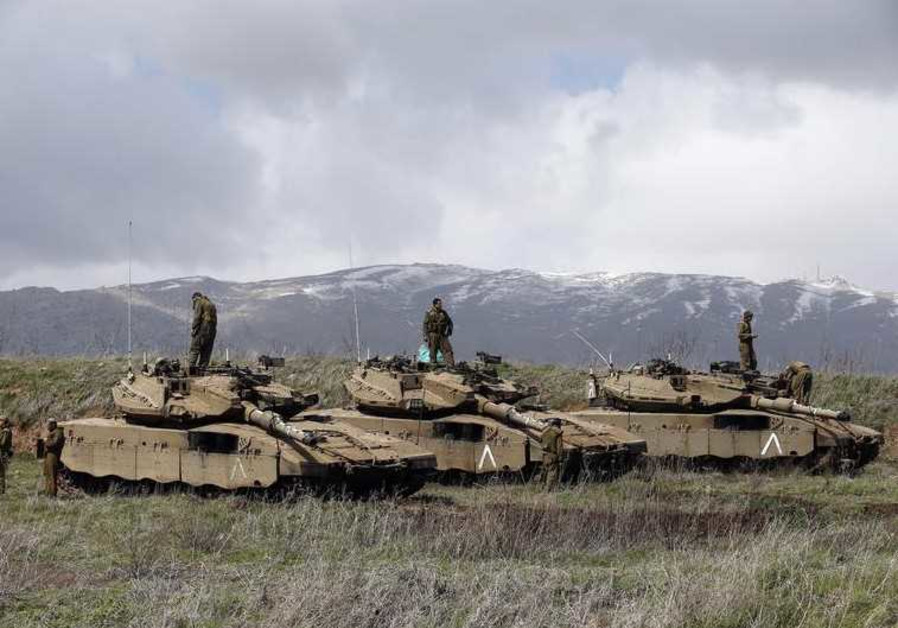
Israeli soldiers stand atop tanks in the Golan Heights near Israel’s border with Syria. (photo credit: REUTERS)

On Monday Syrian regime forces and their allies began to close in on a village near Mount Hermon across from Israeli positions on the Golan Heights. Beit Jinn has been held by Syrian rebels for the last several years, surrounded on three sides by the Syrian regime and its allies, including Hezbollah. The Beit Jinn pocket stretches east from Mount Hermon toward Damascus. Syrian rebels have held Beit Jinn, the nearby Beit Jinn farms, Mugh al-Mir, Bayt Sabir and two other villages for several years. On December 21 the Syrian regime quietly moved into three of the villages, leaving the village of Beit Jinn isolated.

In early November fighting near Beit Jinn between rebels and the Syrian regime in the village of Khadr led to concerns that Israel would intervene to protect the Druze across the border.

Although Israel has enjoyed amicable relations with the Syrian rebels on the Golan it has also said it would not let them conquer the Druse village to link up with Beit Jinn because Golan Druze sympathize with their coreligionists across the border. In November residents of Beit Jinn reported that the Syrian regime had dropped chlorine barrel bombs on their positions injuring people.

On Christmas eve, Al-Mayadeen News, which is pro-Damascus, claimed that the Syrian army had taken some ground near the Beit Jinn farms. Al-Manar, which is close to Hezbollah, also reported similar accounts on December 25th. Wiam Wahhab, a former Lebanese Minister of the Environment, tweeted congratulations to the Syrian army and “sons of the Hermon” for the “collapse of the terrorists in Beit Jinn.” He said that the areas around Beit Jinn had “raised the white flag.”

The Beit Jinn pocket stretches east from Mount Hermon toward Damascus. Syrian rebels have held Beit Jinn, the nearby Beit Jinn farms, Mugh al-Mir, Bayt Sabir and two other villages for several years. On December 21 the Syrian regime quietly moved into three of the villages, leaving the village of Beit Jinn isolated.

In early November fighting near Beit Jinn between rebels and the Syrian regime in the village of Khadr led to concerns that Israel would intervene to protect the Druze across the border.

Although Israel has enjoyed amicable relations with the Syrian rebels on the Golan it has also said it would not let them conquer the Druse village to link up with Beit Jinn because Golan Druze sympathize with their coreligionists across the border. In November residents of Beit Jinn reported that the Syrian regime had dropped chlorine barrel bombs on their positions injuring people.

On Christmas eve, Al-Mayadeen News, which is pro-Damascus, claimed that the Syrian army had taken some ground near the Beit Jinn farms. Al-Manar, which is close to Hezbollah, also reported similar accounts on December 25th. Wiam Wahhab, a former Lebanese Minister of the Environment, tweeted congratulations to the Syrian army and “sons of the Hermon” for the “collapse of the terrorists in Beit Jinn.” He said that the areas around Beit Jinn had “raised the white flag.”

Other accounts celebrated the “defeat of the terrorists after five years of fighting,” and claimed the Syrian rebels in Beit Jinn had received “protection from the Zionists.”

Another Arabic website, muraselon.com, claimed that the Syrian rebels in the pocket, including members of Hayat Tahrir al-Sham, which was formerly Al-Qaeda in Syria, will either be “reconciled” with the regime forces or be bused out to Dar’ar or Idlib province. This is how Damascus has sought to put down the rebellion in recent years, instead of fighting for every village it has a “reconciliation agreement” where the village agrees to come back under the control of the government. Those rebels who do not put down their arms have agreed to be bused to enclaves still in their control.

This happened when Aleppo fell in December 2016 and thousands were bused out to Idlib. According to reports from the area the regime has been trying for four months to take back Beit Jinn and has not succeeded yet.

In July the US, Russia and Jordan signed a ceasefire that included the areas in southwest Syria near Jordan and the Golan. Since then the border area has been relatively quiet. However the Beit Jinn pocket does not appear to have been included in the ceasefire.

The Syrian regime declared victory over ISIS in November and Russia did the same in December and began drawing down its troops in Syria which have support Bashar al-Assad’s government. Now the Syrian regime wants to slowly take back the remaining rebel enclaves after six years of war.

For Israel this presents a challenge because Jerusalem has warned it will not allow an Iranian presence in Syria and has carried out airstrikes to prevent weapons transfers to Hezbollah via Syria. Any Syrian government attack on villages near the Golan raises fears that Hezbollah or Iranian agents could exploit the changes on the ground.


twoje uwagi, linki, wlasne artykuly, lub wiadomosci przeslij do: webmaster@reunion68.com