Archives

The Year Is 1936. Captures an Israel That’s No More

The Year Is 1936. A Man Picks Up a Camera, Captures an Israel That’s No More

Daniel Tchetchik and Rudi Weissenstein


A deeper look at the works of legendary photographer Rudi Weissenstein from 1936 to 1973 shows what was and no longer exists, and hints of the future.

Rudi Weissenstein’s archive is managed today by The PhotoHouse, a business that reminds you of the old-fashioned beauty of Tel Aviv. His grandson, Ben Peter, tells about his thoughts as he edited these pictures:
A 26-year-old man, what does he know? Decides to get up and leave. In fact, he is called. The year is 1936 and he has one camera and many fantasies. Even back when he worked at a newspaper in Vienna he imagined how he would build his photo archive, in Palestine – a rather strange word.

Beit Yosef, 1937. Rudi Weissenstein

Herzliya, 1940. Rudi Weissenstein

Ra’anana, 1938. Rudi Weissenstein

Oranges and clementines. Tel Aviv was a city that had just begun and knew nothing about its future. People came from all over the world. They were persecuted, which ignited an inner fire in them – to build, to live. Everything was new and promising. A very large collection laid in front of you, wrapped in strong senses and smells, confusing and enticing, important but forgotten.
The man who saw and collected has passed on. A woman sits and flashes a shrewd smile at me. She is rich in years that have wrinkled and softened her, shrunk her more and more, and now she is facing me. Take it. The touch of her hands is so soft and pleasant. She holds on to me. Her name is Miriam and she is my grandmother. She asks me for herself, to devote myself, to give up everything for her. To continue to walk the path she has built.
A 26-year-old man, what does he know? The year is 2003 and he has a hard time deciding. He has no camera and no parents, nor a clear direction or goal. When he worked for that company he fantasized how he would be a successful actor in New York – the Big Apple.

Tel Aviv does not know anything about its past. People come from all over the world to eat, enjoy and screw. Everything is new and ugly, advanced and improved. Successful. And it lies on my shoulders but its weight does not crush me. It roots itself inside me and gives birth to new things.
Now I’m mother and father, I’m the parents.

Ra’anana, 1947. Rudi Weissenstein

read more: The Year Is 1936. A Man Picks Up a Camera, Captures an Israel That’s No More


twoje uwagi, linki, wlasne artykuly, lub wiadomosci przeslij do: webmaster@reunion68.com


Take a tour of Israel’s huge new solar-energy valley in the desert

Israel21cTake a tour of Israel’s huge new solar-energy valley in the desert

Abigail Klein Leichman


One of the largest renewable energy projects in the world, the sprawling Negev complex will produce 300 megawatts of clean electricity every day.
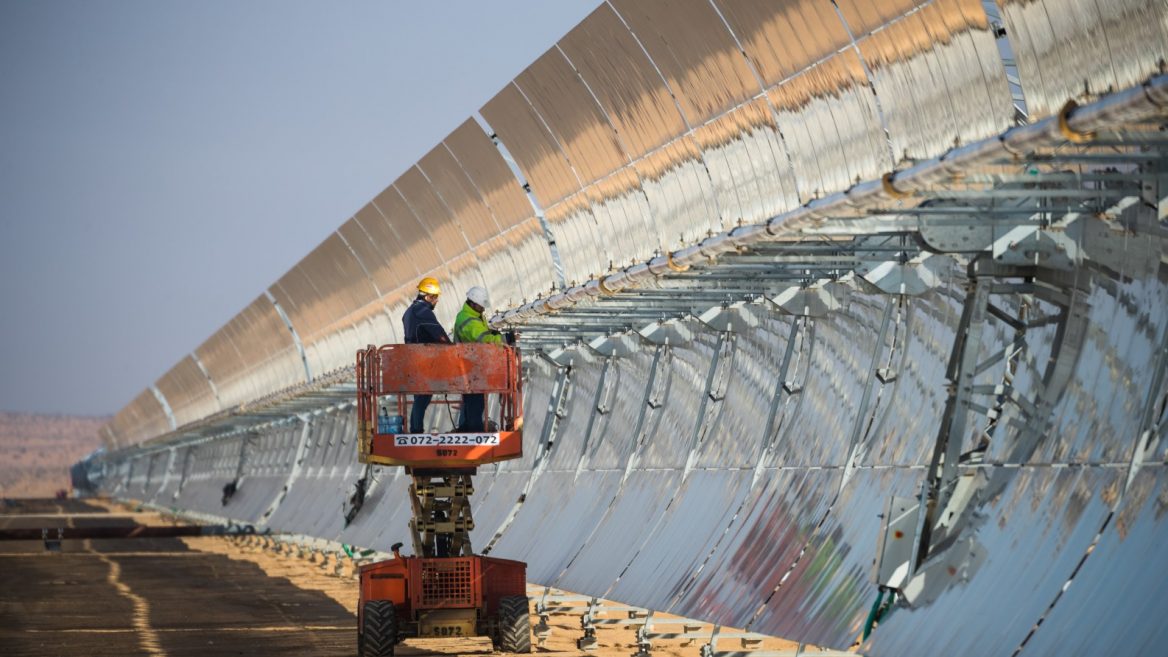
Photo of Ashalim thermo-solar power station mirror arrays by Gilad Kavalerchik/Negev Energy

Four Eiffel Towers could be built with the 28,000 tons of steel being used by Negev Energy to construct the Ashalim Thermo-Solar Power Station in Israel’s Negev Desert. Spread flat over 988 acres of sand, the array is nevertheless an impressive sight that tourists will be able to view from a platform after the plant opens next summer.

The Negev Energy project – which ISRAEL21c toured recently — is one of two gigantic thermo-solar plants going up side by side in Ashalim, about 40 kilometers south of Beersheva. The other one actually does incorporate a tall tower.
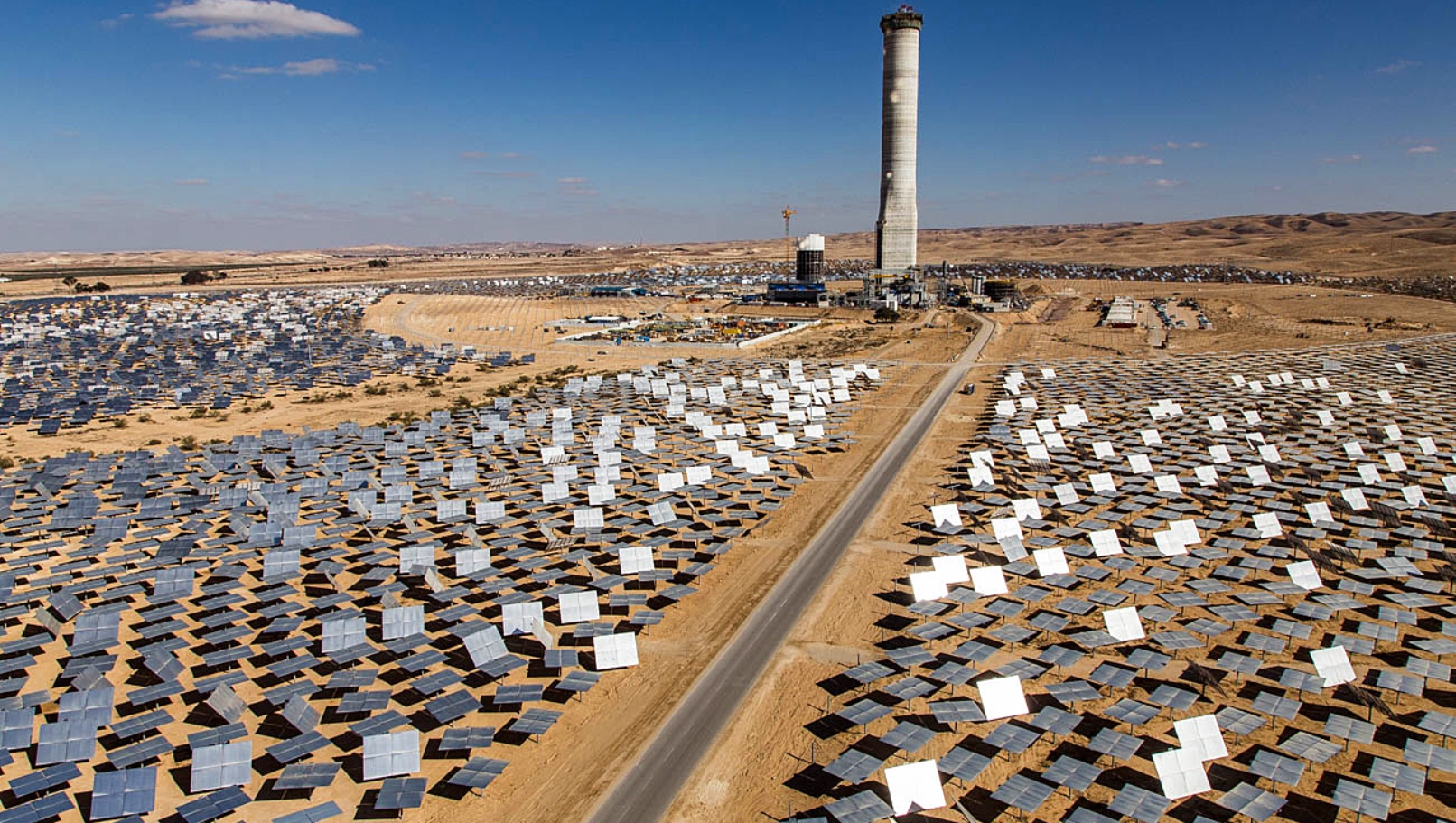
The Tower of Power energy project in Ashalim. Photo courtesy of BrightSource Energy

In addition to these two plants generating electricity from the sun’s heat using different technologies, two other plants will produce a total of 70 megawatts of electricity from sunlight using photovoltaic panels. The combination of technologies in one spot is unprecedented in the world.

Altogether, the Ashalim complex will provide approximately 300 megawatts of electricity daily to the Israel Electric Company’s national grid, contributing 2.5 percent toward the government’s goal of 10% renewable energy by 2020. Currently, only 2.6% of Israel’s electricity is generated from renewable sources.
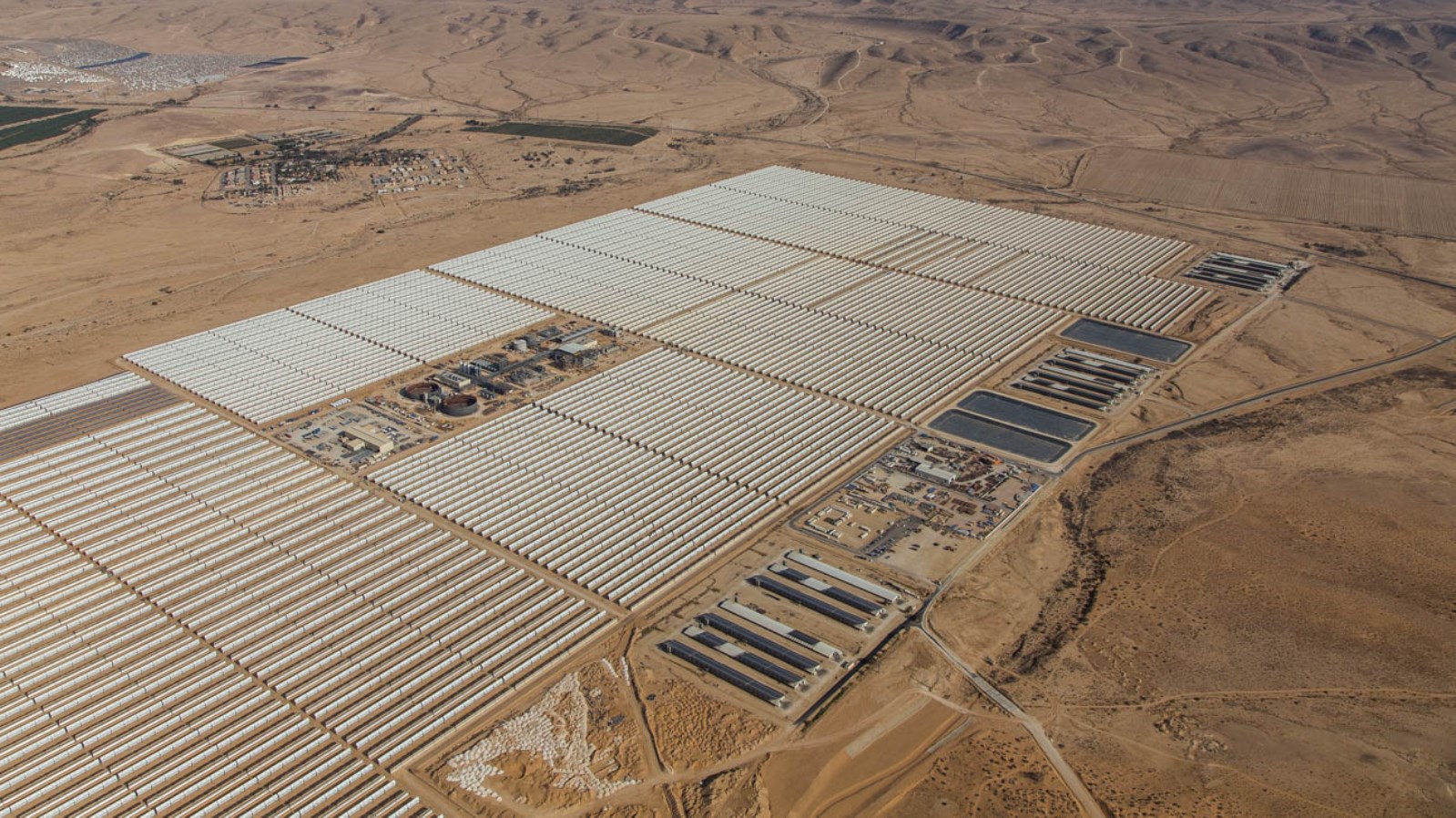
Overhead view of Ashalim thermo-solar power station under construction. Photo by Albatross/Negev Energy

“I think that Ben-Gurion is turning over in his grave, but from joy,” comments Eran Doron, head of the Ramat Hanegev Regional Council in whose jurisdiction Ashalim lies.

Doron is referring to a 1955 speech by first Israeli Prime Minister David Ben-Gurion, spelling out his vision for scientific innovation arising from the Israeli desert. Large-scale water desalination and solar-energy generation were central to his dream and both are happening.

Half a million mirrors

Each of the four Ashalim projects is funded by international consortiums based on the build-operate-transfer (BOT) model. Following construction and 25 years of operation, they’ll be transferred to the state.

Our tour focused on Negev Energy’s $1.1 billion project, said to be the largest energy project in Israel and one of the largest renewable energy projects in the world.

Negev Energy is a 50% subsidiary of Israel’s global Shikun & Binui Group; the other owners include the Noy Fund and Spanish company TSK.

The 121-megawatt plant’s 16,224 parabolic troughs, fitted with half a million mirrors (cleaned twice weekly), will collect the sun’s heat from any angle and transfer it through 203 kilometers of glass-insulated steel pipes that absorb the radiation.

The radiation will heat thermal oil flowing through the pipes to 390 degrees Celsius. The hot oil will then turn water into steam to drive a turbine generating enough power for 60,000 homes.

The net effect will be equivalent to taking 50,000 vehicles off the road, preventing emissions of some 245,000 tons of carbon dioxide.
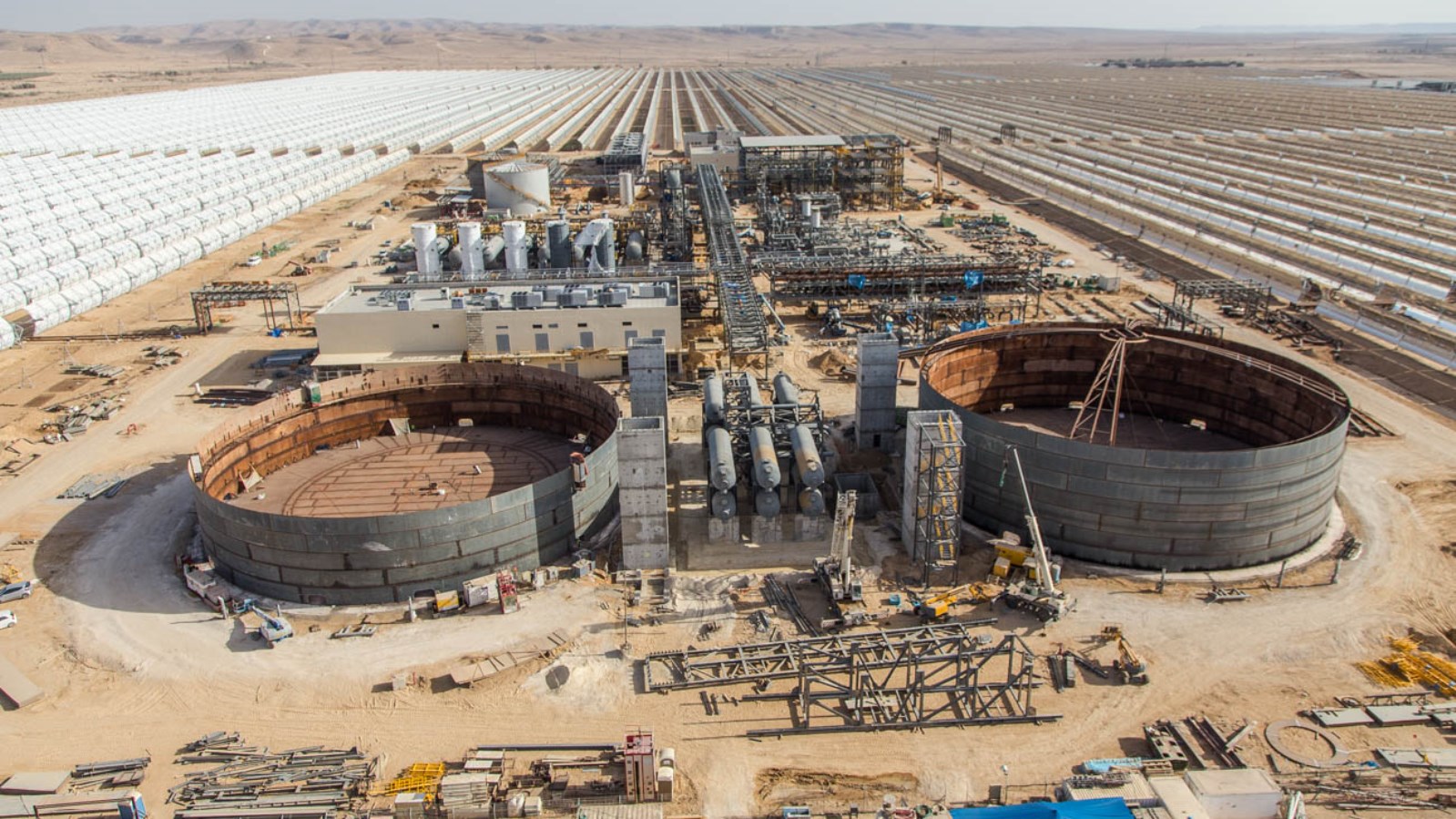
The round storage units hold molten salt that will transfer heat to and from thermal oil via heat exchangers in the middle. Photo by Albatross/Negev Energy

The plant will operate up to 18 hours per day, even in cloudy weather and after dark, using a molten salt heat-exchange and storage system to keep the oil hot. Some natural gas will be used as well.

“This is a game-changer,” said Negev Energy CEO Didi Paz. “It’s the first time this proven technology is being used in Israel.”

The plant uses a combination of field-tested Israeli and foreign innovations. For example, the mirrors are imported from Spain, the oil from the United States and the insulated pipes are made by a company in Beit Shemesh.

“Israel was one of the pioneers in developing the science behind thermo-solar technology, especially at the Weizmann Institute 30 or 40 years ago. But Israel lagged behind in applying the technology,” Paz told ISRAEL21c.

Tower of Power

The companion to the Negev Energy installation is a 110-watt thermo-solar station consisting of 50,000 computer-controlled heliostat mirrors that concentrate the sun’s heat onto a boiler atop a 250-meter tower.

This BOT project is being built by Megalim Solar Power for a consortium consisting of BrightSource Energy, GE Renewable Energy and the Noy Fund.
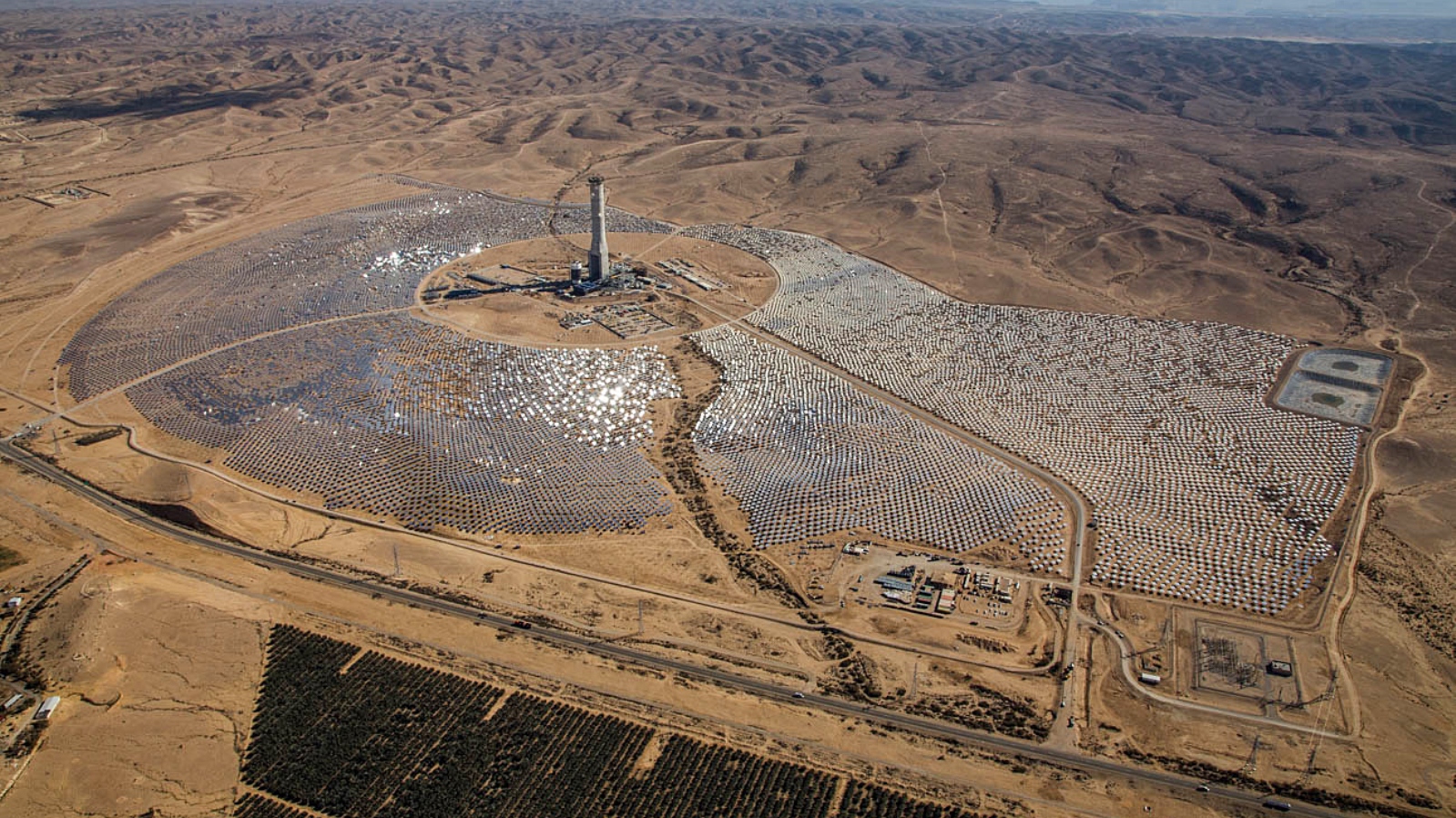
The Tower of Power thermo-solar power station at Ashalim. Photo courtesy of BrightSource

The two massive thermo-solar installations overshadow the 100 houses of Ashalim village, founded about 15 years ago by the Ayalim Association, a grassroots student movement to populate the Negev and Galilee.

“These families woke up one day and realized four monsters are going to be surrounding them,” said Paz, explaining that the government chose this particular site for a variety of reasons.

“We want to make life easier for them so we’ve engaged them on a constant basis, keeping them updated on the project and trying to avoid harming their peace. Now they sell services to the project and we’ve been able to provide them with better infrastructure that helps their agriculture and homes. We started three or four years ago as enemies and we’ve become friends.”

What about wildlife?

Yuval Saragusty, Negev Energy’s manager of energy, health, safety and security, oversees sustainability on site. His crew made 26 small-animal crossings, relocated rare desert plants and will restore truckloads of topsoil removed in construction. So as not to disturb animals active after dark, the plant won’t have perimeter lights.

Although there’s no avoiding the intensive natural-resource consumption of any power plant – even one producing clean, green energy — the Ashalim project meets advanced international environmental standards, said Paz.

The thermal oil will be fully recycled, while the water (1.6 million cubic meters annually, mainly from desalination plants) will be recycled as much as possible. Water that has gotten too salty from repeated recycling and evaporation will be released into two evaporation ponds rather than into the two streams bordering the plant.
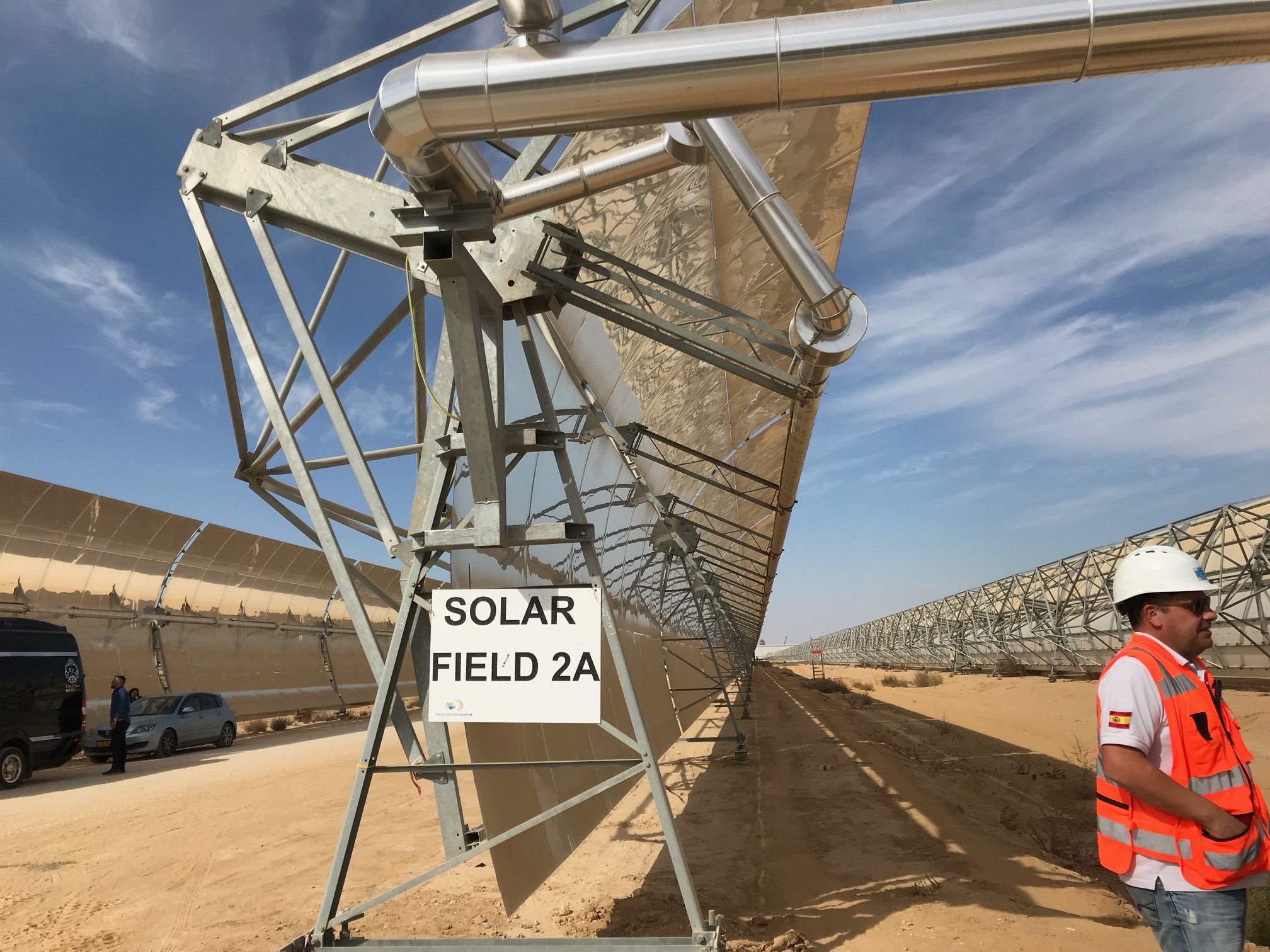
Juan Morales De Casticca, safety officer for Negev Energy’s thermo-solar project in Ashalim. Photo by Abigail Klein Leichman

The project also strives for social responsibility, Paz noted.

About 300 of the more than 1,000 employees in the construction phase come from the neighboring Bedouin village of Bir Hadaj. All the schoolchildren of Bir Hadaj have toured the site and learned how the technology works.

“We are giving preference to residents of the South. More than half of our employees now are residents of the Negev,” Paz said. “We are doing everything possible to make them benefit from the project by training and employing them.”

About 60 workers will operate and maintain the plant during its 25 years of private operation.


twoje uwagi, linki, wlasne artykuly, lub wiadomosci przeslij do: webmaster@reunion68.com


Palestyńczycy zamykają w więzieniu dziennikarzy za ujawnianie korupcji

Palestyńczycy zamykają w więzieniu dziennikarzy za ujawnianie korupcji

Khaled Abu Toameh


Jeśli Hadżer Harb, dziennikarka palestyńska, wróci po wyleczeniu choroby nowotworowej do Gazy, zostanie aresztowana i posłana do więzienia na sześć miesięcy za “przestępstwo” ujawnienia korupcji w systemie opieki zdrowotnej w Strefie Gazy. (Zrzut z ekranu Hager Press)

Hadżer Harb, dziennikarka palestyńska, została uznana za winną przez Hamas po ujawnieniu przez nią korupcji w systemie opieki zdrowotnej w Strefie Gazy. 13 września sąd Hamasu skazał ją na sześć miesięcy więzienia i grzywnę. Był to pierwszy wyrok tego rodzaju wydany na dziennikarkę w Strefie Gazy.

Nie jest jednak prawdopodobne, by Harb w niedalekiej przyszłości miała odsiedzieć tę karę. Niedawno wyjechała ze Strefy Gazy do Jordanii na leczenie po zdiagnozowaniu u niej choroby nowotworowej.

Jej choroba nie powstrzymała jednak Hamasu przed zastosowaniem środków prawnych przeciwko niej za rolę jaka odegrała w ujawnieniu korupcji w palestyńskim systemie opieki zdrowotnej. Zamiast zawiesić kroki prawne, sąd Hamasu skazał ją na więzienie in absentia.

Jeśli wyzdrowieje i wróci do Strefy Gazy, Harb zostanie aresztowana i posłana do więzienia na sześć miesięcy. Będzie także musiała zapłacić tysiąc szekli (250 dolarów) grzywny, jaką nałożył na nią sąd Hamasu.

Kłopoty Harb zaczęły się w czerwcu 2016 r., kiedy opublikowała reportaż ujawniający, jak Hamas i Autonomia Palestyńska (AP) używają opieki medycznej do szantażowania palestyńskich pacjentów. W reportażu ujawniła, że niektórzy lekarze i urzędnicy Hamasu żądają łapówek za wydanie pozwolenia na opuszczenie Strefy Gazy na leczenie w Izraelu, na Zachodnim Brzegu, czy w innych krajach arabskich lub zachodnich. Ci, których nie stać na łapówki, umierają w niedostatecznie wyposażonych i cierpiących na niedobór personelu szpitalach palestyńskich.

Reportaż Harb, dziennikarki śledczej rozwścieczył funkcjonariuszy Autonomii Palestyńskiej i Hamasu. Palestyńczycy nazwali zamieszanych w ten skandal korupcyjny “mafią zniszczenia”, jak poinformował Gatestone Institute.

Po opublikowaniu reportażu władze Hamasu wezwały ją na przesłuchanie. Przesłuchujący żądali, by ujawniła swoje źródła i tożsamość ludzi zamieszanych w skandal korupcyjny.

“Powiedziałam im, że jestem dziennikarką i nie mogę podać im tożsamości moich źródeł bez wyroku sądowego” – powiedziała.

“Prokurator powiedział mi, że wysunięto przeciwko mnie następujące oskarżenia: podawanie się za inną osobę (twierdzą, że nie ujawniłam mojej prawdziwej tożsamości podczas robienia reportażu); szkalowanie Ministerstwa Zdrowia; publikowanie nieścisłych i niepoprawnych informacji i praca ‘z zagranicznymi elementami’ (przez przygotowywanie reportażu dla stacji telewizyjnej z Londynu pod pretekstem, że ta organizacja medialna nie jest zarejestrowana w Biurze Prasowym w Strefie Gazy)”.

Jest zarówno tragiczne, jak i ironiczne to, że w końcu sama Harb musiała złożyć podanie o pozwolenie na leczenie poza granicami Strefy Gazy. Znalazła się w tej samej sytuacji co pacjenci, o których pisała w reportażu, którzy musieli płacić łapówki urzędnikom Autonomii Palestyńskiej i Hamasu, by wyjechać ze Strefy Gazy. W odróżnieniu jednak od tych pacjentów nie musiała nikogo przekupywać w zamian za pozwolenie opuszczenia Strefy Gazy. Przyjaciele Harb mówią, że pozwolono jej na wyjazd po interwencji grup praw człowieka.

Wyrok na Harb wywołał powszechne oburzenie wśród Palestyńczyków, szczególnie działaczy praw człowieka i dziennikarzy.

Palestyński Ośrodek Rozwoju i Wolności Mediów (MADA) potępił wyrok sądu i powiedział, że jest to “bardzo poważny precedens przeciwko wolności mediów”. W oświadczeniu, MADA powiedziała, że widzi to jako kolejny “dodatek do narastających represji wolności medialnej” pod rządami Autonomii Palestyńskiej i Hamasu. “MADA, życząc szybkiego wyzdrowienia naszej koleżance [Herb] ostro potępiamy tę decyzję, która nie była podjęta w sprawiedliwej procedurze sądowej”.

Adwokatka Harb, Mervat Al-Nahal, powiedziała, że jej klientkę oskarżono o zniesławienie, opublikowanie nieścisłych informacji na temat Ministerstwie Zdrowia i o podawanie się za kogoś innego, ale że jej klientka, która jest na leczeniu w szpitalu jordańskim, dowiedziała się o wyroku sądowym dopiero z mediów.

Palestyński politolog Dżihad Harb (nie będący krewnym dziennikarki) powiedział, że wyrok sądu Hamsu ma na celu zamknięcie ust dziennikarzom, ale także ochronę korupcji i tych w Strefie Gazy, którzy są za nią odpowiedzialni.

“Wyrok sądowy przeciwko dziennikarce nie był niespodzianką – powiedział. – Był jednak szokiem z powodu rozmiarów ataku na wolność wypowiedzi i na media”. Podkreślił, że zamiast rozpocząć dochodzenie przeciwko zamieszanym w skandal korupcyjny, Hamas wybrał ukaranie dziennikarki, która ujawniła złe traktowanie pacjentów i nadużycia wobec nich przez wysokich funkcjonariuszy służby zdrowia.

Palestyńska Agencja Dziennikarska także ostro potępiła wyrok na dziennikarkę i wezwała Hamas do cofnięcia tej decyzji. “To jest niebezpieczny precedens i jaskrawe naruszenie wolności wypowiedzi”, stwierdziła agencja. Wezwała również międzynarodowe organizacje praw człowieka, by interweniowały u władz Hamasu i nie pozwoliły im na uwięzienie dziennikarki z powodu jej reportażu.

Palestyński pisarz Talal Al-Szarif, który także wyraził solidarność z dziennikarką, napisał, że on także był skazany na sześć miesięcy więzienia za artykuł, w którym krytykował Hamas.
Al-Sharif napisał, że po opublikowaniu artykułu, miał proces o zniesławienie. Napisał także, że nikt z Autonomii Palestyńskiej w Ramallah nigdy się z nim nie skontaktował, by go poprzeć lub potępić wyrok, jaki wydał na niego Hamas.

Al-Szarif był naiwny sądząc, że Autonomia Palestyńska wystąpiłaby w jego obronie. AP prowadzi od dawna kampanię zastraszania dziennikarzy, pisarzy i przeciwników politycznych na obszarach, jakie kontroluje na Zachodnim Brzegu.

W ostatnich tygodniach siły bezpieczeństwa Autonomii Palestyńskiej aresztowały wielu Palestyńczyków, w tym dziennikarzy. Jedni zostali aresztowani za otwarte krytykowanie AP, inni za “podważanie bezpieczeństwa państwa” i obrażanie przywódców palestyńskich (“pokazywanie języka”, według prawa AP).

Tymczasem palestyńscy dziennikarze i działacze praw człowieka prowadzą kampanię przeciwko nowemu Prawu o Przestępstwach Elektronicznych Mahmouda Abbasa, które daje jego siłom bezpieczeństwa możliwość rozprawy z użytkownikami mediów społecznościowych, szczególnie tych, którzy ośmielają się wyrazić poglądy uznane za krytyczne wobec jego przywództwa.

Wyrok sądowy wydany na Hadżer Harb i trwające kroki karne wobec dziennikarzy palestyńskich na Zachodnim Brzegu i w Strefie Gazy służą jako jeszcze jedno przypomnienie, że Hamas i Autonomia Palestyńska nie mają żadnego respektu dla wolności wypowiedzi i wolności mediów. Hamas i AP mogą być w stanie wojny ze sobą, ale jedni i drudzy zgadzają się, że media są wrogiem, który musi zostać pokonany, by świat nie dowiedział się o korupcji i represjach.

Obecnie wydaje się, że Hamasowi i Autonomii Palestyńskiej udało się zastraszyć dziennikarzy i pisarzy palestyńskich. To wszystko dzieje się, podczas gdy społeczność międzynarodowa i tak zwane grupy pro-palestyńskie na świecie chowają głowy w piasek i odmawiają zobaczenia czegokolwiek złego po stronie palestyńskiej.


twoje uwagi, linki, wlasne artykuly, lub wiadomosci przeslij do: webmaster@reunion68.com


IsraAID and partners open STEM Center in South Sudan

Israel21cIsraAID and partners open STEM Center in South Sudan

ISRAEL21c Staff


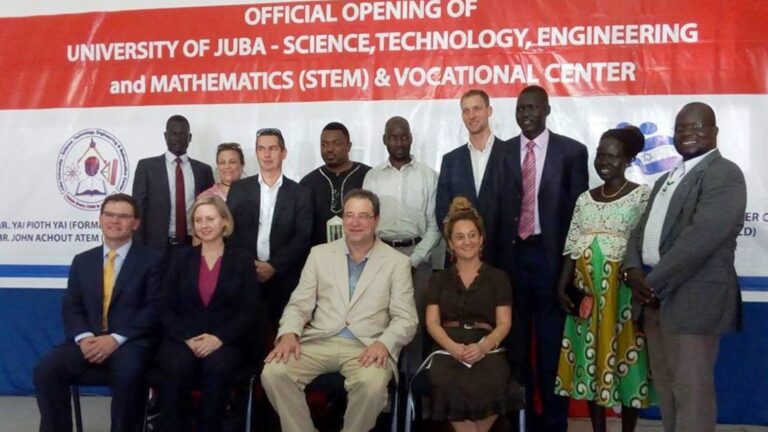
Opening of the STEM Center in South Sudan. Photo courtesy of IsraAID

Israeli humanitarian aid organization IsraAID helped open the first Center for Science Technology Engineering and Mathematics (STEM) education in South Sudan on November 13.

Over the next three years, the center is expected to provide vocational training to 10,000 young South Sudanese students in areas such as building and construction; electronics; computing; chemistry and optics. The long-term goal is to provide engineers, technicians, mathematicians and physicians contributing to the economic and social development of the fledgling African country.

The University of Juba is leading the initiative in partnership with IsraAID, STEM Synergy, the Gelfand Family Charitable Trust of Massachusetts and UNESCO.

IsraAID’s mandate in South Sudan is to accompany national government and civil society partners in their efforts to design, implement, deliver, monitor and evaluate sustainable projects, programs and services that meet the protection, health and education needs of communities affected by conflict and displacement.

“IsraAID has been working tirelessly with the university and STEM Synergy for the past year and half to make this day happen, and it is truly inspiring to see that our joint efforts have created such a crucial project which, I am sure, will greatly contribute to the social and economic development of South Sudan,” said Ophelie Namiech, IsraAID’s former South Sudan country director.

Current IsraAID Country Director in South Sudan Tim Berke added, “The result today is impressive. But there is more work to come. We need to focus our efforts on bringing STEM awareness and knowledge into the communities, so that all South Sudanese, women, men, girls and boys, have access to information and education.”

The center was officially opened by the Vice President of the Republic of South Sudan, James Wani Igga, on behalf of President Salva Kiir.

“STEM does not know any boundaries of gender, religion nor ethnicity. STEM connects people and promotes peaceful coexistence through knowledge and education,” remarked Mark Gelfand, founder of STEM Synergy and the Gelfand Family Charitable Trust.


twoje uwagi, linki, wlasne artykuly, lub wiadomosci przeslij do: webmaster@reunion68.com