Archives

Holocaust Survivor Testimony: Peretz Hochman

Holocaust Survivor Testimony: Peretz Hochman

   Yad Vashem


Peretz Hochman was born in 1927 in Warsaw as Pavel, the fourth of eight siblings. When the situation in the ghetto took a turn for the worse, Peretz and Zanek escaped to the Polish side, where they posed as Poles and sustained themselves by street singing and selling cigarettes, while smuggling food and clothing to their parents in the ghetto.
Peretz’s father, Benjamin, died of hunger in the ghetto and his mother, Miriam, was shot and killed in the summer of 1942. Peretz and Zanek continued to sell cigarettes and newspapers with other Jewish children in the city, hiding at night in stairwells. Most of their customers were Germans, among them SS officers.
When the Warsaw Ghetto Uprising broke out, Zanek was in the ghetto. He was caught and transferred to the Umschlagplatz (deportation plaza). As the Jews were being loaded onto the train, Zanek managed to escape to the Polish section of Warsaw, where he located his brother.
On the eve of the Polish rebellion in Warsaw, Peretz and Zanek joined the Polish underground. After the rebellion was crushed, remnants of the fighters, among them Peretz and Zanek, were transferred to prison camps in Germany. Upon liberation, they returned to Warsaw, where they found their older brother, Leon.
Peretz and Zanek arrived in Eretz Israel in 1946, and Peretz joined Kibbutz Sha’ar Hagolan. During the War of Independence, he served in the Palmach Brigade of the Negev and was injured. He later worked in manual labor.
Peretz married Sima (née Hershkovitz). The Hochmans have three sons and six grandchildren.

A few days before Holocaust Martyrs’ and Heroes’ Remembrance Day 2013, Peretz Hochman passed away. His widow Sima lit the Torch in his place. May his memory be blessed.

For more information http://www.yadvashem.org/remembrance/…


twoje uwagi, linki, wlasne artykuly, lub wiadomosci przeslij do: webmaster@reunion68.com


How a Facebook post got wartime rescuers recognized as Righteous Gentiles

How a Facebook post got wartime rescuers recognized as Righteous Gentiles

NADINE WOJAKOVSKI


A foster family that hid a Jewish baby during the Holocaust has been reunited with her after 50 years, and the parents posthumously honored by Yad Vashem
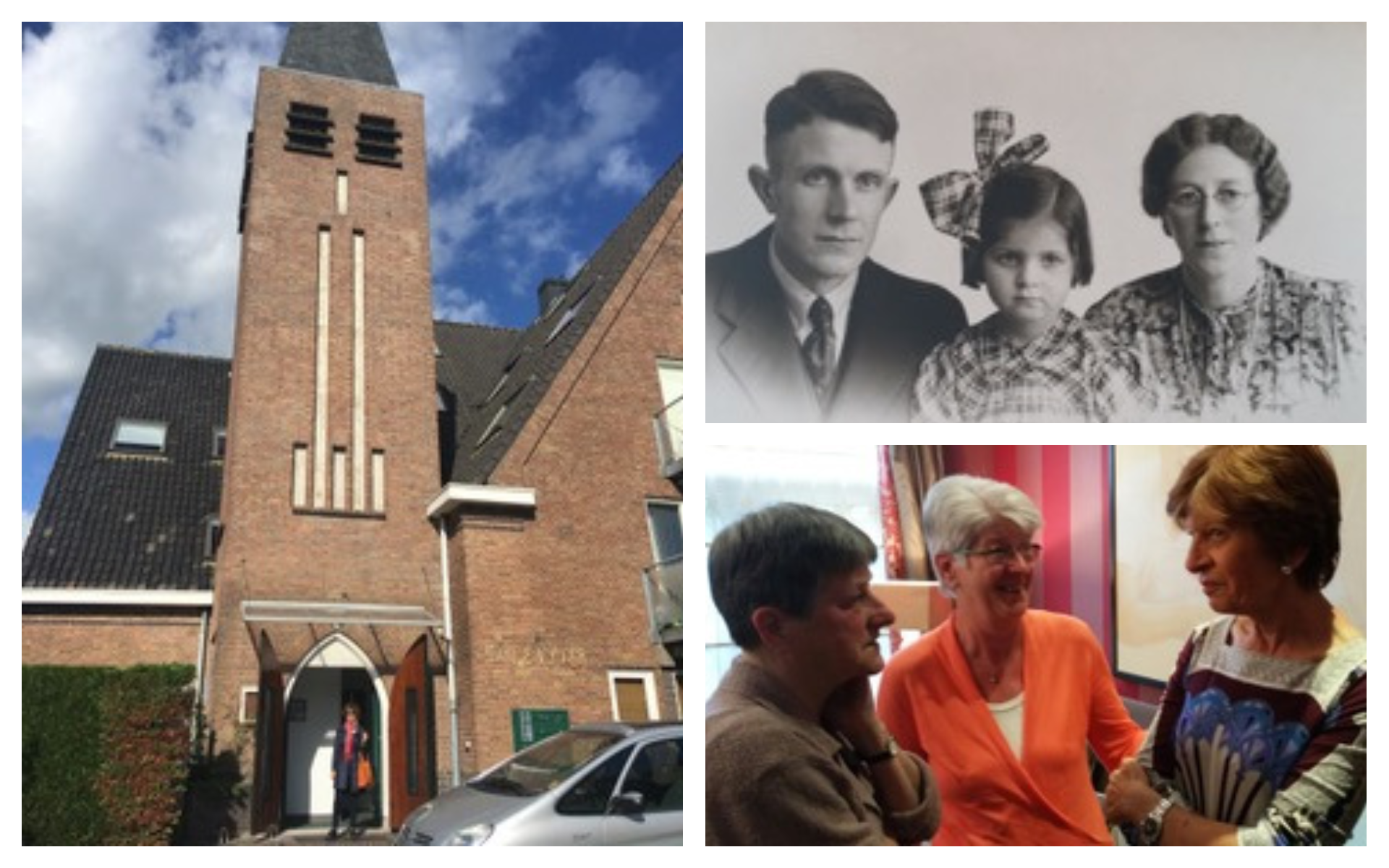
Clockwise, from left: The church Renate is believed to have attended during the war; Aad and Fie Versnel with Renate, circa 1945; Renate reunited in 2015 with Cobi and Els after more than 50 years. (Courtesy Nadine Wojakovski)

WORMERVEER, Netherlands — Seventy-five years and four days after my mother was sent into hiding as a baby in wartime Holland, her rescuers Aad and Fie Versnel were finally posthumously recognized by Yad Vashem as members of that select band, the Righteous Among The Nations.

It has been a long time coming, but had it not been for a Facebook post that miraculously traced the family within just four days, this story might never have been told.

Three years ago I published “Two Prayers Before Bedtime,” a memoir about my grandmother Cilla Bitterman, who sent her daughter (my mother) Renate into hiding during the war.

Lacking documentary records, we estimated that she was forced into hiding at just 19 months old, in the middle of September 1942, exactly 75 years earlier.

The bravery of my grandparents in making the heart-wrenching decision to send their son and daughter to an unknown fate was only possible thanks to those people, living in Nazi-occupied Holland, who were willing to face the utmost risk and sacrifice, endangering their own lives to save another.

100,000 Dutch Jewish men, women and children were rounded up or herded off the streets of Holland into cattle trucks and deported to concentration camps — Auschwitz, Bergen-Belsen, Sobibor and Theresienstadt, where they were brutally and horrifically slaughtered. Only two-sevenths of the 140,000 Dutch Jewish population survived.

As the great 18th century Whig statesman Edmund Burke famously said: “The only thing necessary for the triumph of evil is for good men to do nothing.”

Two Prayers Before Bedtime’ by Nadine Wojakovski.

My grandparents, Cilla and Eugen Bitterman, had the unimaginable good fortune to find a selfless, childless couple in their 30s who were not prepared to stand by and do nothing.

Aad and Fie Versnel, who lived in the village of Wormerveer, just over 10 miles from Amsterdam, saved my mother’s life. My grandmother handed over her baby in 1942. In June 1945 she was reunited with a four-year-old daughter whom she no longer recognized.

For the Versnels, handing back Renate, the only child in their life, was so very painful. On receiving her daughter back, my grandmother Cilla promised that she would pray for them to be blessed with their very own child. Exactly one year later, in June 1946 a baby daughter — Els Renate — was born, followed by Cobi in 1948.

When I wrote the book, I dedicated it to Aad and Fie Versnel and the Dutch Resistance.

One of the last times my mother saw the Versnels was in 1962, at her wedding to my father Arthur in the Kraznapolski Hotel in Amsterdam, which was attended by the couple and their teenage daughters.

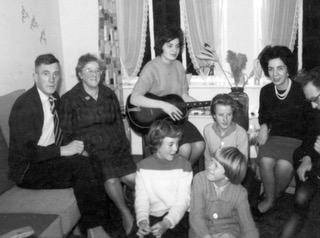
A black-and-white vintage picture of Fie, Aad, Els and Cobi greeting the bride Renate, 17 years after the end of the war, testifies to the imperishable bond of love between the Bittermans and the Versnels that time could not dim. Their wedding gift was a silver plate, on the back of which was engraved: “To our foster daughter.”

After my parents married, they left Amsterdam and eventually built a home and life in London. As the years went by, and my grandparents and the Versnels passed away, my mother lost touch with the family. Her attempts to find them were unsuccessful.

After my book was published, we redoubled our efforts to find the descendants of the Versnels.

Versnel and Bitterman families get together in Holland, circa 1961. (Courtesy Nadine Wojakovski)

A righteous use of social media

On December 29, 2014, my sister posted a single photo of the Versnels on Facebook, with the message: “Looking for children and grandchildren of Fie and Aad Versnel from Holland circa 1945. Please please share.”

read more: How a Facebook post got wartime rescuers recognized as Righteous Gentiles


twoje uwagi, linki, wlasne artykuly, lub wiadomosci przeslij do: webmaster@reunion68.com


4,000-year-old prenup pushes for surrogacy in case of infertility

4,000-year-old prenup pushes for surrogacy in case of infertility

AMANDA BORSCHEL-DAN


Cuneiform tablet calls for a contractual sex slave to be freed after a son’s birth — and would have prevented the bitter rivalry between biblical Hagar and Sarah

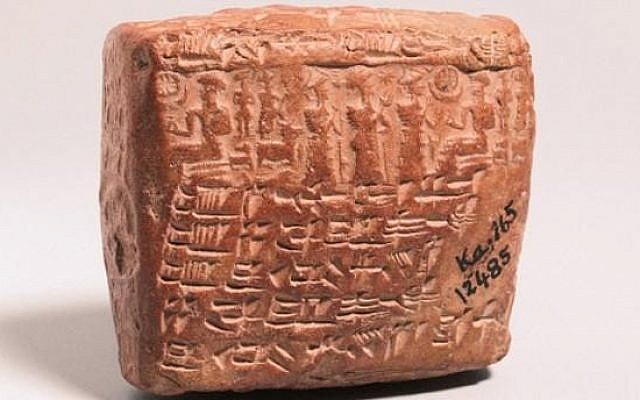
A 4,000-year-old Assyrian tablet is the first evidence of surrogacy in infertility. (Istanbul Archaeology Museum)

The cradle of civilization is also the birthplace of surrogate motherhood, according to a recently deciphered cuneiform tablet from Turkey.

The first historical reference to infertility and surrogacy was found in a trove in Turkey’s Kayseri province. And, unlike the famous biblical surrogacy of Hagar which resulted in bitter rivalry, this contractual surrogate mother would have been freed from slavery after the birth of a male child.

The 4.000-year-old Assyrian clay tablet, an ancient prenuptial agreement, was discovered during modern excavations of a site where some 1,000 such tablets were uncovered in 1925. Today they are known by scholars as the Cappadocian tablets and since 2014 the site of Kültepe-Kanesh has appeared on the UNESCO World Heritage List.

On the recently found prenup tablet, linguists uncovered what is now considered the first historical reference to infertility. According to the marriage contract, if within two years of marriage there is no issue, the couple’s infertility was to be remedied by surrogacy through the use of a hierodule, which Merriam-Webster Dictionary defines as “a slave or prostitute in the service of a temple.”

Due to its historic medical nature, the discovery was recently announced in the journal Gynecological Endocrinology.

According to the article’s abstract, written by group of researchers led by Harran University in Şanlıurfa, Turkey, “demographic infertility” is defined as the inability to produce a live birth after five years of unobstructed sexual contact. It was previously unknown how early in mankind’s history infertility was remedied through any external means, such as the use of a surrogate.

“A first mention about infertility and surrogacy is discovered on a 4000-year-old clay tablet of marriage contract belonging to the Assyrian period exhibited at Istanbul Archeology Museum in Turkey,” according to the English abstract.

The tablet was found in Turkey’s Kültepe district, which from 2,100 BCE to 1,800 BCE was a thriving trade colony of the Old Assyrian Empire. Written in Old Assyrian and signed before four witnesses, the prenup states the wife could hire a sex slave to serve as a surrogate mother. However the husband could not take an additional wife, according to an article in Atlas Obscura. The article explains that Mesopotamians were monogamous and if one partner pushed for a divorce, according to the prenup, he would have to pay five minas of silver (some $1,500 in current currency) to leave the marriage.

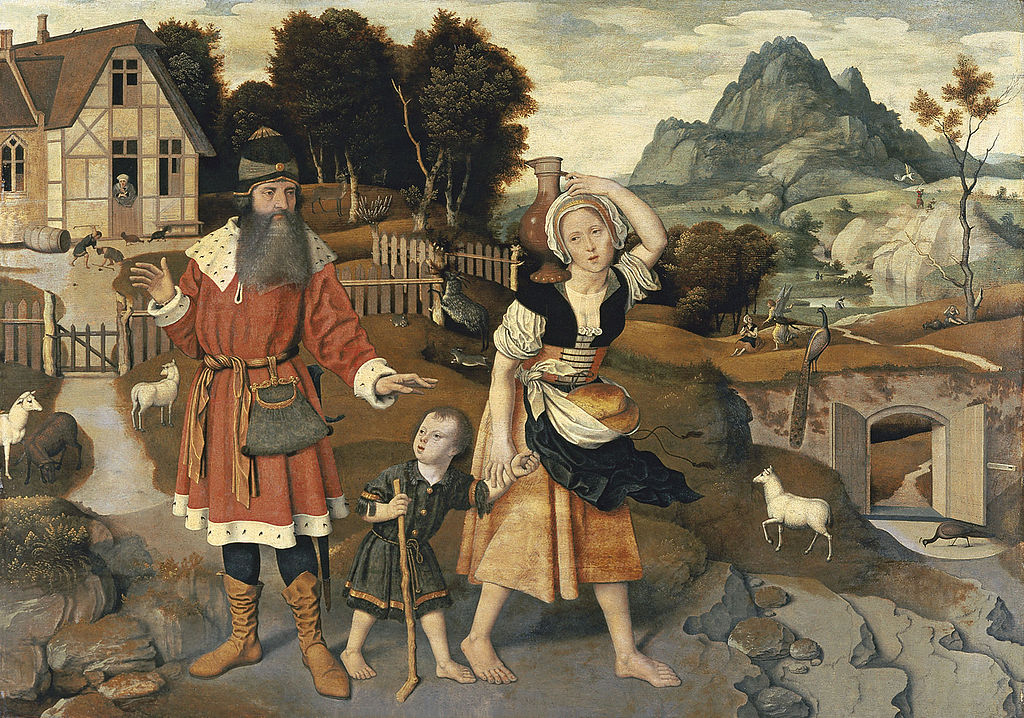
This Assyrian idea of a wife sourcing a handmaiden to bear her husband’s child is paralleled in the story of Hagar and Sarai (later called Sarah). As described in Genesis 11 and 16, Sarai, Abram’s wife (later Abraham), “saw she was barren.” She then offers to Abram, “Consort with my maid; perhaps I shall have a son through her.” “Hagar the Egyptian” was made her husband’s concubine and became pregnant.

‘The Banishment of Hagar’ by Jan Mostaert, c. 1620–25, Thyssen-Bornemisza Museum. (public domain, via wikipedia)

However, the Bible indicates that Hagar felt herself superior to Sarai after conceiving, which arguably became the seeds for her eventual expulsion with her son Ishmael.

According to “Surrogate Motherhood: Hagar and Sarah” by Ben-Gurion University Medical School Prof. Emeritus Liubov Ben-Nun, “At her advanced age, Sarah was an infertile woman. She desperately wanted a child, so she gave Hagar to Abraham to be his wife. Since Hagar agreed to give birth to a baby on behalf of Sarah, we can define Hagar as a surrogate mother.”

However, writes Ben-Nun, because not enough care was taken in the contract between Sarah and Hagar to prevent a loss of status to Sarah, the family’s fabric was frayed.

“Persistent continuous tension between Sarah and Hagar poisoned the internal family atmosphere, so that hostile confrontations, jealousy, and hatred between women broke the equilibrium of Abraham’s family,” writes Ben-Nun. “Lack of comprehension and adequate handling of continuous stresses led to severe disequilibrium in this family. The crisis deepened, deteriorated slowly, and disintegration followed. This is indicated by Sarah’s request ‘…Cast out this bondwoman and her son…’” in Genesis 21:10.

The Assyrian prenup, however, would have eased such family drama before its inception in its stipulation that the surrogate mother be freed, and would presumably leave the couple and her offspring.

According to an NTV interview quoted in the Daily Sabah with Prof. Ahmet Berkız Turp from Harran University’s Gynecology and Obstetrics Department, “The female slave would be freed after giving birth to the first male baby and ensuring that the family is not… left without a child.”


twoje uwagi, linki, wlasne artykuly, lub wiadomosci przeslij do: webmaster@reunion68.com


Don’t mess with Jerusalem

Don’t mess with Jerusalem

Naomi Chazan


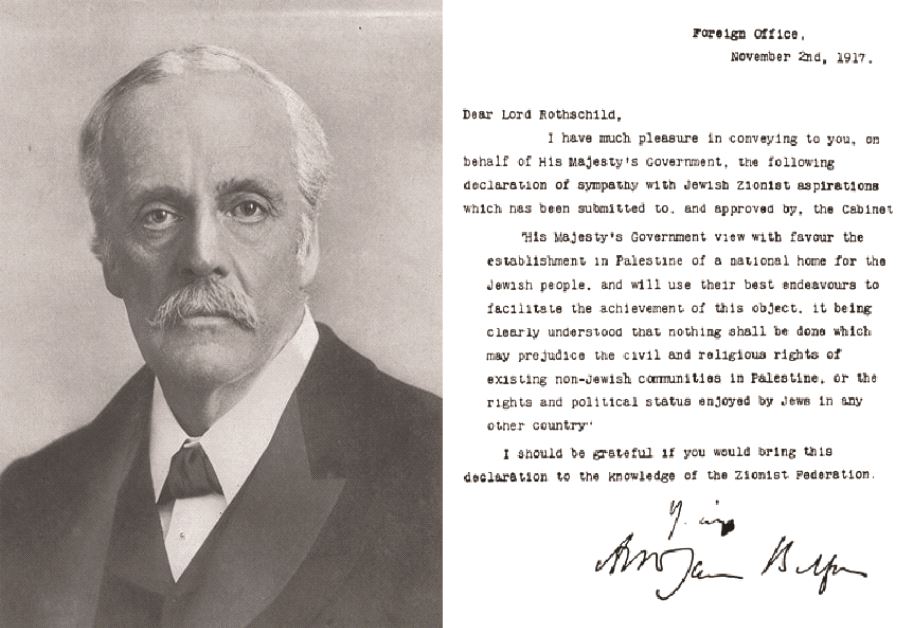
The heated discussions over the meaning of the assassination of Yitzhak Rabin and the 100th anniversary of the Balfour Declaration have dominated the media just as moves to entirely alter the status of Jerusalem and its environs have quietly proceeded apace. Two interrelated bills (The Basic Law: Jerusalem, the Capital of Israel [Amendment Number 2] and the Jerusalem and Its Daughters Bill — dubbed the Greater Jerusalem Bill), if adopted, will fundamentally redraw the contours of the city and the composition of its inhabitants in Israel’s 70th year. Together, they will create a massive Jerusalem metropolis under Israeli sovereignty, transform the character of the city, further bifurcate the West Bank, and sound the death knell for any possibility of an Israeli-Palestinian accord. No move Israel has made since 1967 has greater implications for the future of the area than that being quietly promoted at this time.

Jerusalem has traditionally stood at the center of violent confrontations for control, as well as at the heart of collective hopes for peace and harmony. In the present era, it has become both a microcosm of the ongoing Israeli-Arab conflict and also — because of its unique confluence as a meeting point of people, nationalities, religions, cultures and aspirations — a receptacle of prospects for intercommunal sharing and reconciliation. Any unilateral change in the geographical or human demarcation of the city will have broad — and potentially disastrous — implications for all those who treasure this city.

The aim of the two bills currently under consideration, along with the recent approval of Jewish construction in the heart of Palestinian neighborhoods (such as Sheikh Jarrah, Ras al-Amud and Jabel Mukaber), is clear: to expand the area of Israeli control over Jerusalem and to substantially alter its human makeup. The first legislative initiative — one that hastily passed a first reading this past July — is the amendment to the Basic Law: Jerusalem the Capital of Israel. Introduced by Minister for Jerusalem Affairs Ze’ev Elkin and Minister of Education Naftali Bennett, the proposal prohibits the transfer of any area currently within the municipal borders of Jerusalem (including neighborhoods beyond the separation barrier) to any foreign entity, and sets a barrier of a super-majority of the Knesset (80 members) for any future change. The real significance of the bill, however, lies in what is not explicitly stated: the granting of the right to make “municipal adjustments” to the shape of the city — thus paving the way for additions and detractions to its present boundaries.

This is precisely what the Greater Jerusalem Bill, a private member’s proposal introduced by a group of coalition members headed by the Likud’s Yoav Kish, sets out to do. It seeks to incorporate municipal areas around Jerusalem — many of them in the West Bank — as autonomous sub-municipalities (“daughters”) of the city. At the same time, it would physically detach heavily populated Palestinian parts of the city that are beyond the wall, but still within the boundaries of the city annexed in 1967 (thus establishing a separate, Palestinian, category of sub-municipalities whose inhabitants are stripped of their rights as residents of the city). A preliminary reading of this bill — heavily backed by representatives of all parties in the coalition — is currently pending government approval.

Together, these two legislative initiatives are effectively acts of Israeli annexation in a dual sense. Geographically, they will extend the reaches of Jerusalem to include the major settlement blocks around the city, such as Ma’ale Adumim (including the E-1 enclave), Beitar Ilit, Givat Ze’ev, Efrat and Gush Etzion, and give their residents the right to participate in Jerusalem municipal elections, while maintaining their local autonomy. Simultaneously, areas of East Jerusalem (the Shu’afat refugee camp, Anata, Kufer Aqab and possibly Wallaje to the north, east and south of the city) will be excised from Jerusalem proper and granted sub-municipality status as determined by the Israeli government.

Demographically, the current balance between Jews and Palestinians will be totally reset. The close to 900,000 residents of Jerusalem in its present demarcation consist of 37% (323,700) Arabs and 63% (about 570,000) Jews and “others” (mostly Christian). To counter the rise of over 10% in the percentage of Palestinians in the city since 1967, the two bills would add some 120,000 Jews to Jerusalem, while extracting over 140,000 Palestinians — fundamentally transforming its human face.

The combined effect of these two acts would be incorporating new territories into Jerusalem (a twofold increase in the size of its territory) in the name of Jewish inclusion and transferring existing Palestinian residents from the city in the name of ethnic exclusion. But while the area under Israeli control will grow, Israel’s assertion of sovereignty may not be enhanced, despite efforts to consolidate its rule within the redrawn boundaries — especially through infrastructural improvements in East Jerusalem. The separation of Palestinian neighborhoods from Jerusalem creates a fiction for Israel of sovereignty without responsibility. The addition of new Jewish sub-municipalities to the city suggests that people may determine policies without having to live with their consequences (a bizarre notion of sovereignty if ever there was one).

It is difficult to exaggerate the negative ramifications of these one-sided moves for Israel, for the Palestinians, for Jerusalem and for the lives of its inhabitants. On the most mundane level, the delicate fabric of the city will be upended. Many Palestinian residents who see themselves as an integral part of Jerusalem and depend on it for their livelihood will once again relocate back to the heart of the city — as they did when the security barrier was constructed in the early part of this century. This will undoubtedly increase tensions, create instability, and raise the prospects of more violence. On the human level, the existing crowding, poverty and unemployment will soar. Daily life in this majestic and impoverished city will become even harder, contributing even further to the unraveling of the already patently strained social mosaic that is Jerusalem today.

The political implications are perhaps even more daunting. Another Israeli unilateral move focusing on Jerusalem — this time through the first outright act of annexation in the West Bank since June, 1967 — is a prescription for a global uproar of monumental proportions. Besides being an obvious violation of international law and all UN resolutions since Security Council Resolution 242, it would essentially bury the two-state solution. Such, perhaps, is the intent of the drafters of the proposed legislation. But even the United States under President Trump is wary of its consequences — which might explain the postponement of the government decision on the Greater Jerusalem bill.

If this is not enough, for Israel the fallout could be even greater: its quest for recognition of Jerusalem as its capital would be replaced by more persistent efforts to undermine the legitimacy of its claims to the city. Its overall legitimacy will be further questioned. And, while its present ultra-nationalist leaders continue to push their expansionist goals through invoking the most cherished symbol of Jewish tradition, Jerusalem, the Israeli enterprise in its entirety could be irreparably weakened. The current ruling coalition’s attempts to determine the future of the city through legislation are self-defeating and hence nothing short of sheer and utter folly. They will make the realization of the full meaning of the Balfour Declaration meaningless and will destroy what is left of the Rabin legacy.

Jerusalem is too central to Palestinian and Israeli relations; to Jewish, Christian and Muslim beliefs; and to the existence of its so diverse inhabitants to have its destiny determined unilaterally. That is the lesson of its past, the reality of its present and its destiny. Therefore any change in the territorial scope of the city and in its human composition should be determined by agreement between Israelis and Palestinians, whose life in Jerusalem is so inextricably intertwined.


Naomi Chazan Professor Naomi Chazan, former Deputy Speaker of the Knesset and professor (emerita) of political science at the Hebrew University, is co-director of WIPS, the Center for the Advancement of Women in the Public Sphere at the Van Leer Jerusalem Institute.


twoje uwagi, linki, wlasne artykuly, lub wiadomosci przeslij do: webmaster@reunion68.com


US Ambassador: Gush Etzion terror victim was a patriot

US Ambassador: Gush Etzion terror victim was a patriot

Ernie Singe


Ambassador David FriedmanArutz Sheva

United States Ambassador to Israel David Friedman has offered the US’s heartfelt thoughts and prayers to the family, friend, teachers and classmates of terror victim Ezra Schwartz on the second anniversary of his murder.

In a letter written on Monday to be read at a memorial service today at Oz Vegaon Park in Gush Etzion, Friedman said, “Ezra was a patriot because he believed so deeply in the ideals and values shared by the United States and Israel.”

He also wrote, “Although I am currently in Washington, D.C. and unable to attend today’s ceremony, I join you in spirit as we renew our commitment to living a life of service to others and to remaining resolute in the defense of our values and the defeat of evil.”

Last week, Friedman cancelled his planned appearance at the memorial service, after initially telling organizers from the Orot Yehuda Yeshiva in Efrat that he had accepted their invitation to the service honoring Schwartz, an 18-year-old American yeshiva student who was killed along with two others in a terror attack in Gush Etzion south of Jerusalem in 2015.

Schwartz, a native of Sharon, Massachusetts, had been studying in the Ashreinu Yeshiva in Beit Shemesh during his year-long stay in Israel.

The memorial event is taking place today at Oz Vegaon park, near the scene of the deadly attack in November 2015 in Judea. Schwartz was on his way there to volunteer when he was shot at the Gush Etzion junction.

The preserve was initially designated an ‘unauthorized outpost’, but subsequently received backing from then-Defense Minister Moshe Yaalon, who endorsed retroactive authorization for the park.

While initially dedicated to the memory of the three murdered Israeli teens kidnapped in 2014, in December 2015, a month after their son’s death, the Schwartz family sponsored the paving of a new hiking trail there in Ezra’s honor.

Organizers of the event said that Ambassador Friedman initially accepted an invitation, which had been extended to the ambassador because Schwartz was an American citizen.

But a senior embassy official told Arutz Sheva that ambassador was forced to decline over a scheduling conflict, adding that he was needed for consultations in Washington and would not be in Israel on the day of the memorial.

“US Ambassador David Friedman is unable to attend the memorial for Ezra Schwartz, as he is engaged in consultations in Washington DC, November 28th. The Embassy will be sending a message of support.”


twoje uwagi, linki, wlasne artykuly, lub wiadomosci przeslij do: webmaster@reunion68.com