Archive | June 2019

Jerusalem Post Opinion ARE THERE WINDS OF WAR ON THE NORTHERN BORDERS OF ISRAEL?

ARE THERE WINDS OF WAR ON THE NORTHERN BORDERS OF ISRAEL?

SARIT ZEHAVI


At the end of the week in a speech marking the anniversary of Iran’s Jerusalem Day, Hezbollah leader Hassan Nasrallah made it clear that the war against Iran will not stay there.
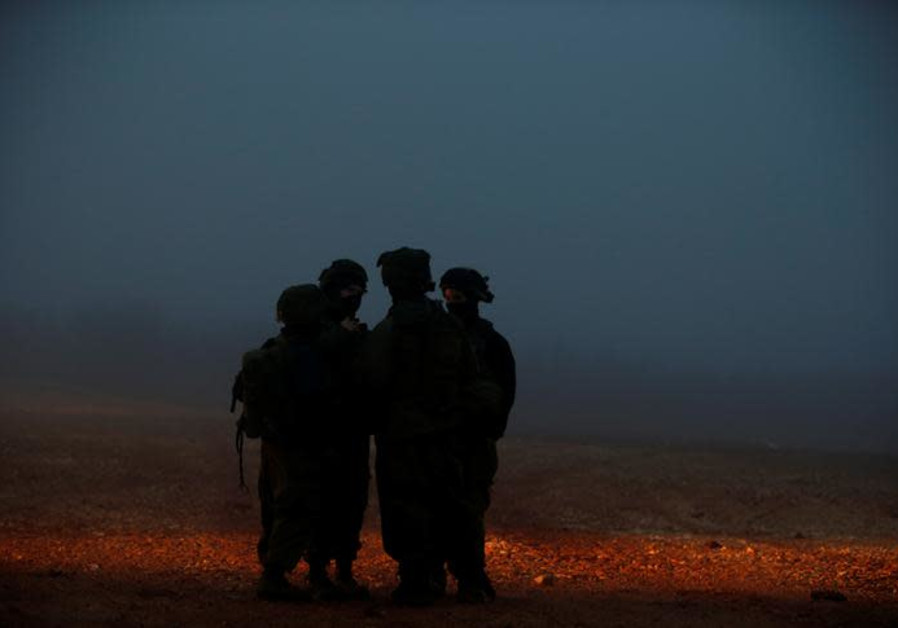
Israeli soldiers stand near the area where Israeli military personnel continue their work on exposing and thwarting cross-border tunnels dug from Lebanon into Israel, as seen on the Israeli side of the border, near the town of Metula December 19, 2018. (photo credit: RONEN ZVULUN / REUTERS)

In the past two weeks, tensions in northern Israel may have reached a new stage. Mutual attacks between the IDF and the Syrian army on the Golan Heights; tension between the United States and Iran in the Persian Gulf; and increasing economic pressure on the Shi’ite axis due to the sanctions on Iran and Hezbollah, may mark the end of a relatively quiet period on the northern border.

Moreover, paradoxically, in the Middle East even peace talks may be a sign of war. There are two such channels now: the “Deal of the Century” led by US President Donald Trump – apparently in coordination with the Sunni Arab states – and at the same time, an agreement to settle Israeli-Lebanese border disputes mediated by the United States. The Saudi newspaper Al-Hayat also reported that as part of these contacts, the Americans raised the issue to the Lebanese of Hezbollah’s precise missiles, making it clear that the United States would not be able to prevent Israel from acting against them.

Therefore, Hezbollah and its boss in Tehran are under pressure. They will not gladly accept these two American initiatives, especially with regard to Lebanon – which may obviate the need for “Resistance” to Israel there. In addition, the “Deal of the Century” will probably strengthen the inter-bloc polarity in the Middle East between the Sunni countries supported by the United States – led by Saudi Arabia and the Gulf states – and the Shi’ite elements, headed by Iran. Qatar and Turkey have been playing for both teams until now and will soon have to choose a side.

How will this affect Israel’s security? At the end of the week in a speech marking the anniversary of Iran’s Jerusalem Day, Hezbollah leader Hassan Nasrallah made it clear that “the war against Iran will not remain within the borders of Iran” and that “the whole region will be ignited and all US forces and American interests will be destroyed – and all those who had conspired will pay a price, first and foremost Israel and Saudi Arabia. The price of a barrel of oil will reach $400.”

Nasrallah added that Hezbollah has accurate missiles in sufficient amounts that are capable of “changing the region and the equation.”

Iran has already raised the tension on Israel’s southern border in the past year, and now it looks like there is full coordination of policy and messages between radical elements in the northern and southern borders of Israel. Thus, coordination meetings between Hezbollah, Iran, Hamas and the Palestinian Islamic Jihad have been held several times in recent months. In an interview with Hezbollah’s Al-Manar television channel, the leader of the PIJ, Ziyad Nahala, recently made it clear that “we have no redlines in the war with Israel” and promised attacks against the Jewish state, including in the West Bank.

ISRAELIS ARE used to such threats. But the timing – and the clear statement that Hezbollah will stand by Iran – indeed indicate that there is no shame. Hezbollah, despite the internal restraints, will continue to defend its Iranian boss and is fully prepared for this in terms of its military level.

So far, the exchange of blows between Israel and the Shi’ite elements has been concentrated almost totally on the Syrian side of the border. Indeed, the critical point will be if and when Hezbollah acts against Israel from Lebanon. What will life in the North of Israel be like with intermittent showers of rockets, like those that have been falling in the South for 15 years? And how long will it take for these showers to make the lives of Israeli citizens unbearable and in fact lead the region to war?

A balance of deterrence has existed between Israel and Hezbollah in Lebanon for the past 13 years. It was clear to both sides that war would exact a heavy price. It was also clear to them that any security incident at the border could lead to a war that no one was interested in. The big question now is whether the Shi’ite side is willing to take the risk of escalation on the Lebanese border, along which there are many settlements on both sides of the fence, based on an assessment that escalation does not necessarily mean war.

As indicated both by the rocket fire from Syria toward Israel this week and from Nasrallah’s speech, Iran will certainly strive to increase the pressure on the United States by heating up Israel’s northern border. However, the question is what the IDF will do – and how it will maintain the balance of deterrence without being dragged into a war that it would prefer to avoid.


The writer is the founder and CEO of Alma, a leading research and education center that focuses on Israel’s security challenges on the northern border. She is a lieutenant-colonel in the IDF reserves, who served for 15 years in the military specializing in intelligence and holds a masters degree in Middle East Studies from Ben-Gurion University.


Zawartość publikowanych artykułów i materiałów nie reprezentuje poglądów ani opinii Reunion’68,
ani też webmastera Blogu Reunion’68, chyba ze jest to wyraźnie zaznaczone.
Twoje uwagi, linki, własne artykuły lub wiadomości prześlij na adres:
webmaster@reunion68.com


Ambasadorowie Polski i Izraela protestują przeciwko pomnikowi Szuchewycza

Ambasadorowie Polski i Izraela protestują przeciwko pomnikowi Szuchewycza

jjk/ ap/


© PAP / Radek Pietruszka Bartosz Cichocki

Joel Lion

Ambasadorowie Polski i Izraela, Bartosz Cichocki i Joel Lion, zaprotestowali przeciwko pomnikowi dowódcy Ukraińskiej Powstańczej Armii (UPA) Romana Szuhewycza, który odsłonięto niedawno w Iwano-Frankiwsku (dawnym Stanisławowie) na zachodniej Ukrainie.

Otwarty list w tej sprawie dyplomaci skierowali do mera Iwano-Frankiwska Rusłana Marcinkiwa. Jego tekst przesłano w poniedziałek PAP. W liście zwrócono uwagę, że podczas odsłonięcia posągu Marcinkiw nazwał Szuchewycza „wybitną postacią” oraz zaapelował do obecnych na uroczystości uczniów, by „cieszyli się widokiem złotego pomnika”.

„Ambasador Izraela i ambasador Polski (…) występują przeciwko decyzji Rady Miejskiej Iwano-Frankiwska i przypominają dzieciom Iwano-Frankiwska, ich rodzicom, babciom i dziadkom, że Roman Szuchewycz był osobiście odpowiedzialny za pozbawienie życia dziesiątków tysięcy podobnych do nich ludzi, zgładzając ich kulami, ogniem, gwałtami, torturami i innymi zwierzęcymi metodami tylko dlatego, że modlili się do Boga po polsku albo hebrajsku” – oświadczyli dyplomaci.

„Ambasadorowie dwóch krajów przypominają, że ludzie, którzy ocaleli z masowych mordów, w których decydującą rolę odegrał Roman Szuchewycz, do dziś żyją na Ukrainie, w Polsce i Izraelu, a wielu z nich zostało uratowanych przez ich bohaterskich sąsiadów ukraińskich” – napisali.

Cichocki i Lion wyrazili przekonanie, że uczniowie szkół w Iwano-Frankiwsku powinni być zachęcani do zgłębiania historii i zadeklarowali, że mogą wesprzeć ich w dziele „odkrywania prawdziwej historii polsko-żydowsko-ukraińskiej spuścizny” – czytamy we wspólnym liście, którego kopię przesłano ministrowi spraw zagranicznych Ukrainy Pawłowi Klimkinowi.

Roman Szuchewycz, ps. Taras Czuprynka, był działaczem Organizacji Ukraińskich Nacjonalistów (OUN). W latach 1934-1937 więziony był za organizację zamachów na przedstawicieli polskich władz. Od 1943 roku dowódca Ukraińskiej Powstańczej Armii, która do 1945 roku dokonała masowych mordów ok. 100 tys. Polaków z Wołynia i Galicji Wschodniej.

UPA walczyła podczas II wojny światowej zarówno przeciwko Niemcom, jak i ZSRR. Od wiosny 1943 roku prowadziła także działania zbrojne przeciwko ludności polskiej Wołynia, Polesia i Galicji Wschodniej, zmierzające do jej całkowitego usunięcia z tych terenów.

W 2016 roku Sejm ustanowił 11 lipca Narodowym Dniem Pamięci Ofiar Ludobójstwa dokonanego przez ukraińskich nacjonalistów na obywatelach II RP. Sejm – głosi uchwała – oddaje hołd “wszystkim obywatelom II Rzeczypospolitej bestialsko pomordowanym przez ukraińskich nacjonalistów”.

O ile dla polskiej strony była to masowa i zorganizowana zbrodnia ludobójstwa, o tyle dla Ukraińców był to efekt symetrycznego konfliktu zbrojnego, za który w równym stopniu odpowiedzialne były obie strony. Dodatkowo Ukraińcy chcą postrzegać OUN i UPA wyłącznie jako organizacje antysowieckie (ze względu na ich powojenny ruch oporu wobec Związku Sowieckiego), a nie antypolskie.

Z Kijowa Jarosław Junko (PAP)


Zawartość publikowanych artykułów i materiałów nie reprezentuje poglądów ani opinii Reunion’68,
ani też webmastera Blogu Reunion’68, chyba ze jest to wyraźnie zaznaczone.
Twoje uwagi, linki, własne artykuły lub wiadomości prześlij na adres:
webmaster@reunion68.com


ISRAELI COLON CANCER RESEARCH

ISRAELI COLON CANCER RESEARCH COULD DOUBLE PATIENTS’ LIFE EXPECTANCY

ALON EINHORN


Israeli Prof. Dan Aderka’s research settled a decade-long controversy surrounding the medicinal regimen for Colorectal Cancer patients.

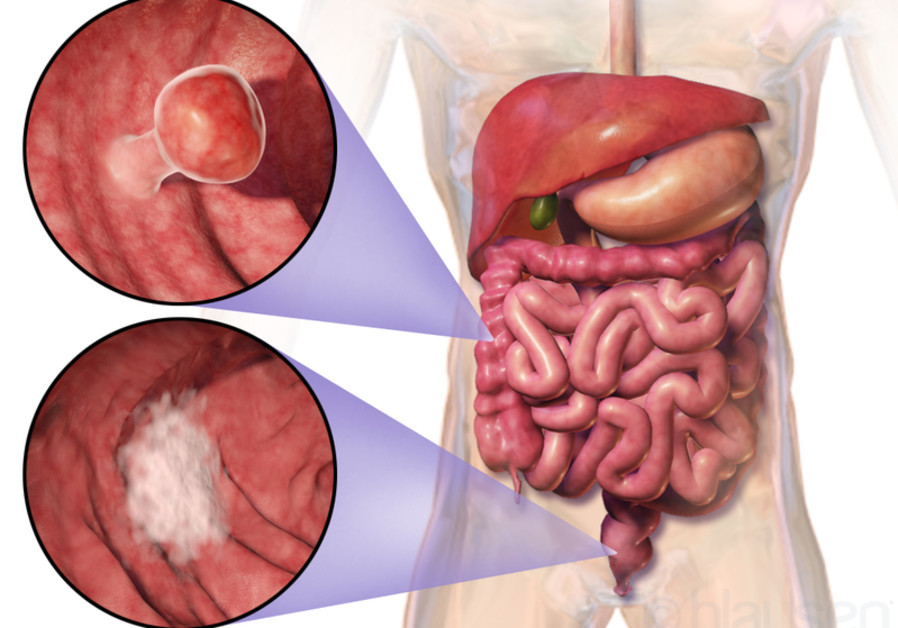
Location and appearance of two example colorectal tumors. (photo credit: BLAUSEN MEDICAL COMMUNICATIONS INC./WIKIMEDIA COMMONS)

Research conducted by Prof. Dan Aderka from Sheba Medical Center, Tel Hashomer found that various combinations of biological medicine and chemotherapy, depending on the type of tumor, affect the life expectancy of Colorectal Cancer (CRC) patients, according to an Israel Hayom report.

Colorectal Cancer is also known as bowel cancer and colon cancer.

The study resolves a decade-long controversy over the treatment of a third (35%) of metastatic CRC patients, patients whose tumor contains receptors of EGFR (Epidermal Growth Factor Receptor).

The controversy in question surrounded the difference between medicinal regimens for CRC used with the chemotherapy treatment. The main difference had been whether to use Avastin first and then Erbitux, or the other way around. Earlier research conducted showed conflicting results for each approach.

Aderka conducted his research at the Oncology wing at Sheba along with fellow associates from abroad. The research had also been published at The Lancet Oncology, among the world’s oldest, most prestigious and best known general medical journals, according to the Population Media Center.

Prof. Aderka’s research settled the argument and showed that the different use of medicines directly affects the life expectancy for CRC patients.

The research conducted on patients with an incurable tumor, classified the patients into four different groups according to their type of tumor.

In one of the focus groups, the use of Avastin along with chemotherapy increased the patients’ life expectancy by an average of 21 months, whereas the use of Erbitox, applied with the same chemotherapy treatment, increased the life expectancy by an average of 40 months.

A research group with a different type of CRC tumor showed that the use of Avastin increased the life expectancy of those patients by an average of 22 months, whereas consummation of Erbitox only increased their life expectancy by an average of 11 months.

“The different results obtained with the same biological material for the same type of tumor stemmed from the simultaneous combination of various chemotherapy drugs: in one study, the chemotherapy worked together with the biological drugs against the tumor, while in the other the chemical stimulated the secretion of substances that neutralized biological activity, which reduced its effectiveness,” Aderka told Israel Hayom.

“For years, we did not know how to maximize the potential of the drugs, and we did not care with which of the two biological drugs we started the treatment. We thought that applying one treatment was suitable for all patients,” Aderka explained. “If the right combination of drugs was applied, the patient’s life expectancy would be extended. Whereas if another combination had been used – his life expectancy would not be extended. In one case, we even observed that a combination of a biological drug and chemotherapy in one of the tumor types reduces the effectiveness of the biological drug and not the other way around, as we have thought for years.”

Aderka is the head of the Gastrointestinal Cancer Service at Sheba and a chief specialist in the field of digestive system oncology. He is the member of the Israeli Association of Clinical Oncology and Radiotherapy (ISCORT), the American Society of Oncology (ASCO) and the European Oncology Society (ESMO).


Zawartość publikowanych artykułów i materiałów nie reprezentuje poglądów ani opinii Reunion’68,
ani też webmastera Blogu Reunion’68, chyba ze jest to wyraźnie zaznaczone.
Twoje uwagi, linki, własne artykuły lub wiadomości prześlij na adres:
webmaster@reunion68.com


‘Anti-Semitism must be confronted immediately’

‘Anti-Semitism must be confronted immediately’

Nitsan Keidar


Former British PM Tony Blair blasts Labour over its anti-Semitic conduct.

Tony Blair

Tony Blair, former British Prime Minister and currently chairman of the Institute for Global Change, visited Israel as a guest of Bar-Ilan University’s Sir Naim Dangoor Centre for Universal Monotheism.

Blair spoke at the opening gala event of Bar-Ilan University’s 64th annual Board of Trustees and was interviewed at the gala event by Channel 12anchorwoman Yonit Levy.

In his remarks, Blair was critical of the Labour Party, which he once led, over its anti-Semitic conduct.

“If you’d told me back in May 1997 or at any time in the next ten years that the Labour Party – which I led for 13 years – would have a problem with anti-Semitism today, I wouldn’t have believed it. Anti-Semitism must be confronted immediately. It is a poison that must be rooted out and eradicated,” he said.

On Labour Party leader Jeremy Corbyn, Blair said, “Is Jeremy Corbyn anti-Semitic? Some of the remarks are not explicable in any other way, I’m afraid, and that’s very sad. Does he think he is anti-Semitic? No, he doesn’t think at all that he is.”

Regarding the peace process and the Trump administration’s peace plan, the former British Prime Minister said, “The State of Israel needs to know that any independent state of Palestine will be properly and securely governed. If that isn’t the case, no matter who the prime minister is, it will be hard to make peace.”

“The two-state solution will only happen if first there is a genuine cultural acceptance of the State of Israel and Palestinian politics is unified and accepting of this, and secondly, by building the links between the Arab world,” he continued.

Blair also discussed the Brexit saga and said, “Brexit is a destiny changing decision for the country. The dilemma is that there’s a painful version of Brexit and a pointless version. We’re three years on without a resolution, so I think to resolve it, it should go back to the people.”


Zawartość publikowanych artykułów i materiałów nie reprezentuje poglądów ani opinii Reunion’68,
ani też webmastera Blogu Reunion’68, chyba ze jest to wyraźnie zaznaczone.
Twoje uwagi, linki, własne artykuły lub wiadomości prześlij na adres:
webmaster@reunion68.com