Archive | July 2019

Capricious Treatment of Pro-Israel Professor

DePaul Faculty Council’s Capricious Treatment of Pro-Israel Professor

Steven H. Resnicoff


DePaul University. Photo: southie3, via Wiki Commons.

I am a professor at the DePaul University College of Law, and recently attended a public meeting of the university’s Faculty Council. I feel compelled to comment on the procedurally improper and profoundly unfair way in which it publicly pilloried professor Jason Hill, a senior faculty member. Why? Because he had the temerity to publish unpopular opinions — pro-Israel opinions, at that — in an op-ed piece in The Federalist.

The proposed resolution contained ugly, explosive charges. In part, it stated:

Whereas the recent article by Professor Jason Hill, entitled “The Moral Case for Israel Annexing the West Bank — and Beyond” 1) misrepresents the history of the Israeli-Palestinian conflict, 2) distorts the facts about the current state of Israeli-Palestinian relations, 3) promotes racism toward Arabs generally and Palestinians in particular, and 4) advocates for war crimes and ethnic cleansing against the Palestinian populations of the West Bank and the Gaza Strip.

Such extreme accusations could not only significantly imperil academic freedom and irreparably tarnish Hill’s reputation, but it could also lead to Hill feeling threatened. He has already reportedly received anonymous death threats.

Among other things, the proposed resolution condemned “in the strongest possible terms both the tone and content” of Hill’s article, affirmed that the article “represents an abuse” of Hill’s academic freedom, and urged him “to seriously reconsider his positions on these issues, to take cognizance of the perspectives of other scholars on these issues … and to refrain from abusing his freedom as a scholar in writing on controversial issues in the future.”

Let me just make three points. First, the Faculty Council violated its own bylaws by failing to provide proper notice regarding the resolution. Section 1.2 of the Faculty Council bylaws require that the Faculty Council’s secretary send all public documents and resolutions to the full faculty “at least five calendar days before each meeting.”

Instead, the Council sent an email to faculty on April 30, the day before its May 1 meeting, announcing three additions to that meeting’s agenda. One of the additions was a resolution against Hill and his scholarship. The Council could have complied with the bylaws by putting the resolution on the agenda for its June 2019 meeting.

To make things worse, the April 30 email simply described the resolution as “A Faculty Council Resolution on Academic Freedom and Responsibility.” The notice mentioned neither Hill, nor the demeaning language included in the resolution. To view what the resolution was all about, one had to use their DePaul University credentials to access the online site at which the resolution was posted.

To make things still worse, Hill told me that he was not personally informed — even on April 30 — that a resolution referring to him or his scholarship was to be on the May 1 agenda. He explained that he only learned about the resolution on the morning of May 1 itself, when he read an article referring to the resolution on the Internet.

Second, the Faculty Council also violated its bylaws by allowing Professor Scott Paeth to preside over debate on the resolution. Section 1.4.1 of the bylaws states: “Robert’s Rules of Order shall guide the conduct of Faculty Council meetings unless otherwise specified in these Bylaws, which in such case shall take precedence.”

Section 43 of Robert’s Rules of Order (11th ed.) explains that an organization’s presiding officer should not ordinarily speak to the merits of a matter under consideration. If in a particular case it is necessary for the person to do so, he or she must relinquish the chair and “should not return to it until the pending main question has been disposed of, since he has shown himself to be a partisan as far as that matter is concerned.”

At the May 1 meeting, Paeth announced that, with the help of a few others, he had written the resolution about Hill. Paeth acted as the movant of the resolution, unilaterally deciding whether or not to accept proposed amendments as “friendly amendments.” Nevertheless, Paeth did not relinquish the chair. Instead, he presided, calling on people (and not calling on others — such as me and another faculty member well-known for his conservative views), interspersing his own comments when he saw fit without having to wait in a queue to do so, and ultimately declaring that there was no more time for further discussion before a vote was taken. Whatever Paeth’s intentions may have been, he was responsible for following Robert’s Rules of Order, and his failure to do so rendered the Faculty Council’s action fundamentally unfair.

Third, although the resolution was amended before being approved, it still stated, among other things, that Hill’s article “misrepresents the history of the Israeli-Palestinian conflict, 2) distorts the facts about the current state of Israeli-Palestinian relations, 3) promotes racism toward Arabs generally and Palestinians in particular.” Nevertheless, the resolution failed to identify which statements in the article purportedly did these things. In fact, the Council’s debate regarding the resolution essentially ignored such specifics. Why? Paeth, who presided, repeatedly stated that there was not enough time for much debate, and not enough time to consider the evidence for the nasty, defamatory accusations contained in the resolution.

Yet it was Paeth and other proponents of the resolution who chose to add the resolution to the agenda at the last minute, and to allot its consideration a ridiculously short period of time. Paeth’s protestations about the lack of time for a deliberate evaluation of the resolution reminds one of the way in which the Yiddish word “chutzpah” (similar to “hubris”) is anecdotally explained: “Chutzpah” is manifested in the action of the boy who, after murdering his father and mother, pleads for mercy from the court because he is an orphan.

One might seriously question the authority of the Faculty Council to sua sponte evaluate the quality of a particular faculty member’s scholarship. Moreover, one might — as I do — question the competency of the Faculty Council to evaluate such scholarship, especially without the benefit of expert testimony by persons who are properly credentialed in the relevant discipline(s). After all, the Faculty Council is composed in such a way that, in effect, dramatically limits the number of members with expertise in any particular area.

One thing cannot be reasonably questioned. If the Faculty Council was to address the proposed resolution – a resolution that risked severe injury to the principle of academic freedom and that impugned the integrity of a faculty colleague — it should have engaged in a careful, scrupulous and reasoned examination of the issues in accordance with all the procedural rules designed to ensure fairness. The DePaul Faculty Council failed to do so in this case.


Steven H. Resnicoff is a professor at the DePaul University College of Law, and Director of the College of Law’s Center for Jewish Law & Judaic Studies (JLJS).


Zawartość publikowanych artykułów i materiałów nie reprezentuje poglądów ani opinii Reunion’68,
ani też webmastera Blogu Reunion’68, chyba ze jest to wyraźnie zaznaczone.
Twoje uwagi, linki, własne artykuły lub wiadomości prześlij na adres:
webmaster@reunion68.com


Labour Party Supporters Back Readmission of MP at Heart of Latest Antisemitism Scandal

Poll: Majority of British Labour Party Supporters Back Readmission of MP at Heart of Latest Antisemitism Scandal

Algemeiner Staff


UK Labour MP Chris Williamson (left) takes to the stage with party leader Jeremy Corbyn. Photo: Reuters / Hannah McKay.

A poll of readers of a British political website with close links to the Labour Party has revealed that a decisive number of the party’s backers were supportive of its decision last week to readmit controversial parliamentarian Chris Williamson.

The MP for the Derby North constituency in central England had been suspended in February after declaring at a public meeting that Labour — led by Williamson’s close ally, Jeremy Corbyn — had been “too apologetic” over the antisemitism scandals that have rocked the party’s public reputation since Corbyn was elected leader in 2015. But on June 26, a three-person review panel rejected a recommendation by party officials to refer Williamson to the next stage of a disciplinary process.

UK Labour MP Chris Williamson (left) takes to the stage with party leader Jeremy Corbyn. Photo: Reuters / Hannah McKay.

A poll of readers of a British political website with close links to the Labour Party has revealed that a decisive number of the party’s backers were supportive of its decision last week to readmit controversial parliamentarian Chris Williamson.

The MP for the Derby North constituency in central England had been suspended in February after declaring at a public meeting that Labour — led by Williamson’s close ally, Jeremy Corbyn — had been “too apologetic” over the antisemitism scandals that have rocked the party’s public reputation since Corbyn was elected leader in 2015. But on June 26, a three-person review panel rejected a recommendation by party officials to refer Williamson to the next stage of a disciplinary process.

In a poll of over 10,000 of its readers, the Labour List website — which operates independently of the party itself — revealed that 61 percent of respondents were in favor of Williamson’s readmission, with 31 percent of them opposed.

A vocal backer of the BDS campaign targeting Israel and a backer of the Palestine Solidarity Campaign — a group which advocates the elimination of the Jewish state — Williamson’s offenses include signing a petition in support of Gilad Atzmon, a notorious antisemite and former Israeli citizen who is based in the UK.

Williamson’s social media behavior has included approving retweets of posts by Sonia Mot — a Holocaust denier and an active defamer of the Talmud, the ancient body of Jewish religious law.

Meanwhile, at the House of Commons, Williamson used his privileges as an MP in 2018 to show a documentary by Jackie Walker, an activist who was expelled from Labour because of her antisemitic outbursts.

While a clear majority of Labour List readers supported Williamson despite his record of conflict with the Jewish community, the same poll showed the party bitterly divided over Brexit — the UK’s impending departure from the European Union, and the main issue dominating the country’s politics.

About one-third were in favor of the UK declaring its intention to remain in the EU, another third wanted to postpone the decision to a later date, while the final third expressed their support for Britain’s departure from the bloc, currently scheduled for Oct. 31.


Zawartość publikowanych artykułów i materiałów nie reprezentuje poglądów ani opinii Reunion’68,
ani też webmastera Blogu Reunion’68, chyba ze jest to wyraźnie zaznaczone.
Twoje uwagi, linki, własne artykuły lub wiadomości prześlij na adres:
webmaster@reunion68.com


Prawdziwym problemem jest palestyńskie zaprzeczanie żydowskiej historii

Uderzenie młotem nie ”judaizuje” Jerozolimy, ani nie zabija procesu pokojowego

Jonathan S. Tobin
Tłumaczenie: Małgorzata Koraszewska


Prawdziwym problemem jest palestyńskie zaprzeczanie żydowskiej historii, nie zaś obecność ambasadora Ameryki przy otwarciu archeologicznego zabytku.

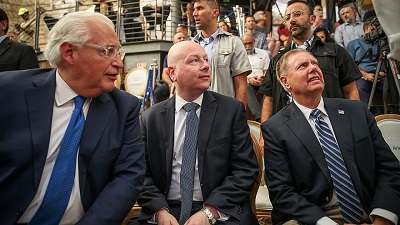
(1 lipca 2019 / JNS) Krytycy mają rację, że obecność ambasadora USA w Izraelu, Davida Friedmana na ceremonialnym otwarciu „Drogi Pielgrzymów” w Jerozolimie była bezprecedensowa. Żaden z jego poprzedników nie dałby się przyłapać w żydowskim miejscu po złej stronie „Zielonej Linii”. Do ubiegłego roku Stany Zjednoczone uparcie odmawiały uznania, że jakakolwiek część starożytnej stolicy Żydów należy do państwa żydowskiego.

Nawet jednak jeśli przyznamy, że uczestnictwo Friedmana i wysłannika USA na Bliski Wschód, Jasona Greenblatta, było odstępstwem od dotychczasowej polityki – i że ambasador uderzający młotem, by przebić symboliczny mur, otwierając szlak biblijny, dostarczył argumentu krytykom administracji Trumpa – nie znaczy to, że było to niesłuszne lub błędne.

Gdybym miałGdybym miał użyć jako metafory obrazu Amerykanów rozbijających cokolwiek, nie byłoby to – jak utrzymują krytycy prezydenta Donalda Trumpa i Friedmana – symbol zniszczenia już martwego procesu pokojowego. Raczej byłaby to kolejna afirmacja poprawnej postawy administracji, stanowczo podkreślającej absurdalność palestyńskiej gotowości do zaprzeczania żydowskiej historii.

„Droga Pielgrzymów” jest projektem El Ad Association, która kieruje Parkiem Narodowym Miasto Dawida, we współpracy z Izraelskim Urzędem Starożytności i Urzędem Natury i Parków. Archeolodzy pracujący na tym stanowisku archeologicznym najpierw odkryli dowody miasta, które było stolicą króla Dawida w biblijnym Izraelu. „Droga” jest tunelem, który został wykopany pod dzisiejszą dzielnicą Jerozolimy i pozwala uczonym i gościom na przejście drogą, którą szli starożytni pielgrzymi żydowscy. Tysiące lat temu Żydzi szli od Sadzawki Siloe w Mieście Dawida i wchodzili na Wzgórze Świątynne powyżej. Ci, którzy idą przez odkopany tunel teraz, wychodzą kilkaset metrów od jego wejścia do punktu w pobliżu Ściany Zachodniej wewnątrz Starego Miasta.

Ponieważ międzynarodowa społeczność normalnie uważa konserwację starożytnych obiektów dziedzictwa za coś dobrego, obserwator mógłby zastanawiać się, dlaczego otwarcie tego tunelu wywołało tyle szumu i wściekłej krytyki.

Odpowiedzią jest, że społeczność międzynarodowa z niechęcią i konsternacją patrzy na wszystko, co przypomina im o głębokich korzeniach zarówno judaizmu, jak narodu żydowskiego w ziemi Jerozolimy. Miasto Dawida mieści się w tej części Jerozolimy, którą nielegalnie okupowała Jordania od 1949 do 1967 roku. To znaczy, że oni uważają ją za „okupowane terytorium”, na którym, zdaniem Palestyńczyków i ich zagranicznych wielbicieli jakakolwiek obecność żydowska jest nielegalna, nawet jeśli wymaga to delegitymizowania miejsca historycznego, które dostarcza obfitości dowodów na historyczne królestwo Izraela.

Dlatego każda działalność Izraela na tym terenie, które obejmuje arabską dzielnicę Silwan, jest uważana za nielegalne osadnictwo w dodatku do tego, że jest przeszkodą dla planów podzielenia miasta i uczynienia go stolicą domniemanego państwa palestyńskiego. Głównym jednak zarzutem jest to, że park archeologiczny jest częścią starań o „judaizację Jerozolimy”.

Pomysł, że Jerozolima – miasto, które było nieodłączne od żydowskiej tożsamości narodowej, historii i wiary przez 3000 lat, może być „judaizowane” – jest absurdalny. Pasuje jednak do twierdzeń tak Autonomii Palestyńskiej, jak jej rywali z Hamasu, że starożytna świątynia, Dawidowe królestwo i cała historia miasta jest bardziej fikcją niż faktem.

Na poparcie swoich skarg na wykopaliska krytycy projektu wskazują na fakt, że niektórzy Palestyńczycy doznają niewygód przez tę budowę, jaka dzieje się pod ich domami. Współczujemy im, ale to samo można powiedzieć o każdym, kto żyje blisko projektu budowlanego w miastach na całym świecie. Prawdziwe pretensje nie są o pęknięcia w ścianach, ale o to, że historia, jaką odsłonili archeolodzy, podważa starania o przedstawienie Żydów jako obcych kolonialistów we własnej starożytnej stolicy.

Krytycy Trumpa mówią, że obecność Friedmana i Greenblatta stanowi uznanie przez USA izraelskiej suwerenności nad całą Jerozolimą. Mówią, że to przeszkadza sprawiedliwym negocjacjom pokojowym, w których Palestyńczycy mają nadzieję na otrzymanie części Jerozolimy, a przynajmniej mieliby, gdyby AP była kiedykolwiek skłonna do powrotu do rozmów pokojowych i okazała gotowość do uznania prawomocności państwa żydowskiego niezależnie od tego, gdzie będą przebiegały jego granice.

Problem z tym argumentem polega na tym, że jak długo Stany Zjednoczone udawały – jak to robiły od 1949 do 2017 roku – że Jerozolima nie jest stolicą Izraela lub, że Izrael nie ma żadnych prawomocnych roszczeń do Miasta Dawida, wyłącznie wzmacniały palestyńskie nieprzejednanie. Stany Zjednoczone zawsze powinny były jasno powiedzieć Palestyńczykom, że nie mogą spodziewać się, że Izrael odda im części Jerozolimy, które są nieodłączną częścią żydowskiego dziedzictwa. Niemniej poprzednicy Trumpa tego nie zrobili i w wyniku podsycali niechęć Palestyńczyków do zrozumienia, że przegrali swoją wieloletnią wojnę ze syjonizmem.

Friedman miał rację, kiedy powiedział nie tylko, że Izrael może z równym prawdopodobieństwem oddać to dziedzictwo, co Stany Zjednoczone oddałyby Statuę Wolności, ale że kluczową sprawą w otwarciu tego miejsca było ujawnienie prawdy. Bez przyznania przez Palestyńczyków prawdy o żydowskiej historii, o której ciągle kłamią, prawdziwy pokój nie jest możliwy.

Zamiast skarżyć się na pokazywanie takich miejsc Palestyńczycy i ich sojusznicy powinni uznać fakty o żydowskiej Jerozolimie i przestać żywić się fantazją, w której państwo żydowskie dłużej nie istnieje. Trump, Friedman i Greenblatt przypominają im jedynie, że pora pozbyć się tych złudzeń – czego ich poprzednicy ze Stanów Zjednoczonych nie robili. Ci, którzy twierdzą, że dobrze życzą Palestyńczykom, powinni zrobić to samo.


Jonathan S. Tobin

Amerykański dziennikarz, redaktor naczelny JNS – Jewish News Syndicate, publicysta miesięcznika Commentary. Autor cotygodniowych felietonów w “View from America”, publikuje często w The Jerusalem Post, zapraszany jest do CNN, BBC Radio, FOX News jako znawca problemów Bliskiego Wschodu.


Od redakcji „Listów z nawszego sadu”

O tym jak Jerozolima była dejudaizowana w 1948 roku pisał John Roy Carlson, który był naocznym świadkiem zdobycia Jerozolimy przez Arabów

 http://www.listyznaszegosadu.pl/notatki/dejudaizacja-jerozolimy-w-1948-roku   


Zawartość publikowanych artykułów i materiałów nie reprezentuje poglądów ani opinii Reunion’68,
ani też webmastera Blogu Reunion’68, chyba ze jest to wyraźnie zaznaczone.
Twoje uwagi, linki, własne artykuły lub wiadomości prześlij na adres:
webmaster@reunion68.com


American, French, and Israeli Jews Agree on Many Issues, But Sharp Divide Over Trump

New Survey of American, French, and Israeli Jews Shows Majority Agree on Many Issues, But Sharp Divide Over Trump

Benjamin Kerstein


Members of the Ugandan Abayudaya community visit the Western Wall in Jerusalem during their Taglit-Birthright trip. Photo: MAROM.

A new unprecedented survey of the world’s three largest Jewish communities — American, French, and Israeli — showed a majority of the communities agreeing on many issues, but a sharp divide on President Donald Trump’s relationship with Israel.

The American Jewish Committee poll showed that 48 percent of Israelis strongly approve of Trump’s handing of the US-Israel relationship, with another 31 percent somewhat approving and only four percent strongly disapproving.

Among American Jews, on the other hand, the numbers are almost precisely the opposite, with 45 percent strongly disapproving and only 22 percent strongly approving.

In addition, 88 percent of Israelis support Trump’s recognition earlier this year of Israeli sovereignty over the Golan Heights, while only 50 percent of American Jews do.

There was, however, agreement on other issues. On the question of Jewish identity, 59 percent of American Jews, 43 percent of French Jews, and 51 percent of Israelis believe Jewish identity is mainly an issue of ethnicity and culture. Only a quarter of each community believe it is a matter of religion.

recomended by: Leon Rozenbaum
On whether Israel is vital to the future of the Jewish people, 91 percent of Israelis, 72 percent of Americans, and 53 percent of French Jews agreed. In regard to a thriving Diaspora, 74 percent of Israelis, 65 percent of Americans, and 51 percent of French Jews felt it was essential to the future of the Jewish people.

The survey showed that 65 percent of French Jews and 41 percent of American Jews have visited Israel at least once.

In regard to antisemitism, half of French Jews felt their security situation was worse now than it was a year ago, 58 percent said they had experienced antisemitism, and 56 percent felt the authorities were not doing enough about the problem. Fifty-five percent have considered emigration as a result. Forty-six percent of Israelis and 17 percent of Americans felt French Jews should leave immediately.

American Jews, surprisingly, had similar views on security, with 65 percent saying they felt less safe now than they did last year. Fifty-seven percent also said that pro-Israel students were facing a more hostile environment on campus.

On the peace process, there was moderate disagreement between Israeli and American Jews. Forty-three percent of Israelis thought the chances of peace with a Palestinian state would decline in the next five years. Fifty-one percent of American Jews said the chances will stay the same.


Zawartość publikowanych artykułów i materiałów nie reprezentuje poglądów ani opinii Reunion’68,
ani też webmastera Blogu Reunion’68, chyba ze jest to wyraźnie zaznaczone.
Twoje uwagi, linki, własne artykuły lub wiadomości prześlij na adres:
webmaster@reunion68.com


French Israelis singing on the Voice Israel (French Jews in Israel israeli French Jewish)

French Israelis singing on the Voice Israel (French Jews in Israel israeli French Jewish)

  AJ Za Za


French Jewish Israelis singers on the Voice Israel, singing in French, ‘Belle Histoire’


Zawartość publikowanych artykułów i materiałów nie reprezentuje poglądów ani opinii Reunion’68,
ani też webmastera Blogu Reunion’68, chyba ze jest to wyraźnie zaznaczone.
Twoje uwagi, linki, własne artykuły lub wiadomości prześlij na adres:
webmaster@reunion68.com