Archive | June 2020

Who’s the Real Cause of Gaza’s Misery? Surprise: It’s Not Israel!

Who’s the Real Cause of Gaza’s Misery? Surprise: It’s Not Israel!

Ken Cohen / JNS.org


A rocket is fired toward Israel, in the southern Gaza Strip, Feb. 24, 2020. Photo: Reuters / Ibraheem Abu Mustafa.

With the launching of more missiles and balloon-bombs from Gaza into Israel, some media are again fulminating about how Israel has turned Gaza into “the world’s largest open-air prison.” Of course, the reasoning goes, the Gazan people have no choice but to resist in any possible way the horrific conditions with which the Israeli air, land, and sea blockade strangles them daily.

In his weekend comments about the Middle East, Democratic presidential contender Joe Biden was just the latest to blame Israel for Gaza’s woes.

However, once again, facts prove these media and observers wrong: The principal source of Gaza’s isolation and desperation is, in fact, Egypt. Egypt has the largest Arab population in the world, ruled Gaza for two decades before the fateful “War of Extermination” against Israel in 1967, and totally controls the southern border of Gaza — containing the terrorist leadership of Hamas, Islamic Jihad, and the compliant Gazans in the 140-square-mile strip.

Gaza is roughly rectangular, with its western side bordering the Mediterranean Sea. The northern and eastern sides form the boundary with Israel. But its seven-mile-long southern border is with Egypt, with that boundary running through the city of Rafah, the location of a major border crossing from Gaza into Egypt’s Sinai Peninsula. That crossing is tightly controlled by Egypt, and is mainly used for humanitarian transfers of individual patients and occasional diplomatic meetings.

A few miles from Rafah, around the southeast corner of Gaza, Israel maintains the Kerem Shalom crossing into Israel in uneasy partnership with the Hamas government on the other side. Through this crossing into the “Zionist Entity,” thousands of tons of material are trucked in annually, including construction supplies, food, medicine, and other humanitarian assistance. Gazans with work passes or humanitarian needs transit here and through the more northerly Erez crossing.

In addition, Gazan exports go through the Israeli crossings, and remittances are paid to the Gazan exporters and their Hamas enablers. None of this goes on at the Egyptian Rafah crossing.

But there is lots of activity going on at — and under — Rafah, through hundreds of smuggling tunnels into Sinai. Hamas charges $2,500 for an annual license to operate a tunnel into Egypt. Some are as deep as 100 feet, and run from houses in Rafah, Gaza to Rafah, Egypt. Principally, this enormous network of tunnels is used to smuggle arms into Gaza, and to transport terrorists into the Sinai Peninsula to wreak havoc in Egypt.

Worldwide, everyone is keenly aware of the Israeli security fence that protects its border with Gaza, and knows that the Israeli Navy patrols the Gaza coast to ensure that armaments are not smuggled in by sea via the Gazan “fishing fleet.”

But the media seem to ignore the fact that Egypt has a far more formidable barrier on its frontier with Gaza. Last week, Egypt announced a major upgrade to the Gaza wall to disrupt the underground smuggling operations. The double wall is a 20-foot-tall reinforced concrete monolith. It will be built to a depth of 20 feet to augment the tunnel blockage of the wall constructed in 2008.

In 2014, Egypt realized that a major problem with the smuggling tunnels was their entrance and exit points in densely populated Rafah neighborhoods on both sides of the wall. So Egypt condemned all the houses in Egyptian Rafah within a quarter-mile of the wall.

But the Gazans just extended their tunnels, and in 2017 the clear-cut buffer zone was increased to a mile in breadth, rendering hundreds of Egyptian families homeless — while rendering most of the Gaza smuggling routes “tunnels to nowhere.”

While Hamas and Palestinian Islamic Jihad shoot missiles and launch incendiary devices at Sderot and other southern Israeli cities, Rafah, el-Arish, and other northern Egyptian cities are exempt. Nor do Gazans launch barrages of longer-range projectiles into Egyptian population centers. Since the massive celebratory breach of the Egyptian border in 2008 — in which hundreds of thousands of Gazans crossed into Egypt — no further efforts have been made to confront Egypt on its relatively airtight border with Gaza.

Instead, everyone looks the other way — condemning Israel, which is actually Gaza’s greatest, though still-hated, benefactor.

In reality, Egypt could open its border with Gaza tomorrow. It could declare a free trade zone to aid the shattered Gazan economy. It would have masses of trucks and civilian transportation crisscrossing the border, as they do at Israel’s Kerem Shalom crossing, giving Gazans freedom of travel and employment in a place their leadership hasn’t insistently deemed worthy of total destruction. After all, Gazans and Egyptians are Arab brethren, with a shared language, culture, and religion.

So why doesn’t Egypt open their arms to their Gazan brethren? Simple: thanks to Hamas and PIJ, Gazans are thoroughly indoctrinated in militancy and terrorism. Islamist elements that have made it into Sinai from Gaza have murdered Egyptian citizens and soldiers on a large scale. What’s more, Egypt has enough trouble containing the Muslim Brotherhood on its own territory — remember the Morsi regime? The last thing Egypt wants is to allow the free movement of Hamas operatives into Egypt; Hamas is, after all, the Gaza branch of the Muslim Brotherhood.

So why then does the media ignore Egypt’s critical role in keeping Gaza boxed in and isolated? The answer is simple: When in doubt, blame Israel. Gazans inevitably get shot trying to invade Israel, making for good TV and photos. Plus, it fits neatly into the mainstream media’s preferred narrative — Israel is Goliath. Likewise, the Hamas leadership fully appreciates that attacking the Egyptian border and launching hundreds of missiles into Egypt would cause a reaction that would make Israel’s responses look positively pacifistic in comparison.

Egypt is responsible for the perpetual pressure cooker that is Gaza. While Israel’s blockade of Gaza completes its encirclement, that encirclement would not be possible if the world demanded that Egypt throw open its border with Gaza. The focus on Israel as the culprit in Gaza’s misery is misplaced and hypocritical.


Ken Cohen is co-editor of the Hotline published by Facts and Logic About the Middle East (FLAME), which offers educational messages to correct lies and misperceptions about Israel and its relationship to the United States.


Zawartość publikowanych artykułów i materiałów nie reprezentuje poglądów ani opinii Reunion’68,
ani też webmastera Blogu Reunion’68, chyba ze jest to wyraźnie zaznaczone.
Twoje uwagi, linki, własne artykuły lub wiadomości prześlij na adres:
webmaster@reunion68.com


Black Jewish Rapper Addresses Antisemitism, Racism and Dual Identity in His Music

Black Jewish Rapper Addresses Antisemitism, Racism and Dual Identity in His Music

Shiryn Ghermezian


Westside Gravy in his music video for ‘Diaspora.’ Photo: Screenshot.

Black Jewish rapper Noah Shufuntinsky, also known as Westside Gravy, talked in a recent interview about writing and producing music that confronts Jewish stereotypes and antisemitism, among other issues.

The Israel supporter, whose parents are both Jewish, is most popularly known for his 2019 song “Diaspora,” which includes the lyrics, “I’m a proud part of the diaspora in my heart I hold Jerusalem and Africa.” He performed the track, in which he raps in Hebrew, at the 2020 AIPAC Policy Conference.

The George Washington University student, who was raised Jewish, told the website Hey Alma that his dual black and Jewish identity had resulted in him having to deal with “double the racism,” but he said he was grateful to his family for preparing him “to deal with it from a very young age” and “feel empowered to use my music to deal with it in a productive way.”

“All the cultural history gives me inspiration, and stories of my ancestors remind me of all I have to appreciate and my responsibility to keep moving forward,” he said.

In his song “Stereotypes,” he talks about the stigmas he faces as a black Jewish person. He raps, “Crack rock dealer/I’m a baby killer/Baby mama drama/Droppin’ bombs in Gaza/I’m up in the kitchen whipping up a brick/Disrespecting women/Sipping on a fifth/Then I think to myself — should I spend it all on gold chains, or keep all the wealth?”

Similarly in the politically-charged track “Benjamins Baby,” released in February, he addresses Jewish stereotypes.

The rapper told Hey Alma, “Almost every other Jewish person I’ve met has had antisemitic experiences. I wanted to get the irony across [about] all these crazy, ridiculous ideas, stereotypes and antisemitic tropes [that] are present all over the media. This song comes from my own personal experience with antisemitism. In the video, I use all sorts of examples, historical and modern, to show the history of antisemitism. I wanted to take this serious topic and portray it in a creative way that makes people think about the impact of antisemitism and their actions.”

Shufuntinsky said he hoped his music could be used to help educate young people about racism and Jewish identity.

“I think there’s a space where education and music can overlap,” he said. “Through the performances I’ve done with BBYO and other youth groups, I’ve used music as an educational tool — I’m able to talk to high school students about antisemitism and Jewish identity. I can share with others how music can help you express your Jewish identity.”


Zawartość publikowanych artykułów i materiałów nie reprezentuje poglądów ani opinii Reunion’68,
ani też webmastera Blogu Reunion’68, chyba ze jest to wyraźnie zaznaczone.
Twoje uwagi, linki, własne artykuły lub wiadomości prześlij na adres:
webmaster@reunion68.com


Dlaczego Palestyńczycy umierają w więzieniach Hamasu?

Dlaczego Palestyńczycy umierają w więzieniach Hamasu?


Bassam Tawil
Tłumaczenie: Małgorzata Koraszewska


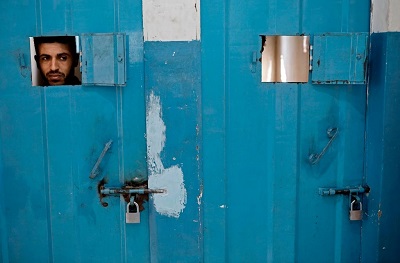
Kiedy Palestyńczycy są brutalnie torturowani i umierają z podejrzanych przyczyn w więzieniach Hamasu, te zgony ignoruje nie tylko Hamas, ale także społeczność międzynarodowa, organizacje praw człowieka i media. Na zdjęciu: Uwięziony Palestyńczyk w Gazie 7 listopada 2018 roku. (Zdjęcie: Thomas Coex/AFP via Getty Images)

Essam al-Sa’afeen, 39-letni Palestyńczyk z obozu uchodźców al-Bureij w centrum Strefy Gazy, zmarł 23 lutego, miesiąc po tym jak aresztowały go siły bezpieczeństwa Hamasu. Jego rodzina i przyjaciele żądają odpowiedzi od Hamasu w sprawie śmierci al-Sa’afeena, ojca sześciorga dzieci.

Hamas mówi, że ustanowił komisję dochodzeniową w sprawie okoliczności jego śmierci.

Według kontrolowanego przez Hamas ministerstwa spraw wewnętrznych, które zarządza palestyńskimi siłami bezpieczeństwa w Strefie Gazy, al-Sa’afeen zmarł wkrótce po tym, jak został przeniesiony z więzienia do szpitala. Ministerstwo mówi, że al-Sa’afeena natychmiast przetransportowano do szpitala po „nagłym pogorszeniu się jego stanu zdrowia”.

Palestyński Fatah, na którego czele stoi prezydent Autonomii Palestyńskiej (AP), Mahmoud Abbas, oskarżył Hamas o brutalne torturowanie al-Sa’afeena podczas jego uwięzienia.

Al-Sa’afeen był członkiem Fatahu i uprzednio służył jako policjant w siłach bezpieczeństwa AP, zanim Hamas siłą przejął władzę w Strefie Gazy w 2007 roku. 27 stycznia 2020 roku zamaskowani, uzbrojeni ludzie aresztowali al-Sa’afeena na ulicy obozu al-Bureij, podobno za jego członkostwo w Fatahu.

Hamas często aresztuje członków Fatahu w Strefie Gazy za polityczną działalność i krytykowanie przywódców i polityki Hamasu. Również zdominowana przez Fatah Autonomia Palestyńska na Zachodnim Brzegu regularnie aresztuje Palestyńczyków na Zachodnim Brzegu z powodu ich związków z Hamasem. Palestyńczycy nazywają rozprawy sił bezpieczeństwa obu stron „politycznie motywowanymi aresztowaniami”.

Śmierć al-Sa’afeena nie zdziwiła Palestyńczyków, którzy dobrze znają rozmaite metody tortur stosowane w więzieniach Hamasu i AP. Mieszczący się w Gazie Ośrodek Praw Człowieka Al-Mezan powiedział, że autopsja zwłok al-Sa’afeena, wykonana przez wydział patologii, wykazała „sińce i zmianę koloru skóry” – sugerując, że był fizycznie maltretowany.

“Ośrodek Al-Mezan ubolewa nad śmiercią zatrzymanego i wzywa do poważnego dochodzenia w sprawie warunków jego uwięzienia” – czytamy w oświadczeniu Ośrodka.

Ośrodek wezwał także Hamas do zbadania, czy al-Sa’afeen otrzymał opiekę lekarską podczas uwięzienia z powodu wysokiego ciśnienia krwi i cukrzycy, na które cierpiał.

Addammer, palestyńska organizacja praw człowieka na Zachodnim Brzegu, także wyraziła niepokój z powodu jego śmierci i wezwała do natychmiastowego dochodzenia.

Ta organizacja wezwała również do „dostarczania opieki medycznej zatrzymanym w ośrodkach internowania” i żądała, by Hamas rozpoczął „poważne dochodzenie w sprawie tego incydentu i pociągnął winnych do odpowiedzialności”.

Niezależna Komisja Praw Człowieka (ICHR), inna palestyńska organizacja, powiedziała, że dowiedziała się o zatrzymaniu al-Sa’afeena na początku lutego, kiedy jego rodzina zwróciła się do przedstawicieli organizacji z prośbą o pomoc. „Od kiedy ICHR otrzymała skargę rodziny, starała się odwiedzić al-Sa’afeena w więzieniu, żeby dowiedzieć się o warunki jego zatrzymania” – ujawniła organizacja.

“Agencja Bezpieczeństwa Wewnętrznego [Hamasu] odmówiła pozwolenia naszym przedstawicielom na odwiedzenie go. Żądamy karnego dochodzenia tego incydentu, publikacji wyników i pociągnięcia do odpowiedzialności winnych”.

Matka al-Sa’afeena podkreśliła, że Izraelczycy traktują Palestyńczyków dużo lepiej niż robi to Hamas. ”Kiedy Żydzi aresztują kogoś, kontaktują jego rodzinę, żeby powiedzieć, że go trzymają” – powiedziała.

“Hamas jednak odmówił nam jakiejkolwiek informacji o zatrzymaniu mojego syna lub o stanie jego zdrowia. Nie otrzymaliśmy żadnego telefonu od mojego syna i [Hamas] nie pozwolił nam wysłać mu ubrań, żywności ani lekarstw”.

Dodała, że Hamas nawet nie poinformował rodziny, że al-Sa’afeen został przeniesiony do szpitala. „Niechaj Bóg ukarze tych, którzy go napadli” – powiedziała.

“Żydzi pozwalają zatrzymanym dzwonić do ich rodzin. Nie dostaliśmy ani jednego telefonu. Powiedzieliśmy [Hamasowi], że jest chory i potrzebuje lekarstw, ale odmówili udzielenia mu jakiejkolwiek opieki medycznej. Do dzisiaj nie wiem, dlaczego mój syn został aresztowany”.

Palestyńska internetowa witryna informacyjna, Amad, wskazała, że tego samego dnia, kiedy al-Sa’afeen został uznany za zmarłego, izraelskie władze zainstalowały telefony do użytku przez więźniów z Hamasu trzymanych w izraelskich więzieniach.

Rodzina al-Sa’afeena wydała później oświadczenie, mówiąc, że w ich syn zmarł w więzieniu Hamasu w następstwie brutalnych tortur. Rodzina powiedziała, że uważa Hamas i jego siły bezpieczeństwa za w pełni odpowiedzialne za śmierć ich syna i wezwała do utworzenia niezależnej komisji do zbadania okoliczności i powodów jego śmierci.

Niestety, śmierć al-Sa’afeena nie jest pierwsza i widzimy tu powtarzający się wzór:

W 2011 roku, Hamas oznajmił o śmierci Ibrahima al-A’radża w jednym ze swoich więzień w dwa dni po jego aresztowaniu.

W 2015 roku rodzina Chaleda al-Balbisiego, 41 lat, oznajmiła, że zmarł on w więzieniu Hamasu trzy dni po aresztowaniu.

W 2016 roku palestyńska grupa praw człowieka wezwała do natychmiastowego dochodzenia w sprawie śmierci Aszrafa Eida, 40 lat, w więzieniu Hamasu w mieście Deir al-Balah w Strefie Gazy. Grupa powiedziała, że Eid zmarł w zaledwie trzy dni po aresztowaniu go przez siły bezpieczeństwa.

W 2017 roku inny Palestyńczyk. Chalil Abu Harb, z miasta Gaza, także zmarł w więzieniu Hamasu. Hamas obiecał wtedy zbadać ten incydent, ale wyniki nigdy nie zostały opublikowane. Według niektórych doniesień, Abu Harb popełnił samobójstwo.

Rok później inny zatrzymany, którego nazwiska nigdy nie ujawniono, został znaleziony martwy w celi więziennej w mieście Rafah w Strefie Gazy. Nikt również nigdy nie słyszał o wynikach jakiegokolwiek dochodzenia w tej sprawie.

Także w 2018 roku Palestyńczycy informowali, że 21-letni mężczyzna, którego tożsamość również nie jest znana, zmarł na „atak serca” w więzieniu Hamasu w północnej Strefie Gazy.

Rodziny al-Sa’afeena i innych Palestyńczyków, którzy zmarli w więzieniach Hamasu, łudzą się, jeśli sądzą, że kiedykolwiek otrzymają od Hamasu zadowalające wyjaśnienie okoliczności tych zgonów.

Wezwania rodzin o rozpoczęcie dochodzeń w sprawie śmierci ich synów w więzieniach Hamasu są ignorowane nie tylko przez Hamas, ale także przez społeczność międzynarodową, organizacje praw człowieka i media.

Ci palestyńscy więźniowie, którzy umarli z podejrzanych powodów, nie umarli w izraelskich więzieniach; być może dlatego nikogo w społeczności międzynarodowej nie wydaje się to obchodzić. Kiedy Palestyńczycy umierają w palestyńskich więzieniach, morderstwo jest przypuszczalnie uważane za dzieło rąk dzikich (podobno) Arabów, od których – z rasistowską pogardą – wymaga się niższych standardów zachowania niż od ludzi Zachodu i dlatego nie uważa się ich za godnych praw człowieka, odpowiedzialnego zarządzania, właściwych procedur prawnych ani równości wobec prawa.

Są najwyraźniej uważani za „tylko” palestyńskie rodziny skarżące się na brutalne tortury w palestyńskich więzieniach – więc międzynarodowe organizacje praw człowieka ich nawet nie zauważają.


Bassam Tawil
Muzułmański badacz i publicysta mieszkający na Bliskim Wschodzie.


Zawartość publikowanych artykułów i materiałów nie reprezentuje poglądów ani opinii Reunion’68,
ani też webmastera Blogu Reunion’68, chyba ze jest to wyraźnie zaznaczone.
Twoje uwagi, linki, własne artykuły lub wiadomości prześlij na adres:
webmaster@reunion68.com


Ontario Police Praised for Arresting Publisher of Antisemitic Polish-Language Newspaper

Ontario Police Praised for Arresting Publisher of Antisemitic Polish-Language Newspaper

Algemeiner Staff


Andrzej Kumor was arrested by police in Ontario for publishing antisemitic articles in his Polish-language newspaper. Photo: Screenshot.

One of Canada’s leading organizations combating antisemitism praised police in Ontario on Thursday for arresting and warning the publisher of a Polish-language newspaper that featured antisemitic content.

Andrzej Kumor — publisher of the Mississauga-based publication Goniec — was taken into custody last Sunday by police in the regional municipality of Peel.

Kumor used the paper to accuse Jews and Zionists of having “terrorism in their blood,” and claimed that “Jews are spying on you” using the WhatsApp cellphone application.

He further alleged that the governments of the United States and Poland were being controlled by sinister Jewish forces.

“We salute the Peel Regional Police for their diligence in pursuing this matter, and hope that Mr. Kumor has learned his lesson,” said Michael Mostyn, chief executive officer of B’nai Brith Canada. “It is a criminal offense in Canada to wilfully promote hatred against an identifiable group. B’nai Brith will continue to relentlessly pursue these incidents, so that incitement against the Jewish community and other groups cannot proceed with impunity.”

Police officers cautioned Kumor that any further promotion of hatred against Jews would result in charges being brought against him under the Criminal Code. They then released him without formal charges for the present at time.

Shortly afterward, the offending articles were all deleted from the Goniec website, while the YouTube video in which Kumor had accused Jews and Zionists of having “terrorism in their blood” was removed from public view.

Last October, Kumor ran unsuccessfully for a seat in the Polish parliament with the far-right Konfederacja (“Confederation”) party.

Konfederacja has a long history of antisemitism, with its leader asserting in May 2019 that the “American empire here is the political and military tool of Jewish blackmail against Poland.”


Zawartość publikowanych artykułów i materiałów nie reprezentuje poglądów ani opinii Reunion’68,
ani też webmastera Blogu Reunion’68, chyba ze jest to wyraźnie zaznaczone.
Twoje uwagi, linki, własne artykuły lub wiadomości prześlij na adres:
webmaster@reunion68.com


The Missing Miracles of Marc Klionsky

The Missing Miracles of Marc Klionsky

MENACHEM WECKER


Born in the Soviet Union, the painter took on everything and everybody from Dizzy Gillespie to New York street life to the Holocaust. When will he get his full due?

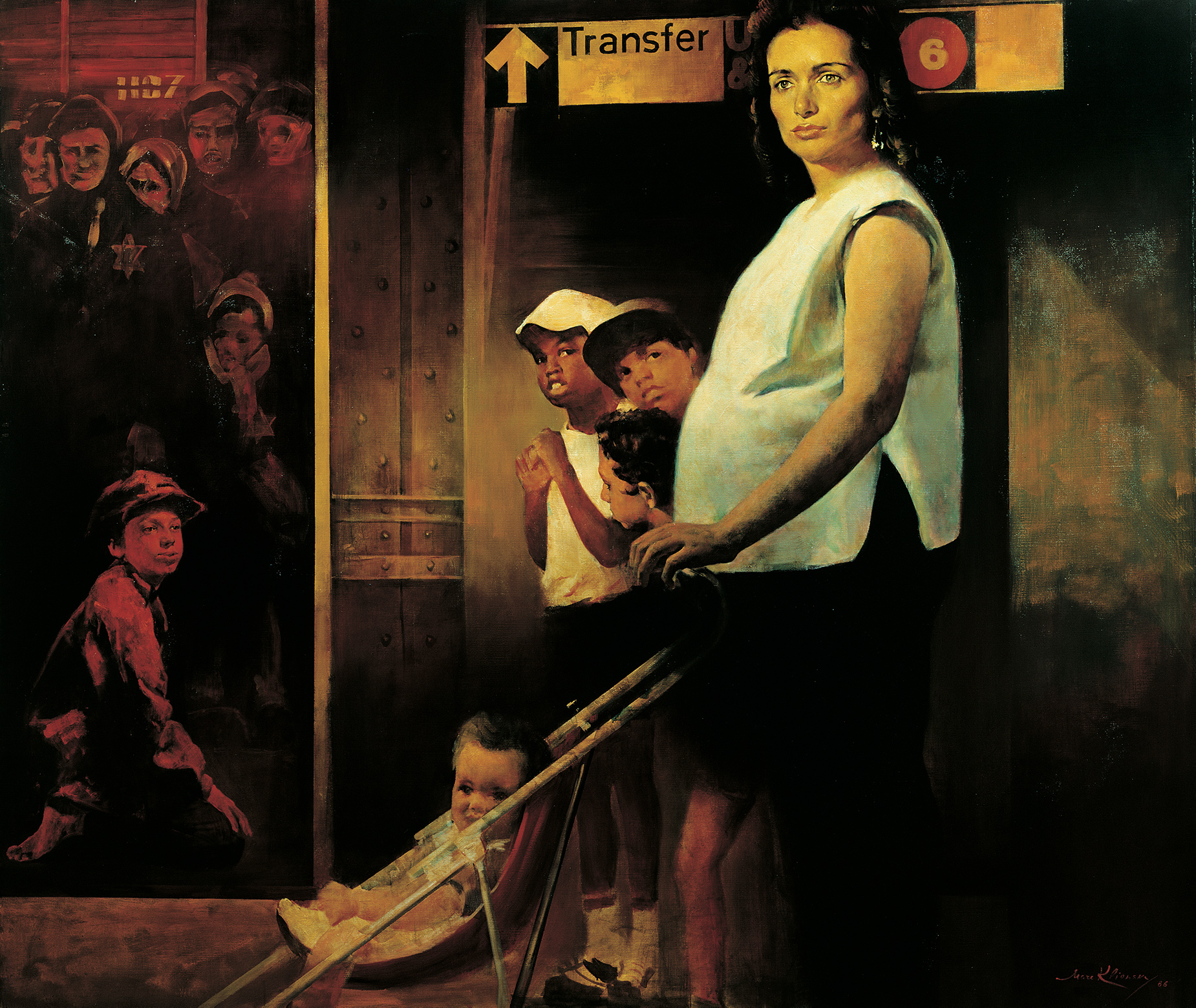
Waiting for the Train (1986) by Marc Klionsky, currently at the Yad Vashem Art Museum in Jerusalem. Marc Klionsky Estate.

One of the occasional gifts of life as an art critic is the opportunity to rescue from oblivion the work of a relatively unknown artist. In this case, unknown to oneself—for, until recently, and despite having written about Jewish art for nearly two decades, I’d been virtually unacquainted with Marc Klionsky, who was born in Russia in 1927 and from 1974 until his death in 2017 lived and painted in New York City. Today, the more I’ve become acquainted with his work, the more I’m reminded of the plea entered by Willy Loman’s devoted wife in Death of a Salesman: “Attention, attention must finally be paid to such a person.”

Unlike the pathetic Linda Loman, Klionsky’s widow Irina speaks dotingly of her husband’s life as a series of miracles. In 1941, the Minsk-born fourteen-year-old, who had evinced artistic promise from an early age, fled the approaching Nazis with his family and 200 other members of the Jewish community to settle in Kazan (now the capital of Russian Tatarstan). At the end of the war, the young Klionsky moved to Leningrad, soon to become the star student at the city’s academy of fine arts. In the wave of regime-sponsored anti-Semitism stirred up by the so-called “Doctors’ Plot,” he was forced out, only to be readmitted after Stalin’s death in 1953. Graduating with honors, he went on, in a first for a Jew, to postgraduate studies at the same academy.

Having set up shop as a working artist, Klionsky earned regular commissions from the Soviet Ministry of Culture, creating social-realist and propagandistic works. In Youth, for example, a young man dressed in khaki climbs a ladder into the painting; on a platform above, a joyous young woman holds her billowing hair in her hands as she takes in the view. But he was constrained from touching the themes most dear to him: namely, Jewish life and Zionism.

By 1961, however, stirred by a close call with a tumor, he resolved to focus on what he saw as his greater purpose in art: to depict the devastating impact on Jewry of the Holocaust. He realized this ambition in a series of secret prints and engravings that he collectively titled Lest People Forget. In technique, these recall the lithographs of Honoré Daumier; in subject matter, the intensely haunting war drawings of the German artist Käthe Kollwitz (1867-1945).

When some of Klionsky’s work came to be included in an exhibit at a London gallery, Klionsky was hauled into a KGB office and interrogated by an official demanding to know how this breach of Moscow’s iron protocols had occurred. Although he talked his way out of the jam, he knew he was on the KGB’s radar—and that it was time to leave. (Later, the London dealer, Eric Estorick, would arrange for a joint show of Klionsky and Marc Chagall.)

More “miracles” loomed. In 1974, as Klionsky, his wife, and their two daughters readied themselves for emigration to the U.S., he managed to secrete many of the Jewish sketches and prints amid piles of works on “secular” subjects—and then to convince unsuspecting officials to stamp the backs for clearance without inspecting each one. Unfortunately, the engraving plates had to stay behind, thrown into the river by Klionsky himself. Among the roughly 300 paintings and 1,500 works on paper in his widow’s possession today, some still bear their exit stamps.

Nor was that the final miracle. A Russian gallerist from whom Klionsky was gathering some of his unsold works stuck her neck out for him by confiding the name of the employer of an overseas collector who had purchased multiple paintings. By chance, in the Klionskys’ first week in New York, they would meet someone who knew someone who knew the mysterious buyer.

A year after movingto New York, Klionsky went on an official trip to Israel to paint one of the last portraits for which Golda Meir would sit. For this and other, subsequent portraits he attracted the notice of the critic John Russell at the New York Times, who in 1988 would gush: “Marc Klionsky is one of the best portraitists around, and he has an astute eye for the body language of people who cannot quite talk their way through their difficulties.”

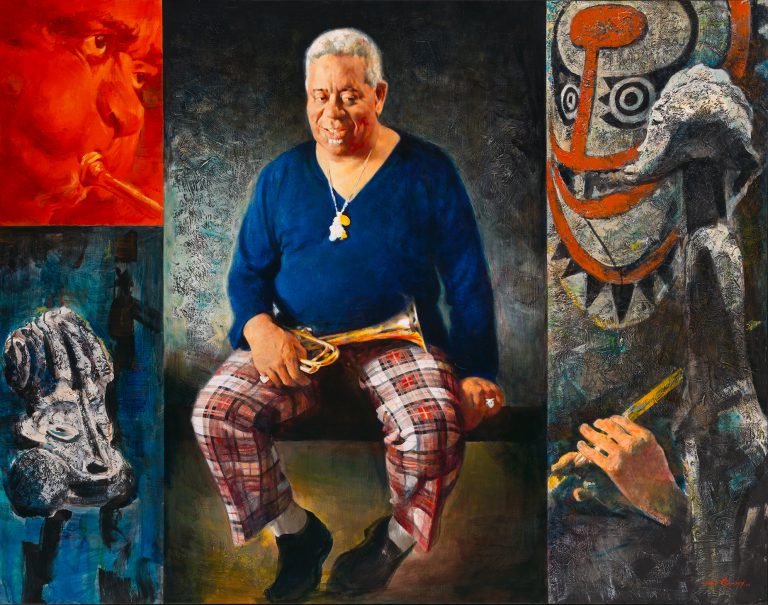
In that same year, the great jazz musician Dizzy Gillespie sat for a portrait that hangs today in the National Portrait Gallery in Washington. Two years earlier, Klionsky had designed a commemorative Nobel Peace Prize medal for Elie Wiesel, whose portrait he also painted. Years later, in the introduction to a 2004 book about Klionsky, Wiesel wrote:

I dream of Rabbi Naḥman of Bratslav for whom everything had a heart: the heart itself has a heart, he said. For Marc, the face also has a face; the latter alone makes us guess its upsetting secret of truth.

In view of all this, it’s surprising that Klionsky’s name is absent today from the websites of the Jewish Museum and the Museum of Jewish Heritage, both in New York, as well as of the Contemporary Jewish Museum in San Francisco, the National Museum of American Jewish History in Philadelphia, and the Skirball Cultural Center in Los Angeles. An exception is Yeshiva University Museum in New York, whose collection includes an undated, expressionist painting titled The Fiddler. Another tantalizing exception may be the embassy of Saudi Arabia in Washington, which owns Klionsky’s 1995 portrait of Bandar bin Sultan, the Saudi prince and former ambassador to the United States. (The embassy didn’t respond to my query.)

For a tasteof Klionsky’s art, let’s dwell briefly on the portrait of Dizzy Gillespie that hangs in the exhibit Bravo! on the third floor of the National Portrait Gallery. Nearby are renderings of such familiar performers as Joan Baez, Elvis Presley, Bob Hope, and Grace Kelly. Klionsky’s portrait is one of the show’s most nuanced.

Dizzy Gillespie (1988) by Marc Klionsky. National Portrait Gallery.

In what is a sort of triptych, the center section, the work’s largest, shows the seated Gillespie wearing a blue shirt and plaid pants, his trumpet on his lap and a half-smile on his face, his eyes looking down and away from the viewer. From a distance the brushwork appears deceptively slick; up close, one can admire the artist’s masterful mingling of calligraphic lines with bold strokes of color that he doesn’t trouble to pretty up. In the painting’s left-hand panel, the top corner gives us a different, zoomed-in portrait of Gillespie’s face as, cheeks puffed out, he plays the trumpet; this entire segment is rendered in red and yellow, with a yellow squiggle on the mouthpiece making practically an abstract painting all its own.

In talking with Gillespie prior to painting the portrait, Klionsky came to appreciate the African (and Afro-Indonesian) influences on his music. These are reflected here in imagery he may have gleaned in visits to the Metropolitan Museum of Art. In the triptych’s right-hand panel, Klionsky gives us in meticulous closeup a figure holding a wooden flute, a large early-20th century mask created by the Elema peoples of Papua New Guinea, and a smaller sculpted figure whose protruding chin recalls the work of the Senufo peoples of the Ivory Coast. In the bottom corner of the left-hand panel we find another mask, this one a 19th-century creation from Cameroon. Thus, overall, we have the full man in the middle of the portrait and on the edges a flavor of what his music means and whence it came.

Standing in Klionsky’sformer studio in lower Manhattan, I noticed, hanging from the ceiling, a large rectangular graphite drawing: the artist’s vision for a Holocaust memorial. Sadly never realized, it provides a key to understanding his mind as an artist and his soul as, in particular, a Jewish artist.

Massive stones form the Hebrew word “remember” (zakhor), dwarfing the pedestrians crouched below in a manner reminiscent of the biblical spies in the book of Numbers who in reporting back to Moses describe themselves as feeling like grasshoppers in comparison with the plus-sized Canaanites. From the depths of the drawing there emerge a tallit and two arms clutching a rifle. Klionsky’s ultimate ambition, I learned from his family, was to create an entire park on the same monumental scale.

I began to daydream about what such a monument would look like on the National Mall. At a time when Jewish blood has once again become cheap, its title could be De Profundis (Latin) or mi-ma’amakim (Hebrew, Psalm 130): from out of the depths. As it is, the sketch offers one of art history’s most powerful illustrations of, simultaneously, “Never Forget” and “Never Again.”

On a smaller scale but no less momentous is Waiting for the Train (1986), at Yad Vashem in Jerusalem. On the right, a very pregnant woman with a toddler in a stroller stands with three other children on a New York City subway platform as if looking expectantly for a train. Above and behind her, a “Transfer” sign with an arrow directing passengers to a number-6 train creates a near-halo around her head. Extreme light and shadow make the figures appear to be on stage, with the viewer gazing slightly upward at them either from the pit below, as it were, or from the window of a train newly arriving.

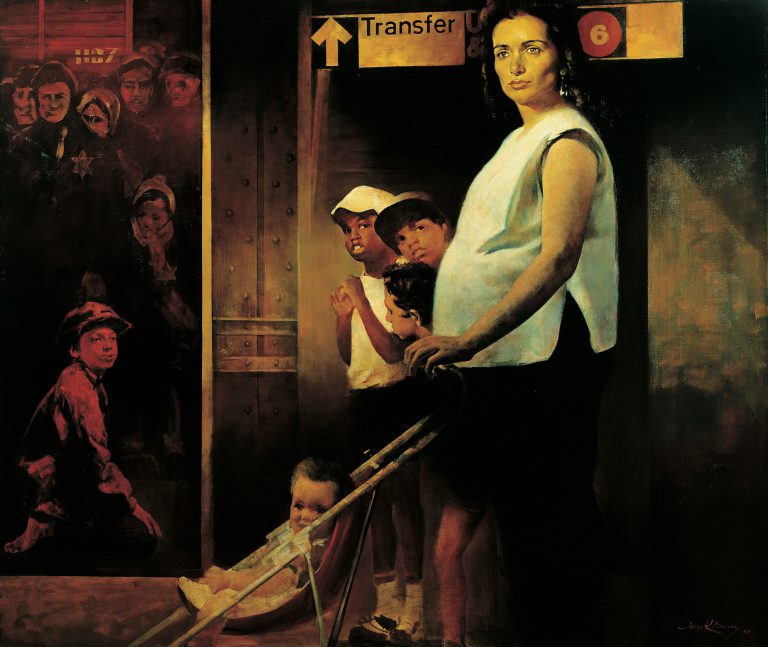
Waiting for the Train (1986) by Marc Klionsky. Marc Klionsky Estate.

On the left side, a Jewish boy in oversized clothing and a newsboy cap throws something or picks something up; behind him, several Jews wearing yellow stars emerge from the shadows of a train marked “1107.” Past and present seem mutually oblivious, each of the other, but the Jewish figures on the left appear at least somewhat aware of their fate while the mother on the right deals grimly with the complicated challenge of navigating the city with young children in tow and another on the way.

Beyond its ominous layering of past and present, of concentration camp and New York City, the painting displays much technical prowess. Thus, the sharp diagonal of the Jewish boy’s arm on the left balances the corresponding angle of the stroller frame on the right, forming a triangle that culminates below a heavy vertical line that functions as a kind of barrier between past and present while also forming an arrow that echoes, in reverse, the arrow on the Transfer sign above.

A symphony of deep shadows, indifferent to chronology, crisscrosses this composition; throughout, hats and eyes reverberate. The palette is such as to leave one thinking that a bit of the color on the right has begun to animate the sepia tone on the left. It’s hard to visualize such a balance, but in this work Klionsky has seamlessly collaged the beautiful and the terrifying—just as, throughout his artistic career, he was haunted by the amalgamation of prayer with the need, and the duty, to arm oneself.

In pursuing their familial duty of securing the late artist’s legacy, Klionsky’s widow, daughter, and grandson have their work cut out for them. Still, in light of his many accomplishments, there’s plenty to work with. The admonitory title of his sketches and prints, Lest People Forget, applies both to Klionsky’s chosen Jewish subjects and to the artist who imagined and created them.


Menachem Wecker, a freelance journalist based in Washington DC, covers art, culture, religion, and education for a variety of publications.


Zawartość publikowanych artykułów i materiałów nie reprezentuje poglądów ani opinii Reunion’68,
ani też webmastera Blogu Reunion’68, chyba ze jest to wyraźnie zaznaczone.
Twoje uwagi, linki, własne artykuły lub wiadomości prześlij na adres:
webmaster@reunion68.com