Archive | June 2020

Co kanadyjski żołnierz uświadomił mi o IDF

Co kanadyjski żołnierz uświadomił mi o IDF

Aboud Dandachi
Tłumaczenie: Andrzej Koraszewski


Kanadyjskie Siły Zbrojne

James A. Michener, w swojej powieści The Source , opisuje scenę, w której amerykański filantrop, Paul Zodman zwiedza izraelskie wykopaliska archeologiczne, które wspierał finansowo. Potem jest gościem kibucu, ogląda konkurs wiedzy biblijnej i bierze udział w obchodach na cześć brytyjskiego oficera Orde Wingate’a, który pomagał tworzyć struktury przyszłego żydowskiego państwa. Zodman uświadamia sobie, że widział coś, czego nie zapomni – widział izraelskiego żołnierza.

“Przez dwa tysiące lat, kiedy my, Żydzi, widzieliśmy żołnierza, nie wróżyło to nic dobrego. Żołnierz nie mógł być Żydem. Był wrogiem. Niemałą rzeczą jest widok żydowskiego żołnierza, stojącego na własnej ziemi i gotowego do jej obrony.”

Jako Syryjczyk miałem pewien problem, w moim kraju żołnierze wyznają tę samą religię co ja, jednak żaden Arab nie ma ochoty na spotkanie z żołnierzem żadnej arabskiej armii. Przez całe moje życie widok wojskowego munduru budził lęk.

Z ciekawością odwiedziłem wystawę Kanadyjskich Sił Zbrojnych podczas Wystawy Krajowej w 2018 roku. Pokazywali różne rodzaje broni i techniki kamuflażu. Zafascynowało mnie artyleryjskie działo, lśniące jakby nigdy nie znało wojny. Obok działa stał młody kanadyjski żołnierz o azjatyckich rysach twarzy, wyglądający na człowieka bardziej inteligentnego niż jakikolwiek żołnierz syryjski.

Z samej ciekawości zapytałem go, ile szkody może taka armata narobić?

“Trudno powiedzieć – odpowiedział – Strzelałem z takiej armaty, ale nigdy nie byłem po drugiej stronie.”

I mam nadzieję, że nigdy nie będziesz – pomyślałem – ja byłem celem artyleryjskiego ostrzału ze strony syryjskiej armii w moim rodzinnym mieście Homs.

Zarzuciłem go pytaniami, ponieważ po raz pierwszy w moim życiu mogłem normalnie rozmawiać z człowiekiem w wojskowym mundurze. Z kimś, kto nie jest zagrożeniem ani dla mnie, ani dla moich bliskich.

Pod koniec rozmowy zapytałem go , co go skłoniło do wyboru życia w wojsku?

Izraelski mundur z przyszytą izraelswką flagą.

“Kiedyś ktoś mi powiedział, że prawdziwy żołnierz nie walczy dlatego, że nienawidzi tego, co jest przed nim, ale dlatego, że broni tego, co jest za nim” – powiedział.

W tym momencie zrozumiałem coś, co dręczyło mnie od pewnego czasu: moi żydowscy kanadyjscy przyjaciele, których dzieci po ukończeniu liceum lub uniwersytetu decydowały się na wyjazd do Izraela, żeby odbyć służbę w IDF. Syn jednego z przyjaciół służył w brygadzie Nahal, w której rytuał ukończenia służby, to długi marsz na trasie 400 kilometrów. Inny młody człowiek po ukończeniu normalnej służby został jeszcze na rok w IDF.

Teraz wreszcie zrozumiałem, co kieruje tymi młodymi ludźmi, którzy na ochotnika decydują się na służbę w Kanadyjskich Siłach Zbrojnych.

Ten kanadyjski żołnierz, podobnie jak jego koledzy, zaciągnął się z miłości do ojczyzny i z chęci bronienia tego, co kocha. W syryjskiej armii najlepsza służba jest tam, gdzie oficerowie mogą zarobić na szmuglu.

Armia składająca się z mężczyzn i kobiet kierujących się miłością do swojego kraju będzie zawsze bardziej skuteczną i bardziej moralną siłą niż armia idąca na podbój i rabunek. A mierząc to jakąkolwiek obiektywną miarą, IDF jest jedną z najbardziej moralnych, jeśli nie najbardziej moralną armią na świecie.

Kiedy syryjska armia zmieniała syryjskie miasta w ruiny, IDF dostarczyła medycznej pomocy ponad dwunastu tysiącom Syryjczyków. Izraelski rząd i zwykli Izraelczycy wydali miliony dolarów na szpitale polowe w samej Syrii.

To do Izraela zwrócił się kanadyjski minister spraw zagranicznych, Chrystian Freeland z apelem o pomoc w wyciągnięciu z Syrii Białych Hełmów – syryjskiej służby obrony cywilnej, grupy, która gdyby wpadła w ręce syryjskiej armii wkraczającej w pobliże Golanu, jej członków spotkałaby pewna śmierć.

Liczą się fakty. A niezaprzeczalnym faktem jest to, że gdyby syryjska armia była w połowie tak moralna jak jest IDF, ani jeden Syryjczyk nie zostałby uchodźcą.

Od czasu wizyty na tej wystawie, zacząłem się interesować historią kanadyjskiej armii. Na mojej półce znalazła się książka Pierre’a Bertona Vimy, Terrego Coppa Cinderella Army i EllinBessner Double Threat, historia siedemnastu tysięcy Kanadyjczyków żydowskiego pochodzenia, którzy brali udział w drugiej wojnie światowej. Zarówno Kanada, jak i Izrael mają powód do dumy z historii swoich armii i z powodu tego, że są to wysoce moralne armie.

Chciałbym móc to powiedzieć o armii syryjskiej…


Aboud  Dandachi – Były syryjski uchodźca, który przyjechał do Kanady w 2017 r. w ramach kanadyjskiego programu przesiedleń uchodźców. Publikował w wielu mediach kanadyjskich, w BBC, NPR oraz w prasie izraelskiej i tureckiej. Jego konto na Twitterze: @abouddandachi


Zawartość publikowanych artykułów i materiałów nie reprezentuje poglądów ani opinii Reunion’68,
ani też webmastera Blogu Reunion’68, chyba ze jest to wyraźnie zaznaczone.
Twoje uwagi, linki, własne artykuły lub wiadomości prześlij na adres:
webmaster@reunion68.com


A Brief History of Antifa: Part I

A Brief History of Antifa: Part I

Soeren Kern


  • Empirical and anecdotal evidence shows that Antifa is, in fact, highly networked, well-funded and has a global presence. It has a flat organizational structure with dozens and possibly hundreds of local groups.
  • Antifa’s stated long-term objective, both in America and abroad, is to establish a communist world order. In the United States, Antifa’s immediate aim is to bring about the demise of the Trump administration.
  • A common tactic used by Antifa in the United States and Europe is to employ extreme violence and destruction of public and private property to goad the police into a reaction, which then “proves” Antifa’s claim that the government is “fascist.”
  • Antifa is not only officially tolerated, but is being paid by the German government to fight the far right. — Bettina Röhl, German journalist, Neue Zürcher Zeitung, June 2, 2020.
  • “Out of cowardice, its members cover their faces and keep their names secret. Antifa constantly threatens violence and attacks against politicians and police officers. It promotes senseless damage to property amounting to vast sums.” — Bettina Röhl, Neue Zürcher Zeitung, June 2, 2020.

A common tactic used by Antifa in the United States and Europe is to employ extreme violence and destruction of public and private property to goad the police into a reaction, which then “proves” Antifa’s claim that the government is “fascist.” Pictured: A senior citizen flees after being brutally beaten by members of Rose City Antifa on June 29, 2019 in Portland, Oregon. (Photo by Moriah Ratner/Getty Images)

U.S. Attorney General William Barr has blamed Antifa — a militant “anti-fascist” movement — for the violence that has erupted at George Floyd protests across the United States. “The violence instigated and carried out by Antifa and other similar groups in connection with the rioting is domestic terrorism and will be treated accordingly,” he said.

Barr also said that the federal government has evidence that Antifa “hijacked” legitimate protests around the country to “engage in lawlessness, violent rioting, arson, looting of businesses, and public property assaults on law enforcement officers and innocent people, and even the murder of a federal agent.” Earlier, U.S. President Donald J. Trump had instructed the U.S. Justice Department to designate Antifa as a terrorist organization.

Academics and media outlets sympathetic to Antifa have argued that the group cannot be classified as a terrorist organization because, they claim, it is a vaguely-defined protest movement that lacks a centralized structure. Mark Bray, a vocal apologist for Antifa in America and author of the book “Antifa: The Anti-Fascist Handbook,” asserts that Antifa “is not an overarching organization with a chain of command.”

Empirical and anecdotal evidence shows that Antifa is, in fact, highly networked, well-funded and has a global presence. It has a flat organizational structure with dozens and possibly hundreds of local groups. Not surprisingly, the U.S. Department of Justice is currently investigating individuals linked to Antifa as a step to unmasking the broader organization.

In the United States, Antifa’s ideology, tactics and goals, far from being novel, are borrowed almost entirely from Antifa groups in Europe, where so-called anti-fascist groups, in one form or another, have been active, almost without interruption, for a century.

What is Antifa?

Antifa can be described as a transnational insurgency movement that endeavors, often with extreme violence, to subvert liberal democracy, with the aim of replacing global capitalism with communism. Antifa’s stated long-term objective, both in America and abroad, is to establish a communist world order. In the United States, Antifa’s immediate aim is to bring about the demise of the Trump administration.

Antifa’s nemeses include law enforcement, which is viewed as enforcing the established order. A common tactic used by Antifa in the United States and Europe is to employ extreme violence and destruction of public and private property to goad the police into a reaction, which then “proves” Antifa’s claim that the government is “fascist.”

Antifa claims to oppose “fascism,” a term it often uses as a broad-brush pejorative to discredit those who hold opposing political beliefs. The traditional meaning of “fascism” as defined by Webster’s Dictionary is “a totalitarian governmental system led by a dictator and emphasizing an aggressive nationalism, militarism, and often racism.”

Antifa holds the Marxist-Leninist definition of fascism which equates it with capitalism. “The fight against fascism is only won when the capitalist system has been shattered and a classless society has been achieved,” according to the German Antifa group, Antifaschistischer Aufbau München.

Germany’s BfV domestic intelligence agency, in a special report on left-wing extremism, noted:

“Antifa’s fight against right-wing extremists is a smokescreen. The real goal remains the ‘bourgeois-democratic state,’ which, in the reading of left-wing extremists, accepts and promotes ‘fascism’ as a possible form of rule and therefore does not fight it sufficiently. Ultimately, it is argued, ‘fascism’ is rooted in the social and political structures of ‘capitalism.’ Accordingly, left-wing extremists, in their ‘antifascist’ activities, focus above all on the elimination of the ‘capitalist system.'”

Matthew Knouff, author of An Outsider’s Guide to Antifa: Volume II, explained Antifa’s ideology this way:

“The basic philosophy of Antifa focuses on the battle between three basic forces: fascism, racism and capitalism — all three of which are interrelated according to Antifa…. with fascism being considered the final expression or stage of capitalism, capitalism being a means to oppress, and racism being an oppressive mechanism related to fascism.”

In an essay, “What Antifa and the Original Fascists Have In Common,” Antony Mueller, a German professor of economics who currently teaches in Brazil, described how Antifa’s militant anti-capitalism masquerading as anti-fascism reveals its own fascism:

“After the left has pocketed the concept of liberalism and turned the word into the opposite of its original meaning, the Antifa-movement uses a false terminology to hide its true agenda. While calling themselves ‘antifascist’ and declaring fascism the enemy, the Antifa itself is a foremost fascist movement.

“The members of Antifa are not opponents to fascism but themselves its genuine representatives. Communism, Socialism and Fascism are united by the common band of anti-capitalism and anti-liberalism.

“The Antifa movement is a fascist movement. The enemy of this movement is not fascism but liberty, peace and prosperity.”

Antifa’s Ideological Origins

The ideological origins of Antifa can be traced back to the Soviet Union roughly a century ago. In 1921 and 1922, the Communist International (Comintern) developed the so-called united front tactic to “unify the working masses through agitation and organization” … “at the international level and in each individual country” against “capitalism” and “fascism” — two terms that often were used interchangeably.

The world’s first anti-fascist group, Arditi del Popolo (People’s Courageous Militia), was founded in Italy in June 1921 to resist the rise of Benito Mussolini’s National Fascist Party, which itself was established to prevent the possibility of a Bolshevik revolution on the Italian Peninsula. Many of the group’s 20,000 members, consisting of communists and anarchists, later joined the International Brigades during the Spanish Civil War (1936–39).

In Germany, the Communist Party of Germany established the paramilitary group Roter Frontkämpferbund (Red Front Fighters League) in July 1924. The group was banned due to its extreme violence. Many of its 130,000 members continued their activities underground or in local successor organizations such as the Kampfbund gegen den Faschismus (Fighting-Alliance Against Fascism).

In Slovenia, the militant anti-fascist movement TIGR was established in 1927 to oppose the Italianization of Slovene ethnic areas after the collapse of the Austro-Hungarian Empire. The group, which was disbanded in 1941, specialized in assassinating Italian police and military personnel.

In Spain, the Communist Party established the Milicias Antifascistas Obreras y Campesinas (Antifascist Worker and Peasant Militias), which were active in the 1930s.

The modern Antifa movement derives its name from a group called Antifaschistische Aktion, founded in May 1932 by Stalinist leaders of the Communist Party of Germany. The group was established to fight fascists, a term the party used to describe all of the other pro-capitalist political parties in Germany. The primary objective of Antifaschistische Aktion was to abolish capitalism, according to a detailed history of the group. The group, which had more than 1,500 founding members, went underground after Nazis seized power in 1933.

A German-language pamphlet — “80 Years of Anti-Fascist Actions” (80 Jahre Antifaschistische Aktion)” — describes in minute detail the continuous historical thread of the Antifa movement from its ideological origins in the 1920s to the present day. The document states:

“Antifascism has always fundamentally been an anti-capitalist strategy. This is why the symbol of the Antifaschistische Aktion has never lost its inspirational power…. Anti-fascism is more of a strategy than an ideology.”

During the post-war period, Germany’s Antifa movement reappeared in various manifestations, including the radical student protest movement of the 1960s, and the leftist insurgency groups that were active throughout the 1970s, 1980s and 1990s.

The Red Army Faction (RAF), also known as the Baader-Meinhof Gang, was a Marxist urban guerrilla group that carried out assassinations, bombings and kidnappings aimed at bringing revolution to West Germany, which the group characterized as a fascist holdover of the Nazi era. Over the course of three decades, the RAF murdered more than 30 people and injured over 200.

After the collapse of the communist government in East Germany in 1989-90, it was discovered that the RAF had been given training, shelter, and supplies by the Stasi, the secret police of the former communist regime.

John Philip Jenkins, Distinguished Professor of History at Baylor University, described the group’s tactics, which are similar to those used by Antifa today:

“The goal of their terrorist campaign was to trigger an aggressive response from the government, which group members believed would spark a broader revolutionary movement.”

RAF founder Ulrike Meinhof explained the relationship between violent left-wing extremism and the police: “The guy in uniform is a pig, not a human being. That means we don’t have to talk to him and it is wrong to talk to these people at all. And of course, you can shoot.”

Bettina Röhl, a German journalist and daughter of Meinhof, argues that the modern Antifa movement is a continuation of the Red Army Faction. The main difference is that, unlike the RAF, Antifa’s members are afraid to reveal their identities. In a June 2020 essay published by the Swiss newspaper Neue Zürcher Zeitung, Röhl also drew attention to the fact that Antifa is not only officially tolerated, but is being paid by the German government to fight the far right:

“The RAF idolized the communist dictatorships in China, North Korea, North Vietnam, in Cuba, which were transfigured by the New Left as better countries on the right path to the best communism….

“The flourishing left-wing radicalism in the West, which brutally strikes at the opening of the European Central Bank headquarters in Frankfurt, at every G-20 summit or every year on May 1 in Berlin, has achieved the highest level of establishment in the state, not least thanks to the support by quite a few MPs from political parties, journalists and relevant experts.

“Compared to the RAF, the militant Antifa only lacks prominent faces. Out of cowardice, its members cover their faces and keep their names secret. Antifa constantly threatens violence and attacks against politicians and police officers. It promotes senseless damage to property amounting to vast sums. Nevertheless, MP Renate Künast (Greens) recently complained in the Bundestag that Antifa groups had not been adequately funded by the state in recent decades. She was concerned that ‘NGOs and Antifa groups do not always have to struggle to raise money and can only conclude short-term employment contracts from year to year.’ There was applause for this from Alliance 90 / The Greens, from the left and from SPD deputies.

“One may ask the question of whether Antifa is something like an official RAF, a terrorist group with money from the state under the guise of ‘fighting against the right.'”

Germany’s BfV domestic intelligence agency explains Antifa’s glorification of violence:

“For left-wing extremists, ‘Capitalism’ is interpreted as triggering wars, racism, ecological disasters, social inequality and gentrification. ‘Capitalism’ is therefore more than just a mere economic order. In left-wing extremist discourse, it determines the social and political form as well as the vision of a radical social and political reorganization. Whether anarchist or communist: Parliamentary democracy as a so-called bourgeois form of rule should be ‘overcome’ in any case.

“For this reason, left-wing extremists usually ignore or legitimize human rights violations in socialist or communist dictatorships or in states that they allegedly see threatened by the ‘West.’ To this day, both orthodox communists and autonomous activists justify, praise and celebrate the left-wing terrorist Red Army Faction or foreign left-wing terrorists as alleged ‘liberation movements’ or even ‘resistance fighters.'”

Meanwhile, in Britain, Anti-Fascist Action (AFA), a militant anti-fascist group founded in 1985, gave birth to the Antifa movement in the United States. In Germany, the Antifaschistische Aktion-Bundesweite Organisation (AABO) was founded in 1992 to combine the efforts of smaller Antifa groups scattered around the country.

In Sweden, Antifascistisk Aktion (AFA), a militant Antifa group founded in 1993, established a three-decade track record for using extreme violence against its opponents. In France, the Antifa group L’Action antifasciste, is known for its fierce opposition to the State of Israel.

After the fall of the Berlin Wall in 1989 and the collapse of communism in 1990, the Antifa movement opened a new front against neoliberal globalization.

Attac, established in France in 1989 to promote a global tax on financial transactions, now leads the so-called alter-globalization movement, which, like the Global Justice Movement, is opposed to capitalism. In 1999, Attac was present in Seattle during violent demonstrations that led to the failure of WTO negotiations. Attac also participated in anti-capitalist demonstrations against the G7, the G20, the WTO, and the war in Iraq. Today, the association is active in 40 countries, with more than a thousand local groups and hundreds of organizations supporting the network. Attac’s decentralized and non-hierarchical organizational structure appears to be the model being used by Antifa.

In February 2016, the International Committee of the Fourth International advanced the political foundations of the global anti-war movement, which, like Antifa, blames capitalism and neoliberal globalism for the existence of military conflict:

“The new anti-war movement must be anti-capitalist and socialist, since there can be no serious struggle against war except in the fight to end the dictatorship of finance capital and the economic system that is the fundamental cause of militarism and war.”

In July 2017, more than 100,000 anti-globalization and Antifa protesters converged on the German city of Hamburg to protest the G20 summit. Leftist mobs laid waste to the city center. An Antifa group called “G20 Welcome to Hell” bragged about how it was able to mobilize Antifa groups from across the world:

“The summit mobilizations have been precious moments of meeting and co-operation of left-wing and anti-capitalist groups and networks from all over Europe and world-wide. We have been sharing experiences and fighting together, attending international meetings, being attacked by cops supported by the military, re-organizing our forces and fighting back. Anti-globalization movement has changed, but our networks endure. We are active locally in our regions, cities, villages and forests. But we are also fighting trans-nationally.”

Germany’s domestic security service, in an annual report, added:

“Left-wing extremist structures tried to shift the public debate about the violent G20 summit protests in their favor. With the distribution of photos and reports of allegedly disproportionate police measures during the summit protests, they promoted an image of a state that denounced legitimate protests and put them down with police violence. Against such a state, they said, ‘militant resistance’ is not only legitimate, but also necessary.”


Part II of this series will examine the activities of Antifa in Germany and the United States.

Soeren Kern is a Senior Fellow at the New York-based Gatestone Institute.


Zawartość publikowanych artykułów i materiałów nie reprezentuje poglądów ani opinii Reunion’68,
ani też webmastera Blogu Reunion’68, chyba ze jest to wyraźnie zaznaczone.
Twoje uwagi, linki, własne artykuły lub wiadomości prześlij na adres:
webmaster@reunion68.com


Dutch church group walks back call for EU sanctions against Israel

Dutch church group walks back call for EU sanctions against Israel

CNAAN LIPHSHIZ/JTA


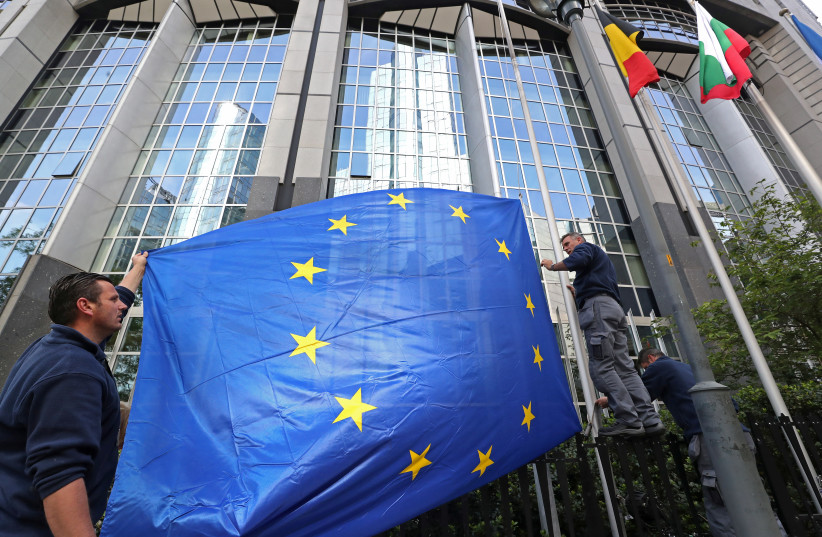
Workers adjust a European flag outside the EU Parliament ahead of the EU elections in Brussels / (photo credit: YVES HERMAN / REUTERS)

AMSTERDAM — Following internal debate, a large Dutch church group retracted and apologized for its call for EU sanctions against Israel.

The Council of Churches, an umbrella of 18 churches and denominations, issued its unusual apology in a statement Thursday. The group took back its letter from last month to Foreign Minister Stef Blok urging him to scrap trade deals between the European Union and Israel if Israel applies its civilian laws in West Bank lands, a move some call annexation.

“We’re sorry that the letter brought to the minister’s attention has led to concern and confusion,” the council wrote in the statement.

The letter to Blok was a copy of an open letter published by the Geneva-based World Council of Churches, of which the Dutch council is a member.
Had the Dutch Council written its own letter, the retraction read, “it would have conveyed more carefully the ideas we wanted to express. ”
“We don’t wish to speak over specific sanctions or penal action, this is the responsibility of the political domain,” the statement said.

Three churches said that Thursday’s statement does not reflect their views. Two had vocally protested the letter to Blok, along with the Christians for Israel group.

The kingdom’s main interfaith organ, the Council of Jews, Christians and Muslims in the Netherlands, in a statement expressed “relief that [the council] successfully found its way back to the middle ground.”

The council’s statement reiterated its concern about what it called Israel’s annexation plans.


Zawartość publikowanych artykułów i materiałów nie reprezentuje poglądów ani opinii Reunion’68,
ani też webmastera Blogu Reunion’68, chyba ze jest to wyraźnie zaznaczone.
Twoje uwagi, linki, własne artykuły lub wiadomości prześlij na adres:
webmaster@reunion68.com


GIOVANNI BUTTAFAVA Wywiad z Josifem Brodskim

GIOVANNI BUTTAFAVA
Wywiad z Josifem Brodskim

GIOVANNI BUTTAFAVA
tłum. Paweł Bravo


Josif Brodski i Giovanni Buttafava

Wywiad z Josifem Brodskim*

GIOVANNI BUTTAFAVA: Wszyscy czekają teraz na przemówienie podczas wręczania Nagrody Nobla. Wielu uznaje je za egzamin.

JOSIF BRODSKI: Uważam, że mój wygląd publiczny znajduje się w moich dziełach a nie przemówieniach. To, co piszę, nie jest przypadkowe, to, co mówię – w jakimś stopniu tak. Dlatego piszę, a nie wygłaszam kazań na ulicy. Nie czuję się na siłach odgrywać rolę wyroczni. W Sztokholmie będę mówił bardziej o literaturze niż o polityce. Nagrodzono mnie za dokonania literackie a nie za polityczną przenikliwość. Poza tym, idee polityczne są w najlepszym wypadku częścią literatury a nie odwrotnie.

G. B.: Czy miłuje pan bliźniego swego jak siebie samego?

J. B.: Nie pretendowałbym aż do tego. A poza tym człowiek zazwyczaj siebie nie kocha, zwłaszcza jeśli nie wypada zbyt dobrze przed lustrem. Powiedziałbym raczej: uważaj bliźniego za istotę słabsza od ciebie, miej dla niego litość. Pierwsza moralną powinnością jest być może właśnie to: upraszczaj życie bliźniego, nie komplikuj go.

G. B.: Jakie były najgorsze dla pana chwile w ZSRR?

J. B.: Więzienny szpital psychiatryczny w Leningradzie, po wszczęciu procesu o „pasożytnictwo”. Robili mi potworne zastrzyki uspokajające. Budzili w środku nocy, wrzucali do lodowatej kąpieli, owijali w wilgotny ręcznik i sadzali przy kaloryferze. Ciepło wysuszało ręcznik, który wrzynał mi się w ciało.

G. B.: Stenogram pańskiego procesu z 1964 roku wzbudził na Zachodzie sensację…

J. B.: Stenogram odzwierciedla tylko jedną trzecią procesu. W pewnym momencie zabroniono robić notatki. Pod koniec odczytano mi szesnaście punktów oskarżenia: drukowanie i rozpowszechnianie materiałów antyradzieckich (czyli Achmatowej i Pasternaka), pisanie wierszy pornograficznych (co, niestety, nie było prawdą), obelżywe epigramy skierowane do przywódców Związki Pisarzy itd. aż do zarzutu o deprawację młodzieży (która, jak się wydaje, czytała potajemnie moje wiersze). Ten ostatni zarzut, muszę powiedzieć, prawie mi się podobał, przypominał sprawę Sokratesa. „Macie do powiedzenia coś na swoją obronę, Brodski?”. Odpowiedziałem, że możliwe były dwa przypadki. Albo wszystkie te zarzuty są prawdziwe, więc zasługuję na karę śmierci, albo nie są prawdziwe i należy mnie natychmiast zwolnić. Sąd nie podjął wyzwania i skazał mnie na pięć lat pracy przymusowej.

G. B.: Głównym punktem oskarżenia było jednak „pasożytnictwo”, tunejadstwo.

J. B.: Było to ultimatum wymierzone na początku lat sześćdziesiątych przeciw włóczęgom, alkoholikom, wszelkiego rodzaju drifters, których istotnie aresztowano w wielkiej liczbie. Wydano je w grudniu, dlatego też skazani za pasożytnictwo nazywani byli dekabrystami. W gruncie rzeczy ja też jestem „dekabrystą”.

G. B.: Jakie ma pan wspomnienia z zesłania, z pracy przymusowej?

J. B.: Na początku było bardzo ciężko. Musiałem pracować jako drwal w rejonie Archangielska, na dalekiej północy, w Konoszy. To było straszne, mdlałem, nie dawałem sobie rady. Szef miejscowej milicji, człowiek nadzwyczajny, który później został zabity przez grupę przestępców, pokój jego duszy, wezwał mnie i mówi: „Nie wolno panu opuścić tego rejonu, ale niech się pan rozejrzy za pracą, która by panu odpowiadała”.

G. B.: I co pan zrobił?

J. B.: Wynalazłem sobie wioskę Norinska, zapomnianą od Boga i ludzi: potrzebowali rąk do pracy, więc mnie przyjęli. Był to sowchoz zajmujący się przede wszystkim hodowlą bydła. Robiłem wszystko, czyściłem obory, przerzucałem gnój, brałem udział w pracach polowych, kiedy było trzeba: podczas siewu i żniw; najcięższą pracą było zbieranie kamieni, by odzyskać jeszcze trochę ziemi pod uprawę. Warstwa żyznej gleby była cienka, póki obrabiano ją drewnianym pługiem, uchowywała się. Traktor natomiast ją pożerał. Były to ziemie podarowane przez Katarzynę II Suworowowi, nigdy nie zaznały systemu folwarcznego. W latach 1919-20 nie przyszła tu rewolucja, przyszła nędza. Zresztą w 1964 nie było jeszcze prądu. Stało tam czternaście chałup zamieszkałych przez starców i dzieci. Wszyscy młodzi uciekli. Patriarchalny obraz.

G. B.: Jak Pana traktowali? Bardzo dobrze, myśleli, że znalazłem się tam z przyczyn religijnych. O nic nie pytali, ja nic nie mówiłem, to byli powściągliwi ludzie. I nie było antysemityzmu, zjawiska czysto miejskiego. Nie było lekarzy, aptekarzy; miałem ze sobą różne lekarstwa, trochę pigułek i pomagałem im. Schlebiało mi to: w wieku szesnastu lat chciałem być chirurgiem, chodziłem nawet przez miesiąc do kostnicy na sekcje zwłok. W Norinskiej byli nadzwyczajni ludzie. Najpierw mieszkałem u przeuroczej dojarki, później wynająłem pokój w chacie starego chłopa. Moje zarobki rozchodziły się na czynsz i pożyczki dla gospodarza, który co jakiś czas prosił mnie o trzy ruble na wódkę. Nie było nic innego do roboty w tej wiosce, tylko się upić. „Dam ci trzy ruble, Konstantynie Borysowiczu – mówiłem – ale jak zdobędziesz wódkę? Najbliższa osada jest trzydzieści kilometrów stąd, wszystko zamarzło, jest wichura”. Odpowiadał mi wspaniałym rosyjskim przysłowiem: „Nie przejmuj się, Josifie Aleksandrowiczu, wieprz zawsze znajdzie błoto w którym się wytarza”.

G. B.: Proszę mi wybaczyć, ale ma się wrażenie, że dla pana jest to okres, śmiem powiedzieć, szczęśliwy.

J. B.: Z jednej strony było bardzo ciężko, szok dla chłopca z miasta, takiego jak ja, który co najwyżej miał doświadczenia z wypraw geologicznych w towarzystwie kolegów: wiadomo, co to jest rolnictwo, zwłaszcza w Rosji. Na dalekiej północy jest wystawiane na wszystkie możliwe klęski: żywiołowe i administracyjne. Z drugiej strony, był to jeden z najpłodniejszych okresów w moim życiu: miałem dużo wolnego czasu. Klimat był surowy, niekiedy nawet nie wychodziło się z domu, dzięki czemu mnóstwo czytałem i pisałem. Z początku podobało mi się, że jestem kimś na wzór bohatera poezji Roberta Frosta. Potem doszło coś ważniejszego, głębszego, co naznaczyło mnie na całe życie: kiedy wychodzisz o szóstej rano pracować na polu, przy wschodzącym słońcu, czujesz, że twój gest jest gestem milionów i milionów innych ludzkich istot. Wtedy odczuwasz, czym jest lud, sens ludzkiej solidarności, rzekłbym. Gdyby mnie nie aresztowano i nie skazano, nie doświadczyłbym tego, byłbym uboższy. W pewien sposób, miałem szczęście.

G. B.: Po roku został pan uwolniony i wrócił do Leningradu. W jakim nastroju?

J. B.: Wydawało mi się, że wszystko wiem, że potrafię odróżnić dobro od zła, byłem pełen nowej energii. Byłem we wspaniałej formie wewnętrznej. W pewnej chwili wydawało się nawet, że uda mi się opublikować wiersze w jakimś ważnym czasopiśmie. Jewtuszenko, który w Moskwie prowadził dział poetycki pisma Junost’, przygotował wybór moich wierszy i zamierzał uczynić wielki gest i wydać je.

G. B.: Jak to się stało, że nic z tego nie wyszło?

J. B.: Ponieważ nie zgadzałem się na ten wybór, chciałem włączyć jeden wiersz – Proroctwo – który nie podobał się Jewtuszence: zbyt metafizyczny, mówił. Jewtuszenko pokazywał mi swoje wiersze, oczekiwał pochwał, ale nie dawałem rady, nie podobały mi się. Pewnego pamiętnego wieczoru w czerwcu 1966 na wydziale literatury w Moskwie wziął mnie nawet ze sobą na scenę, razem z Bellą Achmaduliną i Bułatem Okudżawą, abym czytał swoje wiersze (było to z okazji Dnia Zwycięstwa, wszyscy czytali wiersze na tematy wojenne, ja nigdy takich nie pisałem, czułem się trochę nieswojo). Jewtuszenko pozwolił mi czytać publicznie na swoją odpowiedzialność. Ale w tamtej sprawie był niewzruszony: albo zgadzałem się na jego wybór, albo nic. I nic z tego nie wyszło.

G. B.: Jak Pan wówczas zarabiał na życie?

J. B.: Tłumaczyłem, imałem się różnych robót, podłożyłem nawet dźwięk pod kilka filmów animowanych. Czasami czytałem swoje poezji wśród przyjaciół lub w małych kółkach, nie takich, rzecz jasna, jak owego wieczoru na uniwersytecie moskiewskim. W pewnej chwili wydawało się, że nadszedł czas wydania zbioru wierszy z prawdziwego zdarzenia, było to około 1968: dokonałem wyboru, wszystko było gotowe, pewnego dnia wezwano mnie nawet do wydawnictwa, by podpisać umowę.

G. B.: Ale i tym razem nic z tego nie wyszło. Dlaczego?

J. B.: Owego dnia zaczęto kręcić i odwlekać, odsyłali mnie od jednego redaktora do drugiego. Ewidentnie ktoś zatelefonował, ktoś poprzedniego wieczora zadecydował, że nie należało wydawać Brodskiego, skoro publikowano go już za granicą (w Ameryce wyszedł byle jak sklecony zbiór moich wierszy, bez mojej zgody). Kto wie. Starali się mi wytłumaczyć, co było nie w porządku, grali na zwłokę, zgodnie z tą dziwną etykietą, jaka obowiązuje tam w stosunkach z autorem: otóż nigdy nie mówi się mu: „Nie”. „Jak w końcu jest: tak czy nie?” – pytam. „Jeśli tak pan stawia sprawę – odpowiadają – ale nie powinien pan tak jej stawiać, Josifie Aleksandrowiczu, to nie”. (…) Dwa tygodnie później wzywają mnie do leningradzkiego Związku Pisarzy. „Coś nabroiłeś, Josif? Dwóch z KGB do ciebie”, mówią mi. Staję przed dwoma mężczyznami ubranymi na szaro, nigdy nie widzianymi w Związku, którzy zatrzymują mnie na pięć godzin rozmowy. Normalnej nieprzerwanej rozmowy. To w długości tkwi sekret tych spotkań: wszystko, kiedy trwa długo, zbyt długo, zaczyna wydawać się normalne. „Odwiedzają pana liczni cudzoziemcy, niektórzy to przyjaciele Związku Radzieckiego, interesują się literaturą, inni nie, interesują się wyłącznie polityką, są związani z CIA”. „To wasze zadanie wykryć, kto jest przyjacielem, a kto wrogiem”, odpowiadam. „Chcielibyśmy zmienić ten stan rzeczy, tę spekulację pańskim nazwiskiem, jaka odbywa się za granicą”. „Dobrze, ale jak?”. „Jesteśmy gotowi wydać pana książkę, bez żadnej cenzury, na fińskim papierze. Chcielibyśmy jednak prosić pana, jako człowieka kulturalnego, znawcę literatury o służenie nam radą”, itd. – cztery, pięć godzin. Tracisz poczucie rzeczywistości, słuchasz, rozważasz: są z KGB, zgoda, ale w gruncie rzeczy to tacy sami ludzie jak inni. Nagle przychodzą mi na myśl dwaj moi przyjaciele, dopiero co aresztowani i skazani. „Zgadzam się, ale natychmiast dacie mi stopień kapitana”. „Myśleliśmy, że mamy do czynienia z osobą bardziej inteligentną”, odpowiedzieli i sobie poszli. Zniknęła wszelka możliwość uładzenia się.

G. B.: Jak doszło do wydalenia?

J. B.: 10 maja wzywają mnie i mówią: „Proszę natychmiast skorzystać z jednego z wielu zaproszeń do emigracji do Izraela i wyjechać. Paszport otrzyma pan za dwa dni”. „Ale nie mam najmniejszego zamiaru z tego skorzystać”. „Wobec tego proszę się przygotować na najgorsze”. Nie mogłem nie ustąpić: udało mi się tylko przedłużyć termin do 10 czerwca („Po tej dacie nie ma pan dowodu osobistego, nie ma pan nic”); chciałem spędzić w Leningradzie moje trzydzieste drugie urodziny, po raz ostatni z rodzicami. Przy wręczaniu paszportów na wyjazd wezwano mnie z pominięciem kolejki: było tam wielu Żydów, którzy czekali, biwakowali w korytarzach całymi dniami w oczekiwaniu na papiery, patrzyli na mnie zdumieni, z zawiścią („Jak on je dostał tak szybko?”). Ostatnią noc w ZSRR spędziłem pisząc list do Breżniewa. Następnego dnia byłem już w Wiedniu.

G.B.: Jaką lekcję odebrał pan ze swej wyjątkowej drogi życia, ze swej „drogi przez mękę”?

J. B.: Kiedy tylko rzeczywistość okazuje się poniżej twoich lęków, staje ci się obojętna. Gdy cię aresztują pierwszy raz, jest to straszne. Za drugim razem znacznie mniej. Za trzecim razem reagujesz automatycznie. Próbowałem po wielokroć przekonać moich przyjaciół, wprawdzie bez wielkiego powodzenia, że najważniejsze to nie brać zbyt serio tego, co się dzieje. Jeśli naprawdę sądzisz, że jesteś aż tak świetny, iż to, co ciebie spotyka, jest strasznie niesprawiedliwe, to katastrofa. Jedyną obowiązującą zasadą jest ta, że należy, mniej lub bardziej, spodziewać się zła. Zaletą systemu totalitarnego jest to, że, by tak rzec, sankcjonuje zło: przypomina ustawicznie o grzechu pierworodnym. Kto wyrósł w takim systemie, jest bardziej zahartowany, lepiej przygotowany na spotkanie z niesprawiedliwością.

G. B.: Kiedy zaczął pan pisać wiersze?

J. B.: Kiedy miałem szesnaście lat, zafascynowały mnie wiersze Roberta Burnsa tłumaczone przez Samuiła Marszaka, ich balladowy ton, ich ostry wyraz oraz Borys Słucki, poeta niedoceniany, o tyle bardziej ciekawy i nowatorski od różnych Jewtuszenków i Wozniesienskich następnego pokolenia. Parę lat później ujrzałem w księgarni tomik wierszy chłopaka, którego znałem z wypraw geologicznych. Pomyślałem, że może i ja mogę pisać, i to w sposób ciekawszy od niego. Nie chciałem zostać zawodowym poetą, chciałem być pilotem, lekarzem. Ale wciągnęły mnie te pisarskie ćwiczenia. Interesowały mnie coraz bardziej, wiersze nagromadzały się, stawały się coraz liczniejsze. Stałem się poetą bardziej w wyniku akumulacji niż powołania.

recommended by: Leon Rozenbaum
G. B.: Nie podziela pan zatem idei Pasternaka, zgodnie z którą poezja tkwi w trawie pod naszymi stopami: wystarczy schylić się, dostrzec ją i podnieść.

J. B.: Obserwacja nie jest źródłem poezji, tylko jej częścią. Tak po prawdzie, poezja przychodzi raczej z powietrza. W każdym razie nie leży pod nogami. Poezja to tłumaczenie, tłumaczenie prawd metafizycznych na język ziemski. To, co widzisz na ziemi, to nie trawa i kwiaty, to stosunki, które odgadujesz pomiędzy rzeczami i które odsyłają do wyższego prawa. Pasternak był wielkim poetą szczegółu: od szczegółu, z dołu, wznosił się ku górze. Ale jest też inny wariant, odwrotna droga, z góry ku dołowi. Idealnym rozmówcą poety nie jest wtedy człowiek, lecz anioł, niewidzialny pośrednik. Nawet jeśli w rzeczywistości prawdziwa racja poezji jest inna.

G. B.: Jaka?

J. B.: Język. Poeta jest wytworem, narzędziem, orężem języka, a nie na odwrót. Język jest starszy od nas i nas przeżyje: jest żywym organizmem samym w sobie, ma własną dynamikę. To język dyktuje poezję.

G. B.: Jednak język, w jakim pan pisze – rosyjski – żyje i rozwija się na obszarze geograficznie odległym. Czy to pana nie martwi?

J. B.: Oczywiście, niepokoi mnie to. Ale uważam, że na ogół literatura tworzy język, a nie na odwrót. Z drugiej strony, pomimo że w naszym stuleciu rozpowszechniła się idea, że poeta ma słuchać głosu tłumu, wyrażać go i naśladować, by zostać szerzej zrozumianym, to nie poeta powinien mówić językiem tłumu, lecz tłum powinien mówić językiem poety. Także dlatego często powtarzam, że pierwszą powinnością pisarza wobec społeczeństwa jest pisać dobrze. Estetyka jest matką etyki. To miał na myśli Dostojewski, kiedy twierdził, że piękno zbawi świat.

G. B.: Ale czasami pisuje pan po angielsku.

J. B.: Napisałem kilka wierszy po angielsku, ale są to tylko wyjątki. To coś na kształt terapii. Widzę swoich amerykańskich kolegów, jak piszą swoje wiersze, wkładają je do koperty, wysyłają do czasopisma i w tydzień później widzą je w druku. Zazdrościsz im, przychodzi ci ochota pisania w języku zrozumiałym dla tych, co żyją wokół ciebie, bez czekania po pięć-dziesięć lat, aż ktoś przetłumaczy. To wielka pokusa, która grozi przekształceniem się w neurozę. By się uchronić przed neurozą, od czasu do czasu ulegam pokusie. Jeśli chodzi o eseje, to inna sprawa. Piszę je po angielsku, ponieważ dążę do racjonalności, której proza rosyjska, nawet proza krytyczna, nie zna.

G. B.: Pana wiersze ukażą się być może w „Nowym mirze” razem z Doktorem Żiwago Pasternaka. Nigdy nie czuł Pan pokusy napisania powieści?

J. B.: Nie, nie mam najmniejszego zamiaru. Nie lubię bohatera, fikcja estetyczna leżąca u podstaw narracji jest mi głęboko obca. Poza tym, działa to, co u Pasternaka: wiersze zamykające powieść są wspaniałe, a powieść niedobra. A jest niedobra, ponieważ Pasternak jest poetą; kiedy pisze wiersze, umie ugiąć się pod dyktatem języka, umie ustalić sobie swoje własne normy. W prozie nie daje rady, a więc opiera się na tym, co przyzwyczaił się uznawać za absolutny model narracyjny. Powieść okazała się nieoczekiwanie tołstojowska. Martwa. Przemiana poety w pisarza prawie nigdy się nie udaje. Ruch w przeciwną stronę jest łatwiejszy: Thomas Hardy, Iwan Bunin.

G .B.: Uczy Pan, jako poet-in-residence na dwóch amerykańskich uniwersytetach. Jak pan ocenia tę działalność?

J. B.: Ogromnie mi się podoba. Nobel czy nie Nobel, będę dalej uczył. Pozwala mi to mówić o tym, co najbardziej leży mi na sercu i daje dyscyplinę umysłową. Uczę interpretacji poezji, ale wielu moich studentów zabiera się za pisanie wierszy. Na ogół ich nie zniechęcam, przeciwnie. Zmuszam ich do uczenia się na pamięć dwóch tysięcy wersów na semestr. Chcę, by słyszeli jak brzmi ich język. Te wiersze będą jak ogień wewnętrzny, przydatny na następne zlodowacenie. Istnieje poznanie rozumowe, poznanie intuicyjne oraz to, co Biblia nazywa objawieniem. Poezja lokuje się gdzieś w połowie drogi pomiędzy intuicją a objawieniem. Na uniwersytecie młodzi ludzie stykają się jedynie z jednym typem poznania, tym rozumowym, które nie wyczerpuje tego, co rzeczywiste. Nauczanie poezji jest po prostu niezbędne.

JOSIF BRODSKI
rozmawiał GIOVANNI BUTTAFAVA

tłum. Paweł Bravo


* „L’Espresso”, Rzym 6 XII 1987 (fragment). Wywiad poprzedziło wprowadzenie od Redakcji: „Teraz, na kilka dni przed wręczeniem Nagrody Nobla, poeta rosyjski na uchodźstwie po raz pierwszy zgodził się mówić o swoim życiu”.

JOSIF BRODSKI ur. 1940, zm. 1996. Poeta i eseista. Laureat Literackiej Nagrody Nobla (1987). Członek redakcji „Zeszytów Literackich”. Nakładem ZL ukazały się jego 82 wiersze i poematy (1988), Śpiew wahadła (1989), Znak wodny (1992), specjalne poświęcone mu numery kwartalnika (39, 55, 57, 92) oraz czterotomowe Dzieła zebrane z „Zeszytów Literackich” (2013-16).

GIOVANNI BUTTAFAVA, ur. 1939, zm. 1990. Dziennikarz rzymskiego „l’Espresso”, tłumacz, przyjaciel Josifa Brodskiego.

Zawartość publikowanych artykułów i materiałów nie reprezentuje poglądów ani opinii Reunion’68,
ani też webmastera Blogu Reunion’68, chyba ze jest to wyraźnie zaznaczone.
Twoje uwagi, linki, własne artykuły lub wiadomości prześlij na adres:
webmaster@reunion68.com


Liberate Old Jerusalem In The Six Day War

Remembering Yoram Hamizrachi East, Who Helped Liberate Old Jerusalem In The Six Day War

Marty Gold


“I know who I fought against in 1967. I didn’t fight against the Palestinian people. From 1948 to 1967 the owner of the West Bank and Jerusalem was the Hashemite Kingdom of Jordan. The enemy I fought against was the Jordanian army.”

Lt.- Col.Yoram Hamizrachi, IDF veteran, father, mentor, friend

Lt.-Col. Yoram Hamizrachi East, the former Israeli commander in South Lebanon and father of TheJ.Ca founder and Publishing Director, Ron East, took me under his wing and taught me about Middle Eastern geo-political affairs, community and multicultural activism, citizen journalism, the art of radio, and how to burst the balloons of the rich and entitled class in society, among many other things. That he had moved to Winnipeg, and come into my life, was a miracle.

I was raised in a typical for the era, Orthodox family from the North End, and graduated from a Jewish high school. But I had never known anyone with such distinguished military service and mastery of human communication as Yoram. On his father’s side, he was a 7th generation Jerusalemite. He entered the IDF as a paratrooper in 1957 and ten years later as a reservist, he fought to free East Jerusalem in the Six Day War.

Today marks the 53rd anniversary of his participation in an overwhelming moment for modern Zionism. On June 7, 1967, Yoram advanced from the American district to the Damascus Gate, before reaching the Western Wall. He was among the first Israeli troops who captured the Old City of Jerusalem and celebrated by praying at the holy Kotel Ha’Ma’aravi.

His wife, Beate Zahn, was an incredibly brave, tough and sharp-minded woman from Germany who was an ambulance driver in Jerusalem during the war. The day after the victory, she drove through the Mandelbaum Gate into the Old City to pick up wounded, and heard her name called out. She stopped, and there Yoram was. The enormity of the miracle was clear to Beate, who drove a wounded Jordanian combatant to Shaarey Zedek Hospital. Had the tide turned, there would have been no similar life-saving effort for Israeli soldiers, in fact almost certainly the opposite.

Returning to journalism and broadcasting, Yoram covered the Yom Kippur War for German Television in 1973. In the late 1970s, he rejoined the IDF as a colonel to work with the Lebanese Christians. He stayed for several years and became the first Israeli officer to work with the South Lebanon Army, and became known as “King of the North” to Israelis. He departed military service upon a profound disagreement with the expansion of military actions into Lebanon by Ariel Sharon, and resumed his career as a journalist.

He had a clarity about the nature of war, the lines that are drawn, and the human cost it exacted, that was unmatched by any speaker I have seen.

“I know who I fought against in 1967”, he once told a panel discussion. “I didn’t fight against the Palestinian people. From 1948 to 1967 the owner of the West Bank and Jerusalem was the Hashemite Kingdom of Jordan. The enemy I fought against was the Jordanian army.” In his later years his paintings reflected horrific images of destruction and human suffering that were a window into the personal toll his experiences in war had taken. About 15 years ago, Yoram and Ron, also an IDF veteran, established the first community-wide Yom Hazikaron service in Winnipeg to pay tribute to Israel’s fallen heroes.

Homemade dog tag Yoram hurredly crafted for the Six Day War

After Yoram returned to journalism, in the spring of 1982, he immigrated with his young family to Winnipeg where he had cousins. I met Yoram when he was standing at a bus stop near the Jewish high school. My then-wife and I drove by and recognized him from his interview that same morning on the CTV Morning news program about the war in Lebanon against the PLO. We hadn’t realized he was actually located in our city so it was quite a surprise to see. He accepted a ride to the shopping centre, and that chance meeting changed my life. Yoram and Beate readily accepted my young family into their home and I became the primary babysitter for their children Tahl, Ron, and Dan.

In early 1985 he assumed duties at the International Centre working with immigration settlement issues and hired me as his ‘boy Friday’ — liason, typing documents, researching, translating for him from Hebrew to English, and introducing him to the players in Winnipeg’s media and political scene. In turn, he taught me … almost everything.

In the era of the Charter of Rights and rising tensions within newly-arrived Asian and African communities struggling to survive in the core area of Winnipeg, they found in Yoram a man with a knowledge of a huge variety of diverse cultures from his career in the IDF, a man who willingly attended their events and celebrations, represented them in grievances, and who was their voice to power. Yoram would champion their needs for housing and real jobs, and would not let them be fooled by “Folkloramas and wine and cheese parties”.

Lt.-Col. Yoram Hamizarachi and his paratrooper comrades, posing together after liberating our eternal capital

A special citation awarded Yoram by the commander of the Lebanese Army in South Lebanon for his “courage, devotion, sacrifices and personal example”.

I saw the strategic brilliance of his military mind first-hand when we were an integral part of the first ‘truce talks’ that led to an uneasy peace brokered by Yoram and Manitoba Human Rights chair Claudia Wright between rival ethnic gangs in the hot summer of 1985. The city of Winnipeg had not seen anything like it, with guns and machetes becoming a frightening reality and police scrambling to even understand the forces at play. With allies like Afro-Carribean leader Wade Williams and Urban Indigenous leader Damon Johnston, Yoram and Claudia were able to hear out the issues between the warring sides and reduce tensions.

A special citation awarded Yoram by the commander of the Lebanese Army in South Lebanon for his “courage, devotion, sacrifices and personal example

Premiers, Mayors, and elected and high-level officials from all levels of government, including school boards, actively sought out Yoram’s wise counsel on many issues. I was fortunate to be a part of those meetings and discussions. The depth of his knowledge and incisive questions were unique and tremendously effective at advancing discussions and forging partnerships. He was a personal advisor to several Canadian Foreign Ministers on counter-terrorism and a sought-after expert in terrorism, instructing courses for the Canadian and US military and police forces across North America. He later worked as a development officer for First Nations communities and opened an art cafe, and was a University lecturer on political science.

As the years passed, when I was offered opportunities in radio, TV or documentary films, I turned to Yoram for his approval. He was the guiding light of the daily talk show I hosted on radio for 4 years and Yoram made many appearances until his passing in October 2010 , discussing transparency and accountability of government and institutions, Middle Eastern geopolitics, and the rise of different forms of antisemitism in the Internet age. In 2019, Ron launched TheJ.ca as Publisher, and I took the role of Editor-in-Chief. For us, this enterprise is taking the lessons of Yoram and putting them into action on a daily basis, in defence of Jewish communities and of Israel.

As a leading political reporter on world affairs, Yoram drew assignments in the most hostile locations in the Middle East, including Iran.

Recently I was honoured to be part of a revealing gathering with a longtime friend and operative of Yoram’s. He provided secret details to Ron and I, about the crucial role Yoram had played in the rescue of Ethiopian Jews – ‘The Lost Tribe’ – in the mid-1980’s. Marshalling resources, funding and political willpower, Yoram would be key in establishing escape routes, itineraries and supplies while governments worldwide, with little exception, stood by. Neither Ron or I had a clue he had done any of this – and neither did Beate.

His legacy both in Eretz Israel and in Canada continues to grow as time passes, and his personal relationships with Israel’s most prominent leaders is only now starting to emerge from his private files.

TheJ.ca was inspired by the passion and character of Yoram, his love of journalism and advocacy that spoke out for unheard viewpoints and human rights for all, his dedication to the State of Israel and Jewish culture, and his love for the little man.

May his memory be a blessing to us all.


Marty Gold is the Editor-in -Chief of TheJ.ca. Known for investigative reporting, he has specialized in covering municipal and provincial politics, and a wide range of sports and entertainment, in newspapers, magazines, online, and on his first love, radio. His business and consulting experience includes live events and sales, workplace safety, documentary productions, PR, and telecommunications in Vancouver, Los Angeles and across Canada, and as a contestant on CBC-TV Dragon’s Den.


Zawartość publikowanych artykułów i materiałów nie reprezentuje poglądów ani opinii Reunion’68,
ani też webmastera Blogu Reunion’68, chyba ze jest to wyraźnie zaznaczone.
Twoje uwagi, linki, własne artykuły lub wiadomości prześlij na adres:
webmaster@reunion68.com