Archive | July 2021

The Screamers

The Screamers

KATHRYN WOLF


When an ugly hatred arrives in your idyllic backyard, don’t say we didn’t warn you it was coming

.
Durham City Council meeting, April 16, 2018
YOUTUBE

You think it’s over? It’s not o-ver,” my Great-Aunt Lee used to warn me, in a singsong voice, her forced smile wrapped up with some sort of awful knowing. “Antisemitism isn’t over. It’s never o-ver.”

My dear Aunt Lee was clearly crazy, I’d think. Superstitiously spitting-after-compliments crazy. What antisemitism?

Then the mayor and city council of my hometown of Durham, North Carolina, enacted a resolution in support of what Jewish Voice for Peace dubbed “Deadly Exchange,” a toxic campaign to spook well-intentioned people into blaming Israel for policing issues in the United States. Suddenly, Durham Jews found themselves having to deny that Israeli Jews were instructing local cops on how to torture Black Americans. And deny that hating people of color was a Jewish thing. And deny that we were the most sinister, vile people on the planet. Anyone feel like going to the Hope Valley Diner while wearing a Jewish star necklace tonight?

We began hearing rumors that similar campaigns were afoot in cities nearby. So I plunked down the $600 AIPAC registration fee and bought a long Tory Burch dress at T.J.Maxx, figuring a serious dress would help me get taken seriously. Surely someone, someone, among the twinkling constellation of Jewish muckety-mucks at that conference would listen to my story and then help me fix what left me sitting in numb disbelief on my cold bathroom floor night after night, once the kids were asleep.

My husband designed business cards for me. “Fight Back Now,” they said, with a Jewish star. We printed an optimistic 200 cards on flimsy stock at FedEx, and then to Washington, D.C., I went. I didn’t care that I’d be spending my birthday alone. It was 2019. The world was on fire.

Walking through the soaring, glass-paneled lobby of the Walter E. Washington Convention Center, I somehow felt things might be looking up. The place was abuzz with some 20,000 AIPAC attendees. A veritable army! In one of the conference rooms, a star of the Jewish establishment was holding forth about he had converted an Israel critic into an Israel supporter by employing a few gentle talking points. The takeaway: Understatement can work for you, too.

I raced up to the front of the room the moment he was done. Deadly Exchange is spreading, I told him, breathlessly. How can we respond? What can we do?

He seemed flummoxed. A circle of people pressed in around us, anxious to pump his hand. I shifted uncomfortably in my black boots.

Surely, he had something for me. Anything, really. Could you give me a few sentences, I asked, that will help me fight back against the logic of Deadly Exchange, which is turning my family and other local Jews in Durham, North Carolina, into pariahs unless we publicly renounce the evils of Zionism? No, he said, he didn’t have those sentences. He turned away. I clamped my hand around the business card I held ready. It suddenly seemed so presumptuous.

That scene would become a loop in the three days I attended the conference. I’d sit tensely through the speeches or panels, waiting to make a beeline afterward to the People Who Mattered. Now clutching my Kleenex instead of my cards, I’d tell anyone who would listen that bad things were afoot in Durham. Really bad. We had to reverse the city’s boycott. We needed help. We needed a plan.

They sized me up. Shook their heads. Tsk, tsk, what a shame. Some handed me their business cards, thick card stock bearing the names of hefty organizations: Jewish Federations, American Israel Public Affairs Committee, Anti-Defamation League, Israel Action Network, Jewish Community Relations Council …

But somehow, that was it: a business card to cheer you through your troubles. A few times, someone would take me gently by the elbow and lead me to someone else. Maybe so-and-so will have some ideas, they said. So-and-so didn’t.

I plodded on: Anti-Zionist posters have gone up in Durham. Swastikas have come out. You really, really should care. Because, you know, what starts with us, might not end with us …

Someone suggested that I meet with my local officials, behind closed doors. Explain things. Don’t you get it? They laughed us out of municipal meetings! After the 20th fruitless exchange, I began to understand. No one was going to fix this. Maybe they didn’t know how. Maybe they couldn’t be bothered. Perhaps it was a combination of both. But one thing was increasingly clear: I’d be going back to Durham empty handed, the same old doomsayer as when I’d left.

As my despair grew, I began to take stock of the inverse relationship of my happiness to theirs. The AIPAC crowd was a chipper-looking one in 2019. The men in sharp ties and women in sensible heels all seemed to have somewhere to go, and usually someone to go with. In the evenings, they dashed off to some party or another, ducking into Ubers while taking very important calls.

Meanwhile, I’d go back to my room at the Embassy Row Hotel and study a cityscape of bleak roofs outside my window. “I’m such an extraneous presence here,” I wrote in my journal on March 25, 2019. “There’s no booth set up for people whose towns are crashing and burning. No kiosks in here to connect with other disbelieving, horror-struck Jews who see the schisms coming and need help to stop them.”

On my third and final day, an old friend from New York led me to a small table and introduced me to a dark-haired woman, the director of outreach at such-and-such organization. My last hope. Exhausted and frazzled, I told her that although we’d lost, I was still making blistering speeches at Durham City Hall, directly calling out the mayor and city council for legislating against the Jews.

Her exact words: “Please don’t take your show on the road. We would rather not have a vote than have a win vote.”

I found myself saying for maybe the 100th time that the city resolution mattered. That I had neighbors who thought Jews were out to get them. Who were being taught that their solidarity with other groups and their moral standing in their community depended on loudly opposing something called Zionism, which also meant opposing my very existence. That this was a programmatic, effortful campaign, supported by copious organizing energy and ideological manifestos and speakers flown in from out of town, targeting my neighbors, who aren’t Jewish.

“I would invite them over,” she began, speaking slowly and deliberately, because that is how one speaks to the witless.

I burst into tears. At the sight of a grown woman, publicly reduced to a weepy lump in a serious and very long dress, my friend was speechless. He finally said, “I guess we forget, living on the Upper West Side, what it’s like in regular America.”

Indeed. You there, the lucky ones, standing by the spotless windows of your multistory co-ops, peering down occasionally at us if you remember we’re there. From our perspective, you appear something akin to the “privileged Viennese bourgeois” of whom Herzl despaired.

And us?

Perhaps we are the wretched Eastern Europeans in the evolving story of America. We are the not-lucky people like Mel Waldorf, railing alone against the Alameda County school board; or John Kovac, battling the public library in Highland Park; or Andrew Pessin, thanklessly exposing BDS’ latest maneuvers; or Victor Muslin, chronicling which Columbia University professors whom students would do well to avoid; or Naomi Reinharz, penning a solitary howl against Israeli divestment at Brown University; or Deborah Friedman, Amy Rosenthal, and Josh Ravitch, persisting in the Sisyphean labor of holding accountable Durham’s most powerful civic leaders and the (usually sanguine and occasionally colluding) Jewish establishment here.

Some of us have been screaming for several years now about the urgency of awakening a slumbering Jewish world as to the dangers of dismissing, excusing, and normalizing anti-Zionism.

We are the ragged ranks of isolated objectors doing the dirty work of calling out anti-Zionism in America’s powerhouses and hinterlands. Because that’s the stuff that rots the floor joists, leading to the moral collapse of otherwise good Americans who will grow to favor Deadly Exchange, and reject things like funding the Iron Dome that protects innocent Israeli children from rocket fire. And once that happens, they’re just a breath away from justifying why someone might want to smash the face of, say, one Joseph Borgen, a red-headed accountant who had the misfortune recently to walk through Midtown while Jewish.

Dzieje społeczności żydowskiej Krakowa

Dzieje społeczności żydowskiej Krakowa

Wirtualny Sztetl


GALERIA
PRZEMYSŁAW PIEKARSKI PRZYGOTOWUJE ŻYDOWSKIE POTRAWY

Title of photo: Przemysław Piekarski przygotowuje żydowskie potrawy
Description of photo: Przemysław Piekarski przygotowuje żydowskie potrawy
Author of photo: Justyna Woźniak
Date of the photo: 23.08.2017
Place the photo was taken: Krasków
Source: Wieści Gminne z dnia 24.09.2009
Latitude and longitude: 50.9696° N / 18.1667° E
ID: 90334
Article: 13-20.09.2009 – Festiwal Kultur Krasków 2009


Gmina żydowska w Kraskowie powstała w 1765 roku. Posiadała drewnianą synagogę, cheder i mykwę. Cały ten zespół znajdował się w pobliżu cmentarza wyznaniowego. W 1872 r. powstał Związek Górnośląskich Gmin Synagogalnych (Oberschlesische Synagogen-Gemeinden), w skład którego weszła także kraskowska gmina żydowska. Jednak już w 1876 r. pożar zniszczył synagogę i mykwę. Większość Żydów przeprowadziła się wówczas do pobliskiego Kluczborka. 

W 1886 r. w Kluczborku wybudowano nową synagogę i wówczas tam przeniesiono siedzibę gminy. Wedle danych z 1925 i 1933 r. w Kraskowie nie było już Żydów. Pomimo spadku znaczenia i całkowitego wyludnienia przez ludność żydowską niektóre tutejsze instytucje wyznaniowe istniały aż do okresu rządów nazistów w Niemczech. Podczas „nocy kryształowej” hitlerowcy zdewastowali tutejszy cmentarz żydowski i spalili dom przedpogrzebowy.


NOTA BIBLIOGRAFICZNA

  • Arczyńska A., Żydzi w powiecie kluczborskim, „Kurier Kluczborski” 1999, nr 4/107.
  • Rademacher M., Landkreis Rosenberg in Oberschlesien, [w:] Deutsche Verwaltungsgeschichte [online] https://www.redaktionstest.net/verwaltungsgeschichte/ [dostęp: 18.11.2020].

Zawartość publikowanych artykułów i materiałów nie reprezentuje poglądów ani opinii Reunion’68,
ani też webmastera Blogu Reunion’68, chyba ze jest to wyraźnie zaznaczone.
Twoje uwagi, linki, własne artykuły lub wiadomości prześlij na adres:
webmaster@reunion68.com


4 lipca 1946. 75 lat temu wybuchł pogrom kielecki


4 lipca 1946. 75 lat temu wybuchł pogrom kielecki

Żydowski Instytut Historyczny


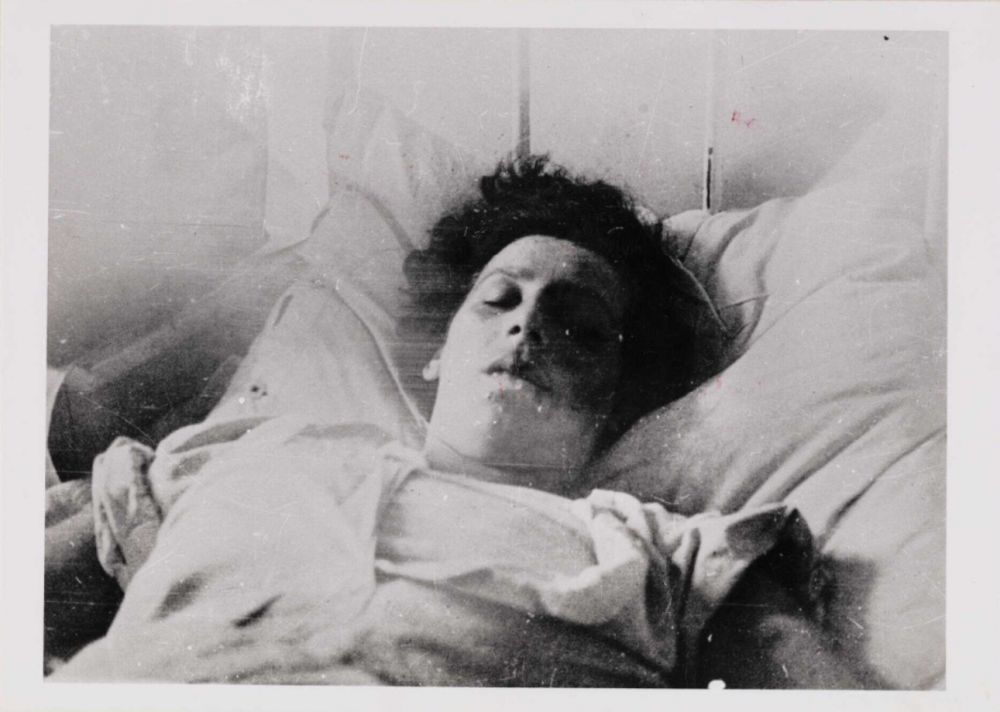
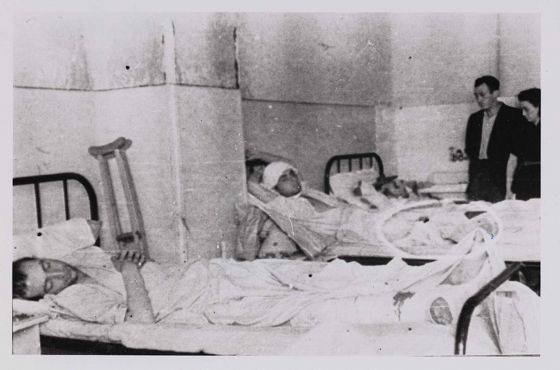
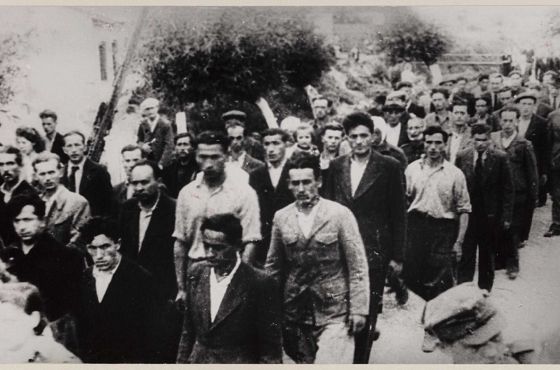
75 lat temu doszło do pogromu Żydów w Kielcach. Oprawcami swoich żydowskich sąsiadów byli Polacy, a do tragicznych wydarzeń doszło w wyzwolonej spod okupacji hitlerowskiej Polsce.

kielce_pirotte_1_szpital.jpgKobieta ranna podczas pogromu kieleckiego na łóżku w Szpitalu św. Aleksandra. Fotografia Julii Pirotte, zbiory ŻIH

Wydarzenia nazywane dziś „pogromem kieleckim” rozegrały się przede wszystkim w budynku przy ulicy Planty 7/9, w którym mieszkało około 200 osób. Oprócz lokatorów mieściły się tam również biura instytucji żydowskich (komitet żydowski, kongregacja, kibuc partii syjonistycznej Ichud itp.). Nie była to jednak jedyna arena tragicznych wydarzeń. Do pogromów ludności żydowskiej dochodziło także w innych miejscach w Kielcach, a także w pociągach przejeżdżających tego dnia przez miasto.

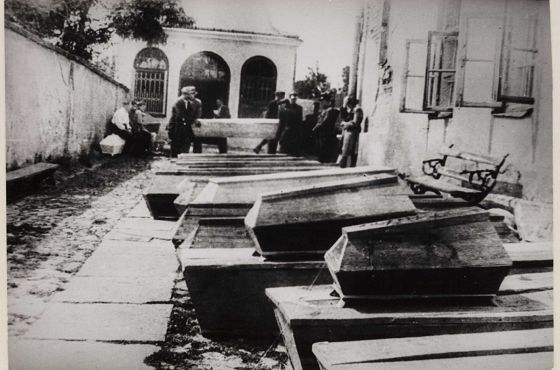
Jak pisze Joanna Tokarska-Bakir w książce Pod klątwą. Społeczny portret pogromu kieleckiego, z powodu niekompletnej dokumentacji definitywne określenie liczby ofiar jest niemożliwe. Istnieje co najmniej pięć wykazów ofiar pogromu, m.in. lista organizacji Joint (American Jewish Joint Distribution Committee) z lipca 1946 r., która składa się z 39 nazwisk (zwłoki 32 rozpoznano, zwłoki 7 osób pozostały nierozpoznane). Całkowite zestawienie nazwisk obejmuje 52 pozycje. [1]

Jak doszło do pogromu?

Wywołanie pogromu kieleckiego wiązało się z niezależnymi od siebie działaniami wojska, milicji i niektórych pracowników Urzędu Bezpieczeństwa. Bezpośrednią przyczyną podjęcia przez nich owych działań w stosunku do ludności żydowskiej była plotka o rzekomym porwaniu 8-letniego wówczas Henryka Błaszczyka, który zaginął 1 lipca. Jego ojciec, Walenty Błaszczyk, szewc, jeszcze tego dnia około godziny 23.00 zgłosił Milicji Obywatelskiej zaginięcia dziecka. Dwa dni później chłopiec wrócił sam do domu.

kielce_pirotte_2_szpital.jpg

kielce_pirotte_3_trumny.jpgMężczyźni ranni podczas pogromu kieleckiego na łóżkach w Szpitalu św. Aleksandra; trumny z ciałami ofiar pogromu przy szpitalu. Fotografie Julii Pirotte, zbiory ŻIH

W dniu jego powrotu, około północy Walenty Błaszczyk, będący pod wpływem alkoholu, stawił się na komendzie Milicji twierdząc, że jego syn przez cały czas od chwili zaginięcia był przetrzymywany w piwnicy przez Żydów, skąd udało mu się uciec. 4 lipca rano Walenty Błaszczyk z synem i w towarzystwie sąsiada ponownie stawili się na komisariacie. Według zeznań obu Błaszczyków nieznajomy mężczyzna dał chłopcu na ulicy paczkę i poprosił o odniesienie jej do domu. Za tę przysługę miał mu zapłacić 20 zł. Mężczyzna ten miał osobiście wskazywać Henrykowi drogę. Po dotarciu na miejsce miano zabrać Henrykowi paczkę i zamknąć go w piwnicy, gdzie rzekomo przetrzymywano już kilkoro innych dzieci. Po drodze na komisariat mały Henryk miał wskazać budynek przy ulicy Planty 7/9 jako na miejsce swojego uwięzienia, a także rozpoznać mężczyznę, który go uwięził. Budynek ten znajdował się w odległości 200 metrów od komisariatu.

Zeznania Błaszczyków okazały się później fałszywe. W rzeczywistości chłopiec, nie informując o tym rodziców, pojechał do wsi oddalonej o 20 km od Kielc, w której wraz z rodziną mieszkał w czasie wojny. Opowieść o porwaniu i przetrzymywaniu go przez Żydów zmyślił, najpewniej chcąc uniknąć kary.

Po odebraniu zeznań dowódca komisariatu, starszy sierżant Edmund Zagórski, wysłał na ulicę Planty razem z Błaszczykami patrol milicji złożony z sześciu funkcjonariuszy. Po dotarciu na miejsce milicjanci aresztowali wskazanego przez chłopca mężczyznę o nazwisku Kalman Singer i wrócili z nim na komisariat. Następnie, po rozmowie z zastępcą Komendanta Wojewódzkiego MO majorem Kazimierzem Gwiazdowiczem, sierżant Zagórski wysłał patrol na miejsce rzekomego uwięzienia chłopca w celu przeszukania budynku. Patrol miał niespotykaną w tych warunkach liczebność – liczył kilkunastu funkcjonariuszy. Wszyscy zgłosili się na ochotnika. Po drodze milicjanci opowiadali napotkanym przechodniom o rzekomym porywaniu dzieci chrześcijańskich przez Żydów i wykorzystywaniu ich do mordów rytualnych. Po przeszukaniu budynku stało się oczywiste, że historia nie mogła być prawdziwa, ponieważ dom przy ulicy Planty 7/9 nie miał piwnic.

Przebieg pogromu

Pogrom rozpoczął się 4 lipca 1946 roku w godzinach porannych. Pierwsze strzały zostały oddane przez wojskowych wewnątrz budynku przy ulicy Planty 7/9. Po wejściu do budynku żołnierze wyciągali Żydów szukających schronienia w kolejnych pomieszczeniach i wyprowadzali ich na zewnątrz. Znajdujący się przed budynkiem tłum cywilów i żołnierzy bił te osoby i rzucał w nie kamieniami. Od kilku do kilkunastu osób, zarówno kobiet jak i mężczyzn, zostało wówczas zastrzelonych i zginęło od ran zadanych bagnetami lub tępymi narzędziami. Dwie kobiety wyrzucono przez okna, po czym na ulicy zostały one dobite przez tłum. Działania mające na celu uspokojenie tłumu, podejmowane przez różne czynniki władz oraz przedstawicieli Kościoła, odznaczały się dużą nieudolnością i nie przyniosły żadnych rezultatów. Cywile, a także żołnierze, rabowali swoje ofiary i ich dobytek znajdujący się w budynku.

Żydów atakowano również na pośrednich stacjach linii kolejowej Kielce-Częstochowa. Łącznie w pociągach i na dworcach w rejonie kieleckim zginęło tego dnia około trzydzieścioro Żydów.

Pierwsza faza pogromu trwała do południa, druga rozpoczęła się wraz z przybyciem na ulicę Planty robotników z huty „Ludwików”. Około godziny 16 sytuacja została opanowana, nie wyciszyło to jednak nastrojów antyżydowskich. Bezpośrednio po pogromie odbył się wiec antyżydowski. Demonstrowano także przed szpitalem, gdzie znajdowali się ranni Żydzi.

kielce_pirotte_4_kondukt.jpg

kielce_pirotte_5_kondukt.jpgKondukt pogrzebowy ofiar pogromu kieleckiego; Żołnierze wojska polskiego idący w kondukcie. Fotografie Julii Pirotte, zbiory ŻIH

Procesy sądowe

Wyjaśnieniem przyczyn pogromu kieleckiego zajmowały się komisje powołane przez poszczególne ministerstwa. Należy jednak zaznaczyć, że z powodów politycznych nie istniały szanse na obiektywne przeprowadzenie śledztwa i znalezienie winnych. Wydarzenia w Kielcach zostały wykorzystane przez czołowych działaczy PPR (Władysław Gomułka) i PPS (Józef Cyrankiewicz) do zdyskredytowania opozycji niepodległościowej. Władze hamowały także działalność niezależnych czynników, starających się odnaleźć odpowiedzialnych za mord. Wyjaśnienia inne niż oficjalna wersja wydarzeń były ograniczane przez cenzurę bądź fałszowane.

W następstwie pogromu kieleckiego odbyło się około 10 procesów osób, w różny sposób odpowiedzialnych za owe wydarzenia. Wśród oskarżonych byli cywile, wojskowi, milicjanci, kierownik kieleckiego UB. Zapadło kilka wyroków śmierci (zostały wykonane). Procesy były także podporządkowane racjom politycznym. Wielokrotnie w czasie rozpraw naruszano prawo, stosowano przemoc, niektórzy oskarżeni znaleźli się na sali rozpraw przypadkowo.

Istnieje kilka teorii mających wyjaśnić przyczynę tamtych wydarzeń. Najczęściej pojawia się teza o radzieckiej, bądź polskiej prowokacji sił bezpieczeństwa. W opublikowanych w 2006 roku wynikach śledztwa Instytut Pamięci Narodowej podał, że materiał dowodowy nie wskazał jednoznacznie na to, by którakolwiek z tych hipotez była prawdziwa. Jako najbardziej prawdopodobną hipotezę IPN uznał wersję, że wydarzenia kieleckie z 4 lipca 1946 roku miały charakter spontaniczny i zaistniały wskutek nieszczęśliwego zbiegu okoliczności natury historycznej i współczesnej.

Badania nad tą problematyką są utrudnione z powodu zniszczenia części dokumentów.


Przypis:

[1] Joanna Tokarska-Bakir, Pod klątwą. Społeczny portret pogromu kieleckiego, t.1, Wyd. Czarna Owca, Warszawa 2018, s. 446.

Tekst przygotowany na bazie hasła „pogrom kielecki” autorstwa Bożeny Szaynok znajdującego się w Polskim Słowniku Judaistycznym.


Zawartość publikowanych artykułów i materiałów nie reprezentuje poglądów ani opinii Reunion’68,
ani też webmastera Blogu Reunion’68, chyba ze jest to wyraźnie zaznaczone.
Twoje uwagi, linki, własne artykuły lub wiadomości prześlij na adres:
webmaster@reunion68.com

The Other Side of Summer Weddings

The Other Side of Summer Weddings

ROKHL KAFRISSEN


Rokhl’s Golden City: Mock marriages, drag brides, and the dangers of dancing

ORIGINAL PHOTO: JILL FREEDMAN/GETTY IMAGES
.

Once upon a summertime, we didn’t have streaming video in our pockets or a PS5 controller in our hands or endless Spotify playlists cupped snugly around our ears. Back when it was a lot harder for folks to amuse themselves over long summer days, the mock Jewish wedding was a thing. A wedding, after all, is a highly choreographed piece of theater. It’s got a beginning, middle and end. It’s got dancing. It usually even comes with a catered meal, if not an open bar. And pretty much anyone can take part.

Mock Jewish weddings can still be found at summer camps and on Jewish day school curricula. The mock wedding isn’t something I grew up with, although it makes sense to me as an immersive way of teaching the Jewish life cycle. But while I was researching queer Yiddishkayt in 2019, I started to dig into a much stranger tradition: the mock wedding in drag, once a staple of Catskills entertainment.

Right before Klezkamp brought the klezmer revival to the Catskills in the mid-1980s, Peter Davis was there with his camera, capturing the end of a different era. In his 1983 documentary The Rise & Fall of the Borscht Belt, we get a peek into the kind of entertainment one might’ve expected at the smaller, less expensive hotels, namely the mock drag wedding. I knew Rise & Fall might be an uncomfortable watch. I didn’t think it would border on horror. But the film’s particular aesthetic choices, combined with a poor-quality print, made a lighthearted summer’s day activity appear darkly foreboding, like the prelude to an unspeakable evening of horrors.

.

.

The mock drag wedding in the movie combines American Jewish, Christian, and Yiddish elements. At 1:16:40, for example, we see the “groom” being dragged to the khupe, a familiar trope in Yiddish vaudeville and comedy records. Where arranged marriages were the norm, it was not unexpected for the groom (or bride) to go unwillingly.

What’s interesting is how boldly the film spells out its conclusion. Marriage was the site of the reproduction of the Jewish people. And for decades, Catskills hotels were the site of American Jewish matchmaking. With the end of the Jewish Catskills era, we are told, the very continuation of the Jewish people is now in question. The movie closes with the wild, screaming weirdness of the mock wedding, alongside an incongruously serious narrative voice of doom.

But long before the first Jew unpacked a suitcase north of New York City, Jewish weddings were a prime location for the anxiety of continuity and assimilation. Those fears played out in front of guests and religious authorities, especially on the dance floor. And they continue to play out in new permutations, even today. If this long pandemic year opened with a new obsession with the mageyfe khasene (plague wedding), it is gradually coming to a close with the return of the non-mageyfe khasene. But what’s a wedding without dancing?

A recent headline in the U.K.’s Jewish Chronicle read: “US [United Synagogue] welcomes rise in wedding numbers—but still no dancing.” As of June 21, the U.K. government lifted the cap on the number of wedding attendees, but dancing is still forbidden, save for a dance by the bride and groom. “We know weddings are not the same without dancing,” said a United Synagogue executive, but the new regulations are in place to keep everyone safe.

Here, dancing is a threat to public health and hygiene. But the dance floor was long understood as a place where communal boundaries became dangerously blurred. Jews and Christians might meet there, and Jewish men and women could mingle in the kind of proximity strenuously forbidden by religious authorities. The danger posed by the dance floor threatened not the body, but the soul, individual and communal. The wedding dance floor was all the more laden with symbolism, and for Jewish writers of fiction, it was irresistible.

In her fascinating new book, It Could Lead to Dancing: Mixed-Sex Dancing and Jewish Modernity, literary scholar Sonia Gollance examines the portrayal (across multiple languages) of Jews and Jewish dancing, between approximately 1780 and 1940. Dancing happened in public, making it a convenient way to talk about sex without talking about sex. As Gollance writes, “dance scenes helped writers convey the impact of modern life on intimate personal relationships.” The dance floor was a place young people could, for example, meet each other and outwit the efforts of the traditional matchmaker.

Gollance explains that these dance scenes have a function similar to that of Clifford Geertz’s idea of “deep play.” In these scenes, the “community has deep emotional investment because the dynamics of the game mirror existing social tensions.” What happens on the dance floor can thus mirror or amplify that which might otherwise not be given voice. The empty dancefloor in the U.K. is a poignant example by its lack.

In It Could Lead to Dancing, Gollance examines Joseph Opatoshu’s Yiddish novel A roman fun a ferd-ganef (Romance of a Horse Thief). The protagonist, Zanvl, has fallen in love with Rachel, and he wants to leave his life of crime and make a new life with her. But he is torn between Rachel and one of his underworld paramours, Beyle. The three meet at Zanvl’s sister’s wedding. Opatoshu uses popular dance to paint the vivid scene and externalize Zanvl’s inner conflict. The interplay between dancer and spectator has Zanvl “passed” between the two women, and rather than choosing between the two, he is swept away by the fiery, foreign dance, his moral decision swept right out of his hands, just another victim of mixed dancing.

On this dance floor, social norms are turned upside down. Beyle both chooses the song and pays for it. She tells the klezmorim to play the “exotic” pas d’espagne, a dance readers would have understood to embody the act of seduction. Beyle is part of the underworld milieu Zanvl is trying to escape and she can afford to pay. Beyle and Zanvl are then alone on the dance floor because, as Gollance notes, “Wedding musicians were frequently paid per dance by the dancers, rather than the hosts of the event, and only those dancers who paid for a particular dance had the right to participate.” Such an arrangement allows for cinematic moments, like Beyle and Zanvl’s “racy” pas d’espagne. It also gave rise to vulgar expressions, such as “az an oreme kale shtelt zikh tantsn, geyen di klezmer pishn!” (When a poor bride gets up to dance, the musicians go out to piss.) Such a saying points to the tension between the elevated values at the core of Jewish wedding (dancing as a vehicle for fulfilling the mitsve of gladdening the bride) and the coarsest economic realities of shtetl life.

“Dance both adds to a disreputable ambiance and aids in seedy flirtation,” Gollance writes, “although in the case of Opatoshu’s … wedding dance scene, it pushes the plot and character development forward while mirroring, in the very steps and figures, the struggles and interpersonal dynamics of the characters.”

Of course the wedding dance between Zanvl and Beyle, with its bright colors, seductive body movements, and brazen contact between a single man and a married woman, was the heightened reality of a novelist, mixing New World American literary aesthetics and Eastern European fantasies.

In real life, traditional Eastern European Jewish weddings had their own drama. This was of a more subtle, but just as highly choreographed kind. And its narrative was propelled forward by a unique paradox at the heart of the Jewish wedding, as Gollance writes, “the expectation of joy with ritualized sorrow.” That paradox provided a rhythm of its own, one which has been almost, but not entirely, lost in the destruction of Eastern European Yiddish folk life.

In the late 1990s, the members of the band Budowitz embarked on a project to reconstruct and record the ritual portions of a traditional Ashkenazi wedding. They were able to do this with the help of an Eastern European Yiddish wedding musician (with an astonishing musical memory), and enormous amounts of ethnomusicological rigor. The result was the CD Wedding Without a Bride. Don’t be put off by the fear of a gloomy listen. Wedding Without a Bride has some of the hottest tsimbl work you’ll hear anywhere, and even in its saddest moments, it is the complete opposite of some dreary museum piece.

As the liner notes explain: “the alternation between joy and sorrow runs like a thread through the entire ceremony …” The mitsve of mesameyekh zayn khosn-kale (making the bride and groom joyful) was never forgotten among the expressions of sorrow. This alternating pulse is the vital rhythm to the traditional Jewish wedding, one not easily captured in a few dance tunes at a two-hour party.

There were tunes and forms for each part of the wedding: walking to the veiling, the veiling (badekns), singing for the bride, singing for the groom, the march to the canopy, and so on. And of course, there were the badkhn’s exhortations to the bride to cry her eyes out at her fate, before being made glad again by the dancing in her honor.

As the band describes in the liner notes, “we were surprised at how the wedding, from beginning to end, offered a complex and emotionally subtle work as a form of its own, as intricate as any classical symphony.” Wedding Without a Bride suggests to us a new way of thinking about the Jewish wedding, an emotionally and spatially expansive place in time that, in a time of empty dance floors and missing family members, feels more important than ever.

MORE: Even if you’re not going to any weddings this summer, buy Sonia Gollance’s It Could Lead to Dancing and, if you can, get your hands on Wedding Without a Bride.

ALSO: Professor Samuel Kassow will give the Naomi Prawer Kadar Annual Lecture, “Dr. Emanuel Ringelblum: Historian and Fighter.” July 1, 9 a.m. ET. In English, Zoom link here … Paris Yiddish Center (Bibliotheque Medem) is offering scholarships for its 10th Summer Program for Yiddish Language and Literature, Aug. 9-27. Deadline to apply for a scholarship is July 15. Scholarships will cover most of the registration fee and there’s no age limit, though they are mostly intended for university students. See their website for more information … Live music continues to trickle back into the veins of New York City. On Aug. 6, Slavic Soul Party returns to DROM.


Rokhl Kafrissen is a New York-based cultural critic and playwright.


Zawartość publikowanych artykułów i materiałów nie reprezentuje poglądów ani opinii Reunion’68,
ani też webmastera Blogu Reunion’68, chyba ze jest to wyraźnie zaznaczone.
Twoje uwagi, linki, własne artykuły lub wiadomości prześlij na adres:
webmaster@reunion68.com


Richard Donner, Jewish Director Behind ‘Superman,’ ‘The Goonies’ and ‘Lethal Weapon,’ Dies at Age 91

Richard Donner, Jewish Director Behind ‘Superman,’ ‘The Goonies’ and ‘Lethal Weapon,’ Dies at Age 91

Shiryn Ghermezian


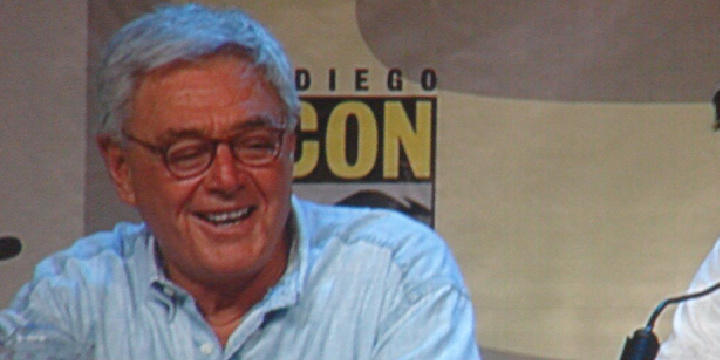
Richard Donner at Comic-Con San Diego 2006. Photo: Wikimedia Commons.

Acclaimed director and producer Richard Donner died on Monday at the age of 91, according to his wife, producer Lauren Schuler-Donner, and his business manager. The cause of death was not revealed.

The Jewish filmmaker’s credits include the 1978 classic “Superman” starring Christopher Reeve, which grossed more than $300 million at the global box office, as well as “The Goonies” and all four films in the Mel Gibson-Danny Glover cop franchise “Lethal Weapon.” The series grossed more than $900 million globally.

Donner, who was born in the Bronx,  started his career directing a long list of television shows in the ’60s, including “Route 66,” “The Rifleman,” “The Twilight Zone,” “The Man From U.N.C.L.E.,” “Gilligan’s Island,” “Perry Mason” and “The Wild Wild West,” Deadline reported. His debut film was “X-15″ in 1961 with Charles Bronson and Mary Tyler Moore, followed by the 1968 comedy “Salt & Pepper,” starring Sammy Davis Jr. and Peter Lawford, and 1969’s “Lola” with Charles Bronson. He turned to directing films full time with “The Omen” in 1976.

“Dick had such a powerful command of his movies, and was so gifted across so many genres,” director Steven Spielberg said in a statement following Donner’s death. “Being in his circle was akin to hanging out with your favorite coach, smartest professor, fiercest motivator, most endearing friend, staunchest ally, and — of course — the greatest Goonie of all. He was all kid. All heart. All the time. I can’t believe he’s gone, but his husky, hearty, laugh will stay with me always.”

Marvel Studios President Kevin Feige called Donner his mentor and said the late filmmaker made him “believe that comic characters could be brought to life on the big screen.”

“I loved Richard Donner as person, and massively admired him as a director,” wrote “Wonder Woman” director Patty Jenkins on Twitter. “To think he made ‘The Omen,’ ‘Superman,’ ‘The Goonies’ and ‘Lethal Weapon’ in just over 10 years time, and many more. Stunning. Truly one of the greatest American filmmakers of all time. He will be sorely missed.”
Zack Snyder — who directed “Man of Steel,” “Batman v Superman: Dawn of Justice,” and “Justice League” — shared on Twitter a poster of the original “Superman” film and wrote, “Thank you, Richard Donner. You made me believe.”

“The Goonies” star Sean Astin also paid tribute to Donner in a tweet, writing: “Richard Donner had the biggest, boomiest voice you could imagine. He commanded attention and he laughed like no man has ever laughed before. Dick was so much fun. What I perceived in him, as a 12 year old kid, is that he cared. I love how much he cared.” He also quoted a famous line from the film: “Goonies Never Say Die.”

Donner’s other directing credits include 1994’s “Maverick”; 1997’s “Conspiracy Theory” ; the 1988 Christmas film “Scrooged” with Bill Murray; and 1992’s “Radio Flyer.” His final project as a director was 2006’s action film “16 Blocks” starring Bruce Willis. Donner and his wife produced dozens of films through the The Donners’ Company, including the “X-Men” franchise and 1993’s “Free Willy.”


Zawartość publikowanych artykułów i materiałów nie reprezentuje poglądów ani opinii Reunion’68,
ani też webmastera Blogu Reunion’68, chyba ze jest to wyraźnie zaznaczone.
Twoje uwagi, linki, własne artykuły lub wiadomości prześlij na adres:
webmaster@reunion68.com