
Archive | September 2023

Our Weaponized Legal System Misfires

Our Weaponized Legal System Misfires


MICHAEL LIND


How partisan lawfare threatens democracy

.
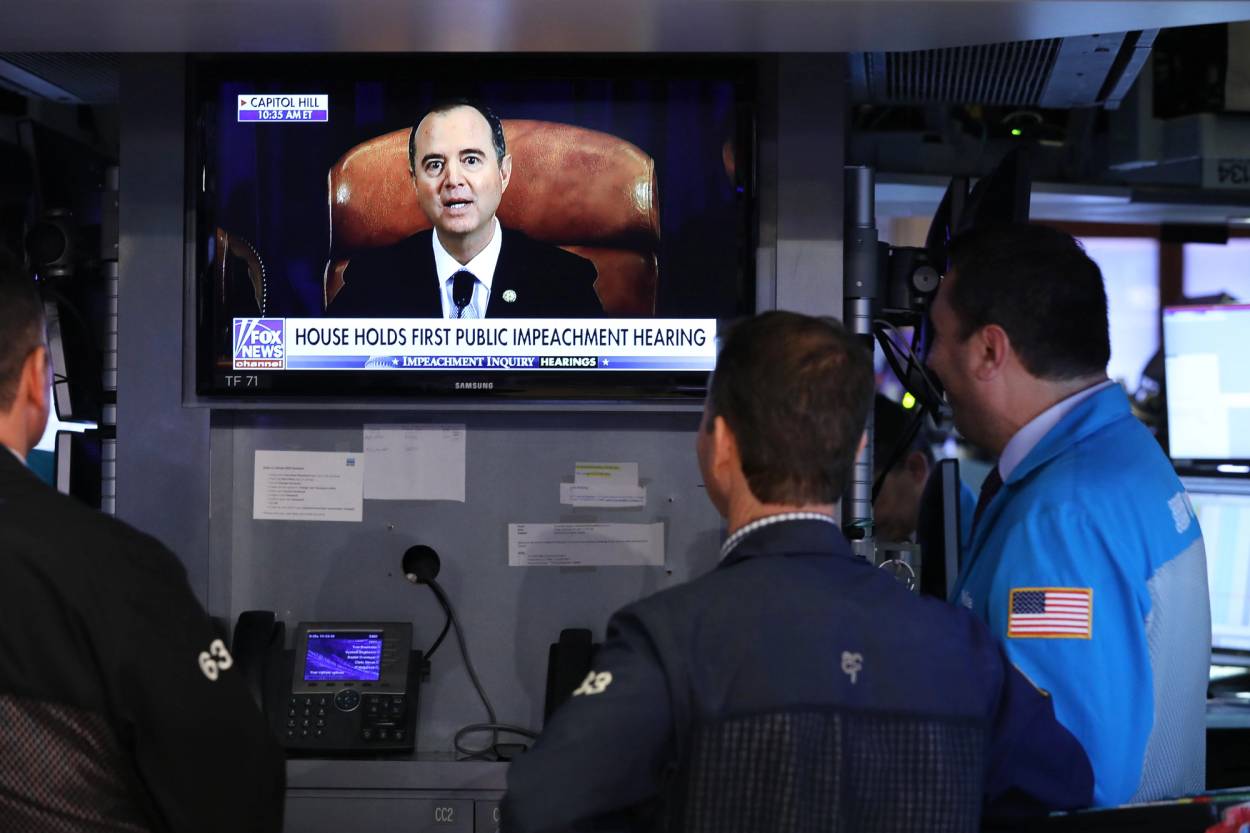
Traders on the floor of the New York Stock Exchange watch the opening of the public hearing in the impeachment inquiry of President Donald Trump on Nov. 13, 2019SPENCER PLATT/GETTY IMAGES

The greatest threat to democracy today is not populism, as elite liberals claim. Nor is it the old-fashioned dictatorial coup d’etat. The greatest danger that multiparty democracy faces is “lawfare”—the weaponization of national judicial systems by political parties to delegitimize, harass, bankrupt, disqualify, and sometimes imprison politicians of other parties.

In Scotland, the husband of former Prime Minister Nikola Sturgeon has been arrested in a case involving Scottish National Party finances; soon she may be arrested herself. In India, opposition leader Rahul Gandhi has been arrested and sentenced to two years in jail and expelled from parliament for joking about the name of India’s prime minister, Narendra Modi. In Pakistan, former Prime Minister Imran Khan has been arrested, with Pakistan’s Supreme Court holding that his arrest by paramilitary forces was unconstitutional. In Brazil, Luiz Inacio Lula da Silva was recently elected president, after having been arrested and imprisoned on corruption charges, only to have the verdict thrown out by a judge. In 2018, half of all former living South Korean presidents were in prison.

Latin America, sharing separations-of-powers constitutions like the U.S., leads the world in impeachments of presidents by opposition parties carrying out “legislative coups.” Of 12 impeachments in Latin America since 1900, 10 have taken place in the last three decades and six in only three nations—Brazil, Ecuador, and Paraguay.

In the 235 years in which the U.S. has been governed under the federal Constitution, three of the four presidential impeachments have taken place in the last 25 years, and two in the last three years. In North America, as in Latin America, impeachment has gone from being the last resort in emergencies to being a frequently used weapon by one political party against another.

Has any U.S. president ever deserved impeachment? Yes, one: Richard Nixon.

Nixon’s Special Investigations Unit, known as the Plumbers, had originally been created to spy on opponents of the Vietnam War. On June 17, 1971, Nixon told his aide H.R. Haldeman he wanted the Plumbers to obtain files that might be in the safe of the Brookings Institution that could show that his predecessor, Lyndon Johnson, had ordered a bombing halt in Vietnam to help Nixon’s Democratic opponent in 1968, Hubert Humphrey. Nixon wanted to use the files to blackmail Johnson.

Nixon: “Did they get the Brookings Institute raided last night? No?”

Haldeman: “No, sir, they didn’t.”

Nixon: “Get it done! I want it done!” (banging desk for emphasis) I want the Brookings Institute safe cleaned out, and have it cleaned out in a way that makes somebody else” (unclear).

On July 1, Nixon returned to the theme in a meeting with Haldeman and Henry Kissinger:

Haldeman: “You could blackmail [Lyndon] Johnson on this stuff, and it might be worth doing. …

Nixon: “Bob? Bob? Now you remember Huston’s plan? Implement it.”

Kissinger: “Couldn’t we go over? Now, Brookings has no right to have classified documents.”

Nixon: “I mean, I want it implemented on a thievery basis. Goddam it, get in and get those files. Blow the safe and get it.”

Brookings was never burglarized and the safe was never blown, but the Plumbers later burglarized the Watergate Hotel in search of Democratic Party secrets, leading eventually to Nixon deciding to resign before he could be impeached. I think most people of all parties would agree that a president who uses a private gang to burglarize the offices and hotel rooms of his opponents is indeed guilty of “high crimes and misdemeanors.”

In contrast to the possible impeachment of Nixon, the impeachments of Andrew Johnson and Bill Clinton, and the two impeachments of Trump, were unjustified exercises of partisan power. Andrew Johnson was a terrible president, but the radical wing of his own Republican Party impeached him because they opposed his Reconstruction policies, not because he committed any “high crimes and misdemeanors.” Clinton’s affair with Monica Lewinsky and his perjury in concealing it; Trump’s clumsy attempt to get Ukrainian President Zelensky to supply him with incriminating evidence against Hunter Biden; the inflammatory effect of Trump’s claim that the election had been stolen in inciting the unforeseen January 6 riot (not “insurrection”)—all of these deserved the harsh penalty of censure by Congress, but not the nuclear weapon of impeachment and removal from office.

A more serious charge arises from Trump’s recorded phone call to fellow Republican Brad Raffensburger, Georgia’s secretary of state, asking him to “recalculate” to “find 11,780 votes.” Raffensburger refused, as the state had already done three separate ballot counts and two certifications of Biden’s victory.

Even with Georgia’s electoral votes, Trump still would have lost the electoral college to Biden. Trump failed to persuade officials in other states, as well as Vice President Pence and other leading Republicans, to take steps to delay or overturn the certification of Biden as president. From this distance in time, Trump looks less like the mastermind of a plausible scheme to overturn the election and establish a dictatorship than an incompetent, pathetic narcissist who genuinely believed that he had been cheated out of a second term and listened to cronies who fed his delusion.

Even after the riot on January 6, six Republican senators and 121 Republican House members objected to certifying the electoral outcome in Arizona, while seven Republican senators and 138 House Republicans objected to certifying the results in Pennsylvania.

This was a disgraceful stunt, but it was an escalation of what had become the normal practice of both parties for years. In January 2005, House Democrat Stephanie Tubbs Jones of Ohio and California Sen. Barbara Boxer, also a Democrat, objected to the certification of Ohio’s electoral votes, claiming: “We believe there are ample grounds for challenging the electors from Ohio as being unlawfully appointed.” If their motion had succeeded, all 20 Electoral College votes of Ohio for George W. Bush would have been denied and with neither candidate having an Electoral College majority the election would have been decided by the House of Representatives. Although the effort failed, 32 members of Congress, all Democrats, voted for this attempt to overturn the presidential election of 2004.

On Jan. 6, 2017, the following seven Democrats in the House objected to the certification of the electoral count: Jamie Raskin, D-Md., (objecting to Florida’s votes); Jim McGovern, D-Mass., (objecting to Alabama’s votes); Pramila Jayapal, D-Wash., (objecting to Georgia’s votes); Raul Grijalva, D-Ariz., (objecting to North Carolina’s votes); Sheila Jackson Lee, D-Texas, (objecting to votes from North Carolina, South Carolina, Wisconsin, and Mississippi; Barbara Lee, D-Calif., (objecting to Michigan’s votes); and Maxine Waters, D-Calif., (objecting to Wyoming’s votes).

Several of these Democrats objected to congressional certification of the 2016 election on the basis of conspiracy theories. Barbara Lee alleged Russian manipulation of the election and malfunctioning voting machines. Sheila Jackson Lee claimed there had been “massive voter suppression” in Missisippi. All were overruled by then-Vice President Joe Biden in 2017, in the same way that Vice President Mike Pence overruled similar objections in 2021.

One of the Democrats in the House who tried to stop the certification of the election in 2016 on spurious grounds, Jamie Raskin, went on to be the lead impeachment manager in the second impeachment of Donald Trump.

Impeachment has gone from being the last resort in emergencies to being a frequently used weapon by one political party against another.

Having lost the election of 2020 and returned to private life, Donald Trump is now the most likely opponent of Joe Biden in the presidential election of 2024. Trump continues to be the victim of Democratic lawfare. Attorney General Merrick Garland authorized a theatrical ransacking of Donald Trump’s home by FBI agents to collect classified documents during a dispute over ownership—shortly before it was learned that President Joe Biden also had possessed classified documents, from his days as vice president.

Now Alvin Bragg, the elected district attorney of New York City, has had Trump arrested and indicted. Trump is charged with falsifying business records while legally paying hush money to Stormy Daniels, a porn star with whom he had an affair. By an extreme stretch of the imagination, Bragg claims this violated campaign finance laws. Even so, normally this would be a misdemeanor, punished by a fine. For example, in 2022, the Federal Election Commission fined the Democratic National Committee and the Clinton campaign more than $100,000 for disguising payments to Fusion GPS, the opposition research group behind the pro-Clinton “Russiagate” hoax that claimed Trump was a witting or unwitting Russian asset, by claiming falsely that the money was for legal expenses incurred by the law firm Perkins Coie.

But Bragg, instead of seeking to fine Trump for similar campaign finance violations, has promoted 34 charges to felonies. If convicted on all 34 counts, Trump could face a maximum sentence of 136 years.

Cy Vance, Bragg’s predecessor as DA, refused to charge Trump on such flimsy grounds. His refusal infuriated many Democrats who welcome Bragg’s prosecution of Trump as revenge, pure and simple, for Trump’s defeat of Hillary Clinton in 2016 and the failure of the two unjustified impeachments of Trump by partisan Democrats in the House. Campaigning for election to the post of district attorney, Bragg boasted: “I have investigated Trump and his children and held them accountable for their misconduct with the Trump Foundation. I know how to follow the facts and hold people in power accountable.” This sounds very much like a campaign promise to voters in overwhelmingly Democratic New York City to find some excuse, any excuse, to use the power of the District Attorney’s Office to try to imprison a former president they despised.

“Whataboutism” is a perfectly valid argument, when it is proof of a double standard. For most Democrats, Bill Clinton’s perjury about his affair with Lewinsky was “just about sex” and blown out of proportion to the offense. And yet Trump’s hush money payment to Stormy Daniels, many Democrats tell us, threatened democracy itself by somehow subverting the 2016 presidential election.

In yet another case in overwhelmingly Democratic New York, a federal jury found Trump innocent of a charge of raping E. Jean Caroll, while finding him guilty in a civil trial of defamation and sexual abuse and ordering him to pay a fine of $5 million. Assuming that Trump was guilty on these lesser counts, perhaps Alvin Bragg or other Democrats can come up with a creative theory why this incident, like the Stormy Daniels incident, threatened American democracy.

For his part, Trump has often threatened to wage the kind of lawfare to which he has been subject by Bragg and other partisan Democrats abusing the powers of their office, like former House Speaker Nancy Pelosi and the House Democrats who thrilled their voters by impeaching him twice. In a presidential debate on Oct. 9, 2016, on live television, Trump told Clinton: “If I win, I am going to instruct my attorney general to get a special prosecutor to look into your [missing email] situation, because there has never been so many lies, so much deception.” When Clinton replied, “It’s just awfully good that someone with the temperament of Donald Trump is not in charge of the law in our country,” Trump interjected: “Because you’d be in jail.”

During campaign rallies, Trump smiled as his followers chanted “Lock her up!” and at one point he told a crowd: “She has to go to jail!” All of this over Clinton’s use of a private email server during her service as U.S. secretary of state, a minor security breach and a misdemeanor of a kind which in most cases the government has chosen not to prosecute.

When I raise my concerns about the increasing resort by both parties to lawfare as a substitute for regular electoral politics in the U.S., I am sometimes told that nobody is above the law. But this is a facile answer, for two reasons.

The first has to do with legal complexity and ambiguity. Many of the politicians who have been attacked by their partisan rivals with the weapons of lawfare have been ensnared by charges of corruption in campaign spending. I do not claim to be an expert in U.S. campaign finance laws, much less those of Israel or South Korea. But the campaign laws in our country and many others are so complex and vague that any clever prosecutor might be able to indict any politician. Hush money payments to keep an extramarital affair out of the press constitutes election interference? Really, Mr. Bragg?

Moreover, some abuses of office in return for donations are perfectly legal in the United States. For example, all presidents appoint a number of rich campaign donors or bundlers, many of them utterly unqualified, to ambassadorships. Joe Biden has given around a third of ambassadorial appointments to donors. Isn’t this … selling offices? And if so, this routine practice is not so different from the corruption of former Illinois Gov. Rod Blagojevich, who was impeached by the Illinois legislature and sent to prison for, among other things, plotting to “obtain a personal benefit in exchange for his appointment to fill the vacant seat in the United States Senate [left by President-elect Obama].” If former President Obama is not in prison for appointing 31 campaign “bundlers” who each raised $50,000 or more and who together raised more than $20 million for Obama’s campaigns to cushy ambassadorial posts in Western Europe, Canada, and New Zealand, why was Blagojevich’s sale of Obama’s Senate seat—as distinct from his other misdeeds—a crime? (In 2020, President Trump commuted Blagojevich’s 14-year sentence after eight years in prison.)

Another form of perfectly legal corruption in the United States involves ex-presidents being paid enormous sums for speeches by special interests that may have benefited from their policies while in office. In 1989, former President Ronald Reagan reportedly earned $2 million from a Japanese media conglomerate for a speech and tour of Japan.

Hollywood and Wall Street are major donors to the Democratic Party and they see to it that former Democratic presidents get rich quickly. After serving in the White House, for example, Barack Obama made $1.2 million for only three Wall Street speeches. He and former first lady Michelle Obama were given lucrative deals to produce TV shows and films with Netflix and podcasts with Spotify through their company Higher Ground Productions, hastily founded for that purpose in 2018. How is this any different from the former head of a congressional committee or a former executive branch regulator immediately being hired or otherwise paid off by the industry he or she regulated?

I am not arguing that Barack and Michelle Obama should be locked up, though they should be shamed for their blatant buck-raking. My point is that, just as it is hard to make sense of American campaign finance laws, there seems to be no logic to which certain kinds of pay-to-play deals and payoffs for services rendered are legal in this country and which can lead to jail time. It follows we should be skeptical about corruption charges along with alleged campaign finance violations, particularly when a partisan political motive is behind a prosecution.

The second reason that the phrase “nobody is above the law” is a trite answer that evades serious questions has to do with legitimacy. When I have taught courses on politics, I have asked students: What is the purpose of multiparty democracy? To achieve justice? No, I suggest, it is to avert civil war, by exchanging ballots for bullets. If elections are thought of as bloodless civil wars every few years, then the losers must be conciliated and made to feel that they remain valued members of the national community and that they have a chance to win next time. If each party portrays the other as an enemy to democracy and society, and the winners use the court system to bankrupt and jail opponents in attempts to prevent the losers from winning elections in the future, then the legitimacy of the democratic system will collapse.

Here we can learn lessons from actual civil wars. Thanks to President Andrew Johnson’s 1868 proclamation “granting full pardon and amnesty for the offense of treason against the United States during the late Civil War,” only two Confederate soldiers were executed for crimes committed during the war, Henry Wirz, commandant of the notorious Andersonville prisoner of war camp, and a Confederate guerrilla, Henry “Champ” Ferguson. Both Robert E. Lee, commander of the Confederate army, and former Confederate President Jefferson Davis were pardoned as part of Johnson’s amnesty, even though the rebellion they led had caused the death of more than 600,000 Americans—more than died in the world wars, the Korean War, the Mexican-American War, the Spanish-American War, the War of 1812 and the War of Independence, combined.

Abraham Lincoln almost certainly would have approved of his successor’s amnesty. In Recollections of Abraham Lincoln, Lincoln’s bodyguard Ward Hill Lamon related the following story:

General Grant asked for special instructions of Mr. Lincoln, whether he should try to capture Jefferson Davis, or let him escape from the country if he wanted to. Mr. Lincoln related the story of an Irishman who had taken the pledge of Father Matthew, and having become terribly thirsty applied to a bar-tender for a lemonade; and while it was being prepared he whispered to the bar-tender, ‘And couldn’t you put a little brandy in it all unbeknownst to myself?’ Mr. Lincoln told the general he would like to let Jeff Davis escape all unbeknown to himself; he had no use for him.

Partisan prosecutions need to be condemned by all civic-minded Americans now. Otherwise, Republican versions of Alvin Bragg all over the country may soon appear and start suing former Democratic officials now in private life. American democracy may die, not all at once in a coup d’etat, but slowly as the result of party-driven legislative impeachments and vengeful partisan lawsuits.


Michael Lind is a columnist at Tablet and a fellow at New America. His most recent book is The New Class War: Saving Democracy from the Managerial Elite.


Zawartość publikowanych artykułów i materiałów nie reprezentuje poglądów ani opinii Reunion’68,
ani też webmastera Blogu Reunion’68, chyba ze jest to wyraźnie zaznaczone.
Twoje uwagi, linki, własne artykuły lub wiadomości prześlij na adres:
webmaster@reunion68.com


First Trailer Drops for ‘One Life’ Starring Anthony Hopkins as Holocaust Hero Nicholas Winton

First Trailer Drops for ‘One Life’ Starring Anthony Hopkins as Holocaust Hero Nicholas Winton

Shiryn Ghermezian


Anthony Hopkins as Sir Nicholas Winton in “One Life.” Photo: Courtesy of TIFF

The official trailer was released last week for the upcoming film One Life, in which star actor Sir Anthony Hopkins takes on the lead role of Sir Nicholas Winton, a British stockbroker whose real life heroic efforts saved hundreds of children from Nazi persecution on the eve of World War II.

The film, made in collaboration with BBC Films and See Saw Films, stars actor Johnny Flynn as a young Winton while Hopkins plays him during his older years. When Flynn’s character is asked in the trailer why he is risking his life to help hundreds of children, he replies, “Because I may be able to do something about it — I must.”

The extended cast includes Helena Bonham Carter — whose grandfather saved thousands from the Holocaust — as Winton’s German-Jewish mother, Babette Winton, and Jonathan Pryce as Martin Blake. Carter’s character tells a young Winton in the film, “Nicky, you must know, we cannot save them all. You have to forgive yourself.”

Winton visited Prague in December 1938 and found thousands of refugees who fled the Nazis in Germany and Austria and now faced the threat of a Nazi invasion in Czechoslovakia. Over the course of the next few years, he helped transport nearly 700 children, mostly Jewish, safely from Czechoslovakia to London through the Kindertransport initiative, up until the borders closed.

Afterwards, for five decades, Winton lived with grief and guilt over the children he could not save — until the live BBC television show That’s Life! surprised him by introducing him to some surviving children, who are now adults. That real life moment is one of many emotional scenes portrayed in One Life.

Winton was nicknamed the “British Schindler” for his efforts and knighted in 2003 by Queen Elizabeth II. He died in 2015 at the age of 106.

One Life, from director James Hawes, will be released in theaters in the United Kingdom on Jan. 1, 2024. The film had its world premiere at the 2023 Toronto International Film Festival on Saturday.

Watch the trailer below.


Zawartość publikowanych artykułów i materiałów nie reprezentuje poglądów ani opinii Reunion’68,
ani też webmastera Blogu Reunion’68, chyba ze jest to wyraźnie zaznaczone.
Twoje uwagi, linki, własne artykuły lub wiadomości prześlij na adres:
webmaster@reunion68.com


Velshi z MSNBC wymyśla fakty, aby uderzyć Izrael

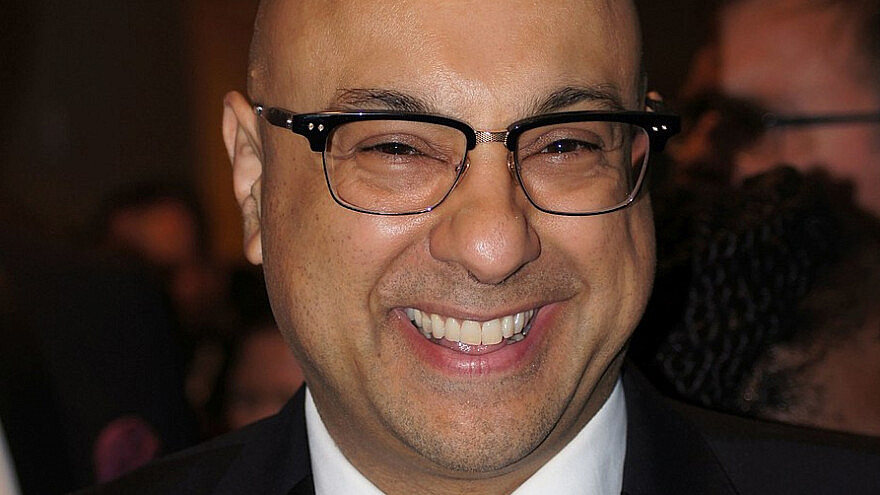
“MSNBC” host Ali Velshi. Photo by John Mathew Smith.


Velshi z MSNBC wymyśla fakty, aby uderzyć Izrael

DAVID M. LITMAN
tłumaczenie: Google.com


Po raz kolejny odbiorcy sieci zostali nie tylko niedoinformowani, ale wręcz wprowadzeni w błąd.
.

W przypadku gospodarzy takich jak Ayman Mohyeldin i Mehdi Hasan opinie na temat Izraela w MSNBC są mocne, ale fakty są zbędne lub, w najlepszym razie, podatne na wpływy. Jest to poziom uczciwości i dokładności, że można wybaczyć pomylenie monologu gospodarza MSNBC na temat Izraela z inną bezsensowną tyradą przewodniczącego Autonomii Palestyńskiej Mahmouda Abbasa wygłoszonej w Organizacji Narodów Zjednoczonych.

Najnowszy przykład pochodzi od Alego Velshiego, który większość niedzielnego poranka spędził na snuciu narracji o złym państwie żydowskim, łącząc jawne kłamstwa i materialne zaniedbania, aby stworzyć fałszywą opowieść o brutalnym, niedemokratycznym państwie apartheidu. Jak zwykle w MSNBC, gośćmi gospodarza na ten temat byli tylko ci, którzy w dużej mierze byli z nim zgodni ideologicznie i na których mógł liczyć, powstrzymując się od merytorycznego kwestionowania jego rażących kłamstw.

W rezultacie odbiorcy sieci po raz kolejny zostali nie tylko niedoinformowani, ale wręcz wprowadzeni w błąd.

Niektóre fałszywe twierdzenia Velshiego były wyraźnie złośliwe, jak na przykład jego opis ofiar śmiertelnych w Izraelu w 2023 r.: „Według ONZ od początku tego roku w Izraelu i na Zachodnim Brzegu zginęło prawie 200 Palestyńczyków. To najwyższa liczba od 2005 roku. Najwyraźniej w tych starciach zginęło także około 30 Izraelczyków”.

Prawie nikt z Izraelczyków nie zginął w „starciach”. Raczej prawie wszyscy z nich byli cywilami zajmującymi się swoimi sprawami i zostali zamordowani przez palestyńskich terrorystów. Na przykład kiedy Lucy Dee i jej dwie córki zostały zastrzelone w drodze podczas rodzinnej wycieczki do Tyberiady, nie brały udziału w „starciach”.

Z drugiej strony zdecydowana większość z tych „prawie 200 Palestyńczyków” zginęła w starciach lub podczas przeprowadzania ataków terrorystycznych. Pomimo kłamstwa na temat okoliczności śmierci Izraelczyków, Velshi powstrzymuje się od wspominania o tym szczególe, jeśli chodzi o Palestyńczyków. Wybiórczy komentarz gospodarza wspomina także jedynie o wzroście „brutalnych [izraelskich] ataków na osadników”, pomijając fakt, że wzrost liczby palestyńskich ataków na Izraelczyków poprzedzał gwałtowny wzrost liczby ataków osadników i znacznie go przewyższał.

Do tego doszły fałszywe twierdzenia, które w najlepszym przypadku obnażyły niechęć do sprawdzenia prawdziwości jego twierdzeń. Po drwieniu z Izraelczyków za życie „w iluzji” demokracji, Velshi stwierdził:

„Netanjahu podważył to poprzez reformę sądownictwa, która zasadniczo daje politykom, tym skrajnie prawicowym politykom w jego rządzie, pełną kontrolę nad nominacjami do Sądu Najwyższego. Umożliwia także parlamentowi unieważnianie decyzji sądowych, podważając jedną z jedynych kontroli władzy rządu. Pytanie brzmi, co Netanjahu i jego ultranarodowy rząd planują zrobić ze swoją nowo nieskrępowaną władzą”.

Nic z tego nie jest prawdą. Jedyną przyjętą ustawą o reformie sądownictwa jest poprawka dotycząca „rozsądności”, która nie ma nic wspólnego z nominacjami Sądu Najwyższego i nie daje Knesetowi możliwości uchylania orzeczeń sądowych. Chociaż takie propozycje zostały przedstawione, nie zostały one przyjęte, jednak Velshi mówi swoim słuchaczom inaczej. Być może Velshi powinien rozważyć, czy to on nie działa pod wpływem iluzji.

Jako kolejny przykład braku zainteresowania dokładnością Velshi stwierdził, że Izrael zatwierdził budowę „tysięcy nowych osiedli na terytoriach okupowanych”. Oczywiście nic takiego nie miało miejsca. Izrael zatwierdził budowę nowych domów w już istniejących osiedlach.

Pojawiły się także fałszywe twierdzenia, które ilustrują, jak gospodarz lubi śmiało wypowiadać się na tematy, o których niewiele wie. W kwestii osiedli Velshi zarzucił, że: „Izraelskie osady na Zachodnim Brzegu są uważane za nielegalne w świetle prawa międzynarodowego, co jest w szczególności ignorowane przez Izrael i jego największego zwolennika militarnego i finansowego, Stany Zjednoczone”.

Czyje znalezisko? Kto to uznał? Chociaż niektóre rządy i podmioty polityczne mogą wysuwać ten argument, nie oznacza to jednak, że coś jest „nielegalne w świetle prawa międzynarodowego”, a ich opinie nie liczą się jako „ustalenia”. Po prostu nie tak działa prawo międzynarodowe.

W tym rozwlekłym monologu znalazły się także błędne i często sprzeczne stwierdzenia na temat „apartheidu” i „okupacji”. Velshi zaczął od oświadczenia, że „okupacja” Izraela jest „nielegalna”. Zakładając na potrzeby dyskusji, że Zachodni Brzeg jest „okupowany”, okupacje wojskowe nie są nielegalne. W rzeczywistości istnieją całe traktaty regulujące sposób przeprowadzania okupacji wojskowej, takie jak Czwarta Konwencja Genewska. Dość powiedzieć, że pisanie całych ustaw dotyczących sposobu prowadzenia nielegalnej działalności oznaczałoby zasadnicze niezrozumienie pojęcia prawa.

Prawa okupacyjne uznają, że podczas konfliktu zbrojnego terytorium przechodzi z rąk do rąk, dlatego też niezbędny jest pewien zestaw przepisów regulujących, w jaki sposób strony wojujące mają traktować ludność okupowanego terytorium do czasu rozwiązania konfliktu. Izrael zajął to terytorium podczas wojny sześciodniowej, broniąc się przed otaczającymi je armiami arabskimi. Chociaż Izrael składał później liczne oferty dotyczące pokoju i państwowości (np. 2000, 2008), przywódcy palestyńscy odrzucili je wszystkie. W rezultacie Judea i Samaria pozostały w rękach Izraela bez porozumienia w sprawie ostatecznego statusu (jak wezwano na przykład w rezolucji Rady Bezpieczeństwa ONZ nr 242). Odrzucenie Palestyny nie czyni w magiczny sposób izraelskiej okupacji „nielegalną”, w przeciwnym razie prawo międzynarodowe i dziesięciolecia konsensusu w sprawie procesu pokojowego nie miałyby znaczenia.

Ale na tym właśnie polega ignorancja lub zła wiara Velshiego: w efekcie twierdzi on, że Izrael nie może być demokracją, ponieważ nie daje Palestyńczykom prawa do głosowania w izraelskich wyborach. Jest to twierdzenie, które pomija cały sens prawa okupacyjnego. Absurdem byłoby sugerowanie, że okupowanej ludności należy przyznać prawo do głosowania w wyborach krajowych władzy okupacyjnej. Nikt poważnie nie sugerowałby, że w okresie, w którym Stany Zjednoczone były siłą okupacyjną w Iraku, Irakijczycy mieli prawo do głosowania w wyborach w USA. Nie byłoby też mowy o wysuwaniu takiego argumentu w stosunku do któregokolwiek z pozostałych członków koalicji. A jednak to właśnie sugeruje argument Velshiego.

Aby przyznać Palestyńczykom prawo do głosowania, Izrael musiałby zaanektować to terytorium, co Velshi wygodnie i błędnie definiuje na nowo jako „całkowitą kontrolę [terytorium] bez zapewniania swoim mieszkańcom prawa głosu”. Jednak aneksja jest zabroniona na mocy prawa okupacyjnego. Fantazyjna wersja „prawa międzynarodowego” Velshiego po prostu stawia Izrael w sytuacji, w której nie ma wygranej.

Velshi ma prawo do swoich opinii, nawet jeśli są one całkowicie oderwane od rzeczywistości. Jednak gospodarze programów opinii publicznej muszą opierać swoje poglądy i retorykę na faktach, jeśli chcą być uważani za coś więcej niż tylko kolejnego wściekłego demagoga. Widzowie MSNBC powinni zadać sobie pytanie, jaką wartość im nadano, skoro gadające głowy w sieci nie mogą przejmować się dokładnością faktów.


David M. Litman

David M. Litman is a media and education research analyst at the Committee for Accuracy in Middle East Reporting and Analysis (CAMERA).


Zawartość publikowanych artykułów i materiałów nie reprezentuje poglądów ani opinii Reunion’68,
ani też webmastera Blogu Reunion’68, chyba ze jest to wyraźnie zaznaczone.
Twoje uwagi, linki, własne artykuły lub wiadomości prześlij na adres:
webmaster@reunion68.com


Biden Backdoors Israel in the U.N., Rescinding Trump’s Recognition of Sovereignty over the Golan

Biden Backdoors Israel in the U.N., Rescinding Trump’s Recognition of Sovereignty over the Golan

TONY BADRAN


In a move from the Obama playbook, the U.S. is advancing a stealth agenda in the Middle East at the expense of its allies.
.

A Hezbollah flag flies at the new Baalbek Tourist Museum, which showcases Hezbollah’s 41-year history of fighting Israel and resisting Western influence in the Middle East, on September 1, 2023 in the hills above the ancient Bekaa Valley town of Baalbek, Lebanon / SCOTT PETERSON/GETTY IMAGES

Sometimes, U.S. foreign policy is what you see on the news. Increasingly, however, changes in policy are hidden from view because they are unpalatable to many Americans. The growing divide between the policies that America claims to be pursuing and the policies that it’s implementing on the ground poses a growing threat to America’s global standing, as well as to its democracy, which is supposed to exert oversight of foreign policy through Congress. In order to maintain key alliances, allies must believe that American commitments will endure regardless of changes in administration. In order for American commitments to be worth the paper they are written on, allies must believe that America has their backs.

Nowhere is the split between formal U.S. policy and the stealth agendas being implemented by U.S. policymakers more glaring and toxic than in the Middle East. This is true because the core of U.S. Middle East policy is the de facto alliance with Iran promoted by the Obama administration and enshrined in the JCPOA. Obama’s revisionist approach to Iran has in essence left the U.S. with two Mideast policies—one enshrined in our alliances and understandings with historic U.S. allies, and the other centered on dumping our commitments to our allies in order to appease Iran. Only one of these is truly U.S. regional policy, of course—the policy that seeks to establish Iran as the center of a new Middle East. As a result, American commitments now serve to gaslight our allies into going along by encouraging them to imagine that, sooner or later, things will go back to normal.

The focus of the split in U.S. policy and of gaslighting our allies is the Lebanese pseudo state run by Hezbollah, the terror army controlled by Iran. By dealing with “Lebanon,” the U.S. can help forward the objectives of its Iranian partner without ever dealing directly with Iran—and thereby can continue gaslighting its allies to the extent that they would prefer to believe that the U.S. is still their partner.

The latest act in the Biden administration’s Middle Eastern Kabuki theater is the use of Lebanon to rescind America’s recognition of Israel’s sovereignty over the Golan Heights. No formal announcement of this major policy shift was made, of course. Instead, it was buried in the fine print of the U.N. Security Council’s reauthorization of UNIFIL, the force that ostensibly secures Lebanon’s border with Israel. In a reprise of Barack Obama’s passage of Security Council Resolution 2334 in the final days of his second term, Team Obama-Biden on Aug. 31 again used the route of the Security Council to abandon a formal American commitment and implement a new policy with extreme repercussions for Israel’s security.

With UNSCR 2334, Obama adopted the so-called 1967 lines as the official U.S. position on Israel and its conflict with neighboring Arabs. The resolution called upon all states “to distinguish, in their relevant dealings, between the territory of the State of Israel and the territories occupied since 1967,” and reaffirmed that all Israeli communities established in territory “occupied since 1967, including East Jerusalem, have no legal validity.” It meant that the U.S. had adopted the position of Israel’s enemies on East Jerusalem and Judea and Samaria, as well as on the Golan Heights.

UNSCR 2334 was the twin of UNSCR 2231, the resolution Obama used to lock in his deal with Iran at the Security Council. Obama’s objective in both cases was to bypass Congress and to tie the hands of his successor by etching his preferences—what people like to call his “legacy”—in Security Council resolutions.

Both planks of Obama’s “legacy” were cracked by Donald Trump, who made two historic moves of his own: moving the U.S. Embassy to Jerusalem and recognizing Israeli sovereignty over the Golan Heights.

When Trump made his move, officials from Team Obama (who now serve in the Biden administration) publicly opposed it. Obama’s former ambassador to Israel, Daniel Shapiro, who is currently the Biden administration’s senior adviser for “Regional Integration,” was particularly vocal in his opposition to the recognition of Israel’s sovereignty over the Golan. In fact, Shapiro wrote, the recognition might become an obstacle to a future Israeli-Saudi agreement—a line that offered a preview of how the Biden administration would invert the Abraham Accords in order to reassert Obama’s framework.

The growing divide between the policies that America claims to be pursuing and the policies that it’s implementing on the ground poses a growing threat to America’s global standing, as well as to its democracy.

Upon returning to power, the Biden administration underscored its plan to reopen the U.S. Consulate in Jerusalem. It also quickly tipped its hand on its intention to reaffirm Obama’s position on the Golan. In February 2021, Secretary of State Antony Blinken telegraphed the administration’s rejection of Trump’s decision, as well as their plan to rescind it during their tenure. The administration continued to speak of Israel’s “control” (as opposed to “sovereignty”) over the Golan as a “practical” matter. The issue of “legality,” however, was “something else” that the administration was “still working on,” as U.N. Ambassador Linda Thomas-Greenfield put it in June 2021.

And work on it they did. This past June, the administration took measures to reaffirm Obama’s UNSCR 2334 legacy, issuing new guidance to government agencies ending scientific and technological cooperation with Israel “in geographic areas which came under the administration of Israel after 1967.”

Then Team Obama-Biden received an assist from a party that shared the same objective: Hezbollah. A few months ago, Hezbollah set up an outpost in the Mount Dov region of Israel, in the area of the Golan that the Lebanese refer to as the Shebaa Farms. Hezbollah orchestrated a full-blown campaign around this calculated move, which pro-Hezbollah media framed as a response to Israel capitalizing on Trump’s recognition of its sovereignty over the Golan. The purpose of the campaign, Hezbollah’s leader made clear, was to force the reopening of the border file, from the coast to the Shebaa Farms.

The Biden administration had teamed up with Hezbollah in 2022, when it forced Israel to concede to the terror group’s demands and seal a maritime-border delineation agreement with Lebanon. It now saw another opportunity to push an intersecting agenda using the Lebanese backdoor.

The vehicle, once again at the Security Council, was UNSC Resolution 2695, renewing the mandate of the U.N. interim force in Lebanon (UNIFIL). First, the administration camouflaged its play by sanctioning a Hezbollah environmental front group, Green Without Borders, which has set up observation positions along the Blue Line and has used its activities to obstruct Israeli cameras and visibility along the border fence.

The administration also put on a big show about upholding a provision in the resolution allowing UNIFIL to conduct patrols independently, without coordination with or prior authorization from the Lebanese authorities—practically meaningless language, evidenced, if nothing else, from UNIFIL’s typically terrible record over the past year, even though the previous resolution renewing its mandate explicitly authorized it to conduct unannounced patrols independently.

The fuss over UNIFIL’s independence of movement was a successful feint. While the Israeli press hailed it as a victory for Israeli diplomacy, no one—not even Israel’s befuddled Defense Minister Yoav Gallant, who came to New York and demanded that the resolution retain UNIFIL’s freedom of movement—noticed the language in the resolution pertaining to the Golan Heights, which the Biden administration had signed off on.

In that resolution, the U.S. government agreed for the first time to the introduction of language in the UNSCR referring to “the occupied Shab’a Farms.” Since the U.S. does not consider the farms to be Lebanese, but rather a part of the Golan Heights, the Biden administration had effectively reversed the official American position recognizing Israel’s sovereignty over the Golan Heights, without having to make an official policy announcement—just like Obama did with UNSCR 2334.

In tandem with the Golan move, the Biden team is pressing ahead with its play in Jerusalem. As noted earlier, the administration has been working to reopen the U.S. Consulate in Jerusalem, which Trump shut down, and has specifically expressed its desire to have it in East Jerusalem. The day before the UNIFIL resolution passed, anonymous U.S. officials told Team Obama-Biden’s preferred Israeli stenographer, Barak Ravid, that reopening the U.S. Consulate was a Palestinian request that had been passed on to the Saudis as part of a purported “mega-deal” between the kingdom and the U.S., which would involve Saudi “normalization” with Israel.

A week before that, U.S. officials had put out through their Israeli mouthpiece that if the Netanyahu government wants an agreement with Saudi Arabia, it will have to make concessions to the Palestinians. That is, the Biden administration had inserted its agenda on the 1967 lines and Jerusalem into the Saudi-Israeli process, and presented it as a Saudi ask that was necessary to provide “legitimacy”—through Palestinian buy-in—to any prospective agreement with Israel. You want your “historic” deal, Bibi? Sign here.

Only, an Israeli-Saudi peace agreement does not appear to be on the horizon—or at least not on terms that any Israeli government has ever been likely to agree to. Even if it were to miraculously materialize, the purported Saudi “normalization agreement” appears to be a political device not only to put the screws on the Israelis, but also to undo and invert the Trump framework, which explicitly eschewed the 1967 lines and removed the Palestinians from the heart of the equation. In its place, the administration is reaffirming the Obama framework of UNSCR 2334, and putting the Palestinians back at the center of U.S. regional policy.

That this reaffirmation is happening alongside the administration’s secret “understandings” with Iran—which appear to have substituted for the pretense of a formal agreement—is likewise only natural, in the context of the new bifurcation of U.S. Mideast policy between historical commitments to allies and our actual policies, which seek to replace those allies with Iran and its allies in the rejectionist front, like Hezbollah and the Palestinians. After all, UNSCR 2231 (locking in the Iran deal) and UNSCR 2334 (endorsing the rejectionist Arab position) were twin initiatives. Using the Palestinians as an instrument to sabotage any movement toward peace with Israel is a historically established practice of radical regimes in the region. Now, Team Obama-Biden has claimed the mantle of rejectionist leadership by delegitimizing Israel’s borders and submarining the country’s attempts to draw closer to the Gulf.


Tony Badran is Tablet magazine’s Levant analyst and a research fellow at the Foundation for Defense of Democracies. He tweets @AcrossTheBay.


Zawartość publikowanych artykułów i materiałów nie reprezentuje poglądów ani opinii Reunion’68,
ani też webmastera Blogu Reunion’68, chyba ze jest to wyraźnie zaznaczone.
Twoje uwagi, linki, własne artykuły lub wiadomości prześlij na adres:
webmaster@reunion68.com


At Venice Film Festival, Celebrities Show Solidarity With Iranian Anti-Regime Protesters

At Venice Film Festival, Celebrities Show Solidarity With Iranian Anti-Regime Protesters

Shiryn Ghermezian


Venice Film Festival director Alberto Barbera and jury members Jane Campion and Saleh Bakri take part in a flash mob in solidarity with the Iranian people at the 80th Venice Film Festival on Sept. 2, 2023. Photo: REUTERS/Guglielmo Mangiapane

Actors, filmmakers, and other celebrities took to the red carpet at the 80th Venice International Film Festival on Saturday — but not to show off their outfits. Instead, they joined activists in demonstrating in support of ongoing anti-government protests that erupted across Iran last year and triggered a brutal crackdown by the regime.

Demonstrators, including festival director Alberto Barbera and several jury members, chanted “Free Iran” and “Women, Life, Freedom” — the latter of which has become the unofficial slogan for the protests in Iran. Protesters in Venice also held placards and banners showing the slogan’s Italian translation — “Donna, Vita, Libertà” — and “rise with the women of Iran.”

Other signs featured the image of Mahsa Amini, the 22-year-old Kurdish women whose death almost a year ago while in the custody of Iran’s “Morality Police” sparked the protests in Iran. Amini was arrested and allegedly tortured by Iranian regime forces for wearing her hijab, or head covering, inappropriately.

At the Venice Film Festival, some posters held by demonstrators also included pictures of Iranian director Saeed Roustaee, who was sentenced to six months in prison in Iran for screening his family drama Leila’s Brothers at the Cannes Film Festival last year without government permission. One sign read, “Freedom of speech for Iranian artists now! Artists’ rights are human rights!”

The demonstration took place ahead of the festival’s screening of Maestro, a film about the late and renowned Jewish composer and conductor Leonard Bernstein. Others who participated in the protest included Saleh Bakri, a Palestinian actor and Venice Film Festival jury member, as well as jury president Damien Chazelle, Iranian actress and director Zar Amir Ebrahimi, and Israeli director Guy Nattiv.

Ebrahimi and Nattiv co-directed the film Tatami, which made its world premiere at the Venice Film Festival earlier on Saturday. The movie — which tells the story of an Iranian female judoka ordered to fake an injury and withdraw from an international competition to avoid facing an Israeli opponent — is the first feature co-directed by an Israeli and an Iranian filmmaker. It received a standing ovation at its premiere.

During a scene in the film, the protagonist says, “I wore what they ordered me to; I repeated everything they told me. I am one of millions of people under the control of the Islamic regime of Iran. None of us matter to them. We are all tools.”


Zawartość publikowanych artykułów i materiałów nie reprezentuje poglądów ani opinii Reunion’68,
ani też webmastera Blogu Reunion’68, chyba ze jest to wyraźnie zaznaczone.
Twoje uwagi, linki, własne artykuły lub wiadomości prześlij na adres:
webmaster@reunion68.com