Archive | February 2024

South African Immigrants to Israel Protest Against Former Country Government

South African Immigrants to Israel Protest Against Former Country Government

Troy O. Fritzhand


Virtual visit of the International Court of Justice (ICJ) – YouTube

Dozens of South African immigrants to Israel protested against their former country’s government on Friday, standing with their new home against political and legal attacks from South Africa’s ruling ANC party, highlighted by accusing Israel of “genocide,” last Thursday in the International Court of Justice (ICJ)

“The demonstration is not against South Africa or its people, but against its disgraceful government. I am proud to stand here as an Israeli, but I am ashamed of the government of my homeland, for stooping so low. It is a danger to Judaism,” said David Kaplan, an attendant of the event.

Former Knesset member Ruth Wasserman Lande, who was raised in Cape Town, South Africa before moving to Israel for military service, living in Israel since, added “Justice is with us, the ruling party of South Africa has sold its soul to Iran.”

The protest in Ra’anana in central Israel comes a few weeks after Israel was forced to stand trial at the International Court of Justice in The Hague against charges of “genocide” in its current defensive war against Hamas in Gaza. The charges were filed by South Africa’s government, a noted friend of Hamas leadership and outspoken critic of Israel and the Israeli government.

In South Africa’s case against Israel, the country alleges that the IDF is acting “genocidal in character because they are intended to bring about the destruction of a substantial part of the Palestinian national, racial and ethnical group.”

The suit came as both countries are signatories to the 1948 Genocide Convention, passed after the Holocaust and with the goal of creating proceedings to ensure no genocide like what happened to the Jews of Europe occurs in the future.

Israel said South Africa was acting as “the legal arm of Hamas,” and called the charges “baseless,” especially as the country has been noted to take unprecedented steps to protect civilians in the war. Furthermore, the war began after Israel was attacked by Hamas terrorists on October 7, when they invaded southern Israel, murdering more than 1,200 and taking hostage over 240.

The ICJ refused to grant South Africa’s wish of calling for an immediate ceasefire, but nevertheless ruled to investigate the genocide charges and called on Israel to “take all measures within its power to prevent the commission of all acts within the scope of [genocide].”

Even this past week South Africa continued its attacks, calling for the defunding of Israel, with Foreign Minister Naledi Pandor saying “This necessarily imposes an obligation on all states to cease funding and facilitating Israel’s military actions.”


Zawartość publikowanych artykułów i materiałów nie reprezentuje poglądów ani opinii Reunion’68,
ani też webmastera Blogu Reunion’68, chyba ze jest to wyraźnie zaznaczone.
Twoje uwagi, linki, własne artykuły lub wiadomości prześlij na adres:
webmaster@reunion68.com


Pamięć o tych ludziach jest najważniejsza | Podpisaliśmy porozumienie o współpracy z Muzeum Treblinka


Pamięć o tych ludziach jest najważniejsza | Podpisaliśmy porozumienie o współpracy z Muzeum Treblinka

Natasza Majewska


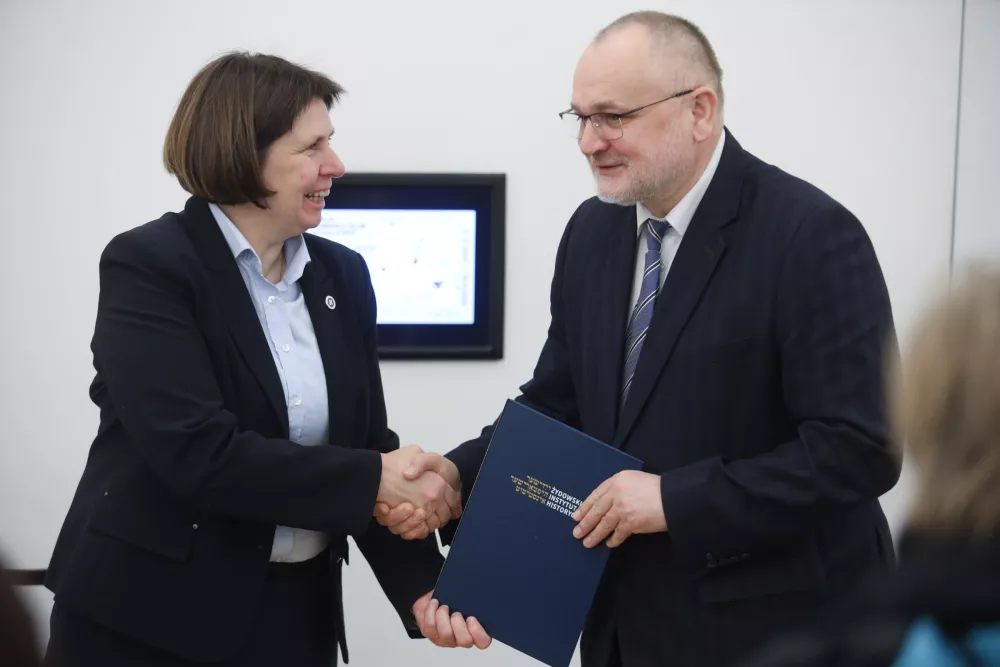
1 lutego 2024 roku podczas konferencji prasowej zorganizowanej w Żydowskim Instytucie Historycznym dyrektorka ŻIH Monika Krawczyk i dyrektor Muzeum Treblinka. Niemiecki nazistowski obóz zagłady i obóz pracy (1941-1944) Edward Kopówka podpisali porozumienie o współpracy przy tworzeniu nowej wystawy stałej Muzeum. Zespołem odpowiedzialnym za opracowanie wystawy będzie kierował prof. Andrzej Żbikowski, kierownik Działu Naukowego ŻIH.
.

Na spotkaniu był obecny dr Piotr Szpanowski, zastępca dyrektora Departamentu Dziedzictwa Kulturowego w Ministerstwie Kultury i Dziedzictwa Narodowego.

Konferencję rozpoczęła dyrektorka Monika Krawczyk, mówiąc o znaczeniu zbiorów przechowywanych w Żydowskim Instytucie Historycznym dla powstającej wystawy.

– W Żydowskim Instytucie Historycznym przechowywany jest zasób, który zapoczątkowała Żydowska Komisja Historyczna, zbierając i dokumentując zdarzenia związane z okresem okupacji niemieckiej w czasie II wojny światowej, aby zbrodnie niemieckie zostały udokumentowane zeznaniami i relacjami bezpośrednich świadków zagłady. ŻIH jest też miejscem, w którym przechowywane jest Archiwum Getta Warszawskiego. Działalność naszych naukowców gwarantuje najwyższy poziom historyczności, adekwatności, wykorzystania zbiorów. Obóz zagłady w Treblince został przez Niemców całkowicie zniszczony, ale dzięki relacjom grupy Oneg Szabat udało się pozyskać autentyczne dokumenty. Na uwagę zasługuje m.in. prezentowana w naszym gmachu na wystawie stałej relacja Jakuba Krzepickiego, który uciekł z Treblinki, a także plan obozu zagłady w Treblince pochodzący z 1942 roku opracowany z pamięci przez jednego z uciekinierów.

– W tej chwili w Muzeum Treblinka rozpoczęła się budowa nowoczesnego budynku muzealnego – mówił następnie dyrektor Edward Kopówka. – Należy wspomnieć, że osobą, która lobbowała budowę budynku był już błogosławionej pamięci Samuel Willenberg, przez długie lata jedyny żyjący więzień obozu zagłady. Teraz osobą, która promuje dalej i jest bardzo zaangażowana, jest wdowa po nim, Ada Krystyna Willenberg. Cieszę się, że te marzenia Samuela spełniają się. Sercem każdego obiektu muzealnego jest wystawa stała i jeszcze raz dziękuję, że Instytut wszedł we współpracę z nami, dziękuję prof. Andrzejowi Żbikowskiemu, który stanie na czele tego zespołu, dziękuję wszystkim pracownikom ŻIH-u, którzy wejdą w skład tego zespołu.

– Jesteśmy jako ŻIH zobowiązani wobec żydów warszawskich, ale nie tylko – rozpoczął swoje wystąpienie prof. Andrzej Żbikowski. – W Treblince został zamordowany prawie milion osób, byli to Żydzi z centralnej części Generalnego Gubernatorstwa, z Dystryktu Białystok. Wszystkim im jesteśmy winni pamięć. Pamięć o tych ludziach jest najważniejsza.

Następnie prof. Żbikowski opowiedział o swoim pomyśle na stworzenie wystawy stałej w Muzeum Treblinka.

– W Warszawie mamy kilka środowisk badaczy dziejów żydów polskich i Żydów, szczególnie warszawskich. Moim marzeniem jest, żeby każde z tych środowisk miało coś do powiedzenia w tym zespole, pokazało swoją wizję, wskazało na aspekty koniecznej wrażliwości i na oczekiwania społeczne. Zdajemy sobie sprawę, że minęło ponad osiemdziesiąt lat, w pamięci współczesnych warszawiaków inaczej to wygląda. Musimy zapytać, czego oni oczekują. Chcemy, żeby ta wystawa była w jakiś sposób i tradycyjna, i upamiętniała ludzi, i na swój sposób nowoczesna.

Następnie dyrektor Edward Kopówka przekazał na ręce Moniki Krawczyk medal „Zasłużony dla Muzeum Treblinka” przyznany Żydowskiemu Instytutowi Historycznemu, a dyrektor Krawczyk wręczyła dyrektorowi Kopówce odznakę pamiątkową ŻIH.

Cieszymy się, że wraz z podpisaniem porozumienia współpraca Żydowskiego Instytutu Historycznego i Muzeum Treblinka, prowadzona od ponad dwudziestu lat, jeszcze bardziej się zacieśniła. Wierzymy, że jej efektem będzie merytoryczna, wartościowa i interesująca wystawa w nowym gmachu Muzeum.    

fot. Grzegorz Kwolek, ŻIH (1).jpg
fot. Grzegorz Kwolek, ŻIH (10).jpg
fot. Grzegorz Kwolek, ŻIH (11).jpg
fot. Grzegorz Kwolek, ŻIH (12).jpg
fot. Grzegorz Kwolek, ŻIH (2).jpg
fot. Grzegorz Kwolek, ŻIH (3).jpg
fot. Grzegorz Kwolek, ŻIH (4).jpg
fot. Grzegorz Kwolek, ŻIH (5).jpg
fot. Grzegorz Kwolek, ŻIH (6).jpg
fot. Grzegorz Kwolek, ŻIH (7).jpg
fot. Grzegorz Kwolek, ŻIH (8).jpg
fot. Grzegorz Kwolek, ŻIH (9).jpg

Zawartość publikowanych artykułów i materiałów nie reprezentuje poglądów ani opinii Reunion’68,
ani też webmastera Blogu Reunion’68, chyba ze jest to wyraźnie zaznaczone.
Twoje uwagi, linki, własne artykuły lub wiadomości prześlij na adres:
webmaster@reunion68.com


How Palestine Hijacked the U.S. Civil Rights Movement

How Palestine Hijacked the U.S. Civil Rights Movement


GIL TROY


A new generation of progressives has stumbled on old Soviet antisemitic propaganda

.
Yasser Arafat, right, and Rev. Jesse Jackson embrace before their meeting in Beirut, September 1979 / AP PHOTO

For over 50 years, the American left has tried rebranding the Palestinian cause by camouflaging Palestinian terrorism with the slogans of America’s civil rights movement. Today, a new generation of would-be radicals has stumbled onto this zombie corpse of ahistoric sloganeering with the confident excitement of college freshmen on their first beer run.

Using pseudo-intellectual jargon like “intersectionality,” multiple identity groups and astroturfed leftist political organizations have made fealty to the Palestinian cause a litmus test for belonging to the wider left. That is why many progressives were “exhilarated” by Hamas’ massacre of innocent people, and feminists remained silent about the Gazans’ mass rape of Israeli women. The artificiality, or often absurdity, of the supposed “intersection” between Palestine and the fashionable cause of the moment matters not at all. Hence, Palestine is a queer issue, as much as it is a feminist issue, and a social justice issue. The common thread remains supposed shared oppression—regardless of how homophobic, sexist or dictatorial Palestinian society might be.

But most group identities, no matter how politically fashionable, lack the social, cultural, and political heft to integrate the Palestinians into the new hierarchy of American victim groups and protected minorities. In America, only race has that valence. That is why other identity groups keep trying to graft their victimhood onto the story of the Black civil rights movement to cement their legitimacy.

The Palestinian cause has gained a seat in the progressive sectarian tent by piggybacking off the historical experience of American Blacks. Especially since 2020, Palestine has become thoroughly incorporated into Black Lives Matter sloganeering and visual aesthetics. As a result, an Arab nationalist movement fighting a battle 6,000 miles away from America’s Atlantic coast has become a central component of America’s “anti-racist struggle,” regardless of its lack of even the slightest connection to the historical reality of race-based discrimination in America, or to the values of the American civil rights movement.

The differences between the Palestinian national movement and the American civil rights movement are obvious and fundamental. Palestinians have played no role in American history or the history of slavery. Palestinians played no role in the civil rights struggle. The Palestinian-Israeli clash, which is occurring a world away from America, is national not racial. Most Israelis are dark-skinned, while some Palestinians are light-skinned. Nonviolence fueled the civil rights struggle, while the Palestinian movement keeps perfecting new forms of political violence and terror-porn, from hijacking to suicide bombing.

As this brief history suggests, the identification of the Israeli-Palestinian conflict with America’s race problem was hardly made in America. It is a recent foreign import. Long before the “globalization of the intifada,” Soviet communist propagandists “internationalized” the Palestinian “struggle.” In the mid-1960s, under Soviet patronage, Palestine became a global cause for the international left, earning a privileged spot in the constellation of Soviet-backed Third World anti-colonial and anti-imperial “liberation” movements through their use of terror. Today’s movement toward the “Palestinianization” of the Black struggle in America therefore mirrors Soviet propaganda efforts that are now more than half a century old—30 years after Soviet communism imploded. Today’s campus commissars and progressive fanatics use very similar methods toward similar aims. If one wants to understand current rhetorical political alignments, understanding that history is therefore crucial.

As the late Palestinian academic, and member of the Palestine Liberation Organization’s (PLO) Palestinian National Council, Edward Said, put it in The Question of Palestine (1979), the Palestinian movement moved to situate “their struggle in the same framework that includes Vietnam, Algeria, Cuba, and black Africa,” joining “the universal political struggle against colonialism and imperialism.”

The turn toward worldwide anti-colonial revolution and “Third World solidarity” pivoted Palestinian rhetoric around race. As Said explained, “The Zionist settler in Palestine was transformed retrospectively and actually from an implacably silent master into an analogue of white settlers in Africa.”

In the mid-1960s, under Soviet patronage, Palestine became a global cause for the international left, earning a privileged spot in the constellation of Soviet-backed Third World ‘liberation’ movements.

Working with Soviet propagandists to delegitimize America’s ally in the Middle East, PLO leader Yasser Arafat jumped at the opportunity to brand Zionism as racism, binding the Palestinian cause to what in his infamous speech at the U.N. he called the global “struggle” against “colonialism, imperialism, neo-colonialism, and racism in all its forms, including Zionism.”

Still, after Israel won the Six-Day War in 1967, most Black American leaders, including Martin Luther King Jr., continued to support Israel passionately. Their identification with Zionism drew on powerful, historical bonds with Jewish leaders and organizations, cemented by decades of joint struggle.

Nevertheless, although aimed at the developing countries, the Soviet strategy made headway in America, too, where Maoist China had built strong relationships with radical Black activists like Robert Williams. Groups like the Black Panthers and other extremists fused Black Nationalism with Marxist-Leninism and Maoism. Also seeing themselves as advancing a global struggle, Black Power activists fed off Soviet communism, Maoist China, and Fidel Castro’s and Che Guevara’s Cuba in their search for external sponsors. As the rise of identity politics in the 1960s and 1970s paved the way for America’s grievance-based politics, sectarian activists gained cover to sacrifice individual rights on the altar of collective resentments.

These Maoist Black American figures detested the Constitution-positive, patriotic, liberal-left mainstream Black leadership of Dr. King and his circle. Shut out from the U.S. liberal power structure, these radicals began traveling to the Middle East and Africa and meeting with members of the PLO. In 1970, the “Committee of Black Americans for Truth about the Middle-East” took out an ad in The New York Times in “solidarity with the Palestinian people’s struggle for national liberation.” It declared that “Zionism is a reactionary racist ideology that justifies the expulsion of the Palestinian people from their homes and lands.” Marginal then, such rhetoric is common now on U.S. college campuses.

In defying Dr. King and other civil rights liberals they found insufficiently militant—and by defining themselves against Zionism, by extension—a new generation of Black radicals staked their claim to being the “true voice” of angry young men in the cities. They demanded “revolution,” nothing less. While the language of global Marxist radicalism alienated Black churchgoers in the civil rights heartland, it provided Black Power activists with allies and street cred among white Marxist campus radicals who likewise celebrated “revolution” and established trust-fund terrorist organizations like the Weather Underground.

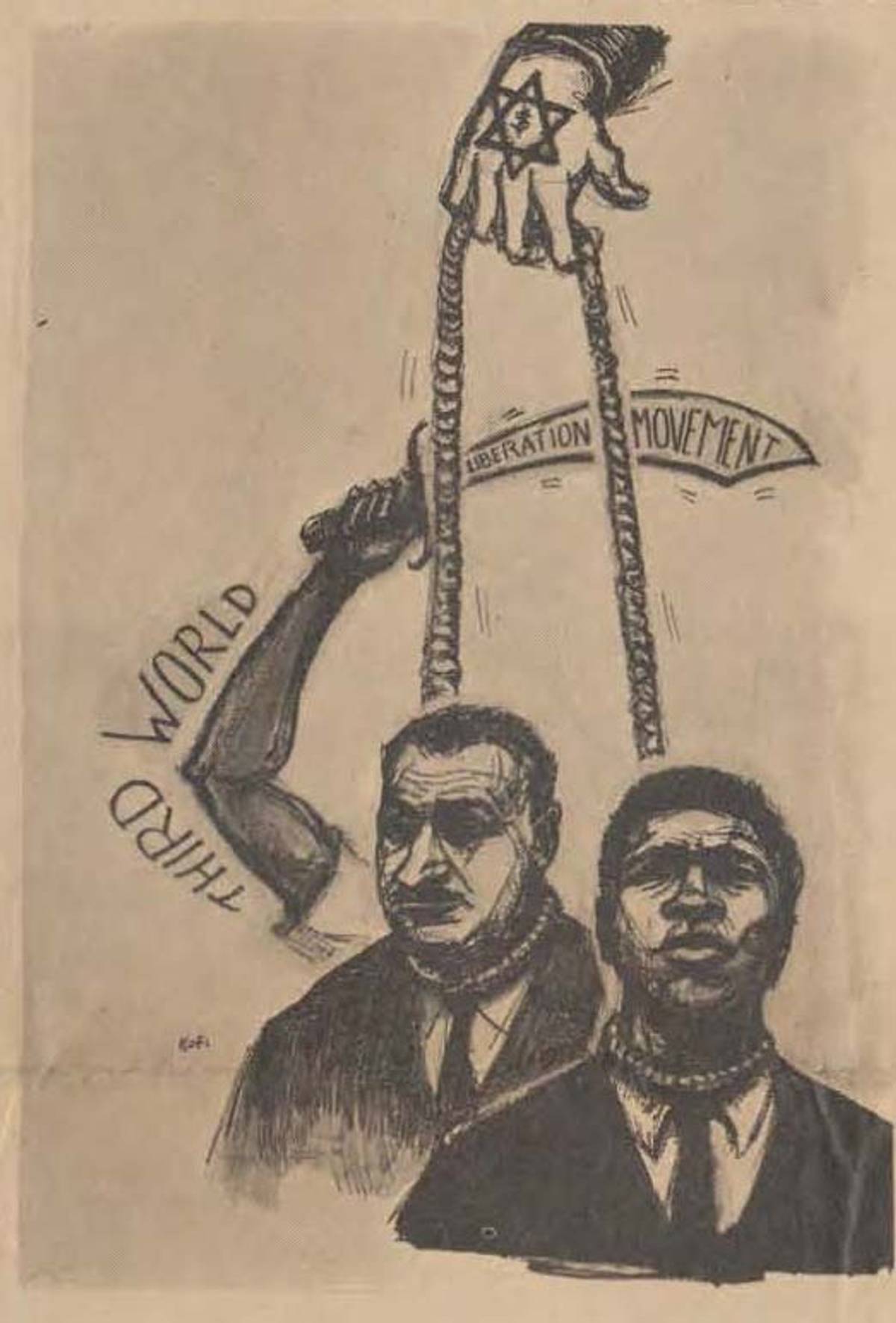
The distance from anti-Zionism to antisemitism was predictably brief. One Student Nonviolent Coordinating Committee (SNCC) newsletter portrayed the Jewish state as a tool of “white western colonial governments … helping white America to control and exploit the rich oil deposits of the Arab nations.” The pamphlet included a cartoon with a puppeteer’s hand marked with a Jewish star and a dollar sign, pulling on a rope hanging Egypt’s dictator Gamal Abdul Nasser and heavyweight champion Muhammad Ali; greedy Jews were lynching an iconic Black figure and an Arab leader, side by side. SNCC’s program director Ralph Featherstone denied charges of antisemitism, as would his comrades in their 1970 New York Times ad, claiming the cartoon “only” targeted Jewish oppressors—in Israel and “in the little Jew shops in the [Negro] ghettos.” Featherstone explained that the SNCC supported the Palestinian cause because it was working toward a “third world alliance of oppressed people all over the world—Africa, Asia, and Latin America.”

CARTOON APPEARING IN SNCC NEWSLETTER, JUNE-JULY 1967. CIVIL RIGHTS MOVEMENT ARCHIVE

When the United Nations branded Zionism to be a form of “racism” in 1975, most mainstream African American leaders openly objected. Martin Luther King’s friend Bayard Rustin wrote a column invoking King’s famous comment that “when people criticize Zionists, they mean Jews, you are talking anti-Semitism.’” Vernon Jordan, the National Urban League president, wrote: “Black people, who recognize code words since we’ve been victimized by code words … can easily smell out the fact that ‘Zionism’ in this context is a code word for anti-Semitism.” Other civil rights leaders signed an ad proclaiming, “We have fought too long and too hard to root out discrimination from our land to sit idly while foreign interests import bigotry into America.” Nevertheless, by singling out Jewish nationalism as “racism,” the U.N. assisted in the effort to frame the Palestinian struggle as a racial conflict.

The equation of Zionism and racism, no matter how obviously ahistorical and unfair—no other form of nationalism is accused of being inherently racist—resonates and contaminates, inasmuch as race continues to have a hold on American emotions. The purpose of the slur is obvious and toxic: It aims to place American Jews, the vast majority of whom identify as some form of Zionist, outside the bounds of normal American morality, while stigmatizing Israel with America’s own historical guilt over race relations.

In the 1980s, the international left’s crusade focused on the apartheid regime in South Africa. Palestinian propagandists quickly appended the term “apartheid” to the Palestinian cause, further entrenching the racialist approach.

The Soviet Union’s collapse in the early 1990s deprived leftists of their ideological glue, while the end of South African apartheid deprived leftists of a favorite cause. Yet paradoxically, in the vacuum, these historic breakthroughs cleared the way for “Palestine” to become the paramount cause célèbre on the activist left. Wearing a kaffiyeh proved to fellow progressives that you passed a default ideological litmus test. Throughout, spearheaded by its Committee on the Exercise of the Inalienable Rights of the Palestinian People, established while passing the 1975 Zionism-is-Racism resolution, the United Nations kept amplifying the Soviet-Palestinian antisemitic project.

Since 2010 or so, when progressive Third World sectarianism became quasi-official ideology among all right-thinking people, the Palestinian cause has become increasingly central in left doctrine, bounding to the top of the American left’s “anti-racist” agenda. Time and again, the Palestinian cause gets a free pass other movements somehow don’t merit. When the Black Lives Matter movement emerged, its activists policed any attempts to broaden their slogan to include other identity groups. Yet pro-Palestinian activists were allowed to appropriate the slogan “Palestinian Lives Matter” and to embed themselves in an internationalized framework against “oppression” that extends “from Ferguson to Gaza.”

BLM has helped Palestine activists repackage their predecessors’ racialist slogans and tailor them to fit America’s current pathological zeitgeist. In addition to run-of-the mill charges of “racism” and “apartheid”—the new hot items, in line with the broader political agenda and official terminology of the Democratic Party, are “white supremacy” and “white nationalism,” resulting in the charge that American Jews and Israelis are beneficiaries of “white privilege,” a statement that casually erases nearly all of Jewish history up to and including the Holocaust. Apparently, Jews—whether American or Israeli—are so privileged that not even centuries of exclusion and pogroms, culminating in the worst genocide in human history, can detract from their inherent status as “privileged,” i.e., evil.

During the George Floyd riots in 2020, Palestinian activists commandeered “I can’t breathe” as part of their transnational campaign painting Blacks and Palestinians as fellow victims of the same “structural violence, occupation, and colonial oppression” inflicted by “whites.” In what was dubbed the “deadly exchange,” intersectional propagandists for Palestine charged that the “Israeli military trains U.S. police in racist and repressive policing tactics, which systematically targets Black and Brown bodies.” This lie transformed some police junkets into nonexistent IDF boot camps where innocent American cops were systematically reeducated into specialized Israeli techniques of racial brutality.

The point of this bizarre accusation was not just that the Jews are oppressors. It was that “the Jews” are guilty of the most heinous crime in the American cosmos. Eerily echoing traditional blood libels, Jews became racist oppressors, complicit in, even responsible for America’s original sin, racist oppression. After all, it was the IDF that “perfected” the chokehold “used to murder George Floyd,” hundreds of academics and students in the University of California system declared. In other words, it was “the Jews” who had actually killed the 21st century’s leading American Black martyr.

In a way, this trajectory was inevitable, once progressives decided on a vision of social justice in which America would be run according to a sectarian quota system, in which they defined which groups would be worthy of everything from university admissions to political power. According to this logic, success and failure is—and should be—a function of group identity, which pigeonholes individuals as either “oppressors” or “oppressed.” Within this new taxonomy, American Jews have been defined as the quintessential “white oppressors,” since “Jew” is defined as being synonymous with “white” and “successful.” The Jewish connection to Israel makes the Jews doubly or triply as oppressive as other “white people.”

It is no coincidence that at its core the Palestinianization of the U.S. civil rights movement is an anti-American project. The intersection of the Palestinian cult of victimhood with the “anti-racist” progressive ideology being pushed institutionally by DEI regimes, not only declares that Israel is inherently racist, it also maligns America as systemically racist. The implication is clear: Both projects should be dismantled. That a generation of young American radicals chooses to ignore the real-world implications of these insane slogans is scary enough. That many of them, their professors, and other influential politicos in fact embrace the broader message, is terrifying.


Professor Gil Troy, a Senior Fellow in Zionist Thought at the JPPI, the global think tank of the Jewish people, is an American presidential historian, and, most recently, the editor of the three-volume set Theodor Herzl: Zionist Writings, the inaugural publication of The Library of the Jewish People.


Zawartość publikowanych artykułów i materiałów nie reprezentuje poglądów ani opinii Reunion’68,
ani też webmastera Blogu Reunion’68, chyba ze jest to wyraźnie zaznaczone.
Twoje uwagi, linki, własne artykuły lub wiadomości prześlij na adres:
webmaster@reunion68.com


West Point Urban Warfare Expert: IDF ‘Implemented More Measures to Prevent Civilian Casualties Than Any Other Military in History’

West Point Urban Warfare Expert: IDF ‘Implemented More Measures to Prevent Civilian Casualties Than Any Other Military in History’

Jack Elbaum


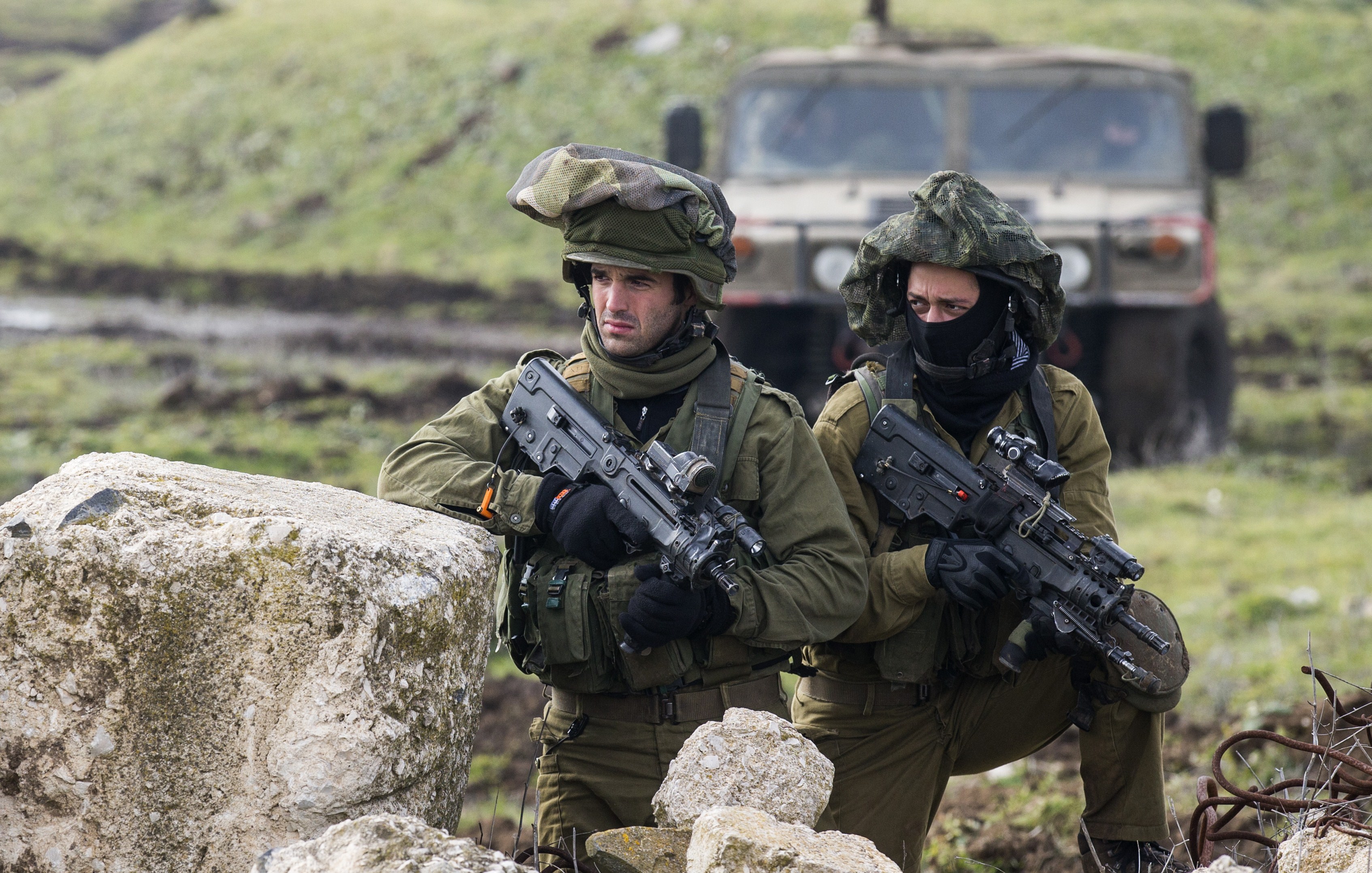
Photo:JACK GUEZ

The chair of urban warfare studies at West Point’s Modern Warfare Institute released an op-ed on Wednesday arguing that, during Israel’s war on Hamas, the country “has implemented more measures to prevent civilian casualties than any other military in history.”

John Spencer, who served in the U.S. Army for 25 years and did two tours in Iraq, took to the pages of Newsweek to push back on allegations that Israel is indiscriminately targeting civilians and even committing genocide. 

“As someone who has served two tours in Iraq and studied urban warfare for over a decade,” Spencer explained, “Israel has taken precautionary measures even the United States did not do during its recent wars in Iraq and Afghanistan.”

He wrote: “One of the best ways to prevent civilian casualties in urban warfare is to provide warning and evacuate urban areas before the full combined air and ground attack commences. This tactic is unpopular for obvious reasons: It alerts the enemy defender and provides them the military advantage to prepare for the attack. The United States did not do this ahead of its initial invasion of Iraq in 2003, which involved major urban battles to include in Baghdad. It did not do this before its April 2004 Battle of Fallujah (though it did send civilian warnings before the Second Battle of Fallujah six months later).”

“By contrast,” Spencer continues, “Israel provided days and then weeks of warnings, as well as time for civilians to evacuate multiple cities in northern Gaza before starting the main air-ground attack of urban areas. The Israel Defense Forces (IDF) employed their practice of calling and texting ahead of an air strike as well as roof-knocking, where they drop small munitions on the roof of a building notifying everyone to evacuate the building before a strike.”

Israel’s use of hundreds of thousands of leaflets, almost 20,000 cell phone calls, 65,000 texts, and 6,000,000 voicemails to civilians, along with alerting civilians where its ground operations would be on a day-to-day basis, is also unprecedented, says Spencer. Not to mention pausing fighting for four hours “over multiple consecutive days” to allow civilians to leave war zones.

Israel may have needed to take such unprecedented measures because the conditions in which they are fighting are also unprecedented, according to analysts. Gaza is a small piece of land — only 25 miles long and, at its widest point, 7.5 miles wide — and extremely densely populated. To make matters more difficult, there are between 350 and 450 miles of tunnels under the strip, which is only 141 square miles, meaning almost the entire territory has Hamas infrastructure under it.

On this point, Spencer writes, “No military in modern history has faced over 30,000 urban defenders in more than seven cities using human shields and hiding in hundreds of miles of underground networks purposely built under civilian sites, while holding hundreds of hostages.”

Protecting civilians in such an environment is particularly challenging, which is likely one of the reasons Israel took the measures they have.

At the same time, the destruction in Gaza is widespread. More than half of the buildings are likely no longer habitable and the war has created a humanitarian crisis where people are unable to gain access to food and necessary medical care.

Additionally, the Hamas-run Gaza Ministry of Health says almost 27,000 Palestinians have been killed during the war, although it does not differentiate between civilians and terrorists. Based on Israeli and U.S. estimates, the civilian-to-combattant casualty ratio is somewhere between 1.5-to-1 and 3-to-1, which is significantly better than the international average, which is 9-to-1 according to the United Nations, but still means thousands of uninvolved civilians have been killed.

“To be clear, I am outraged by the civilian casualties in Gaza,” Spencer makes sure to emphasize, “But it’s crucial to direct that outrage at the right target. And that target is Hamas.”


Zawartość publikowanych artykułów i materiałów nie reprezentuje poglądów ani opinii Reunion’68,
ani też webmastera Blogu Reunion’68, chyba ze jest to wyraźnie zaznaczone.
Twoje uwagi, linki, własne artykuły lub wiadomości prześlij na adres:
webmaster@reunion68.com


Halina Birenbaum w 79. rocznicę wyzwolenia Auschwitz: zło nie rodzi dobra, ale dobro nie da się zwyciężyć

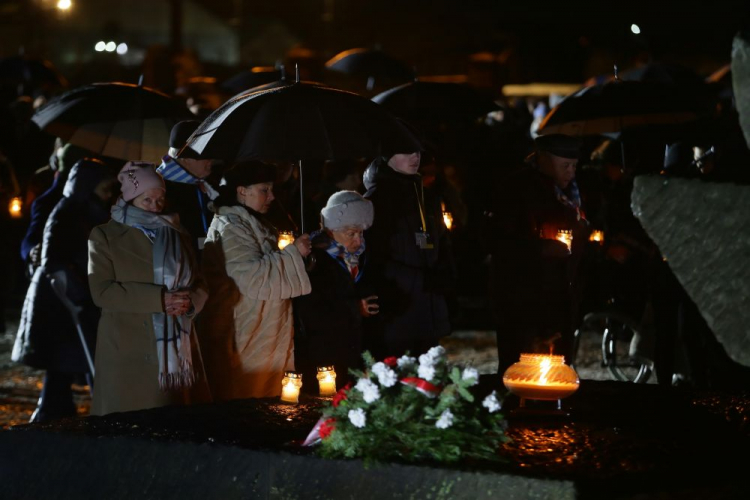
Uroczystości w 79. rocznicę wyzwolenia przed pomnikiem ofiar KL Auschwitz na terenie byłego niemieckiego nazistowskiego obozu koncentracyjnego i zagłady Auschwitz-Birkenau. Fot. PAP/J. Praszkiewicz


Halina Birenbaum w 79. rocznicę wyzwolenia Auschwitz: zło nie rodzi dobra, ale dobro nie da się zwyciężyć

baj/ jann/


Zło nie rodzi dobra, ale dobro nie da się zwyciężyć – powiedziała podczas obchodów 79. rocznicy wyzwolenia KL Auschwitz była więźniarka obozu Halina Birenbaum. W trakcie uroczystości przemawiali też marszałek Senatu Małgorzata Kidawa-Błońska, ambasador Izraela w Polsce Jacov Livne i dyrektor Muzeum Auschwitz Piotr Cywiński.

W uroczystościach upamiętniających 79. rocznicę wyzwolenia Auschwitz udział wzięło m.in. 20 byłych więźniów obozu, marszałek senatu Małgorzata Kidawa-Błońska, wicemarszałek sejmu Dorota Niedziela, minister kultury i dziedzictwa narodowego Bartłomiej Sienkiewicz i ambasador Izraela w Polsce Jacov Livne.

Pierwsza głos zabrała b. więźniarka obozu Halina Birenbaum. “Doczekałam wyzwolenia i długiego życia podczas następnych wojen. Boleśnie odczuwam cierpienia i tragedie obecnych wojen, obecnych ludzi. U nas napad barbarzyński, długoletni Rosji na Ukrainę, u nas napady terrorystyczne barbarzyńskie Hamasu i wojna z wszystkich stron. Padają synowie i córki tych ocalałych nielicznych z zagłady, już po odbudowaniu nowego życia w nowej ojczyźnie Izrael” – mówiła ocalała z Zagłady Halina Birenbaum.

Była więźniarka mówiła o demonstracjach antyżydowskich i antyizraelskich w państwach Europy i w Ameryce. “Dla mnie to jest przedłużenie Auschwitz” – podkreśliła.

Halina Birenbaum: Miałam poczucie straszliwe, końca świata przeczucie. Przywieźli tu wszystkich, ogołocili ze wszystkiego i spalili, a teraz my skończymy sortowanie i dźwiganie do tych pociągów do Niemiec tych rzeczy i wtedy nas uduszą, spalą, i nie ma więcej niczego, nikogo, ale tak się nie stało jednak. Zanim jeszcze przyszły wojska sowieckie pognali nas w pięciodniowy marsz śmierci do dwóch obozów w Niemczech, gdzie zostałam wyzwolona w maju 1945 roku.

Jak zaznaczyła, “zło nie rodzi dobra, ale dobro nie da się zwyciężyć”. “Świat nie da się zgładzić, nie da się zniszczyć musi być czujny, musi być nieobojętny (…) Jestem pewna, że takim właśnie będzie” – wyraziła nadzieję Birenbaum.

Ocalała przemawiała podczas ceremonii rocznicowej z miejsca przy poobozowym baraku, w którym była więziona. Wspominała, że widać z niego było budynek komory gazowej. “Widziałam to, słyszałam krzyk hebrajskiej modlitwy: Szma Israel! Słuchaj, Israelu!” – mówiła.

Halina Birenbaum powiedziała również, że w tym miejscu przebywała od sierpnia 1943 do 18 stycznia 1945 roku. “Pracowałam z grupą więźniarek przy sortowaniu rzeczy zamordowanych, pakowaniu ich i dźwiganiu do czekających pociągów na wywóz do Niemiec. (…) Pewnego dnia nasza grupa komanda w +Kanadzie+ (obozowy magazyn – PAP) zderzyła się przeciwlegle z kolumną Żydów z Węgier prowadzonych na śmierć, do gazu. Mężczyzna obok kobiety z niemowlęciem zapytał, jak daleko jeszcze do kolonii żydowskiej, bo trzeba nakarmić dziecko? I co można było odpowiedzieć? Poszłyśmy w milczeniu dalej, mijając się; oni na śmierć do gazu, a my sortować rzeczy po nich” – powiedziała.

Była więźniarka mówiła, że nie mogła już “wypowiedzieć ludzkiego słowa, bo ono już niczego nie wyrażało więcej”.

“Miałam poczucie straszliwe, końca świata przeczucie. Przywieźli tu wszystkich, ogołocili ze wszystkiego i spalili, a teraz my skończymy sortowanie i dźwiganie do tych pociągów do Niemiec tych rzeczy i wtedy nas uduszą, spalą, i nie ma więcej niczego, nikogo, ale tak się nie stało jednak. Zanim jeszcze przyszły wojska sowieckie pognali nas w pięciodniowy marsz śmierci do dwóch obozów w Niemczech, gdzie zostałam wyzwolona w maju 1945 roku” – wspominała.

“Wszyscy mamy obowiązek bycia strażnikami pamięci o tym, co się działo zarówno w obozie Auschwitz-Birkenau, jak i innych obozach koncentracyjnych i zagłady stworzonych przez reżim nazistowski. Zapewniam zwłaszcza państwa – byłych więźniów obozu i ocalonych z Zagłady, że nie pozwolimy nikomu tej pamięci zgasić. W Międzynarodowym Dniu Pamięci o Ofiarach Holokaustu z całą mocą potępiam wszelkie współczesne przejawy dyskryminacji, antysemityzmu, ksenofobii i rasizmu. Stanowczo mówimy: nie! Nie możemy być obojętni” – powiedziała marszałek Senatu Małgorzata Kidawa-Błońska.

Następnie głos zabrała marszałek Senatu Małgorzata Kidawa-Błońska.

“Wszyscy mamy obowiązek bycia strażnikami pamięci o tym, co się działo zarówno w obozie Auschwitz-Birkenau, jak i innych obozach koncentracyjnych i zagłady stworzonych przez reżim nazistowski. Zapewniam zwłaszcza państwa – byłych więźniów obozu i ocalonych z Zagłady, że nie pozwolimy nikomu tej pamięci zgasić. W Międzynarodowym Dniu Pamięci o Ofiarach Holokaustu z całą mocą potępiam wszelkie współczesne przejawy dyskryminacji, antysemityzmu, ksenofobii i rasizmu. Stanowczo mówimy: nie! Nie możemy być obojętni” – powiedziała marszałek w swoim wystąpieniu.

Małgorzata Kidawa-Błońska przypomniała, że Auschwitz “stało się symbolem niewyobrażalnego cierpienia, nienawiści, okrucieństwa i pogardy dla drugiego człowieka”. “To miejsce tragicznie wyryło się w historii Polski i Europy, będąc niemym świadkiem zagłady Żydów – Szoah, ludobójstwa Romów z całego kontynentu, miejscem kaźni dziesiątek tysięcy Polaków i obywateli prawie wszystkich europejskich krajów” – mówiła.

Jak podkreśliła, 27 stycznia 1945 roku był zarówno początkiem nadziei dla ocalonych, ale też opłakiwania ofiar. “To wydarzenie było dniem zwycięstwa nad złem. Dziś, 79 lat później, oddajemy hołd milionom ofiar nazistowskiego ludobójstwa, które zginęły w obozie Auschwitz-Birkenau i innych miejscach kaźni, przypominając ich cierpienie. Składamy też hołd wszystkim bohaterom, którzy przeszli przez to piekło” – powiedziała.

Zdaniem marszałek Senatu historia Auschwitz zobowiązuje wszystkich do refleksji, pamięci i działania. Kidawa-Błońska zaznaczyła, że należy przede wszystkim pamiętać, jak doszło do powstania obozów zagłady. “Zaczęło się od tego, że ludzie niewystarczająco reagowali na mowę nienawiści, która, jak pokazała historia II wojny światowej, ma niszczycielską moc. Można z całą odpowiedzialnością powiedzieć, iż do Auschwitz-Birkenau doprowadziły słowa dehumanizujące drugiego człowieka, które przez lata zatruwały serca, umysły i sumienia, i które w końcu zrodziły absolutne zło” – powiedziała.

Zwróciła uwagę, że Auschwitz “jest wciąż niezabliźnioną raną w zbiorowej pamięci o ludziach, którzy tu cierpieli i zginęli”. “Dlatego, kierując moje słowa zwłaszcza do osób młodych, (…) apeluję: bądźmy świadomi zagrożenia, jakie niesie ze sobą nienawiść i kłamstwo! Jest to ważne szczególnie obecnie, gdy w wielu miejscach świata zło znów tryumfuje” – mówiła.

Ambasador Izraela w Polsce Jacov Livne stwierdził, że prosta linia łączy ideologię nazistowską z ludobójczym dżihadyzmem, a obydwa zjawiska terroryzują brutalnością i wykorzystują antysemityzm i ksenofobię, by zniszczyć wolny świat.

Podkreśliła, że na kolejnych pokoleniach ciąży odpowiedzialność przekazywania prawdy o Auschwitz, zwłaszcza, że – jak wskazała – obecnie łatwo jest negować i relatywizować tragiczną historię, manipulować informacjami, a tym samym ludźmi. “Niech pamięć o tym, co stało się w obozie Auschwitz-Birkenau, będzie dla każdego z nas zobowiązaniem do budowania świata, w którym miłość zwycięża nienawiść, otwartość i empatia pokonują stereotypy i uprzedzenia, a każdy człowiek jest szanowany przez innych oraz chroniony przez mądre i skutecznie egzekwowane prawo” – apelowała.

W uroczystości udział wziął również ambasador Izraela w Polsce Jacov Livne, który stwierdził, że prosta linia łączy ideologię nazistowską z ludobójczym dżihadyzmem, a obydwa zjawiska terroryzują brutalnością i wykorzystują antysemityzm i ksenofobię, by zniszczyć wolny świat.

“7 października widzieliśmy jak wygląda jeden dzień Holokaustu. Rozstrzeliwano kobiety, mężczyzn, starców, dzieci i niemowlęta, okaleczano i palono żywcem, a ich ciała były bezczeszczone. Porwano ocalałych. Terroryści Hamasu nadal przetrzymują 136 izraelskich zakładników, którzy muszą zostać natychmiast uwolnieni” – powiedział Livne. Ambasador Izraela niemal całe swoje przemówienie pod namiotem ustawionym nad jednym z baraków w byłym Auschwitz II-Birkenau poświęcił atakowi Hamasu na Izrael w październiku 2023 r. W ataku tym zginęło około 1200 osób, w większości izraelskich cywilów.

Livne wyraził zdumienie tym, że “przeciwko państwu żydowskiemu kierowane są oskarżenia o ludobójstwo, kiedy walczymy o nasze istnienie”, nawiązując do krytykowanej powszechnie operacji militarnej Izraela w Strefie Gazy, która kosztowała życie blisko 26 tys. Palestyńczyków.

“Pamiętajcie, jak błędna była polityka +appeasementu+ wobec nazistowskich Niemiec” – zaapelował izraelski dyplomata. “Dziś takim samym błędem byłoby pozostać obojętnym i nie przeciwstawiać się dżihadystom, którzy mordują Żydów, chrześcijan i innych muzułmanów. Błędem byłoby finansowanie radykałów, którzy nazywają Żydów synami świń i nauczają jedynie zabijania” – dodał.

Głos zabrał również dyrektor Muzeum Auschwitz Piotr Cywiński. “Wierzyliśmy w świat bardziej sprawiedliwy, bardziej przyjazny i bardziej ludzki. W świat, którego fundamentem staną się prawa człowieka. Wierzyliśmy w pamięć, żyjąc w czasach powojenności. Dziś widzimy, jak cały nasz świat się zmienia; wszyscy stoimy na ogromnym zakręcie historii. Oto dziś jedni wyzwoliciele atakują drugich. Gwałcą i mordują. A w Izraelu, w świecie ocalałym z Zagłady, pokoju nie widać nawet na horyzoncie” – powiedział dyrektor Muzeum Auschwitz.

Dyrektor Muzeum Auschwitz Piotr Cywiński: Wartości, które stały się po wojnie fundamentem świata, jak pokój, otwartość, dialog, współzależność, solidarność, pomocniczość, słabną w obliczu lęku, zobojętnienia, nowych podmuchów populizmu i demagogii. Być może jesteśmy dziś świadkami końca ery powojenności.

Cywiński dodał, że wybuchają konflikty na ogólnoświatową skalę, a stworzony po II wojnie globalny system bezpieczeństwa jest jedynie swoim własnym cieniem. “Europa nie potrafiła zjednoczyć swych wysiłków i ustrzec się przed powrotem antysemityzmu, rasizmu, ksenofobii. Tego nieracjonalnego i przeklętego lęku przed wszystkim, co inne. A przecież wiemy, że tylko słaba tożsamość boi się inności” – powiedział.

Jak podkreślił, wartości, które stały się po wojnie fundamentem świata, jak pokój, otwartość, dialog, współzależność, solidarność, pomocniczość, słabną w obliczu lęku, zobojętnienia, nowych podmuchów populizmu i demagogii. “Być może jesteśmy dziś świadkami końca ery powojenności” – powiedział.

Dyrektor muzeum przypomniał, że uroczystość odbywa się przy baraku obozu kobiecego w Birkenau, w którym więziono obecną na ceremonii Halinę Birenbaum. “Barak ten został pieczołowicie zakonserwowany. Ale pamięci zakonserwować się nie da. Jest ona żywiołem targanym wiatrami historii. Pamięć jest zawsze polifoniczna. I – koniec końców – każde pokolenie będzie żyło swoją pamięcią” – powiedział.

Zdaniem dyrektora, pamięć nie jest równoważna z wiedzą historyczną. “Pamięć to tożsamość. Korzenie i zarazem skrzydła. Klucz dla ludzkich wyborów. I tylko takie jej zrozumienie pozwala jej nieść przekaz wartości ponad pokolenia. A pamięć o tak skrajnym odczłowieczeniu wskazuje drogę dla całej ludzkości, zwłaszcza w trudnych czasach, w chwili wyboru” – dodał.

Cywiński przypomniał, że za rok obchodzona będzie 80. rocznica wyzwolenia obozu. „Staniemy tu razem, raz jeszcze. Czy nadal będą to obchody w cieniu tylu wojen?” – pytał. Pokreślił zarazem, że “tworzenie zaczyna się od dzisiejszych decyzji każdego z nas”.

Wystąpienie dyrektora było ostatnim słowem podczas głównej ceremonii rocznicowej. Uroczystości zwieńczyła wspólna, chrześcijańsko-żydowska modlitwa i położenie zniczy na pomniku ofiar obozu.(PAP)


Zawartość publikowanych artykułów i materiałów nie reprezentuje poglądów ani opinii Reunion’68,
ani też webmastera Blogu Reunion’68, chyba ze jest to wyraźnie zaznaczone.
Twoje uwagi, linki, własne artykuły lub wiadomości prześlij na adres:
webmaster@reunion68.com