Archives

IRAN HACKS ISRAEL IN CYBER ATTACK

IRAN HACKS ISRAEL IN CYBER ATTACK

SANDEEP SINGH GREWAL/GULF DAILY NEWS


The group, dubbed “Leafminer,” has attacked networks in Saudi Arabia, the UAE, Qatar, Kuwait, Bahrain, Egypt, Israel and Afghanistan, according to a report issued by US cyber security firm Symantec.

Hacker. (photo credit: INGIMAGE / ASAP)

Manama, Bahrain (Tribune News Service) – A group of “highly active” hackers based in Iran have been found to be trying to steal vital information from governments in the Middle East.

The group, dubbed “Leafminer,” has attacked networks in Saudi Arabia, the UAE, Qatar, Kuwait, Bahrain, Egypt, Israel and Afghanistan, according to a report issued by US cyber security firm Symantec.

However, an Information and eGovernment Authority (iGA) spokesman told the GDN yesterday “no indication was found up until now that Leafminer targeted the portal or any systems managed by IGA.”

The cyber espionage group’s targets includes the “energy, telecommunications, financial services, transportation and government” sectors.

Means of intrusion used to infiltrate target networks consisted of infecting malware on websites often visited by the users, also known as watering hole style attacks, and using brute-force login attempts, which features trying numerous passwords with the hope of eventually breaching the network.

“Symantec has uncovered the operations of a threat actor named Leafminer that is targeting a broad list of government organizations and business verticals in various regions in the Middle East,” stated a threat intelligence report by Symantec.

Operations reportedly began in early 2017 but has increased since the end of last year.

“Leafminer is a highly active group, responsible for targeting a range of organizations across the Middle East.

“The group appears to be based in Iran and seems to be eager to learn from, and capitalize on, tools and techniques used by more advanced threat actors.”

The report also said an investigation into Leafminer revealed a list, written in Farsi, of 809 systems targeted by the hackers.

“Targeted regions included in the list are Saudi Arabia, the UAE, Qatar, Kuwait, Bahrain, Egypt, Israel, and Afghanistan.”

The report said the attackers were looking for e-mail data, files and database servers on their target systems in financial, government, energy, airlines, construction, telecommunication and other sectors in the region.

Symantec said it was able to identify Leafminer after discovering a compromised web server that was used in several different attacks.

“It [the cyber espionage group] made a major blunder in leaving a staging server publicly accessible, exposing the group’s entire arsenal of tools.

“That one misstep provided us with a valuable trove of intelligence to help us better defend our customers against further Leafminer attacks.”

IGA said, in a statement to the GDN yesterday, that part of its job was to monitor any report issued by security vendors such as Symantec regarding any threat actors targeting the region.

“The team then conducts further investigation to look for any sign of indication related to the threat actors,” it said.

“If an indication is detected, the case is reported to IGA’s cybersecurity incident management team to take the needful action to approach the incident.

“With regards to the Leafminer cyber espionage group, no indication was found up till now that Leafminer targeted the portal or any systems managed by IGA.”

IGA officials previously said that around 27,000 attacks on government systems were managed last year, with majority of them originating from countries in the east, namely Iran.

Meanwhile, a spokesman from Bahrain-based security firm CTM360 said it was aware of Leafminer and urged companies and individuals to install anti-virus software as well as use complex passwords.

“Leafminer targeted government organizations and businesses in the Middle East by using the existing available threats out there,” said the spokesman.

“The group studied reports published by different security firms about malwares or threats, and fix the loopholes mentioned in those papers for an advanced malware attack.”


Zawartość publikowanych artykułów i materiałów nie reprezentuje poglądów ani opinii Reunion’68,
ani też webmastera Blogu Reunion’68, chyba ze jest to wyraźnie zaznaczone.
Twoje uwagi, linki, własne artykuły lub wiadomości prześlij na adres:
webmaster@reunion68.com



AHED TAMIMI AND THE BATTLE OVER PUBLIC OPINION

AHED TAMIMI AND THE BATTLE OVER PUBLIC OPINION

NACHMAN SHAI


Ahed Tamimi is not naive. She knows very well what she did.

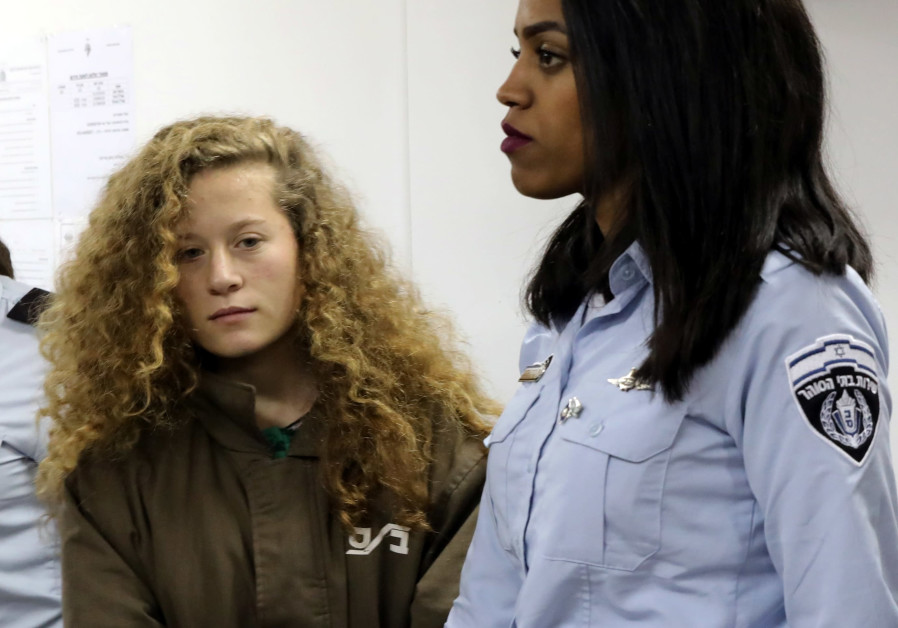
Palestinian teen Ahed Tamimi enters a military courtroom escorted by Israeli Prison Service personnel at Ofer Prison near the West Bank city of Ramallah, December 28, 2017. . (photo credit: AMMAR AWAD / REUTERS)

Ahed Tamimi is not naive. She knows very well what she did. At several points in the past, she has gone out of her way to harass IDF soldiers. This is also a family matter, as her family has a record of such encounters with soldiers.

Of course, all of these events were documented by Ahed and her family so that they would quickly be spread across social media and get the desired exposure. A few months ago, she stood in front of an IDF officer and cursed him. The officer responded with silence. He did not hit her with his weapon nor did he react in any way other than distancing himself from her. After some time, she was arrested and eventually sentenced to prison. On Sunday, she was released and returned with honor to her village, riding waves of sympathy and support. As she wanted, Ahed Tamimi has become a heroine.

The current war between Israelis and Palestinians is a war of public opinion. In this war, symbols are an inseparable part of the battle. This was what Muhammad al-Dura symbolized after he was killed at the Netzarim Junction on September 30, 2000 – the first day of the Second Intifada. Palestinians have been searching for faces and names to illustrate their struggle since then.

Numbers and places do not speak. But the human face, preferably a young boy or girl, is the kind of fuel that sustains this war. The damage caused by a war of public opinion on Israel is no less serious than an intifada that kills and wounds people. Thanks to social networking and new technologies, on which they garner support, Palestinians can reach any corner of the world and incite public opinion or mobilize BDS protests.

In such a struggle the differences between strong and weak, big and small, and technological and primitive are reduced. Within this context, for example, the incendiary balloon and kite attacks juxtaposed with interceptors like the Iron Dome missile-defense system once again illustrate the asymmetric character of the struggle. Israel must have been aware of the impact of the transition and its outcome. We must not supply the Palestinians with means and reasons to attack us.

The war of public opinion requires a new approach other than what has been taken in the past. It is true that countries have difficulty with this. They have great military power and they tend to use it. Terrorist organizations, like Hamas in Gaza, Hezbollah in Lebanon, the Taliban in Pakistan or ISIS in Iraq and Syria, are better than their more sophisticated enemies in engaging in this war.

It’s too bad we were caught in the trap and didn’t see it coming, because we can’t say we are surprised. We knew Ahed would be the heroine, and all our wisdom was spent trying to prevent her from reaching that status. Yet now she is a symbol whom many may copy and take after. She could have been put under house arrest. Other sanctions could have been placed on her and the family. We could have ignored the incident and waited for a calmer time, separate from the incident with the soldier. Any other solution would have been preferable to the situation created today and the unnecessary Palestinian celebration.

The war with the Palestinians does not end in Gaza and the West Bank, as was proven during the weekend, nor anywhere else. Their success breeds more events of this nature. We have to be prepared for this, not only in the realm of the IDF but also in all the relevant bodies: The Foreign Affairs Ministry, Strategic Affairs Ministry, Economic Strategy Ministry, Culture and Sport Ministry, Government Press Office and the Justice Ministry. Each one deals with this issue or various aspects related to the war of public opinion.

In order to achieve maximum success in this multifaceted campaign, we must work together in joint cooperation. There must be one body that takes the lead. In my view, there should be a government authority which deals with public diplomacy, and that body must lead the campaign and guide all other governmental bodies. That is the only way to win this war.


Zawartość publikowanych artykułów i materiałów nie reprezentuje poglądów ani opinii Reunion’68,
ani też webmastera Blogu Reunion’68, chyba ze jest to wyraźnie zaznaczone.
Twoje uwagi, linki, własne artykuły lub wiadomości prześlij na adres:
webmaster@reunion68.com


Boat trying to break Gaza blockade seized by Israeli navy

Boat trying to break Gaza blockade seized by Israeli navy

TOI STAFF


Organizers says vessel ‘hijacked’ and towed to Ashdod; IDF confirms it intercepted the boat, says it was in violation of blockade

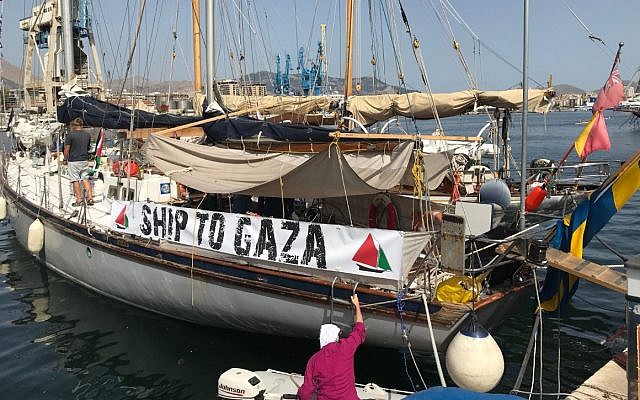
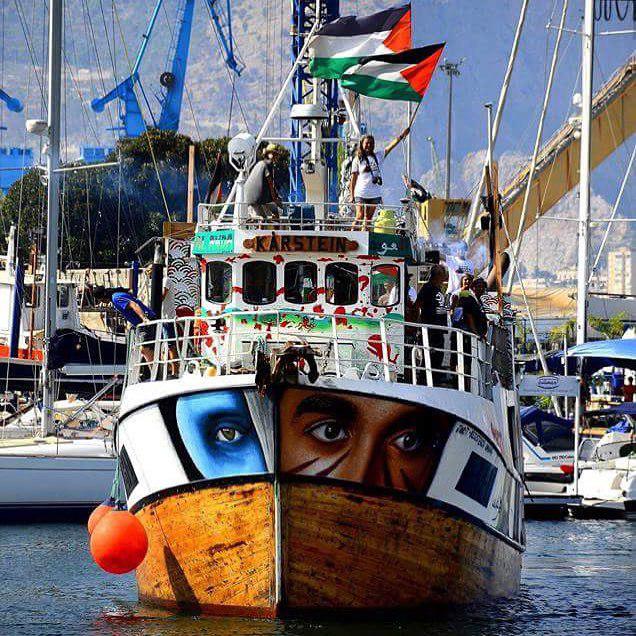
The ‘Freedom,’ one of the boats headed to the Gaza Strip in a flotilla defying Israel’s blockade, July 2018 (screen capture: Press TV/Twitter)

The Israeli Navy on Sunday stopped a boat that was trying to break the maritime blockade of the Gaza Strip and started to tow the vessel to the port in Ashdod.

The “Freedom Flotilla” group said that the boat had been “seized” and that the ship had received a warning from the navy prior to the interception.

According to the group, the navy said it would “take all necessary measures” if the vessel did not adjust its course.

The IDF confirmed that it had intercepted the boat and was towing it to the nearby Ashdod port.

“The forces made it clear to the boat that it was violating the blockade and that any humanitarian supplies [it is carrying] can be delivered to Gaza through the port of Ashdod,” the military said in a statement. “The activity ended without any unusual incidents. The boat is being towed to the port of Ashdod at this time.”


View image on Twitter

The “Return” (al-Awda) is one of two vessels making up the flotilla, alongside “Freedom.”

The flotilla was organized by the Freedom Flotilla Coalition, an umbrella of organizations aiming to end the closure of Gaza, and set sail from the Danish port of Copenhagen.

Those on board the ships include Prof. Ismail Nazari, chairman of Malaysia’s boycott Israel campaign; Charlie Andreason of Sweden, who spent time in Israeli detention for his role on the Marianne, a Swedish-flagged trawler leading a flotilla of boats in June 2015; Spanish Jewish activist Zohar Shamir Chamberlain; and Heather Milton-Lightening, an activist for indigenous Canadians.

The flotilla’s two-month journey saw the ships stopping off at several European ports to take part in activities supporting the Palestinians’ so-called “March of Return.”

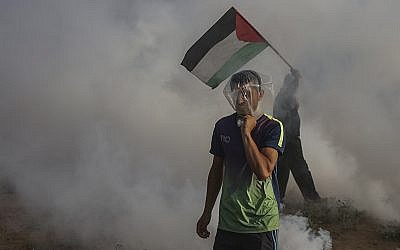
It is under the “March of Return” banner that more than 100 Palestinians and one Israeli have been killed in violent clashes with Israeli security forces along the border fence since March 30.

Most of the Palestinians killed were members of the Hamas terror group, according to the group itself.

Teargas canisters fired by Israeli troops fall over Palestinians during a protest at the Gaza Strip’s border with Israel, Friday, July 13, 2018 (Wissam Nassar/Flash90)

Hamas has promised Gazans that they will “return” to homes in what is now Israeli territory. The Palestinians claim that tens of thousands of original refugees, displaced at the time of Israel’s creation in 1948, and their millions of descendants, have a “right of return.”

Israel will not agree to such a “return,” which would see a Palestinian majority outnumbering Jews and effectively bringing an end to the Jewish state.

Israel has imposed a blockade on Gaza since Hamas, which is sworn to Israel’s destruction, seized the territory from the internationally backed Palestinian Authority in 2007. It says the blockade is in place in order to prevent weapons and other military equipment from entering the Strip.

Critics point to worsening humanitarian conditions in Gaza and say the blockade amounts to collective punishment of the two million Palestinians living there. There have been many reports that the coastal strip is “on the verge of collapsing,” and could plunge into a new round of fighting with Israel if conditions do not improve.

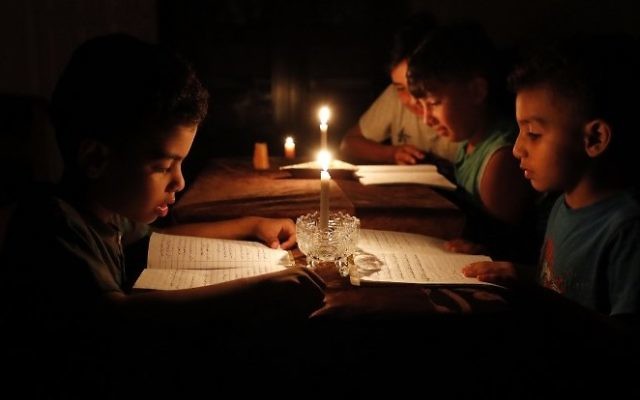
A picture taken on June 13, 2017, shows Palestinian children at home reading books by candle light due to electricity shortages in Gaza City. (AFP/ THOMAS COEX)

Egypt, too, has kept its Gaza border crossing largely closed during several years of sour relations with the Islamist group ruling Gaza.

Many attempts have been made to draw attention to the Palestinian cause using blockade-busting flotillas.

Two years ago, 13 women, including Nobel Peace Prize winner Mairead Maguire of Northern Ireland, were detained and then deported after their sailboat, “Women’s Boat to Gaza,” was stopped around 35 nautical miles off the coast of Gaza on its way to break the blockade.

The Israel Navy said at the time that it had stopped the boat to prevent a “breach of the lawful maritime blockade” of the Palestinian enclave and after advising it “numerous times to change course prior to the action.”

The most notorious flotilla sailed in 2010 and involved the Turkish flag-bearing Mavi Marmara, the biggest ship in a six-vessel convoy. IDF commandos who boarded the ship were violently attacked by those on board. Nine Turkish citizens, including one with American citizenship, were killed in the ensuing melee, and a tenth died of his wounds years later. A number of Israeli soldiers were injured in the raid.


Zawartość publikowanych artykułów i materiałów nie reprezentuje poglądów ani opinii Reunion’68,
ani też webmastera Blogu Reunion’68, chyba ze jest to wyraźnie zaznaczone.
Twoje uwagi, linki, własne artykuły lub wiadomości prześlij na adres:
webmaster@reunion68.com


Argentina freezes assets of suspected Hezbollah fundraising network

Argentina freezes assets of suspected Hezbollah fundraising network

JTA


Barakat Group targeted for funding terror group linked to 1992 attack on Israeli embassy and 1994 AMIA attack, both in Buenos Aires

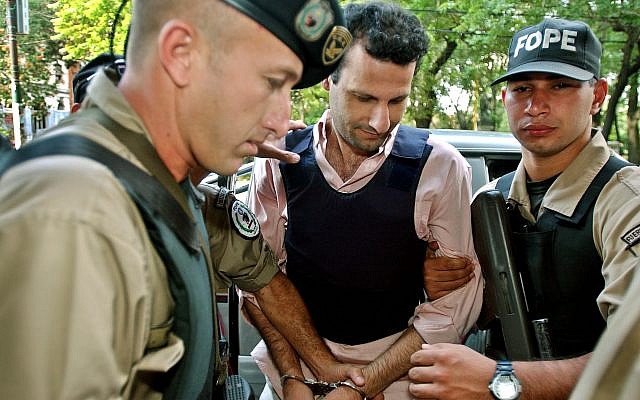
Lebanese citizen Assad Ahmad Barakat, (c), arrives at a courthouse in Asuncion, Paraguay, November 17, 2003. (AP Photo/Jorge Saenz)

BUENOS AIRES, Argentina — In a first, Argentina’s government has targeted a Hezbollah fundraising network in the northern Triple Frontier with Brazil and Paraguay.

The Financial Information Unit of the Argentine Republic investigated possible criminal actions by Lebanese citizens living in Argentina who could be involved in money laundering and financing terrorist acts.

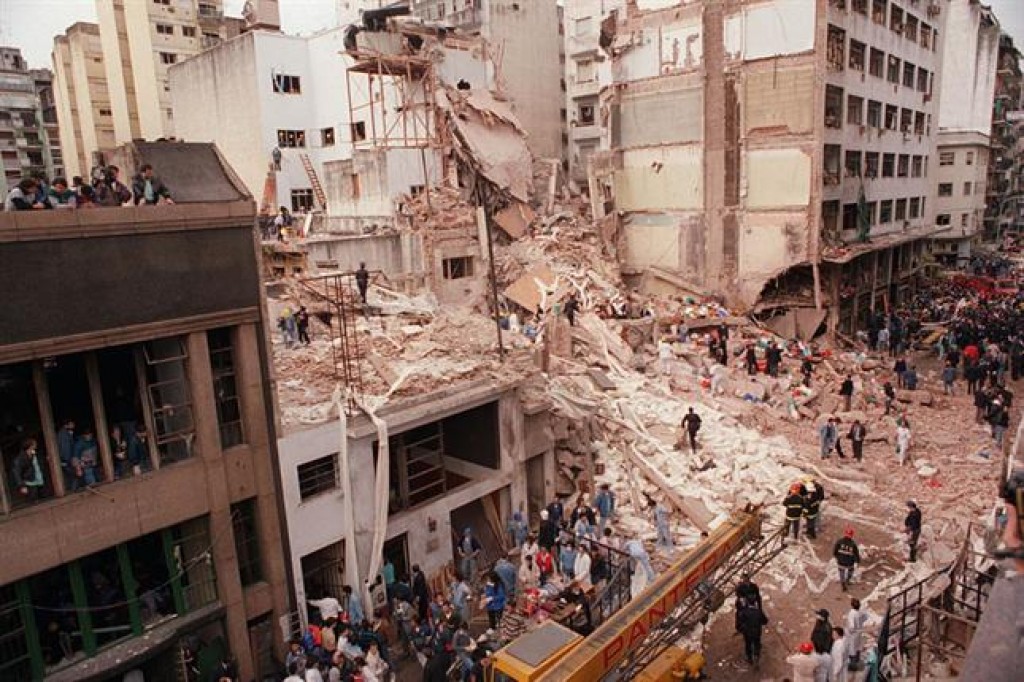
Hezbollah has been linked to the 1992 attack on the Israeli embassy in Buenos Aires, which killed 29. A Hezbollah suicide bomber carried out the 1994 attack, orchestrated by Iran, on the AMIA Jewish center in Buenos Aires that killed 85.

The unit investigated the Barakat Group, also known as the Barakat Clan, a criminal organization linked to Hezbollah, which operates in the area known as the “Triple border” made up of Argentina, Brazil and Paraguay, led by Assad Ahmad Barakat.

The Buenos Aires AMIA Jewish center after it was attacked, July 1994 (Cambalachero/Wikimedia commons)

As a result, Argentina’s government issued an administrative order freezing the assets and money of the group’s members, allowed by an article of the national Criminal Code related to financing terrorism.

Barakat, along with other people who operate at the tri-border area, has been designated a terrorist by the Office of Foreign Assets Control, or OFAC, of the Treasury Department of the United States, which means that his assets are frozen and he is unable to operate financially in the US.

The Triple Frontier between Argentina, Brazil and Paraguay is often mentioned as a place linked to Hezbollah and the Barakat group, and has been investigated over the last two decades as a source of money for Hezbollah and for other groups’ activities related to terrorism.

This is the first time that one of the three governments has frozen assets and funds from a Hezbollah-linked organization based in the Triple Frontier.

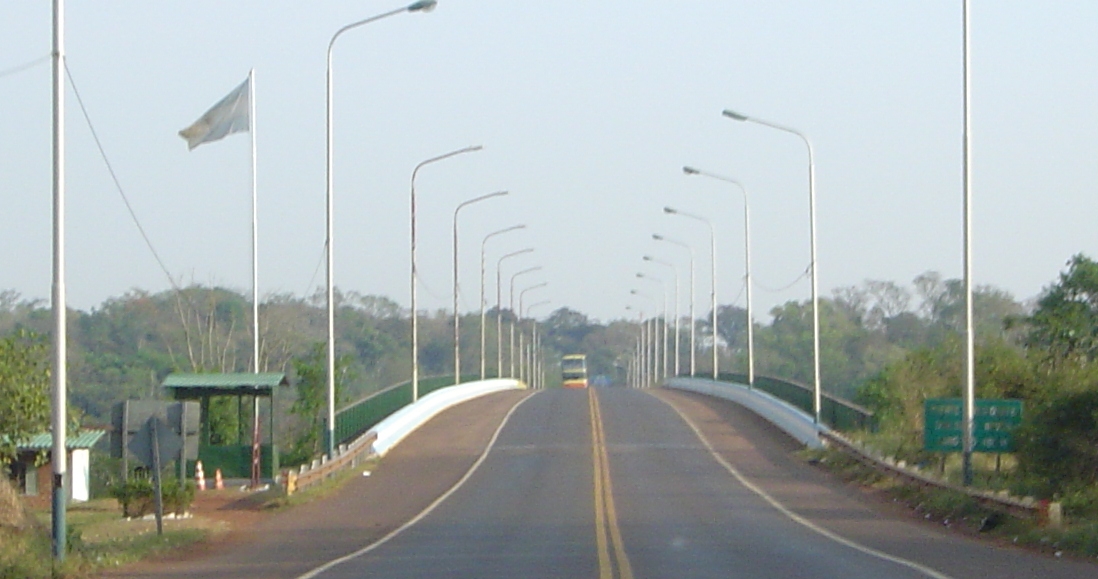
Tancredo Neves International Bridge between Brazil and Argentina. (CC BY Albasmalko, Wikimedia Commons)

The Financial Information Unit identified at least 14 people linked to the Barakat Clan who registered multiple crossings to Argentina, mainly through the Tancredo Neves International Bridge, located in the Province of Misiones. Once in Argentina, the members of the clan would make, in a casino in Iguazú, charges for supposed prizes that together would exceed $10 million, without declaring either the income nor the discharge of funds when crossing the border.

The “strong hypothesis” of the unit is that once out of the country the money is transferred to Hezbollah.

According to a Financial Information Unit statement issued on Friday, the Barakat clan is involved in crimes of smuggling, falsification of money and documents, extortion, drug trafficking, arms trafficking, money laundering and terrorist financing. “In relation to this illegal act, it is suspected that it would raise funds for the Lebanese Hezbollah organization,” wrote the government agency. The accounts were frozen on Wednesday, according to the statement.

Argentina is home to a large Lebanese expat community and US authorities suspect groups in that community of raising funds through organized crime to support the Iranian-backed terror organization.

In 2006, the US Treasury targeted the same fundraising network.

Earlier this year, the US and Argentina agreed to work together to cut off Hezbollah funding networks and money laundering financing terrorism across Latin America.


Zawartość publikowanych artykułów i materiałów nie reprezentuje poglądów ani opinii Reunion’68,
ani też webmastera Blogu Reunion’68, chyba ze jest to wyraźnie zaznaczone.
Twoje uwagi, linki, własne artykuły lub wiadomości prześlij na adres:
webmaster@reunion68.com


Syrian Flag Raised in Quneitra, on Syrian Side of Golan Heights

Syrian Flag Raised in Quneitra, on Syrian Side of Golan Heights

Reuters and Algemeiner Staff


Uniformed men chat next to Syrian and Ba’ath Party flags in Quneitra, on the Syrian side of the border with Israel in the Golan Heights, as seen from the Israeli side, July 26, 2018. Photo: Reuters / Ammar Awad.

Pro-Assad forces raised the Syrian flag in Quneitra on Thursday, as the government continued its push to regain full control of the Syrian side of the Golan Heights, a strategic area that borders Israel and Jordan.

A Reuters photographer saw uniformed men raise the Syrian national flag and the black, white, green and red flag of the Baath Party in the long-abandoned city. No weapons were immediately visible.

The Reuters photographer was reporting from a vantage point on the Israeli side of the Golan Heights that overlooks Quneitra.

Forces supporting Syrian President Bashar al-Assad, backed by a Russian air campaign, have been pushing into Quneitra province following an offensive last month that routed rebels in adjoining Deraa province who were once backed by Washington, Jordan and Gulf states.

Damascus is set to recover control of the Golan area in a major victory over rebels, who have agreed to surrender terms. The army is still battling a local Islamic State affiliate around the Yarmouk Basin nearby.

Israel says it is concerned that Assad may defy a 1974 UN armistice that demilitarized much of the Golan, or let his Iranian and Lebanese Hezbollah reinforcements deploy there. Israel captured its side of the Golan from Syria in the 1967 Six-Day War.


Zawartość publikowanych artykułów i materiałów nie reprezentuje poglądów ani opinii Reunion’68,
ani też webmastera Blogu Reunion’68, chyba ze jest to wyraźnie zaznaczone.
Twoje uwagi, linki, własne artykuły lub wiadomości prześlij na adres:
webmaster@reunion68.com