AMANDA BORSCHEL-DAN
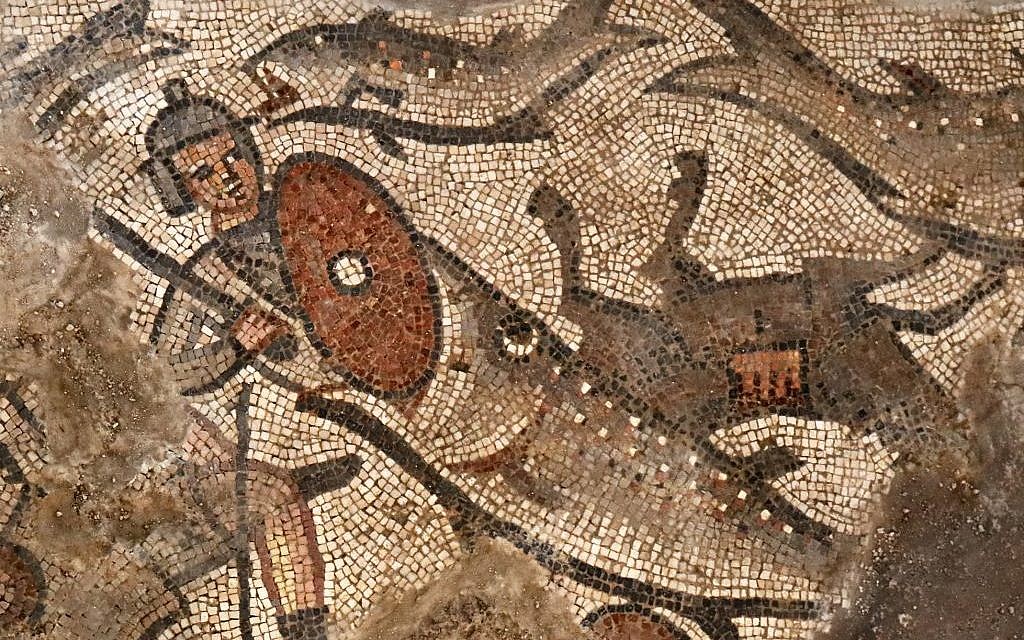 A fish swallows an Egyptian soldier in a mosaic scene depicting the splitting of the Red Sea from the Exodus story, from the 5th-century synagogue at Huqoq, in northern Israel. (Jim Haberman/University of North Carolina Chapel Hill)Detail from the Huqoq synagogue’s 5th century mosaic showing Samson carrying the gate of Gaza, from Judges 16. (photo credit: Jim Haberman)Detail from the Huqoq synagogue’s 5th century mosaic showing Samson carrying the gate of Gaza, from Judges 16. (photo credit: Jim Haberman)The Huqoq synagogue’s 5th century mosaic, with the upper register showing a war elephant. (photo credit: Jim Haberman)The Huqoq synagogue’s 5th century mosaic, with the upper register showing a war elephant. (photo credit: Jim Haberman)Pair of donkeys in Noah’s Ark scene at the Huqoq excavation. (Jim Haberman via UNC-Chapel Hill)Pair of donkeys in Noah’s Ark scene at the Huqoq excavation. (Jim Haberman via UNC-Chapel Hill)
In its eighth dig season, the vibrant mosaic flooring of a fifth century synagogue excavated in the small ancient Galilee village of Huqoq continues to surprise. The 2018 Huqoq dig has uncovered unprecedented depictions of biblical stories, including the Israelite spies in Canaan.
With its rich finds, the Byzantine-period synagogue busts scholars’ preconceived notions of a Jewish settlement in decline.
“What we found this year is extremely exciting,” University of North Carolina at Chapel Hill Prof. Jodi Magness told The Times of Israel, saying the biblically based depictions are “unparalleled” and not found in any other ancient synagogue.
“The synagogue just keeps producing mosaics that there’s just nothing like and is enriching our understanding the Judaism of the period,” said Magness.
A recently unearthed mosaic shows two men carrying between them a pole on their shoulders from which is hung a massive cluster of grapes (the same as the easily recognizable symbol of Israel’s Ministry of Tourism). With a clear Hebrew inscription stating, “a pole between two,” it illustrates Numbers 13:23, in which Moses sends two scouts to explore Canaan.
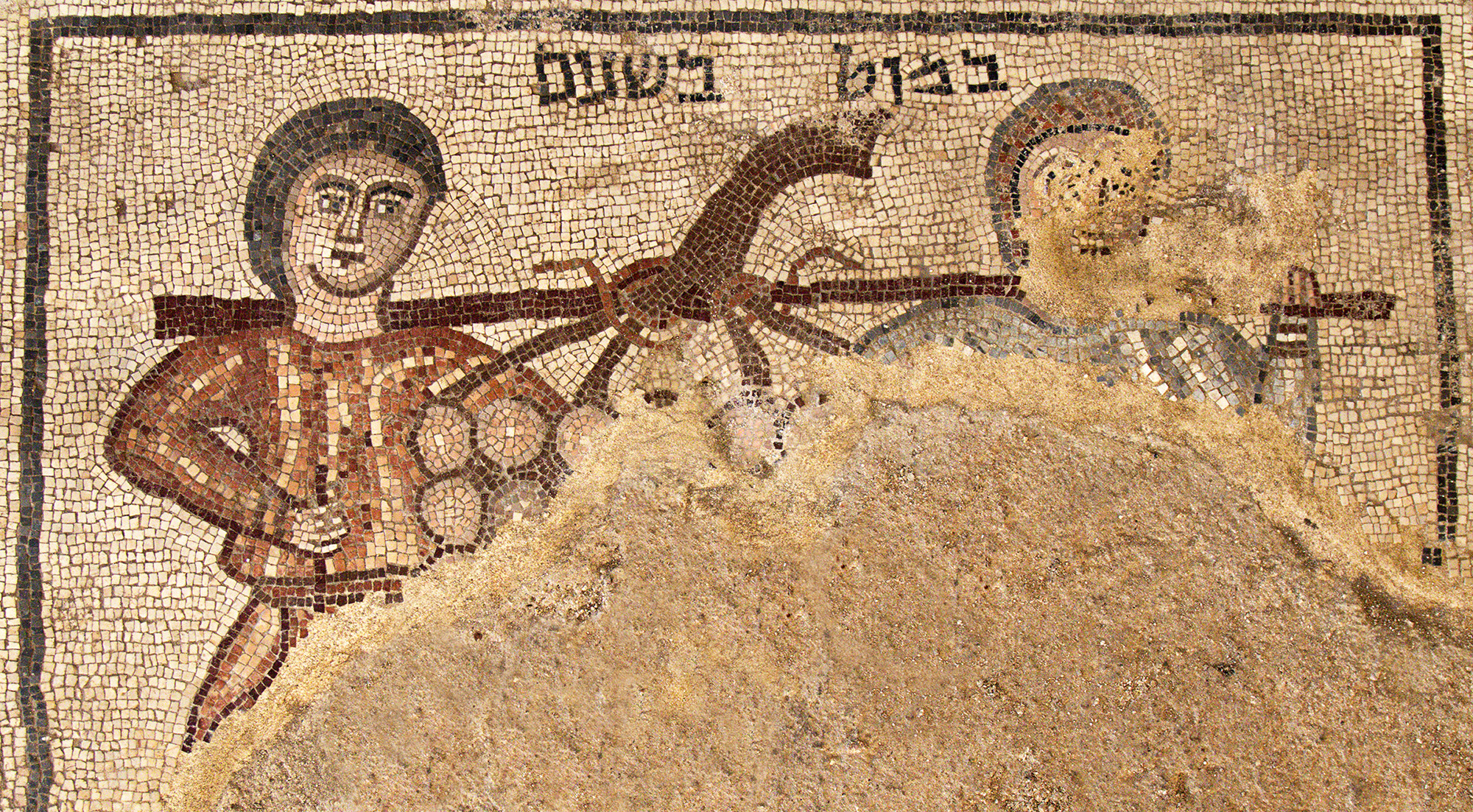 A mosaic found in the 2018 Huqoq excavation is labeled ‘a pole between two,’ depicting a biblical scene from Numbers 13:23. The images show two spies sent by Moses to explore Canaan carrying a pole with a cluster of grapes. (Jim Haberman)
Before wrapping up the dig season last week, the team of 20 excavators uncovered a further biblical mosaic panel, which shows a youth leading an animal on a rope and includes the inscription, “a small child shall lead them.” It is a reference to Isaiah 11:6, “The wolf also shall dwell with the lamb, and the leopard shall lie down with the kid; and the calf and the young lion and the fatling together; and a little child shall lead them.”
According to a 2013 Biblical Archaeology Review article by Magness, “Huqoq was a prosperous village about 3 miles west of Magdala (home of Mary Magdalene) and Capernaum (where Jesus taught in the synagogue),” located next to a fresh spring. It appears twice in the Hebrew Bible, in Joshua 19:32–34 and 1 Chronicles 6:74–75. “Our excavations have not reached these early occupation levels, however,” she writes.
University of North Carolina archaeologist
Jodi Magness. (George Duffield © J3D US LP)
 These two newly published mosaics join a pantheon of others — from 2012 and 2013, two Samson depictions, to fantastical elephants and mythical creatures from 2013-2015, Noah’s Ark in 2016, and colorful and as yet unpublished Jonah and the whale in 2017.
During this year’s dig, the team also continued to expose and study rare 1,600-year-old columns, first uncovered in previous seasons, which are covered in painted plaster with red, orange, and yellow vegetal motifs. Other discovered columns, said Magness, were painted to imitate marble.
However, despite these “imitation marble” columns, this was no poor man’s synagogue. Much in the manner of King Herod decorating his palaces with painted faux-marble frescos, the columns and gorgeous mosaics point to a wealthy, flourishing fifth-century Jewish settlement, said Magness.
“In general, unless you’re in a really important church in the Byzantine period, you won’t find marble, rather this common local alternative,” she said. She laughed, saying there is a feeling of “one-ups-manship” in the construction of the Huqoq synagogue.
read more: Mind-blowing 1,600-year-old….
 sraeli Man Murdered, Two Others Wounded, in Stabbing Attack Near Jerusalem
 Emergency responders at the scene of Thursday night’s stabbing attack in Adam. Photo: Screenshot.

 PlanetIsrael
 Hebrew University of Jerusalem