Archives

New Hebrew Worship with English Subtitles Music Video from Israel!

New Hebrew Worship with English Subtitles Music Video from Israel!

   ONE FOR ISRAEL Ministry


Music performed by Sarah Liberman
Song: Fire of Your Spirit
Buy Album at: www.sarahliberman.com
Undertextare (Spanska (Latinamerika))
Ramon Ascencio


Zawartość publikowanych artykułów i materiałów nie reprezentuje poglądów ani opinii Reunion’68,
ani też webmastera Blogu Reunion’68, chyba ze jest to wyraźnie zaznaczone.
Twoje uwagi, linki, własne artykuły lub wiadomości prześlij na adres:
webmaster@reunion68.com


Żydowski związek z Jerozolimą: “to imperialistyczny mit i wypaczenie historii”

Sędzia Najwyższego Sądu szariatu Autonomii Palestyńskiej i doradca Abbasa, Mahmoud Al-Habbash: Żydzi nie mają żadnego związku z Jerozolimą; to jest imperialistyczny mit i wypaczenie historii

MEMRI


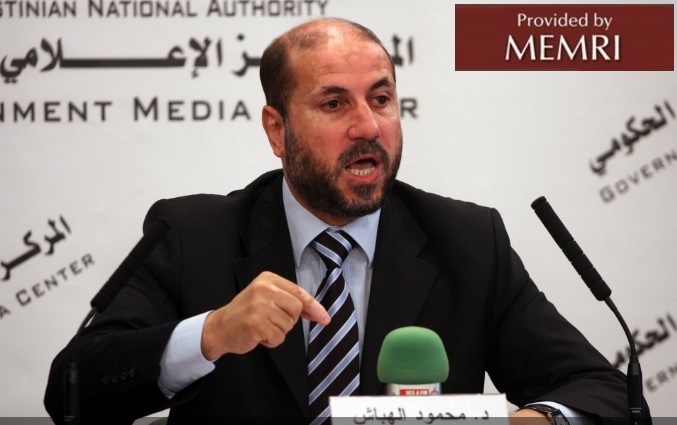
Mahmoud Al-Habbash, sędzia Najwyższego Sądu szariatu Autonomii Palestyńskiej i doradca prezydenta Mahmouda ‘Abbasa d.s. religijnych, powiedział na konferencji 4 czerwca 2018 r., że walka o Jerozolimę toczy się między prawowitymi właścicielami miasta – muzułmanami i chrześcijanami – a „jakimiś zagranicznymi, zachodnimi imperialistami, którzy nie mają żadnego związku z tą ziemią”. Dodał, że państwo Izrael jest imperialistycznym, zachodnim przedsięwzięciem, którego celem jest osłabienie i podzielenie świata arabskiego i że twierdzenie, iż Żydzi mają historyczny związek z Jerozolimą jest wyłącznie wypaczeniem historii.

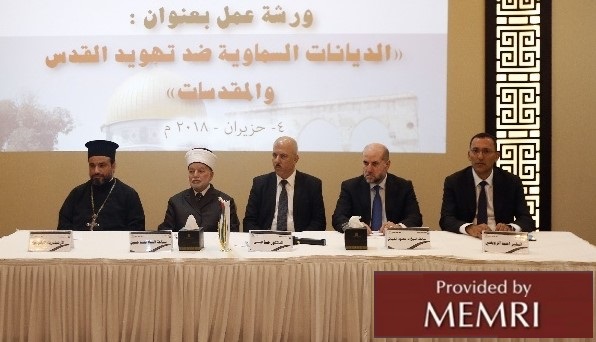
W konferencji, na której Al-Habbash przemawiał, zorganizowanej przez „Muzułmańsko-chrześcijańską Radę Ratowania Jerozolimy i Miejsc Świętych” oraz Organizację Muzułmańskiej Współpracy (OIC) pod tytułem “Monoteistyczne religie przeciwko judaizacji Jerozolimy i jej miejsc świętych”, brali udział także inni dygnitarze AP, włącznie z palestyńskim muftim, jak też inni chrześcijańscy i muzułmańscy przywódcy religijni i ambasadorowie.

Mahmoud Al-Habbash (zdjęcie: Palsawa.com, 4 czerwca 2018)

Al-Habbash (drugi od prawej) na konferencji z innymi uczestnikami (zdjęcie: Alquds-online.org, 5 czerwca 2018)


Poniżej podajemy fragmenty wystąpienia Al-Habbasha na tej konferencji [1]:

Bitwa o Jerozolimę nie jest religijna; jest to polityczna bitwa między prawowitymi właścicielami [miasta] a imperialistami. To zobowiązuje nas do podniesienia świadomości świata arabskiego, muzułmańskiego i chrześcijańskiego co do tożsamości Jerozolimy…

Musimy być ostrożni, kiedy używany konkretnego terminu lub słowa w powiązaniu z Jerozolimą, bo to nie jest konflikt z Żydami, ale walka między [prawdziwymi] mieszkańcami i właścicielami Jerozolimy, którymi są muzułmanie, chrześcijanie i Arabowie, z jakimiś   zagranicznymi, zachodnimi imperialistami, którzy nie mają związku z tą ziemią. Katastrofa Jerozolimy nie zaczęła się w 1967 r. ani w 1948 r., ani z Deklaracją Balfoura. Zaczęła się znacznie wcześniej, około 450 lat temu, kiedy imperialiści zaczęli być słyszalni na Zachodzie.

Palestyna nie jest [żydowską] Ziemią Obiecaną ani krajem [żydowskich] przodków – bo gdyby była, czy uważaliby ją za [tylko] jedną z kilku opcji, kiedy zaczęli szukać miejsca na swoje państwo?…

Jest różnica między wiarą a roszczeniami do terytorium w oparciu o fałszywy żydowski lub biblijny pretekst, którego jedynym celem jest przejęcie ziemi. Ściana Al-Buraka [tj. Ściana Zachodnia] nie ma nic wspólnego z [żydowską] świątynią i [Żydzi] nie mają prawa do jej kamieni. To jest imperialistyczny mit, który wykorzystuje i wypacza historię i miejsca święte w celu promowania i uzasadniania imperialistycznych projektów.

Krok prezydenta USA Trumpa [uznania Jerozolimy za stolicę Izraela i przeniesienia tam ambasady]… jest niczym innym jak konsolidacją imperialistycznego planu umieszczenia państwa [w regionie], które wbije klin między azjatycką i afrykańską część świata arabskiego, żeby trzymać [Arabów] podzielonych, zacofanych i łatwo kontrolowanych…

[Ambasada USA w Jerozolimie] jest amerykańskim osiedlem w Jerozolimie i symbolem imperializmu. My, 13 milionów Palestyńczyków, mówimy, że Jerozolima nie zostanie zjudaizowana i jej tożsamość i kultura nie zostaną zmienione. Pozostanie odwieczną stolicą palestyńskiego państwa…


[1] Palsawa.com, June 4, 2018


Zawartość publikowanych artykułów i materiałów nie reprezentuje poglądów ani opinii Reunion’68,
ani też webmastera Blogu Reunion’68, chyba ze jest to wyraźnie zaznaczone.
Twoje uwagi, linki, własne artykuły lub wiadomości prześlij na adres:
webmaster@reunion68.com


Song – Praise to Our God 5 Concert – Lechu Nerannena LeAdonai

Praise to Our God 5 Concert – Lechu Nerannena LeAdonai (Let us sing to the Lord)

   Messianic Jewish Alliance of Israel (MJAI)


Zawartość publikowanych artykułów i materiałów nie reprezentuje poglądów ani opinii Reunion’68,
ani też webmastera Blogu Reunion’68, chyba ze jest to wyraźnie zaznaczone.
Twoje uwagi, linki, własne artykuły lub wiadomości prześlij na adres:
webmaster@reunion68.com


CROATIA’S NEO-FASCIST REVIVAL

FUNDAMENTALLY FREUND: CROATIA’S NEO-FASCIST REVIVAL

MICHAEL FREUND


Thanks in part to the silence and inaction of the EU on this issue, the fascist threat is once again rearing its ugly head in the Balkans.
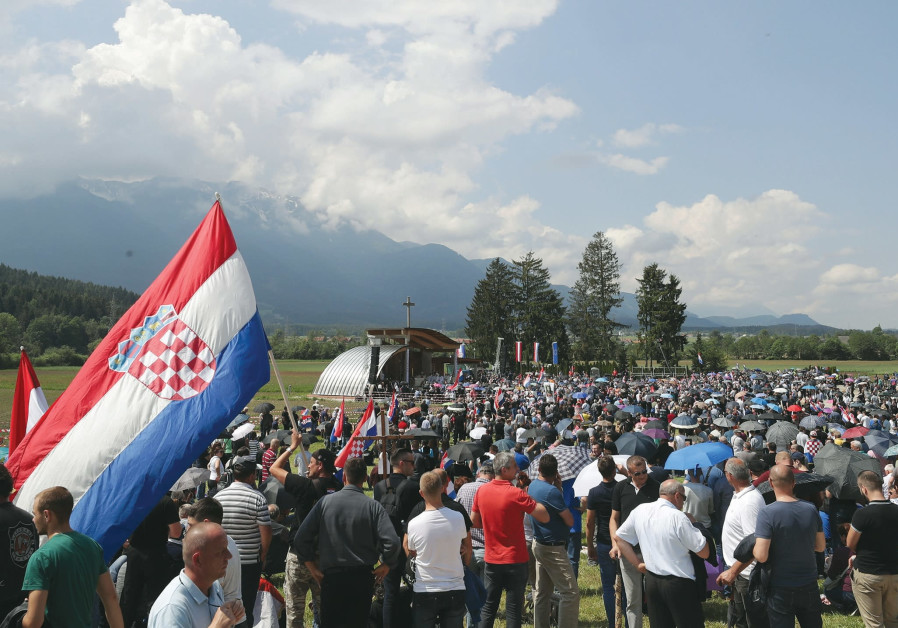
PARTICIPANTS TAKE part in a Catholic ceremony commemorating the turning away from Austria of pro-Nazi Croatians at the end of the Second World War.. (photo credit: REUTERS)

As a rising tide of extremism and antisemitism sweeps across Europe, much of the focus has been on a wave of incidents that has engulfed France and Germany, two of the continent’s largest powers.

While events on the streets of Paris and Berlin, cities which have become increasingly dangerous for Jews, most certainly warrant our attention and concern, it would be a grave error to conclude that the problem is confined primarily to these two countries.

Indeed, the sad fact is that Croatia, a much smaller member of the European Union, is home to perhaps one of the largest, most pervasive and troubling revivals of neo-fascism in recent decades.

And despite the movement’s growing and vociferous presence in Croatian public life, and the threat this poses to stability in the Balkans and beyond, Western and European officials have done little to condemn this worrisome trend.

Take, for example, the shocking event that took place on May 12, when thousands of Croats gathered in the Austrian town of Bleiburg for an annual ceremony in memory of Croatian Nazi collaborators and sympathizers who were killed there at the end of World War II.

“Today,” said Gordon Jandrokovic, the speaker of Croatia’s Parliament, “we are paying our respect to the victims, civilians as well as soldiers.”

Behind that seemingly bland statement is a chilling admiration for the murderous pro-Nazi Ustashe movement, whose “soldiers” butchered tens of thousands of Jews, Serbs and others during the war.

Honoring the memory of the Ustashe’s fallen “soldiers” is an act of moral depravity, one that seeks to whitewash the crimes of a vicious wartime regime that left a legacy of brutality and bloodshed.

It is simply disgraceful that Croatian authorities, along with the Croatian Catholic Church, actively participate in this event each year, and it is no less deplorable that the Austrian government allows it to take place. As famed Nazi-hunter Dr. Efraim Zuroff, the head of the Simon Wiesenthal Center in Israel, told the Associated Press, “It’s absolutely outrageous that Austrian authorities allow an event like this to happen. In Austria, you are not allowed to brandish Nazi symbols, but they allow Ustashe symbols.”

To fully appreciate how offensive this is to historical memory, consider the following.

The Ustashe regime was established in April 1941 after Germany and the Axis powers invaded Yugoslavia. Ante Pavelic, a fanatical antisemite who headed the Ustashe movement, was installed as military dictator and moved quickly to create an ethnically pure Croatia by embracing the methods of his patron, Adolf Hitler, and employing a policy of mass murder and expulsion.

Pavelic moved quickly to establish a network of death camps, the largest of which was Jasenovac, which opened in August 1941 and was staffed entirely by members of the Ustashe. Known as “the Auschwitz of the Balkans,” Jasenovac became a killing field, where tens of thousands of Croatian and Bosnian Jews were slaughtered alongside even larger numbers of Serbs.

Unlike German extermination camps, however, Jasenovac did not have the infrastructure for mass murder, such as gas chambers. Instead, inmates were stabbed to death with knives, bludgeoned with hammers, cut to pieces with axes or simply shot, making the killings far more personal.

The Croatian Ustashe also deported thousands of Jews from Jasenovac to Auschwitz, and were so eager to be rid of them that they agreed to pay Germany 30 marks per Jew to cover the cost of transporting them.

Altogether, more than 30,000 Croatian Jews, over 75% of the community, were murdered in the Holocaust, and hundreds of thousands of Serbs were massacred, exiled or forcibly converted by the Ustashe.

Nevertheless, Croatia has never come to terms with what it did during World War II, and persists in viewing itself as a victim rather than a perpetrator.

Worse yet, there has been a rising tide of nostalgia for the Ustashe in contemporary Croatia, with open expressions of neo-Nazism and fascism occurring regularly.

Indeed, last fall, Menachem Z. Rosensaft of the World Jewish Congress published a lengthy and detailed position paper in Tablet magazine blasting Croatia for “brazenly attempting to rewrite its Holocaust crimes out of history.”

He cited numerous examples of “the effective rehabilitation and glorification of the Ustashe,” ranging from pro-Ustashe chants at soccer matches to the country’s president posing for photographs with Croatian emigres holding a flag with the Ustashe symbol.

The situation has become so acute that for the third year in a row, representatives of Croatia’s Jews, Serbs and Roma communities boycotted the official memorial ceremony organized by Croatia’s government at Jasenovac last month because it downplayed Ustashe crimes.

While some Croatian leaders have publicly condemned the Ustashe, they have done little to quell the rising tide of neo-fascism in the country, nor have they taken practical steps to educate the next generation about the true nature of the nation’s behavior during the Holocaust.

It has been five years since Croatia was formally accepted as a member in the European Union. At the time, many hoped that membership would have a tranquilizing effect on the undercurrents of antisemitic and anti-Serb extremism and hatred that pervade much of Croatian public life.

But thanks in part to the silence and inaction of the EU on this issue, the fascist threat is once again rearing its ugly head in the Balkans.


Zawartość publikowanych artykułów i materiałów nie reprezentuje poglądów ani opinii Reunion’68,
ani też webmastera Blogu Reunion’68, chyba ze jest to wyraźnie zaznaczone.
Twoje uwagi, linki, własne artykuły lub wiadomości prześlij na adres:
webmaster@reunion68.com


STOP TAKING EVANGELICAL SUPPORT FOR GRANTED

STOP TAKING EVANGELICAL SUPPORT FOR GRANTED

MICHAEL FREUND


A whopping 41% of younger Evangelicals said they do not have strong views regarding Israel.

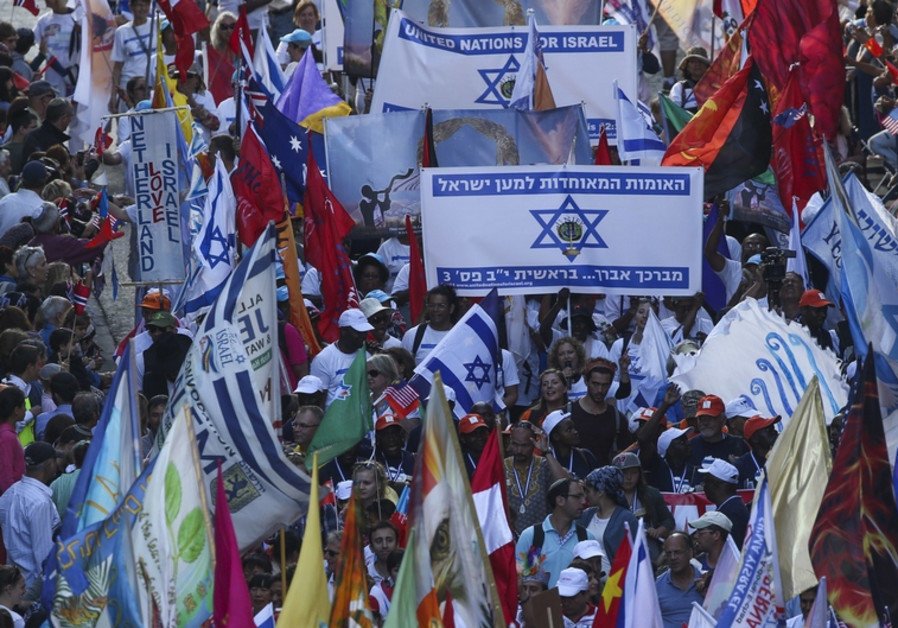
Evangelical Christians from around the world wave their national flags along with Israeli flags as they march in a parade in Jerusalem to mark the Feast of Tabernacles . (photo credit: JNS.ORG)

In recent years, a certain mantra has gained traction among many pro-Israel activists according to which long-term US support for the Jewish state is guaranteed, thanks to the country’s growing number of Evangelical Christians.

Hence, the thinking goes, even if American Jewry’s size and influence is in decline, we can all rest easy in the knowledge that Evangelical support for Israel will continue to bolster ties between Washington and Jerusalem for decades to come.

As comforting as it might be to latch onto this view, the sad fact is that there are already some very troubling signs that the younger generation of US Evangelicals may not share the same level of enthusiasm for Israel, as do many of their elders.

Indeed, the findings of a study released six months ago by the Nashville-based LifeWay Research bear this out. The survey, which was conducted among 2,002 respondents, found that while 76% of Evangelicals over 65 have a positive view of Israel, that number drops to 58% among those ages 18 to 34.

In addition, a whopping 41% of younger Evangelicals said they do not have strong views regarding Israel.

As David Nekrutman, the executive director of the Center for Jewish-Christian Understanding and Cooperation, recently told me, “It is easy, but dangerously inaccurate, to assume that the children of Christian Zionists are building on the foundation of what their parents have learned.”

“The fact is,” he notes, “that many Christian universities and colleges have not corrected Martin Luther’s antisemitism in their Bible, theology or missions departments.”

As a result, the curricula of many Christian schools continue to instill their students with ideas that end up weakening the foundation of their support for the Jewish state.

Moreover, Nekrutman states, millennial Evangelicals are “less literate of the Bible,” creating the possibility that “Christian support for Israel could dramatically dwindle.”

Unfortunately, certain pro-Palestinian groups have sought to take advantage of this by launching an insidious and determined effort to undermine Evangelical support for Zionism.

Take, for example, the anti-Israel group “Christ at the Checkpoint,” which along with the Bethlehem Bible College, attempt to “address the injustices” in the Middle East, particularly in what they refer to as “the Palestinian lands under occupation.”

Twisting the text of the Bible to the point that it becomes unrecognizable, such organizations spuriously assert that Scripture does not grant the people of Israel an exclusive claim to the Land of Israel, despite the fact that throughout the Torah and the Prophets that is exactly what the Creator promised.

They also hide under the cloak of protesting supposed discrimination by rejecting “theologies that lead to discrimination or privileges based on ethnicity,” which is a convoluted way of denouncing the Jewish people’s right to establish a Jewish state. In what is perhaps a sign of the group’s growing confidence, they are planning to hold their first national US conference in Oklahoma City in October.

While this may seem like an entirely intra-Christian matter, Israel cannot and must not ignore its possible political and diplomatic ramifications. Left unaddressed, it could have far-reaching and damaging consequences from the halls of Congress all the way to the White House.

According to the Pew Research Center on Religion and Public Life, 25.4% of Americans identify themselves as Evangelical Protestant Christians, making them the largest religious group in the United States.

As their clout at the ballot box grows, it becomes all the more essential to take steps to cultivate the younger generation of Evangelical leaders, whether by facilitating visits to the Jewish state or launching public diplomacy campaigns targeting this segment of the Evangelical world.

There is no reason to be alarmed just yet, as overall Evangelical support for Israel is positive, passionate and pro-active. But the writing is on the wall, and if Israel wants to ensure a solid base of US Evangelical support for the rest of this century, it would do well to work with pro-Israel Christian groups to ensure that the younger generation of Evangelicals will continue to carry the torch.


Zawartość publikowanych artykułów i materiałów nie reprezentuje poglądów ani opinii Reunion’68,
ani też webmastera Blogu Reunion’68, chyba ze jest to wyraźnie zaznaczone.
Twoje uwagi, linki, własne artykuły lub wiadomości prześlij na adres:
webmaster@reunion68.com