Archives

Israel’s Netanyahu Hails Trump-Kim Summit

Israel’s Netanyahu Hails Trump-Kim Summit, Lauds America’s ‘Strong Stand’ Against Iran

Algemeiner Staff


Israeli Prime Minister Benjamin Netanyahu. Photo: Menahem Kahana / Pool via Reuters

Israeli Prime Minister Benjamin Netanyahu hailed on Tuesday US President Donald Trump’s summit meeting with North Korean dictator Kim Jong-un, calling it “an important step in the effort to rid the Korean Peninsula of nuclear weapons.”

The Israeli leader also tied the development to the Iran nuclear issue, crediting Trump for taking “a strong stand against Iran’s efforts to arm itself with nuclear weapons and against its aggression in the Middle East.”

“This is already affecting the Iranian economy,” Netanyahu continued. “President Trump’s policy is an important development for Israel, the region and the entire world.”

Israeli Defense Minister Avigdor Lieberman stated, “I am sure that as determined as the USA and President Trump were to reach an agreement, they will also, of course, monitor its implementation and this will be a good example to other nations and other people.”

“We think this is an achievement and the most significant breakthrough that we’ve seen in recent years,” he added. “I hope that beyond the signatures on the agreement, it will also be carried out in actuality and will stand up to the real test.”


Zawartość publikowanych artykułów i materiałów nie reprezentuje poglądów ani opinii Reunion’68,
ani też webmastera Blogu Reunion’68, chyba ze jest to wyraźnie zaznaczone.
Twoje uwagi, linki, własne artykuły lub wiadomości prześlij na adres:
webmaster@reunion68.com


Lebanon Foreign Minister Escalates Refugee Row With UN Agency

Lebanon Foreign Minister Escalates Refugee Row With UN Agency

Reuters and Algemeiner Staff


Lebanese Foreign Minister Gebran Bassil. Photo: Reuters / Remo Casilli.

Lebanon’s caretaker foreign minister escalated his row with the UN refugee agency UNHCR on Wednesday, accusing it at a news conference of working to stop refugees from returning to Syria.

UNHCR has denied similar accusations, saying it supports the return of refugees when it is safe for them to go back to Syria and helps those who choose to return with their documentation. It had no immediate reaction to the latest accusation.

“Their policy is to forbid the return,” Foreign Minister Gebran Bassil said. “The Lebanese policy is to encourage the return. Forbid, encourage. Stop, facilitate. That’s it,” Bassil said during the news conference in the town of Arsal, where he spoke alongside Syrian refugees.

The UN has registered about a million refugees in Lebanon — nearly a quarter of Lebanon’s population. The Lebanese government, which puts the figure at 1.5 million, says it wants them to start going back to territory where fighting is over.

Bassil said on Wednesday the burden of hosting Syrian refugees seven years into the conflict that drove them to flee had grown “unbearable,” blaming the crisis for the collapse of the economy and emigration of Lebanese citizens.

Last week, Bassil ordered a freeze on applications by the UN High Commissioner for Refugees (UNHCR) for residency permits for its staff, saying it was intimidating refugees into staying in Lebanon.

Some 19 UNHCR staff members are affected by the Lebanese residency permit freeze, she said, and the agency’s spokesman in Geneva said it hopes the decision will be reversed.

Bassil accuses UNHCR of discouraging refugees from going home by asking them questions about potential difficulties they face upon return, including possible military conscription, damage to housing and lack of UN support in parts of Syria.

“I don’t want to have disputes with them, but it’s time to tell them enough,” he said.

The UNHCR favored the return of all refugees when it was safe for them to go home, its Lebanon representative, Mireille Girard, told Reuters on Tuesday. It speaks to refugees in all countries when they are preparing to return home to make sure it can give them enough support and protection, she said.

Another senior UN official, the deputy special coordinator for Lebanon Philippe Lazzarini, was quoted late on Tuesday as saying it would be “inconceivable” for the body to oppose refugees who wanted to go home.

“We respect refugees’ individual decision to return home and would never, never discourage the return from taking place based on their decision,” Hariri’s office quoted Lazzarini as saying during a meeting.

Lebanon’s government is operating on a caretaker basis because prime minister designate Saad al-Hariri has not yet formed a new cabinet after parliamentary elections on May 6.


Zawartość publikowanych artykułów i materiałów nie reprezentuje poglądów ani opinii Reunion’68,
ani też webmastera Blogu Reunion’68, chyba ze jest to wyraźnie zaznaczone.
Twoje uwagi, linki, własne artykuły lub wiadomości prześlij na adres:
webmaster@reunion68.com


CUT THE POLITICS

CUT THE POLITICS

YAAKOV KATZ


Gaza is a problem that is not going to simply go away by, and thinking about it in tactical terms – how to stop kites, how to stop border riots, how to stop tunnels – will work for only so long.

Israeli Prime Minister Benjamin Netanyahu (R) and Israeli Culture Minister Miri Regev (L) present the logo chosen for Israel’s 70th anniversary celebrations during the weekly cabinet meeting at the Prime Minister’s office in Jerusalem January 28, 2018. . (photo credit: REUTERS/TSAFRIR ABAYOV/POOL)

It’s hard to imagine how Miri Regev, Israel’s culture and sport minister, was once upon a time the person in charge of Israel’s secrets. But she was. Between 2004 and 2005, Regev was the IDF’s chief censor, a job in which silence is golden. She then served as the IDF spokesperson during the disengagement from the Gaza Strip and the Second Lebanon War with Hezbollah.

So how did someone who once worked in two of the military’s most sensitive positions morph into a politician known for little else but grandstanding and some of the most inappropriate political public comments in recent history? That’s politics, I guess. What is interesting in Regev’s case is that she went from being the person who sold the IDF’s unilateral withdrawal from Gaza to the world, to one of the most right-wing members of the Likud today. After she left the IDF, she reportedly tried joining the Labor Party but was snubbed, and as a result ran with the Likud. It wasn’t ideology but convenience.

I mention all of this because we again witnessed Regev and her politics at play this week, with the cancellation of the Israel-Argentina soccer match that was supposed to bring superstar Lionel Messi to the Jewish state.

Regev tried hijacking what was supposed to be a friendly game between Israel and Argentina and a simple repeat of the match the two countries played in 1986, also on the eve of the World Cup.

Earlier this week, for example, Regev said in a radio interview that Messi was going to shake hands with her and with Prime Minister Benjamin Netanyahu, despite reports that he did not plan on meeting them. “Let’s see who’s not going to shake my hand,” she said provocatively.

A few weeks earlier she demanded that the game be moved to Jerusalem – even though the organizers had originally booked it in Haifa – and she allocated NIS 3 million from the government to facilitate the change, announcing that the game would now become part of Israel’s 70th anniversary celebrations.

“At a time that we are fighting to move embassies to Jerusalem, there is no question that when one of the most popular players in the world with a billion fans arrives, he should play in Jerusalem,” she said. “Jerusalem is on the map, and at a time when there is BDS, there is nothing more important.”

In other words, an apolitical game that was supposed to be a friendly match between two countries was turning into a government and political celebration.

The only thing missing was asking Messi to become a card-carrying member of the Likud Party.

It was almost a replay of Regev’s fight with Knesset Speaker Yuli Edelstein earlier this year over her attempt to politicize the annual Independence Day ceremony.

The difference is, in the case of Argentina and Messi, Regev single- handedly scored Israel its own goal and handed the Palestinians and the BDS movement a victory on a silver platter. Makes one wonder why we even need BDS when we have someone like Miri Regev.

What is ironic about Regev’s use of BDS when explaining the importance of Messi’s visit is that on Wednesday, after the game was canceled, she claimed it wasn’t a result of BDS but, rather, the product of a new type of terrorism that included threats against the lives of Messi and his family. She showed pictures of pro-Palestinian protesters holding Messi jerseys soaked in blood, and said that “this old/new terrorism scares and deters athletes.” She then went a step further and claimed that this was the same terrorism that killed 11 members of Israel’s Olympic team in Munich in 1972.

For Regev, apparently, a protest against Argentina’s national team coming to Israel is like the Munich massacre by Black September.

With all due respect to Messi, that is not the case. He might be a soccer superstar, but his decision not to come to Israel is not like the murder of 11 Israelis. This is an offensive exaggeration meant to once again politicize something that didn’t have to be politicized in the first place.

Don’t get me wrong. What Messi did won’t be easy to forgive. He caved to pressure and to a few threats by pro-Palestinian activists.

He might not have meant to help the BDS movement, but he gave it a boost and a very public one. Israel is already concerned over the ripple effect this will have on future international events planned for Jerusalem, such as the 2019 Eurovision Song Contest.

Regev didn’t help. She should have kept out of the Messi-Argentina visit to begin with. She could have let them come play in Haifa and just let sports be sports.

The irony is, had that happened, she would have hailed the visit as a blow to BDS. Instead, she had to try to turn the game into a political victory for herself, and as a result, handed the BDS campaign a victory and dealt Israel a major diplomatic blow.

Last March, Regev gave a speech against some of her liberal critics.

“I was always told to start a speech with a quote. It makes for a cultured impression,” she said at the time. “As the famed Chinese philosopher Sun Tzu once put it,” she continued, switching to broken English: “Cut the bullshit! Cut the bullshit!” Well, Minister Regev, I couldn’t have said it any better.

*** It’s difficult to imagine what has been happening in recent weeks in the lives of Israelis who live along the border with the Gaza Strip. Every day, dozens of kites and balloons, carrying incendiary devices aimed at starting fires in nearby fields, are flown across the border. Hundreds of hectares have been burned and millions of shekels in agriculture have been lost. Residents can’t open their windows. This is terrorism.

But there is also something uncomfortable in the way Israeli politicians have been talking about what is happening down south. Some ministers are calling for targeted killings of the kite flyers, others are talking about the importance of developing new technology to intercept the kites and balloons.

Israel is not a helpless country.

It is a state with an annual defense budget amounting to NIS 75 billion. Burned fields and millions of shekels in damages is not just unpleasant, it is terrible. But it is not something that should lead Israel into a state of hysteria.

There is no question that in the war between Israel and Hamas, Israel is the more powerful side.

Hamas’s capabilities are incomparable to what the powerful IDF has and can do.

But this war is not about military capabilities. It is about public perception and narratives. It is about who looks good in the world and who doesn’t. Israel shouldn’t let kites fly across the border and burn its fields, but it also shouldn’t respond to them without first calculating what it is going to do.

The problem is that no one seems to be doing that. Netanyahu, for example, announced Sunday night that Israel will deduct the cost of the agricultural damage from “kite terror” from the funds Israel regularly transfers to the Palestinian Authority.

This is pure populism. Punishing the PA in the West Bank will have no effect on Hamas in the Gaza Strip. But this is not meant to be a solution. This is meant to create a facade for the public that something is being done. This is politics.

The real problem with the Gaza Strip is that no Israeli politician is willing to publicly say what, in his or her opinion, really needs to happen. Due to the political price one might end up paying, no one is willing to put a sincere and viable plan on the table that could work.

To call for conquering Gaza is much more lucrative politically than to call for an increase in humanitarian aid. If a politician calls to topple Hamas, he or she will receive more votes than if they recommend allowing 30,000 Gazans into Israel for work.

Gaza is a problem that is not going to simply go away by itself, and thinking about it in tactical terms – how to stop kites, how to stop border riots, how to stop tunnels – will work for only so long. A grander strategy is needed.


Zawartość publikowanych artykułów i materiałów nie reprezentuje poglądów ani opinii Reunion’68,
ani też webmastera Blogu Reunion’68, chyba ze jest to wyraźnie zaznaczone.
Twoje uwagi, linki, własne artykuły lub wiadomości prześlij na adres:
webmaster@reunion68.com


MESSI ISN’T THE BE-ALL AND END-ALL

MESSI ISN’T THE BE-ALL AND END-ALL

JOSHUA HALICKMAN


We need to look inwards at who we really are and where our values as a people lie.

Argentina’s Lionel Messi. (photo credit: REUTERS)

We have plenty of amazing athletes in Israel.

We really do. There are many role models, whether they play soccer, basketball, judo or handball ,and it’s time that we begin to appreciate them a little bit more.

Against all odds, Israelis have reached the highest of heights in many different sports and have played and appeared at major tournaments and competitions across the globe. It’s time for us to do some soul-searching as to who we look up to and admire.

With the Argentina national soccer team announcing that it won’t come to Israel to play a pre-World Cup friendly in Jerusalem, anger and disappointment have reigned supreme throughout the country. Arguably the biggest star of the past decade, Lionel Messi won’t be visiting the Holy Land, and that has upset millions.

Reasons for the cancellation have been numerous from the coach not wanting to take the team out of training camp for the World Cup, to Messi and his family being threatened by terrorists, to the BDS activists, we’ve heard them all. Where does the truth lie? Probably somewhere in between.

What disturbs me the most is how we as a people here in Israel worship the ground that Messi walks on. Why are so many children running around with his jersey in Israel and why is he treated by us as a god?

From Prime Minister Benjamin Netanyahu to the Culture and Sport Minister Miri Regev begging for Argentina to change its mind, it’s as if a criminal offense has taken place.

Certainly it’s a disgrace that Argentina decided to break the contract and not come to Israel, and it’s an even bigger disgrace that Jibril Rajoub, head of the Palestinian soccer association can freely speak the way he does against Israel and say Messi’s jersey should be burned if he steps foot in Israel. But we need to look inwards at who we really are and where our values as a people lie.

Why not wear an Israel national team shirt of any sport and support the many Israelis not only playing in the country but outside of it as well? How about looking up to our Olympic athletes, from judo to swimming to track? There are many teams playing both domestically and in Europe that have provided the country and its people much pride over the years. From Maccabi Tel Aviv in both soccer and basketball to Hapoel Jerusalem, Nahariya and even down south to Hapoel Eilat, let’s understand that this is our country, our one and only.

We have much to be proud of, but we need to begin the process of educating our youth that the Messis and Ronaldos are not the be-alls and end-alls. Sure it’s fun to watch them and we should appreciate them as well, but at the end of the day we need to support our own athletes and those who decide to play and represent our country.

Bringing Argentina to Israel would have been nice, but at the price that we were going to pay for this privilege we could have put the money into developing our youth sports programs throughout the country. We need to truly look at what Zionism through sports really is and Messi coming to play 90 minutes is just not it.


Zawartość publikowanych artykułów i materiałów nie reprezentuje poglądów ani opinii Reunion’68,
ani też webmastera Blogu Reunion’68, chyba ze jest to wyraźnie zaznaczone.
Twoje uwagi, linki, własne artykuły lub wiadomości prześlij na adres:
webmaster@reunion68.com


SHIN BET THWARTS TERROR ATTACK GUIDED BY OPERATIVE IN SYRIA

SHIN BET THWARTS TERROR ATTACK GUIDED BY OPERATIVE IN SYRIA

ANNA AHRONHEIM


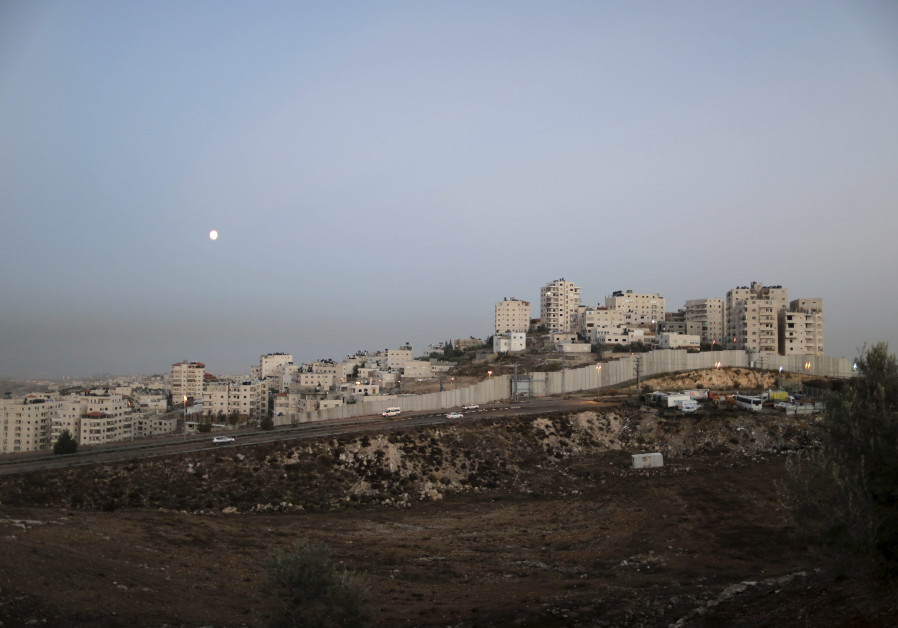
A general view picture shows the Israeli barrier running along the East Jerusalem refugee camp of Shuafat. (photo credit: REUTERS)

Israel’s Shin Bet internal security agency thwarted a terror cell directed by an operative in Syria who planned to harm senior Israeli figures and international delegations, it was announced on Tuesday.

According to the Shin Bet, 30-year-old Muhammad Jamal Rashdah, from the Shuafat refugee camp in east Jerusalem, planned to carry out significant terrorist attacks against a variety of targets, including Prime Minister Benjamin Netanyahu and Jerusalem Mayor Nir Barkat.

Rashdah, who has an Israeli ID card and is a former security prisoner, also planned terror attacks against a delegation of Canadian representatives residing in Jerusalem who train Palestinian Authority forces in the West Bank as well as against buildings belonging to the American consulate.

The Shin Bet investigation also revealed that, at the instruction of the terror operative in Syria, Rashdah carried out preliminary steps to collect intelligence about the targets against which he planned to carry out attacks. In order to promote some of the attacks, the cell intended to bring in a terrorist operative from Jordan, the Shin Bet statement added.

In response to the Shin Bet announcement, Jerusalem Mayor Barkat said that “our Shin Bet is one of the finest organizations in the world. I was briefed on the threat the entire time. When the Shin Bet is involved and the police are on the ground, I can trust them and sleep quietly and safely.”

Additional suspects were later arrested, allowing for the suspicions to be verified and further intelligence was gained regarding the cell’s activity.

“The arrest of the suspects thwarted significant terrorist activity that the infrastructure sought to advance,” the Shin Bet said.

While the indictment against Rashdah remains under gag order, according to information cleared for publication, Rashdah and two other members of the Popular Front for the Liberation of Palestine were arrested in the affair and were indicted on Sunday, May 27th.


Zawartość publikowanych artykułów i materiałów nie reprezentuje poglądów ani opinii Reunion’68,
ani też webmastera Blogu Reunion’68, chyba ze jest to wyraźnie zaznaczone.
Twoje uwagi, linki, własne artykuły lub wiadomości prześlij na adres:
webmaster@reunion68.com