Archives

REPEATED ROUNDS OF ISRAELI ROCKETS HIT SYRIA

SYRIAN STATE MEDIA: REPEATED ROUNDS OF ISRAELI ROCKETS HIT SYRIA
REUTERS

Tensions between Israel and Iran have threatened to spill over in Syria, where the Iranian military and allied Shi’ite militia are backing Syrian President Assad in his civil war.
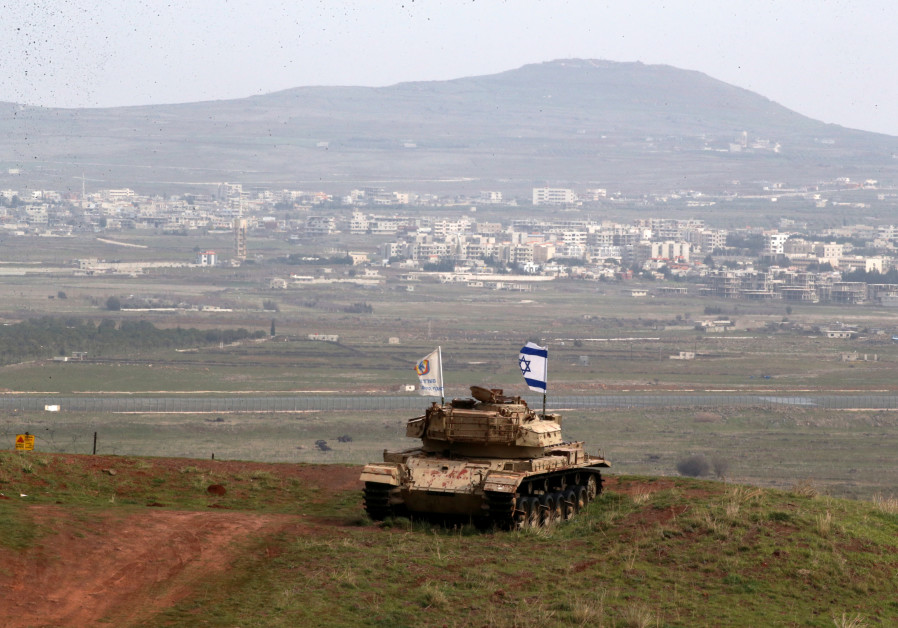
An old military vehicle can be seen positioned on the Israeli side of the border with Syria, near the Druze village of Majdal Shams in the Golan Heights. (photo credit: AMMAR AWAD/REUTERS)

JERUSALEM/BEIRUT, May 10 – Israel launched repeated rounds of rocket fire into Syria early on Thursday, Syrian state media reported, after Israel’s military said Iranian forces in Syria had shelled one of its outposts near the border.

The scale of Israeli rocket fire appeared to be far higher than in previous incidents and Damascus residents described seeing explosions above the city from air defense systems.
Tensions between Israel and Iran have threatened to spill over in Syria, where the Iranian military and allied Shi’ite militia are backing Syrian President Bashar al-Assad in his war against rebels seeking to oust him.

“The Syrian air defenses are confronting a new wave of Israeli aggression rockets and downing them one after the other,” state news agency SANA reported.

Syrian state television was broadcasting footage of its air defenses firing at incoming rockets and playing patriotic songs.

Israel’s military spokesman Lieutenant Colonel Jonathan Conricus said Israel had retaliated for an attack on its outposts in the strategic Golan Heights plateau. He did not elaborate.

Earlier, state news agency SANA and a war monitor, the Syrian Observatory for Human Rights, reported artillery fire from Israeli-held territory at Baath City in Quneitra province near the border. The Observatory said rockets were fired at military positions of the Syrian army and allied forces.

The late-night incident followed a surge in tensions between Israel and Syria, where Iranian and Lebanese Hezbollah forces have been helping Damascus beat back a 7-year-old rebellion.

Israel describes Iran as its biggest threat and Hezbollah as the biggest threat on its borders.

Fearing that Iran and Hezbollah are setting up a Lebanese-Syrian front against it, Israel has occasionally struck at their forces. Iran blamed it for an April 9 air strike that killed seven of its military personnel in Syria, and vowed revenge.

Conricus said that, in Thursday’s attack, around 20 projectiles, most likely rockets, were fired by the Quds Force, an external arm of the Iranian Revolutionary Guards Corps, at around 12.10 a.m.

“A few of those rockets were intercepted” by Israel’s Iron Dome air defense system, Conricus told reporters. “We are not aware of any casualties. The amount of damage that we currently assess is low.”

Asked if Israel retaliated for the salvo, he said, “We have retaliated but I have no further details about this.”

Expectations of a regional flare-up were stoked by U.S. President Donald Trump’s announcement on Tuesday that he was withdrawing from the Iranian nuclear deal. Hours later, Israeli rockets targeted a military base in Kisweh, a commander in the pro-Syrian government regional alliance said.

The strike killed 15 people, including eight Iranians, the Observatory said. Israel has neither confirmed or denied responsibility. 


Zawartość publikowanych artykułów i materiałów nie reprezentuje poglądów ani opinii Reunion’68,
ani też webmastera Blogu Reunion’68, chyba ze jest to wyraźnie zaznaczone.
Twoje uwagi, linki, własne artykuły lub wiadomości prześlij na adres:
webmaster@reunion68.com



STOPPING THE S-300

STOPPING THE S-300

JPOST EDITORIAL


It is in Israel’s interest that Syria be stabilized, but it is in the world’s interest that weapons do not proliferate to terrorist groups and terrorist regimes.

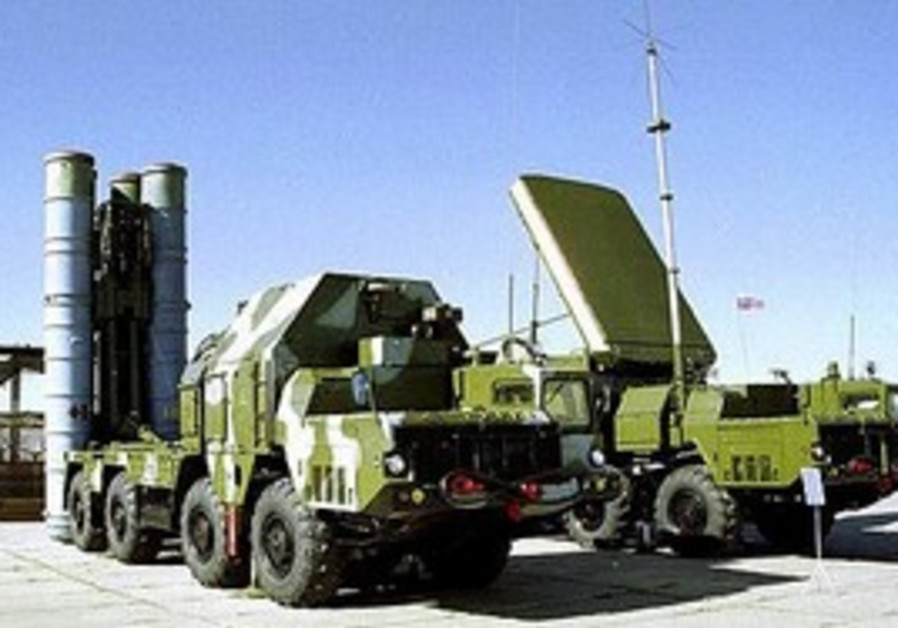
s300 missile truck 311. (photo credit: Associated Press)

Russia’s s-300 surface-to-air missile platform is one of the most sophisticated air defense systems in the world. it is for that exact reason that Israel and the united states have worked tirelessly over the years to prevent its delivery to Iran and why Israel is now working to stop it from getting to Syria.

The real question concerns Russia’s intentions and why it recently announced its intention to deliver the system to the Bashar Assad’s military.

What makes the s-300 a cause of such concern in Israel is that it has the reported ability to track up to a hundred targets simultaneously while engaging up to 12 at the same time. it has a range of about 200 kilometers and can hit targets at altitudes of 27,000 meters. Moscow has already deployed the system in Syria – as well as the more advanced s-400 – but they are under the control of the Russian military. the new systems would be given to the Syrians.

This poses two problems for Israel. First is the possibility that it will be used to shoot down Israeli aircraft. due to its long range, it can reach deep into Israel and hit planes taking off and landing at Ben-Gurion airport, not to mention Israel air Force jets operating over Syria. in addition, there is the possibility that Syria will transfer the system to Hezbollah in Lebanon, further undermining Israel’s operational freedom and aerial superiority in the region.

In Israel, there have traditionally been two schools of thought with regard to the severity of the s-300 threat. on the one hand, there are those like former air force commander Maj.-Gen. (res.) Ido Nehushtan who said a few years ago: “We need to make every effort to stop this system from getting to places where the IAF needs to operate or may need to operate in the future.”

Other officials have been less concerned and claim that if and if and when the s-300 is delivered to Iran or Syria, Israel will be able to develop an electronic warfare system to neutralize it.

The problem is that delivery of this system to Syria could lead to a war. defense minister Avigdor Leberman told ynet last week that if the s-300 is used against Israel, “we will act against it.” Moscow has reportedly warned of catastrophic consequences if Israel attacks the system once it reaches Syria.

Russia’s aim seems to be, on the one hand, an attempt to bolster the regime of Bashar Assad that it has been fighting to keep in power for the last few years. at the same time, it wants to use the threat of delivering the system to Syria as diplomatic leverage in its dealings with the United States over the future of the middle east.

What Israel will do if the s-300 is delivered to Syria remains to be seen. it will have to navigate between destroying a system that could significantly under – mine its capabilities and at the same time avoiding a direct military confrontation with Moscow.

Russia should be careful. it is true that it has deployed significant military assets in Syria, but Israel has proven over the last few years that a Russian presence does not stop it from acting against strategic threats. the IAF has carried out more than 100 strikes against targets in Syria in recent years, most recently, according to foreign sources, on an Iranian drone base.

Russia should not be allowed to get away with whatever it wants in Syria. us president Donald Trump has already accused Vladimir Putin of responsibility for allowing Assad to gas his own people, but he needs to keep the pressure on the Russian leader to stop the delivery of the s-300.

It is in Israel’s interest that Syria be stabilized, but it is in the world’s interest that weapons do not proliferate to terrorist groups and terrorist regimes. Giving the Syrian military the s-300 achieves the exact opposite. the world needs to act now to stop that from happening.


Zawartość publikowanych artykułów i materiałów nie reprezentuje poglądów ani opinii Reunion’68,
ani też webmastera Blogu Reunion’68, chyba ze jest to wyraźnie zaznaczone.
Twoje uwagi, linki, własne artykuły lub wiadomości prześlij na adres:
webmaster@reunion68.com


Severe Weather Strikes Israel

Severe Weather Strikes Israel

   JewishLife


Jerusalem – 17-year-old boy drowned Wednesday after being swept away in a river in the Negev region in a flash flood, according to the Police Spokesperson’s Office.

Police are also searching for a girl that was reported missing in another flash flood. Police units dealt with a number of rescues in the south Wednesday during a severe, unseasonable storm that struck Israel, bringing rain and hail to much of the country.

Streets in Tel Aviv and Jerusalem flooded, as did areas of the desert and other cities across the Jewish state.

Dozens of people were treated for hypothermia after being caught in floods and severe rain.

A mall in Rishon Lezion flooded after the ceiling collapsed. MDA said no one was injured.

The Israel Meteorological Service said the rain was expected to continue overnight and into Thursday throughout Israel and would be accompanied by isolated thunderstorms.

It also said there was concern of further flooding in southern Israel and the Jordan Valley.

Heavy rain and hail have spread over much of Israel since early Wednesday morning. The rains are expected to continue until Friday.

Heavy hail was reported in the Negev cities of Dimona and Arad.

Several roads and highways have been closed to traffic, primarily in the south, due to flooding.

The Nature and Parks Authority announced the closure of the Nahal Ramon and Ein Ovdat national parks due to severe flooding. The Authority said that the regulations must be obeyed in order to prevent unnecessary danger to tourists.

Rain fell today in most areas of the country accompanied by thunderstorms and hail. There is a significant concern of flooding in the rivers of the southern and eastern parts of the country. There is also fear of flooding on the coastal plain. The rain will be accompanied bya significant decrease in temperature which will be unseasonably low. There may be haze mainly in the north of the country.

Local showers are expected overnight. There may be isolated thunderstorms.

Tomorrow there will continue to be local showers in most areas of the country accompanied by isolated thunderstorms. There are fears of floods in the southern and eastern rivers. Temperatures will continue to be unseasonably low.

On Friday, local rains are still expected and there are fears of flooding in the south and east of the country.

On Saturday it will be partly cloudy. Temperatures will increase and they will be normal for the season. In the north of the country local rain showers may remain.


Zawartość publikowanych artykułów i materiałów nie reprezentuje poglądów ani opinii Reunion’68,
ani też webmastera Blogu Reunion’68, chyba ze jest to wyraźnie zaznaczone.
Twoje uwagi, linki, własne artykuły lub wiadomości prześlij na adres:
webmaster@reunion68.com


The Spielberg Jewish Film Archive – A Colony is Born

The Spielberg Jewish Film Archive – A Colony is Born

   Hebrew University of Jerusalem


Name: A Colony is Born
Year: 1946
Duration: 00:15:33
Language: French inter-titles

Abstract: Pioneers establish a tower and stockade settlement.

The Spielberg Jewish Film Archive –
The 500 films, selected for the virtual cinema, reflect the vast scope of documentary material collected in the Spielberg Archive. The films range from 1911 to the present and include home movies, short films and full length features.

שם: הקמת נקודה
שנה: 1946
אורך: 00:15:33
שפה: כותרות בצרפתית

תקציר: חלוצים מקימים יישוב בסגנון חומה ומגדל.

ארכיון הסרטים היהודיים על שם סטיבן שפילברג –
חמש מאות הסרטים שנבחרו עבור הקולנוע הווירטואלי משקפים את ההיקף הנרחב של החומר התיעודי בארכיון שפילברג. באתר ישנם סרטים משנת 1911 ועד ימינו אלה ביתיים, קצרים ובאורך מלא.

כל הזכויות שמורות לארכיון הסרטים היהודיים על שם סטיבן שפילברג ולאוניברסיטה העברית בירושלים 2010; דף הבית; www.spielbergfilmarchive.org.il
http://multimedia.huji.ac.il/


twoje uwagi, linki, wlasne artykuly, lub wiadomosci przeslij do: webmaster@reunion68.com


THE DIRTY SECRET OF SYRIA

THE DIRTY SECRET OF SYRIA: ENABLING THE ENABLERS

BOB FEFERMAN


Who is doing business in Iran today?

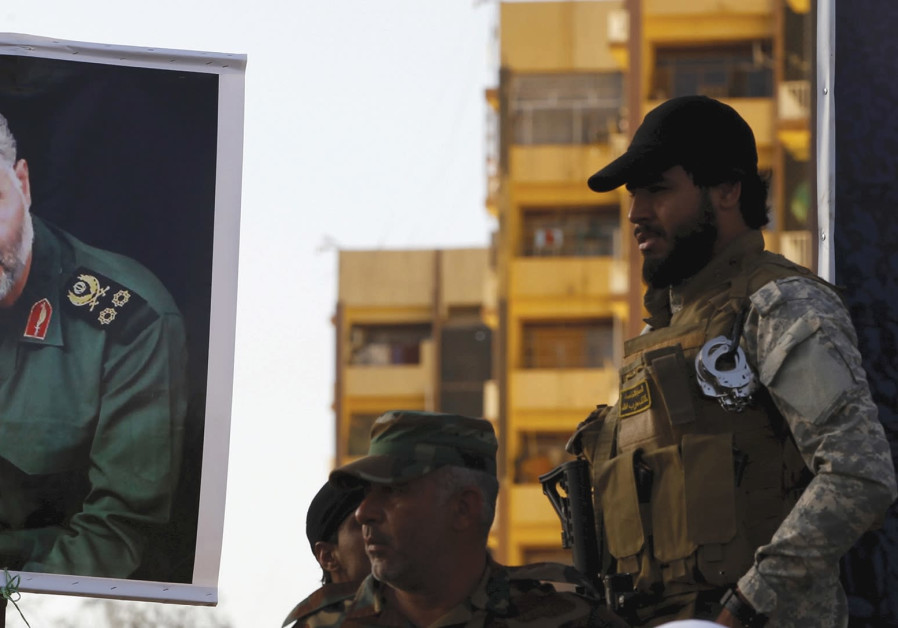
A POSTER of Iranian Quds Force leader Qassem Suleimani.. (photo credit: REUTERS)

In its coverage of the Syrian civil war, the media has ignored a key factor that fuels the ongoing tragedy. We know a lot about the war crimes committed by the Syrian regime of Bashar Assad, and we also know that Iran and Russia are the key enablers of the Assad regime. However, few analysts have bothered to ask: who has been enabling the enablers? The answer contains the dirty secret of Syria.

In her speech to the UN Security Council following the latest chemical weapons attack by the Syrian regime, US Ambassador to the UN Nikki Haley said, “We must not overlook Russia and Iran’s roles in enabling the Assad regime’s murderous destruction…

after all, no civilized government would have anything to do with Assad’s murderous regime.”

Unfortunately, the world has failed to hold Iran accountable for its pivotal role in the Syrian tragedy even though the facts are well known.

Whereas Russia only entered the conflict in the past two years, since the outbreak of the Syrian civil war, Iran has gone out of its way to prop up the brutal regime of Assad.

Experts estimate that since 2011, Iran has been spending between $6 billion and $35b. per year in Syria.

Beyond its financial support, Iran has provided the Assad regime with an endless supply of ammunition and weapons and tens of thousands of fighters from its Revolutionary Guard Corps and from its loyal proxy, Hezbollah. In addition, Iran has recruited, trained and deployed thousands of loyal Shi’ite fighters from Iraq, Afghanistan, and elsewhere to Syria.

It is important to know that the arm of the Iranian government that supports the Syrian regime and deploys foreign fighters to Syria is the Islamic Revolutionary Guard Corps, the IRGC. Specifically, it is the notorious Maj.-Gen. Qassem Suleimani, commander of the IRGC Quds Force, who runs the war in Syria.

Absent the support of the IRGC, Assad would have fallen from power years ago and there could have been a peaceful resolution to the civil war.

Hundreds of thousands of lives could have been saved and there would not be seven million Syrian refugees wandering the face of the earth.

And why has Iran been investing so much blood and treasure in Syria? In an excellent article that addresses this question, Iran expert Karim Sadjapour quotes Ali Akbar Velayati, a senior adviser to Supreme Leader Khamenei. Velyati writes, “The chain of resistance against Israel by Iran, Syria, Hezbollah, the new Iraqi government and Hamas passes through the Syrian highway. …Syria is the golden ring of the chain of resistance against Israel.”

This explains why Iran is working to build a permanent military infrastructure in Syria.

So here is the dirty secret of the Syrian tragedy: At the recent Munich Security Conference, former US national security advisor Lt.-General H. R. McMaster warned, “When you invest in Iran, you’re investing in the IRGC. You might as well cut the Islamic Revolutionary Guard Corps a check and say, ‘please use this to commit more murder across the Middle East.”

McMaster makes a point that has been missing from the discussion of Iran and Syria. The IRGC is not just a paramilitary organization. It is also a major economic force in Iran.

According to the website of United Against Nuclear Iran (UANI), “The IRGC now largely controls the petrochemical, banking, construction and telecommunications sectors in Iran. Estimates of IRGC control of the economy “range from a third to nearly two-thirds of Iran’s GDP – amounting to tens of billions of dollars.”

Who is doing business in Iran today? Whereas US law prevents most American companies from doing business in Iran because it is designated as a “State Sponsor of Terror,” that is not the case for Asian and European companies. Since the lifting of economic sanctions under the Iran nuclear deal (the JCPOA), hundreds of major multinational companies have returned to do business in Iran – and investors should beware.

If you are investing in Asian or European companies, then you should ask whether these companies are doing business in Iran. If they are, then there’s a very good chance they are doing business with the IRGC. And let there be no doubt, the business deals of Asian and European companies not only enrich the IRGC, they also send Iranian leaders the message that there are no economic consequences for their support for the war crimes of the Assad regime.

There is a moral dimension to this reality that we cannot ignore.

Each of us as investors has the power to choose where to put our money. And major institutions – including endowment funds and pension funds – have tremendous economic power. If we are to put an end to the slaughter in Syria, then we must demand that the international business community cut its ties with companies owned by the IRGC.

The leaders of major Asian and European companies who do business in Iran have chosen to ignore the moral consequences of their decisions. They have chosen to be indifferent to the complicity of Iran in the murder and suffering of the people of Syria, simply for the sake of economic gain.

The late Nobel laureate Elie Wiesel wrote in his famous book, Night, “On planet Auschwitz, human moral responsibilities are silenced and deformed into indifference.”

We as investors must not remain indifferent to human suffering.

We must not inadvertently help to enable the IRGC and its support for the war crimes of the Syrian regime.


The author is outreach coordinator for the non-partisan advocacy group, United Against Nuclear Iran (UANI).


Zawartość publikowanych artykułów i materiałów nie reprezentuje poglądów ani opinii Reunion’68,
ani też webmastera Blogu Reunion’68, chyba ze jest to wyraźnie zaznaczone.
Twoje uwagi, linki, własne artykuły lub wiadomości prześlij na adres:
webmaster@reunion68.com