Archives

US Ambassador: Gush Etzion terror victim was a patriot

US Ambassador: Gush Etzion terror victim was a patriot

Ernie Singe


Ambassador David FriedmanArutz Sheva

United States Ambassador to Israel David Friedman has offered the US’s heartfelt thoughts and prayers to the family, friend, teachers and classmates of terror victim Ezra Schwartz on the second anniversary of his murder.

In a letter written on Monday to be read at a memorial service today at Oz Vegaon Park in Gush Etzion, Friedman said, “Ezra was a patriot because he believed so deeply in the ideals and values shared by the United States and Israel.”

He also wrote, “Although I am currently in Washington, D.C. and unable to attend today’s ceremony, I join you in spirit as we renew our commitment to living a life of service to others and to remaining resolute in the defense of our values and the defeat of evil.”

Last week, Friedman cancelled his planned appearance at the memorial service, after initially telling organizers from the Orot Yehuda Yeshiva in Efrat that he had accepted their invitation to the service honoring Schwartz, an 18-year-old American yeshiva student who was killed along with two others in a terror attack in Gush Etzion south of Jerusalem in 2015.

Schwartz, a native of Sharon, Massachusetts, had been studying in the Ashreinu Yeshiva in Beit Shemesh during his year-long stay in Israel.

The memorial event is taking place today at Oz Vegaon park, near the scene of the deadly attack in November 2015 in Judea. Schwartz was on his way there to volunteer when he was shot at the Gush Etzion junction.

The preserve was initially designated an ‘unauthorized outpost’, but subsequently received backing from then-Defense Minister Moshe Yaalon, who endorsed retroactive authorization for the park.

While initially dedicated to the memory of the three murdered Israeli teens kidnapped in 2014, in December 2015, a month after their son’s death, the Schwartz family sponsored the paving of a new hiking trail there in Ezra’s honor.

Organizers of the event said that Ambassador Friedman initially accepted an invitation, which had been extended to the ambassador because Schwartz was an American citizen.

But a senior embassy official told Arutz Sheva that ambassador was forced to decline over a scheduling conflict, adding that he was needed for consultations in Washington and would not be in Israel on the day of the memorial.

“US Ambassador David Friedman is unable to attend the memorial for Ezra Schwartz, as he is engaged in consultations in Washington DC, November 28th. The Embassy will be sending a message of support.”


twoje uwagi, linki, wlasne artykuly, lub wiadomosci przeslij do: webmaster@reunion68.com


Wonder Woman can save the world but not even Gal Gadot can save ‘Justice League’

Wonder Woman can save the world but not even Gal Gadot can save ‘Justice League’

JORDAN HOFFMAN


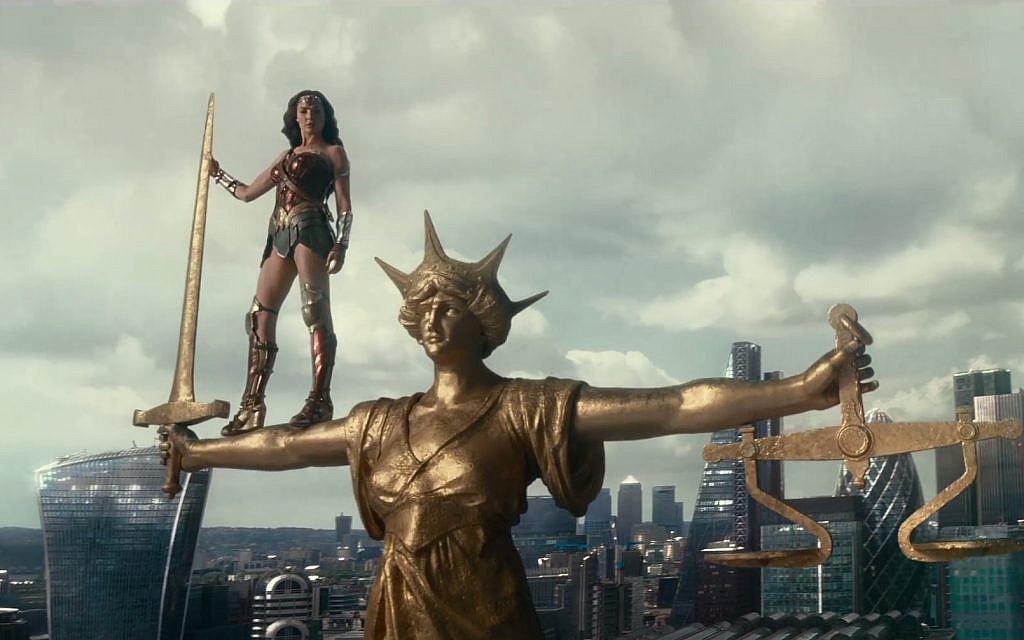
Wonder Woman (Gal Gadot) in the trailer for ‘Justice League’ released on October 8, 2017. (Screen capture:YouTube)

Despite ample screen time and her abundant charisma, Gal Gadot, the most significant Israeli find since the Dead Sea Scrolls, is unable to rescue this meandering, dreary and pointless movie.

It isn’t just dull, it’s infuriating. The whole world loves these characters, and so much time, effort and money has been hurled at this property. But the story in “Justice League” is practically nonexistent — and, even more insulting, the big Hollywood special effects look like garbage

If this were a low-budget matinee B-picture, I’d let it slide. But this tentpole franchise picture, which opens November 16, cost more than the GDP of some small nations. What a mess.

Things kick off when Batman, aka Bruce Wayne (Ben Affleck), is fighting crime in Gotham (as he does) but starts noticing more and more fly-creatures. (Parademons, they are called, if you pay close attention.) As they implode they leave behind a mark: three squares. It’s something Batman remembers scribbled in Lex Luthor’s notebooks, so clearly they are evil.

He decides it’s time to call upon the other “metahumans” that were briefly glimpsed in “Batman V Superman: Dawn of Justice.”

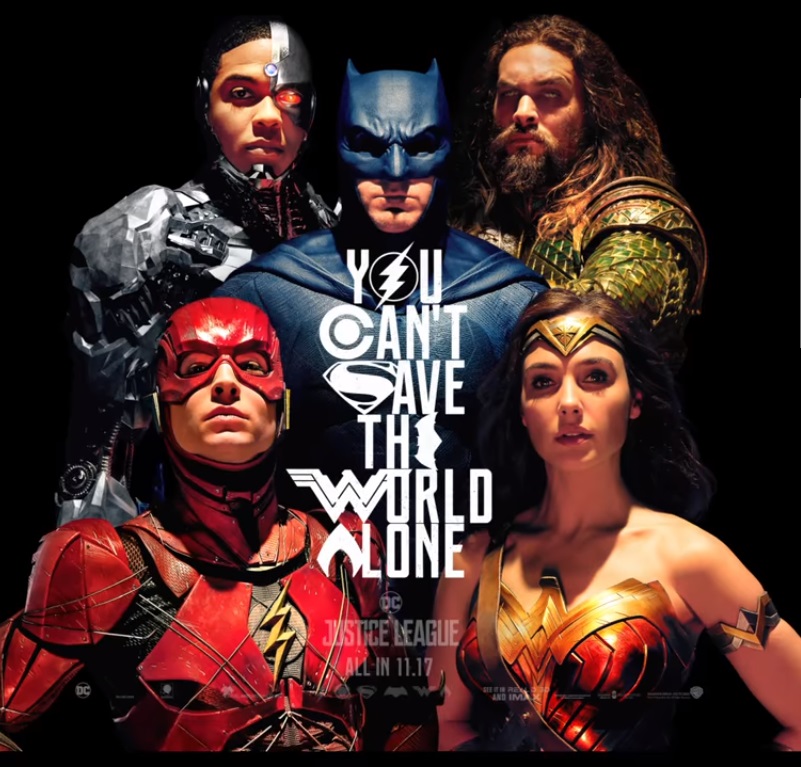
First there’s Aquaman (Jason Momoa) who is entertaining, but isn’t given much to do but swim. There’s also Cyborg (Ray Fisher), a gloomy kid in a hoodie, who spends most of his time staring at his hands. There’s also Superman (Henry Cavil) but he’s dead for the first half (unlike the drama in this story, which is dead throughout). Then there’s Barry Allen, aka The Flash (Ezra Miller), but more on him later.

Wonder Woman (Gal Gadot) in the trailer for ‘Justice League’ released on October 8, 2017. (Screen capture:YouTube)
Despite ample screen time and her abundant charisma, Gal Gadot, the most significant Israeli find since the Dead Sea Scrolls, is unable to rescue this meandering, dreary and pointless movie.

It isn’t just dull, it’s infuriating. The whole world loves these characters, and so much time, effort and money has been hurled at this property. But the story in “Justice League” is practically nonexistent — and, even more insulting, the big Hollywood special effects look like garbage.

Get The Times of Israel’s Daily Edition by email and never miss our top stories FREE SIGN UP

If this were a low-budget matinee B-picture, I’d let it slide. But this tentpole franchise picture, which opens November 16, cost more than the GDP of some small nations. What a mess.

Things kick off when Batman, aka Bruce Wayne (Ben Affleck), is fighting crime in Gotham (as he does) but starts noticing more and more fly-creatures. (Parademons, they are called, if you pay close attention.) As they implode they leave behind a mark: three squares. It’s something Batman remembers scribbled in Lex Luthor’s notebooks, so clearly they are evil.

He decides it’s time to call upon the other “metahumans” that were briefly glimpsed in “Batman V Superman: Dawn of Justice.”

First there’s Aquaman (Jason Momoa) who is entertaining, but isn’t given much to do but swim. There’s also Cyborg (Ray Fisher), a gloomy kid in a hoodie, who spends most of his time staring at his hands. There’s also Superman (Henry Cavil) but he’s dead for the first half (unlike the drama in this story, which is dead throughout). Then there’s Barry Allen, aka The Flash (Ezra Miller), but more on him later.

Before collecting the team we cut to some Wonder Woman action, in which she foils a terrorist attack at the British Museum. It’s not shot as well as the action in Gal Gadot’s solo film, “Wonder Woman,” but once again she is impressive in her athletic moves, half-smiles and reaction shots.

Gal Gadot may not be much of a thespian (her voice-over exposition about those three mysterious cubes later in the film sounds as if she’s as confused as we are) but she’s a remarkable movie star.

It isn’t just that she “looks good” — her glances exude the confidence and grace that would have made her a legend even back in the days of silent film. She and the camera love one another. Yes, it may be ridiculous that she, in her position as an art conservator at the Louvre, dusts statues in a tight, laced-up white dress and push-up bra, but no one ever came to superhero movies for their realism.

Wonder Woman (Gal Gadot) in the trailer for ‘Justice League,’ released on October 8, 2017. (Screen capture: YouTube)

It’s lucky she doesn’t need any dazzling effects to brighten the frame, because the computer imagery in “Justice League” is just awful. There’s a green screened cornfield that had my audience laughing. The action in this movie is so video game-like I almost grabbed a controller based solely on muscle memory.

The fighting comes when the big villain, a poorly rendered Minotaur-ish ghoul called Steppenwolf, emerges from a portal to collect those three boxes I keep talking about. When he has accomplished this the “Unity” will be complete, and then, I dunno, I guess he’ll get lower interest rates or something. His plans are very vague.

What isn’t vague is just how much Batman feels sorry for the fact that Superman got injured in the last installment. This, in addition to wanting to save the world, is what motivates him to create this new superhero team-up.

Trailer for ‘Justice League’ released on October 8, 2017. (Screen capture:YouTube)

read more: Wonder Woman can save the world but not even…


twoje uwagi, linki, wlasne artykuly, lub wiadomosci przeslij do: webmaster@reunion68.com


COPING WITH ATTACKS AND INSULTS

COPING WITH ATTACKS AND INSULTS

HANNAH BROWN


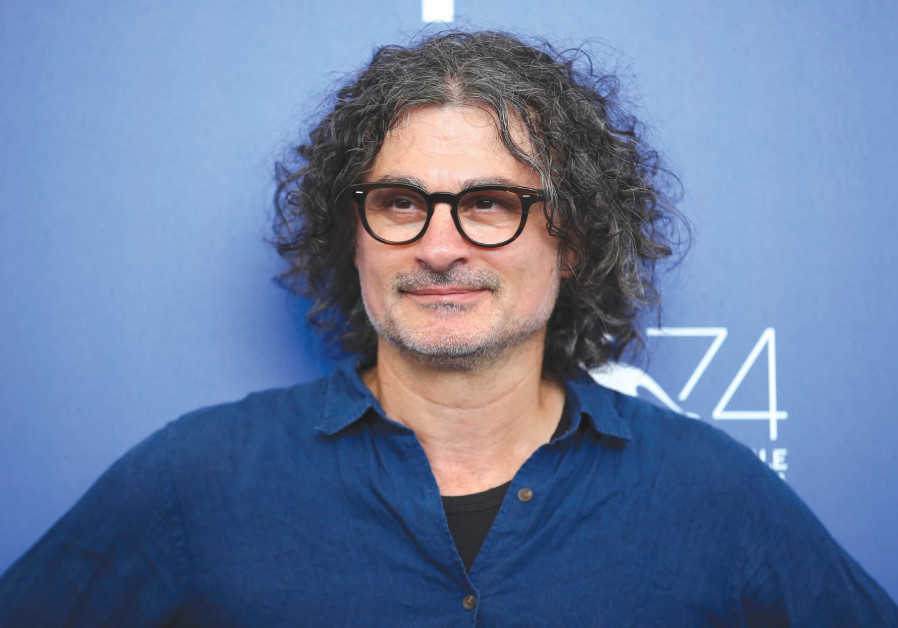
Lebanese director Ziad Doueiri attends a photocall for the movie ‘The Insult’ at the 74th Venice Film Festival. (photo credit:REUTERS/ALESSANDRO BIANCHI)

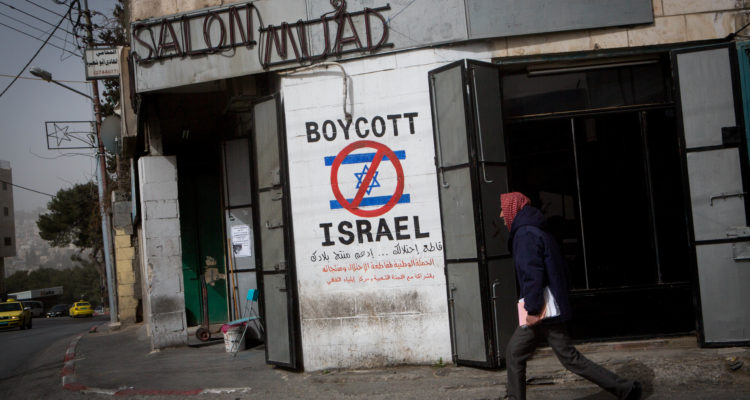
Lebanese director Ziad Doueiri’s The Insult was recently dropped from a film festival in Ramallah, and the banning of this film illustrates just how tangled the world of the Boycotts, Divestment and Sanctions movement has become, as BDS increasingly advocates boycotting the work of Arab filmmakers.

The cancellation of Doueiri’s The Insult from the Days of Cinema Festival in Ramallah came after the BDS movement called for a boycott of the film because Doueiri made the 2012 movie, The Attack, in Israel.

The Attack, which is about a Palestinian doctor who discovers his wife is a suicide bomber, starred several Israeli actors, both Muslims and Jews, among them Ali Suliman (Paradise Now, Dancing Arabs), Reymonde Amsallem and Uri Gavriel.

The Attack was based on the novel by the Algerian writer Yasmina Khadra.

The Attack won a number of international awards, including at the Marrakech International Film Festival and the Istanbul International Film Festival.

Doueiri’s latest film, The Insult, which won the Volpi Cup for Best Actor for its Palestinian star, Kamel El Basha, at the Venice International Film Festival, tells the story of a feud between a Lebanese Christian and a Palestinian refugee in contemporary Beirut. It is Lebanon’s official submission for consideration for a Best Foreign Language Film Oscar.

The cancellation of the film in Ramallah highlights disagreements over exactly what it means to uphold the boycott.

CNN reported that BDS co-founder Omar Barghouti said Doueiri had not apologized for making The Attack in Israel, and that screening The Insult would have served to condone Doueiri’s decision to make a film in Israel.

But, according to CNN, Days of Cinema festival director Hanna Atallah said he had kept the BDS criteria in mind when he chose The Insult to close the festival. Since The Insult was not made in Israel, showing it did not break BDS rules, or so Atallah thought.

“We are very proud that we don’t have censorship of films in Palestine,” Atallah told CNN. “Every Palestinian citizen [should have] the right to watch a product and decide whether it is good or not.”

In the end, though, due to the controversy, city authorities ordered Atallah to pull the film because they could not guarantee security at the screening.

El Basha told CNN, “There is a bunch of people, a small group of people that have succeeded in forcing their opinion on the municipality of Ramallah… to censor our movies and our job. It is a catastrophe for our struggle and for our life.”

The banning is the latest in a series of headaches for Doueiri, who was briefly detained upon arriving at the Beirut airport after The Insult won the Best Actor prize at Venice and was ordered to appear before a Lebanese military court, according to Agence France-Presse.

No charges were filed and he was released shortly afterwards, but those familiar with the case speculated in the press that he was detained due to that fact that he had made a movie in Israel. Lebanese citizens are not allowed to visit Israel, since the two countries are officially in a state of war. But Doueiri said he had been in and out of Lebanon many times since the release of The Attack without incident.

“I am profoundly hurt. I came back to Lebanon with a prize from Venice. The Lebanese police have authorized the broadcast of [The Insult]. I have no idea who is responsible for what has happened,” the director told AFP.

Doueiri burst onto the international film scene in the late Nineties with his autobiographical drama West Beirut, about teen boys coming of age in the shadow of that country’s civil war during the Seventies.

I interviewed him for The New York Post in the summer of 1999.

He was brash, charming and ambitious, and West Beirut received rave reviews. Prior to making West Beirut, he had been working on movie crews, mainly as an assistant camera operator on such movies as Quentin Tarantino’s Reservoir Dogs and Pulp Fiction. That alone would have been a huge achievement for someone who grew up in war-torn Beirut, and the fact that Doueiri went on to become a writer/director was phenomenal.

But even back then, Doueiri faced issues with the Lebanese government.

He told me that an Israeli company had bought West Beirut for release, but the Lebanese government objected. “So we pulled the sale because the Lebanese government said, ‘If you sell it to Israel, we cannot let you go back to Lebanon,’” he said in 1999.

One young director who was profoundly influenced by West Beirut was Maysaloun Hamoud, the Israeli Arab filmmaker who made In Between, the award-winning story of three Arab roommates in Tel Aviv.

In an interview in late 2016, she told The Jerusalem Post: “I saw West Beirut by Ziad Doueiri, in 2002. That movie, it made me change the way I was thinking about movies. I thought, ‘F**k, I want to do West Beirut. My West Beirut.’ I met him when he was in Tel Aviv filming The Attack. He was an inspiration and a mentor for me. The combination of a personal story with a story about war was so intense. The movie didn’t get the recognition it deserved. It’s a masterpiece.”

Hamoud’s success with In Between has brought out some of the contradictions in the BDS movement, since BDS would have audiences boycott her film, as well as those of other Israeli Arab directors such as Maha Haj (Personal Affairs) and Shady Srour (Holy Air). But in spite of the BDS attitude toward movies directed by Israeli citizens, In Between was one of five movies by Israelis screened at the Toronto Palestine Film Festival in September 2017.

Hamoud has been criticized for her decision to accept money from Israeli film funds, but according to her, “People said, ‘Don’t take the Israeli money, get Arab funding.’ This is an oxymoron. There were no Arab film funds, there was nothing I could get.”

Turning down Israeli funding – which she was entitled to as an Israeli citizen – meant that she wouldn’t have been able to make her film.

The BDS ethos is being used to turn audiences away from Arab directors and shut down collaboration among filmmakers. Said Ben Said, a well-known Tunisian-born movie producer, revealed in an article in the French newspaper Le Monde on November 6 that the 28th Carthage Film Festival in Tunisia had rescinded its invitation for him to preside over the jury because he had worked with Israeli film director Nadav Lapid and was a judge of the Israeli Competition at the Jerusalem Film Festival last summer.

Ben Said has produced movies for such prominent directors as David Cronenburg, Roman Polanski and Brian De Palma.

“No one can deny the misery of the Palestinian people, but it must be admitted that the Arab world is, in its majority, antisemitic,” Ben Said wrote. “This hatred of Jews has redoubled in intensity and depth not because of the Arab-Israeli conflict, but with the rise of a certain vision of Islam.”

Perhaps Doueiri said it best nearly two decades ago: “I’ve found that over the years, the more I learn about politics, the more confused I get.”


twoje uwagi, linki, wlasne artykuly, lub wiadomosci przeslij do: webmaster@reunion68.com


GOLANI SHELI – Israeli Soldiers IDF Medley Songs ✡ (full version)

GOLANI SHELI – Israeli Soldiers IDF Medley Songs ✡ (full version)

   Jerusalemite


IDF medley mix songs in Israel’s Children’s Festival 2014.

Participants: Eliana Tidhar, Roni Dalumi, Dana Frider, Tuval Shafir, Tal museri, Libi Ran, Eli


twoje uwagi, linki, wlasne artykuly, lub wiadomosci przeslij do: webmaster@reunion68.com


Knesset advances bill to crack down on BDS activists within Israel

Knesset advances bill to crack down on BDS activists within Israel

Jack Ben-David


(Miriam Alster/Flash90)

“They don’t want peace, they simply want to delegitimize the State of Israel and destroy it as the Jewish homeland,” said one of the bill’s sponsors.

Israeli lawmakers moved ahead in the Knesset Tuesday with legislation designed to target Israeli activists and companies that “systematically” call for boycotts, divestments and sanctions against Israel, making them liable to pay hefty penalties of up to NIS 500,000.

Spearheaded by Likud MK Yoav Kisch, the bill is the latest legal tool being sharpened by the Israeli government to puncture the Boycott, Divestment and Sanctions Movement (BDS), which has been inflated in recent years by the endorsement of prominent artists and musicians such as Roger Waters.

The new bill, which passed its initial reading by a vote of 60-40, is also the successor of a similar bill ratified in 2011 which enabled companies to demand compensation from activists calling for the boycott of Israeli firms located in various parts of Israel, including Judea and Samaria.

The law, however, was partially defanged by the High Court of Justice two years ago after it scrapped a clause allowing for the imposition of unlimited fines on the pro-BDS activists or companies.

Seeking to remedy the shortfall, the new bill sets a limit of up to NIS 100,000 fines for such companies without proof of damages. Furthermore, activists and organizations that run afoul of the latest bill, if passed, will face a maximum compensation order of as much as NIS 500,000 where damages can be proved.

Among the bill’s chief proponents is Public Security Minister Gilad Erdan, whose subsidiary Ministry of Strategic Affairs was established to tackle the BDS movement.

According to Erdan, the bill is intended to “send a clear message” that people seeking to economically squeeze Israel could fall prey to their own tactics.

“They don’t want peace, they simply want to delegitimize the State of Israel and destroy it as the Jewish homeland,” Erdan said.

Kisch claimed before the Knesset plenary session that the bill was necessitated by the fact that the court’s 2015 removal of the clause pertaining to unlimited compensation essentially meant that the old law was “ineffective.”

The most recent bill, he said, before listing a few of the worst offenders who could find themselves on the receiving end of the law, would be “sticking a finger in the eye” of the Israeli activists and organizations targeting Israel’s economy.

In recent years, the Israeli government has taken a series of measures designed to mitigate its impact, utilizing the modern technology such as applications, lobbying international lawmakers and enlisting pro-Israel communities throughout the world.


twoje uwagi, linki, wlasne artykuly, lub wiadomosci przeslij do: webmaster@reunion68.com