Archives

SAP buying Israel’s Gigya for reported $350 million

Israel21cSAP buying Israel’s Gigya for reported $350 million

ISRAEL21c Staff


Gigya’s customer identity management platform currently helps companies build digital relationships with some 1.3 billion consumers.

Gigya team photo: courtesy

Gigya, whose customer identity management platform helps companies build digital relationships with some 1.3 billion consumers, has entered into an agreement to be acquired by software giant SAP.

The company did not disclose the price tag of the deal, though it has been reported at $350 million. Gigya was founded in 2006 in Israel and currently employs 300 people in its offices in Mountain View (California), Tel Aviv and London.

“Gigya brings a wealth of skills and expertise that will significantly enhance the SAP Hybris Profile solution and allow us to take leadership of the emerging customer identity and access management market,” said Carsten Thoma, president and cofounder of SAP Hybris, with which Gigya has partnered since 2013.

The acquisition — expected to close in the final quarter of 2017 — will enable SAP Hybris to offer a cloud-based data platform enabling companies to profile and convert new customers, gather accurate conclusions from disparate consumer engagement sources and collect data for enhanced consumer choices that are in line with regulations.

“Combining the data matching and enrichment capabilities of SAP Hybris Profile with Gigya’s consent-based identity data and access management platform will allow us to identify consumers across channels and offer a robust single consumer profile,” said Patrick Salyer, CEO of Gigya.

“This is a vital step for digitalizing businesses because companies need to be able to draw accurate conclusions seamlessly across all channels, including web, mobile, in-store or connected devices, and the Internet of Things, as well as collect data about consumer preferences. Together, we are uniquely positioned to drive more effective marketing, sales and service through data, while the customer stays in control of how much data is shared.”


twoje uwagi, linki, wlasne artykuly, lub wiadomosci przeslij do: webmaster@reunion68.com


ארכיון שפילברג ומשרד התרבות והספורט. שירות הסרטים הישראלי ירחון מס’ 12

ארכיון שפילברג ומשרד התרבות והספורט. שירות הסרטים הישראלי ירחון מס’ 12

    Hebrew University of Jerusalem


[Po polsku]


12
אוק. 1957
12:15 דקות
פולנית
כולל: סוכות, דרוז חוגגים, שייט, לאונרד ברנשטיין

Israel Newsmagazine no. 12
1957 October
12:15 min.
Polish
Monthly news magazine including: Succot, Druze celebration, Sailing, concert with Leonard Bernstein.


twoje uwagi, linki, wlasne artykuly, lub wiadomosci przeslij do: webmaster@reunion68.com


10 Israeli innovations that will outsmart superbugs

Israel21c10 Israeli innovations that will outsmart superbugs

Abigail Klein Leichman


Antibiotic resistance is one of the world’s most serious health threats. Here’s how Israeli scientists are trying to overcome the problem.

Super bugs kill more than 700,000 people worldwide every year. Has Israel got the answer?Photo via Shutterstock

Antibiotics are one of the most effective ways to treat bacterial infections. However, they have been overprescribed and misprescribed for years, leading to the development of bacterial strains that are resistant to specific antibiotics.

The World Health Organization considers this one of the biggest threats to global health because antimicrobial resistant (AMR) infections kill more than 700,000 people worldwide every year.

Israeli researchers and entrepreneurs are approaching the problem from various different perspectives. Here are 10 promising advances.

  1. Customized antibiotics

The SNDA-AST diagnostic system, developed in the biomedical engineering lab of Prof. Shulamit Levenberg at the Technion-Israel Institute of Technology in Haifa, enables rapid and accurate antibiotic customization for each patient.

The point-of-care system, not yet commercialized, quickly analyzes bacteria isolated from urine samples and assesses their level of resistance to specific antibiotics. This enables the doctor to choose the most effective antibiotic immediately, rather than starting treatment with broad-spectrum antibiotics – which can cause AMR and kill “good” bacteria — while awaiting lab results from traditional cultures.

2. Distinguishing bacterial from viral infections

MeMed’s ImmunoXpert kit. Photo: courtesy

MeMed of Tirat Carmel has developed a pioneering point-of-care platform that can distinguish bacterial from viral infections. This helps doctors avoid prescribing antibiotics before knowing if the infection actually is bacterial.

ImmunoXpert, the first generation of this novel test, is in use in the European Union, Switzerland and Israel, and a broader commercial roll-out is underway. A $9.2 million contract from the Defense Threat Reduction Agency (DTRA) of the US Department of Defense will help develop an advanced version of the test that will be easier and faster to use.

On September 18, results of a major study published in the official journal of the American Academy of Pediatrics confirmed that ImmunoXpert accurately distinguishes between bacterial and viral infections in children.

3. Cotton that kills bacteria

Argaman Technologies of Jerusalem recently started making CottonX, described as the world’s first bio-inhibitive all-cotton fabric, embedded permanently with accelerated copper oxide to which bacteria cannot become resistant. CottonX has been shown to kill 99.9% of microbes (bacteria, viruses and fungi) in seconds and is being used to make hotel bedding and towels, uniforms, disposable and reusable face masks and other medical, military and consumer products. The process also makes textiles fire-resistant, conductive and able to smooth skin wrinkles.

4. Engineered delivery

Infecting antibiotic-resistant bacteria with tiny viruses called bacteriophages has long been understood as a potentially effective weapon.

A breakthrough patent-pending technology from the lab of Tel Aviv University Prof. Udi Qimron facilitates the delivery of genetically engineered bacteriophages into a wide range of drug-resistant bacteria, rendering them sensitive to antibiotics.

The team also designed hybrid nanoparticles from different bacteriophages, which can recognize new strains of bacteria.

In 2011, Qimron and a TAU colleague formulated a powerful cleaning solution for hospitals, fortified with genetically engineered bacteriophages. In 2014, they successfully isolated a protein made by a bacteriophage, which could help in the development of a substitute for conventional antibiotics.

5. Viruses vs. bacteria

A research team led by Dr. Ronen Hazan from the Institute of Dental Sciences at the Hebrew University and Dr. Nurit Beyth from the Hebrew University-Hadassah School of Dental Medicine isolated a particular bacteriophage found to be effective in preventing infections following root-canal procedures.

The same bacteriophage could also work against urinary-tract infections, meningitis and endocarditis stemming from E. faecalis bacteria, which normally reside in the gastrointestinal tract and are resistant to the common antibiotic vancomycin.

6. How long can bacteria wait out antibiotics?

A simple new method for measuring the time it takes to kill a bacterial population could improve the ability to wipe out “tolerant” bacterial strains that survive antibiotics for a long time as they become resistant.

“Routinely measuring tolerance could supply valuable information about the duration of antibiotic treatments, reducing the chance of both under- and over-treatment,” said researcher Nathalie Balaban of the Hebrew University of Jerusalem.

This method could enable microbiology labs to classify bacterial strains as tolerant, resistant or persistent, helping to guide treatment decisions, added Balaban. “Understanding tolerance and finding a way to combat it could significantly reduce the ever-growing risk of resistance.”

In 2014, Balaban and Prof. Gadi Glaser discovered the mechanism by which persistent bacteria (as opposed to tolerant or resistant) survive antibiotics by going into a dormant state.

7. Antibiotic alternative

Research from the lab of Assistant Prof. Oded Lewinson, from the Technion’s medical school, shows that low-concentration combinations of metals and organic acids could provide an effective alternative to antibiotics for people and plants.

Lewinson and his team found that the combination is extremely effective in eradicating pathogenic bacteria such as cholera, salmonella, and pseudomonas, as well as bacteria that attack crops such as tomatoes, melons and apples.

8. A smarter antibiotic

A Technion research team led by Assistant Prof. Meytal Landau discovered unique amyloid fibrils through which the pathogenic and highly drug-resistant Staphylococcus aureus bacterium attacks human cells and the immune system.

This discovery could enable the development of antibiotics with a novel mechanism of action to inhibit amyloid formation.

Staphylococcus aureus is one of the most common causes of hospital-acquired infections. In the US alone, approximately 500,000 patients at hospitals contract a staph infection.

9. Bacteria-resistant fabrics, surfaces

Nano Textile of Ramat Gan is developing a patented ultrasonic method of permanently embedding antibacterial zinc-oxide nanoparticles onto textiles and surfaces including glass, plastics, composites and metals. The company is seeking a strategic partner to develop the machinery in time to debut at the June 2019 ITMA Textile & Garment Technology Exhibition in Barcelona. Odor-resistant active wear, underwear, children’s wear, workwear, hotel linens and upholstery for public transportation are planned. The technology also gives treated substances UV protection, water and flame resistance and other properties.

10. Antibacterial food packaging

NanoPack, a consortium of 18 leading industrial and research institutes across Europe, led by the Technion-Israel Institute of Technology in Haifa, this year received an EU grant of €7.7 million to develop a novel polymer-based antimicrobial food packaging solution. Technion Assistant Prof. Ester Segal, NanoPack’s coordinator, said the three-year project “will enhance food safety for consumers by significant growth inhibition of food-borne microbes, which in turn will prevent food-borne illness outbreaks and early spoilage.”


twoje uwagi, linki, wlasne artykuly, lub wiadomosci przeslij do: webmaster@reunion68.com


US Ambassador: Jewish communities in Judea and Samaria ‘part of Israel’

US Ambassador: Jewish communities in Judea and Samaria ‘part of Israel’

World Israel News Staff


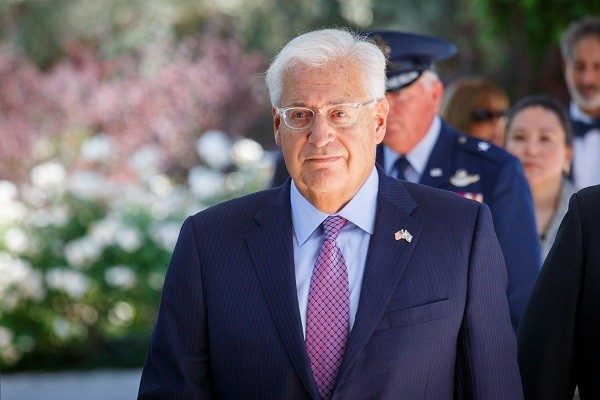
David Friedman, US Ambassador to Israel (Hillel Maeir/TPS)

US Ambassador to Israel David Friedman supports the legal rights of Jewish communities beyond the 1967 boundaries, signaling a fresh approach to resolving the Israeli-Palestinian conflict.

In an expansive interview with Israeli media outlet Walla!, the US Ambassador to Israel, David Friedman, provided insight into the direction the US envisions for Israel as the Jewish state navigates shifting alliances in the region and its approach to resolving the Palestinian conflict. Among the topics Friedman addressed were Jewish communities in Judea and Samaria and the future of the two-state solution.

With regard to the first point, Friedman explained, “I think the settlements are part of Israel,” which “was always the expectation when [UN] Resolution 242 was adopted.” Friedman added, “The 1967 borders were viewed by everybody as not secure. There was always supposed to be some expectation of [Israeli] expansion” into Judea and Samaria.

Friedman referred to the “important nationalistic, historical, and religious significance”of these communities, commenting, “I think the settlers view themselves as Israelis, and Israel views the settlers as Israelis.”

When asked about the prospects for moving the US Embassy to Jerusalem, Friedman reiterated to Walla! that it was a question of “when not if,” and stressed that “most importantly [the US would] recognize Jerusalem as the eternal capital of the state of Israel and of the Jewish people.”

In discussing the broader geopolitical landscape for Israel in the year 2017, Friedman identified “more interest and flexibility in the Arab world generally,” commenting that “there are natural alliances between Israel and the Gulf, and Egypt and Jordan, that didn’t exist ten years ago and those are going to be an important factor in contributing to opportunities.”

When pressed on the fate of the “two-state solution,” Friedman responded, “Conceivably I think that phrase has largely lost it’s meaning … it’s not a helpful term because it just doesn’t mean the same thing to different people.” Friedman concluded, “The solution comes first, then we deal with the label.”


twoje uwagi, linki, wlasne artykuly, lub wiadomosci przeslij do: webmaster@reunion68.com


THE NORWEGIAN ELECTIONS, ISRAEL AND THE JEWS

THE NORWEGIAN ELECTIONS, ISRAEL AND THE JEWS

MANFRED GERSTENFELD


Norway was the most problematic country in Europe for Israel from 2005-2013.

NORWAY’S PRIME MINISTER Erna Solberg arrives at a news conference in Oslo earlier this month.. (photo credit:REUTERS)

Developments in Norway are at best sparsely analyzed abroad, including in Israel, despite the fact that Norway was the most problematic country in Europe for Israel from 2005-2013. Under governments led by Labor Party leader Jens Stoltenberg, anti-Israel attitudes flourished.

There were also extreme expressions of antisemitism, including shots fired at Oslo’s only synagogue by a Muslim. In 2012, the well-known Norwegian author Hanne Nabintu Herland called Norway the “most antisemitic country.”

The current prime minister, Erna Solberg, leader of the Conservative Party (Hoyre), and three potential coalition parties unexpectedly won the September 11 elections, receiving 89 out of 170 seats. Creating a government will, however, not be easy. The Christian Democrat Party, a Solberg ally, which barely passed the entrance threshold of 4%, is opposed to the anti-Islam Progress Party continuing in government.

A few months ago, polls indicated that Labor and its allies would return to power. In that case the Labor leader, Jonas Gahr Stoere, would have become prime minister. If that had happened, it is likely that Norway would have joined Sweden sooner or later in recognizing a Palestinian Authority government which controls only part of the Palestinian territories.

In 2011, Anders Breivik murdered 77 people, mainly Labor Party youngsters. Stoltenberg thereafter publicly proclaimed that Norway, despite this, would become an even more open democracy. In reality dissenters who strongly opposed the social-democratic rule were even more ostracized than before.

After his 2013 defeat, Stoltenberg became secretary general of NATO.
As prime minister he was not so much an anti-Israeli inciter himself as he was tolerant of such incitement by his party and allies. At several venues where he spoke, there were brutal verbal attacks on Israel, while he remained silent. By not confronting these attacks he condoned them.

Stoere’s anti-Israelism reached an extreme point when he wrote a back-cover comment legitimizing a book by two Norwegian Hamas supporters, Mads Gilbert and Erik Fosse. Writing on the 2009 Cast Lead campaign in Øyne i Gaza (“Eyes in Gaza”), they claimed that Israel entered the Gaza Strip in 2009 to kill women and children.

Stoere always played both sides.

In January 2009, the most antisemitic riots that ever took place in Norway happened in Oslo. Muslims attacked pro-Israel demonstrators with potentially lethal projectiles.

Stoere visited the Oslo synagogue afterward to express his solidarity with the Jewish community.

In 2012, a study was published by the Norwegian Center for Studies of the Holocaust and Religious Minorities. It was paid for by the government. The study found that 38% percent of Norwegians believe that Israel acts toward the Palestinians like the Nazis behaved toward the Jews. (When Shimon Peres, then Israel’s president, visited Norway in 2014, he stated nonsensically: “Norway is the pearl of humanity, built on human values, and seeks to keep people equal and free.”) During the Solberg government years, extreme anti-Israelism among organizations mainly on the Norwegian Left did not end. To the contrary, the large trade union LO, which is a major force behind the Labor Party, came out in favor of totally boycotting Israel. In 2014, the Christian youth organization YMCA-YWCA voted for a boycott on goods and services from the territories.

The Oslo chapter, however, rejected the boycott.

One often underestimates the importance of Norway because the country is not a member of the European Union and has only about 5 million inhabitants. Yet its huge gas and oil income has enabled it to make important donations abroad, including to Palestinian causes.

The Labor governments have made ample use of this and the Solberg government has continued donations.

However, in May of this year Norway asked for funds it had donated to a center for women in the West Bank village of Barak to be returned.

It had become known that the center was named for Dalal Mughrabi, who led the 1978 massacre on a highway near Tel Aviv that killed 37 Israeli civilians, many of them children, and wounded dozens.

A recent study by Jonas Duc Enstad of Oslo University’s Center for the Study of Extremism stated that it seems that “most antisemitic incidents in Norway are caused by Arabs and left-wing radicals.”

As Sweden’s government is currently the main anti-Israel inciter in Europe, it is interesting to note that before the elections Norwegian Immigration Minister Sylvi Listhaug, of the Progress Party, kept warning that Norway should not allow “Swedish conditions” to develop.

The Financial Times wrote: “That is code for the gang warfare, shootings, car burnings and other integration problems that Sweden has endured recently in the suburbs of its three largest cities, Stockholm, Gothenburg and Malmö.” One might also recall that Malmö is considered by many experts the antisemitism capital of Europe.

Listhaug also traveled to Stockholm shortly before the elections and visited the extremely violent Rinkeby suburb. She furthermore stated that there are more than 60 no-go zones in Sweden. Sweden, with its 10 million citizens, is the dominant Scandinavian country and many Swedes look down on Norway. This unusual Norwegian criticism hit Sweden below the belt, all the more so as it was largely true.

If Solberg manages to govern for four years this may enable Israel to further improve relations with Norway and better counteract its leftwing enemies there.


The author’s book The War of a Million Cuts analyzes how Israel and Jews are delegitimized and how to fight this. He is a former chairman (2000-2012) of the Jerusalem Center for Public Affairs.


twoje uwagi, linki, wlasne artykuly, lub wiadomosci przeslij do: webmaster@reunion68.com