Archives

Israeli research – why honeybees are dying

Israel21cUnique Israeli research reveals why honeybees are dying

Abigail Klein Leichman
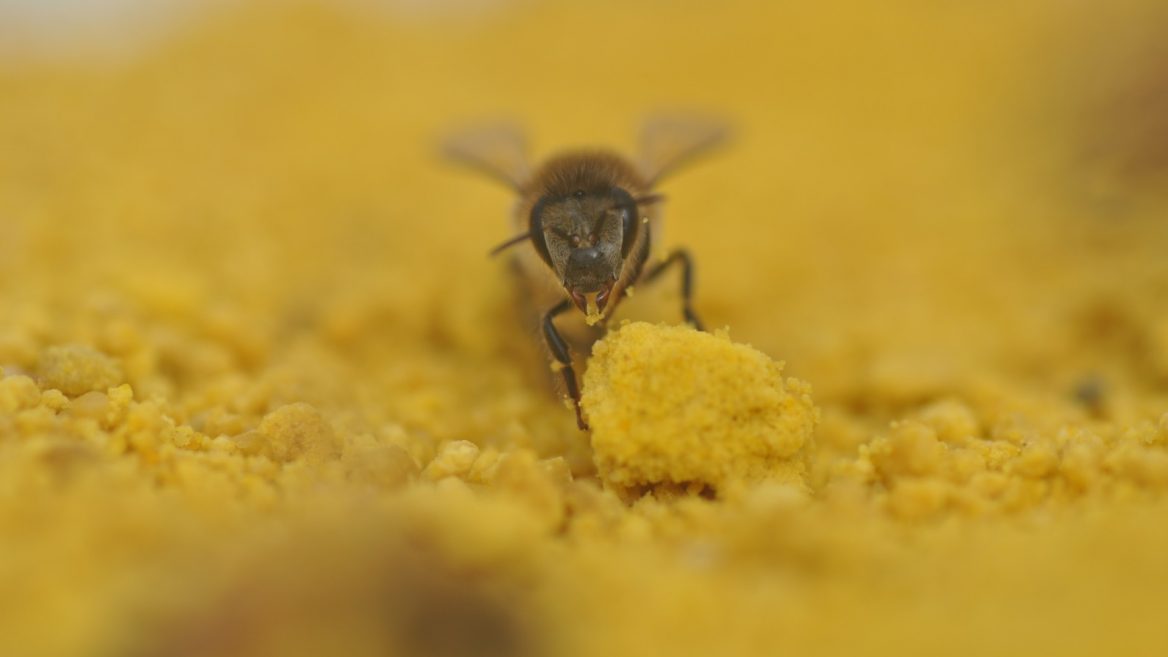

A bee in the Benjamin Triwaks Bee Research Center in Rehovot. Photo by Shlomi Zarchin

 If you give a “menu” to a bee, it will instinctively choose dishes that provide the right balance of nutrients: sugary nectar plus pollen full of protein, fatty acids and micronutrients.

That’s one of the findings of groundbreaking experiments performed at Israel’s Benjamin Triwaks Bee Research Center at Hebrew University’s Robert H. Smith Faculty of Agriculture in Rehovot.

The center also has discovered that, like humans, bees consuming an unhealthy ratio of omega-6 to omega-3 fatty acids develop cognitive deficiencies.

They cannot simply choose pollen from flowers high in omega-3 because increasing urbanization has decimated many kinds of wildflowers. The resulting nutritional imbalance is a major reason why honeybees, responsible for the pollination of more than 90 commercial food crops across the world, are dying at an alarming rate.

“Our specific research is on understanding bee diets and how they choose their diets. We know they need nectar and pollen, and that all comes from flowers,” Bee Research Center director Prof. Sharoni Shafir tells ISRAEL21c.

“Beekeepers can give them sugar water if there’s not enough nectar but lack of pollen is a more acute problem because it’s complex. There are essential amino acids they can only get from pollen, and the amount of essential fatty acids — omega-3 and omega-6 – varies from pollen to pollen. We are working in an international consortium to understand how to formulate an artificial diet that will be as good as pollen,” he says.
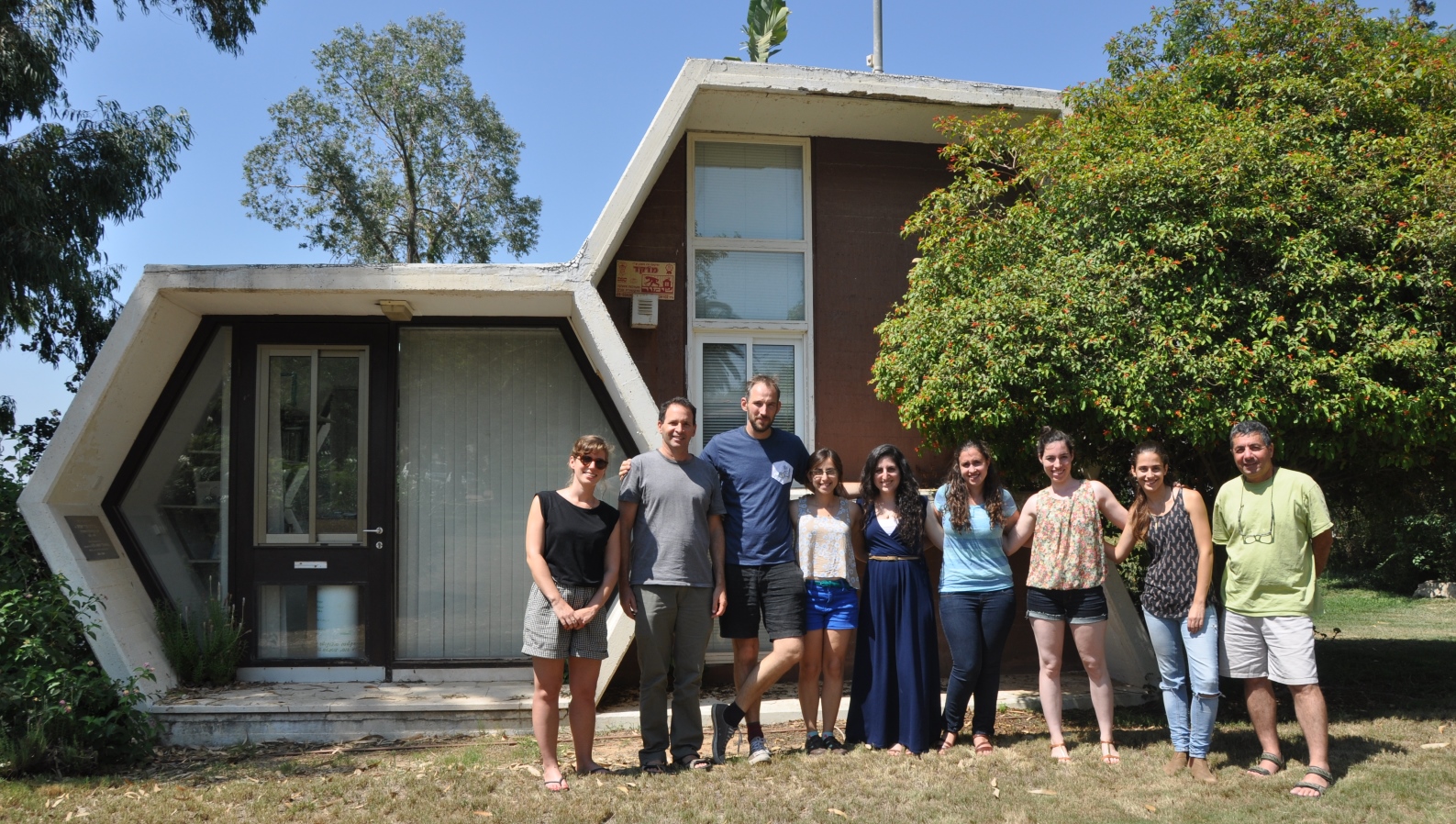
Prof. Sharoni Shafir, second from left, with staff and researchers at the Benjamin Triwaks Bee Research Center of Hebrew University. Photo: courtesy

Omega-3 deficiency slows bees’ learning

Shafir’s PhD student Yael Arien fed colonies of bees with artificial pollens, some poor in omega-3 and others rich in omega-3. Then she tested the bees’ learning aptitude using Pavlovian conditioning.

The experiment revealed that 90% of the bees raised on high omega-3 diets learned to differentiate between odors associated with sugar or salt within three trials. But only about 45% of the bees raised on an omega-3 deficient diet were able to do so.

“That was a striking effect,” says Shafir.

He explains that in humans, the right balance of omega-6 and omega-3 is 1:1. The typical modern Western diet (high in corn and corn byproducts and low in fish and free-range meat, poultry and eggs) provides a 15:1 omega-6 to omega-3 ratio. This imbalance is thought to contribute to cognitive dysfunctions such as dementia, depression and ADHD.

“Some doctors think too much omega-6 is the No. 1 health issue of the future,” Shafir says. “In bees and other invertebrates, nobody has looked at this possible unbalance. It turns out that bees usually collect pollen higher in omega-3 than omega-6. When they can, they collect a mixed diet of pollen.”
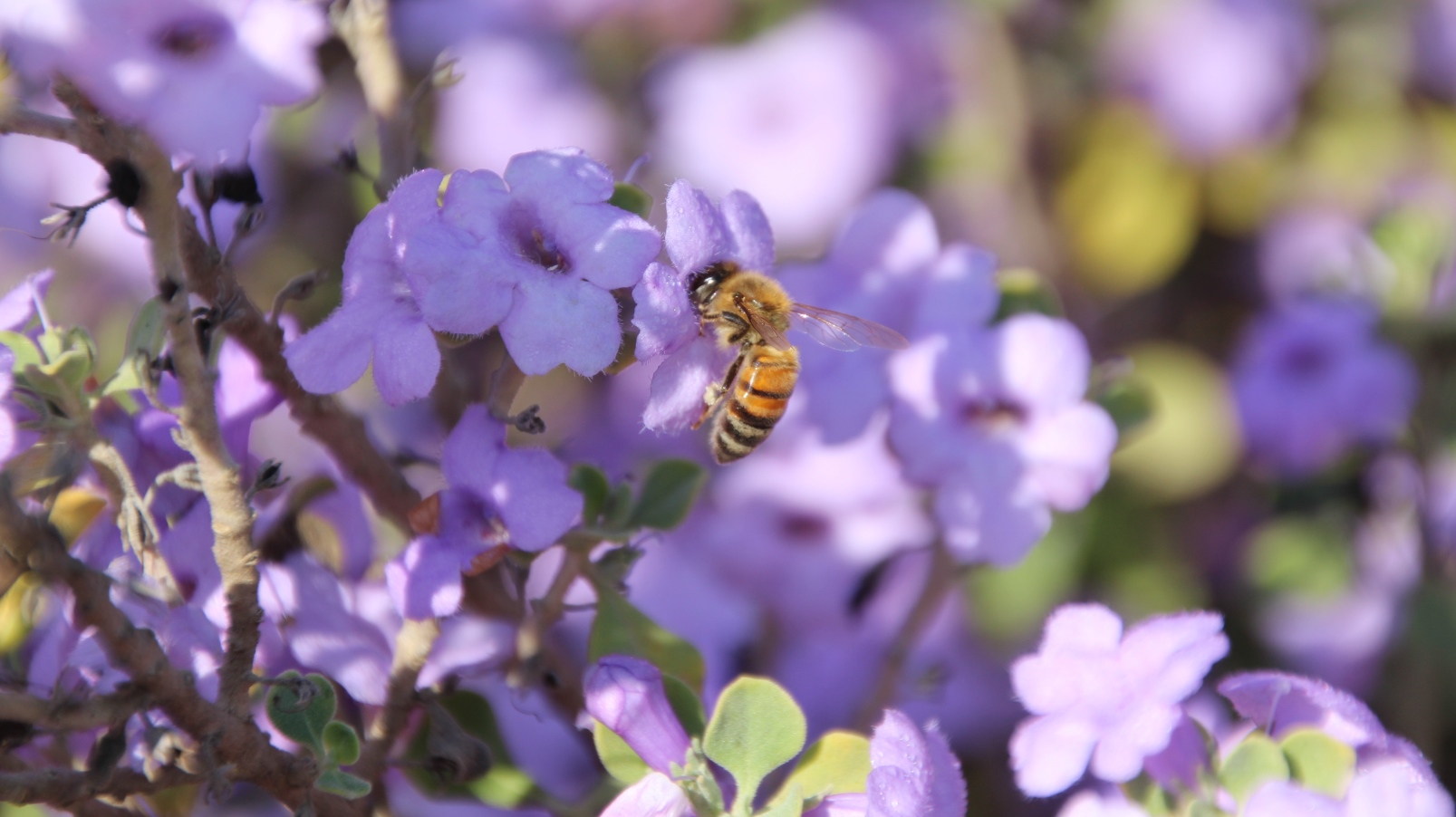
A honeybee feeding on a high-pollen Leucophyllum (San Jose) shrub. Photo by Pablo Chercasky/KKL-JNF

read more: Israeli research …. why honeybees are dying


twoje uwagi, linki, wlasne artykuly, lub wiadomosci przeslij do: webmaster@reunion68.com


12 cool things to do in Tiberias

Israel21c12 cool things to do in Tiberias

Viva Sarah Press


The capital of the Galilee is on every tourist’s must-see list, but that doesn’t mean you have to spend a fortune.

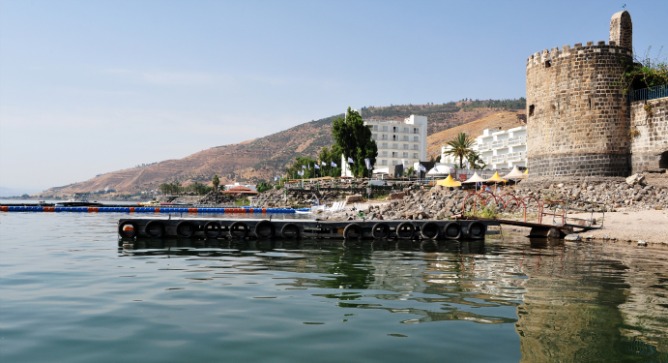
The Old City walls of Tiberias. Image via Shutterstock.

Flowing with natural hot springs, brimming with Christian and Jewish holy sites and hugging the shores of the Sea of Galilee, Tiberias is a top tourist stopover for visitors to Israel. The city boasts many historical and religious sites as well as water recreation options.

But required tourist hotspots usually translate to opening one’s wallet at every other turn. ISRAEL21c presents 12 things to do in Tiberias without spending an agora.

1. Old Tiberias Walking Tour

On Tuesdays, a local tour guide takes tourists through the archaeological park (next to Sheraton Moriah and Golden Tulip hotels) and then to the promenade, past the Turkish citadel, to the famous Etz Hachaim synagogue of Rabbi Haim Abulafia, and the Scottish Compound (see below). On Fridays, he leads a free tour of the city’s historical sites. Every Sunday, Monday and Thursday, a walking group leaves from the Tiberias Tourist Information Center (04-672-5666), and the Tiberias Hotel Association (04-672-4549) offers free Saturday morning walking tours revealing the history behind the walled Ottoman city to today’s contemporary hotel industry. Book in advance and reconfirm.

2. Beaches

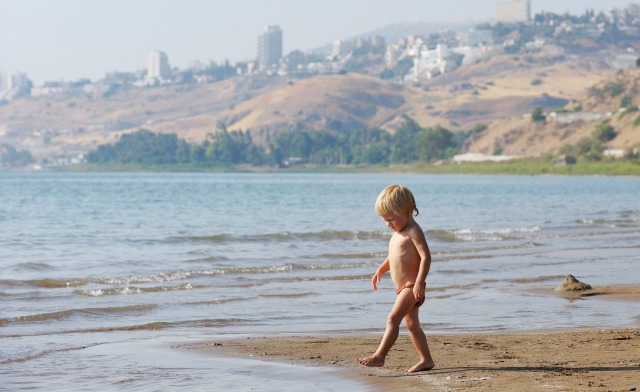
Located on Israel’s only fresh water lake, Tiberias has many good beaches to choose from. Image via Shutterstock.

Tiberias is located on the shores of Israel’s only freshwater lake, the Sea of Galilee (Lake Kinneret). There are 10 beaches to choose from, including three oriented to religious sunbathers that separate the sexes and enforce modesty codes. HaTchelet Beach (“The Light-Blue Beach”) is one of the most pristine; Holiday Inn Beach is a good place for water sports and kids playgrounds; and Beriniki Beach offers facilities for camping.

3. Amdur Fine Gallery

Located in the center of town on one of the last ancient cobblestone streets (HaKishon, between HaGalil and HaBanim streets), the Amdur Fine Gallery is the place to go for modern art. Here you’ll find original works of known and emerging Israeli contemporary artists. The gallery hosts events such as wine-and-cheese evenings and concerts. On exhibit are paintings, sculpture, jewelry and furniture design.

4. Tiberium Water Show

Think Bellagio on the Kinneret. Disk In Pro, Israel’s world-renowned multimedia design company known for its installations in visitor centers, museums, exhibitions and theme parks, created a breathtaking water-music-light show for Tiberias. The show takes place at the south end of the Yigal Alon Promenade, and is free to the public three times each evening from 7-9 pm. (Note: Tiberium depends on the water level of the Kinneret. If the level is too high, the light show will not take place.)

5. Churches

No Christian pilgrimage to Israel is complete without a visit to the Galilee. While most of the important churches are in communities surrounding the lake, many churches were also built in Tiberias. Check out St. Peter’s Church, constructed on the ruins of a Crusader church; the modest basalt Church of Scotland; and the Greek Orthodox Church and Monastery of the Twelve Apostles, which includes three houses of prayer and a wall of religious icons.

6. Old Cemetery

Cemeteries aren’t usually at the top of a tourist’s itinerary, but the Old Cemetery in Tiberias is an exception. The ancient sacred burial ground, which is still in use, is said to be the site where the Sanhedrin (Supreme Court of Jewish law) will reemerge first before relocating to the Temple in Jerusalem. The cemetery dates back to Herod Antipas, son of Herod the Great, who built the city in 17 BCE.

read more: 12 cool things to do in Tiberias


twoje uwagi, linki, wlasne artykuly, lub wiadomosci przeslij do: webmaster@reunion68.com


Christians who celebrate Rosh Hashanah and Yom Kippur

Christians who celebrate Rosh Hashanah and Yom Kippur a growing trend

BEN SALES


Some congregations maintain some of Jesus’s Jewish traditions by following the holiday schedule set out in the Old Testament

A Living Church of God congregation in San Diego celebrates the Feast of Tabernacles — the church’s name for Sukkot — in 2016. (Courtesy of the Living Church of God/via JTA)

NEW YORK (JTA) — On the night of Rosh Hashanah, thousands of people will leave work, gather in congregations across the globe and worship God, the ruler of the world. Ten days later they will begin a fast and gather again to pray, this time atoning for their sins.

On both occasions they will praise Jesus Christ and pray for his return.

They are not Jews, nor are they Jews for Jesus. Rather, these congregants are members of an evangelical Christian movement called the Living Church of God. On the days Jews know as Rosh Hashanah and Yom Kippur, these Christians celebrate what they call the Feast of Trumpets and Day of Atonement.

“We’re not trying to be Jewish,” said Dexter Wakefield, a Living Church minister and the church’s spokesman. “We’re obeying God’s commandments. The holy days have great meaning for the Christians who keep them.”

Living Church of God is one of a few evangelical groups that observes Christianity as it believes Jesus observed it, according to the dictates of the Hebrew Bible. That means no Christmas and no Easter — holidays the church rejects as pagan in origin. It also means that members observe their Sabbath like the Jews: from Friday night to Saturday night. The mainstream Christian custom of observing the Sabbath on Sunday, they believe, is another deviation from the authentic Christianity of Christ.

Christian supporters of Israel march during a parade for the Feast of Tabernacles in Jerusalem in 2006. Thousands of Evangelical Christians participate in an annual pilgrimage to support Israel (photo credit: Olivier Fitoussi/Flash90)

Though the Living Church of God, which has about 10,000 members, advocates observing the Sabbath on Saturday as well as Jewish holidays, they are not Messianic Jews, who self-identify as Jewish and use Hebrew scripture and liturgy. Nor are they Seventh-day Adventists, who observe a Saturday Sabbath but no other Jewish holidays.

The church has nearly 400 congregations on six continents, and most of its membership is in North America, with headquarters in Charlotte, North Carolina. It is governed by a Council of Elders and is an ideological outgrowth of the philosophy of Herbert Armstrong, whose preaching of Old Testament observance inspired several churches that see themselves outside of the evangelical mainstream.

A seder plate at the Cross Life  Church in Alvarado, Arkansas. (Courtesy)

For the Living Church of God, Rosh Hashanah and Yom Kippur — the former begins this year on the evening of September 20 and the latter at sunset September 29 — are two of seven festivals celebrated across the year. Those festivals correspond to the five Jewish holidays commanded in the Torah – Rosh Hashanah, Yom Kippur, Sukkot, Passover and Shavuot. The church gets to seven by treating Shemini Atzeret, the holiday at the end of Sukkot, as a separate festival, and by splitting Passover in two – the first day and everything that comes afterward.

“These days were clearly commanded in the Old Testament, and their observance by Christ and the Apostles in the New Testament certainly ratifies them for the Christian Church,” the church’s founder, Roderick Meredith, wrote in a pamphlet. “True Christians are to keep holy the days God made holy. And we are to follow the example of Jesus and the original Apostles in so doing.”

These holidays correspond to the annual agricultural cycle, and have also taken on Jewish historical significance. But for the church, they reflect steps in the second coming of Jesus and the world’s ultimate redemption.

Rather than marking the New Year, Rosh Hashanah — a one-day holiday called the Feast of Trumpets, a reasonably literal translation of its name in the Torah, Yom T’ruah — marks the day when Jesus will appear again hailed by trumpets. Yom Kippur, translated as the Day of Atonement, marks the day when Satan will finally be defeated.

The church celebrates each day with a service — short by Jewish High Holiday standards — that includes a short and long sermon on the theme of the day, bookended by hymns. Like observant Jews, on the Day of Atonement congregants will take the day off and abstain from eating and drinking. But on the High Holidays they dispense with Jewish rituals like dipping apples in honey, wearing white robes known as kittels or blowing a shofar.

Congregants celebrate the Passover seder at the Cross Life Church in Alvarado, Arkansas. (Courtesy)

read more: Christians who celebrate…


twoje uwagi, linki, wlasne artykuly, lub wiadomosci przeslij do: webmaster@reunion68.com



Simulating war with Hezbollah, IDF looks to avoid past mistakes

Simulating war with Hezbollah, IDF looks to avoid past mistakes

JUDAH ARI GROSS


After war games with mock terrorist ‘killing sprees’ in Israeli communities and a counterattack in southern Lebanon, army bringing to a close its largest drill in 19 years

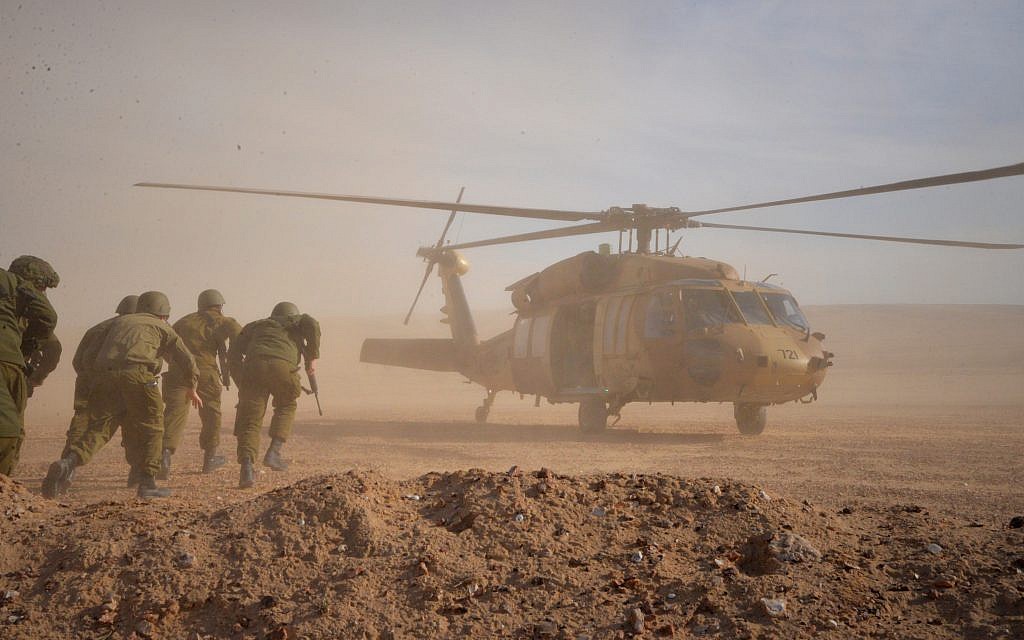
After a week of beating back simulated Hezbollah raids on border communities and responding to fake rocket fire over much of Israel, the IDF went on a mock offensive in southern Lebanon, as the military’s largest exercise in nearly two decades came to a culmination on Monday, a senior IDF officer said.

Last week, the army launched its largest drill since 1998, with tens of thousands of troops drilling for a war with the Hezbollah terrorist group, which the army considers to be its main threat.

The war game was run by the head of the IDF’s Northern Corps, Maj. Gen. Tamir Hyman. It included both physical actions and maneuvers by foot soldiers, land vehicles, naval vessels, helicopters and planes (including jets that reportedly broke the sound barrier over southern Lebanon), as well as computer models.

The exercised was named “Or HaDagan” after Meir Dagan, a former Mossad chief and IDF general who died last year.

In the simulation, war was sparked by a Hezbollah incursion into Israel, followed by rocket fire. “The exercise began on the defensive, with a Hezbollah initiated attack, in which it crossed the Blue Line and infiltrated [Israeli communities],” the officer said late Monday night, speaking on condition of anonymity.

“There were raids on communities near the border, killing sprees in some places,” he said.

The military focused on defending the towns along the border, practicing the evacuation first of the ones lying within four kilometers of the border with Lebanon, and working outwards to nine kilometers from the frontier.

According to the officer, this included everything up to, but not including, moving residents out of their homes, as the army did not want to disrupt the routines of local residents during this specific drill.

After the initial focus on defense, this week the army went on the attack, pretending to conduct ground maneuvers in southern Lebanon, using the similar terrain of northern Israel.

The drill will technically continue through Thursday, but is “scaling down considerably” starting Tuesday, the officer said.

Israel last fought a full-scare war with Hezbollah in 2006’s Second Lebanon War, and tensions have remained high even as the northern border has remained relatively quiet since.

This exercise was touted as a chance to practice failures or military shortcomings exposed during the war.

Led by Hassan Nasrallah, Hezbollah is believed to have an arsenal of between 100,000 and 150,000 short-, medium- and long-range missiles and a fighting force of some 50,000 soldiers, including reservists.

It is seen by the IDF as its main threat, representing the standard by which the Israeli army measures its preparedness.

While military officers often discuss a future conflict with the terrorist group as a matter of “when, not if,” the assessment of the IDF is that Hezbollah is not currently interested in renewed warfare with Israel at present, due to its active involvement in the Syrian civil war, which have caused it significant strategic problems.

Focus on cooperation

In Brig. Gen. (res.) Gal Hirsch’s book on the Second Lebanon War — “A Story of War, a Story of Love,” in Hebrew; “Defensive Shield,” in English — the former commander of a Northern Command division, who played a key role in the conflict, lays out many of the military’s failings: communication issues, intelligence not reaching commanders in the field and an over-reliance on air power.

While the past 11 years of quiet on the northern border are seen as a direct result of the conflict, within the military the war marks a point of negative comparison. “We’re much better since the Second Lebanon War” is a common remark from IDF officers.

The main focus of this month’s drill was therefore cooperation, the officer said, both within the Ground Forces and between the Ground Forces, Air Force and Navy.


read mores: Simulating war with Hezbollah …


twoje uwagi, linki, wlasne artykuly, lub wiadomosci przeslij do: webmaster@reunion68.com


2 Hamas fighters die in separate Gaza tunnel collapses

2 Hamas fighters die in separate Gaza tunnel collapses

FP and TOI STAFF


Terror group confirms deaths of two members of its armed wing overnight; security source says incidents took place in Gaza City, Khan Younis

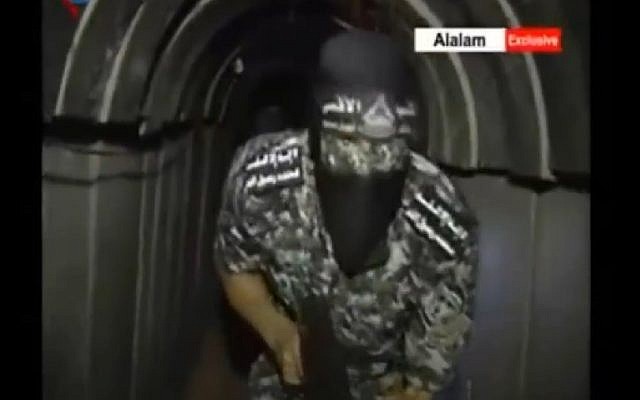
Screenshot from an Iranian TV report purporting to show a new Hamas tunnel that reaches into Israeli territory, June 28, 2015. (Screenshot/Al-Alam)

Two Hamas fighters died in separate tunnel collapses in the Gaza Strip overnight, the Palestinian terror organization, which controls the territory, said on Friday.
Khalil al-Dimyati, 32, and Yusef Abu Abed, 22, were killed after two “resistance tunnels” collapsed, Hamas said, referring to tunnels used for military purposes.

It did not give details of the locations or causes of the collapses, but confirmed the two men were members of Hamas’s armed wing.
A security source said one collapse was in Gaza City, while the other was near the city of Khan Yunis.

Hamas has run Gaza for a decade and fought three wars with Israel.

Hamas has built a network of tunnels inside Gaza, as well as some under the Israeli border.

During the last round of conflict in 2014, the terror group carried out several deadly attacks on Israeli soldiers using its cross-border network.

Other tunnels are used for smuggling from Egypt, although many have been destroyed by the Egyptian authorities in recent years.

Several dozen Hamas members have died in tunnel collapses in the past year.


twoje uwagi, linki, wlasne artykuly, lub wiadomosci przeslij do: webmaster@reunion68.com