Archives

The True Palestinian ‘Nakba’

The True Palestinian ‘Nakba’

Philip Carl Salzman


A truck that was attacked by Arab irregulars on the main road to Jerusalem, 1948. Photo: Wikimedia Commons.

Seventy years ago today, the United Nations Special Committee on Palestine (UNSCOP) introduced a detailed proposal to the UN General Assembly for the partition of Palestine into a Jewish and an Arab state, approved less than three months later by a vote of 33 to 13. Not for the last time, however, a concerted international effort to resolve the Israeli-Palestinian conflict foundered on the shoals of Arab rejectionism.

Arab Muslims roundly condemned UN partition — and more broadly the very principle of a Jewish state anywhere in Palestine — striving instead for complete victory. Following the tribally-based principle of those closer uniting against those more distant, the opposition to the Jews was both organizational and religious. Jews were not kinsmen and, worse, were infidels.

The Arabs acted according to their tradition, refusing compromise with inferiors. For over a millennium, Islamic empires had spread by the sword from Arabia across the Middle East and North Africa to much of Europe and as far east as India. God bestowed upon Muslims a right — no, a duty — to dominate Dar al-Islam (the house of Islam) forevermore. Not only did Jews, long a subservient and despised minority in Dar al-Islam, lack the right to have an independent state in Palestine, but the Arab residents of Palestine had no right to concede it to them.

The Arabs in Palestine thought that the Jews could not and would not stand up to them, and they acted on that well-established cultural principle. However, the thousand-year-old conditions did not obtain this time around. The Jews they faced were not a dhimma, and they did not cower. Against the odds, and with little outside help, they fought and won. Again and again.

While maintaining their uncompromising rejection of any Jewish state in the Holy Land, the Arabs eventually abandoned their triumphalist rhetoric in favor of a more useful narrative. In this retelling, Israel is responsible for seven decades of mayhem, not the victim of unremitting hostility. That role would now be played by the Arab residents of Palestine, now called “Palestinians” — indeed, they would be forced to play it by the refusal of Arab states to naturalize, or even provide humane accommodations, to the so-called “refugees.”

Arab states marshalled their collective influence to sell this narrative to the rest of the world, with much success. Most Europeans and their governments, including the European Union, and many Americans risk apoplexy in their violent denunciations of Israel, while tripping over themselves offering sympathy and money to the Palestinians. The United Nations has established a complex bureaucracy devoted solely to their needs.

This narrative has received a particularly warm reception in the academic world, where Western imperialism, rationalized by disparaging “Orientalist” stereotypes of Middle Easterners, is seen as the single greatest cause of the region’s ills.

Of course, blaming all Palestinian problems on Israel makes even less sense than attributing the Arab-Islamic world’s economic, political, and cultural decline in recent centuries to relatively brief and limited Western interventions.

Though the narrative has grown more and more fantastical over the years, its acceptance remains disturbingly widespread. Palestinian Authority President Mahmoud Abbas’ condemnation of Israel for “destroying the environment” at a signing ceremony for the Paris climate accord last year encountered no howls of diplomatic protest. Dubravka Simonovic, the UN special rapporteur on violence against women, could claim weeks later that Palestinian men beat their women because of “the clear linkage between the prolonged occupation and violence against women” without being promptly terminated.

In the end, of course, the Palestinian victimization narrative hurts Palestinians by obscuring the actual sources of their misery — their failed supremacist ideology, despotic and corrupt leaders, and irrational hate of Jews — preventing the emergence of genuine solutions to a tragic, festering problem.


Philip Carl Salzman is a professor of anthropology at McGill University and a fellow at the Middle East Forum.


twoje uwagi, linki, wlasne artykuly, lub wiadomosci przeslij do: webmaster@reunion68.com


Israeli institute trains Palestinian avocado growers

Israel21cIsraeli institute trains Palestinian avocado growers

Abigail Klein Leichman


Galilee International Management Institute enables Palestinian farmers to join Israeli growers in meeting high avocado demand in Europe

Avocado grove image via Shutterstock.com

 This July was a month full of depressing news regarding diplomacy among Israel, the Palestinian Authority and Jordan.

And yet, far from the headlines, cooperation across these populations was thriving at the Galilee International Management Institute (GIMI) in Nahalal, a city in northern Israel.

During July alone, GIMI gave a training course to Jordanian, Palestinian and Israeli olive-oil producers, taught farmers from Palestinian Authority territories to grow avocados for export, and began planning a tele-course for Gazan computer engineers meant to lead to remote employment at Israeli companies.

“This is nothing new for us,” says GIMI President Joseph “Yossie” Shevel. “We’ve been cooperating with the Palestinians for the last 30 years.”

Established in 1987, GIMI develops and presents advanced capacity-building courses for professional personnel from all over the world – from more than 170 countries so far — taught in a wide variety of languages. But local and regional needs are never far from GIMI’s radar.

The avocado-growing course came out of GIMI’s awareness that the healthful avocado is in great demand in Europe and that Israelis could help Palestinian farmers join them in offering a quality product for this “green gold” market.

“We thought we should encourage Palestinians to grow avocados based on the excellent Israeli experience. We know there is a problem of exporting agricultural goods from the West Bank to Europe and we hope to help find a way,” Shevel tells ISRAEL21c.

The GIMI course for Palestinian avocado growers was partially funded by the Israeli Foreign Ministry.

Israel avocado exports to Europe have grown to roughly 100,000 tons in recent years, comprising about a third of the winter avocado market in EU countries.

GIMI organized a training course designed for Palestinian agricultural extension officers who will then share their newfound knowledge with farmers. Funding was provided by the Israeli Ministry of Foreign Affairs and the European Union through the agency of Economic Cooperation Foundation, a Tel Aviv-based nonprofit think tank founded in 1990 to build, maintain and support Israeli-Palestinian and Israeli-Arab cooperation.

“We have many alumni in the West Bank so once we announced the program they helped us spread the word, and 28 people registered,” says Shevel. About 40 percent of the registrants were female, and some already grow avocados for export to Arab countries.

The two-week course began with online classes taught mainly by Arab-Israeli GIMI faculty members and ended with two days of in-person classes and field trips to Israeli avocado farms in the north at the end of July.

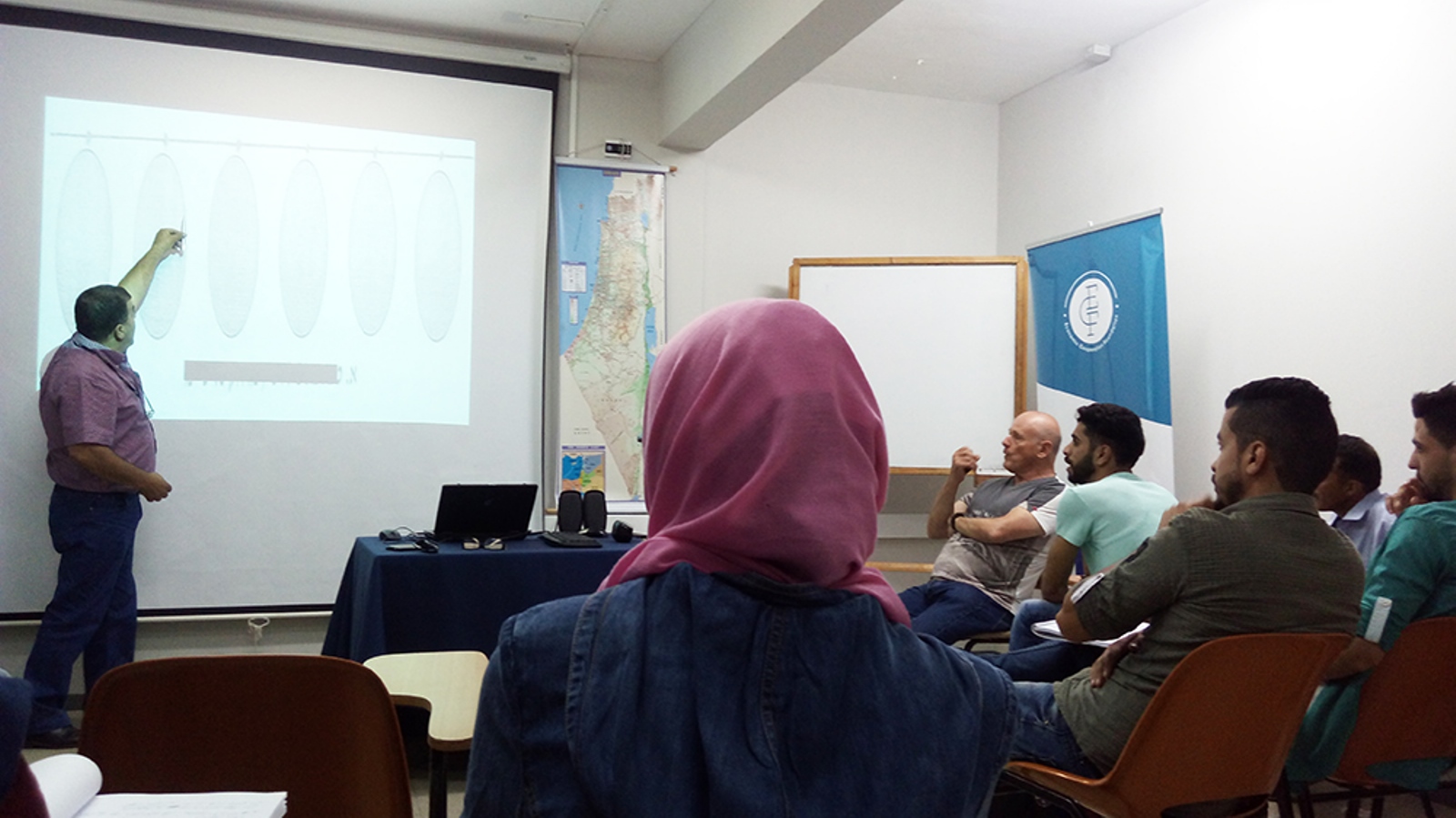
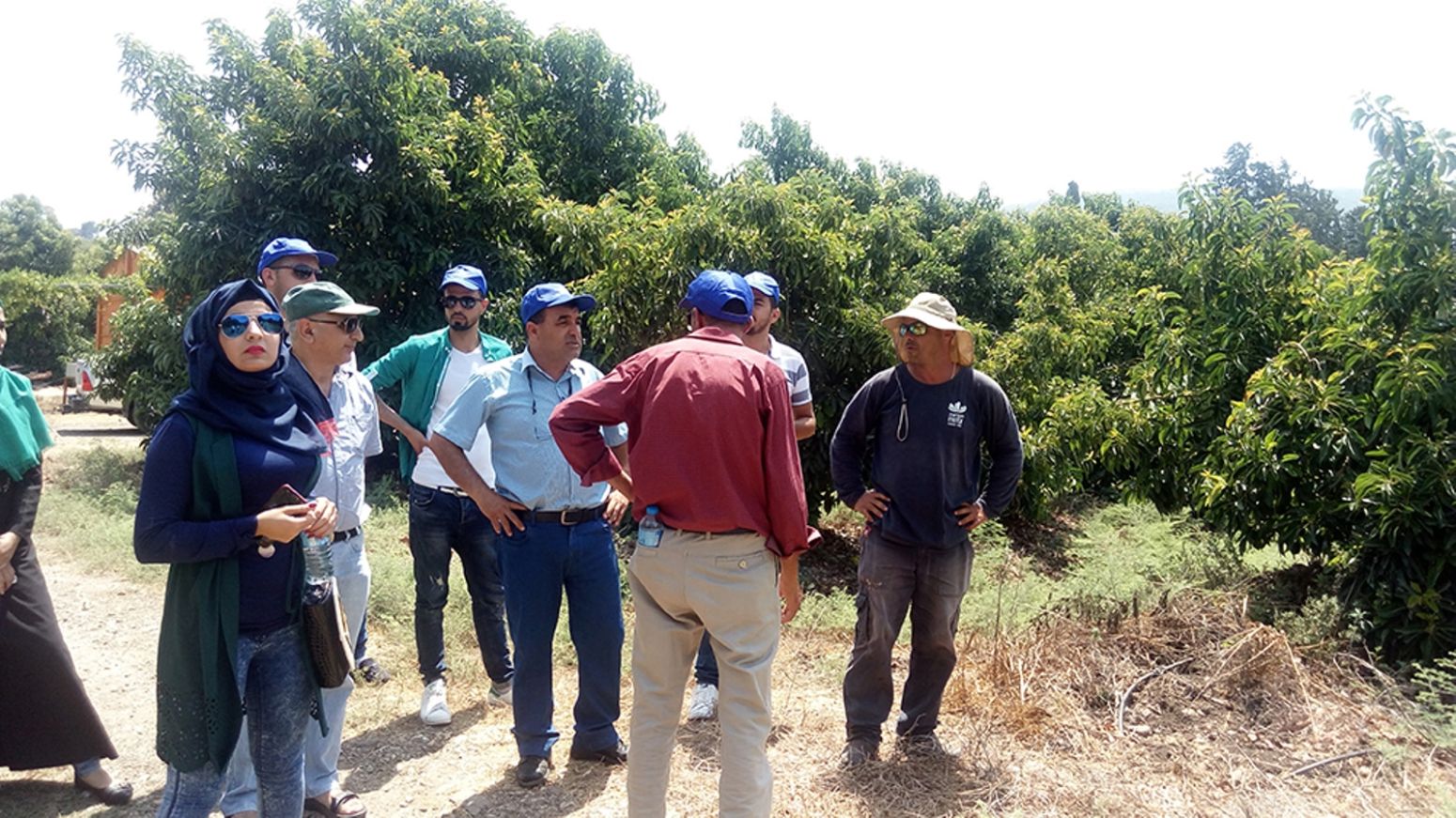
Students in the GIMI course for Palestinian avocado growers touring the fields.

Unfortunately, politics got in the way of 20 of the participants making their way to Israel for the final two days because the Palestinian Authority had halted cooperation with the Israeli government over the issue of security on the Temple Mount.

“They had permits and everything was ready,” says Shevel. “We hope to find funding for them to come and complete the course later on. Usually we manage to overcome politics.”

The eight agronomists and agricultural engineers who did manage to make it came from Hebron, Kalkilya, Tibas and Jenin, and “were received very nicely by the Israeli farmers,” Shevel says.

The course did not end with the formal sessions, he adds. “Now we’ll follow up and help them to plant avocados and work with them, especially when the crops are ready, to export to Europe.”

Breakthrough program

Shevel also is looking forward to what he calls a “breakthrough” program intended to ease the unemployment situation in the Gaza strip, which is contiguous with Israel but ruled by Hamas and therefore few people can cross the border in either direction.

Scheduled to begin in October after the Jewish high holidays, this course will train Gazan computer engineers online to qualify for jobs in Israel via remote connection.

“With globalization you can hire an engineer anywhere, so why not in Gaza, to improve their lives?” Shevel says. “At the end of the program we’ll look for Israeli high-tech companies to employ them. Already one large company made a commitment to do so, and we have two sources ready to fund the program.”

How is GIMI publicizing the course in Gaza? “We have a graduate in Gaza who studied here about 10 years ago and is in close contact with us and wants to coordinate this program for us,” says Shevel.

Perhaps surprisingly, he reveals that his efforts to reach out also have been helped by a close personal friend who is the former president of Al Aqsa University in Gaza.


twoje uwagi, linki, wlasne artykuly, lub wiadomosci przeslij do: webmaster@reunion68.com



Teaching the world how to make the desert bloom

Israel21cTeaching the world how to make the desert bloom

Lin Arison & Diana C. Stoll/The Desert and the Cities Sing


People come to the Ramat Negev Agro-Research Center from all over the world to study how Israel grows things in the desert and how to fight desertification.

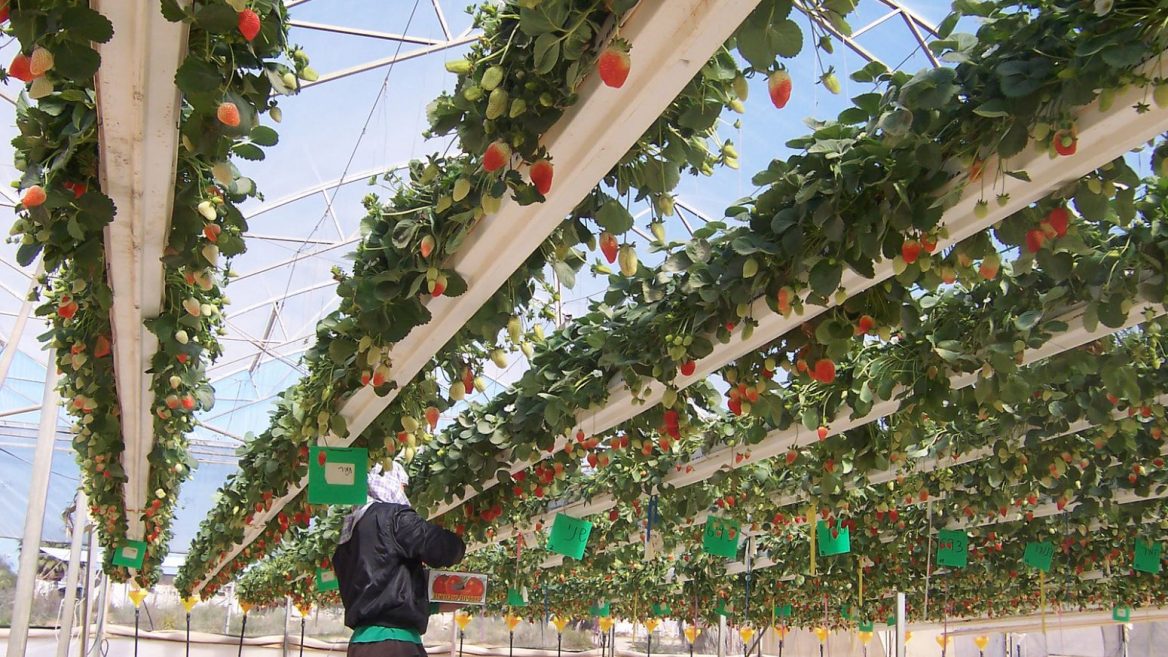
Growing strawberries at the Ramat Negev Agro-Research Center. Photo courtesy

At the Ramat Negev Agro-Research Center, acacia trees bloom, casting long shadows by the greenhouses, and fat pumpkins ripen on the ground. Everywhere you look, jewel-like cherry tomatoes dangle above the sand, on vines strung to wires, carefully irrigated and nourished.
While tiny tomatoes have been around for centuries, certain varieties of cherry tomatoes – including the popular tomaccio – were developed in Israel back in the 1970s. Here they grow in abundance, as do sweet peppers of all colors – yellow, green, red, chocolaty-brown, and purple.

The Ramat Negev Regional Council oversees this center, and agricultural experiments are conducted by onsite researchers as well as by scientists from Ben-Gurion University, the agriculture faculty of the Hebrew University, the Volcani Center, and elsewhere, in consultation with the Israeli Extension Service. It is a hotbed of innovation and discovery.

“People come here from all over the world to study how we grow things in the desert and how to fight against the desert’s continuing conquest of their land,” Gadi Grinblat explains.

It was here that scientists determined the importance, when irrigating with brackish water, of directing the water underneath the plant, so that it goes directly to the roots and doesn’t touch the upper parts. Otherwise, the salt in the water will harm the plants’ sensitive green leaves.

Like most Israeli agricultural endeavors, the Agro-Research Center makes use of the drip-irrigation system, which was developed by the country’s Netafim company – the headquarters of which are also located in the Negev, at Kibbutz Hatzerim.

Like the Blaustein Institutes for Desert Research, the Ramat Negev Agro-Research Center is happy to spread the word about its findings with the rest of the world.

Israel’s MASHAV (Agency for International Development Cooperation) helps to make that happen through its agricultural/outreach arm, CINADCO (Center for International Agricultural Development Cooperation), and with the scientific research capabilities of the Volcani Center.

Israeli agro-scientists are regularly sent out to demonstrate their findings, in Africa, Asia, Latin America, Central Europe, and the Middle East – and farmers and scientists from abroad are brought into Israel to study and share their knowledge as well.

Not surprisingly, the focus is on Israel’s areas of expertise: growing food in semi-arid and arid zones, combating “desertification,” irrigation and water management, dairy farming, and strategies for the small farmer. The goals are vast and vital: to ensure food security and economic self-sufficiency.

For more information: Ramat Negev Agro-Research Center


Lin Arison & Diana C. Stoll are the creators of The Desert and the Cities Sing: Discovering Today’s Israel, a treasure box that highlights Israel’s creative achievement and innovation.


twoje uwagi, linki, wlasne artykuly, lub wiadomosci przeslij do: webmaster@reunion68.com


The Muslim country who saved its Jews in WW2

THERE’S HOPE: The little known story of the Muslim country who saved its Jews in WW2

Cloyes DioGuardi


In 1990, the late Congressman Tom Lantos, a Holocaust survivor, and former Congressman Joe DioGuardi, were the first U.S.officials to enter Albania in fifty years. Albania’s last dictator, Ramiz Alia, handed them a thick file from the Communist archives of newspaper clippings about the Albanian rescue of Jews and undelivered letters and photos from Jewish survivors to their Albanian rescuers. This unprecedented story was hidden by brutal Communist rule for 45 years.

When DioGuardi sent these documents through an Israeli friend to Yad Vashem, the Holocaust Martyrs’ and Heroes’ Remembrance Authority in Israel, they were authenticated.

After recognizing 69 Albanians as Righteous among the Nations, the US Holocaust Memorial Museum in Washington, DC, publicly recognized the Albanian rescue in 1995. Yad Vashem did so in 2007, and in 2012, the Albanian rescue was memorialized by two Resolutions introduced by Senator Charles Schumer in the U.S. Senate and by Congressmen Dana Rohrabacher and Jerrold Nadler in the U.S. House of Representatives. The resolutions are part of the effort to bring the Albanian rescue of European Jewry to national and international attention.

The Albanian rescue is unique because of its scale, including not just Jews within their borders but every Jew who sought refuge there during the Holocaust. Though the Nazis had invaded and occupied Albania and expected it to cooperate with Hitler’s “Final Solution,” everyone, from officials to farmers, organized to save Jews. There were approximately 200 Jews in Albania before the war. From the late 1930s, until Allied forces defeated the Nazis, thousands of Jews were smuggled into Albania by Albanians outside the state, primarily by Kosova’s Albanian majority. Once inside, Jews were treated by Albanians as guests that had to be defended, fed, hidden in private homes (often for years), and transported to safety whenever danger threatened.

Why did Albania, a country consisting primarily of Muslims and Christians, rescue Jews? The answer lies in Albanian history. The oldest inhabitants of Southeast Europe, Albanians have survived centuries of invasion, occupation, expulsion, and even genocide. No sooner did they emerge from 435 years of Ottoman Turkish occupation, than they were divided by the “Great Powers” (Austria-Hungary, Britain, France, Germany, Italy, and Russia). Serbia annexed half of Albanian lands, including Kosova, and other parts were given to Montenegro and Greece. Only because of the intervention of U.S. President Woodrow Wilson was the State of Albania created after World War I.

When World War II broke out, and Mussolini’s Italian fascists and then the Nazis invaded, Albanians treated Jews as guests, because religious and ethnic tolerance is part of Albanian history. It is based on the Kanun, a set of customary laws that has regulated Albanian conduct, since their Illyrian ancestors arrived in the Balkan Peninsula thousands of years ago. With its underlying moral code of besa, emphasizing tolerance and compassion, the Kanun was passed down orally and enabled Albanians to survive centuries of persecution. Besa links personal honor to respect for and equality with others. It also involves protection of a guest even to the point of forfeiting one’s own life. The modern Western concept of “foreigner” does not exist in the Kanun, only the concept of the guest. When the Nazis were bent on genocide, it was natural for Albanians to save Jews.

Many of those who did risk their lives have left behind stories that dramatically illustrate the Albanian rescue. There is Ali Alia, a general store owner, who was visited by Nazi soldiers transporting Albanian prisoners to hard labor and one Jew to his death. After plying the soldiers with wine and convincing them that he should give food to the prisoners, Alia handed the Jew a melon in which he concealed a message telling him to flee to the woods and wait at a designated location. When the Nazis finally discovered that the Jew was missing, they pinned Alia against a wall. Four times, the Nazis put a gun to his head and threatened him with death. But he continued to deny what he had done, and when they finally left, he retrieved the Jew in the woods and hid him for two years.

Besa, the driving force behind the Albanian opposition to genocide, today remains the underlying reality in the sovereign states of Albania and Kosova and among Albanians in Macedonia, Montenegro, southern Serbia, and northern Greece. Albanians, whether secular Muslims, Roman Catholics, Orthodox Christians, or Jews, have lived side by side in harmony for centuries, and often intermarry.

The task of preventing genocide in our time benefits from examining why Albanians responded as they did to the Holocaust. While we have made great strides in technological advancement in the 21st century, we are woefully behind in moral advancement. As Gavra Mandil, a Yugoslavian Jew who with his family was saved by Albanians, has said, Albanians “may have not been educated in the heritage of Goethe and Schiller, but they attached the greatest importance to human life.”


twoje uwagi, linki, wlasne artykuly, lub wiadomosci przeslij do: webmaster@reunion68.com


10 of the hottest autonomous driving technologies from Israel

Israel21c10 of the hottest autonomous driving technologies from Israel

Brian Blum


Israel’s high-tech expertise is a perfect fit for automakers building the systems that will put self-driving cars on the road safely and securely.

Autonomous driving image by Chombosan/Shutterstock.com

“Car manufacturing is not about tires
or brakes anymore, but the technology
inside the car – the sensors and algorithms.”

How did Israel, a country that has no domestic car manufacturing industry, become a worldwide powerhouse for autonomous-driving technology (also known as self-driving cars)?

“We get that question a lot,” says Yaniv Sulkes, VP of business development and marketing for Autotalks, a leading Israeli startup in the autonomous driving space. “We’ll meet with a manufacturer and they’ll say, ‘You’re the 30th company we’ve seen from Israel!’”

Sulkes tells ISRAEL21c that the car business is going through a massive paradigm shift. If before it was all about “the engine, the power train and the design, now we’re getting into artificial intelligence, cybersecurity and network connectivity. It’s become an interdisciplinary domain and this is an area where Israel has a lot of IP [intellectual property] and experience.”

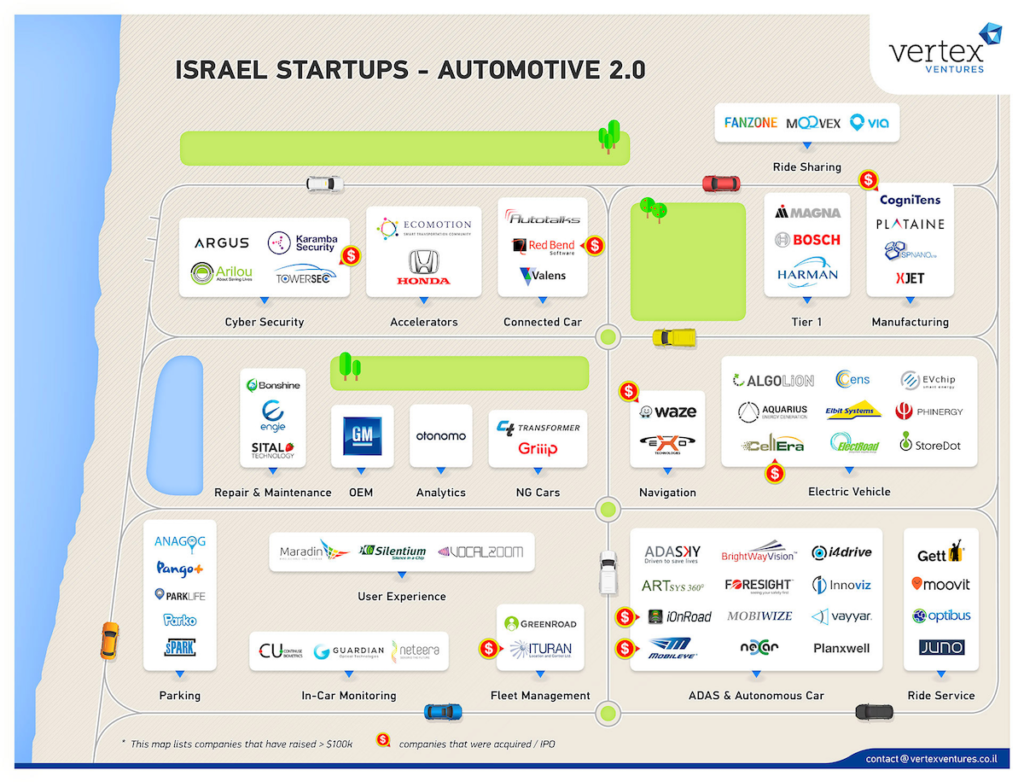
This chart shows some of the prominent Israeli companies in the autonomous-vehicle sector. Graphic courtesy of Vertex Ventures

Alon Atsmon, an Israeli business advisor and investor in the burgeoning car-tech industry, agrees with Sulkes. “Car manufacturing is not about tires or brakes anymore, but the technology inside the car – the sensors and algorithms. It’s a natural next direction for the expertise Israel has built over the years.”

Here are our picks for the 10 hottest Israeli companies offering autonomous driving technology.

1. Mobileye

The Jerusalem-based company that’s made its mark with an annoying beep whenever you get too close to another car or change lanes without signaling was bought earlier this year by Intel for $15 billion. The reason: to turn Intel into a player in the autonomous driving space.

Mobileye makes integrated cameras, chips and software for driver-assist systems – the building blocks for self-driving cars. Intel Chief Executive Brian Krzanich said the acquisition was akin to merging the “eyes of the autonomous car with the intelligent brain that actually drives the car.”

2. Innoviz

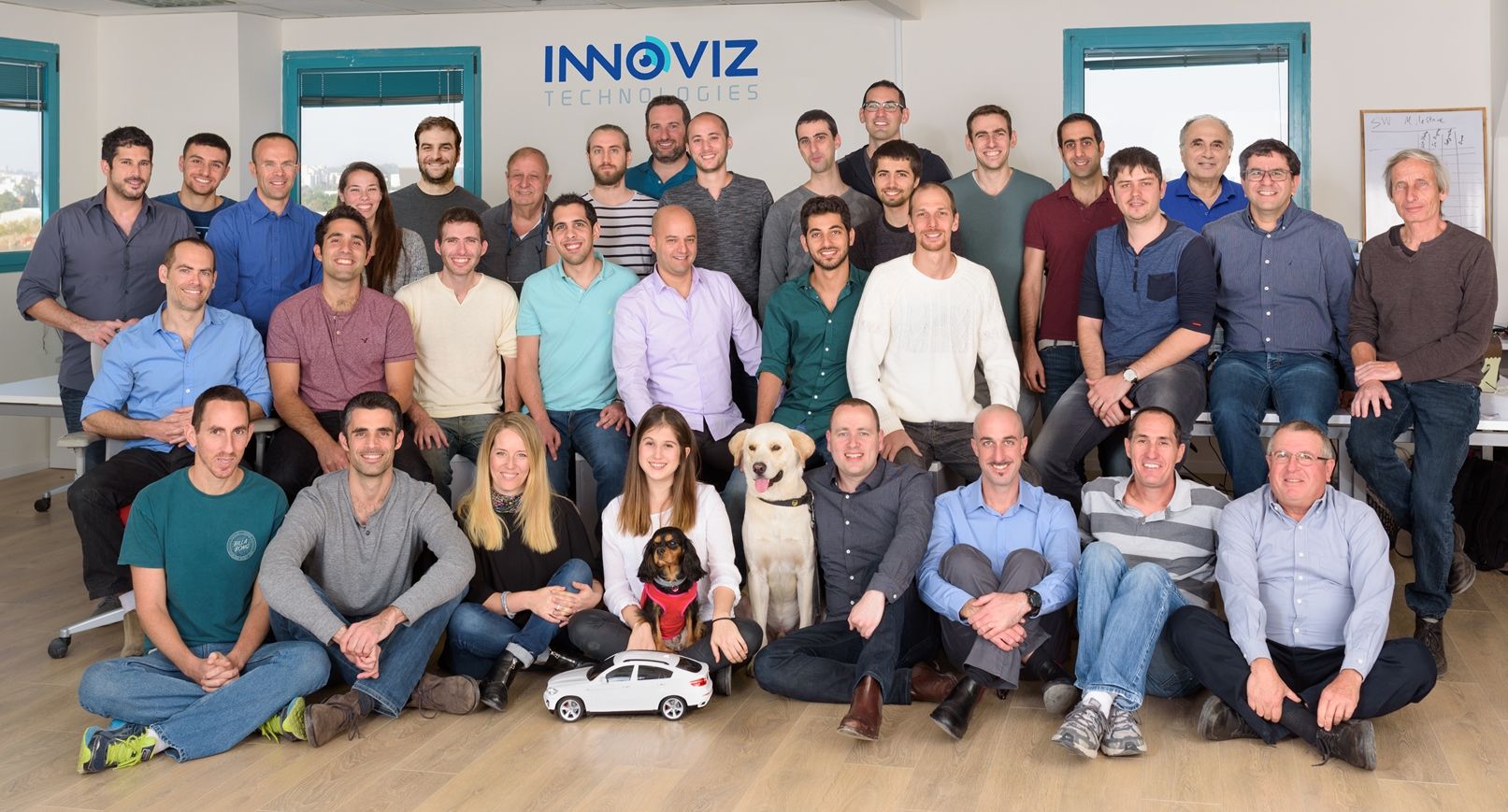
The Innoviz team. Photo: courtesy

czytaj dalej tu: 10 of the hottest autonomous driving technologies from Israel


twoje uwagi, linki, wlasne artykuly, lub wiadomosci przeslij do: webmaster@reunion68.com