Archive | April 2020

Lockdown lifted as Israel’s corona count hits 10,995

Lockdown lifted as Israel’s corona count hits 10,995

MAAYAN JAFFE-HOFFMAN, ANNA AHRONHEIM


92 people dead * Testing in senior facilities increases * PM slams Bennett for public attack
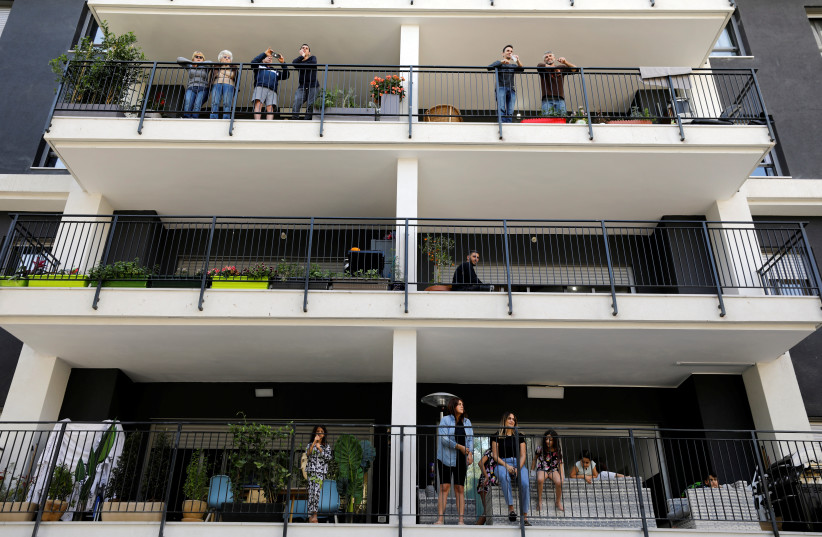
Residents stand on their balcony as they watch Israeli soldiers performing for them in a bid to assist civilians observing government stay-at-home orders to help fight the spread of the coronavirus disease (COVID-19) in Tel Aviv, Israel April 7, 2020. / (photo credit: AMIR COHEN/REUTERS)

The curfew and other restrictions imposed on Israelis to slow the spread of the coronavirus pandemic over the Passover holiday were lifted Friday at 6 a.m., notwithstanding that the number of Israelis infected with the novel virus has hit 10,095, of whom 164 are in serious condition, and 92 have died.

An extension through the end of the seven-day Festival of Freedom that was considered would have continued the ban on intercity travel except in urgent cases and when food, medicine or other essential services are not available nearby. Still, public transport – except cabs – and flights will not run until Sunday morning. And, as has become the new normal, citizens will only be able to walk 100 meters from their home.

Channel 12 reported that some airlines received permission from the Transportation and Interior ministries to land in the country, including from places with high coronavirus counts, such as New York City. Those travelers cleared customs at Ben-Gurion Airport without being tested for coronavirus and weren’t ordered into isolation, according to the news. The Health Ministry said it was unaware of the flights.

At the same time, the National Security Council said it has presented an exit strategy plan for after Passover. The phased plan includes increasing the percentage of workers allowed to return to the field, plus testing different models of working in shifts or on different days. Special education would resume and slowly thereafter preschools, and eventually the entire school system.

Soon, the NSC’s plan would allow for people to travel further from their homes. The plan, however, keeps malls and most recreational establishments closed.

The multi-stage plan also involves releasing cities by level of infection – least infected first – and people by age category – youngest and healthiest first.

This comes on the backdrop of discussions about extending the closure just on those cities with the highest rates of infection, such as Jerusalem and Bnei Brak, though that idea has faced stiff opposition in the cabinet. Overnight, a special ministerial committee on coronavirus made a decision to extend the Bnei Brak lockdown by five days, but to lighten some of the restrictions on the haredi (ultra-Orthodox) city.

On Thursday night, the Health Ministry released updated data on the numbers of coronavirus patients by municipality. The report showed a promising trend in most areas.
Health Ministry director-general Moshe Bar Siman Tov told Channel 12 that the trends are due to both the country’s coronavirus policies and the public’s adhering to the ministry’s guidelines.

However, not all cities are alike. In Jerusalem, the number of confirmed coronavirus patients between Tuesday and Thursday increased by 11.3% and reached 1,630, while in Bnei Brak it spiked by 15% within two days to 1,594.

There was also a sharp 25% increase of patients in Elad and a 24% increase in Tiberias. In Rishon Lezion, the number of patients rose by 18% within two days and reached 180. In Modi’in Illit, the number of confirmed patients increased by 15.2% to 174.

In Tel Aviv, which has the fourth highest number of patients, there are now 415 infected people, up 5.6% in the last two days.
Defense Minister Naftali Bennett slammed the Health Ministry’s proposal to continue the nation-wide lockdown past Friday morning, arguing on Thursday night that the shutdown of the country will lead to devastating economic damage.

“The sweeping closure of Israel, which was very correct at the beginning, cannot continue to be the main tool over time, due to its devastating impact on businesses and jobs in Israel,” he said. “The Health Ministry is rooted in an ideology that does not believe in the centrality of testing which is a tool for exiting this crisis.”

Bennett argued that Israelis must be able to return to work and that conducting more coronavirus tests while keeping high-risk people in quarantine, such as the elderly, but allowing others to work is more sensible.

When it comes to deaths, the great majority of Israelis who have fallen victim to COVID-19 are elderly, including many residents of the country’s senior living facilities, where former residents now constitute around 30% of all coronavirus deaths.
Three more former residents of Mishan geriatric center in Beersheba died, bringing the death toll from that facility to 11. In addition, two more people passed away from the senior center in Yavniel, bringing the death toll there to five.

The news comes amid an announcement by the Health Ministry on Tuesday that the country will be increasing screenings in nursing homes so that when one resident or staff member falls ill with coronavirus, all the residents and staff will be tested. This initiative launched already during the Passover holiday and, according to Magen David Adom and the Health Ministry, some 3,000 tests were carried out in nursing homes on Thursday. A similar number is expected to be performed each of the coming days.

Nonetheless, Bennett called once again Thursday night for his ministry and the IDF to be given immediate responsibility for testing in an effort to curb the virus. He warned that the country not only risks not being able to exit the crisis but a renewed outbreak of the pandemic.

“Without extensive, quick and accurate testing, we will have to continue the ‘hammer’ approach that requires a sweeping closure on all Israeli citizens, instead of a ‘tweezers’ policy that will allow the Israeli economy to open alongside local isolation of corona carriers or the closure of specific corona areas,” he said.

According to the defense minister, there are too few tests and those tested must wait five to six days before receiving a result.
“The lack of belief in the importance of the tests is as if a brigade commander does not want to receive intelligence on enemy territory for action,” he said. “This is the most urgent task of the Israeli government. We shouldn’t waste even one day.”

In response, a senior official close to the prime minister said that “in an emergency, a government minister is expected to behave responsibly and hold discussions in the professional forums of the government, and not in the media. The prime minister, who is conducting the fight against coronavirus responsibly and optimally with experts in Israel and around the world, allows all ministers to express their views fully in government debates.”
On the positive side, three recovering coronavirus patients aged 91, 96 and 97 were released from the Galilee Medical Center in Nahariya over the holiday, and returned to their senior facility in the city.

The country’s youngest coronavirus patient, a five-week-old baby boy who was hospitalized at Sheba Medical Center, Tel Hashomer on Wednesday, is in good condition and his life is not in danger, according to hospital. The boy is being treated in the hospital’s coronavirus unit by a pediatric intensive care team. It is assumed that the baby became infected by a close family member who is also being treated for the virus at Sheba.

For the most part, Israelis obeyed the emergency regulations imposed for the Passover holiday in an effort to curb the spread of the deadly disease.
Thousands of police officers, accompanied by some 1,400 unarmed IDF soldiers, enforced the nation-wide lockdown regulations as part of “Operation Spring Protection.” The police used helicopters, drones and “other technology” to enforce the regulations, and handed out more than 1,000 fines to people violating the curfew.

Beginning at 7 a.m. on Sunday, the wearing of a face mask in public spaces by anyone over the age of six and without a disability will be mandatory. Citizens will be required to wear masks while driving if they have another person in their car who is not a member of their immediate famil


Zawartość publikowanych artykułów i materiałów nie reprezentuje poglądów ani opinii Reunion’68,
ani też webmastera Blogu Reunion’68, chyba ze jest to wyraźnie zaznaczone.
Twoje uwagi, linki, własne artykuły lub wiadomości prześlij na adres:
webmaster@reunion68.com



The Passover Story for Seder

The Passover Story for Seder


Joshua Huff


Zawartość publikowanych artykułów i materiałów nie reprezentuje poglądów ani opinii Reunion’68,
ani też webmastera Blogu Reunion’68, chyba ze jest to wyraźnie zaznaczone.
Twoje uwagi, linki, własne artykuły lub wiadomości prześlij na adres:
webmaster@reunion68.com


VIDEO: The Last Passover in the Warsaw Ghetto

VIDEO: The Last Passover in the Warsaw Ghetto

Zev Stub


Yad Vashem has created an online exhibit of photos marking the holiday of passover before, during and after the Holocaust. Entitled “And You Shall Tell Your Children”, the web site is a valuable resource to explore and remember some of the ways Passover was observed throughout Europe prior to the Holocaust, during the Holocaust years, and in the displaced persons camps and children’s homes following the war.

Above, testimonies given by survivors of the last Pesach in the Warsaw Ghetto. Below, Jews at a Passover Seder at Dzielna 7 in the Warsaw Ghetto, Poland.


twoje uwagi, linki, wlasne artykuly, lub wiadomosci przeslij do: webmaster@reunion68.com


Izrael: Ortodoksi nadal nie przestrzegają zakazów. Władze odetną kolejne miasta?

Izrael: Ortodoksi nadal nie przestrzegają zakazów. Władze odetną kolejne miasta?

Marta Urzędowska


Policja przerywa protest ortodoksyjnych Żydów w dzielnicy Mea Shearim w Jerozolimie, 30 marca 2020 r. (Fot. Mahmoud Illean / AP Photo)

Najbardziej ortodoksyjni Żydzi w Izraelu zbierają się wciąż na wspólne modły i czytanie Tory, ignorując związane z epidemią obostrzenia.

Dwóch policjantów przebiera się za ultraortodoksyjnych Żydów. Wchodzą do synagogi, w której właśnie zaczynają się zbiorowe modły. Ich koledzy czekają na zewnątrz. Kiedy dostają potwierdzenie, że doszło do nielegalnego zgromadzenia, wkraczają i rozpędzają tłum. Na godzinę – wkrótce rozpędzeni ultraortodoksi wracają na miejsce. Wtedy policja wkracza ponownie, tym razem wlepia nieposłusznym grzywny. Operację izraelskiej policji przeprowadzoną w ostatnich dniach na północy kraju opisuje brytyjski „Guardian”.

Najczęstsi pacjenci szpitali

Opisana operacja to tylko jeden epizod z dłuższej walki, jaką izraelskie władze toczą ze społecznościami ultraortodoksyjnych Żydów, którzy nie chcą się stosować do restrykcji nałożonych w związku z epidemią koronawirusa. Choć w Izraelu potwierdzono już 8,6 tys. przypadków zakażeń, a ponad 50 osób zmarło, w mediach jeszcze kilka dni temu roiło się od informacji o organizowanych przez ortodoksów hucznych weselach i pogrzebach z setkami żałobników.

Władze boją się, że w efekcie w ultraortodoksyjnych społecznościach dojdzie do prawdziwej eksplozji nowych przypadków zakażenia SARS-Cov-2. Już dziś, choć ortodoksi stanowią tylko 12 proc. z 9 mln Izraelczyków, w dużych szpitalach stanowią od 40 do 60 proc. zakażonych pacjentów.

Wielu ultraortodoksów mieszka w biednych, zatłoczonych dzielnicach, a ich rodziny są – w porównaniu z resztą społeczeństwa – duże. W dodatku mają ograniczony dostęp do internetu i mediów społecznościowych, a wielu religijnych przywódców wprost odmawia podporządkowania się restrykcjom, twierdząc, że wspólna modlitwa nie tylko nie zaszkodzi w walce z epidemią, ale może pomóc.

Protest ortodoksyjnych Żydów w Mea Shearim w Jerozolimie z 30 marca 2020 r. zakończył się zamieszkami Fot. Mahmoud Illean / AP Photo

92-letni wpływowy rabin Chaim Kaniewski do niedawna przekonywał, że Żydzi powinni gromadzić się w synagogach, wspólnie się modlić i studiować Torę, która „chroni i ratuje”. Dopiero pod koniec marca odpuścił i wezwał do samodzielnej modlitwy.

Pozostali Izraelczycy są oburzeni zachowaniem ortodoksów znanych jako Haredim, czyli „bojący się Boga”, których prawo nie od dziś traktuje wyjątkowo. Są zwolnieni z obowiązkowej służby wojskowej, a jeśli zajmują się studiami religijnymi, dostają specjalne stypendia.

„Kiedy jakaś społeczność, która uważa swoich przywódców religijnych za nieomylnych, słyszy od nich, że Tora ją uchroni, a instytucje świeckiego prawa to nazizm i antysemityzm, nie czuje żadnej motywacji, by przestrzegać zakazów” – konkluduje „Haarec”, wzywając jednocześnie ultraortodoksyjnych Żydów do noszenia masek w miejscach publicznych.

Część winy po stronie rządu

Najbardziej skrajnym przypadkiem jest Bnei Brak, zamieszkane przez ultraortodoksów miasto niedaleko Tel Awiwu, które w ub. tygodniu zostało odcięte przez policję i wojsko od reszty kraju. Według ekspertów nawet 38 proc. z 200 tys. mieszkańców może być zakażonych.

Mieszkańcy są wypuszczani z Bnei Brak tylko wtedy, gdy muszą pojechać do lekarza albo prawnika. Izraelskie media cytują też anonimowych urzędników resortu zdrowia, którzy przyznają, że rozważane jest odcięcie także innych terenów zamieszkanych przez ortodoksów.

W zamieszkanych przez nich dzielnicach Jerozolimy policja musiała kilka razy interweniować, by rozgonić gromadzących się na modlitwę albo studiowanie Tory ortodoksów. Kilka razy doszło do zamieszek.

Jak opisuje „Guardian”, mnożą się też informacje o łamaniu zasad izolacji w społecznościach ultraortodoksyjnych Żydów w innych krajach, w tym – w Wielkiej Brytanii. Podobno także tam wśród ortodoksów liczba zakażonych jest większa niż reszty społeczeństwa.

– Niektórym rabinom bardzo trudno przychodzi zrozumienie powagi sytuacji. Oni naprawdę wierzą, że studiowanie Tory jest ważniejsze niż wszystko inne – tłumaczy cytowany w „Guardianie” Jehuda Meszi-Zahaw, który w Jerozolimie prowadzi ochotniczą grupę pomagającą lokalnie koordynować walkę z epidemią.

Dodaje, że rząd izraelski też nie jest bez winy – nie stara się docierać do ultraortodoksyjnych Żydów, z których wielu nie korzysta z internetu, telewizji czy radia, a informacje czerpie z rozklejanych w okolicy plakatów. – Rozwieszamy informacje na temat obowiązujących dzisiaj zasad, ale to nie nasz obowiązek, powinno się tym zająć ministerstwo zdrowia – tłumaczy.

Ostrzega, że Izraelczycy są coraz bardziej wrogo nastawieni wobec ortodoksów, w związku z nieprzestrzeganiem przez nich zasad społecznej izolacji. – Nawet w normalnych czasach dyskutuje się o tym problemie, lecz dzisiaj sekularyści mówią wprost: „Zakażacie nas!”. To okropne, na świecie i tak jest już mnóstwo antysemityzmu, a teraz tak postępują sekularyści? – oburza się. – Oczywiście, że część tego, co mówią, jest prawdą, ale nie można oskarżać całej społeczności.


Zawartość publikowanych artykułów i materiałów nie reprezentuje poglądów ani opinii Reunion’68,
ani też webmastera Blogu Reunion’68, chyba ze jest to wyraźnie zaznaczone.
Twoje uwagi, linki, własne artykuły lub wiadomości prześlij na adres:
webmaster@reunion68.com


Revising previous guidance, Orthodox groups say no shared Passover seders should take place

Revising previous guidance, Orthodox groups say no shared Passover seders should take place

JOSEFIN DOLSTEN


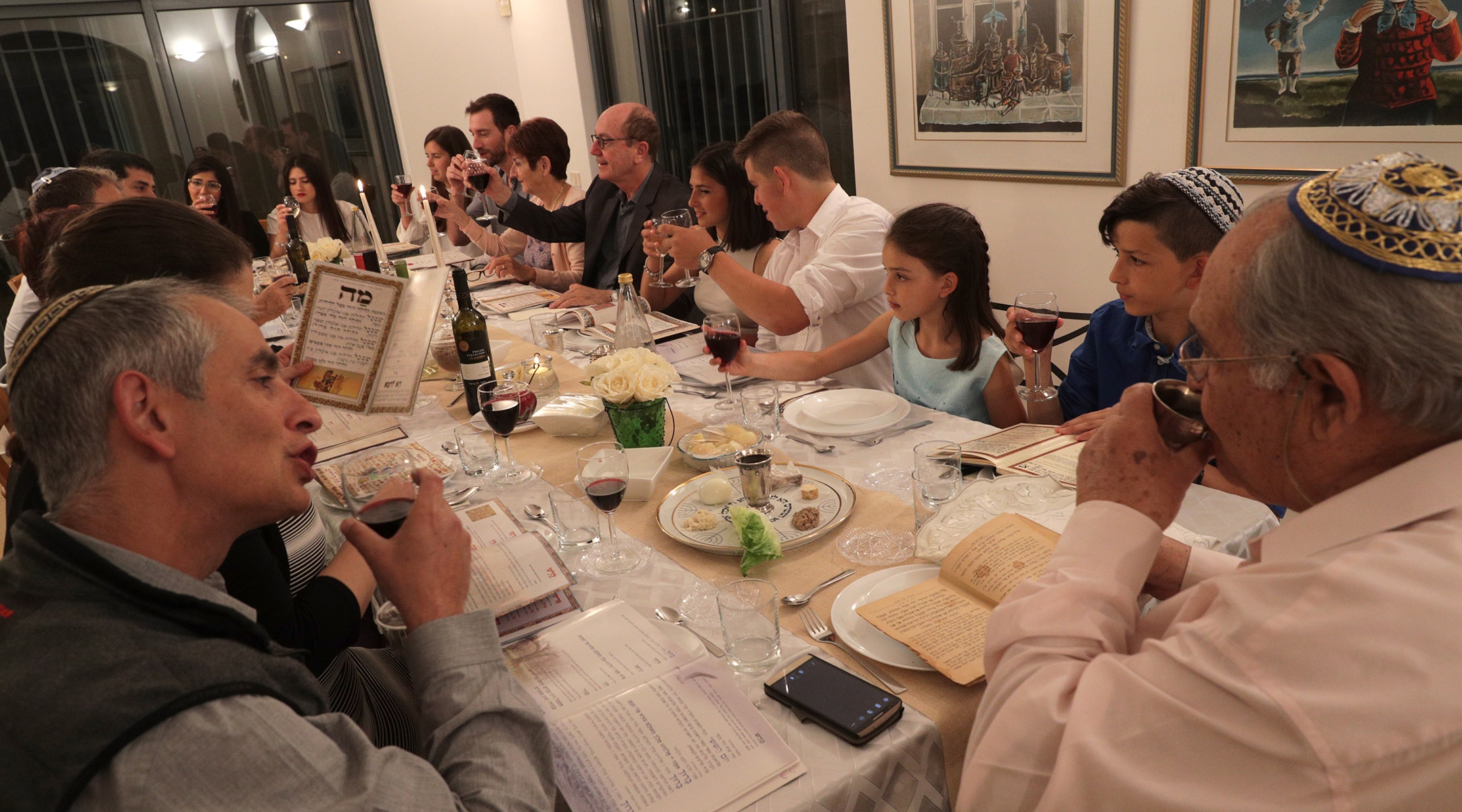
An Israeli family seen during the Passover seder on the first night of the eight-day holiday, April 10, 2017. (Nati Shohat/Flash 90)

NEW YORK (JTA) — Leading Orthodox Jewish groups have come out firmly against shared Passover meals, two days before the holiday begins and two weeks after the groups left open the possibility of communal seders under narrow circumstances.

“Everyone must plan to celebrate Pesach where they are currently,” reads the guidance issued Monday by a number of groups including the Orthodox Union. “Travel to other cities, or visits with family even within your city, should be cancelled. This applies to the entirety of Pesach.”

That marked a sharp change from the previous guidance, which said that Jews who would otherwise be alone for Passover meals could consider self-quarantining for two weeks before the holiday’s start, then joining a single local family for the festive meal if asymptomatic.

The reversal illuminates just how thoroughly the coronavirus has disrupted planning for Passover, the eight-day holiday that celebrates Jews’ exodus from slavery in ancient Egypt. The holiday begins with festive meals called seders that stretch into the night and are typically celebrated communally. But the pandemic has made that practice perilous, especially as the holiday coincides with a critical period for stopping the disease’s spread.

The new statement, which was signed by leaders of six groups — the Orthodox Union, the Agudath Israel of America, Igud HaRabbanim – Rabbinical Alliance of America, The Lakewood Vaad, National Council of Young Israel, Rabbinical Council of America — acknowledged the changing nature of the situation.

“We note that the situation continues to evolve, and under all circumstances nothing should be done that is not within the current guidance offered by local governments and health departments, as well as within the standards prescribed by communal rabbinic and medical leadership,” it read.

Indeed, public health experts say people should not leave their houses for seder — even if they quarantined for 14 days.

“It’s completely and utterly inappropriate for anyone to get together for Pesach,” said Dr. Joseph Vinetz, a professor of infectious diseases at Yale University. “Especially because certainly in New Rochelle and elsewhere it’s been the observant Jewish community doing its normal activity that seems to be the seed for spreading this throughout New York. The answer is absolutely not, no exceptions.”

Vinetz added that a two-week quarantine does not guarantee someone cannot transmit the virus.

“People have been shown to sometimes even be infectious for more than 14 days after exposure,” he said.

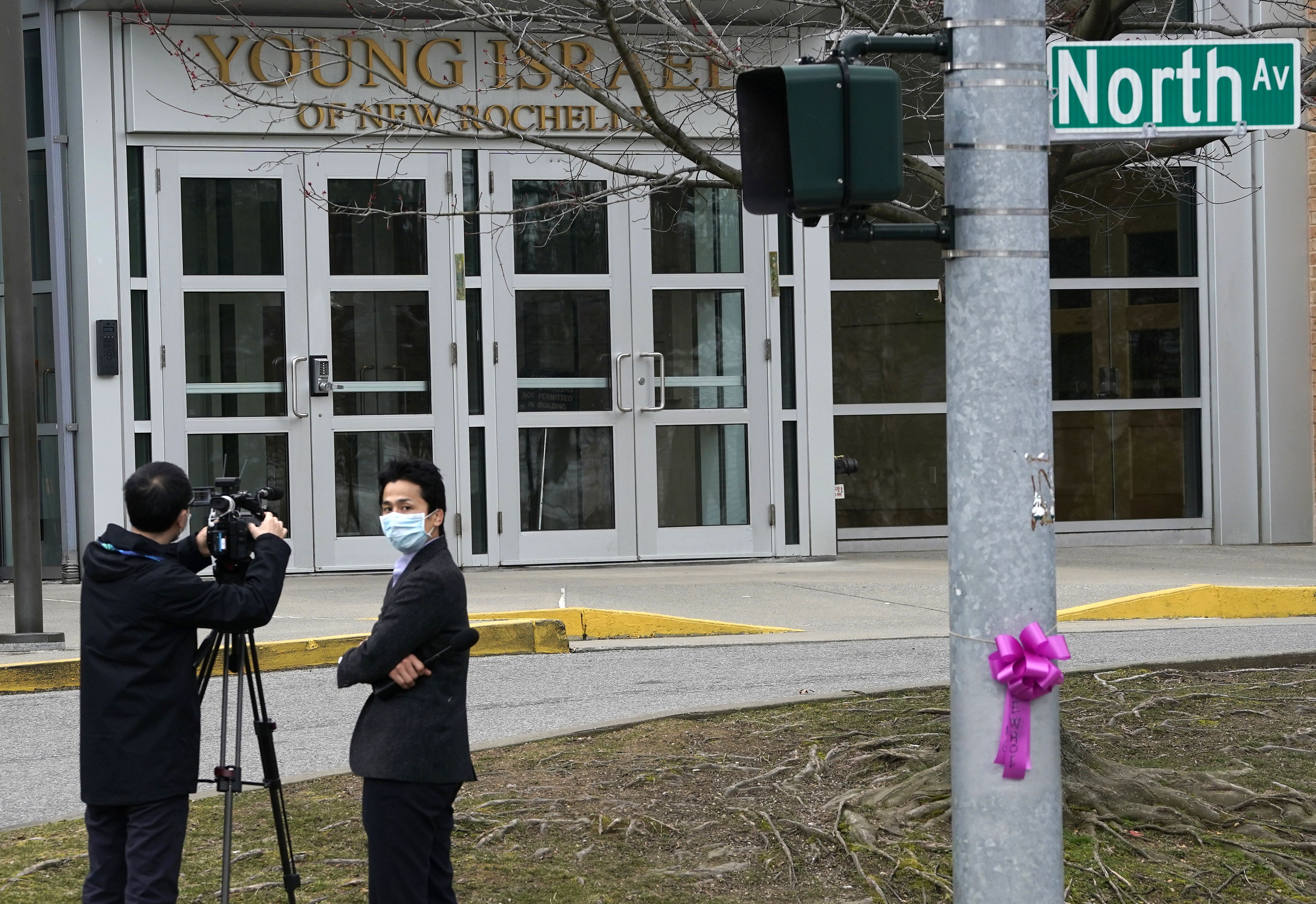
Members of the media wear protective masks film outside the Young Israel of New Rochelle, a suburban New York town at the center of a coronavirus outbreak in Westchester County, March 10, 2020. (Timothy A. Clary/AFP via Getty Images)

Caroline Morganti had the two-week time horizon in mind when she first started making her Passover plans. As soon as the coronavirus started spreading widely in the United States last month, the 25-year-old software engineer figured her seder dinners wouldn’t be the typical social gathering.

But until recently, Morganti, who lives alone, had considered going to a family close to her home in the Washington Heights neighborhood of Manhattan. To make that happen, she knew, she would have to isolate completely in her apartment for two weeks before the first night of the holiday.

Morganti ultimately set the idea aside. There were technical challenges: She couldn’t figure out how to gather food for both a two-week quarantine before the holiday, to ensure that she would not bring the virus to her hosts, and for the specialized diet that is required once Passover begins.

But perhaps more significantly, as more became known about the coronavirus, she decided she couldn’t accept even the limited risk of attending someone else’s seder.

“For a lot of people it’s very hard emotionally to think about spending Pesach, especially the seder alone, but I do think it’s still a risk,” Morganti said.

Even while the Orthodox groups’ guidance left open the possibility of some people joining others’ seders, many religious leaders had advised against the practice.

A letter signed by 10 Orthodox rabbis in Dallas says people should not be hosting seders for anyone not living in their house and goes as far as to say that those who pray together with other families, even if they adhere to social distancing, “will not be welcome in our shuls once we return to them, may it be soon.”

Forty-three Orthodox rabbis in the greater Washington, D.C., area signed a letter saying no one should have a seder with someone who does not live in their house, while a letter signed by four rabbis in Lakewood, New Jersey, urged community members to stay home.

The Agudath Israel of America, one of the signatories on the original statement, released a video last week that urged people to celebrate Passover at home.

Israel went the farthest of all on Monday night, issuing a lockdown order for the entire country that makes leaving one’s home on the first night of Passover a criminal offense.

For Orthodox Jews in America, not being able to join a seder means three days of solitude. They do not turn on and off electricity, cook or use their phones for the first and last two days of the Passover holiday. This year, the holiday starts just two days before Shabbat, which means that those prohibitions are extended for another day without break. (In Israel, the holiday and Shabbat are separated by a day when normal activity is permitted.)

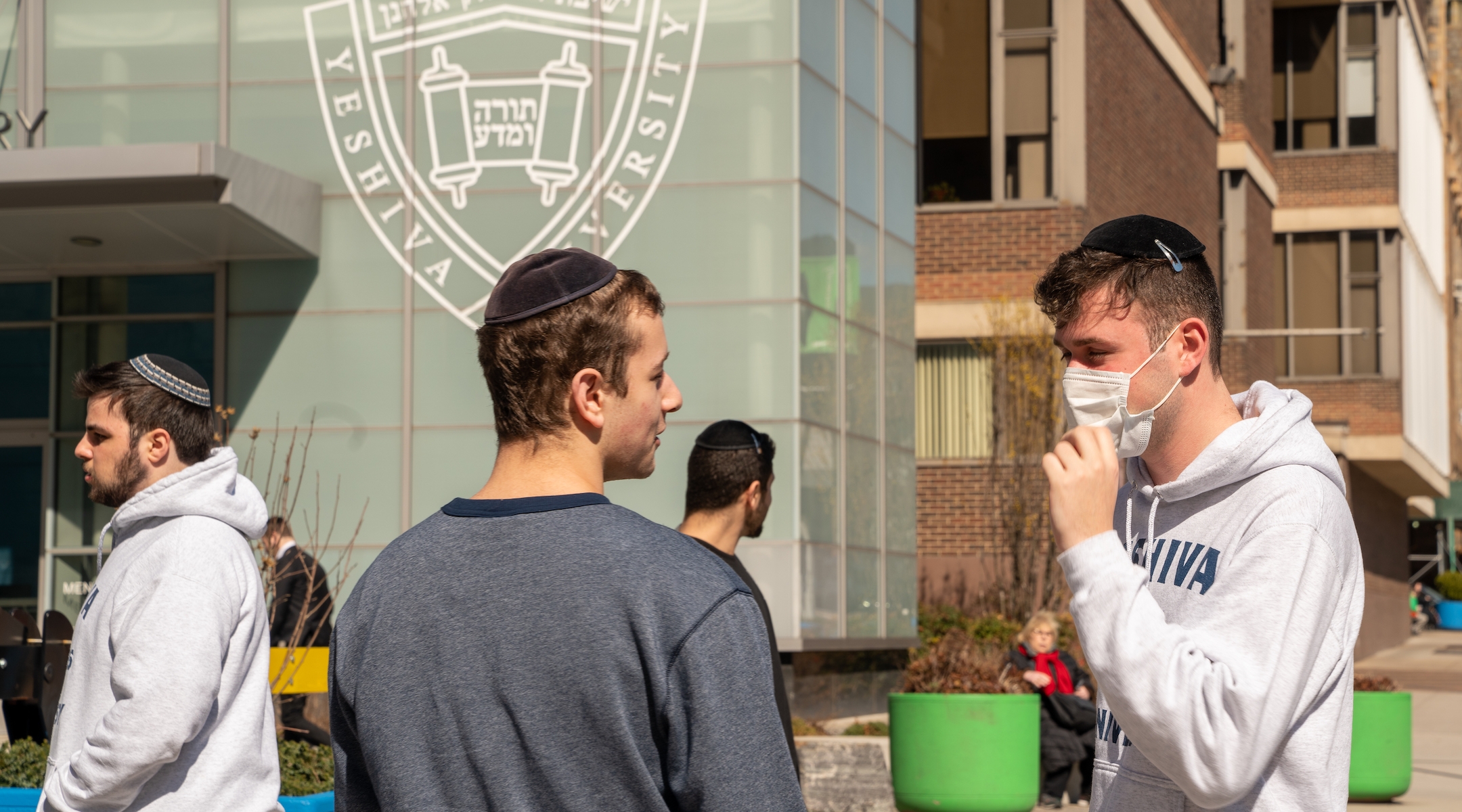
A Yeshiva University student wears a face mask on the grounds of the university in New York City, on March 4, 2020. (David Dee Delgado/Getty Images)

For Elliot, another Washington Heights resident who asked to be identified only by his first name because he was concerned about how his plans would be perceived, spending his seder alone “was out of the question.”

The 24-year-old Orthodox Jew was initially supposed to travel to see his 62-year-old mother in Maryland but did not want to put her at risk. Instead he opted instead to visit his sister and her family in Tennessee. He arrived two weeks before Passover and is spending that time socially distancing from the family so they can be together for the seders.

“I feel like the psychological impact also needs to be taken into account,” he said. “Not just people who have clinical depression, but just in general it can be very hard for people to be on their own.”

Some Orthodox authorities have acknowledged that concern, instructing followers to use the phone if they believe their life is imperiled by prolonged isolation.

Stephen Buka, a professor of epidemiology at Brown University, said someone visiting family for a seder “would be incurring some risk” of contracting the coronavirus and should self-quarantine for another two weeks after attending the seder to ensure they do not subsequently spread the disease further.

Morganti said she understood why the Orthodox authorities sought to create a path for people who live alone, even though public health concerns ultimately made that path unadvisable.

“I realize that they were doing this because it’s minimizing the risk while still trying to balance people’s desire for community or need for community,” she said. “But it is still a risk.”


Zawartość publikowanych artykułów i materiałów nie reprezentuje poglądów ani opinii Reunion’68,
ani też webmastera Blogu Reunion’68, chyba ze jest to wyraźnie zaznaczone.
Twoje uwagi, linki, własne artykuły lub wiadomości prześlij na adres:
webmaster@reunion68.com