Archive | June 2020

ILTV Israel News – June 18, 2020


ILTV Israel News

ILTV Israel News


Is Israel on the right track as it opens train lines and entertainment venues – with the number of COVID-19 cases on the rise?
Israel stops maritime smugglers trying to bring weapons to Gaza.
Female fighters – we get up close and personal with the women who serve in Israel’s border police.


Zawartość publikowanych artykułów i materiałów nie reprezentuje poglądów ani opinii Reunion’68,
ani też webmastera Blogu Reunion’68, chyba ze jest to wyraźnie zaznaczone.
Twoje uwagi, linki, własne artykuły lub wiadomości prześlij na adres:
webmaster@reunion68.com


The abyss that divides the Israeli leadership from the PA leadership

The abyss that divides the Israeli leadership from the PA leadership

MAURICE HIRSCH


While many countries answered the call and sent aid, in hindsight, it appears the PA was – once again – just crying wolf.

Palestinian President Mahmoud Abbas speaks during a Security Council meeting at the United Nations in New York, U.S., February 11, 2020 / (photo credit: REUTERS/SHANNON STAPLETON)

Today, June 1st, Israel will mark two monumental events in its brief history. These events are the epitome of the abyss that divides us from the Palestinian Authority.

The first monumental event happened On Friday night, June 1, 2001. Among the throngs of Israeli teenagers went out for their weekend entertainment, scores of them went to the popular Dolphinarium nightclub, situated on the Tel Aviv beach. As the kids stood outside, a Palestinian terrorist blew himself up, resulting in 21 kids murdered and over a hundred more were injured. Many of them carry their scars to this day.

While all civilized people see someone who walks into a crowd of teenagers and blows himself up with the intention of murdering as many people as possible as a heinous fiend, in the eyes of the PA, the suicide bomber is a “Martyr”.

According to the PA messaging, becoming a “Martyr” represents the highest religious achievement that can be attained by a Muslim. His death is celebrated as a “wedding” in which the “Martyr” marries 72 dark-eyed virgins in paradise. A video clip, often broadcast on official PA TV, declares that “Life is insignificant… God, grant us Martyrdom.” In another video the PA stooped to new depths of depravity, turning to pregnant mothers saying that their fetus – yes a fetus – will be a “Martyr for Palestine.”

The terrorist who sent the suicide bomber, Raed Al-Houtari, was arrested almost two years later in March 2003. He was convicted and sentenced to twenty-two consecutive life sentences.

As part of its Pay-for-Slay policy, the PA pays monthly cash rewards to both the families of dead terrorists and to imprisoned terrorists.
PA Chairman Mahmoud Abbas, is directly responsible for these payments. In 2006, Abbas approved the regulations that codified the monthly salary payments paid by the PA to Palestinian terrorists held in Israeli prisons. In 2010, he approved a salary hike for the terrorist prisoners – including a 300% rise – from NIS 4,000 per month to NIS 12,000 per month for prisoners who serve more than 30 years in prison, i.e., murderers.

In 2007, 2009 and 2013, Abbas approved a hike in the monthly allowances that the PA pays to the families of dead terrorists, including suicide bombers.

The PA has rewarded the family of the suicide bomber by paying them, cumulatively over the years, hundreds of thousands of shekels, simply because their son is a mass murderer! The PA has rewarded Al-Houtari, by paying him cumulatively NIS 756,200 (US $215,761/ €196,189). He will continue to receive a monthly salary from the PA for the rest of his life, simply because he is a mass murderer!

Having squandered no less than NIS 1,300,000,000 (hundreds of millions of dollars and euros), in 2018-2019 alone incentivizing and rewarding terrorists, when the novel coronavirus pandemic hit, the PA was already prepared with messages of doom and gloom.

Claiming that their income from taxes would decline and that their neglected medical system would not be able to cope with thousands of sick Palestinians, the PA – once again – put its hand out, begging the world for assistance.

While many countries answered the call and sent aid, in hindsight, it appears the PA was – once again – just crying wolf.

On the one hand, thankfully, the number of Palestinians who contracted coronavirus was exceptionally limited – just over 600 cases. On the other hand, not only was there no reduction in the PA income from taxes, there was actually a substantial rise of 47% as compared to the first quarter of 2019.

In the interim period, the PA continued to prioritize the payment of the terror rewards over the medical needs of its population and continued to demonize Israel and Israelis as the source of all evil, including bearing responsibility for the spread of the coronavirus.

At the same time, despite the malicious behavior of the PA leadership, Prime Minister Benjamin Netanyahu, decided to grant the PA an NIS 800 million loan at exceptionally favorable terms, to bridge the gap in the PA income that never materialized. The first part of that loan, a monumental event in and of itself, will be given to the PA today.

While I believe that the decision to grant the loan was a mistake that undermines Israel’s best interests, beneath it hides the abyss that divides the Israeli leadership from the PA leadership.

The PA leadership sanctifies death, murder and hatred, and is proverbially and practically, “putting its money where its mouth is.” The Israeli leadership prioritizes life and is even willing to help those who hate us, if there is a possibility that it will save a life.

Tractate Sanhedrin of the Talmud teaches us that “Whoever destroys a soul of Israel, it is considered as if he destroyed an entire world. And whoever saves a life of Israel, it is considered as if he saved an entire world.”
May the abyss that divides us reign supreme forever!


The writer is the head of legal strategies for Palestinian Media Watch. He served as a lieutenant-colonel (res.) for 19 years in the IDF Military Advocate-General Corps. In his last position he served as Director of Military Prosecution in Judea and Samaria. Tweets @mauricehirsch4


Zawartość publikowanych artykułów i materiałów nie reprezentuje poglądów ani opinii Reunion’68,
ani też webmastera Blogu Reunion’68, chyba ze jest to wyraźnie zaznaczone.
Twoje uwagi, linki, własne artykuły lub wiadomości prześlij na adres:
webmaster@reunion68.com


Eric Idle – “Always Look On The Bright Side Of Life”

Eric Idle – “Always Look On The Bright Side Of Life”

Monty Python’s – Life of Brian


Monty Python’s Life of Brian

Directed by Terry Jones
Produced by John Goldstone
Written by Monty Python
Starring
Graham Chapman
John Cleese
Terry Gilliam
Eric Idle
Terry Jones
Michael Palin
Music by Geoffrey Burgon
Cinematography Peter Biziou
Edited by Julian Doyle
Production company
HandMade Films
Python (Monty) Pictures
Orion Pictures
Distributed by
Cinema International Corporation (UK)
Orion Pictures/Warner Bros.(US)
Release date 17 August 1979 (United States); 8 November 1979 (United Kingdom)

Monty Python’s Life of Brian, also known as Life of Brian, is a 1979 British comedy film starring and written by the comedy group Monty Python (Graham Chapman, John Cleese, Terry Gilliam, Eric Idle, Terry Jones and Michael Palin). It was also directed by Jones. The film tells the story of Brian Cohen (played by Chapman), a young Jewish man who is born on the same day as—and next door to—Jesus Christ, and is subsequently mistaken for the Messiah.

Following the withdrawal of funding by EMI Films just days before production was scheduled to begin, long-time Monty Python fan and former member of the Beatles, George Harrison, arranged financing for Life of Brian through the formation of his company HandMade Films.[4]

The film contains themes of religious satire that were controversial at the time of its release, drawing accusations of blasphemy, and protests from some religious groups. Thirty-nine local authorities in the United Kingdom either imposed an outright ban, or imposed an X (18 years) certificate, effectively preventing the film from being shown, since the distributors said it could not be shown unless it was unedited and carried the original AA (14) certificate. Some countries, including Ireland and Norway, banned its showing, with a few of these bans lasting decades. The filmmakers used such notoriety to benefit their marketing campaign, with posters in Sweden reading, “So funny, it was banned in Norway!”[5]

The film was a box office success, the fourth-highest-grossing film in the United Kingdom in 1979, and highest grossing of any British film in the United States that year. It has remained popular, receiving positive reviews. The film was named “greatest comedy film of all time” by several magazines and television networks, and it later received a 95% “Fresh” rating on Rotten Tomatoes with the consensus, “One of the more cutting-edge films of the 1970s, this religious farce from the classic comedy troupe is as poignant as it is funny and satirical.”[6] In a 2006 Channel 4 poll, Life of Brian was ranked first on their list of the 50 Greatest Comedy Films.[7]


Zawartość publikowanych artykułów i materiałów nie reprezentuje poglądów ani opinii Reunion’68,
ani też webmastera Blogu Reunion’68, chyba ze jest to wyraźnie zaznaczone.
Twoje uwagi, linki, własne artykuły lub wiadomości prześlij na adres:
webmaster@reunion68.com


„Chidusz” 4/2020: Pozwólmy ziemi odpocząć

„Chidusz” 4/2020: Pozwólmy ziemi odpocząć

REDAKCJA


Okładka majowego „Chiduszu” / Autorka: Ester Gundlach

NA OKŁADCE MAJOWEGO „CHIDUSZU” Z TORY WYRASTA BUJNA ROŚLINNOŚĆ, A ZA OKNEM DYMIĄ FABRYCZNE KOMINY. OD TEGO NUMERU ROZPOCZYNAMY NOWY CYKL ARTYKUŁÓW POŚWIĘCONYCH LEKCJOM O EKOLOGII, JAKIE MOŻEMY WYNIEŚĆ Z TORY. PISZEMY RÓWNIEŻ O RUMUŃSKIM PISARZU MIHAILE SEBASTIANIE, KTÓREGO GŁOŚNA, MIĘDZYWOJENNA POWIEŚĆ OD DWÓCH TYSIĘCY LAT WŁAŚNIE UKAZAŁA SIĘ W POLSCE. W ARTYKULE POŚWIĘCONYM STOLPERSTEINOM PREZENTUJEMY HISTORIE KOLEJNYCH OSÓB, KTÓRE Z RÓŻNYM SKUTKIEM PRÓBUJĄ INSTALOWAĆ W POLSCE KAMIENIE PAMIĘCI, ORAZ WYJAŚNIAMY, JAKĄ ROLĘ W CAŁEJ AWANTURZE PEŁNI IPN.

POZWÓLMY ZIEMI ODPOCZĄĆ. CZEGO UCZY SZMITA, ROK SZABATOWY?

„Tora stanowi przewodnik nie tylko po relacjach między mężczyznami a kobietami, rodzeństwem, narodami – zawiera też przykazania, których zadaniem jest uzdrowienie relacji między człowiekiem a ziemią. Szmita, czyli prawo roku szabatowego, jest jednym z 613 przykazań Tory. Biorąc pod uwagę obecne problemy ekologiczne, micwy te mogą okazać się aktualne i potrzebne bardziej niż w jakimkolwiek innym momencie – nie tylko żydowskiej – historii”.

Zapraszamy do lektury pierwszego z cyklu osiemnastu artykułów poświęconych naukom o ekologii zawartym w Torze.

JAK FRIEDA VIZEL PORZUCIŁA ŚWIAT ORTODOKSYJNYCH ŻYDÓW

Frieda Vizel spędziła w chasydzkiej społeczności Satmar dwadzieścia sześć lat swojego życia, po czym zdecydowała się ją opuścić. Jej historia, choć ze szczęśliwym zakończeniem, niewiele ma wspólnego z fabułą serialu Unorthodox, która nie pokazuje odrzucenia, niepewności i nadużyć ze strony obcych ludzi – tego, co spotyka większość uciekinierów z chasydzkiego świata. W rozmowie z „Chiduszem” Frieda opowiada o tym, jak wyglądała jej edukacja i dorastanie, zaręczyny i małżeństwo, obalając przy tym wiele mitów o życiu chasydzkich rodzin. O Unorthodox mówi tak:

„Najbardziej frustrujące w serialu było dla mnie nieprawdziwe przedstawienie rzeczywistości – większość ludzi, którzy decydują się odejść, zostaje odrzuconych także przez społeczeństwo na zewnątrz. Ci, którzy im pomagają, to z reguły osoby, które są albo ex-chasydami, albo żyją gdzieś na granicy dwóch światów i nie przyjmują wszystkiego bezrefleksyjnie. Tylko oni są w stanie zrozumieć, jak ciężka jest sytuacja osoby odchodzącej. Od kogoś z zewnątrz nie dostaniesz czeku albo stypendium. Nie zostaniesz otoczona grupą świetnych ludzi. Kobieta taka jak serialowa Esther w realnym świecie zostałaby najprawdopodobniej seksualnie wykorzystana, ponieważ nie miałaby pojęcia, jak komunikować się z mężczyznami. Przestawienie się z życia w obecności tylko i wyłącznie kobiet nie jest łatwe. Jesteś przyzwyczajona, że w twojej społeczności inne kobiety bezinteresownie ci pomagają. Jeśli jakiś mężczyzna zaproponowałby ci, żeby u niego nocować, nie miałabyś pojęcia, że mogą kryć się za tym złe intencje. Nie znam ani jednej osoby, która opuściła chasydzką społeczność i nie została w jakiś sposób wykorzystana”.

WALKA I MĘCZEŃSTWO, CZYLI STOLPERSTEINY W POLSCE

Kamieni pamięci w Polsce przybywa. W zeszłym roku pojawiły się w Zamościu, Oświęcimiu i we Wrocławiu. Tej wiosny – znów we Wrocławiu. A mimo to znajdziemy miasta, w których rodziny zainteresowane upamiętnieniem swoich krewnych słyszą od urzędników wyłącznie o „negatywnych opiniach IPN-u”. Decyzje dotyczące Stolpersteinów zapadają w tych miejscowościach arbitralnie, z pominięciem roli,  jaką w dbaniu o żydowską historię mogłyby odegrać lokalne społeczności.

W tym numerze analizujemy przypadki Będzina i Szczecina, gdzie władze miejskie odmawiają zgód na wmurowanie kamieni, biorąc pod uwagę jedynie opinie IPN-u. Na ile są one jednak wiążące? Sam Instytut przyznaje, że nie może zezwolić ani zakazać upamiętnienia Stolpersteinami. Wystarczyłoby więc, aby urzędy wykazały się odrobiną dobrej woli i niezależnością oceny, a kamienie – opłacane przez rodziny upamiętnianych osób – mogłyby bez większych problemów zacząć pojawiać się na chodnikach polskich miast.

ŻADNEJ WINY NIGDZIE

Gdy w 1934 roku ukazała się powieść Mihaila Sebastiana Od dwóch tysięcy lat, w Rumunii wybuchł ogromny skandal. Oburzeni byli wszyscy – od komunistów, przez faszystów, po najróżniejsze środowiska żydowskie. Międzynarodowy rozgłos pisarz zyskał jednak dopiero pół wieku po swojej tragicznej śmierci. Wszystko za sprawą Dziennika, który zaczął pisać, gdy przygasła afera wokół Dwóch tysięcy lat. Choć Sebastian raczej nie myślał o publikacji swoich zapisków, wydano je w 1996 roku. Od tego czasu, przetłumaczone na wiele języków, zyskały miano jednego z najważniejszych świadectw XX wieku. Po sukcesie Dziennika świat zainteresował się także powieścią Od dwóch tysięcy lat, która w kwietniu, w przekładzie Dominika Małeckiego, ukazała się w Polsce nakładem wydawnictwa Książkowe Klimaty. W bieżącym „Chiduszu” przyglądamy się bohaterowi Dziennika i autorowi powieści. Obu więcej łączy niż dzieli – choć jeden nie miał nigdy być czytany, a drugi jest wytworem wyobraźni. Od dwóch tysięcy lat można czytać na wiele sposobów. To historia młodego Żyda, który perwersyjnie kocha swoich antysemickich przyjaciół. Opowieść o lęku i nieuchronności. O tym, co było istotą życia Mihaila Sebastiana. 

OD DWÓCH TYSIĘCY LAT

Mihail Sebastian wielokrotnie wracał do swojej powieści. W pewnym momencie pisze w swoim Dzienniku: „Przypadkowo natrafiłem na kilka rozdziałów z Dwóch tysięcy lat (mój stary zwyczaj: sięgnąć na chybił trafił po jakąś książkę z półki i przeglądać ją z godzinę). O niektórych sprawach z tej mojej powieści zupełnie zapomniałem. Powtórne zetknięcie się z nimi było dla mnie prawdziwą niespodzianką. Z wyjątkiem kilku fragmentów, w których zbyt mocno akcentowany jest żydowski punkt widzenia, reszta wydaje mi się doskonała. Nie spodziewałem się tego. Byłbym bardzo zadowolony, gdybym któregoś dnia mógł ponownie wydać tę książkę (…). Nie ulega dla mnie wątpliwości, że spośród wszystkich rzeczy, jakie napisałem, ta książka na pewno się ostanie”. 

Pozostaje mieć nadzieję, że fragment powieści, który publikujemy w „Chiduszu”, jest tym, który Sebastian uznałby za doskonały i nieakcentujący zbytnio żydowskiego punktu widzenia. 

KONKURS – WYGRAJ POWIEŚĆ SEBASTIANA

Zapraszamy do konkursu, w którym można wygrać Od dwóch tysięcy lat Mihaila Sebastiana. Wystarczy zrobić zdjęcie majowego „Chiduszu” i wysłać je na nasz adres: office@chidusz.com, bądź opublikować pod postem konkursowym, który 10 maja pojawi się na profilu facebookowym „Chiduszu” (szczegóły konkursu tutaj). 

SPOIWO WSPÓLNOTY

„Według midrasza przywódcy, którzy zarządzali spisem, to ci sami ludzie, których Egipcjanie wyznaczyli do pomocy podczas zniewolenia Izraelitów. Klasa administracyjna znalazła się w bardzo trudnym położeniu, ponieważ musiała pośredniczyć między ludem a jego ciemiężcą. Mimo że urzędnicy próbowali chronić zniewolonych Izraelitów, a czasami nawet przyjmować na siebie ciosy, byli również agentami reżimu, egzekwującymi jego rozporządzenia i patrzącymi podejrzliwie na pobratymców, którzy nie byli w stanie wypełnić swojego dziennego przydziału pracy”.

Według queerowej interpretacji Davida Greensteina spis powszechny Izraelitów nie był zwykłą biurokratyczną procedurą, ale aktem uznania i pojednania ofiar z ich dawnymi prześladowcami. 

BŁOGOSŁAWIEŃSTWO DEWIANTA

Toba Spitzer, autorka queerowego komentarza do parszy Naso, wyjaśnia, jak społeczne dewiacje mogą stać się źródłem błogosławieństwa dla całej społeczności:

„Poświęcenie, z jakim nazyrejczyk publicznie przyjmuje swoją tożsamość i obiera «queerową ścieżkę» do świętości, skutkuje błogosławieństwem dla całej społeczności. Kapłan, który we wcześniejszych fragmentach odgrywa rolę strażnika norm i granic między dewiantem a wspólnotą, tutaj staje się źródłem błogosławieństwa, nie osądu. Parsza Naso daje nam możliwość spojrzenia na status osoby queer nie w kategoriach nieczystości i wykroczenia, ale błogosławieństwa świadomej odmienności jako drogi do świętości i bliskości z Bogiem”.

RUT I NAOMI. O DOBROCI, LOJALNOŚCI I SIOSTRZEŃSTWIE

Księga Rut to jedyna księga Biblii, która zdaje test Alison Bechdel i Liz Wallace, służący do sprawdzania, w jaki sposób kobiety przedstawiane są w tekstach kultury. Mogłoby się wydawać, że to trudny sprawdzian, skoro zdaje go tylko jeden, stosunkowo niewielki fragment Biblii. 

Pozytywny wynik otrzymujemy, gdy w danym dziele (1) są co najmniej dwie kobiety, które (2) mają imiona i (3) rozmawiają ze sobą o (4) czymś innym niż mężczyźni. Czy to wysoko postawiona poprzeczka? 

W przededniu świąt Szawuot zapraszamy do kolejnej podróży w głąb Księgi Rut. 

DER SZWARCER JUNGERMANCZIK 

Przed nami kolejny dramatyczny rozdział miłości Rozy i Józefa. Bohater nadal pozostaje pod wpływem Szwarcera. Choć Szneurke objawi przed Józefem prawdę o czarnym młodzieniaszku, nie uwierzy on w słowa przyjaciela i podejmie trudną decyzję, by po Szawuot opuścić dom Friedmanów na zawsze.

ZAPRASZAMY DO LEKTURY

W czasie trwania epidemii „Chidusz” z dostawą do domu kosztuje tylko 10 zł (list ekonomiczny). Wydanie elektroniczne na publio.pl: 6.30 zł. Roczna prenumerata krajowa: 89 zł (list ekonomiczny), roczna prenumerata elektroniczna: 50 zł. Zamówienia prosimy kierować pod adres: office@chidusz.com. Przyjemnej lektury!

wpw-kolor

Partnerem wydawniczym tego numeru „Chiduszu” jest Strefa Kultury Wrocław w ramach Wrocławskiego Programu Wydawniczego. 

Pomóż

Dalsze istnienie „Chiduszu” zależy także od Ciebie. Jeśli doceniasz poziom publikowanych w „Chiduszu” artykułów, prosimy o darowiznę, która umożliwi nam kontynuowanie działalności. Można ją przekazać przez PayPala bądź przelewem na nasze konto bankowe. Kliknij tutaj, aby przejść do informacji o numerach kont. Dziękujemy za pomoc! 


Zawartość publikowanych artykułów i materiałów nie reprezentuje poglądów ani opinii Reunion’68,
ani też webmastera Blogu Reunion’68, chyba ze jest to wyraźnie zaznaczone.
Twoje uwagi, linki, własne artykuły lub wiadomości prześlij na adres:
webmaster@reunion68.com


What Erdogan Says vs. What Erdogan Does

Palestinians in Turkey: What Erdogan Says vs. What Erdogan Does

Khaled Abu Toameh


  • While Erdogan is paying lip service to the Palestinian cause and praising Hamas, which is designated as a terrorist group by the US, EU, Canada and Australia, Palestinian refugees who fled to Turkey from Syria are complaining of discrimination and mistreatment by the Turkish authorities.
  • According to Palestinian sources, there are about 10,000 Palestinian refugees in Turkey who are suffering from discrimination and living in dire conditions.
  • The suffering of the Palestinian refugees fleeing Syria begins the moment they arrive at the border with Turkey, Thuri Tamim, a Palestinian refugee, told the Palestinian Refugees Portal, an independent website covering news related to Palestinian refugees.
  • If Erdogan really wants to help the Palestinians, he can start by ordering his government to stop arresting and harassing Palestinian refugees. If he really wants to help the Palestinians, he can stop playing host and cash cow to Hamas, a terrorist group that has brought nothing but misery to Palestinians and Israelis alike.

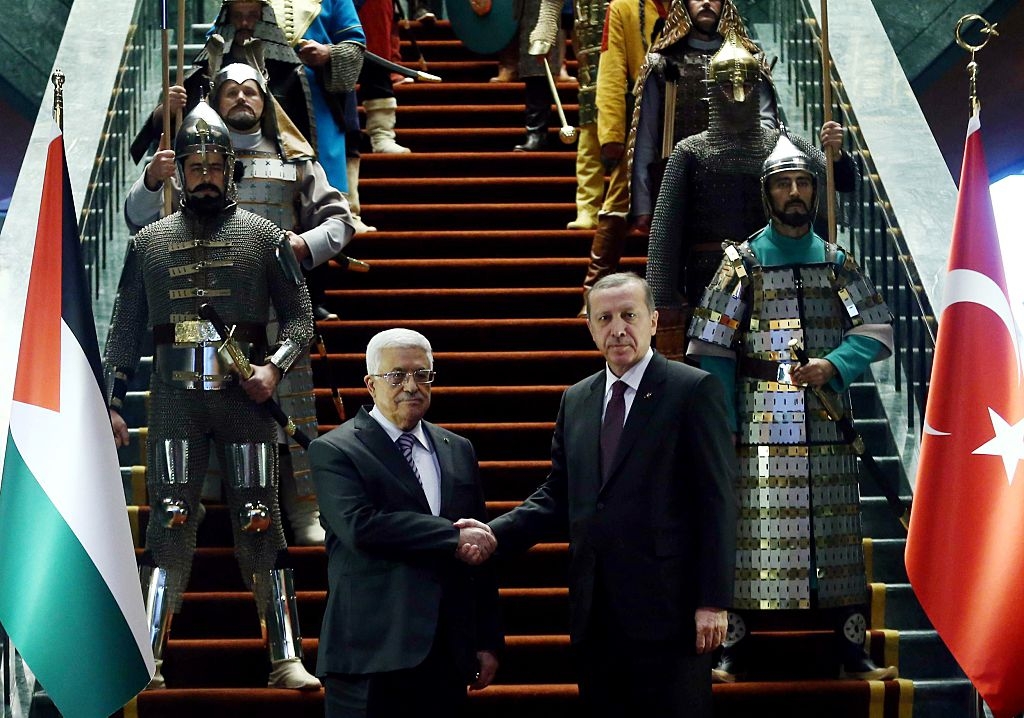
Recently, Turkish President Recep Tayyip Erdogan spoke to Palestinian Authority President Mahmoud Abbas and assured him of Turkey’s “solidarity” with the Palestinian cause, pledging to support the Palestinians in “all fields.” But instead of welcoming the Palestinians fleeing from the civil war in Syria, Erdogan is humiliating them and trying to throw them into prison. Pictured: Erdogan (right) hosts Abbas in his palace in Ankara on January 12, 2015. (Photo by Adem Altan/AFP via Getty Images)

Turkish President Recep Tayyip Erdogan excels at making statements in support of the Palestinians. His actions, however, suggest quite a different attitude about the plight of thousands of Palestinian refugees who fled to Turkey from Syria in the past two years.

For a start, Erdogan does not even recognize these refugees as Palestinian — although they carry ID cards issued by the United Nations Relief and Works Agency for Palestine Refugees (UNRWA) as well as other documents defining them as Palestinian.

Erdogan considers these refugees Syrian, not Palestinian, because they arrived from Syria and their temporary travel documents were issued by either the Syrian government or UNRWA.

All the same, recently Erdogan chatted on the phone with Palestinian Authority President Mahmoud Abbas and assured him of Turkey’s “solidarity” with the Palestinian cause. Erdogan reportedly told Abbas that Turkey will continue to support the Palestinians in “all fields.”

Erdogan has long boasted of his support for Hamas and said he does not regard it as a terrorist organization. “Hamas,” Erdogan said during an official visit to London in May 2018, “is one of the resistance movements working to liberate the occupied territories of the Palestinians.”

In a May 24 video message on the occasion of the Muslim festival of Eid al-Fitr, Erdogan repeated Turkey’s support for the Palestinians. “We will not allow the Palestinian lands to be offered to anyone else,” he said, referring to Israel’s intention to apply sovereignty to parts of the West Bank. “Last week we witnessed that a new occupation and annexation project, which disregards Palestine’s sovereignty and international law, was put into action by Israel.”

In September 2019, Erdogan made yet another passionate pro-Palestinian speech at the UN General Assembly. “Turkey will continue to stand by the oppressed people of Palestine as it has always done so until today,” he said as he again spouted hate against Israel and its leaders.

Erdogan even managed to impress former Hamas leader Khaled Mashaal, who sent a letter thanking him for speaking “on behalf of all persecuted Muslims in the world.”

When Erdogan was re-elected as Turkey’s president in the 2018 general election, many Palestinians, including Abbas and Hamas leaders, were quick to congratulate him on the victory.

Izzat al-Risheq, a member of the Hamas “political bureau,” expressed hope that Erdogan’s success would increase Turkish support for the Palestinians. Another Hamas official, Hazem Qassem, said:

“Hamas is congratulating Erdogan for the success of the democratic experiment and for winning the presidential election. Hamas wants to build relations with regional countries such as Turkey and wants it to stand by the right of the Palestinian people to confront Israeli aggression.”

Erdogan has indeed been supportive of some Palestinians — mainly, Hamas and its Palestinian leaders, some of whom live in Turkey.

A December 2019 report in the British daily The Telegraph revealed that Erdogan was “playing host” to Hamas. From Turkey, the Palestinian terror group, according to the report, has been plotting attacks against Israel.

The activities of Hamas, the report said, include efforts to recruit suicide bombers — with a reward of $20,000 promised to the families of the terrorists — and to assassinate senior Israeli officials.

In the past two years, several Hamas delegations have visited Turkey for meetings with Erdogan and senior Turkish government functionaries.

While Erdogan is paying lip service to the Palestinian cause and praising Hamas, which is designated as a terrorist group by the US, EU and Canada and Australia, Palestinian refugees who fled to Turkey from Syria are complaining of discrimination and mistreatment by the Turkish authorities.

While portraying himself as the defender of the Palestinians and of the holy Islamic sites in Jerusalem, Erdogan is also depriving thousands of Palestinian refugees of basic rights, including access to education and medical care.

Last week, Palestinian activists launched a campaign to try to solve the legal problems facing Palestinian refugees in Turkey. The activists said that Palestinian refugees who fled from Syria are required to report to Turkish security authorities once every two weeks. The Turkish authorities, the activists complained, were refusing to issue official documentation for Palestinian children whose parents have failed to settle their legal status in the country. As a result, the children are being denied access to schools and medical care.

According to Palestinian sources, there are about 10,000 Palestinian refugees in Turkey who are suffering from discrimination and living in dire conditions.

The biggest surprise for the Palestinians refugees, however, came when they noticed that the Turkish authorities were labeling them as Syrian citizens.

By registering them as Syrians, the Turkish authorities have put the Palestinian refugees in an impossible position. When Turkish authorities later check their documents and discover that they hold Palestinian passports although they have been labeled Syrians, the refugees are accused of forgery and face imprisonment or deportation.

The suffering of the Palestinian refugees fleeing Syria begins the moment they arrive at the border with Turkey, Thuri Tamim, a Palestinian refugee, told the Palestinian Refugees Portal, an independent website covering news related to Palestinian refugees.

“Most of [the Palestinians] who entered Turkey illegally were arrested by the Turkish border guards. When they introduced themselves as Palestinians and presented their UNRWA-issued ID cards, they were imprisoned for 30-45 days.”

Tamim pointed out that Palestinian refugees who fled from to Turkey from Syria are experiencing “legal marginalization.” He and other Palestinian refugees said they found it bizarre that that the Turkish authorities do not recognize Palestinian refugees carrying Syrian documents as actually Palestinian.

Another Palestinian activist, Mohammed Omar, said that Turkey’s laws on refugees have made life unlivable for the Palestinians. “The Palestinian passport cannot be used for obtaining work permits, renting a home or receiving various services such as water, gas and electricity,” Omar lamented. The plight of the Palestinian refugees, he added, has only intensified in the past few months, during the coronavirus pandemic.

Instead of welcoming the Palestinians fleeing from the civil war in Syria, Erdogan is humiliating them and trying to throw them into prison.

If Erdogan really wants to help the Palestinians, he can start by ordering his government to stop arresting and harassing Palestinian refugees. If he really wants to help the Palestinians, he can stop playing host and cash cow to Hamas, which has brought nothing but misery to Palestinians. As far as Erdogan is concerned, the Palestinians are just another card he seems to be using to advance his goal of becoming the “Sultan of all Muslims.”


Khaled Abu Toameh, an award-winning journalist based in Jerusalem, is a Shillman Journalism Fellow at Gatestone Institute.


Zawartość publikowanych artykułów i materiałów nie reprezentuje poglądów ani opinii Reunion’68,
ani też webmastera Blogu Reunion’68, chyba ze jest to wyraźnie zaznaczone.
Twoje uwagi, linki, własne artykuły lub wiadomości prześlij na adres:
webmaster@reunion68.com