Archive | July 2020

Convicted Terrorist Susan Rosenberg Raising Funds for “Marxist” Black Lives Matter

Convicted Terrorist Susan Rosenberg Raising Funds for “Marxist” Black Lives Matter

Lloyd Billingsley


(photo: Youtube)

“There’s no way you can do any homework on Black Lives Matter and not see that it’s a Marxist political organization,” and the move to substitute a “black” nation anthem was “a communist political move.”  That was sports journalist Jason Whitlock in an interview with Tucker Carlson of Fox News this week, when more obscure information about BLM emerged.

Convicted terrorist Susan Rosenberg (pictured above) is vice chair of Thousand Currents, a California-based charity that handles fundraising for Black Lives Matter. Rosenberg is a veteran of the May 19 Communist Organization that carried out bombings in the early 1980s to counter President Reagan’s “Morning in America” campaign. Rosenberg landed on the FBI most wanted list and was arrested with stolen explosives in 1984.

The terrorist drew 58 years but served only 16 because in 2001 President Bill Clinton commuted Rosenberg’s sentence. Since 2016, Rosenberg has been involved with Black Lives Matter, now openly recognized as a Marxist organization making communist political moves. One of those moves, supported by prominent Democrats is to defund the police, but BLM Philadelphia boss YahNé Ndgo is taking that to a new level. “One of the things that we are demanding over five years is the complete abolition,” she told Fox News Tuesday. “We don’t want to see any police in our community.”

Black Lives Matter has made a hero of Joanne Chesimard (aka Assata Shakur) who murdered a New Jersey state trooper, escaped prison and fled to Cuba. As Atlanta and Chicago confirm, murder is becoming more common in communities where Black Lives Matter operates, and the abolition of police would make it more so. As it happens, in Communist doctrine and practice, murder is necessary for social progress.

The independent Ukrainian farmers known as kulaks resisted Stalin’s collectivization plan. Stalin murdered them by the millions in a planned famine that Walter Duranty of the New York Times claimed did not exist. American Communist Anna Louise Strong championed the elimination of the kulaks as a class. Stalin knew that one death is a tragedy and a million deaths a statistic, and Mao Zedong followed suit. His cultural revolution and man-made calamities claimed a big part of the 94 million deaths under Communism in the past century.

In China during the cultural revolution, “mutant social growths were identified and unceremoniously uprooted.” That is from China: People-Questions, published by the National Council of Churches in 1975 and edited by Michael Chinoy, once a correspondent for CNN. The NCC book contends that there will be more cultural revolutions as China moves “in a socialist direction.”

From 1975 until 1979 the Khmer Rouge claimed the lives of up to two million people out of a population of roughly seven million. For the full story see Murder of a Gentle Land: The Untold Story of  Communist Genocide in Cambodia, by John Barron and Anthony Paul. The Killing Fields movie, from 1984, showed none of the actual killing. Out of sight is out of mind, and ignorance of Communist atrocities remains a problem.

Should some kind of Communist regime take power in the United States, the killing fields would be vast indeed. For the left, at home and abroad, the United States has always been the main enemy. The motive is there and given the means and opportunity, those mutant social growths, conservatives, and Judeo-Christian types, with their traditional values, would have to go. In a way, the cultural revolution is already in progress.

America is attacked 24/7 as an inherently unjust and racist society, never a great country and beyond all prospect of reform. Like the Khmer Rouge, the left longs for the “year zero” of their utopian socialist dreams. Violent thugs extract cringing confessions of “white privilege” and “inherent bias.” In cities and states controlled by Democrats, police and politicians tend to look the other way. Embattled Americans, isolated by the pandemic, push back as best they can.

As he confirmed in his Mount Rushmore speech, President Trump wants to prevent the left from destroying America. That is welcome news, but problems may arise in the correlation of forces.

Back in the 1990s, the FBI deployed snipers, armored vehicles, helicopters and tanks at Ruby Ridge and Waco. In 2020, with Antifa taking over parts of cities, widespread arson and looting, and the murder of police officers, the FBI remains absent from the front lines. Murder is on the increase and Susan Rosenberg is heading up the fundraising for Black Lives Matter.

Former New York Police Commissioner Bernard Kerik told Tucker Carlson the DOJ needs to start looking into BLM. No such action is evident, and despite the efforts of the allegedly intrepid John Durham, none of the DOJ and FBI bosses in the coup attempt on President Trump has been brought to justice.

As the election approaches, leftist violence is certain to surge. Will the FBI and DOJ continue to take a knee? Will BLM and Antifa be declared terrorist organizations? As President Trump says, we’ll have to wait and see what happens.


Zawartość publikowanych artykułów i materiałów nie reprezentuje poglądów ani opinii Reunion’68,
ani też webmastera Blogu Reunion’68, chyba ze jest to wyraźnie zaznaczone.
Twoje uwagi, linki, własne artykuły lub wiadomości prześlij na adres:
webmaster@reunion68.com

Is Freedom of Speech a thing of past?

Is Freedom of Speech a thing of past?

Is Freedom of Speech a thing of past?


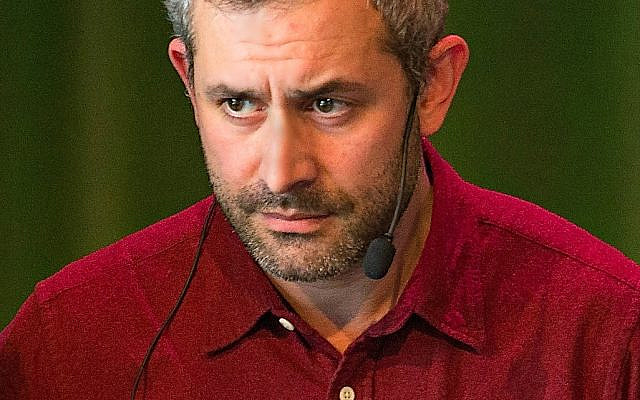
Photo from:https://sv.wikipedia.org/wiki/Aron_Flam

Recent events in a rich European Country, Sweden have risen to a question of how strongly a liberal society is moving towards rise of communism or totalitarians. There have been a few events, two of them makes the author wonder if there is a tendency towards extreme socialism;

  1. Aron Flam is a Swedish stand-up comedian, screenwriter, author, television host, podcaster, and actor. He is of Jewish origin and has spoken frequently on this in his stand-up comedy routines. He has recently published a book “This is a Swedish Tiger “. The book takes as it’s starting point the Swedish wartime propaganda slogan “A Swedish tiger,” which is a play on words – “tiger” in Swedish can mean the animal, but is also the present tense of the verb “to keep silent,” meaning that the slogan can also be read “a Swede keeps silent.”. The author explains that the “book reveals how Sweden’s social democrats managed to not only escape blame for its cooperation with Hitler’s Germany during the war. But also, how they got away with the gold, re-established contacts with other former allies of the Nazi’s, and silently rebuilt the world to suit their ends.”. The entire stock of the latest edition of the book was seized by prosecutor in Stockholm in the police raid, from the offices of the publisher Samizdat. In total some 2,200 books were seized, amounting to nearly 1.5 tonnes of printed material. The prosecutor claims the book is in infringement of copy right. This has been disputed by the author. Extractions from The Jerusalem Post. What does this really show? Sweden, a promoter of freedom of expression and human rights, who annually issues several declarations against violation of freedom of expression and human rights for other countries, and is one of its own critics of censorship and anti-freedom of expression. How is it possible to be both for and against of freedom of expression? According to many fans of this book and its author, this is a move against human rights and freedom of expression. A country that violates freedom of expression, does not have the authority to designate and issue a freedom of expression statement for other countries.
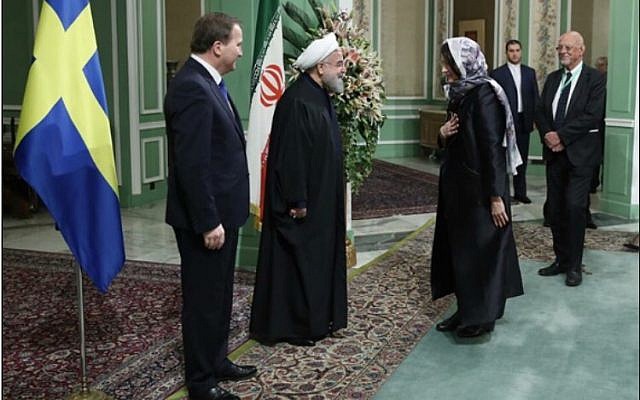
  2. On the other hand, Swedish Foreign Minister Anna Linde, a feminist and Social Democrat strongly criticized Israel and continually preaching against Israel. She emphasised that The European Union’s response to Israel’s accession plans has been strong. But she does not want to address what the EU’s actions may be related to. The criticism has been met with mixed political reactions from Israel’s ambassador to Sweden and a number of high-ranking Swedish politicians. The question is why Ms. Anna Linde, when the regime of the Islamic Republic of Iran, along with its proxy forces, provided financial and missile assistance to the terrorist groups Hamas, Islamic Jihad, and Hezbollah in Lebanon, her political and feminist sentiments were not hurt and did not raise the issue in the EU?

picture from : https://blogs.timesofisrael.com/sweden-rivals-iran-in-violating-human-rights/

Just using these two events, it illustrates we are on a slippery slope, in a so-called liberal democracy society like Sweden. At this juncture of time and place we are gradually being dragged into a totalitarian society, whilst we think we are in a liberal democracy. Are there forces pushing our western society and values towards an extreme socialism / communism, without realising. Are we living in a world the anti-Semitism becoming a norm and politicians scoring points by populist criticism of state of Israel with or without any bases and logic? We in a free society need to question our politicians and some of the far-left media, which hold a lot of power with a sinister agenda. Freedom of speech is a right to any citizen of free world.


Zawartość publikowanych artykułów i materiałów nie reprezentuje poglądów ani opinii Reunion’68,
ani też webmastera Blogu Reunion’68, chyba ze jest to wyraźnie zaznaczone.
Twoje uwagi, linki, własne artykuły lub wiadomości prześlij na adres:
webmaster@reunion68.com


News From Israel – July 9, 2020

News From Israel – July 9, 2020

ILTV Israel News


Government ministers infuriate the public, ignoring their own restrictions designed to stop the spread of the deadly #coronavirus.

A new social responsibility campaign makes it so that no one has any excuse not to wear a #mask.

ILTV takes a trip back in time, five generations– seeing the full modern history of fine #wine in the Holy Land.


Zawartość publikowanych artykułów i materiałów nie reprezentuje poglądów ani opinii Reunion’68,
ani też webmastera Blogu Reunion’68, chyba ze jest to wyraźnie zaznaczone.
Twoje uwagi, linki, własne artykuły lub wiadomości prześlij na adres:
webmaster@reunion68.com


Jak w Polsce żyje się mniejszościom, zwłaszcza Żydom?

Jak w Polsce żyje się mniejszościom, zwłaszcza Żydom?

15 KWIETNIA 2018


Fran Urbano / Flickr CC by 2.0

81 proc. Żydów mieszkających w Polsce jest dumnych ze swojego pochodzenia, a ponad połowa deklaruje, że czuje się Polakiem lub polskim Żydem – to wnioski z raportu Fundacji Chai.

Sytuację mniejszości na Starym Kontynencie analizuje raport „Sytuacja mniejszości narodowych, etnicznych i religijnych w wybranych państwach Unii Europejskiej ze szczególnym uwzględnieniem mniejszości żydowskiej”. Opracowanie przygotowano po to, by rozpoznać stan rzeczy w różnych krajach (Austria, Hiszpania, Słowacja, Węgry, Polska), ale i wskazać działania, które mogłyby zapobiec eskalacji zachowań antysemickich i ksenofobicznych.

Z przytoczonych tu badań Pew Research Center (2015) wynika, że w około dwóch trzecich europejskich państw różne grupy odwołujące się do nacjonalizmu i szowinizmu zwracają się – bezpośrednio lub pośrednio – przeciwko mniejszościom religijnym. Jest to znacznie częstsze w Europie (30 z 45 państw, ok. 67 proc.) niż w innych częściach świata (38 proc.). Różne środowiska, partie i organizacje posługują się retoryką antyislamską (nośną w dobie kryzysu imigracyjnego) i sięgają po hasła antysemickie.

Ile Polaka w Polaku, czyli mniejszości narodowe i etniczne w Polsce

W świetle prawa do mniejszości narodowych zalicza się białoruską, czeską, litewską, niemiecką, ormiańską, rosyjską, słowacką, ukraińską i żydowską. Do mniejszości etnicznych należą zaś karaimska, łemkowska, romska i tatarska. Niekoniecznie pokrywa się to z subiektywnym poczuciem narodowości czy przynależnością etniczną.

W ostatnim Narodowym Spisie Powszechnym (2011) narodowość polską wskazało 35 251 mln osób (91,6 proc.). Potem wskazywano śląską (809 tys.), kaszubską (228 tys.), niemiecką (109 tys.), ukraińską (48 tys.), białoruską (47 tys.), romską (16 tys.), rosyjską (13 tys.) i łemkowską (10 tys.).

W przeciwieństwie do spisów z lat poprzednich tym razem można było wskazać jednocześnie narodowość i przynależność do innego narodu lub wspólnoty etnicznej. Z możliwości tej skorzystało ok. 871 tys. osób. Większość (834 tys.) podała polską oraz inną tożsamość narodowo-etniczną. 554 tys. zadeklarowało narodowość wyłącznie niepolską (w większości śląską lub kaszubską).

Mniejszość żydowska w Polsce

Przed drugą wojną światową mniejszość żydowska w Polsce liczyła ok. 3,5 mln osób. Była największa w Europie i druga co do wielkości na świecie. Żydzi najliczniej skupili się w Warszawie (300 tys.). Czym się ta społeczność odznaczała? Była w dużej mierze ortodoksyjnie religijna, miała wysoki przyrost naturalny, a kobiety były rzadziej w porównaniu z chrześcijankami czynne zawodowo.

W raporcie przypomniano, że choć konflikty się zdarzały (wliczając pogromy tuż po odzyskaniu niepodległości i w latach 30., nieoficjalny numerus clausus dla Żydów w korporacjach zawodowych i na uczelniach, zamieszki na uniwersytetach itd.), to Polska stała się dla wielu przedstawicieli społeczności żydowskich drugą, a czasem pierwszą ojczyzną. „Tutaj przez wieki rozwijało się życie religijne, literatura, sztuka, język, tutaj powstawały szkoły i uczelnie. Tu wykuwały się idee i hasła, które potem dały początek nowoczesnej polityce żydowskiej. Polska wielu przedstawicielom tej społeczności zawdzięcza swój rozwój; oni Polsce – możliwości pracy czy swe sukcesy na niwie zawodowej, kulturalnej, gospodarczej” – czytamy.

W Zagładzie zginęło 85 proc. polskich Żydów. Większość ocalonych po drugiej wojnie światowej wyjechała – dobrowolnie, wskutek powojennych zamieszek, pogromów lub – jak w 1968 roku – pod naciskiem władz. W PRL istniało ściśle koncesjonowane i kontrolowane życie żydowskie. Ale po 1989 roku, zwłaszcza w ostatnich latach, „daje się zauważyć powolny renesans życia żydowskiego we współczesnej Polsce”.

W zależności od przyjętych kryteriów liczebność populacji żydowskiej w Polsce szacuje się na 5–20 tys. osób. Według oficjalnych danych ze spisu powszechnego (2011) w Polsce mieszka ponad 7 tys. osób deklarujących narodowość żydowską (w liczbie tej zawierają się także osoby wskazujące na podwójną tożsamość: polską i żydowską).

Antysemityzm w Polsce – jak poważny to problem?

Autorzy opracowania zauważają, że „antysemityzm nie stanowi poważnego problemu w dzisiejszej Polsce”, choć coraz częściej odbywają się manifestacje, na których podnosi się hasła antysemickie (jako przykład podano spalenie kukły Żyda na prawicowej manifestacji we Wrocławiu), przypadki dewastacji cmentarzy czy miejsc pamięci, graffiti. Podkreślono też, że choć „żadna partia polityczna nie głosi otwarcie haseł antysemickich, w wypowiedziach niektórych polityków, kapłanów i hierarchów Kościoła katolickiego pobrzmiewa niechęć do Żydów i silne nuty antysemickie”. Wypowiedzi otwarcie antysemickie zdarzają się zwłaszcza w katolickiej rozgłośni radiowej Radio Maryja, prawicowych stacjach telewizyjnych i prasie. Z drugiej strony Kościół katolicki organizuje Dni Judaizmu, a jego przedstawiciele biorą udział w dysputach ekumenicznych i prowadzą studia żydowskie.

Czytamy: „Antysemityzm w Polsce często bywa nazywany »antysemityzmem bez Żydów« i jest w tym wiele prawdy: hasła antysemickie bywają jednak wykorzystywane do ataku na wrogów politycznych prawicowych partii politycznych czy krytyce mediów uznanych przez prawicę za lewicowe i »nie-narodowe«”.

Poza tym coraz większym niepokojem napawa „fakt znajdowania się u steru władzy prawicowej i populistycznej partii Prawo i Sprawiedliwość, ograniczanie niezależności aparatu sądowniczego i najwyższych instytucji pilnujących porządku konstytucyjnego, wreszcie tolerowanie i wspieranie przez członków obozu rządzącego ultraprawicowych sił politycznych, nawiązujących w swej retoryce do zajadle antysemickich, paramilitarnych stowarzyszeń młodzieżowych i oddziałów wojskowych, które po zakończeniu drugiej wojny światowej, walcząc z władzą komunistyczną, nierzadko mordowały członków mniejszości narodowych, w tym żydowskiej”.

Antysemickie wypowiedzi członków partii rządzącej nie są piętnowane i są słabo nagłaśnianie w ogólnopolskich mediach publicznych. W raporcie przypomniano jednak spotkanie przedstawicieli środowiska żydowskiego z Jarosławem Kaczyńskim, co wywołało kontrowersje innych organizacji. „Jak się wydaje, mimo niefortunnych wypowiedzi niektórych polityków i antysemickich »wycieczek« niektórych środowisk sytuacja wspólnot żydowskich w Polsce nie jest zagrożona – czytamy. – Niepokojem jednak może napawać próba budowania nowej narracji historycznej i programy edukacji szkolnej, w której niewiele miejsca zamierza się poświęcić trudnym kwestiom wzajemnych relacji, zwłaszcza postawom Polaków w czasie Zagłady (więcej o heroicznej postawie ratujących Żydów, możliwie niewiele lub wcale o szmalcownikach wydających Żydów, grabieży mienia żydowskiego i członkach zbrojnego podziemia antykomunistycznego, którzy mordowali m.in. ocalałych)”.

Co wynika z samego badania społeczności żydowskiej w Polsce

W badaniu wzięło udział 37 respondentów, deklarujących się jako przedstawiciele mniejszości żydowskiej w Polsce: 19 kobiet i 18 mężczyzn w różnym wieku, w większości urodzonych w Polsce (dwie urodziły się na Ukrainie i jedna na Słowacji). Większość mieszka w dużych miastach, trzy poza Polską (w Izraelu, Hiszpanii i na Ukrainie). To grupa dobrze wykształcona, zdecydowana większość ma wykształcenie wyższe, część średnie. Większość posługuje się językiem polskim. Tylko pięć osób posługuje się w domu którymś z języków żydowskich (najczęściej razem z polskim).

Dla większości możliwość uczenia się o historii i kulturze Żydów, podobnie jak nauki języków żydowskich (zwłaszcza hebrajskiego), jest dość ważna, choć poza Warszawą dość ograniczona. Uczestnictwo w uroczystościach religijnych i rodzinnych o charakterze tradycyjnym okazuje się niezmiernie ważną przesłanką do „bycia Żydem”.

Większość respondentów czuje dumę z bycia Żydem względnie pochodzenia żydowskiego. – Wyniki raportu zdziwiły mnie, ale pozytywnie. Wielu Żydów w Polsce próbowało wyciszyć w sobie ten temat. Nierzadkie są przecież sytuacje, gdy ludzie przez lata ukrywają swoje pochodzenie przed przyjaciółmi, a nawet przed najbliższą rodziną – komentuje dla POLITYKA.PL rabin Szalom Dow Ber Stambler ze wspólnoty Chabad-Lubawicz.

5,5 proc. badanych tej dumy nie odczuwa, a 13,5 proc. odmówiło odpowiedzi.

Większość respondentów jest lub czuje się silniej związana z Europą i Izraelem niż krajem zamieszkania (Polską). Stosunkowo słabsza jest identyfikacja z regionem i miejscem (miastem) zamieszkania. Opinie na temat korzyści płynących dla mniejszości z członkostwa w UE są już bardziej podzielone, mniej entuzjastyczne, choć nie negatywne.

Większość respondentów zdecydowałaby się na wyjazd z kraju pod warunkiem otrzymania pomocy finansowej i socjalnej. Wybraliby Izrael (15), USA/Amerykę (3), Kanadę, Wielką Brytanię, Szwajcarię albo Austrię. Odpowiedzi „nie wiem” udzieliły trzy osoby, 12 w ogóle odmówiło odpowiedzi. W raporcie zwrócono uwagę, że niewiele osób wybrało „tradycyjne” państwa emigracyjne. „Może to świadczyć o poprawiającym się statusie życia w Polsce po akcesie do Unii Europejskiej, ale wysoki wskaźnik Izraela jako miejsca ewentualnej emigracji zdaje się świadczyć przede wszystkim o głębokiej identyfikacji z tożsamością żydowską respondentów i dumy z posiadania własnego, żydowskiego państwa, nawet jeśli nie jest się jego obywatelem”.

Interesujące są również odpowiedzi na pytanie, kim najbardziej czują się respondent: Żydem – 14, Polakiem – 1, Polakiem i Żydem – 6, Polakiem pochodzenia żydowskiego – 6, polskim Żydem – 8, Europejczykiem – 1, rosyjskim Żydem – 1.

Za mniejszość narodową lub etniczną najsilniej dyskryminowaną w sferze publicznej, życiu kulturalnym i politycznym uznano Żydów (13), łącznie Arabów, Żydów i Ukraińców (1), Arabów muzułmanów (3), Romów (1), Rosjan (2), Kaszubów (1), Ukraińców (1) i nieposiadających oficjalnie statusu mniejszości Wietnamczyków (1). „Respondenci – będąc członkami mniejszości żydowskiej – są najbardziej wyczuleni na jej sytuację, dostrzegając zarówno jej dużą aktywność czy uprzywilejowanie (8 osób), względnie czując się najbardziej dyskryminowani (13)” – wnioskują autorzy raportu.

Jako mniejszość sprawiającą najwięcej problemów w sferze publicznej respondenci uznali mniejszość żydowską (4), muzułmanów (1), Syryjczyków (1), Ukraińców (3), Niemców i Arabów (1), Romów (6), „nie wiem” (1), brak odpowiedzi (16). Przy czym respondenci niekoniecznie wiedzieli, kto jest oficjalnie uznany za mniejszość w Polsce.

Za najmniej lubianych w Polsce uznano Żydów (15), muzułmanów i Arabów (8), wespół Żydów, Ukraińców i Arabów (1), Romów (1), Rosjan (1), Żydów i Romów (1), Ukraińców (1). „Można spekulować, że odpowiedzi z dopiskami »obecnie« lub »zastępczo« wskazują na Żydów, których zastąpili arabscy muzułmanie. W tym wypadku zatem znów dostrzegamy wyczulenie na sytuację swojej mniejszości, ale także pobrzmiewające echa obserwacji sytuacji w Europie, która boryka się z problemem rozlokowania uchodźców z krajów muzułmańskich, z których niektórzy stwarzają zagrożenie terrorystyczne” – podkreślono.


Zawartość publikowanych artykułów i materiałów nie reprezentuje poglądów ani opinii Reunion’68,
ani też webmastera Blogu Reunion’68, chyba ze jest to wyraźnie zaznaczone.
Twoje uwagi, linki, własne artykuły lub wiadomości prześlij na adres:
webmaster@reunion68.com


Is Israel stealing private Palestinian land? – opinion

Is Israel stealing private Palestinian land? – opinion

MOSHE DANN


When Jewish communities (“settlements”) were established, it was done “in good faith,” and with government approval on vacant land. Arabs did not go to court to claim “their land.”

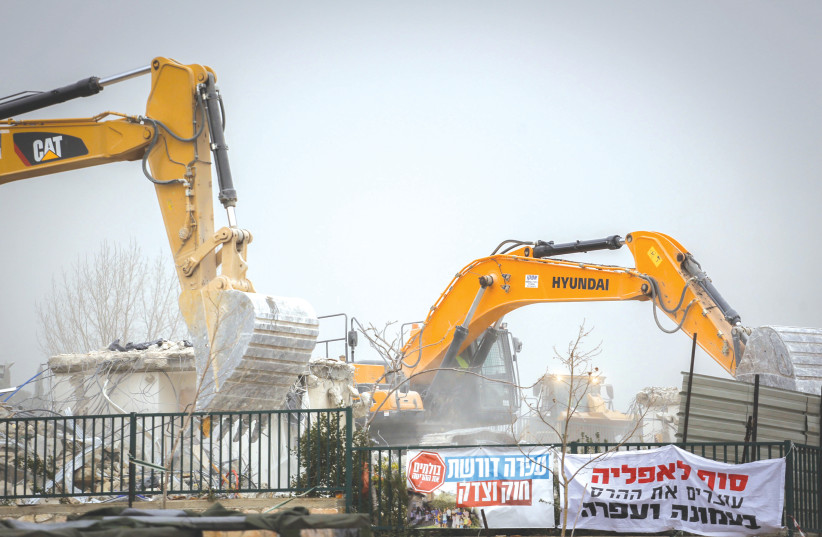
BULLDOZERS DEMOLISH nine homes in Ofra in 2017. / (photo credit: HADAS PARUSH/FLASH90)

One of the most serious accusations against Israel’s presence in Judea and Samaria to “end the occupation” and in the Boycott, Divestment and Sanctions campaigns is that Israel systematically steals or “seizes” “private Palestinian land.” Not only would that be illegal, it is immoral. This seems to be the basis for the High Court’s decision to strike down the Regulation Law.

It is important to remember the reason for the Regulation Law. When Jewish communities (“settlements”) were established, it was done “in good faith,” and with government approval on vacant land. Arabs did not go to court to claim “their land.” Only much later, led by left-wing NGOs, were Arabs encouraged to make their claims.

The humanitarian purpose of the Regulation Law was to protect Jews who had built their homes “in good faith.” Most other countries have similar laws which protect homeowners in cases where the value of what was built far exceeds the value of the land. Destroying the homes of many thousands of Jews to resolve questionable or false Arab land claims would be unfair and unjust. Therefore, compensation was offered to Arab claimants, regardless of proof of ownership.

The source for the charge that “Israel is stealing privately owned land” is not only PLO/PA, Hamas, left-wing and anti-Israel media, and Arab propaganda, but an agency of the Israeli government: Coordinator of Government Activities in the Territories (COGAT).

COGAT, a unit of the Defense Ministry, is responsible for “implementing government policy in Judea and Samaria.” But COGAT not only “implements,” it also makes policy. And, as a separate independent military-legal administration, it is virtually unaccountable to anyone except the defense minister and the prime minister. They are responsible for this misrepresentation of fact.

COGAT and the IDF legal adviser, in cooperation with the attorney-general’s office, the state prosecutor’s office, the Justice Ministry and the High Court (Bagatz), routinely decide that land claimed by Arabs is valid. These claims, however, are based on massive distributions of state land throughout Judea and Samaria during the Jordanian occupation. They lack supporting evidence of ownership, such as deeds, transactions and actual possession, or usufruct. Nevertheless, COGAT recognizes the claims as valid, thus supporting charges that Israel steals private land.

Based on COGAT’s decisions, which are not reviewed by district courts – the only judicial body mandated to determine matters of land ownership – NGOs supporting Arab claims appeal to the High Court, which relies heavily on COGAT as the government’s authority.

COGAT defends its decisions by citing the land registry (taba) for Judea and Samaria, which lists names of “owners,” mostly villages and tribes who were given state land during the early 1960s. None of the land was purchased, most of the land was never used, no taxes were paid and the original Arab recipients of land are no longer alive. To whom does this disputed land belong?

ACCORDING TO Ottoman and British Mandate law, gifted land could not be inherited without approval by the sovereign. Moreover, land that was given by the sovereign could be claimed as private only if the land was used continually (usufruct) for 10 years and taxes were paid. Otherwise, unused land reverts to the sovereign by law. Jordan changed this law and registered the land as privately owned, permanently, without conditions.
Since Jordan was never acknowledged as the legitimate sovereign over this territory, its occupation and anti-Jewish laws – including prohibiting non-Jordanian citizens from owning land and incurring the death penalty for selling land to Jews – have no validity; COGAT differs.

The status of land in Judea and Samaria was further confused by former High Court Chief Justice Dorit Beinisch, who, at the end of her term decided unilaterally that hazakah, the right to claim title to land by working it and paying taxes applied only to Arabs, not Jews.

Since COGAT considers the land registry for Judea and Samaria “confidential,” it restricts access to it by Jews, making it nearly impossible to challenge Arab claims of private ownership or for Jews to acquire land. COGAT’s secretive procedure is backed by the High Court, which defends COGAT’s rule as a government agency. COGAT refuses to explain why their rules prevail exclusively and why access to public documents is forbidden.

Regavim, an NGO, challenged the legality of COGAT’s position specifically with regard to land surrounding the Jewish community of Psagot. Regavim claimed that COGAT’s policies discriminate against Jews. The Jerusalem District Court agreed, awarded the case to Regavim, and ordered COGAT to make available land records of the surrounding area; COGAT has appealed to the High Court.

According to Ari Briggs, spokesman for Regavim, COGAT‘s policy restricts access to the land registry for Judea and Samaria only to people who are “connected to the land,” and defines those people only as Arabs. Regavim’s legal challenge is to force COGAT to end its discriminatory policy and allow equal access to Jews. Not only did COGAT appeal to the District Court’s decision, they also forbade access to the land registry by military order – thus transforming what should be a normal administrative process into their own exclusive domain.

Since 2008, COGAT has prevented the operation of a sewage treatment plant between the Arab village of Silwad and the Jewish community of Ofra because, COGAT ruled, it is built on “private Palestinian land” which belongs to the village. The attorney-general and the High Court have ordered that the project – which would serve all residents of the disputed area – be removed.

COGAT also opposes plans to widen the road near the Adam Junction because it infringes on “private Palestinian land.” Asked for details about who owns the land in question, COGAT has refused – and COGAT is “the law.”

The government sought to rectify this discriminatory and undemocratic system by appointing independent courts to adjudicate land disputes and determine ownership, and/or by extending the jurisdiction of District Courts as recommended by a commission of legal experts headed by the late justice Edmund Levy. That was the purpose of the Regulation Law.

The High Court could also require that disputes over land ownership be heard first by District Courts before any appeals, as is commonly practiced in all democratic countries. The High Court’s recent decision striking down the Regulation Law ignores this important first step in judicial procedures and norms. Therefore, the fundamental questions remain: To whom does disputed land belong? Is the Regulation Law legal, fair and just? This is one of the reasons why plans to extend Israeli law and sovereignty to Jewish communities in Judea and Samaria is so important.


The writer is a PhD historian and journalist in Israel.


Zawartość publikowanych artykułów i materiałów nie reprezentuje poglądów ani opinii Reunion’68,
ani też webmastera Blogu Reunion’68, chyba ze jest to wyraźnie zaznaczone.
Twoje uwagi, linki, własne artykuły lub wiadomości prześlij na adres:
webmaster@reunion68.com