
Archive | July 2021

‘Hate Is More Engaging’: Researchers Make Headway Measuring Antisemitic Propaganda on Social Media

‘Hate Is More Engaging’: Researchers Make Headway Measuring Antisemitic Propaganda on Social Media

Ben Cohen


A pandemic-themed adaptation of the antisemitic, so-called “happy merchant” meme. Photo: ADL

The year-long lockdown brought on by the COVID-19 pandemic in 2020 cemented the place of social media as the main channel for the spread of antisemitic messages, often of the crudest and most violent kind.

As the virus enveloped the world, a set of coronavirus-related antisemitic memes rapidly took shape. Some online trolls asserted that, just like the Black Death in the 14th Century, COVID-19 was a Jewish creation, while others urged that the disease — dubbed the “Holocough” — be used to kill Jews en masse.

Another innovation during this period was the phenomenon of “Zoom bombing.” As social distancing measures compelled Jewish institutions to move real-world events onto online platforms like Zoom, dozens of virtual meetings were hijacked by antisemitic rabble-rousers, pushing what one German research institute described as an “overlap of Nazi-glorifying and anti-Israel content” to a bewildered and often distressed audience.

In tandem with those outrages, established social media platforms like Facebook, TikTok, Instagram, Snapchat and Twitter were flooded with antisemitic posts. According to the Anti-Defamation League (ADL), between May 7 and May 14 alone this year, more than 17,000 posts on Twitter used some variation of the phrase “Hitler was right.”

Quantifying these antisemitic conversations on social media and distilling their content has become a key task for academic researchers monitoring the spread of antisemitism through a range of social and professional networks. At Indiana University, Bloomington, scholars at the Institute for the Study of Contemporary Antisemitism (ISCA) — which today launched a major conference on antisemitism in the US, to continue through next week — are working with colleagues from other departments such as computer science to sift through thousands of antisemitic tweets, some of which are written in strongly coded language, and with others expressing their hatred of Jews in candid terms.

“Indiana University has an agreement with Twitter to obtain 10 percent of all tweets on a statistically-relevant basis,” Prof. Gunther Jikeli of ISCA explained in an extensive interview with The Algemeiner. “That represents a huge database that we can run queries on.”

Jikeli said that he has been meeting on a twice-weekly basis with a research team that includes historians and linguists as well as computer programmers. Various generic search terms are utilized, such as “Israel,” Jews” and “Zionism,” as well as pejoratives like “zionazi” and “k*ke.”

“When we monitor individual tweets, we get the text of the post, the user ID, the number of retweets and responses, and other kinds of metadata that allow us to see the extent of its footprint,” Jikeli said. “We then apply a number of considerations to determine whether the posting is antisemitic.”

Those considerations are based upon the working definition of antisemitism endorsed by the International Holocaust Remembrance Alliance (IHRA), which demonstrates how antisemitic narratives work and how they can manifest in different contexts. Indiana University’s ISCA researchers analyzing Twitter posts are directed to an annotation portal, where they can add additional details and perspectives. A series of prompts — does the tweet quality as antisemitic under the IHRA definition? How intensely is the antisemitism expressed? Is the Holocaust mentioned? Is the user intending to be sarcastic? — can then be answered in order to accurately categorize the post.

Delivering his paper to the ISCA conference on Monday, Jikeli said that his research attempted to clarify six basic questions: what does antisemitism on social media look like? How widespread is it? Who is pushing these messages? Who is countering them? What is the overall impact? And what can be done to combat it?

On the last question, the issue of censorship, or “deplatforming,” crops up constantly. Between a climate of absolute censorship of postings deemed antisemitic or racist and an open season for bigotry online, Jikeli is trying to find a more nuanced solution.

Banning antisemites from social media raises both ethical questions about freedom of expression and practical questions about how to close down millions of social media accounts that traffic in bigotry. Jikeli cited recent research from the University of Amsterdam showing that antisemitic accounts removed from mainstream platforms tend to reappear in fringe locations — among others 4chan, Telegram and Gab, the latter application used by Pittsburgh Synagogue shooter Robert Bowers in 2018. Encouragingly, however, these restored accounts invariably have far fewer followers on these lesser platforms, and therefore find it harder to engage in what Jikeli called the “monetization of hatred.”

Yet while antisemites are turning to less popular platforms (as well as the dark web) as service providers clamp down on hate speech, the profile of antisemitism on mainstream social media still continues to rise. Studies of TikTok and Twitter in the last year showed that despite the commitment of the platforms to enforce community speech guidelines, antisemitic tweets increased exponentially on both.

Paradoxically, some extremist leaders are eager to avoid incitement on their own platforms for two main reasons: showing more moderate potential supporters that they eschew violence, and avoiding being shut down by the service providers.

Ayal Feinberg, an assistant professor of political science at Texas A&M University who moderated Jikeli’s panel on Monday, quoted the observation of one leading neo-Nazi in this regard. “These Jewish corpses are going to be used as clubs in the years to come to beat down our free speech rights,” moaned Andrew Anglin — publisher of the viciously racist Daily Stormer website — in the wake of the massacre at Pittsburgh’s Tree of Life synagogue.

On both sides of this clash, however, uncertainty prevails over what steps social media companies will take in future. While extremists fear the imposition of speech guidelines, Jikeli and others point out that equally, social media companies have a financial interest in directing users to content that they will engage with for a longer period of time.

“Hate content is more engaging, and that’s why the social media companies don’t want a reduction from this point of view, they want more of the same,” Jikeli observed.

Jikeli emphasized that even when it is not fed directly to users, “antisemitic content is easy to find on the internet” — a state of affairs that is unlikely to be resolved overnight.

“These social media companies are very young, and our research is also in its infancy,” Jikeli noted. “We are only at the beginning of our work.”


Zawartość publikowanych artykułów i materiałów nie reprezentuje poglądów ani opinii Reunion’68,
ani też webmastera Blogu Reunion’68, chyba ze jest to wyraźnie zaznaczone.
Twoje uwagi, linki, własne artykuły lub wiadomości prześlij na adres:
webmaster@reunion68.com

The new government has severely failed to tackle Arab violence – editorial

The new government has severely failed to tackle Arab violence – editorial

JPOST EDITORIAL


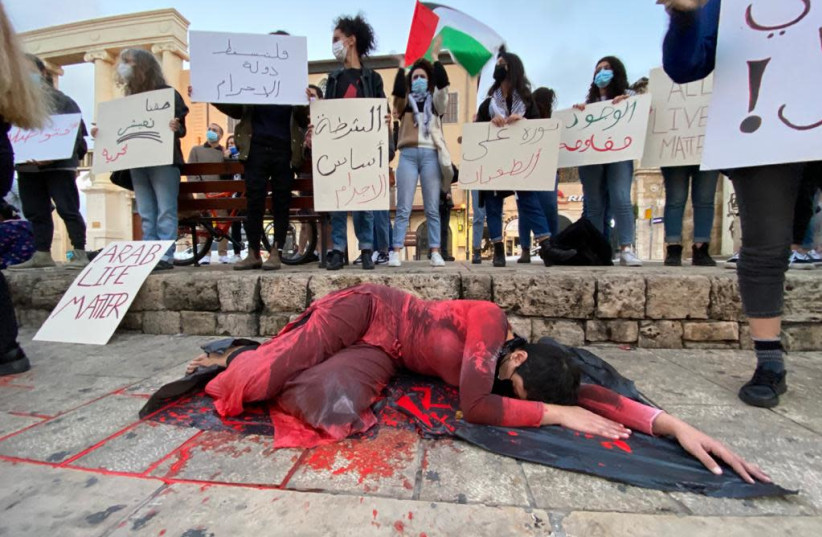
This situation is unacceptable, and the fact that the new government – the first in the county’s history to have Arab members – has yet to address the issue is a disgrace.

A protest against the rising crime and violence in the Arab sector in Israel, Jaffa, Saturday, February 6, 2021. / (photo credit: SASSONI AVSHALOM)

Another week has gone by and the Arab community in Israel keeps on counting their dead.

According to an Abraham Initiatives track, some 43 Arab citizens of Israel have died in violence-related incidents since the beginning of 2021.

The last one was Ahmad Issa, a 17-year-old teen who was stabbed and then run over by a car in his home village of Kafr Kasim.

Issa was killed right after his high school graduation. His father said at his funeral that he couldn’t believe it when he was told about his son’s death.

“I trusted him totally… I was waiting for him to come back home – and instead, he came back in a coffin. He was so happy at his graduation and we were all happy with him,” he said.

“But this day of joy turned into a deep sorrow that will go with us for the rest of our lives,” he was quoted by Ynet as saying.

The violence plague in the Arab sector is getting out of hand, and it doesn’t seem like its end is anywhere near.

Mafias run the streets in Arab towns and villages, and no one in the new government – just like the old one – seems to be moving in the direction of putting an end to this.

Last week, Channel 12 News reported a senior police source saying that most of the severely violent attacks in Arab society are done by people who cooperate with the Shin Bet (Israel Security Agency) to prevent attacks against Jews.

This, if true, is a troubling revelation. For years, Arab citizens and Arab leaders complained that the police are doing nothing about crime because Jews are not involved, and once the violence will be aimed at Jews, they will interfere.

This report strengthens the notion that the country prefers allowing privileged criminals to continue their activities unfettered, forsaking besieged, law-abiding Arab citizens as long as the lawbreakers are assisting security officials in combating terror against Jews.

However, the Shin Bet denied this report. This raises another question: Did the police leak this quote to the media in order to ditch its responsibility and shift the blame to the security agency?

Either way, the message that has been repeatedly relayed is that Israeli Arab citizens are on their own in combating the scourge of crime and violence in their society.

Some of them have complained in the past that even “normative people” feel the need to carry a gun to protect themselves because the police won’t do it for them.

This situation is unacceptable, and the fact that the new government – the first in the county’s history to have Arab members – has yet to address the issue is a disgrace.

The solution to this situation should be an across-the-board investment in Arab society.

Since martial law was lifted in 1966, Israel’s Arab citizens have suffered discrimination. Despite being equal by law, this minority, which comprises 20% of the population, has never enjoyed the same amount of budget and government investment in its communities.

An intra-ministerial committee submitted recommendations in a variety of fields that would advance Arab society and could potentially break the violence and death cycle. One of the topics mentioned in this document is “inactive young men,” which talks about unemployed, idle men who are naturally drawn into violence and are used by the mafia.

According to this government report, some 40% percent of Arabs aged 18 to 23 are not involved in any kind of work or educational context. The Abraham Initiatives noted in their report earlier this week that out of the 43 Arab citizens who have died in violence-related incidents so far this year, more than half of them were young men under 30. A solution for them would be establishing appropriate programs that keep them gainfully off the streets with a decent income.

This adds to the planning and construction issue, in which Arab municipalities rarely get comprehensive programs approved, which makes it impossible for the town to grow and for its residents to get building permits. This leads many citizens to be denied getting mortgages from the bank, so they turn to the gray market instead, which is a main activity of the mafias.

It is up to Prime Minister Naftali Bennett and Alternative Prime Minister Yair Lapid to affect historic change.


Zawartość publikowanych artykułów i materiałów nie reprezentuje poglądów ani opinii Reunion’68,
ani też webmastera Blogu Reunion’68, chyba ze jest to wyraźnie zaznaczone.
Twoje uwagi, linki, własne artykuły lub wiadomości prześlij na adres:
webmaster@reunion68.com

Szef WHO zmienia zdanie w kwestii narodzin pandemii koronawirusa. Chińskie laboratorium wykluczono pochopnie?

Dyrektor generalny Światowej Organizacji Zdrowia (WHO) Tedros Adhanom Ghebreyesus podczas wystąpienia w genewskiej siedzibie tej organizacji, 24 maja 2021 r. (Fot. Laurent Gillieron / AP)


Szef WHO zmienia zdanie w kwestii narodzin pandemii koronawirusa. Chińskie laboratorium wykluczono pochopnie?

Rafał Tomański


czytaj: Trump: ‘I Have Very Little Doubt’ Covid Came From Wuhan Lab

Trump’s fervid embrace of the Wuhan lab theory came last year at a time when his own administration was being heavily criticized for its incompetent response to the virus. Trump repeatedly referred to the disease as the “China virus” and “Kung Flu” and claimed that China was solely responsible. “In recent months, our nation and the world has been hit by the once-in-a-century pandemic that China allowed to spread around the globe,” Trump said at his speech accepting the GOP nomination in August 2020. “They could have stopped it, but they allowed it to come out.”

FURTHER READING

Report: Wuhan Lab Staff Went To Hospital With Covid-Like Symptoms Before Confirmed Outbreak, New Intelligence Finds (Forbes)

Dyrektor generalny Światowej Organizacji Zdrowia (WHO) Tedros Adhanom Ghebreyesus oświadczył, że przedwcześnie wykluczono wydostanie się wirusa COVID-19 z chińskiego laboratorium jako przyczynę pandemii.

.

Szef WHO przez długie miesiące twierdził, że nie można oskarżać Chin o dopuszczenie do zaniedbań procedur bezpieczeństwa w laboratorium chorób zakaźnych w Wuhanie, stolicy prowincji Hubei.

Dyrektor generalny WHO zmienia zdanie

Istnieje kilka teorii na temat tego, gdzie przypadki nowej choroby pojawiły się jako pierwsze; jednak przeważa opinia, że stało się na jednym z targów właśnie w Wuhanie. Działa tam jedno z najnowocześniejszych laboratoriów świata, zdolne do pracy nad najbardziej zakaźnymi wirusami.

Siedziba laboratorium w Wuhanie Fot. Kyodo / AP Photo

Na początku 2021 r. do Wuhanu udała się grupa naukowców z WHO, by zbadać u źródeł przyczyny powstania pandemii. W raporcie wskazano, że najbardziej prawdopodobne jest przeskoczenie nowego typu wirusa na ludzi od pewnych gatunków nietoperzy lub ssaków.

Obecnie Tedros Adhanom Ghebreyesus twierdzi, że podczas pobytu w Chinach jego wysłannicy mieli trudności z dotarciem do informacji o początkach epidemii COVID-19, a WHO wciąż prosi chiński rząd o dostęp do danych na ten temat (kluczową kwestią, dzięki której będzie można dotrzeć do przyczyn powstania pandemii, jest transparencja ze strony chińskiego rządu; oznacza to, że Pekin powinien udostępnić wszelkie informacje specjalistom z zagranicy i nie utrudniać ich pracy).

Ghebreyesus określił mianem “przedwczesnego” wykluczenie możliwości wydostania się wirusa z laboratorium w Wuhanie. Tym komentarzem podważa wnioski z raportu wysłanników WHO – według jednego z ich głównych ustaleń taki wyciek pozostawał “wielce nieprawdopodobny”.

– Sam byłem technikiem laboratoryjnym, jestem immunologiem i pracowałem w laboratorium. Wiem, że wypadki w laboratoriach się zdarzają – powiedział Ghebreyesus, dodając, że jest to nawet powszechne zjawisko.

To niezwykła zmiana stanowiska szefa międzynarodowej organizacji zdolnej do stworzenia raportu rzucającego więcej światła na ogólnoświatowy kryzys, jakim drugi rok pozostaje COVID-19. Dotychczas Ghebreyesus w każdej niemal wypowiedzi podkreślał znakomitą współpracę ze strony Chin. Powtarzał za swoimi ekspertami, że hipoteza wydostania się wirusa z laboratorium jest niezwykle nieprawdopodobna.

Tymczasem w maju prezydent USA Joe Biden zlecił służbom wywiadowczym zwiększenie wysiłków w celu dokładnego ustalenia przyczyn wybuchu pandemii koronawirusa.

Chiny obstają przy swoim

Chiny za każdym razem wystosowują oficjalne protesty ustami rzeczników MSZ.

Pekin zapewnia, że oferuje pełną pomoc przy śledztwie WHO i że standardy bezpieczeństwa w laboratorium w Wuhanie nie zostały naruszone.

Oskarżenia o wyciek nazywa polityczną grą, która ma na celu zdyskredytowanie wizerunku Chin w oczach społeczności międzynarodowej. Wskazuje też, że nazywanie SARS-CoV-2 stworzonym przez Chiny lub wirusem z Wuhanu przekłada się automatycznie na wzrost nastrojów rasistowskich, nie tylko wobec samych Chińczyków, ale też ogólnie osób z Azji.

Po oświadczeniu Ghebreyesusa chińskie media przypomniały, że 48 krajów wysłało prośbę do WHO, by kwestię pochodzenia wirusa przestano traktować z perspektywy politycznej. Zdaniem Pekinu jedynym właściwym podejściem jest stanowisko WHA, czyli World Health Assembly, zgromadzenia przedstawicieli krajów zrzeszonych przy Światowej Organizacji Zdrowia, które przyjęło niedawno rezolucję o konieczności sprawdzenia przyczyn powstania wirusa w skali globu, a nie tylko Chin.


Zawartość publikowanych artykułów i materiałów nie reprezentuje poglądów ani opinii Reunion’68,
ani też webmastera Blogu Reunion’68, chyba ze jest to wyraźnie zaznaczone.
Twoje uwagi, linki, własne artykuły lub wiadomości prześlij na adres:
webmaster@reunion68.com


Erdan: We’ll defend our right to Jerusalem against Hamas lies

Erdan: We’ll defend our right to Jerusalem against Hamas lies

TOVAH LAZAROFF


Israeli ambassador to UN spoke on the Aish Hatorah rooftop ahead of Tisha Be’av.

People wave Palestinian flags during Eid al-Fitr prayers, which marks the end of the holy fasting month of Ramadan, at the compound that houses al-Aqsa mosque, known to Muslims as Noble Sanctuary and to Jews as Temple Mount, in Jerusalem’s Old City / (photo credit: AMMAR AWAD/REUTERS)

Israel will continue to defend its rights to Jerusalem against the falsehoods spread by the terror group Hamas, Israel’s Ambassador to the United Nations and the United States Gilad Erdan (Likud) told a visiting delegation of foreign envoys that he brought to the Old City on Friday.

“As a former minister of public security I know firsthand that contrary to the lies Hamas tries to spread to justify its terror, Israel goes to great efforts to ensure that people of all faiths are able to practice their religion in peace.

“We will continue to defend our right to the holy city, and to defend the freedom of all who want to worship here,” Erdan said.

He spoke as he stood on the rooftop of the Aish Hatorah World Center with its commanding view of the Western Wall and the Temple Mount, also known as al Haram al Sharif.

Just two months ago Hamas launched rockets at Israel in response to unrest in Jerusalem, including reports that Muslims had been denied the right to worship at the al-Aksa Mosque compound on the Temple Mount.

The rockets led to an 11-day war known as Guardians of the Wall. Now in its aftermath Erdan, who is typically stationed in New York, has returned to Israel with a group of ten foreign Ambassadors stationed both in Washington and at the UN.

He plans to take them to Israel’s southern and northern borders so they can see the threats Israel faces both from Hamas in Gaza and Hezbollah in Lebanon.

Erdan started the trip in Jerusalem, so he could show the ambassadors that the Old City is open to worshipers of all three religions; Jews, Christians and Muslims.

A large part of his role at the UN has also been to defend Jewish ties to the city, against a persistent Palestinian and Arab drive to claim that the Temple Mount is exclusively Muslim.

Erdan told The Jerusalem Post, that Jerusalem “is where it all starts” for the Jewish people. The city is the pillar of the Jewish people’s “historical and biblical and moral rights for this land,” he added.

The best way to combat attempts to delegitimize Israel by branding it as a colonial power is to “highlight” the deep roots of the Jewish people to the land and “above all Jerusalem,” Erdan explained. He was certain, he said, that after such a visit it would be difficult for the envoys to support any initiative that wakened Jewish ties to Jerusalem.

“I hope it will help in the future,” he said.
Erdan said he has also had to work against initiatives that sought to deprive Israel of its right to self-defense.

“After Operation Guardian of the Walls I decided that this is the right time to start focusing on bringing UN ambassadors, and ambassadors that represent their countries in Washington, to experience [the situation] first hand,” Erdan said.

On Tisha B’Av the delegation will participate in a special Holocaust Remembrance program at Yad Vashem, arranged by International March of The Living, which is a co-sponsor of the delegation.

Among the diplomats participating in the trip were envoys from Australia, Argentina, Bhutan, Czech Republic, Dominican Republic, Hungary, Kenya, Guatemala, Ukraine, and Tonga.

The American Zionist Movement helped sponsor the trip.
It’s president Deborah Isaac said, “We hope that the participants will come away from the experience with a deeper and more realistic perspective of Israel and the threats it faces, as well as an appreciation for the rich and diverse culture of the State of Israel.

“The American Zionist Movement looks forward to forging new and lasting friendships with the members of the delegation and their host countries.”


Zawartość publikowanych artykułów i materiałów nie reprezentuje poglądów ani opinii Reunion’68,
ani też webmastera Blogu Reunion’68, chyba ze jest to wyraźnie zaznaczone.
Twoje uwagi, linki, własne artykuły lub wiadomości prześlij na adres:
webmaster@reunion68.com


Jewish Organizations Mark Anniversary of 1994 AMIA Bombing in Buenos Aires

Jewish Organizations Mark Anniversary of 1994 AMIA Bombing in Buenos Aires

Algemeiner Staff


The aftermath of the bombing of the AMIA building in Buenos Aires on July 18, 1994. Photo: File.

Jewish organizations on Sunday marked the 27th anniversary of the bombing of a Jewish community center in Buenos Aires that killed 85 people.

The 1994 bombing of the Asociación Mutual Israelita Argentina (AMIA) was orchestrated by Iran and carried out by the terrorist group Hezbollah.

Despite decades of efforts by the Jewish community, the terrorists involved have never been brought to justice.

The six Iranian and Hezbollah operatives behind the attack have escaped arrest and prosecution, while investigating prosecutor Alberto Nisman was found murdered in 2015, before he was to unveil accusations of collusion between the governments of Argentina and Iran to cover up the attack.

B’nai Brith International marked the anniversary, and emphasized, “No perpetrators have been held accountable.”

Pro-Israel lobby AIPAC concentrated on those perpetrators, noting that the bombing was committed by Hezbollah “at the instruction of Iran’s top leadership.”

“Iran continues to fund and promote terrorism around the world,” they said.

American Jewish Committee CEO David Harris asked, “26 yrs later, who’s been caught, tried & imprisoned? No one.”

“Justice delayed is justice denied,” he said.

Michael Dickson, Executive Director of StandWithUs, also noted the lack of accountability for the terrorists, and said the AMIA victims have been “struggling for justice ever since” the bombing.

The World Jewish Congress said that it and the Congreso Judío Latinoamericano, an umbrella organization for Latin American Jews, “are still leading efforts to bring the perpetrators to justice.”

On Friday, the head of Argentina’s umbrella Jewish group lambasted the timing of a court hearing that was held as victims commemorated the anniversary of the attack.

The hearing was scheduled for Vice President Cristina Fernández de Kirchner to appear in an inquiry into a 2013 agreement her then-government had negotiated with Iran.

Delegation of Argentine Israelite Associations (DAIA) head Jorge Knoblovits said the timing was “unnecessarily confrontational and goes against the memory” of the victims.

“If the feelings of the victims of the greatest terrorist attack of the 20th century are disrespected, it is very difficult to reach justice and end impunity,” he said. “We are very ashamed and very embarrassed that you cannot wait two, three weeks or a month to exercise the right of defense, which you can do so legitimately and constitutionally. But to do so today is offensive.”


Zawartość publikowanych artykułów i materiałów nie reprezentuje poglądów ani opinii Reunion’68,
ani też webmastera Blogu Reunion’68, chyba ze jest to wyraźnie zaznaczone.
Twoje uwagi, linki, własne artykuły lub wiadomości prześlij na adres:
webmaster@reunion68.com