Archive | September 2021

Israelis celebrating holidays of Yom Kippur & Sukkot

Israelis celebrating holidays of Yom Kippur & Sukkot

ILTV Israel News


We get reflective and repentant with the holiest day of the Hebrew year, with Israelis and Jews around the world celebrating Yom Kippur, or the day of atonement, over the past weekend.


Zawartość publikowanych artykułów i materiałów nie reprezentuje poglądów ani opinii Reunion’68,
ani też webmastera Blogu Reunion’68, chyba ze jest to wyraźnie zaznaczone.
Twoje uwagi, linki, własne artykuły lub wiadomości prześlij na adres:
webmaster@reunion68.com


The Fall and Rise of the American Sukkah

The Fall and Rise of the American Sukkah


JENNA WEISSMAN JOSELIT


In the late 19th century, many Jews across the U.S. had left Sukkot behind—until subsequent generations connected to the holiday in new ways.

ALLISON DINNER/AFP VIA GETTY IMAGES

It’s getting harder and harder these days to walk down the streets of the urban American landscape without happening upon an outdoor structure housing an eatery of one form or another. Some of these structures are slapdash affairs, held together by spit and polish; others, of a far sturdier caliber, are the handiwork of professional architects. Ranging from weatherized outdoor patios to igloo domes, revamped shipping containers and converted school buses—talk about “food to go”—they also make use of planters and flowers, string lights, plexiglass, striped umbrellas and canopies to make al fresco dining in the age of COVID-19 a pleasant and safe experience.

The names these outdoor facilities bear are as varied as their silhouettes, encompassing shacks, booths, pergolas, patios, cabanas, and cabins. To my mind, the most apt name of them all, bestowed on these new urban amenities by one of my more astute and witty colleagues, is that of a sukkah.

True, not a one conforms to the Halachic definition of the traditional outdoor booth, whose construction demands adherence to a number of age-old regulations regarding both the space itself and the materials used to contain it. But in so many other crucial respects—their improvisatory nature, unexpected presence in the streetscape, and the ways in which they bear witness to vulnerability—these facilities fit the bill and qualify as latter-day sukkahs.

That they also occasion considerable public commentary, from hosannas to hoots, is yet another feature the two have in common. You need only cast your eye on the “letters to the editor” page of any metropolitan newspaper to see how much of a commotion the latest iteration of an outdoor café has unleased. Much the same could be said when, early in the 20th century, the urban sukkah, increasingly visible within Jewish immigrant neighborhoods, was first widely noted and publicized by observers outside of their precincts: “Obtruded themselves on our notice” was how one of their number peevishly put it.

Contemporary eyewitnesses, summoning up all of their descriptive powers and sometimes seeming to compete with one another in seizing on the more outlandish, helter-skelter features of the ritually mandated outdoor booth, made a point of depicting the sukkah as a curiosity, a “queer structure,” a “strange exotic,” of a piece with those who sat inside.

The context that gave rise to these architectural oddities—the holiday of Sukkot, aka the Feast of Tabernacles—was also widely perceived to be an oddity, especially among American Jews of longstanding who, by the 1880s, if not earlier, had dispensed with it altogether. At best, a “faint shadow of the past,” and at worst, “dead” and gone, Sukkot had less and less of a claim on self-consciously modern American Jews of the time.

The hoary agricultural festival of which the outdoor booth, along with the ceremonial presence of an etrog and a lulav, was an integral component, struck increasing numbers of co-religionists as a vestigial occasion, ill-suited to the modern era and far too reminiscent of embarrassing ghetto practices to find a secure footing in the metropolis. “It has slipped out of the consciousness of our people,” glumly noted the American Israelite in September 1880, sounding what would become a standard lament in its pages and those of other American Jewish newspapers.

It wasn’t hard to figure out why. Some of Sukkot’s detractors thought it a “burdensome observance,” especially since the festival came immediately on the heels of the High Holidays. Enough already! Others derided Sukkot as “ridiculous,” insisting that its imperative to cool one’s heels in an uncomfortable outdoor space when not parading about the sanctuary, brandishing a quartet of agricultural products, not only smacked too much of superstition, but also rendered it far too “Oriental” for the rationally minded, well-ordered urban Jews of America. And still others thought that neither the holiday’s rationale nor its rituals had anything to offer them, or, as Rabbi Montague N.A. Cohen of Sacramento, California, acknowledged, there seemed to be “nothing to make it a vital concern for us.”

To make matters worse, where other equally ancient holidays such as Passover and Shavuot lent themselves to rejuvenation, to translation in a modern idiom, acquiring a new lease on life along the way, Sukkot had no such luck. For too many American Jews, it resisted interpretation and remained a dead letter, prompting David Philipson, the influential Cincinnati Reform rabbi, to conclude in 1911 that by then, “people know little or nothing of it.”

While the people had no compunction about bidding Sukkot farewell and removing it from their calendars, Philipson, along with Cohen and a handful of other communal voices, rued the holiday’s erasure and argued strenuously on behalf of its retention. Why should modernity prevail at the expense of tradition? “Why should what is sweet and inspiring in Jewish rite and ceremony turn and fly at the cry of Yankee notions and rapid transit?” they cautioned, harvesting references to two of the perquisites of modern American life. “We need the Succah … To be a sleek cosmopolitan is one thing; to be a national Jew is another.”

How, then, to keep it evergreen and in circulation? For some of its champions like Cohen, recasting the holiday’s “poetry” was one way to go. “The Symbolism of Tabernacles, though Oriental in every respect, can still temper our Occidentalism and suffer some of its sunshine to brighten our lives,” he wrote in his characteristically florid style. No need to think of the holiday in connection exclusively with Palestine or of yesteryear. Since the four species were grown in this country, the “Succah, the frail and temporary hut, is indeed a part of American agricultural life,” the good rabbi pointed out, concluding from that horticultural observation that “our Succoth symbolism can, therefore, today serve a double and unique purpose. It can unite the Orient and the Occident, the past and the present.”

Still other Reform clergy sought alternative ways to “awaken” their congregants to Sukkot’s virtues by emphasizing its visual appeal. Bringing the sukkah indoors and onto the pulpit of the Reform congregation, they transformed the ritual structure into an aesthetic experience whose artful arrangement of autumnal branches and leaves, fruits, and berries pleased the eye rather than tested one’s patience or the limits of the public square. Distilling the holiday’s essence to the nth degree, a number of temples dispensed with the sukkah altogether, instead depositing samples of America’s vegetal bounty—pumpkins, potatoes, corn, apples—on the steps of the altar to bring home the festival’s relationship to nature.

Imaginatively minded Jewish housewives, meanwhile, were encouraged to take their cue from the holiday’s floralization in the sanctuary and to run with it by miniaturizing the sukkah and turning into a centerpiece for their dining room table, replete with mini-tent poles, cloth bows, cranberry chains, and “tiny” electric lights. Once in their hands, the rough and tumble, the makeshift, quality of the traditional sukkah gave way to something that more closely approximated a dainty dollhouse.

Thanks to these newfound approaches, American Jews, it was hoped, might be persuaded to give Sukkot a try. No longer would they have to worry about braving the elements should the fall weather turn chilly and wet or, for that matter, of having to put up with the scorn of the less tolerant. A privatized, feminized, and domesticated equivalent awaited, a demonstration of Judaism’s adaptability and proof positive that, as the American Hebrew roundly put it, “there is absolutely nothing gloomy” about Sukkot.

Armed with this conviction, and, over time, feeling more secure about themselves and their faith, subsequent generations of American Jews—especially our own—would take things a step further. They not only restored the outdoor sukkah, even relishing the prospect of constructing one, but also came up with a new series of culturally relevant approaches to the holiday likely to put a smile on Montague Cohen and David Phillipson’s faces.


Jenna Weissman Joselit, the Charles E. Smith Professor of Judaic Studies and Professor of History at The George Washington University, is the author of Set in Stone: America’s Embrace of the Ten Commandments, now out in paperback.


Zawartość publikowanych artykułów i materiałów nie reprezentuje poglądów ani opinii Reunion’68,
ani też webmastera Blogu Reunion’68, chyba ze jest to wyraźnie zaznaczone.
Twoje uwagi, linki, własne artykuły lub wiadomości prześlij na adres:
webmaster@reunion68.com


Why Do Jews Sit In The Sukka? What Is Sukkot?

Why Do Jews Sit In The Sukka? What Is Sukkot?

Rabbi Manis Friedman


Zawartość publikowanych artykułów i materiałów nie reprezentuje poglądów ani opinii Reunion’68,
ani też webmastera Blogu Reunion’68, chyba ze jest to wyraźnie zaznaczone.
Twoje uwagi, linki, własne artykuły lub wiadomości prześlij na adres:
webmaster@reunion68.com


Wznowiona “obietnica” Iranu dla Palestyńczyków

Wznowiona “obietnica” Iranu dla Palestyńczyków

Khaled Abu Toameh
Tłumaczenie: Małgorzata Koraszewska


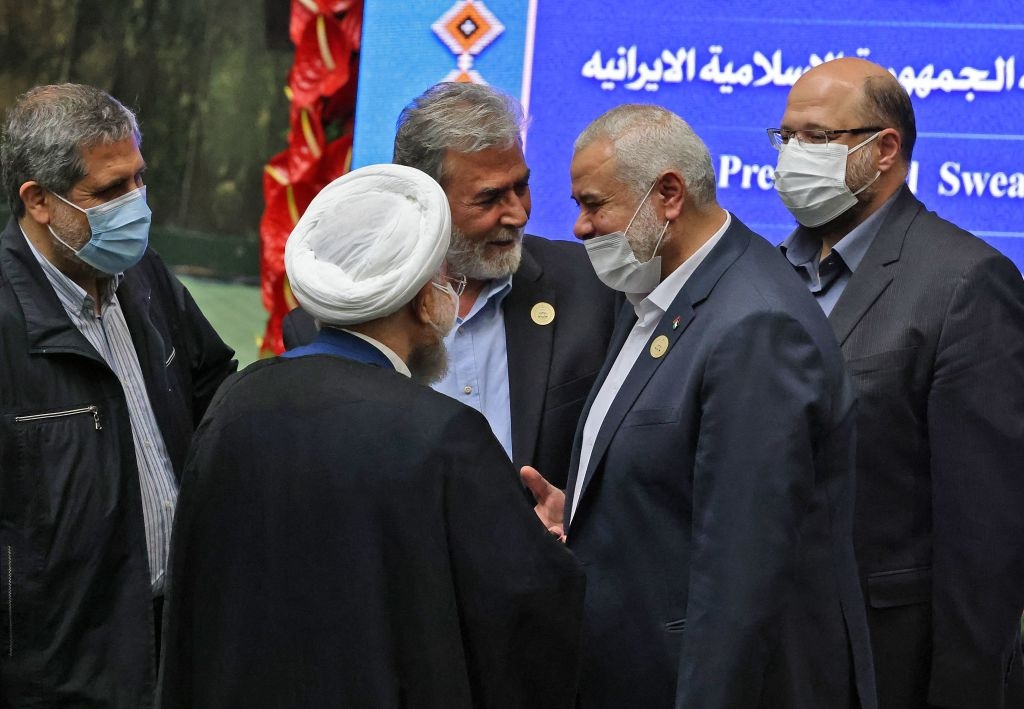
Przywódcy rozmaitych palestyńskich frakcji starają się o wsparcie Iranu dla ich dżihadu (świętej wojny) przeciwko Izraelowi. To znaczy, że Iran pod rządami nowego prezydenta, Ebrahima Raisiego, będzie kontynuował dostarczanie pomocy finansowej i militarnej palestyńskim grupom terrorystycznym w rządzonej przez Hamas Strefie Gazy. Na zdjęciu: przywódca Hamasu, Ismail Hanija (drugi z lewej) na spotkaniu z odchodzącym prezydentem, Hassanem Rouhanim, podczas ceremonii zaprzysiężenia Raisiego w Teheranie, 5 sierpnia 2021. (Zdjęcie: Atta Kenare/AFP via Getty Images)

Podczas gdy administracja Bidena nadal mówi o potrzebie działań budujących zaufanie między Izraelem a Palestyńczykami, by stworzyć środowisko do osiągnięcia rozwiązania w postaci dwóch państw, przywódcy rozmaitych palestyńskich frakcji starają się o wsparcie Iranu dla ich dżihadu (świętej wojny) przeciwko Izraelowi.

Przywódcy Hamasu, Palestyńskiego Islamskiego Dżihadu (PIJ), Ludowego Frontu Wyzwolenia Palestyny (LFWP) i innych frakcji, którzy pojechali do Iranu na inaugurację prezydenta Ebrahima Raisiego, wydają się zadowoleni z obietnic, jakie otrzymali od mułłów w Teheranie.

Administracja Bidena chce kroków budujących zaufanie między Izraelem a Palestyńczykami. Palestyńskie grupy terrorystyczne i ich zwolennicy chcą jednak budujących zaufanie kroków z każdym krajem, który jest gotowy wspierać ich w realizacji marzenia o zniszczeniu Izraela.

Administracja Bidena prawdopodobnie może promować jakiś rodzaj budujących zaufanie kroków między Izraelem a Autonomią Palestyńską pod rządami Mahmouda Abbasa. Nie ma jednak żadnego sposobu, na jaki administracja Bidena byłaby w stanie doprowadzić do takich kroków między Izraelem a palestyńskimi marionetkami Iranu.

Raisi i inni irańscy dygnitarze zapewnili palestyńskich przywódców, że Iran będzie kontynuował wspieranie Palestyńczyków w ich walce przeciwko Izraelowi. To znaczy, że Iran pod rządami Raisiego będzie kontynuował dostarczanie pomocy finansowej i militarnej palestyńskim grupom terrorystycznym w rządzonej przez Hamas Strefie Gazy.

Iran nie obiecał wkładu w rekonstrukcję Strefy Gazy w następstwie 11-dniowej wojny w maju między Hamasem a Izraelem. Iran nie obiecał zbudować nowych szpitali i szkół w Strefie Gazy. Iran nie obiecał pomóc dwóm milionom Palestyńczyków żyjących w Strefie Gazy w radzeniu sobie z wzrastająca liczbą infekcji Covid-19.

Podczas osobnych spotkań z palestyńskimi przywódcami Raisi podkreślił, że Islamska Republika “będzie kontynuować wsparcie Palestyny jako głównej sprawy muzułmańskiego świata”.

“Nie mamy i nigdy nie mieliśmy jakichkolwiek wątpliwości, co do tej polityki – powiedział Raisi podczas spotkania z przywódcą Hamasu, Ismailem Haniją. – Naszym zdaniem Palestyna jest i będzie pierwszą sprawą w muzułmańskim świecie”.

Raisi chwalił przywódcę Hamasu za jego optymizm w sprawie likwidacji Izraela. Powiedział, że rakiety i pociski wystrzelone na Izrael przez Hamas i PIJ podczas niedawnej wojny pokazały, że uczyniono wielki skok w walce przeciwko Izraelowi.

“Dzisiaj pojawiły się oznaki wielkiego zwycięstwa ruchu oporu i Operacja Saif Al-Kuds [“Miecz Jerozolimy”, nazwa używana przez Hamas na ostatnią wojnę z Izraelem], była jedną z oznak tego zwycięstwa” dodał Raisi.

Ze swej strony Hanija zapewnił irańskiego prezydenta i innych dygnitarzy w Teheranie, że Hamas będzie stał wraz z Iranem w każdym konflikcie z USA i Izraelem.

Podczas spotkania z sekretarzem generalnym PIJ, Zijadem al-Nachalahem, Raisi “podkreślił znaczenie poparcia dla uciskanego palestyńskiego narodu przeciwko izraelskiej agresji”. “

Nachalah powiedział, że Islamska Republika jest modelem pokojowego przekazania władzy, podczas gdy zaledwie kilka miesięcy temu był konflikt w sprawie przekazania władzy w USA.

Podczas innego spotkania w sekretarzem generalnym LFWP, Talalem Nadżim i jego zastępcą, Abu Ahmadem Fuadem, irański prezydent powiedział, że “Palestyna i wyzwolenie Al-Kuds (Jerozolimy) są najważniejszymi sprawami w świecie muzułmańskim”.

Nadżi, ze swej strony, powiedział, że walka przeciwko Izraelowi będzie trwała “aż do ostatecznego zwycięstwa nad izraelskim reżimem”. On także zapewnił Irańczyków, że palestyńskie grupy terrorystyczne będą “stały wraz z irańskim narodem, ponieważ Islamska Republika stara się bronić bezpieczeństwa całego regionu”.

Spiker irańskiego parlamentu, Mohammad Baker Kalibaf, także spotkał się z palestyńskimi przywódcami i “ponownie potwierdził poparcie Teheranu dla Palestyny aż do wyzwolenia Jerozolimy”.

Dodatkowo palestyńscy przywódcy spotkali się z dowódcą Korpusu Strażników Rewolucji Islamskiej (IRGC), generałem Hosseinem Salamim, który powiedział im, że “upadek syjonistycznego reżimu jest realny i może zmaterializować się wkrótce”. “Upadek syjonistycznego reżimu” jest określeniem na likwidację Izraela, co jest jawnym i otwarcie deklarowanym celem mułłów w Iranie.

“Biorąc pod uwagę niedającą się zaprzeczyć rzeczywistość w terenie, jesteśmy spokojni, że upadek syjonistycznego reżimu jest czymś więcej niż życzeniem, jest rzeczywistością, która może zdarzyć się w niedalekiej przyszłości” – powiedział generał Salami.

Podkreślił, że “tylko siła może zmusić rebelianckich syjonistów, by zamilkli. Wzmocnienie Palestyny jest strategią i sposobem, który nigdy nie powinien być zatrzymany”.

Generał Salami odrzucił ideę, że Izrael jest niezwyciężony: “Ta idea [państwa nie do pokonania] upadła nagle wraz z Operacją Saif al-Kuds i ta bitwa pokazała, że to Palestyna stała się potężna, a upadek fałszywego reżimu syjonistycznego jest ostateczny”.

Ośmieleni obietnicami, jakie otrzymali podczas wizyty w Iranie, przywódcy palestyńskich frakcji wydają się bardziej wyzywający niż kiedykolwiek i nasilają groźby nie tylko wobec Izraela, ale także wobec krajów arabskich, które starają się znormalizować swoje stosunki z Izraelem.

Kilka dni po wizycie w Teheranie palestyńskie frakcje raz jeszcze potępiły Arabów za normalizowanie stosunków z Izraelem. Ostrzeżenie przyszło w reakcji na niedawną wizytę izraelskiego ministra spraw zagranicznych, Jaira Lapida, w Maroku.

Frakcje potępiły wizytę Lapida jako “zbrodnię” wobec Palestyńczyków i wezwały Arabów do “odrzucenia normalizacji z syjonistycznym tworem”.

Ponowiona obietnica pomocy Iranu dla Palestyńczyków w walce przeciwko Izraelowi pokazuje, że mułłowie w Teheranie czują się ośmieleni przez postrzeganą słabość administracji Bidena i innych zachodnich mocarstw wobec irańskiego zagrożenia nuklearnego.

Najwyraźniej Raisi i jego przyjaciele w Teheranie są przekonani, że USA i Europejczyków nie obchodzi fakt, że Iran nadal dostarcza broń i pieniądze palestyńskim grupom terrorystycznym, których zadeklarowanym celem jest zabicie tak wielu Żydów, jak to możliwe, i unicestwienie Izraela.

Ugłaskiwanie mułłów i nie pociąganie ich do odpowiedzialności za ich ciągłe wsparcie dla terrorystów doprowadzi do dalszego rozlewu krwi na Bliskim Wschodzie. Milczenie USA i reszty międzynarodowej społeczności w obliczu najnowszych gróźb Iranu i jego marionetek sygnalizuje, że jest tylko kwestią czasu zanim dżihad palestyńskich grup terroru wobec Izraela, najprawdopodobniej z entuzjastyczną pomocą Iranu, przybierze na sile w całkowicie przewidywalny sposób.


Zawartość publikowanych artykułów i materiałów nie reprezentuje poglądów ani opinii Reunion’68,
ani też webmastera Blogu Reunion’68, chyba ze jest to wyraźnie zaznaczone.
Twoje uwagi, linki, własne artykuły lub wiadomości prześlij na adres:
webmaster@reunion68.com


Meet Esmaeil Khatib, Iran’s New Spymaster

Meet Esmaeil Khatib, Iran’s New Spymaster

Dr. Ardavan Khoshnood and Erfan Fard


BESA Center Perspectives Paper No. 2,154, September 17, 2021

EXECUTIVE SUMMARY: The new president of the Islamic Republic of Iran, Ebrahim Raisi, has selected cleric Esmail Khatib as Minister of Intelligence. Khatib is a radical Islamist with close ties to both Supreme Leader Ali Khamenei and the Islamic Revolutionary Guard Corps. During his tenure, we can expect a more aggressive approach by the Ministry of Intelligence, meaning more terrorism and violence at the hands of the Islamic regime.

Ebrahim Raisi was sworn in as the new president of the Islamic Republic of Iran on August 5, 2021. Six days later, he released his cabinet selections. Raisi chose cleric Esmaeil Khatib as Minister of Intelligence. Khatib will be the regime’s eighth Minister of Intelligence, succeeding Mahmoud Alavi.

Who is Khatib?

Information on Khatib is scarce. He was born in 1961-62 and is an influential cleric with close ties to Supreme Leader Ali Khamenei. This is no surprise, as he was Khamenei’s student when studying Islamic jurisprudence. He was also a student of Muhammad Fazel Lankarani, Naser Makarem Shirazi, and Mojtaba Tehrani; all of them are radical Islamists.

Lankarani was a die-hard supporter of Ayatollah Rohollah Khomeini, supported the fatwa against Salman Rushdie, and issued a fatwa in 2006 against Azeri physician and writer Rafiq Tagi, who was later assassinated. Makarem Shirazi was highly influential in the preparing of the constitution of the Islamic Republic. He is mostly known for his objection to allowing females to watch sporting events. In 2010, Shirazi stated that “the Holocaust is nothing but superstition.” Mojtaba Tehrani was a student of Khomeini and is very close to the incumbent Supreme Leader. He is known primarily for his support for the Guardianship of the Islamic Jurist theory.

Khatib is thus a highly conservative and radical cleric with close ties to the Islamic establishment and to Ali Khamenei.

Khatib´s prior positions

Unlike Mahmoud Alavi, the outgoing Minister of Intelligence, who had no previous experience in security or intelligence, Khatib has been involved with both. He does not, however, have a formal education in intelligence studies or political science. His expertise lies solely in Islamic jurisprudence.

In 1980-81, after the Islamic Revolutionary Guard Corps (IRGC) was established, Khatib, then in his early twenties, joined the precursor of the IRGC Intelligence Organization. His exact role is unknown, though it is believed that he was highly active in the killing of Iranian opponents of the new Islamic regime who resided in Iranian Kurdistan. During that period, Khatib cooperated closely with Mohsen Rezaee, now a major general of the IRGC and secretary of the powerful Expediency Discernment Council.

In November 1997, Khatib was appointed head of the Ministry of Intelligence regional branch in Qom by then Minister of Intelligence Ali Fallahian, another conservative cleric close to Khamenei. In 1992, during Fallahian´s tenure, the Mykonos Restaurant assassinations occurred. The restaurant, which was in Berlin, was attacked by terrorists sent from Iran to eliminate Iranian opposition members. Several Iranians were killed in the attack. A German court placed the blame on the Islamic regime’s most senior leaders, including Fallahian. The AMIA attack in Argentina in 1994 also occurred while Fallahian was Minister of Intelligence, leading to his being placed on an Interpol wanted list by Argentina.

Khatib was previously head of the Security Department of the Astan Quds Razavi (AQR), a trust that manages the shrine of Imam Reza. The head of the AQR between 2016 and 2019 was current president Ebrahim Raisi, who left the position when he was appointed Chief Justice of Iran.

Beside the above positions, Khatib has worked directly for Ali Khamenei in his administration (the “House of Leadership”) and also served as Iran’s chief warden for several years.

The Ministry of Intelligence under Khatib

Khatib has been installed as the new Minister of Intelligence at a time when the Islamic regime is being bombarded by one catastrophe after another. Tehran is struggling to keep the country safe from infiltrations, attacks on its nuclear plants, and assassination attempts on its most important human assets. Iranian intelligence and counterintelligence are deeply compromised, and conflicts roil between the Ministry of Intelligence and the IRGC Intelligence Organization. These factors were without doubt of the utmost importance when Khatib was selected.

recommended by: Leon Rozenbaum

Khatib is not only very close to Raisi and trusted by him, but also a loyal servant of Supreme Leader Khamenei. It is understandable, therefore, that he was selected to purge the Iranian intelligence community and make its counterintelligence and information protection more effective and secure. He has strong experience in intelligence and counterintelligence, the blessing and trust of the Supreme Leader as well as the country’s most powerful ayatollahs, and perhaps most importantly, he is trusted by the IRGC. Khatib is thus expected not only to “clean up” the Iranian intelligence community but also to diminish the ongoing conflict between the IRGC Intelligence Organization and the Ministry of Intelligence. We will probably see closer cooperation between the two.

During Khatib´s tenure, the Ministry of Intelligence is like to be more aggressive on both the domestic and international fronts. Domestically, the use of torture and arbitrary arrests of opponents of the regime will increase as the ministry grows more proactive. In the region, we will probably see a more sectarian Iran. Khatib´s brand of Islamism, which puts him in the company of the most radical ayatollahs in Iran, will inevitably affect his decision-making. In the US and Europe, Iranian dissidents will be subjected to intensified surveillance and espionage. Islamic terrorism around the world at the hands of the Islamic Republic of Iran will increase in intensity.

While Iran will be careful not to provoke the Western world, it will be much more ready to use terrorism and violence to eliminate opponents of the regime as well as anyone it considers a threat to the regime.


Dr. Ardavan Khoshnood, a non-resident associate at the BESA Center, is a criminologist and political scientist with a degree in Intelligence Analysis. He is also an associate professor of Emergency Medicine at Lund University in Sweden. @ardavank

Erfan Fard is a counterterrorism analyst and Middle East Studies researcher based in Washington, DC. @EQFARD


Zawartość publikowanych artykułów i materiałów nie reprezentuje poglądów ani opinii Reunion’68,
ani też webmastera Blogu Reunion’68, chyba ze jest to wyraźnie zaznaczone.
Twoje uwagi, linki, własne artykuły lub wiadomości prześlij na adres:
webmaster@reunion68.com