Archive | October 2021

Kibbutz harvests previously extinct dates eaten in Judea 2000 years ago

Kibbutz harvests previously extinct dates eaten in Judea 2000 years ago

ROSSELLA TERCATIN


Last year, one of the palms bore fruit for the first time, and now the production has increased with some of it being sold to visitors.

.
Dates from palm tree grown from 2,000 year old see at the Arava Institute for Environmental Studies. /  (photo credit: Marcos Shonholtz)

Researchers recently harvested the second crop of dates grown on palm trees from 2,000-year-old seeds retrieved from archaeological excavations in the region, the Arava Institute for Environmental Studies in Kibbutz Ketura said Monday.

After one of the trees bore fruit for the first time last September, this year’s harvest has increased. Some of the dates will be available for visitors to buy and taste a staple of the ancient Judeans’ diet.

The special fruits resemble modern species of dates and have a very sweet taste, similar to honey, according to people who have tasted them.

The ancient palm grove at Ketura has a few trees. The most senior, which researchers have named Methuselah – the oldest man who ever lived, according to the Bible – was planted in 2005 from a seed found in Masada in the 1960s during excavations led by legendary Israeli archaeologist Yigal Yadin.

Over the following years, the researchers decided to replicate the experiment, planting another 32 seeds from various excavations. About six of them eventually germinated, mostly from Masada or Qumran, another iconic site, where the world renowned Dead Sea Scrolls were unearthed.
.
Dates from palm tree grown from 2,000 year old see at the Arava Institute for Environmental Studies. (credit: Marcos Shonholtz)

While Methuselah was found to be a male tree, some of the new palms turned out to be female, allowing pollination.

“It’s very exciting to taste the dates and see such a large and significant amount of fruit because we had no guarantees that we would get a fruit-bearing female tree,” said Dr. Elaine Solowey, director of the Arava Institute’s Center for Sustainable Agriculture, who leads the project together with Dr. Sarah Sallon, director of the Louis L. Borick Natural Medicine Research Center of Hadassah-University Medical Center.

“It looks like a miracle on several levels,” she said. “Seeds from archaeological digs sprouted successfully, and against all odds, female trees sprouted among them. We are excited to revive an ancient variety of dates.”


Zawartość publikowanych artykułów i materiałów nie reprezentuje poglądów ani opinii Reunion’68,
ani też webmastera Blogu Reunion’68, chyba ze jest to wyraźnie zaznaczone.
Twoje uwagi, linki, własne artykuły lub wiadomości prześlij na adres:
webmaster@reunion68.com


How the Abduction of a Jewish Boy Led to the Founding of “Alliance”

How the Abduction of a Jewish Boy Led to the Founding of “Alliance”

Ushi Derman


The Alliance school network has been considered for years an educational empire. More than a million students have graduated from its hundreds of schools in dozens of countries around the world, since its founding in 1860. Much has been written about Alliance’s educational message. Its leaders’ proficiency in integrating the old and the new, tradition and progress, and excellence and humanity led to a significant cultural and social revolution among the Jewish boys and girls who lived in Islamic nations – from the North African city of Tetouan to the Land of Israel to Tehran.

That is all well and good. But do the thousands of pupils attending the first day of school this morning at Israel’s Alliance schools know that they owe their education to the germ that infected a helpless Italian-Jewish baby 167 years ago? Probably not. 

Alliance Israelite Universelle girls’ school in traditional costume, Tunis, Tunisia, 1903 ( Oster visual documentation center at Beit Hatfutsot, courtesy of Abraham Hatal, Jerusalem)

Shlomo Mortara was a successful Jewish tailor from Bologna, whose clientele included the local police. Ten policemen wearing uniforms produced by the Mortaras knocked on their door on the evening of June 23, 1858. Their stern facial expressions signaled to the tailor that this jovial group had not come to praise him for his sewing skills. One officer presented Mortara with a decree signed by Pope Pius IX, stating that he must hand over his six-year old son Edgardo to the church at once. The reason: Church records revealed that Edgardo had been baptized when he was a year old, and the law banned Catholic children from being educated in a Jewish home. Once must remember that at that time, the modern nation of Italy had yet to be established, and the city of Bologna was part of the Papal State. The failing theocracy’s primitive law enforcement answered to Pope Pius IX, the head of state who declared himself the only human on the planet who was never mistaken.

The Jewish tailor begged the Italian officers to grant him 24 hours to clarify the matter and immediately contacted the city’s governor. The governor shared with him some jaw-dropping information. When Edgardo was a year old, he had contracted tuberculosis and appeared to be dying. This much the father certainly knew. But he did not know that – fearing that the infant would pass to the afterlife and burn in eternal hell before he was absolved of his sins – the family’s Christian servant girl, Anna Morisi, took him to the church to baptize him.

The teaching staff of Alliance School, Hamadan, Iran 1947 (Oster visual documentation center at Beit Hatfutsot, courtesy of Moshe Rassek, Israel)

Anna Morisi was not just an innocent believer. She had a complex past. She had become pregnant out-of-wedlock a few years prior. Shlomo Mortara mercifully paid to board her baby in an orphanage. But when she fell pregnant again several years later, the Mortaras refused to collaborate and fired their servant. As the old saw says, you should always beware of those you help. She divulged to church authorities after she was sacked that the Mortara family was holding a baptized child.

The father’s pleas did not help. Two days later, a carriage loaded with toys and sweets provided by the Church stopped in front of the Mortara home, and they were forced, choking back their tears, to bid their little son farewell. They would only meet again when Edgardo was an altar boy named after his abductor, “Pius.”

But what’s the big deal? The Church has kidnapped hundreds of Jewish children throughout history. What made Steven Spielberg consider turning the Edgardo Mortara story into a film? The answer combines technology and politics.

Inspector Milou addresses the director Mr. Lerner and the children and teachers of Alliance School during the end of the year ceremony, Meknes, Morocco, June 1954 ( Oster visual documentation center at Beit Hatfutsot, Raphael and Georgette Cohen collection)

One must remember that this story did not take place in the dimness of the Middle Ages. It occurred during the last third of the 19th century, when trains began to transverse Europe and the telegraph that connected the four corners of the globe expedited the development of mass communications. The Jewish world exploited the technological revolution, and key figures like Minister Moses Montefiore, shed light on the story that echoed around the world. International press dubbed it the “Mortara Affair.” It represented a significant turning point as it comprised the first public Jewish protest since the Jews’ emancipation.

The Mortara Affair also touched an acutely sensitive political nerve: the battle of secular Western nations to wrest the public arena from religious institutions led by the Papal State. Major French and English newspapers used the kidnapped Jewish boy to lock horns with the Church and the Mortara case remained in the headlines.

“This was an act of arrogance on the part of one of the most backwards nations in the West,” wrote historian Renee Remo about the Papal State. “The abduction of the Italian-Jewish boy from Bologna did much more to foment anti-religious Catholic sentiment than the awkward public blunders of dozens of bishops and priests.” In other words, the free world hated the Church more than it pitied the Mortaras.

Student of the Laurence Kadoorie School, Mosul, Iraq 1930s. In the background the two school buildings: one the Alliance school for boys named after Laurence Kadoorie, and the second, the Alliance school for girls named after Rima Kadoorie. ( Oster visual documentation center at Beit Hatfutsot , courtesy of Ezra Laniado, Israel)

How did the story end? All attempts to free Edgardo failed, because Pius IX refused and because reeducation turned the Jewish boy into a devout Catholic. When he became a teenager, Edgardo changed his name to Pius and joined the Augustine Order. He later served the Church in Germany and New York, earning the title of Papal Emissary. In 1879, 21 years after he was kidnapped from his parents’ home, he was permitted to renew his relations with his Jewish family. He died in a Belgian monastery in 1940.

The most important lesson learned from this dismal affair was that there was a need for an independent Jewish framework to fight the Church’s proselytizing. This was the background for the establishment in 1860 France of the Alliance Israélite Universelle Society, bearing the motto:  “All Jews are responsible for one another.”  Owing its establishment in large part to the “Mortara Affair,” Alliance championed the empowerment of Jewish identity alongside instilling modern values, foreign language acquisition, and science education. The first Alliance school opened in 1862 in Tetouan, Morocco. In 1870, the first agricultural school opened in the Land of Israel in Mikveh Yisrael. The Alliance school in Haifa opened in 1884, and eight years later, another Alliance school opened in Jerusalem.

They say that the fluttering of a butterfly’s wings on one side of the globe can lead to a tsunami on the other. In this story, the emergence of a miniscule germ in the Land of the Boot sparked an educational and social revolution in the Jewish world of the Islamic nations and the Middle East, changing the lives of tens of thousands of children and adults. May this school year be a success!


Zawartość publikowanych artykułów i materiałów nie reprezentuje poglądów ani opinii Reunion’68,
ani też webmastera Blogu Reunion’68, chyba ze jest to wyraźnie zaznaczone.
Twoje uwagi, linki, własne artykuły lub wiadomości prześlij na adres:
webmaster@reunion68.com


Largest wine factory in the world from Byzantine period unearthed in Yavne

Largest wine factory in the world from Byzantine period unearthed in Yavne

ROSSELLA TERCATIN


The sophisticated facility was probably able to produce as many as two million liters of wine per year.
.
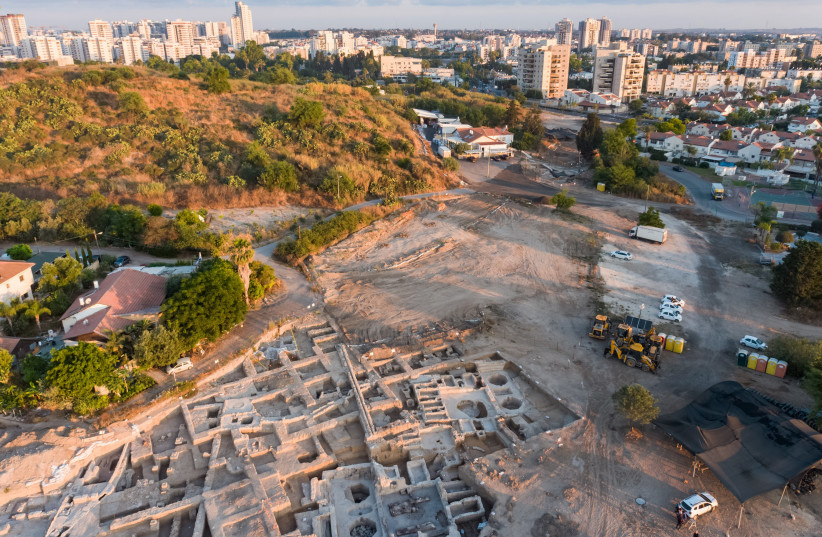
Excavation by the Israel Antiquities Authority at Yavne – Aerial view / (photo credit: Assaf Peretz/Israel Antiquities Authority)

A sophisticated wine production facility, the largest from the Byzantine period ever found in the world, was unearthed in Yavne, the Antiquities Authority (IAA) announced Monday.

The factory was used to produce the legendary regional wine, known as Gaza or Ashkelon wine after the ports from where it was exported all over the Mediterranean. It included five impressive wine presses, large treading floors where the grapes were crushed, two huge octagonal vats, storage rooms and kilns to produce jars to conserve the wine.

.
The facility is said to have produced as much as two million liters of wine annually.

Yavne is located in central Israel and was an important city some 1,500 years ago was, according to IAA archaeologist Dr. Jon Seligman, co-director of excavation with Dr. Elie Haddad and Liat Nadav-Ziv.

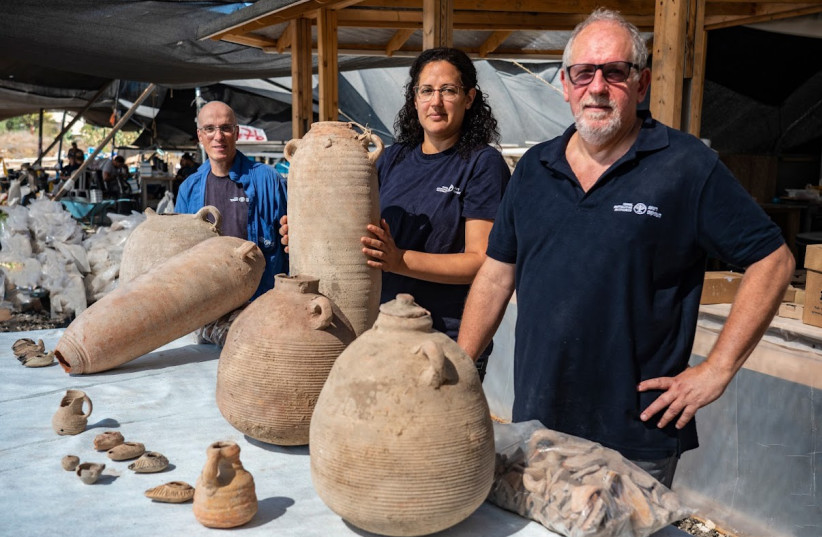
From right to left: Dr. Elie Hadad, Liat Nadav-Ziv – Yavne Excavation Directors; Eli Escozido – Director of the Israel Antiquities Authority; Diego Barkan – Tel Aviv District Archaeologist, and Dr. Jon Seligman – Yavne Excavation Director. (credit: YANIV BERMAN/ISRAELI ANTIQUITIES AUTHORITY)

“Yavne was important enough to be put in a map from the period with Jerusalem, featuring three large churches,” he said. “First and foremost, it was a Christian town. But we also know that there were populations of Jews and Samaritans living there during the same time period. It had a bishop. It was located in what at the time was on a major road, called the sea highway, which went from north to south, and on its junction with the Sorek River.”

The wine factory’s remains were first uncovered during a salvage excavation prior to the construction of a new residential and commercial neighborhood. In Israel, all development projects must be accompanied by such excavations.

“We have been exposing an industrial area of ancient Yavne,” Seligman said. “We found remains of other industries, for example, producing glass and metal. We also found remains from other periods, such as a house from the ninth century and some other buildings from the interim period between the Byzantine and Islamic periods.”

Excavation directors, from right to left: Dr. Jon Seligman, Liat Nadav-Ziv and Dr. Elie Hadad. (credit: YANIV BERMAN/ISRAELI ANTIQUITIES AUTHORITY)

In addition, the remains of another wine press was uncovered, dating back some 2,300 years ago, during the Persian period, testifying to the city’s long tradition in wine production, as stated in the Mishna, which mentions a vineyard of Yavne.

After the destruction of Jerusalem at the hands of the Romans in 70 CE, Rabban Yochanan ben Zakkai moved the Sanhedrin, the supreme court and legislative body in all matters of Halacha, to Yavne.

So far, the archaeologists have not excavated the area where the ancient city center was located, and they have not uncovered the remains of the churches, Seligman said.

“We did find some traces of their presence, such as pieces of marbles and columns,” he said.

The wine produced in Yavne was very well known and prestigious, Seligman said.

“It was a light, white wine,” he said. “We have found many wine presses in Israel, but what is unique here is that we are talking about a cluster of five huge ones, especially beautiful in their architecture.”

In addition, the archaeologists uncovered the remains of thousands of jars to store, age and export the wine, Seligman said.

“They have a specific and very recognizable shape,” he said. “The same jars were found in many places around the region, including Egypt, and we know that they were used for exporting the wine.”


Zawartość publikowanych artykułów i materiałów nie reprezentuje poglądów ani opinii Reunion’68,
ani też webmastera Blogu Reunion’68, chyba ze jest to wyraźnie zaznaczone.
Twoje uwagi, linki, własne artykuły lub wiadomości prześlij na adres:
webmaster@reunion68.com


W Październiku ’56 Polskę przed rozlewem krwi uratowali robotnicy, Gomułka i Chiny

Prawdopodobnie w 1956 r. nie doszło do interwencji sowieckiej w Polsce, bo Gomułka przekonał Nikitę Chruszczowa, że jest prawdziwym komunistą (ZBIGNIEW MATUSZEWSKI / PAP)


W Październiku ’56 Polskę przed rozlewem krwi uratowali robotnicy, Gomułka i Chiny

Józef Krzyk


Ludzie skandowali: “Wiesław, Wiesław!”, ale w pewnym momencie dało się też usłyszeć: “Wyszyński, Wyszyński!”. Gomułka bał się, że ten entuzjazm przerodzi się w bunt.
.

Rozmowa z dr hab. Pauliną Codogni

Józef Krzyk: Co się wydarzyło 24 października 1956 r. w Warszawie?

Paulina Codogni: Na placu Defilad przed Pałacem Kultury i Nauki odbył się wiec, na który przyszło według szacunków 300, a może nawet 400 tys. mieszkańców stolicy, by spotkać się z nowo wybranym I sekretarzem Komitetu Centralnego PZPR Władysławem Gomułką – towarzyszem „Wiesławem”, jak go powszechnie nazywano ze względu na konspiracyjny pseudonim. Powitały go chóralne okrzyki: „Niech żyje Wiesław!”. Odśpiewano mu „Sto lat!”. Ludzie przyszli przez nikogo nieprzymuszeni, aby entuzjastycznie zamanifestować poparcie. Wszyscy uważali, że tylko on jest w stanie tak zmienić Polskę, że zacznie się dziać lepiej. To kulminacyjny moment polskiego Października.

.

Przemówienie Władysława Gomułki i wiec na placu Defilad 24 października 1956 r.

.

Czy to był koniec stalinizmu w Polsce? A może koniec złudzeń? Gomułka na zakończenie przemówienia rzucił wezwanie: „dość wiecowania”?

– To jedno z wielu pytań, na które wciąż, 65 lat po Październiku, nie potrafimy jednoznacznie odpowiedzieć. Z pewnością był to jeden z ważniejszych momentów w historii PRL-u. Jedni uważają, że to był przełom – koniec stalinowskich represji. Inni przeciwnie – że kontynuacja, bo system oparty na autokratycznych rządach jednej partii pozostał. Zaczął się tylko przeobrażać w łagodniejszą wersję.

Jedna ekipa komunistów została zastąpiona przez inną, która rządziła za pomocą nieco mniej opresyjnych metod?

– Gomułka był komunistą, ale wyobrażał sobie komunizm inaczej niż zatwardziali staliniści tacy jak Bolesław Bierut. Wierzył, że można do niego dojść polską drogą, z pewnymi odstępstwami od linii Moskwy, z ustępstwami na przykład na rzecz prywatnej własności na wsi. Takie poglądy pod koniec lat 40. kosztowały go oskarżenie o odchylenie prawicowo-nacjonalistyczne. Odsunięto go od władzy, odebrano legitymację partyjną i zamknięto w willi w Miedzeszynie. Nie postawiono przed sądem i nie urządzono procesu, ale i tak w powszechnej opinii uchodził za jeszcze jedną ofiarę komunizmu. W niepamięć poszło to, że zaraz po wojnie w Polsce sam go zaprowadzał. Szykany, które od 1949 r. spotykały Gomułkę, stały się w 1956 r. jego atutem w rozgrywce politycznej.

Moskwa chyba się bała, że Gomułka będzie drugim Titą i tak jak on wyprowadzi kraj z bloku. Ze względu na położenie Polska była jednak dla niej od Jugosławii ważniejsza. Czy to dlatego tak nerwowo Nikita Chruszczow zareagował na wieści z Warszawy?

– Gomułka pod niektórymi względami rzeczywiście mógł się kojarzyć z Titą. Podobnie jak on, wojnę przeżył w kraju, a nie jak Bierut i wielu innych komunistów – w Moskwie. Nie dało się nim tak łatwo sterować, w różnych sprawach miał swoje zdanie i nie zamierzał ślepo naśladować sowieckich rozwiązań. Przykładem może być kolektywizacja rolnictwa – od początku był jej przeciwny.

Władysław Gomułka (1905-82) podczas słynnego przemówienia na placu Defilad 24 października 1956 r. Trzy dni wcześniej wrócił do władzy - został I sekretarzem PZPR. Źródłem ostrych walk frakcji w partii stały się spory o to, jak ma przebiegać destalinizacja. Inteligenccy puławianie, za którymi się Gomułka ostatecznie opowiedział, chcieli reform systemowych, liberalizacji i demokratyzacji. Plebejscy natolińczycy domagali się czystki personalnej, ale system oceniali jako dobryWładysław Gomułka (1905-82) podczas słynnego przemówienia na placu Defilad 24 października 1956 r. Trzy dni wcześniej wrócił do władzy – został I sekretarzem PZPR. Źródłem ostrych walk frakcji w partii stały się spory o to, jak ma przebiegać destalinizacja. Inteligenccy puławianie, za którymi się Gomułka ostatecznie opowiedział, chcieli reform systemowych, liberalizacji i demokratyzacji. Plebejscy natolińczycy domagali się czystki personalnej, ale system oceniali jako dobry Fot. East News / AFP

To wszystko z pewnością Gomułce na Kremlu pamiętano. Najbardziej jednak sowieckich przywódców musiał zaskoczyć i niepokoić fakt, że władzę w Polsce ma objąć człowiek, który kilka poprzednich lat spędził w przymusowym odosobnieniu. W dodatku polska partia postawiła ich przed faktem dokonanym. Nikt z nimi tej nominacji nie omawiał.

Czy to dlatego Chruszczow bez zapowiedzenia 19 października przyleciał do Warszawy i już na lotnisku wygrażał pięścią gospodarzom: „Ten numer nie przejdzie”?

– Nie do końca wiemy, co za tą wizytą stało: czy chodziło tylko o pokaz siły, któremu jednak towarzyszyła chęć dogadania się, czy też towarzysze radzieccy zamierzali nie dopuścić do niepożądanej przez siebie zmiany.

W tym samym czasie doszło do przemieszczeń stacjonujących na Dolnym Śląsku i pod Bornem Sulinowem wojsk radzieckich w stronę Warszawy.

Bez dostępu do moskiewskich archiwów nie da się jednak w pełni tej sprawy rozwikłać i kategorycznie stwierdzić, czy chodziło tylko o pokaz siły i wywarcie presji czy o zbrojną interwencję.

Jeśli Moskwa chciała wysondować, co się w Polsce dzieje, to wybrała mało subtelne metody. Chyba rzeczywiście groziła nam wtedy zbrojna interwencja. Dlaczego do niej nie doszło?

– Na to pytanie też nie jesteśmy w stanie odpowiedzieć bez wglądu w moskiewskie archiwa. 21 października, nazajutrz po nerwowych rozmowach w Belwederze, Chruszczow miał polecić swoim oddziałom powrót do garnizonów.

Według jednej teorii to był efekt dogadania się – Gomułka przekonał Chruszczowa zarówno słowami, jak i postawą, że jest prawdziwym komunistą i będzie podążać właściwą linią, a chce tylko wprowadzić pewne zmiany, które – jego zdaniem – komunizmowi wyjdą na dobre. Jest też druga wersja – że Polskę uratowali w tamtym momencie… Chińczycy.

Moskwa poinformowała o swoich zamiarach rządy państw komunistycznych, a Pekin dał znać, że się nie zgadza.

Nikita ChruszczowNikita Chruszczow Fot. domena publiczna

Na Warszawę wtedy szły wojska nie tylko radzieckie, ale też polskie. Nasi mieli stawić opór Armii Czerwonej czy pacyfikować stolicę?

– Zarówno jednostki Wojska Polskiego, jak i podległe Ministerstwu Spraw Wewnętrznych formacje Wojsk Wewnętrznych zostały postawione w stan gotowości do ewentualnej pacyfikacji Warszawy. Według niektórych źródeł część Wojska Polskiego była jednak gotowa stanąć w obronie suwerenności, choć wynik takiej konfrontacji z góry dało się przewidzieć. Gorące nastroje dało się wyczuć jednak nie tylko w wojsku, ale też w całym społeczeństwie. Wiec z 24 października był najliczniejszy, jednak wiele mniejszych w tamtym momencie odbywało się zarówno w stolicy, jak i w mniejszych miejscowościach. Ogromne napięcie panowało na Politechnice Warszawskiej, a w zakładach, m.in. FSO na Żeraniu, zaciągano warty. Robotnicy chcieli być gotowi do walki, gdyby wojska radzieckie dokonały napaści na ich miejsce pracy. Nastroje podsycały plotki i doniesienia – 20 października rano przez pomyłkę jeden radziecki batalion łączności znalazł się na przedmieściach Warszawy.

Warszawa jednak nie podzieliła losu Budapesztu, spacyfikowanego na początku listopada przez radzieckie czołgi. Czemu tak się stało?

– Myślę, że decydującą rolę odegrała postawa Gomułki. Udało mu się przekonać towarzyszy z Moskwy, że nie chce zrobić niczego przeciwko komunizmowi i zależy mu na ugruntowaniu systemu w Polsce, choć nieco innego w szczegółach. Trzeba też podkreślić ogromną dojrzałość społeczeństwa. Robotnicy byli w stanie trzymać nerwy ma wodzy. W fabryce samochodów na Żeraniu dużą rolę odegrał Lechosław Goździk, człowiek o niezwykłej charyzmie. Taki wcześniejszy Wałęsa. Miał zaledwie 25 lat, ale mimo to posłuch, i to nie tylko wśród robotników FSO, ale też studentów. W chwilach największego napięcia podczas wiecu na Politechnice sprowadzono go z Żerania, aby uspokoił nastroje studentów. Powitał go gwizd niepozwalający mu dojść do słowa. Nie dał jednak za wygraną i też zaczął gwizdać. Prosto do mikrofonu, więc wszyscy go usłyszeli i zaraz się uciszyli. To, że się udało ostudzić gorące głowy studentów, było w tamtym momencie w dużym stopniu zasługą Goździka. W Warszawie wciąż była też świeża pamięć strasznej ofiary powstania z 1944 r. Nikt nie chciał powtórki. I chyba zdawano sobie sprawę z tego, że ze względu na położenie Polski nie ma co marzyć, by Moskwa zgodziła się z Polski zrezygnować. Tymczasem na Węgrzech wiele osób żyło ułudą, że Zachód nie będzie się przyglądał ich losowi bezczynnie, a nastroje w dodatku podgrzewała jeszcze węgierska sekcja Radia Wolna Europa.

W Polsce zmiana warty dokonała się bezkrwawo. Czemu staliniści oddali władzę Gomułce?

– Było trochę przepychanek, ale w październiku nawet przeciwnicy Gomułki zdawali sobie sprawę z tego, że nie są w stanie zapanować nad społeczeństwem pobudzonym do działania przez to, co się wydarzyło w czerwcu w Poznaniu. To były efekty polityki prowadzonej przez władze, systemu nakazowo-rozdzielczego, fal terroru i represji w stosunku do najlżejszych nawet przejawów opozycji, fałszowania wyborów i wszechogarniającej propagandy. Społeczeństwo nie chciało tego już dłużej znosić, a dowodem był bunt w Poznaniu. Mimo wysiłków władzy poznańskiego Czerwca nie udało się przedstawić jako efektu działań agentury imperialistycznej. Nawet władze PRL-u musiały sobie zdać sprawę, że ten bunt był uzasadniony, bo wynikał z błędów i złych decyzji podejmowanych przez nie. W tym momencie dyskusja o błędach była możliwa, bo w Moskwie w marcu 1956 r. umarł Bierut.

Bolesław BierutBolesław Bierut Domena Publiczna

Dla Gomułki w samą porę…

– Zdążył wysłuchać na zjeździe KPZR referatu Chruszczowa o zbrodniach Stalina. Ten referat powielany w tysiącach egzemplarzy w ciągu kilku miesięcy stał się powszechnie znany, dyskutowano o nim na zebraniach partyjnych, przygotował grunt pod polski Październik.

Jednak w innych krajach, poza Węgrami, na zmiany trzeba było poczekać?

– Inne kraje, z wyjątkiem Węgier, gdzie taką rolę odegrał w pewnym sensie Imre Nagy, nie miały swojego Gomułki. W Polsce silna była pozycja Kościoła. Wprawdzie prymas Stefan Wyszyński był internowany, ale władze nie odważyły się go postawić przed sądem – zaatakować, jak zrobiono na Węgrzech z kardynałem Józsefem Mindszentym, skazanym w 1949 r. na dożywocie.

Kościół w Polsce był wtedy też mądry, wiedział, jak daleko może się posunąć.

Istotny był brak kolektywizacji, a przynajmniej jej ograniczony zasięg. Przed 1956 r. władza na różne sposoby starała się obrzydzić życie rolnikom, którzy nie wstąpili do spółdzielni, ale wielu się nie podporządkowało.

A o co chodziło Gomułce?

– O zbudowanie solidnego gmachu socjalistycznego, jak to sam określił. A doraźnie zależało mu na tym, żeby wyciszyć nastroje, bo bał się, że nie uda się nad nimi zapanować. Sam mówił, że podobnie jak na każdym innych placu budowy, tak i przy budowie socjalizmu nie może być tak, że naczelni budowniczowie chcą jedno, architekci coś innego, jeszcze inne zdanie mają inżynierowie i konstruktorzy, a każdy zaczyna zmieniać przyjęte już plany i rysunki wznoszonego gmachu i przekazywać sprzeczne polecenia majstrom i robotnikom. Stąd to rzucone przez niego na koniec pamiętnego przemówienia hasło: „dość wieców i manifestowania”.

Podobno, gdy zobaczył ten wielotysięczny tłum na placu Defilad, był przerażony, i to wcale nie z powodu tremy przed przemówieniem…

– Jakby na ironię był w tamtym momencie bożyszczem tego tłumu, którego się bał. I bał się, że ten entuzjazm przerodzi się w bunt. Ludzie skandowali: „Wiesław, Wiesław!”, ale w pewnym momencie dało się też usłyszeć: „Wyszyński, Wyszyński!”.

Bał się również dużych zmian. W gruncie rzeczy tych najistotniejszych nie było wiele: odwrót od spółdzielczości, poprawienie stosunków z Kościołem i wypuszczenie prymasa Wyszyńskiego. Zresztą zmiany nie potrwały długo. Symbolem ich końca było zamknięcie tygodnika „Po Prostu” już 2 października 1957 r. Gomułka nie chciał zmieniać, chciał tylko przeobrazić zgodnie ze swoim pomysłem komunizm na polską jego wersję, którą uważał za lepszą.

Przemówienia Władysława Gomułki na placu Defilad w Warszawie mogło słuchać około 400 tys. ludzi, 24 października 1956 r.Przemówienia Władysława Gomułki na placu Defilad w Warszawie mogło słuchać około 400 tys. ludzi, 24 października 1956 r. Fot. Wiesław Prażuch

Dostał na to duży kredyt zaufania, cieszył się autentycznym poparciem. Przed podróżą do Moskwy, gdzie w połowie listopada 1956 r. miał negocjować m.in. status wojsk radzieckich stacjonujących w Polsce, otrzymywał listy od zwykłych obywateli. Pisali z autentyczną troską, żeby tę wizytę odwołał, bo bali się o jego zdrowie, a skoro już musi jechać, to niech przynajmniej zabierze własnego kucharza i lekarza. W Moskwie udało się mu kilka spraw załatwić. Ledwo przekroczył granicę w drodze powrotnej, pociąg musiał się zatrzymywać na prawie każdej stacji, bo tłum witał go jak triumfatora i domagał się od towarzysza Wiesława choćby krótkiego przemówienia.

Mając tak olbrzymie poparcie, nawet swoich osobistych wrogów potraktował delikatnie.

– Radykalne zmiany nigdy nie były jego intencją. Miał własny pomysł na Polskę, ale też świadomość, że bez aprobaty Związku Radzieckiego niewiele zdziała. Tę aprobatę, a nawet uznanie, zdobył twardą postawą, również w rozmowach z Chruszczowem.

Co się zmieniło po Październiku ’56? Czy pozostał tylko mit chwili, w której wszystko było możliwe?

– Było kilka realnych zmian, na przykład odwrót od spółdzielczości i poprawa stosunków z Kościołem. One i tak przez cały czas rządów Gomułki były napięte, ale jakoś się udawało uniknąć najgorszego. Nastąpił również pewien powiew wolności w sferze kultury. Pojawiła się możliwość tworzenia rad robotniczych jako autentycznych, a nie tylko fasadowych form samorządu. Powstawały kluby inteligencji katolickiej, odrodziło się harcerstwo. Przez odejście od stalinowskich metod Gomułka sprawił, że zmniejszył się opór wobec władzy. Polacy komunizmu nie pokochali, ale się z nim pogodzili. Te najgorsze rzeczy – tysiące więźniów politycznych, wyroki śmierci, wszechobecna propaganda, tłamszenie ludzi – w takiej skali jak dotychczas odeszły w przeszłość. Wreszcie dało się odetchnąć i system stał się trochę bardziej zjadliwy, i dzięki temu nastroje się uspokoiły.

Uważam, że Październik ’56 był niezbędnym krokiem do wolności, do tego, co się stało w 1989 r. Wtedy system był na tyle silny, na tyle autorytarny, że nie można go było jednym uderzeniem rozbić, ale to, co się stało w 1956 r. – najpierw w czerwcu w Poznaniu, a potem w październiku w Warszawie – było pierwszym uderzeniem.


Dr hab. Paulina Codogni pracuje w Zakładzie Europy Środkowo-Wschodniej Instytutu Studiów Politycznych PAN. Autorka wielu artykułów i książek m.in.: „Rok 1956″ (2006), „Okrągły Stół, czyli polski Rubikon” (2009), „Wybory czerwcowe 1989 roku. U progu przemiany ustrojowej” (2012), „Architektura oddzielenia” (2016), „Walka bez przemocy. Na przykładzie oporu Palestyńczyków z Zachodniego Brzegu Jordanu wobec polityki Izraela” (2019).


Zawartość publikowanych artykułów i materiałów nie reprezentuje poglądów ani opinii Reunion’68,
ani też webmastera Blogu Reunion’68, chyba ze jest to wyraźnie zaznaczone.
Twoje uwagi, linki, własne artykuły lub wiadomości prześlij na adres:
webmaster@reunion68.com


A JetBlue Jihadist? The Great Press Cover-up


A JetBlue Jihadist? The Great Press Cover-up

Chris Farrell


  • If we are trying to ascertain motive in a situation like this, shouting “Allah” would seem to be a key detail. That potentially moves the incident from “disturbed passenger freaks out over failed phone connection” to “jihadist tries to commit suicide attack.” It does not prove the latter case of course, but it does make it part of the conversation.
  • However, you would have to go to the FBI affidavit to get that detail. The Washington Post write up of the incident, clearly based on the affidavit, went so far as noting that El Dahr “yelled in Spanish and Arabic” but omitted that he was shouting about Allah — despite the obvious news value in that detail.
  • Granted there could be a variety of reasons why El Dahr was invoking his supreme being. But there is only one reason for not reporting it — deliberately to obscure a possible tie to Islamic radicalism.

If a radical Islamist hijacked an airplane, we might never know it was an act of terrorism. That is, if we rely only on the mainstream media. Case in point: On September 22, Khalil El Dahr, a passenger on JetBlue Flight 261 from Boston to Puerto Rico, suddenly rushed to the front of the aircraft, choked and kicked a flight attendant, and tried to break into the flight deck. (Image source: Anna Zvereva/Wikimedia Commons)

If a radical Islamist hijacked an airplane, we might never know it was an act of terrorism. That is, if we rely only on the mainstream media.

Case in point: On September 22, Khalil El Dahr, a passenger on JetBlue Flight 261 from Boston to Puerto Rico, suddenly rushed to the front of the aircraft, choked and kicked a flight attendant, tried to break into the flight deck, and urged crew members to shoot him. It took a half-dozen flight attendants to restrain El Dahr, tying him down with flex cuffs, seat belt extenders and a necktie. On landing in Puerto Rico, El Dahr was arrested and charged with interference with flight crew members and attendants, a federal crime.

What was El Dahr’s motive? Authorities have not released their findings yet, but we know some facts from an affidavit filed by FBI Special Agent William Lopez. El Dahr had attempted an in-flight phone call and “became angry about the call’s unsuccess.” About twenty-five minutes later he rushed the cockpit, struggled with flight attendants, speaking in “Spanish and Arabic,” and “one point during the incident, they were able to understand EL DAHR say Allah in a raised tone.”

If we are trying to ascertain motive in a situation like this, shouting “Allah” would seem to be a key detail. That potentially moves the incident from “disturbed passenger freaks out over failed phone connection” to “jihadist tries to commit suicide attack.” It does not prove the latter case of course, but it does make it part of the conversation.

However, you would have to go to the FBI affidavit to get that detail. The Washington Post write up of the incident, clearly based on the affidavit, went so far as noting that El Dahr “yelled in Spanish and Arabic” but omitted that he was shouting about Allah — despite the obvious news value in that detail.

Granted there could be a variety of reasons why El Dahr was invoking his supreme being. But there is only one reason for not reporting it – deliberately to obscure a possible tie to Islamic radicalism.

This is hardly the first time that the media and even the government have downplayed evidence of a motivation related to Muslim extremism. Take the “workplace violence” narrative that was pitched about US Army Major Nidal Hasan’s terrorist attack at Ft. Hood in 2009 in which he shot and killed 14 people and wounded 33 others. Despite describing himself as a “BU” and with copious evidence of the motivation and intent of his murderous plan, the official Defense Department review was  on any factors related to his radicalization.

Earlier, when 2002 Washington, D.C. sniper John Allen Muhammad left a cryptic note to police saying “I am God … Allah” only the “I am God” part was reported. When married couple Syed Rizwan Farook and Tashfeen Malik shot up a San Bernardino Christmas party, killing 14 people and seriously wounding 22, headlines told us the motive was “unclear“– until it came out that they had spent a year planning the attack as a part of a commitment to “jihad and martyrdom.”

Again, we cannot jump to the conclusion that El Dahr was a terrorist motivated by radical Islamist ideology, even though his actions fit exactly the M.O. that Al Qaeda pioneered two decades ago. What is at issue here is the propensity for news organizations to conceal possible terroristic motivations — but only of a certain type. Naturally if El Dahr had been a white guy raving about election fraud, COVID vaccinations or Trump 2024, there would be 24-hour coverage of the threat posed by “white rage” and “domestic terrorism,” and calls for tight travel restrictions against real or suspected members of the opposition party.

Freedom of Information Act requests with the relevant government agencies will hopefully uncover more about this incident, including what the government knows about El Dahr, his background, his motives, and who he was trying to call while on JetBlue Flight 261. In other words, true investigative journalists will work to uncover facts that the Washington Post‘s “mainstream journalists” should be uncovering but do not, because they are apparently afraid of what they might find.


Chris Farrell is Director of Investigations at Judicial Watch and Distinguished Senior Fellow at Gatestone Institute.


Zawartość publikowanych artykułów i materiałów nie reprezentuje poglądów ani opinii Reunion’68,
ani też webmastera Blogu Reunion’68, chyba ze jest to wyraźnie zaznaczone.
Twoje uwagi, linki, własne artykuły lub wiadomości prześlij na adres:
webmaster@reunion68.com