Archive | September 2023

„Chidusz” 2/2023

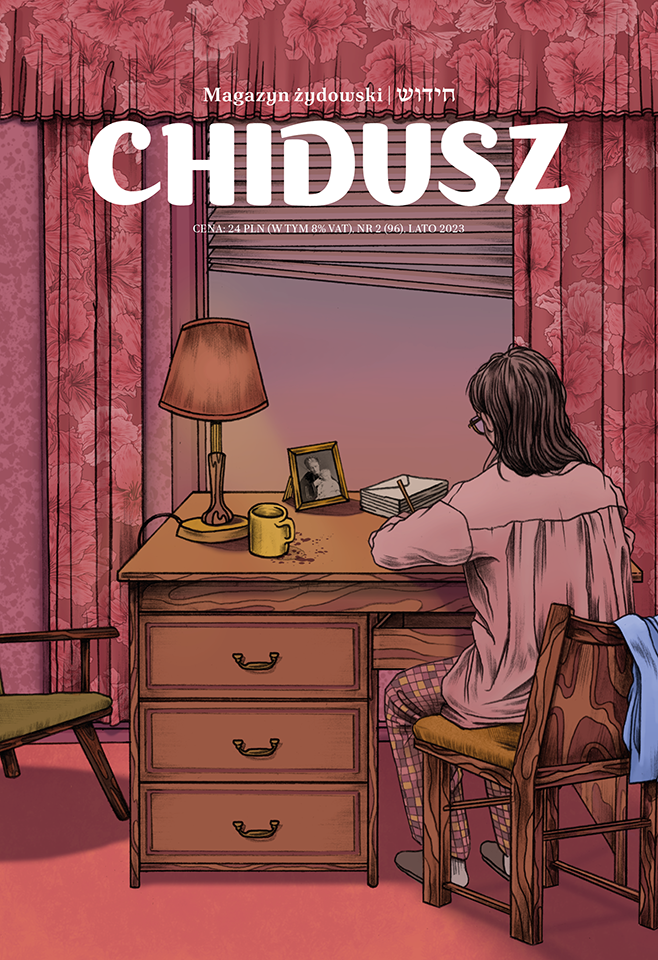
Okładka Magdaleny Pelc do „Chiduszu” 2/2023 przedstawiająca Rosę Lublin, główną bohaterkę opowiadania „Rosa” Cynthii Ozick


„Chidusz” 2/2023

REDAKCJA


W „CHIDUSZU” 2/2023 PUBLIKUJEMY PIERWSZY POLSKI PRZEKŁAD OPOWIADANIA ROSA, KTÓRE – WRAZ Z SZALEM – UCHODZI ZA JEDNO Z NAJWAŻNIEJSZYCH I NAJLEPSZYCH DZIEŁ WYBITNEJ AMERYKAŃSKIEJ PISARKI CYNTHII OZICK. NA 164 STRONACH LETNIEGO WYDANIA ZNAJDZIECIE SPORO LITERATURY, PASJONUJĄCYCH ROZMÓW I ARTYKUŁÓW POŚWIĘCONYCH KULTURZE ŻYDOWSKIEJ. 

CYNTHIA OZICK, ROSA 

Opowiadanie Rosa Cynthii Ozick opublikowane zostało w „New Yorkerze” w 1983 roku. Jest ono kontynuacją wydanego trzy lata wcześniej Szalaktórego pierwszy przekład na język polski zaprezentowaliśmy w „Chiduszu” 1/2023. Tytułową Rosę Lublin, „wariatkę i obdartuskę”, tym razem spotykamy na Florydzie, gdzie wiele lat po wojnie wciąż zmaga się z traumą Zagłady, utraty dziecka i ojczyzny. Oba teksty, świetnie przełożone przez Agę Zano, uznawane są za jedne z najważniejszych i najlepszych dzieł Ozick. To obowiązkowe pozycje na liście lektur o Zagładzie.

„TYGODNIK POWSZECHNY” LICZY, ILU ŻYDÓW ZGINĘŁO Z RĄK POLAKÓW 

Michał Okoński w „Tygodniku Powszechnym” liczy, do ilu żydowskich ofiar Polacy przyłożyli rękę w czasie wojny. Wcale nie jest jednak oczywiste, że odejmowanie w jego działaniu nie powinno być dodawaniem. 

Fragment polemiki Michała Bojanowskiego: 

Podstawowe pytanie, jakiego nie zadaje sobie Okoński, brzmi: Dlaczego Szymon Datner założył, że tylko 10% Żydów podjęło próbę ratowania się przed śmiercią? Dlaczego ci, którzy uniknęli masowych deportacji do obozów zagłady, nie chcieli się ratować? Dlaczego, jak słusznie pyta Anna Bikont, Żydzi poszli do Hotelu Polskiego? Odpowiedź jest bardzo prosta: nie mieli nadziei na przetrwanie. Wiedzieli, że po tzw. aryjskiej stronie staną się od razu łowną zwierzyną, że aby przeżyć, potrzebują bardzo dużo szczęścia i sporo pieniędzy. Wiedzieli, że Polak za lokum zapłaci miesięcznie tyle, ile Żyd musi często zapłacić za jeden dzień, że inni szmalcownicy, co akurat nie oskubywali na śmierć swoich lokatorów (bo wyrzucenie na ulicę kończyło się śmiercią), czekali tuż za bramą getta albo mogli w każdej chwili zapukać do kryjówki z propozycją szantażu nie do odrzucenia. Żydzi wiedzieli, że „ucieczka” z getta tak naprawdę zaczyna się dopiero po jego opuszczeniu. Stąd najpewniej tylko 10% śmiałków. Można chyba założyć, że z tych samych powodów część Żydów „rezygnowała” z ukrywania się i „wracała” do gett. Bo – poza ewentualną tęsknotą za bliskimi – jaki miałby być inny powód rezygnacji z chęci przeżycia?

YEHOSHUA ELLIS, RABIN OD CMENTARZY

Dwie torby podróżne, w nich głównie ubrania, modlitewnik, ulubione kipy. Tyle miał ze sobą, kiedy w 2003 roku przyjechał do Polski po raz pierwszy. Społeczność skupiona wokół synagogi Nożyków nie była duża, ale jako początkujący wówczas żydowski edukator czuł, że to miejsce wyjątkowe. Był młody, zaangażowany i lubił pracę z ludźmi, mimo to niespecjalnie miał na siebie pomysł. Po roku wolontariatu, mając niespełna 26 lat, postanowił nie wrócić już do domu, do Stanów. Zrozumiał, że w Polsce brakuje rabinów i zdecydował: zostanie jednym z nich.

W lipcu, po dwudziestu latach od pierwszego przyjazdu do Warszawy, rabin Yehoshua Ellis wyjeżdża na stałe z Polski, by objąć posadę rabina w synagodze Shearith Israel w Montrealu. Myślę, że moja rodzina potrzebuje zmiany, a ja nowych wyzwań i nieco normalności – opowiada Pauli Szewczyk o powodach wyjazdu. Wojna, a po niej represje komunistyczne wyrządziły tu tyle krzywd, że normalne życie żydowskie w Polsce ledwie istnieje. Sam dużo pracuję z martwymi Żydami. To miłe, bo nie narzekają. Myślę jednak, że już czas popracować z żywymi.

 JAK NIE BYĆ ZJADACZEM WIATRU?

Boris Cyrulnik (rocznik 1937) jest najbardziej znanym francuskim neuropsychiatrą. O swoich rodzicach nie wie prawie nic. Dzięki spektakularnej ucieczce z transportu w 1944 roku ukuł teorię résilience – odporności psychicznej. Jest autorem ponad dwudziestu książek z zakresu psychologii i psychiatrii, sprzedających się we Francji w ogromnych nakładach. 

Fragment rozmowy:

Anna Pamuła: Tęskni pan czasem za mamą?

Boris Cyrulnik: Całe życie. Zniknęła, gdy miałem niecałe sześć lat. Nie mam konkretnych wspomnień, ale czuję, że dała mi poczucie bezpieczeństwa. W sumie to jestem tego pewien, ponieważ nawet w chwilach największej rozpaczy czułem, że uda mi się przeżyć. Inni się poddają, bo może nie mają w sobie takiego zapału. Ktoś go we mnie rozpalił i dzięki temu zawsze wiedziałem, że życie ma sens. To była mama. Wydaje mi się też, że ktoś opiekował się nią w czasie ciąży. Z badań wiemy, że mózg i psychika dziecka zaczynają kształtować się podczas ciąży. Trzeba wtedy koniecznie zadbać o to, by rodzina, mąż lub partner rozumieli, że muszą dać w tym czasie kobiecie spokój, nie mogą narażać jej na stres. Mówię moim pacjentom, żeby się nie martwili, że odzyskają ją potem, ale na czas ciąży niech po prostu będą przy niej, bo matki otoczone opieką otaczają następnie tą opieką dziecko, które noszą. To częściowo dzięki mojej mamie zrozumiałem, że muszę się ukryć, kiedy w 1944 roku zostałem aresztowany i uwięziony w synagodze wraz z grupą innych dzieci. Mimo że dawali nam pyszne mleko skondensowane. Wszystkie te dzieci zostały wysłane do Auschwitz, a ja przetrwałem, bo schowałem się w toalecie. Potem ukryłem się pod ciałem umierającej kobiety, gdzie znalazła mnie pielęgniarka. To była ta pani z telewizji. 

Anna Pamuła: Czego pan żałuje? 

Boris Cyrulnik: Tego, że nie wiem nawet, jaki był mój pierwszy język. Rodzice zapewne mówili między sobą w jidysz i po polsku, ale do mnie może już po francusku, żebym się szybciej zintegrował? Chciałbym to wiedzieć, bo ten pierwszy język zostawia ślady w mózgu na zawsze. Pierwsze dźwięki, ich melodia jest zapisana gdzieś bardzo głęboko. Jak pani jednak słyszy, moje korzenie tam nie sięgają. 

JUDITH PLASKOW, ROK AGUNY

Sam fakt istnienia kategorii aguny to akt przemocy wobec kobiet, plama na honorze społeczności żydowskiej i pogwałcenie praw człowieka, wymagające natychmiastowej interwencji – pisze ostro w eseju Rok aguny Judith Plaskow, jedna z najważniejszych współczesnych myślicielek żydowskich. Badaczka błyskotliwie argumentuje, dlaczego aguny są problemem wszystkich, a nie tylko osób ze społeczności ortodoksyjnych:

Biorąc pod uwagę przechodzenie Żydów między różnymi nurtami – oraz to, że w Izraelu wszelkie kwestie dotyczące małżeństw i rozwodów rozstrzyga halacha – każda Żydówka może na jakimś etapie życia odkryć, że przez brak getu (listu rozwodowego) nie przysługuje jej prawo do ponownego zamążpójścia. Co za tym idzie, dzieci takich kobiet mogą zostać uznane za mamzerim (bękarty), gdyż ich matka wyszła za mąż i urodziła je bez ważnego listu rozwodowego.

Po drugie utrzymywanie statusu aguny w dzisiejszych czasach to problem natury etycznej, na który powinno zwrócić uwagę całe środowisko żydowskie. Wielu Żydów i wiele Żydówek poświęca czas i energię na walkę z różnymi aspektami opresji wobec kobiet w społeczeństwie i w innych kulturach. Nadawanie statusu aguny to najpoważniejsza zbrodnia, jaką czyni kobietom judaizm, i właśnie dlatego powinno się ją uznać za palący problem, który dotyczy wszystkich Żydów.

Rok aguny to jeden z pięciu esejów Judith Plaskow, jakie publikujemy w tym „Chiduszu” w przekładzie Agi Zano. Pozostałe traktują o roli mężczyzn w kształtowaniu feministycznego judaizmu, ignorowaniu problematycznych fragmentów Biblii, konieczności łączenia spraw świeckich i religijnych oraz o istotności utrzymywania przestrzeni wyłącznie dla kobiet – miejsc, w których mogą one m.in. dalej pracować na rzecz równouprawnienia. Wszystkie pochodzą z książki The coming of Lilith.

OPERACJA „PUSZCZA”. O MILICYJNEJ AKCJI NA CMENTARZU ŻYDOWSKIM W WARSZAWIE

10 września 1961 roku, w święto Rosz ha-Szana, na cmentarzu żydowskim w Warszawie zauważono swastyki i napisy „Juden raus!” namalowane na nagrobkach żołnierzy poległych w trakcie obrony Warszawy we wrześniu 1939 roku. Organy ścigania sprawę potraktowały niezwykle poważnie i przeprowadziły operację „Puszcza”, której historię przedstawia Krzysztof Bielawski. 

Fragment artykułu:

Ważną rolę odegrali tajni współpracownicy MO, w tym jeden z mężczyzn zatrudnionych na cmentarzu żydowskim. Do akcji zaangażowano tajnego współpracownika o kryptonimie „Wyga” – Żyda, który miał nawiązać kontakt z kamieniarzem Marianem J.: „TW «Wyga» uda, że poszukuje grobu swojej rodziny pochowanej na cmentarzu żydowskim 30 lat temu (cmentarz nie posiada rejestru pochowanych i trudno jest odnaleźć grób z okresu przedwojennego) […]. Szukanie takiego grobu odbywa się przez dłuższy czas, tak że dojdzie między nimi do szeregu spotkań. […] «Wyga» nadmieni o swastykach […]. Dalszy tok rozmowy będzie kierował na ewentualne ustalenie, czy J. był sprawcą namalowania swastyki”. Oprócz tego Marian J. miał zostać objęty pięciodniową obserwacją. Na ponowne przesłuchania wezwano pracowników cmentarza żydowskiego i protestanckiego. 

Polecamy zwrócić szczególną uwagę na ostatni akapit tego artykułu.

CHODZI O SPODNIE I TAŁES

W niewielkiej, wydanej niedawno książce Spodnie i tałes Konstanty Gebert zaskakująco zestawia ze sobą i analizuje dwa spory. W pierwszym zabójcy kłócą się o to, komu należą się spodnie zdarte z Żyda, którego zamordowali w czasie Zagłady. Drugi – półtora tysiąca lat starszy – to fragment Talmudu, gdzie dwóch Żydów spiera się o to, do kogo należy tałes, który oboje znaleźli w tym samym momencie. Rozważania Geberta sprawią, że będziecie odlatywać daleko od spodni i tałesu, by jednak ostatecznie do nich powracać – ze zrozumieniem, że są one fundamentalne.

Fragment rozmowy:

Konstanty Gebert: Większość systemów prawa zakłada przyjęcie zasady, że ludzi nie wolno mordować i że wszyscy ludzie są ludźmi. Nie jest otóż oczywiste, że zawsze tak myślimy. Pod władzą III Rzeszy Żydzi zostali wykluczeni z gatunku ludzkiego, wykluczeni dość skutecznie. W przytoczonym zeznaniu – co dla mnie jest kluczowe – nie ma cienia refleksji moralnej: „no dobra, ale zabiliśmy człowieka…”. Krawiec Chycek ewidentnie nie był człowiekiem. Przypuszczam – choć to oczywiście tylko mój domysł – że historyczny punkt wyjścia refleksji nad definicją człowieka był taki: nasza społeczność to ludzie, a wszystkie inne dwunogi, jakie spotykamy na swojej drodze, to zwierzęta. Albo mogą być niebezpieczne, albo my możemy stanowić zagrożenie dla nich. Zaś pojęcie rodzaju ludzkiego, do którego należą wszyscy ludzie łącznie z tymi, z którymi nie jesteśmy spokrewnieni, których nie znamy i którzy nawet czymś się od nas różnią, pewnie wzięło się z przeświadczenia, że tak będzie bezpieczniej, że skoro ja mogę kogoś nie uznać za człowieka, to ktoś może i mnie za niego nie uznać. Jeśli uznamy jednak Żydów za zwierzęta, to wprawdzie może w sprawie ich mordowania wybuchnąć duży spór prawny, jak o zabitego wołu – do kogo ten wół należy, kto go bardziej zarżnął. Samo zabicie wołu jest jednak dla tych przepychanek bez znaczenia, bo wół nie ma przyrodzonego prawa do życia. 

Michał Bojanowski: Wystarczy kogoś wykluczyć.

Konstanty Gebert: Albo nie „wkluczyć” kogoś do rodzaju ludzkiego, żeby też pozbawić go prawa do życia – i wtedy ten dialog morderców przestaje szokować. Oni nadal chcą żyć w społeczeństwie rządzącym się prawami i wartościami, które obowiązują wszystkich ludzi. Tyle tylko, że Żydów one nie obowiązują, bo Żydzi – tak jak woły – nie są ludźmi. I jeżeli skupimy się na tym, że tu o prawie i wartościach debatują mordercy, to pominiemy kwestię większą i ważniejszą – że umowa, zgodnie z którą wszyscy ludzie mają przyrodzone prawo do życia, jest właśnie tylko tym – umową. Nie jest czymś naturalnym, niepodważalnym. To, że wszystkim ludziom przysługuje prawo do życia, to też pewna konwencja, w dodatku niekoniecznie respektowana. Wymaga ona dodatkowej sankcji, na przykład takiej jak w judaizmie, gdzie wszyscy jesteśmy równi, bo wszyscy pochodzimy od jednego praprzodka – Adama.

NIE MA RZECZY NIEMOŻLIWYCH. DAVID RODIN I OPOWIEŚCI CHWALIPIĘTÓW

W „Chiduszu” 2/2023 publikujemy pierwsze polskie tłumaczenie opowiadań z książki Davida Rodina Draj barimer (Trzech chwalipiętów), wydanej w Nowym Jorku w 1940 roku. Draj barimer to zbiór historyjek różnej długości, opowiadanych sobie nawzajem przez trzech żydowskich chłopców z Nowego Jorku: Chaima, Moszego i Gecla – wyjaśniają prof. Monika Adamczyk-Garbowska oraz Piotr Sewruk, autorzy przekładu. Nieustannie rywalizują ze sobą, gdyż każdy z nich chce, by to właśnie jego historyjka najbardziej zaskakiwała słuchaczy ilością nagromadzonych w niej dziwówKliknij tutaj, aby przeczytać fragment artykułu na temat życia i twórczości Rodina oraz jedno z opowiadań

CMENTARZ ŻYDOWSKI W JELENIEJ GÓRZE I HISTORIE Z NAGROBKÓW

Kolejną osobą, której nagrobek jest jednym z siedmiu zachowanych na cmentarzu żydowskim w Jeleniej Górze, jest Mathilde Buttermilch. Marta Maćkowiak pisze nie tylko o niej, ale również o niezwykłych losach jej wnuka Hansa Keilsona, pisarza, którego geniusz objawił się światu dopiero w XXI wieku. Twórczość potomka Mathilde Buttermilch wciąż jednak czeka na polski przekład.

Fragment artykułu:

W 2007 roku, przez zupełny przypadek, tłumacz Damion Searls natknął się na kopię trzeciej książki Keilsona Komödie in Moll w koszu na przeceny przed jedną z austriackich księgarni i rozpoczął starania, by przywrócić dzieła niemieckiego pisarza do życia. Trzy lata później, w wieku stu lat i 77 lat po debiucie, Keilson wkroczył na międzynarodowy rynek literacki. Niewątpliwie pomogła mu w tym Francine Prose, która na łamach „The New York Timesa” nazwała go geniuszem, recenzując dwie jego książki: Das Leben geht weiter i Komödie in Moll [Komedia w tonacji molowej], którą dziennikarka okrzyknęła „arcydziełem”. W rozmowie z Philipem Oltermannem dla angielskiego „Guardiana” Keilson mówił: „Wydawało mi się, że ta recenzja była dość przesadzona, nie sądzisz? Kiedy ją przeczytałem, pomyślałem sobie: «Czy to naprawdę ja?». Nie jestem nawet prawdziwym pisarzem!”. Po chwili dodał jednak: „Powoli zachodzi chyba we mnie zmiana. Może jednak udało mi się stworzyć coś niecodziennego? Nie jest niczym niezwykłym, że dzieła literackie odkrywane są na nowo dziesiątki lat po ich napisaniu. Dziwną rzeczą w moim przypadku jest jednak to, że ja wciąż żyję, kiedy to się dzieje”.

CO WOLNO NA CMENTARZU?

Fragment książki Spodnie i tałes (Austeria 2023), w którym Konstanty Gebert m.in. wyjaśnia, skąd takie a nie inne zasady panują na cmentarzach żydowskich.  

Fragment:

Rzecz w tym, że – zgodnie z halachą – na cmentarzu żyć nie wolno. Cmentarz jest domem umarłych, a żywi mogą ich jedynie odwiedzać, bacząc przy tym, by nie urazić ich uczuć wykonywaniem w ich milczącej obecności działań, których zmarli już wykonywać nie mogą. Wolno modlić się w ramach rytuału pogrzebowego, który jest nastawiony na oddawanie czci zmarłemu, lecz nie można się modlić inaczej, studiować Tory ani nosić tefilin. Wszystko to bowiem podpada pod zakazaną kategorię „szyderstwa ze zmarłych” (baraita do Bereszit 18a). Wynika ona z Księgi Przysłów (17,5): „Kto szydzi z biednych, bluźni Bogu” – zmarli, niezdolni już do spełnienia choćby jednej micwy, są najbiedniejszymi z biednych. Na tej samej zasadzie zabronione jest tam również noszenie tałesu. 

Nie wolno też czerpać z cmentarza jakichkolwiek korzyści: nie można siadać na grobach ani zbierać na cmentarzu kwiatów czy owoców. Jedzenie i picie na cmentarzu oraz załatwianie tam potrzeb fizjologicznych także są zakazane. Zabronione jest wreszcie spędzanie na cmentarzu nocy, aby oddawać się nekromancji. Wszystkie te zakazy oznaczają, że normalne funkcjonowanie na cmentarzu jest ściśle ograniczone, a mieszkanie na nim – niemożliwe.

[W powyższym fragmencie usunięto przypisy.]

GNOJÓWKA Z HITLEREM

Michał Bojanowski przekonuje, że poparzenie nie jest najgorszą rzeczą, jaka może zdarzyć się podczas zrywania pokrzywy. Krótka opowieść o wrocławskim Sępolnie i osobliwej parze emerytów, tęskniącej za komorami gazowymi. 

Fragment felietonu:

Zupełnie jak na wsi, tyle że słynne niebieskie tramwaje mkną stąd w kilka minut do centrum, gdzie, rzut beretem, duszno i gorąco. Ten niemal niczym niezmącony spokój, przynajmniej na mojej ulicy, burzy nieco pewna kobieta. Jej choroba sąsiadom objawia się w ten sposób, że zazwyczaj raz na dobę krzyczy przez kilka minut w swoim mieszkaniu. W ciepłe miesiące, których w Polsce jak na lekarstwo, można, siedząc w ogródku, usłyszeć ten hałas. Trwa to jednak tylko kilka chwil. Nieopodal jej okien, w piękne, majowe popołudnie, kucałem przyczajony w krzakach, zrywając pokrzywy na gnojówkę… 

DOLINA POKOJU

Anna Knafo tym razem zabiera nas do Doliny Pokoju, niesamowitego miejsca w pobliżu Jokneam w Izraelu. To piękny zakątek, raj dla oczu i duszy, który w czasie izraelskiej (różnej od kalendarzowej) wiosny i wczesnym latem pokrywa się różnorodną roślinnością, kwiatami i ziołami.

Fragment artykułu:

Po ukończeniu nauki Ader pracował w sierocińcu w Kirjat Bialik koło Hajfy. Tam spotkał Żyda z Kamerunu, który powiedział mu, że jego imię występuje w Biblii, a ludzie z plemienia Aszer zamieszkują Jokneam. 

Informacja ta pomogła Aderowi podjąć decyzję o powrocie w okolice Jokneam i osiedleniu się tam. W 1960 roku poznał Adriana, imigranta z Rumunii, który był agronomem i – tak jak Aszer – weganinem. Wraz z nim kupił od Ester Kerensky z moszawy Jokneam działkę o powierzchni 0,8 ha, na której wcześniej prawdopodobnie znajdowała się osada Wzgórze Dwóch. Zakasali rękawy. Mieszkali w wieży wartowniczej, zbudowanej tam w latach 30. XX wieku, bez prądu i wody (przynosili ją z odkrytego przez Adriana źródła). Spędzali całe dnie na upartych próbach kultywowania dziewiczej ziemi. Własnymi rękami usuwali kamienie, sami tworzyli proste maszyny rolnicze do obróbki roli i zbiorów. W przeciwieństwie do innych ludzi umieścili na swojej bramie duży napis „Wstęp jest dozwolony” i zapraszali wędrowców, aby weszli, usiedli z nimi, zjedli i pozbierali owoce.

Nie wiadomo, jaka jest etymologia nazwy Dolina Pokoju, ale przypisuje się ją właśnie tym dwóm mężczyznom, którzy miłowali pokój i założyli tu swoje gospodarstwo.

WSZYSTKO TO UTKWIŁO MI W PAMIĘCI

13 listopada 2011 roku Krzysztof Bielawski przeprowadził rozmowę ze zmarłym w kwietniu tego roku Ryszardem Bielawskim, jednym z najstarszych polskich youtuberów, autorem licznych nagrań popularyzujących zabytki żydowskie w Polsce. Podczas wojny był on świadkiem zagłady społeczności żydowskiej w Szczuczynie na Białorusi. 

Fragment rozmowy:

Krzysztof Bielawski: W maju 1942 roku był pan świadkiem egzekucji szczuczyńskich Żydów. Czy może pan opisać te wydarzenia?

Ryszard Bielawski: Najpierw jechał samochód i Niemcy mówili, żeby nie wychodzić z domów. Od strony rynku zaczęli wyganiać Żydów. Wchodzili do każdego budynku i wypychali ich na ulicę, która prowadziła w kierunku Różanki. Nie przeganiali ich, ale zostawiali na ulicach, przed domami. Moi sąsiedzi stali na samym początku ulicy. Wyganiali Niemcy i żołnierze ubrani na czarno – kto to był, nie wiem, może jakaś policja. Podobno Niemcy mówili Żydom, że pójdą w kierunku stacji, że ich wywiozą. Jak cała kolumna ruszyła, to po 200–300 metrach stał samochód i tam kazali im skręcić w lewo, w boczną ulicę. Zastanawialiśmy się, co się dzieje, bo przecież nie jest to droga do dworca w Różance. My mieszkaliśmy w domu murowanym, on miał półtora piętra wzwyż i nadbudowany strych. Duże okno ze strychu wychodziło w kierunku, w którym ruszyła ta cała kolumna. Po pewnym czasie weszliśmy na strych. W oddali zobaczyliśmy już nie kolumnę, ale tłum zebrany pod lasem. Tłum wyglądał jak dywan ludzkich ciał. Oni klęczeli, a może siedzieli z głowami w dół. Po ich plecach biegali ci na czarno ubrani żołnierze. Jak ktoś z Żydów podnosił głowę, to go walili pałką. Klęczący nie mogli widzieć, co się dzieje przed nimi. Z tej grupy odganiano pewne osoby i było słychać strzały. 

ŻYDZI SĄ JAK WSZYSCY? JAK MÓWIĆ O ZAGŁADZIE?

Nie ma odpowiedniego języka do mówienia o dziewięćdziesięciu dziewięciu procentach ofiar Zagłady – pisze w swoim felietonie prof. Stanisław Krajewski. Zasadniczo nadal jest tak, że retorykę żołnierską uznaje się za wzorcową, a inne godne uznania postawy są co najwyżej dodatkiem. Na szczęście coraz więcej mówi się o cichym bohaterstwie, o oporze cywilnym, o szukaniu momentów normalności w świecie wywróconym do góry nogami(….)

W obecnej Polsce interesowne wykorzystywanie Zagłady jest nagminne. Wedle forsowanej przez rząd „polityki historycznej” Polacy na ogół pomagali Żydom, a powstańcy to część polskiego ruchu oporu. Podobnie brzmiał oficjalny przekaz za czasów PRL-u. Obecnie mówi tak premier i rząd. Najwyraźniej wierzy w to większość społeczeństwa. Tymczasem Polacy na ogół nie pomagali Żydom, a żydowscy powstańcy raczej nie byli wówczas traktowani jako część polskiego podziemia. Było wiele wyjątków, ale to nie one tworzyły regułę. Przypomniała o tym Barbara Engelking i została za to haniebnie zaatakowana. 

JAK POKOCHAŁAM POLSKĄ POLITYKĘ HISTORYCZNĄ #2

O meandrach polskiej (prawicowej) polityki historycznej pisze Katarzyna Markusz.

Fragment artykułu: 

Koniec maja obfitował w spektakularne wydarzenia z udziałem wybrańców narodu. Najpierw poseł Grzegorz Braun postanowił bronić naszego polskiego honoru i w czasie wykładu prof. Jana Grabowskiego w Niemieckim Instytucie Historycznym wdarł się na podest, wyrwał mikrofon, po czym uderzał nim dzielnie o pulpit, uniemożliwiając kontynuowanie spotkania. Potem Prawo i Sprawiedliwość opublikowało na Twitterze filmik łączący uczestników marszu opozycji z 4 czerwca z obozem Auschwitz. Z filmu dowiedzieliśmy się, że w obozie zginęło ponad milion ofiar, a ponieważ nie podano, kim one były, to łatwo się domyślić, że zapewne Polakami, a nie Żydami. Następnie już wprost mogliśmy przeczytać, że w czasie wojny zostało zamordowanych sześć milionów Polaków, co nie jest prawdą, ale nam takie szczegóły przeszkadzać nie powinny.

CHAIM GRADE, AGUNA 

PRZEDOSTATNI ODCINEK WYBITNEJ POWIEŚCI CHAIMA GRADEGO

OD „CHIDUSZU” 10/2021 PUBLIKUJEMY W ODCINKACH PIERWSZY POLSKI PRZEKŁAD AGUNY CHAIMA GRADEGO W TŁUMACZENIU MAGDALENY WÓJCIK. GRADE UZNAWANY BYŁ PRZEZ ŚRODOWISKO JIDYSZYSTYCZNE – OBOK BASZEWISA SINGERA – ZA NAJPOWAŻNIEJSZEGO KANDYDATA DO NAGRODY NOBLA Z LITERATURY ŻYDOWSKIEJ. W PRZEDOSTATNIM ODCINKU POWOLI ŻEGNAMY SIĘ ZE ŚWIATEM DAWNEGO ŻYDOWSKIEGO WILNA, W KTÓRYM CHASYDZI NIE SĄ MILE WIDZIANI, A RABINI WZBUDZAJĄ SZACUNEK NAWET WŚRÓD BYŁYCH REWOLUCJONISTÓW.

Fragment powieści:

– Widzicie tę, która krzyczy? Przyszła bez męża, bo był najlepszym przyjacielem Mojszke Cyrulnika i bał się tu pokazać. Starsza, ta, którą prowadzi dwoje dziewcząt, też przyszła bez małżonka, bo ją zostawił.

– Stara, schorowana matka aguny mieszka w domu starców. Jest sparaliżowana i blisko jej na tamten świat. Nawet nie wie, że jej córka się powiesiła.

– A gdzie jest mąż aguny?

– Ten cap? Przecież ją porzucił. Ma szczęście, że się nie pojawił, bo z pewnością oberwałby kamieniem.

– Siostrzyczkom należałoby wydrapać oczy – zaczęły syczeć kobiety. – Niech nawet nie podchodzą do trumny. Ta nieszczęśnica była bardziej naszą siostrą niż ich.

Mimo łez Gołda poczuła panujące wokół niej wrogie milczenie. Zazwyczaj na pogrzebach spotyka się wielu przyjaciół. Obce kobiety podtrzymują żałobników pod ręce, płaczą i szepczą słowa otuchy, a zgromadzeni przyglądają się z twarzami pełnymi współczucia. Tym razem jednak ludzie odwracali się od Gołdy plecami, a niektórzy wręcz poszturchiwali ją z niechęcią. Zdało jej się, że słyszy wyłącznie jeden głos, dobiegający z czarnej trumny:

– Chciałaś mnie zmusić do ślubu z moim zaciętym wrogiem, byle tylko mąż cię nie zostawił, a tymczasem zabiłaś i mnie, i siebie. Teraz twojemu mężowi łatwiej będzie cię porzucić.

ANTYSEMITYZM NA KARTACH BRUNATNEJ KSIĘGI 

W nowej edycji Brunatnej Księgi, dokumentującej zdarzenia na tle rasistowskim i ksenofobicznym w ostatnich trzech latach, odnotowano blisko 270 wypowiedzi i zdarzeń o charakterze antysemickim.

Fragment artykułu Anny Tatar:

Do najbardziej kuriozalnych i szkodliwych antysemickich teorii spiskowych w kontekście wojny przeciwko Ukrainie należy ta o „Niebiańskiej Jerozolimie”, wedle której Żydzi z Izraela mieliby zasiedlić tereny południowo-wschodniej Ukrainy. W takim ujęciu winę za wybuch wojny rzekomo ponoszą właśnie Żydzi. Teoria ta była propagowana między innymi przez byłego warszawskiego radnego Rafała Mossakowskiego podczas manifestacji w stolicy 12 marca 2022 roku. W trakcie swojego wystąpienia przedstawił on kuriozalną antysemicką wizję przyszłych wydarzeń: „Ta wojna ma wiele kontekstów żydowskich. […] Na Ukrainie ma powstać Niebiańska Jerozolima w roku 2022. […] Ta wojna, dlatego, że są takie plany, o których się nikomu nie mówi, jest jedną wielką manipulacją”. I dalej: „Obywatele państwa położonego w Palestynie mają wracać do Polin. […] Polin to są te obszary w znacznej mierze ukraińskie, gdzie ta nacja chce wrócić”. 

SZORTY, CZYLI KRÓTKO NA RÓŻNE TEMATY

W krótkich artykułach piszemy m.in. o austriackich pomysłach na pamięć o nazistowskiej przeszłości, zniszczeniu cmentarza żydowskiego w Zabrzu, kontrowersjach wokół tablicy upamiętniającej getto ławkowe na Uniwersytecie Warszawskim, symbolicznym grobie twórców Archiwum Ringelbluma i o tym, co Polacy tak naprawdę myślą o Żydach. 

ZAPRASZAMY DO LEKTURY


„Chidusz” dostępny jest w wybranych Empikach na terenie całego kraju oraz w prenumeracie. Roczna prenumerata krajowa 90 zł (list ekonomiczny), roczna prenumerata elektroniczna za 50 zł. Zamówienia: chidusz.com/prenumerata. Wydanie elektroniczne można znaleźć na publio.pl. Przyjemnej lektury!

wroclawski-instytut-kulturyPartnerem wydawniczym tego numeru „Chiduszu” jest Wrocławski Instytut Kultury w ramach Wrocławskiego Programu Wydawniczego. 


Zawartość publikowanych artykułów i materiałów nie reprezentuje poglądów ani opinii Reunion’68,
ani też webmastera Blogu Reunion’68, chyba ze jest to wyraźnie zaznaczone.
Twoje uwagi, linki, własne artykuły lub wiadomości prześlij na adres:
webmaster@reunion68.com


In Lebanon, Israel and America Are on Opposite Sides

In Lebanon, Israel and America Are on Opposite Sides

TONY BADRAN


Israel backpedals, while Hezbollah grows bolder.
.

A Lebanese army soldier, at left, in Kfar Shouba in southern Lebanon looks on from his side of the border as Israeli soldiers stand opposite, in background, in the Israeli-annexed Golan Heights on July 20, 2023
ALI DIA/AFP VIA GETTY IMAGES

Prime Minister Benjamin Netanyahu’s discussion on Sunday with senior IDF officials about Hezbollah provocations on the northern border was preceded by a flurry of press reports claiming that the IDF intelligence division had issued no less than four warnings about eroding Israeli deterrence. Military intelligence officials, we were told, have been warning Netanyahu about how the political crisis at home and fraying ties with the Americans were undermining deterrence of enemies like Hezbollah.

People might differ on how to read such assessments of the impact of Israel’s political crisis on the country’s deterrence posture. One could choose to read it as earnest analysis, or as political messaging whose point was to paint Netanyahu’s judicial reform as harming Israel’s security—a talking point of the prime minister’s opponents. However, in order to weigh the claim that fraying U.S.-Israeli ties are weakening Israel’s deterrence on the northern front, one would first need to examine the assumption that the United States and Israel share the same interests when it comes to Lebanon, and that this common front is being undermined by Israel’s reckless domestic politics. A sound assessment should begin by questioning the premise of U.S.-Israeli alignment in Lebanon—an alignment that demonstrably does not exist.

A year ago, leveraging a mock drone attack by the terror group Hezbollah against an Israeli offshore gas rig at the beginning of July, the Biden administration went to the caretaker Israeli government with an urgent demand: It must sign a maritime boundary delineation agreement with Lebanon within a couple of months, before the parliamentary elections in Israel, giving potentially valuable gas fields to Hezbollah-dominated Lebanon and signaling Israeli willingness to retreat in the face of Hezbollah’s aggressive threats and actions. This matter was a top priority of the president of the United States, the administration made public. Sure enough, the Biden team got its deal.

In the process, the Biden administration broadcast a new American posture in Lebanon. The U.S. now positioned itself between Israel and Hezbollah, taking on the role of protector of and advocate for Lebanon, which now figured in the imagination of U.S. policymakers and diplomats, if not in reality, as an independent country in need of buttressing. The maritime deal, a senior U.S. official explained last year, would serve as a security guarantee not just for Israel, but also for Lebanon—a territory now transformed in the language of U.S. diplomacy from an Iranian satrapy under the political and military control of the terror group Hezbollah to a sovereign state that might be the deserving recipient of nearly a billion dollars a year in U.S. aid.

As it turned out, the maritime deal did not, in fact, enhance Israel’s security, as U.S. negotiator Amos Hochstein and his echo chamber validators in the U.S. and Israeli press all claimed it would. In reality Israel’s security and deterrence has badly deteriorated on multiple fronts since the Biden administration came to office. The deal did enhance Hezbollah’s security, though, and consequently increased the group’s confidence to press its advantage against Israel.

Over the past few months, the terrorist group that rules Lebanon has conducted, in tandem with its auxiliary force the Lebanese Armed Forces (LAF), a series of border provocations and incursions into Israeli territory. Hezbollah’s moves were part of a larger, concerted campaign. As with the maritime border episode, Hezbollah is now locked in a dance with the Biden team to advance shared objectives and impose them on Israel.

Each time Hezbollah provokes, the U.S. reliably steps in to “mediate” between the terror group and Israel, with the goal of “stabilizing Lebanon.” Needless to say, the Israeli role is strictly to make concessions in the framework of a U.S.-brokered agreement, at the risk of displeasing its American patron. Hezbollah, meanwhile, knows that the structure of this Kabuki performance prohibits Israel from retaliating, making its provocations more or less risk-free—especially given the fact that the “Lebanese state” is a fiction.

In a speech marking the 17th anniversary of the 2006 war, Hezbollah’s leader, Hassan Nasrallah, explained exactly how the terror group’s dance with Team Obama-Biden and its emissaries works. Pointedly, his elucidation began with the maritime deal. The way Lebanon got everything it demanded, Nasrallah explained, was when “the resistance” threatened the Karish offshore platform, and when the official and popular supporting cast played their part. That’s when the Americans and Hochstein came and delivered the Israelis.

Having internalized that precedent, Hezbollah then decided it was time to press its advantage on land, where again, Nasrallah’s reading of the American posture had proven correct. The day before the terror leader’s speech, Amos Hochstein, the Biden administration’s special presidential coordinator for global infrastructure and energy security, who got the lame duck government of Yair Lapid to concede to all of Hezbollah’s demands in its last days in office, arrived in Israel to discuss tensions along the land border with Lebanon.

Hezbollah’s provocations on Israel’s northern border had begun months prior to Hochstein’s arrival. On June 21, Israeli media reported that Hezbollah operatives had entered Israeli territory several weeks earlier—the exact date was later said to have been April 8—and set up an outpost in the Mount Dov area, several meters inside Israel. Needless to say, this was months before the passage of Netanyahu’s judicial reform bill.

That Hezbollah’s actions took so long to surface in the Israeli press in part likely reflects the Israeli government’s reluctance to advertise its own weakness. Instead, the government vainly hoped that this sign of its impotence might be quietly resolved through diplomatic channels and UNIFIL. Israel filed a letter of complaint with the U.N. Security Council and then threatened to remove the tents by force after an unspecified deadline—a threat which, as more time passes, appears increasingly hollow.

Israel’s weak response to Hezbollah’s symbolic invasion of sovereign Israeli territory suggests a failure to recognize that Hezbollah’s cross-border encampment is, as Nasrallah explained, part of a systematic campaign. In turn, this failure appears to be embedded in an even larger refusal to comprehend America’s new posture in Lebanon. As a result, Israel is responding piecemeal to a coherent Hezbollah strategy aimed at forcing Israel to make additional concessions, this time on land, while using the new constraints forced on Israel by the new American posture to establish new operational dynamics at the border.

The oddity of this situation, then, is that both Israel and Hezbollah appear to be acting under the assumption that they have U.S. backing. In the case of Israel, however, this assumption is in part a mistake, and in part a bit of public posturing which has failed to convince their enemies to the north, who in fact know better.

Weeks before the story of the Hezbollah encampment came to light in Israel, the pro-Hezbollah press in Lebanon had already documented an episode in late May where Hezbollah had set up an additional outpost in the same region, in the outskirts of Kfar Shouba near the pond of Ba’athael (long a site of tensions involving Lebanese shepherds crossing into the area). Although Nasrallah would later claim that the second encampment was on the Lebanese side of the border, the ambiguity is deliberate. The episode in Kfar Shouba continued a few days later in June when so-called “locals” disrupted IDF fence construction and earthworks, which are aimed at fending off infiltration and livestock entering from the Lebanese side. A person identified as a local farmer who had blocked the IDF excavator in Kfar Shouba went on Hezbollah TV and declared that his actions were an example of Hezbollah’s whole-of-society doctrine, which it dubs the “army, people, resistance” triad.

A couple of days later, the LAF once again crossed the border fence into Israel. The LAF—whose salaries the Biden administration underwrites—posed for pro-Hezbollah TV cameras, and took positions pointing their weapons at IDF soldiers.

As with the farmer in Kfar Shouba, the choreographed LAF deployment was intended to showcase Hezbollah’s doctrine of synergy between the terror group, government institutions, and the citizenry. It underscored that Hezbollah was the spearhead of a position endorsed by the government and the country as a whole. The latter point was showcased further with trips to the outskirts of Kfar Shouba by members of the Lebanese parliament who expressed support for the liberation of “occupied Lebanese lands.” The LAF would participate in another such stunt alongside Hezbollah operatives in the area opposite Menara, west of Kiryat Shmona, where they crossed into Israeli territory to block IDF activity before being pushed back by the IDF.

The choice of the locations is not random. In 2000, Israel withdrew from Lebanon to the border line, known as the Blue Line, which was set by the U.N. based on historical maps. Aside from the northern part of the village of Ghajar, which the Blue Line cuts through, and leaving aside the Shebaa Farms and the Kfar Shouba hills, which are part of the Golan and which no one recognizes as Lebanese, there are a few points along the Blue Line that Lebanon contests.The Hezbollah stunts took place at some of these points along the security barrier in the area between Metula and Zar’it farther west. This is precisely the area where, in 2018, the IDF uncovered multiple Hezbollah cross-border tunnels.

In one instance near Metula in early July, Hezbollah operatives removed a security camera off the smart fence. In recent years, sabotaging surveillance equipment has been routine activity for Hezbollah, often assisted by the LAF. Hezbollah uses the cover of its so-called “environmental NGO” Green Without Borders both to plant trees that obstruct Israeli security cameras and to erect observation towers a few meters from the barrier. This past year, the group has erected 27 outposts along the Blue Line. Of course, Hezbollah also has its LAF auxiliary regularly disrupt the IDF from clearing the trees. In 2010, the LAF shot and killed an Israeli officer in the area west of Metula, as an IDF crew was removing trees.

To block Hezbollah operational plans of entering northern Israel in a future conflict, over the past several years the IDF has been building a concrete barrier and upgrading fortifications along the border with Lebanon, on the Israeli side. This effort has reached the Mount Dov region, opposite Kfar Shouba.

Some in Israel have assessed that Hezbollah’s current campaign is aimed at disrupting the building of this barrier and of the IDF’s security measures altogether. While that’s true, it falls well short of capturing the full picture. In fact, Nasrallah openly clarified the purpose of this choreography when he spoke of the complementary and cooperative roles of the group and the government to obtain territorial concessions from Israel, “as with the maritime deal.”

Hezbollah has been rather open about what it’s looking to achieve. First on the list is the village of Ghajar. The Blue Line cuts through the village located in the Golan, leaving the northern part of it in Lebanon. With Israel having committed to the Blue Line, the U.N. considers the northern section of Ghajar, that’s on the Lebanese side, occupied and the Security Council routinely urges Israel to complete its withdrawal from that part of the village.

In the period following Israel’s withdrawal in 2000 and leading up to the 2006 war, Ghajar and the Mount Dov area were targets of regular Hezbollah attacks, infiltration, and abduction attempts. Most notable was the November 2005 operation that simultaneously targeted an IDF post in nearby Mount Dov, around the spot where Hezbollah pitched its tent, and a post in Ghajar, in a failed attempt to abduct soldiers—in which they used motorcycles and ATV’s, much like what they featured in their recent military display in May and in the video they released in July simulating a cross-border attack by the Radwan special forces. Less than a year after the 2005 attack, a successful abduction operation near Zar’it sparked the July 2006 war. Clearly, Hezbollah is signaling a readiness to reestablish an updated version of the pre-2006 reality at the border.

Right before the maritime deal was signed last year, the local council of Ghajar began constructing a high fence with cameras and sensors along the northern part of the town. Israel then began allowing unrestricted movement and touristic activity in what had formerly been a closed military zone. What existed before the fence was a stretch of barbed wire that made the village a security vulnerability, in addition to being a location of drugs and weapons smuggling from Lebanon.

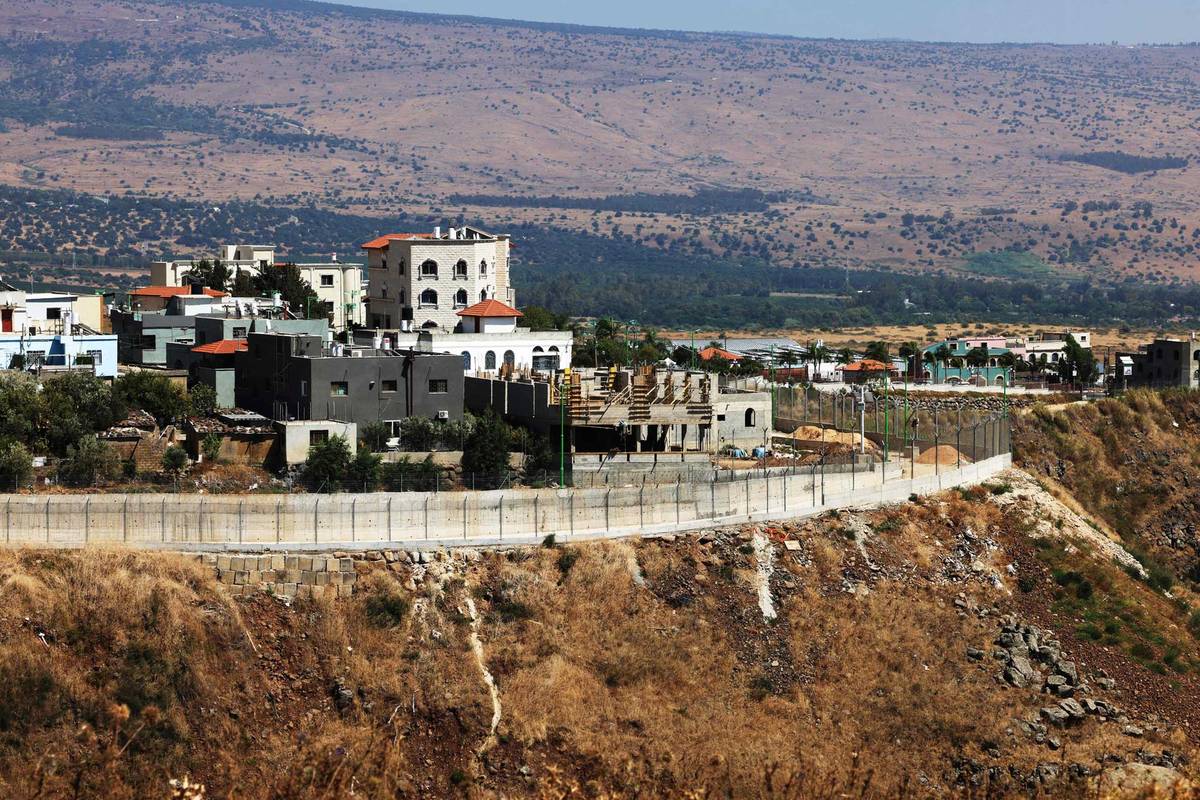
A picture taken from the southern Lebanese village of Wazzani shows the northern part of the border village of Ghajar recently walled by Israel, on July 21, 2023. Lebanon’s Foreign Ministry on July 11 said the country would file a complaint with the U.N. Security Council over Israel’s ‘annexation’ of the north of Ghajar. The so-called Blue Line cuts through Ghajar, formally placing its northern part in Lebanon and its southern part in the Israeli-occupied and annexed Golan Heights. / JOSEPH EID/AFP VIA GETTY IMAGES

The decision to build the new security fence has turned out to be a boobytrap for the current government. After waiting almost a year, Hezbollah decided to take advantage of this opening, and set in motion the same play it ran with the maritime deal. “What we did with the oil, gas and maritime border delineation, today also, through complementarity and cooperation between the state and the resistance and with support from the Lebanese people and the political forces in Lebanon, we can recover our occupied land in the town of Ghajar,” Nasrallah explained.

First, Hezbollah fired an antitank missile near the village and a few days later Hezbollah media published footage of Israeli military vehicles at the fence and declared it a “reoccupation” and “annexation” of the Lebanese part of Ghajar. Then it delegated the government to hand a proposal to the Americans: you need to force the Israelis to take down the fence and to withdraw from the northern part of Ghajar. Sure enough, the U.S. appears to have acted on cue as Hezbollah’s messenger.

The reason Hezbollah decided to focus on Ghajar is because it is the spot where it enjoys the strongest footing with the U.S. and the U.N., who have long been fielding proposals to Israel concerning the status of the northern part of the village. If the U.S. pressures Netanyahu to concede, that would be an easy victory for Hezbollah—achieved without the need even for negotiations. If Israel does not agree, but at the same time opts, with U.S. encouragement, not to remove the Hezbollah tents by force, that would also be a win for Hezbollah—an affirmation of the perception that Israel is deterred. The latter point was the central refrain of Nasrallah’s speech: Israel’s hesitation is the direct result of the deterrence that Hezbollah has imposed.

Building on this perception of deterrence, one Hezbollah objective in the Kfar Shouba hills and the Shebaa Farms pertains to deployment and operations. Over the past decade, Hezbollah has been using the Mount Dov region as a theater for retaliation against Israeli strikes in Syria (and, rarely, in Lebanon) that the group deems to be violate the rules of engagement and the deterrence equation. Now it intends to turn the eastern sector of the Shebaa Farms/Kfar Shouba hills into an arena of regular active and visible deployment, much like in border points to the west.

After gauging Israel’s reaction to its activities in June, and especially after Hochstein’s July visit, Hezbollah has doubled down on its activities outside of Kfar Shouba. On July 20, it brought an excavator, removed IDF concrete obstacles, and proceeded to level the ground in front of the border fence. The same intrepid local farmer featured in the previous episodes helpfully explained on Hezbollah TV that the plan was to create a road along the fence that links to the Ba’athael region, so as to “be at the nearest point to the fence with the Zionist enemy.”

Nasrallah added more detail in his speech. The area where Hezbollah set up the tents is Lebanese land, Nasrallah said, indicating he had no intention to take them down. We have the freedom to do and build whatever we wish there, he added. As he mockingly went through the various things Hezbollah might wish to construct there, he included “a tower” in the list. It remains to be seen if we will soon witness new Green Without Borders observation towers go up along the fence in the area, as is the case farther to the west.

To drive home the normalization of the overt presence of Hezbollah operatives along the entire length of the border line, the IDF filmed masked Hezbollah operatives in full gear patrolling openly along the fence near Moshav Dovev in the upper Galilee, and pointedly looking straight at the camera.

It’s worth placing the campaign at the border in the broader context of Hezbollah’s operations against Israel. If the tent was set up in early April, it was in March that Nasrallah set in motion the action by “locals” and the LAF obstructing Israeli “expansion beyond the Blue Line,” namely near Houla, west of Metula. March was also the month when Hezbollah sent a bomber from Lebanon deep into Israel in an attempted attack at the Megiddo Junction, as part of linking the Lebanese front with the Palestinian front backed by Iran. On April 6, Hezbollah orchestrated the launching of 34 rockets from Lebanon. Two days later, according to Israeli sources, the Hezbollah encampment was set up inside Israeli territory.

The signals Hezbollah is sending with its campaign in the Shebaa Farms/Kfar Shouba hills are of a return to a modified pre-2006 status quo in the area. What the 2006 war did was to upend the rules of engagement that had governed the battle with Hezbollah in the previous decade, especially after the 2000 withdrawal. The pre-2006 rules had allowed south Lebanon to be an arena for low intensity warfare with Israel without Hezbollah suffering major consequences.

Ever since the Biden administration came into office, Hezbollah has steadily raised the temperature in south Lebanon: From the rocket salvos of summer of 2021 through the mock drone attack on the Karish offshore rig in July 2022, to the Megiddo Junction bomber and the April 2023 increased rocket launchings, Hezbollah has been slowly normalizing the Lebanese front as an arena from which to poke at Israel, albeit at a much lower level than that of the pre-2006 period.

The bottom line here is still that whatever deterrence Israel had established with the 2006 war has now largely eroded.


Zawartość publikowanych artykułów i materiałów nie reprezentuje poglądów ani opinii Reunion’68,
ani też webmastera Blogu Reunion’68, chyba ze jest to wyraźnie zaznaczone.
Twoje uwagi, linki, własne artykuły lub wiadomości prześlij na adres:
webmaster@reunion68.com


Iranian Weightlifter Receives Lifetime Ban for Shaking Hands With Israeli Competitor

Iranian Weightlifter Receives Lifetime Ban for Shaking Hands With Israeli Competitor

Shiryn Ghermezian


An Israeli flag is burned by protesters at the 2019 “Quds Day” demonstration in Tehran. Photo: Reuters/Meghdad Madali.

An Iranian weightlifter was given a lifetime ban by authorities inside Iran for shaking hands with an Israeli competitor at the Masters World Weightlifting Championships in Wieliczka, Poland, which concluded on Saturday.

“The Weightlifting Federation bans the athlete Mostafa Rajai for life from accessing all sports facilities in the country, and dismisses the head of the delegation for the competition, Hamid Salehinia,” the federation said in a statement cited by the Iranian state news agency IRNA.

Rajai, who previously represented Iran at the 2015 Asian Championships, finished second in his category at the competition in Poland and stood on a podium with an Iranian flag wrapped around him on Saturday. He then shook hands and took a photo with Israeli weightlifter Maksim Svirsky, who finished third, while they both stood on the podium together.

The athlete “crossed the red lines of the Islamic Republic” as the Iranian delegation “was sent with the support of the federation,” according to IRNA.

“In addition to apologizing to the leader of the revolution, the families of martyrs and all the people of Iran, I promise we will certainly never witness incidents like this in the weightlifting family,” the federation’s chief, Sajad Anoushiravani, reportedly said in a statement quoted by Al Jazeera.

The federation added that a committee representing veteran weightlifters has also been disbanded.


Iran does not recognize Israel and forbids its athletes from competing against Israelis. Iran’s Supreme Leader Ayatollah Ali Khamenei repeated the country’s policy in a 2021 speech, saying, “Any Iranian athlete worthy of the name cannot shake hands with a representative of the criminal regime in order to win a medal.”

Iranian athletes have mostly avoided going head-t0-head against Israeli opponents in international events by pulling themselves out of competitions.

In 2019, Iranian judoka Saeid Mollaei fled Iran after being forced to forfeit a match in order to avoid potentially competing against Israeli judoka Sagi Muki. After the ordeal, Iran was given a four-year ban on participating in all international judo competitions for its refusal to let its athletes square off against Israelis. Mollaei now competes for Mongolia.

Also in 2019, Iranian chess champion Alireza Firouzja renounced his nationality and said he would no longer play for his home country due to Iran’s ban against Israeli athletes.


Zawartość publikowanych artykułów i materiałów nie reprezentuje poglądów ani opinii Reunion’68,
ani też webmastera Blogu Reunion’68, chyba ze jest to wyraźnie zaznaczone.
Twoje uwagi, linki, własne artykuły lub wiadomości prześlij na adres:
webmaster@reunion68.com


How NGOs Fabricate the Legal Definition of Apartheid to Attack Israel

How NGOs Fabricate the Legal Definition of Apartheid to Attack Israel

Salo Aizenberg


Photo by Alex Chis via Flickr. Used under licence: https://creativecommons.org/licenses/by-sa/4.0/legalcode

INTRODUCTION

The charge that Israel is an apartheid regime has become one of the central elements of the lawfare campaigns against the Jewish state. The apartheid label has been falsely applied to Israel for decades, beginning with anti-Zionist propaganda emanating from the Soviet Union in the 1950s. The label was advanced in 1975 when a U.N. General Assembly resolution equating Zionism with racism included the apartheid term. Another step forward took place at the UN Durban Conference in 2001 when NGOs promoted the demonisation of Israel as apartheid. The final declaration of the conference referenced ‘Israel’s brand of apartheid’ with the stated goal of isolating Israel. The most recent and aggressive effort was initiated by a group of NGOs who coordinated to issue a series of detailed reports that they claimed proved Israeli apartheid. The first reports, which can be considered warm-ups to the main events, were issued by Israeli based Yesh Din in July 2020 and B’Tselem in January 2021. These reports were soon followed by prominent NGOs Human Rights Watch (HRW) in April 2021 (A Threshold Crossed, Israeli Authorities and the Crimes of Apartheid and Persecution) and Amnesty International in February 2022 (Israel’s Apartheid Against Palestinians). A close read of these reports shows significant sharing of methodologies and information, all relying on the same manipulations to falsify the legal definition of apartheid so that it fits the parameters of the Israel-Palestine conflict.

A key goal of these NGOs is to normalise the characterisation of Israel as apartheid so that it becomes part of the accepted discourse. Anti-Israel groups are aware of the potency of the label compared to merely saying for example that ‘Israel commits crimes against humanity’ or operates a ‘brutal occupation.’ Since everyone knows what must to happen to apartheid states – they must be dismantled – these groups intend for the apartheid label to lead to greater international pressure that results in boycotts and sanctions and eventually Israel’s dissolution. The effort is gaining traction. UN officials have begun to adopt the term and media reports now regularly associate Israel with apartheid. A group of over 1,000 Jewish academics and activists recently issued a letter agreeing that Israel is an apartheid regime. While the letter was mainly intended to provide support for the movement against changes in the Israeli judiciary and not as part of a campaign to end Israel as the Jewish state, the signatories were nevertheless comfortable describing Israel as apartheid. As will be demonstrated below, these academics negligently bought into the falsification of the meaning of apartheid by NGOs.

A core contention of these NGOs is that they strictly adhere to international law in branding Israel as apartheid. For example, the Yesh Din report is presented as a ‘legal opinion’ written by lawyer and self-described expert on international law Michael Sfard. As will be proven below it is clear that the legal definition of apartheid cannot be applied to the Israel-Palestine conflict and therefore the NGOs deliberately distort the plain language of international legal documents to fabricate a new definition of apartheid. This article will focus on three key falsifications of the legal definition and application of apartheid.[1] There are hundreds of other errors, lies and misrepresentations disseminated by NGOs regarding the details of Israel’s alleged crimes that underpin apartheid that have been exposed in several detailed rebuttals.[2]

FABRICATION 1: REDEFINE THE MEANING OF ‘RACIAL’

As acknowledged by NGOs, apartheid is defined by international law in two documents: (1) The ‘Apartheid Convention’ which refers to a 1973 resolution by the UN General Assembly International Convention on the Suppression and Punishment of the Crime of Apartheid; and (2) The Rome Statute of the International Criminal Court which was issued in 1998 and entered into force in 2002 with 123 state signatories.

The Apartheid Convention defines apartheid as follows and continues by listing specific crimes:

For the purpose of the present Convention, the term ‘the crime of apartheid,’ which shall include similar policies and practices of racial segregation and discrimination as practised in southern Africa, shall apply to the following inhuman acts committed for the purpose of establishing and maintaining domination by one racial group of persons over any other racial group of persons and systematically oppressing them.

The Rome Statute defines apartheid as follows:

‘The crime of apartheid’ means inhumane acts of a character similar to those referred to in paragraph 1, committed in the context of an institutionalized regime of systematic oppression and domination by one racial group over any other racial group or groups and committed with the intention of maintaining that regime;

In both definitions apartheid is specifically a racial crime committed by one racial group against another. The plain dictionary meaning of race is ‘any one of the groups that humans are often divided into based on physical traits regarded as common among people of shared ancestry.’ In South Africa the regime segregated the ‘white race’ from the ‘black race’, and it is this model of discrimination that informed the definition of apartheid. It is clear that the racial aspect of apartheid does not match the groups that are party to the Israel-Palestine conflict as neither Palestinians nor Jews are races. Each of these identity groups include people of different races (e.g. more than 50 per cent of Israeli Jews are of Arab origin). This fact should have eliminated the application of apartheid under international law to Israel’s alleged crimes towards Palestinians, but the NGOs came upon a solution: redefine the meaning of ‘racial’ to expand the application of apartheid to any identity group.

The NGOs first step in the redefinition of racial is to claim that neither the Apartheid Convention nor the Rome Statute defined the term even though this is a gross misrepresentation. HRW states: ‘Both the Apartheid Convention and Rome Statute use the term “racial group,” but neither defines it’ and Amnesty writes: ‘the term “racial group” has not been defined in either of these instruments.’ With this assumption in hand, the NGOs then look to a third international statute known as ICERD or the International Convention on the Elimination of All Forms of Racial Discrimination, which was adopted by the UN General Assembly in 1965. ICERD offers a more expansive definition of ‘racial discrimination’:

  1. In this Convention, the term ‘racial discrimination’ shall mean any distinction, exclusion, restriction or preference based on race, colour, descent, or national or ethnic origin which has the purpose or effect of nullifying or impairing the recognition, enjoyment or exercise, on an equal footing, of human rights and fundamental freedoms in the political, economic, social, cultural or any other field of public life.

By including descent, national and ethnic based identity in the meaning of ‘racial’ for the purposes of defining apartheid it conveniently becomes applicable to the Israel-Palestine conflict. All the NGO reports therefore assert that they are using the ICERD definition of racial for purposes of defining apartheid. For example, Amnesty writes: ‘It is this subjective understanding of “racial groups” that is applied by Amnesty International in this report with regard to the crime against humanity of apartheid.’ The use of ICERD’s definition might seem reasonable on the surface but the NGOs deliberately obscure how the Rome Statute actually treats the meaning of ‘racial’ and dishonestly cherry-picks one clause from ICERD to override the language in the Rome Statute.

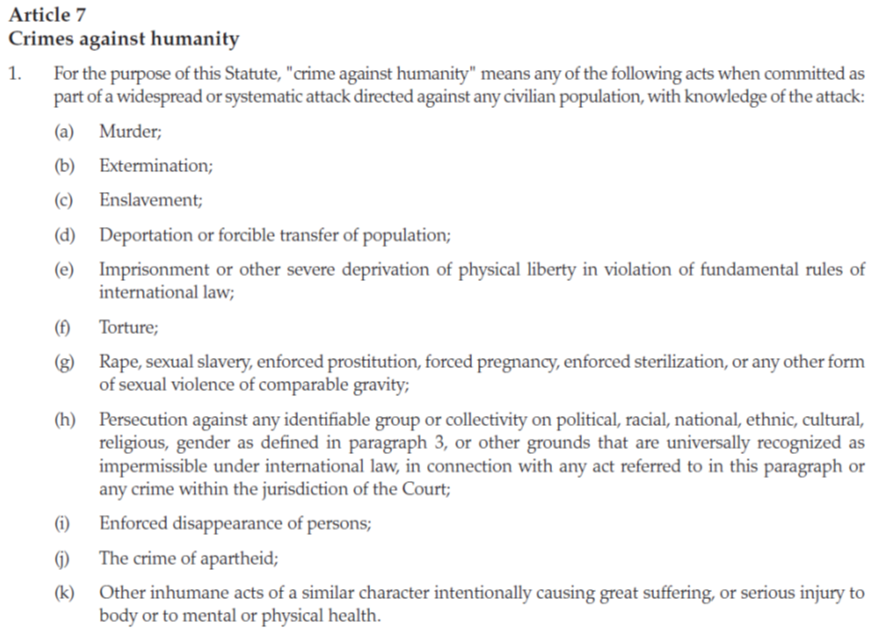
Is it true, as these NGOs contend, that ‘racial’ is undefined in both the Apartheid Convention and the Rome Statute and therefore it is reasonable to look to a document issued more than 30 years prior to Rome for the definition? While these documents do not technically provide a formal definition for racial, the Rome Statute quite explicitly distinguishes race from all the other commonly accepted elements of identity including political, national, ethnic, cultural, religious and gender differences. Thus, while ICERD includes some of these other identity groups in its definition of racial, the Rome Statute specifically excludes them thus isolating the meaning of racial to its literal and classical definition. Copied below is Article 7.1 of the Rome Statute. Clause (h) lists the various identity groups that could suffer the crime of persecution: political, racial, national, ethnic, cultural, religious and gender. Thus while the Rome Statute does not define racial (or any of these terms), no honest reading of the statute could claim that the authors intended for racial to include things like nationality and ethnicity.

The Rome Statute also specifically separates racial from other identity groups in Article 6 where genocide is defined. Genocide is defined as ‘acts committed with intent to destroy, in whole or in part, a national, ethnic, racial or religious group.’ Once again it is evident that the statute intentionally separates racial from these other identity groups. In this case three identity groups that could be subject to the Crime against Humanity of Persecution, cultural, gender, and political, are excluded from genocide.

There is additional evidence for how the Rome Statute considered the word racial as a unique identifier. Article 7.1(j) lists ‘The crime of apartheid’ as one of eleven crimes against humanity, and then further clarifies the meaning of apartheid in the next section. Copied below are clauses (g) and (h) from Article 7.2 that are relevant to this analysis:

The ‘crime of apartheid’ is exclusively defined as a racial crime. The authors were certainly aware of all the other types of group identities – political, national, ethnic, cultural, religious and gender – but deliberately did not include them in the definition of apartheid. The prior clause (g) which further defines ‘Persecution’ is expansive and applies this crime to ‘the identity of the group or collectivity’, referring back to the seven separate group identity types listed in Article 7.1(h). Persecution can be committed against all seven identity groups, including racial, but apartheid can only be committed against a racial group and none of the others. As noted earlier, ‘Genocide’ can be perpetrated against national, ethnic, racial or religious groups, but excludes three other identity groups. Surely if the Rome Statute intended for apartheid in clause (h) to include identities other than race it would have used the same language as clause (g) to describe the crime or listed other specific identity groups that could be subject to apartheid as it did in defining genocide. There is no doubt that the Rome Statute defined race as unique from all other identity groups and there is no doubt that it meant for apartheid to be a unique crime against humanity that was racial only, differentiated by those that could be subject to ‘persecution’ and ‘genocide.’ It is therefore a fraudulent manipulation by the NGOs to insert the ICERD definition of racial from more than 30 years earlier and apply it to the Rome Statute definition of apartheid.

Surely Yesh Din’s 58-page ‘Legal Opinion’ by Michael Sfard, who is cited as an expert in international human rights law, closely addressed Article 7.1.(h) of the Rome Statute and its apparent contradiction with the ICERD definition of racial discrimination? Surely the long reports by HRW and Amnesty, which were each written over several years and claim to rigorously apply international law addressed the fact that the Rome Statute separated racial from all other identity groups? Surely the NGO’s legal experts explained why it is proper to rely on ICERD to define racial even though the Apartheid Convention and Rome Statute written many years later did not cite this definition? The answer is the same for all the reports – none even mention the treatment of racial in the Rome Statute or how ‘persecution’ applies to seven identity groups but ‘apartheid’ only to racial groups in Article 7.1(h), let alone offer a legal analysis of the clause. Of course not, as an honest reading of the statute would make clear that the Israel-Palestine conflict can be many things, but it cannot be apartheid under the international legal definition of the term. HRW doubles down on the lie with the following comment that distorts reality:

While discussion of the meaning of ‘racial group’ during the drafting of the Rome Statute appears to have been minimal, its inclusion in the definition of apartheid, after the end of apartheid in South Africa and when international human rights law had clearly defined racial discrimination to include differences of ethnicity, descent, and national origin, indicates that ‘racial group’ within the Rome Statute reflects, and would likely be interpreted by courts to reflect, a broader conception of race.

FABRICATION 2: CLAIMING THAT THE DEFINITION OF APARTHEID IS NO LONGER BASED ON THE SOUTH AFRICAN MODEL

The second fabrication of international law by NGOs is their contention that apartheid is no longer based on the South African model. The 1973 Apartheid Convention, which was written when apartheid remained in force in South Africa, noted that apartheid included ‘similar policies and practices of racial segregation and discrimination as practised in southern Africa.’ The clear association of apartheid under international law with South Africa, as well as this nation being the only confirmed apartheid regime in history, is problematic for those who seek to label Israel as apartheid. Even Israel’s harshest critics cannot and do not claim that Israeli-Arabs and Palestinians suffer from the same type of segregation in every aspect of life that Black people suffered under apartheid South Africa. While this fact would seem to deal a serious blow to claiming Israeli is an apartheid regime, NGOs came upon an easy solution. HRW explains:

The international community has over the years detached the term apartheid from its original South African context, developed a universal legal prohibition against its practice, and recognized it as a crime against humanity with definitions provided in the 1973 International Convention on the Suppression and Punishment of the Crime of Apartheid (‘Apartheid Convention’) and the 1998 Rome Statute of the International Criminal Court (ICC).

Despite 865 footnotes in a 217-page report, HRW does not cite any evidence of the detachment of apartheid from its South African context and what specific ‘years’ this took place. Certainly no international law – which HRW insists it strictly adheres to – supports the claim that South Africa is no longer the model for apartheid.

HRW published a follow up in July 2021 in response to criticism of its definition of apartheid and the claimed disconnection to South Africa stating: ‘And crucially, the 1998 Rome Statute, drafted after the end of apartheid in South Africa, defines apartheid as a distinct crime against humanity and removed any reference to Southern Africa from its definition.’ It is true that the Rome Statute did not reference South Africa but neither did it negate it and NGOs do not suggest that the Apartheid Convention is no longer valid. Note the selective use by HRW of later editions of international law to supersede prior statutes. In the case of South Africa the 1998 Rome Statute is more relevant and up to date than the 1973 Apartheid Convention; but when it comes to defining ‘racial’ the 1965 ICERD is more informative than the Rome Statute.

The fact is that the Rome Statute further emphasised the unique connection of apartheid to race as literally defined, similar to the Apartheid Convention. With South Africa no longer an apartheid regime as of 1994 it made sense not to invoke this nation in the 1998 definition of apartheid. There is also the matter of legal precedent, a universal and critical element of all legal analysis. Since South Africa is the only nation in history universally acknowledged as apartheid, surely an analysis charging another nation with apartheid for the only the second time in history would include this comparison in their legal analysis. But no NGO bothers to compare Israel to apartheid South Africa. These NGOs know that the South African comparison to Israel is a glaring weakness in its argument, so they have emphasised its aversion to this comparison. For example, Omar Shakir, the author of the HRW report, scoffed at critics who ‘build strawmen, try to say it’s [Israel’s] not like South Africa, that’s not what we’re arguing.’

FABRICATION 3: CHERRY-PICKING ONE CLAUSE OF ICERD AND IGNORING ANOTHER

As described above, NGOs mix and match international law by cherry-picking one clause of ICERD, the one that defines ‘racial discrimination,’ in a fraudulent attempt to override the treatment of ‘racial’ in the Rome Statute. Compounding the dishonesty, NGOs conveniently only cite Article 1.1 of ICERD (shown previously) but ignore the very next clause 1.2 which reads as follows:

  1. This Convention shall not apply to distinctions, exclusions, restrictions or references made by a State Party to this Convention between citizens and non-citizens.

According to ICERD’s definition of ‘racial discrimination,’ differences in how non-citizens are treated, even if excluded and subject to restrictions, are not considered racial discrimination. Therefore, even if one were to assume ICERD’s definition of racial discrimination is the accurate one to use in defining apartheid, actions taken against non-citizens is excluded and thus cannot be a crime of apartheid. In the context of Israel-Palestine, this exclusion effectively negates the case for Israeli apartheid. Large sections of the crimes NGOs allege Israel commits are related to its treatment of Palestinians who by a large majority are non-citizens of Israel. While it is still possible for non-citizens to be subject to crimes against humanity under the Rome Statute (which refers to ‘any civilian population’), the millions of Palestinians who are non-citizens of Israel are not legally victims of racial discrimination under ICERD. Once excluded from racial discrimination it necessarily follows that Palestinians are not victims of apartheid.

CONCLUSION

The first fabrication highlighted is the ‘smoking gun’ evidence that demonstrates that the Israel-Palestine conflict can be many things, but cannot be apartheid. Under both the Apartheid Convention and the Rome Statute apartheid is exclusively a racial crime as strictly and literally defined. There are ten other crimes against humanity under the Rome Statute which could legally apply to the Israel-Palestine conflict. Assuming one believes Israel commits the crimes against Palestinians that NGOs allege (we do not), it would be legally accurate under the Rome Statute to state: ‘Israel commits the crime against humanity of persecution against the national and ethnic group known as Palestinians under Article 7.1(h).’ Of course this does not carry the rhetorical weaponisation like the word apartheid.

The typical response by anti-Israel activists and their supporters when exposing the falsification of the definition of apartheid for its unique application to Israel is: ‘Israel is committing grave crimes against humanity and your best response and defense is to discuss the technical definition of apartheid?’ The answer is two-fold. First, the alleged crimes committed by Israel are grossly fabricated, exaggerated and misrepresented as well, all of which has been documented in detail in several lengthy rebuttals. Second, if the terminology is secondary and not important compared to Israel’s supposed crimes, then why do NGOs care what term is used to describe Israeli actions? Why not move away from this one-word label that invites accusations of antisemitism by international officials? If not technically accurate why not simply say Israel commits crimes against humanity against Palestinians? It is of course disingenuous for Israel’s critics to claim that combatting the use of the apartheid label is besides the point since Israel is criminal anyhow. They know that apartheid commands special attention and seriousness that demands aggressive international action. They know that Israel is the only nation on earth that is routinely branded as apartheid and they strive to keep it that way in hopes of permanently isolating Israel. Shame on academics and the media for blindly following the fabrications of the NGOs, allowing international law to be determined by a popularity contest.


[1] There are other aspect of the definition of apartheid which are also incorrectly applied by NGOs, such as the meaning of ‘inhumane acts’ and ‘domination’ that are not covered in this article. See https://www.ngo-monitor.org/reports/apartheid-report/ for a further analysis of the apartheid definition.

[2] https://www.bicom.org.uk/analysis/the-apartheid-smear-2022/https://www.ngo-monitor.org/reports/amnesty-internationals-cruel-assault-on-israel/https://www.google.com/url?client=internal-element-cse&cx=010323966898720032183:9pwegkotst0&q=https://ngo-monitor.org/pdf/ThresholdCrossed_2022.pdf&sa=U&ved=2ahUKEwi4kKD04-GAAxWNElkFHYEGBcUQFnoECAgQAg&usg=AOvVaw0s8tcmgkSCAQLi_t5Qtvrn


Salo Aizenberg is the author of Amnesty International’s Cruel Assault on Israel: Systematic Lies, Errors, Omissions, and Double Standards (2022) and A Threshold Crossed: Documenting HRW’s ‘Apartheid’ Fabrication (2022). In this essay he explains why, when NGOs extend the term ‘apartheid’ to Israel, they commit ‘three key falsifications of the legal definition and application’ of the term.


Zawartość publikowanych artykułów i materiałów nie reprezentuje poglądów ani opinii Reunion’68,
ani też webmastera Blogu Reunion’68, chyba ze jest to wyraźnie zaznaczone.
Twoje uwagi, linki, własne artykuły lub wiadomości prześlij na adres:
webmaster@reunion68.com


Speech at rally for judicial reform

Speech at rally for judicial reform

Caroline Glick


On September 7, I spoke outside the Supreme Court in Jerusalem at a mass rally in favor of judicial reform. The event was held on the eve of the Supreme Court hearing last week on a petition from a U.S.-funded far left group asking it to abrogate an amendment to Basic Law: The Judiciary. The Supreme Court has no power to adjudicate Basic Laws. It certainly has no power to adjudicate Basic Laws that relate to its own powers.

Here is the video of my speech with English subtitles.


Zawartość publikowanych artykułów i materiałów nie reprezentuje poglądów ani opinii Reunion’68,
ani też webmastera Blogu Reunion’68, chyba ze jest to wyraźnie zaznaczone.
Twoje uwagi, linki, własne artykuły lub wiadomości prześlij na adres:
webmaster@reunion68.com