Archives

Israeli Series ‘Fauda’ Set to Get an Indian Remake Focusing on India, Pakistan Tensions

Israeli Series ‘Fauda’ Set to Get an Indian Remake Focusing on India, Pakistan Tensions

Shiryn Ghermezian


Actors and filming crew members work on the set of Israeli television series ‘Fauda’ in Tel Aviv, May 30, 2019. Photo: Reuters / Amir Cohen.

The hit Israeli TV series “Fauda,” which streams worldwide on Netflix, will get an Indian remake set against the tense relations between India and Pakistan, The Hollywood Reporter revealed on Wednesday.

The Mumbai-based studio Applause Entertainment has partnered with Israel’s Yes Studios for the Indian adaptation, which is expected to go into production by 2020 and be released toward the end of next year.

“‘Fauda’ has the potential to be well-developed in the context of India and Pakistan as the show is about people on both sides of the conflict,” said Applause Entertainment CEO Sameer Nair, “Reality is often stranger than fiction, and is rarely black and white. ‘Fauda’ is an effort to represent this gray state of conflict.”

The original political thriller follows an undercover Israeli counter-terrorism unit that fights Palestinian terrorists. “Fauda,” which means “chaos” in Arabic, was developed by Israelis Avi Issacharoff and Lior Raz, based on their real-life experiences in the Israel Defense Forces.

Raz, who plays the show’s lead character, Doron Kavillio, said about the adaptation, “‘Fauda’ is extremely authentic and real. I’m sure Indian audiences will be enthralled by the realistic and detailed world created in this carefully thought-out adaptation. I’m also excited to know who will play Doron.”

Issacharoff added, “‘Fauda’ has been an integral part of our professional and personal lives and we’re extremely excited that it is being remade for another country and language. India is creating some exciting digital content and this association with Applause Entertainment will help take ‘Fauda’ to a different territory and wider audience base.”

Yes Studios managing director Danna Stern said the adaptation process would “stay true to the original material while making the story relevant to [Applause Entertainment] local viewers — which they know so well; we are certain that they will do complete justice with the Indian version.”

Applause has already done remakes of the Israeli shows “Hostages,” “Honey Badgers” and “Your Honor,” and has also produced the comedy show “Mind the Malhotras,” based on Israeli show “La Famiglia,” for Amazon.

The third season of the Israeli version of “Fauda” finished shooting in June.


Zawartość publikowanych artykułów i materiałów nie reprezentuje poglądów ani opinii Reunion’68,
ani też webmastera Blogu Reunion’68, chyba ze jest to wyraźnie zaznaczone.
Twoje uwagi, linki, własne artykuły lub wiadomości prześlij na adres:
webmaster@reunion68.com


Prehistoric cave dwellers ‘canned’ marrow to eat later

Prehistoric cave dwellers ‘canned’ marrow to eat later

Brian Blum


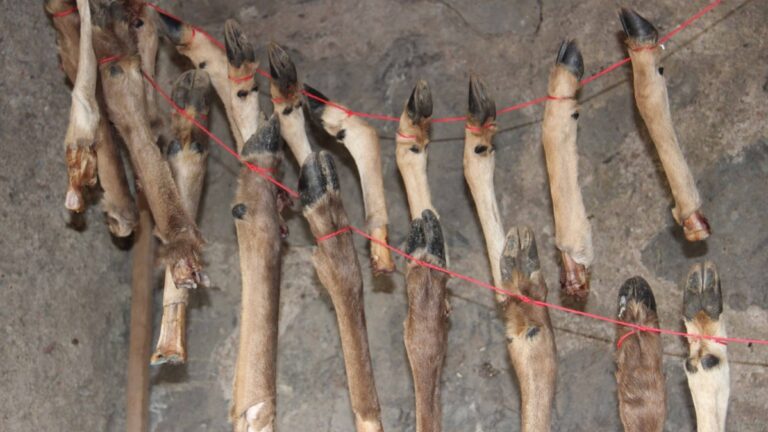
400,000-year-old deer bones found in a cave near Tel Aviv were essentially used as cans to store the marrow, by leaving the skin intact.

Deer leg bones stored during the Tel Aviv University experiment. Photo by Dr. Ruth Blasco

“Mmm, mmm good” may have been the tagline for American soup brand Campbell’s, but it turns out prehistoric humans practiced an early form of “canning” food, too. Call it “mmm, mmm marrow.”

Tel Aviv University and Spanish researchers recently reported that Paleolithic people in the Middle East some 400,000 years ago stored deer leg bones, complete with their skin, in the Qesem Cave 12 kilometers east of Tel Aviv.

“We discovered that preserving the bone along with the skin, for a period that could last for many weeks, enabled early humans to break the bone when necessary and eat the still nutritious bone marrow,” explained Ruth Blasco of TAU’s Institute of Archaeology and Ancient Near Eastern Civilizations.

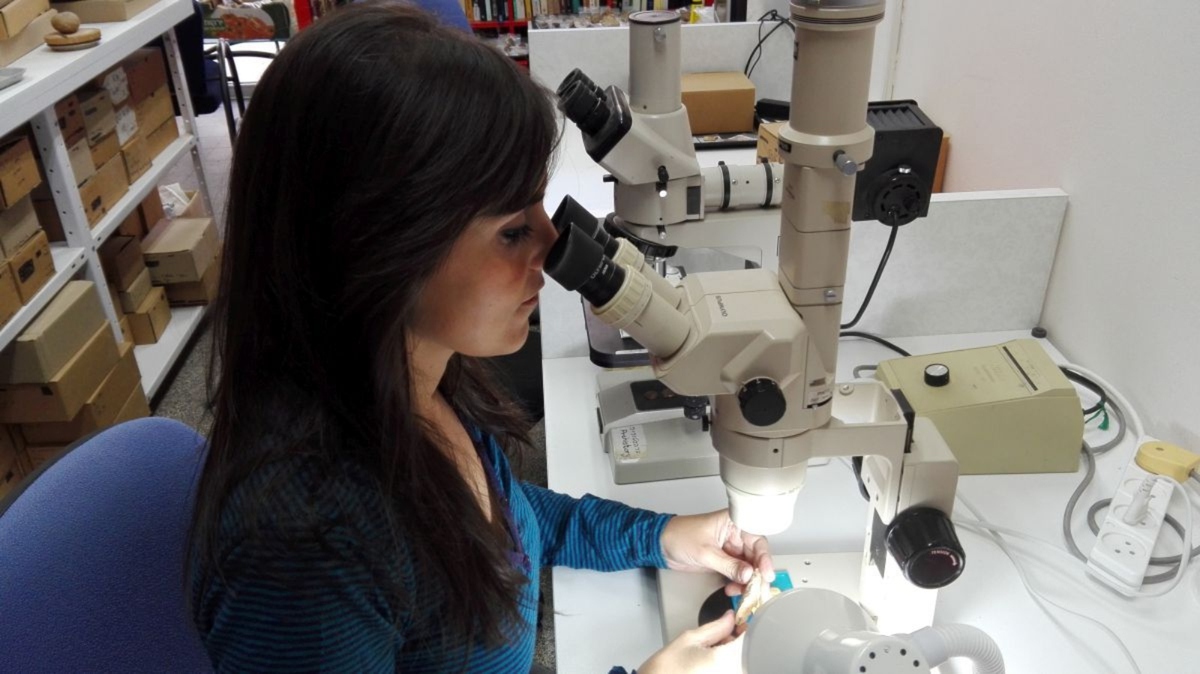
Dr. Ruth Blasco analyzing bones from Qesem Cave at Tel Aviv University’s Institute of Archaeology. Photo by Prof. J. Rosell

This was a surprise to the researchers because it was generally believed that Paleolithic people were primarily hunter gatherers who lived hand-to-mouth, consuming whatever they caught that day.

“Prehistoric humans at Qesem Cave were sophisticated enough, intelligent enough and talented enough to know that it was possible to preserve particular bones of animals under specific conditions, and, when necessary, remove the skin, crack the bone and eat the bone marrow,” said TAU’s Prof. Avi Gopher.

“This is the earliest evidence of such behavior,” noted Blasco.” It also marks a threshold for new modes of Palaeolithic human adaptation.”

The most common prey in the Qesem area was fallow deer. Usually, limbs and skulls were brought to the cave while the rest of the carcass was stripped of meat and fat at the hunting scene and left there.

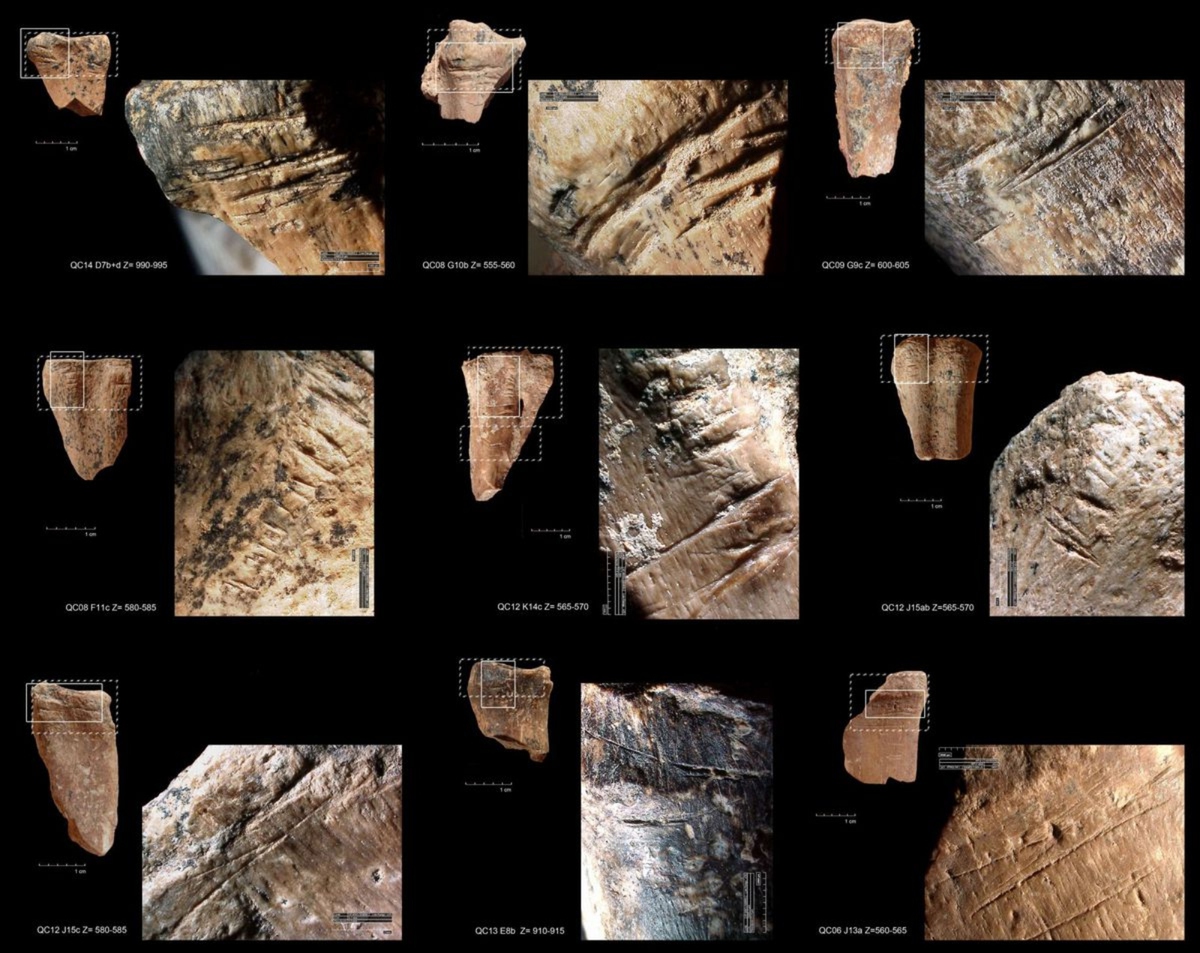
What led the researchers to make their marrow “can” hypothesis is that the deer leg bones found in the cave exhibited unique chopping marks on the shafts, which are not characteristic of the marks left from stripping fresh skin to fracture the bone and extract the marrow on the spot

Chop marks, cortical scars and chip marks on the anterior and posterior surface of deer leg bones from Qesem Cave. Photo by Ruth Blasco

“Bone marrow constitutes a significant source of nutrition and as such was long featured in the prehistoric diet,” explained Tel Aviv University Prof. Ran Barkai. “Until now, evidence has pointed to immediate consumption of marrow following the procurement and removal of soft tissues. In our paper, we present evidence of storage and delayed consumption of bone marrow at Qesem Cave.”

The paper was published in the journal Science Advances.


Zawartość publikowanych artykułów i materiałów nie reprezentuje poglądów ani opinii Reunion’68,
ani też webmastera Blogu Reunion’68, chyba ze jest to wyraźnie zaznaczone.
Twoje uwagi, linki, własne artykuły lub wiadomości prześlij na adres:
webmaster@reunion68.com


The Spielberg Jewish Film Archive – Hassidic Music

The Spielberg Jewish Film Archive – Hassidic Music

Hebrew University of Jerusalem    Hebrew University of Jerusalem


Zawartość publikowanych artykułów i materiałów nie reprezentuje poglądów ani opinii Reunion’68,
ani też webmastera Blogu Reunion’68, chyba ze jest to wyraźnie zaznaczone.
Twoje uwagi, linki, własne artykuły lub wiadomości prześlij na adres:
webmaster@reunion68.com


GERMAN OPINIONS ON A NEW HOLOCAUST AND NEO-NAZIS

GERMAN OPINIONS ON A NEW HOLOCAUST AND NEO-NAZIS

MANFRED GERSTENFELD


38% of Germans think it is possible that something like the Holocaust could happen in the future in other European countries.

A man wearing a Swastika [Illustrative]. (photo credit: CARLOS BARRIA / REUTERS)

In the early 1990s, I interviewed in Frankfurt a board member of one of Germany’s leading banks. The conversation took place in the framework of my preparation for a book on the future economic and political potential of Italy, which I coauthored. I had come to discuss the changes in Germany after the 1990 reunification. My interviewer’s interest in our conversation greatly increased when he realized that I was an Israeli.

He opined that another Holocaust could happen, and said that far too little had changed in Germany. At the time, I thought it a bizarre remark. Yet the recent World Jewish Congress (WJC) survey on Germany showed that this opinion is widely shared in the country. The poll found that 25% of Germans believe another Holocaust could happen. That percentage translates into about 18 million citizens – as 71 million Germans are above 18 years, the age limit of the survey. Another 24% were not sure. That leaves only 51% who believe a Holocaust cannot happen again in Germany.

The major WJC survey, in which 81 questions were posed, has been mainly quoted for its data on antisemitism. Yet much more can be learned from it. The quantitative data combined with existing qualitative information enable one to draw more concrete conclusions than before.

Even more Germans, 38%, think it is possible that something like the Holocaust could happen in the future in other European countries. That is more than the 33% who consider it is not possible. Some 29% said they were not sure.

Close to six million Germans think that people should be allowed to use Nazi slogans and symbols in Germany today. Another eight million – or about 11% – are not sure. The other 54 million say this should not be allowed. Even more people, close to eight million – 11% – think that it is acceptable for an individual to hold Neo-Nazi views. Another eight million are not sure. One can conclude from this that the “unhindered free speech” radicals would make it possible for even more substantial anti-Jewish and anti-Israeli hate speech in a country with such a horrible past as Germany.

From time to time neo-Nazis march through German cities. These marches are often granted permits. In October 2019, such demonstrators marched every Monday in Dortmund. The higher administrative court in Münster decided that marchers are permitted to use the slogan “Never, never, never again Israel,” saying that this does not constitute incitement. The police had forbidden the slogan. The neo-Nazis then appealed to the court and won the case in both the first and second instances.

After the failed massacre on Yom Kippur this year at a synagogue in Halle, the German government ruled that going forward, all web and social media platforms must inform security agencies and police about hate content. Yet one wonders how the German government is going to control German websites in Arabic and Turkish.

The data cited also help us understand the electoral potential of the extreme ethnic wing of the right-populist AfD Party. This faction is believed to be smaller than the party’s more moderate main one. In the October elections in the German state of Thuringia, the AfD became the second largest party with 23.4% of the votes. Its leader there, Bjorn Höcke, is the best known person in the party’s ethnic wing. The largest party in the election was the extreme leftist Linke Party with 31%. Thus, the two extreme parties jointly have significantly more seats than all mainstream parties combined in the state’s parliament.

Only a few aspects of the major WJC survey can be mentioned this short article. In analyzing the survey, several problematic realities of contemporary Germany can be highlighted. There are indeed tens of millions of Germans in favor of a well-functioning democratic state. Yet there are also many millions who have not learned much, if anything, from the Holocaust.

The survey asked: “Where do you get most of your information about Jews?” Television was the dominant source with 32%, followed by the Internet with 16% and newspapers with 12%. There is no reason to assume that the figures concerning Israel are very different. A 2015 study from the Bertelsmann Foundation reported that 41% – close to 30 million people – think “Israel is acting toward the Palestinians like the Nazis acted toward the Jews.”

It is reasonable to assume that this opinion is primarily created by the mood of the country’s media. German television is mainly publicly owned. To fight the rampant anti-Israelism in the country, a profound study on German television programs concerning Israel should be undertaken. One can assume that many of its journalists are left-leaning liberals, a segment of society in which one finds many who demonize Israel.

There are several important reasons why Germany is in flux. A major cause is the economic recession. Another reason is the great decline of the two parties that have ruled the country since its first post-war elections: the Christian Democrats (CDU) and the Socialists (SPD). Their combined percentage of support in recent polls is only around 40%. That decline is linked to the far too liberal immigration policies of the CDU-SPD governments since 2015.

In 2017, the BBC interviewed Niklas Frank, son of Hans Frank who was governor-general of Poland from 1939 to 1945. The latter was convicted of war crimes and crimes against humanity at the Nuremberg trials, and was executed in 1946. The son despises his father. He said about contemporary Germany on the BBC: “Do not trust us.” The findings of the WJC study seem to back up his assessment.


The writer is emeritus chairman of the Jerusalem Center for Public Affairs. He was given the Lifetime Achievement Award by the Journal for the Study of Antisemitism, and the International Leadership Award by the Simon Wiesenthal Center.


Zawartość publikowanych artykułów i materiałów nie reprezentuje poglądów ani opinii Reunion’68,
ani też webmastera Blogu Reunion’68, chyba ze jest to wyraźnie zaznaczone.
Twoje uwagi, linki, własne artykuły lub wiadomości prześlij na adres:
webmaster@reunion68.com


Meet the Jewish Latin Princess

Meet the Jewish Latin Princess

Israel News Talk Radio


Yael Trusch, host of the award-winning podcast Jewish Latin Princess, interviews the world’s most uniquely talented Jewish women.

Yael Trush / By PR

Penina Taylor Speaks with writer, international speaker and creator of the Jewish Latin Princess blog and podcast, Yael Trusch.

Yael shares her inspirational Journey to Torah as well as some words of wisdom for those facing challenges in their own journey to Torah. Another fascinating episode of Leap of Faith you don’t want to miss.

Yael Yael Trusch is an MBA, writer, and international speaker who offers practical and spiritual tools to help women live a “joyful, richer, Jewish life.”

She’s the Host of the award-winning podcast, Jewish Latin Princess, where she interviews the world’s most uniquely talented Jewish women.

Dubbed by her podcast guests and listeners “the Jewish Oprah”, Yael is an insightful, honest, and sensitive communicator, who brings out the best in her guests and extracts powerful life lessons for guests and listeners alike. She’s passionate about Jewish financial literacy & Jewish women’s relationship with money.

Thus, she authors the column Jewish Money Matters for Chabad.org, and contributes regularly to numerous Jewish publications, and her blog JewishLatinPrincess.com. A wife, mother of 4, and native of Puerto Rico, Yael has globe trotted from New York to Argentina to Chileto China to Israel and back to the US.


Zawartość publikowanych artykułów i materiałów nie reprezentuje poglądów ani opinii Reunion’68,
ani też webmastera Blogu Reunion’68, chyba ze jest to wyraźnie zaznaczone.
Twoje uwagi, linki, własne artykuły lub wiadomości prześlij na adres:
webmaster@reunion68.com