Archives

NEARLY 9 IN 10 AMERICAN JEWS SAY ANTISEMITISM IS A PROBLEM IN U.S.

NEARLY 9 IN 10 AMERICAN JEWS SAY ANTISEMITISM IS A PROBLEM IN U.S.

RON KAMPEAS/JTA


Asked if antisemitism had increased over the past five years, 84 percent said it had: 43 percent said a lot and 41 said somewhat.
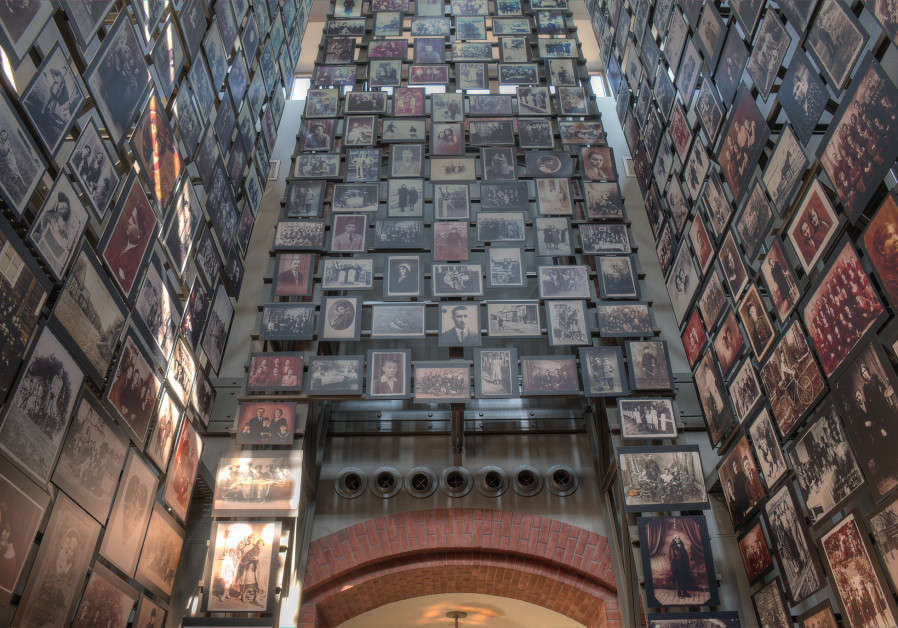
Tower of Faces at the United States Holocaust Memorial Museum. (photo credit: WIKIMEDIA)

More than eight in 10 American Jews say that antisemitism has spiked in recent years and even more believe it is a problem in the United States, according to an American Jewish Committee survey.

Nearly three-quarters of respondents strongly disapprove of how President Donald Trump is handling antisemitism and significantly more see the extreme political right as more of a serious threat to them than the extreme political left.

The telephone survey of 1,283 Jewish adults conducted from Sept. 11 to Oct. 6 found that 88 percent of respondents believe that antisemitism was a problem: 50 percent as “somewhat of a problem” and 38 percent as a “very serious” problem.

Asked if antisemitism had increased over the past five years, 84 percent said it had: 43 percent said a lot and 41 said somewhat.

Just 2 percent of respondents said they had been victims of a physical anti-Semitic attack over the same time frame, but 23 percent said they had been the target of an anti-Semitic remark in person, by mail or over the phone, and 20 percent said they had been targeted through social media.

“American Jews could not be clearer about the reality of antisemitism in the U.S.,” the American Jewish Committee’s CEO, David Harris, said in a news release Wednesday. “Our survey provides, for the first time, an in-depth assessment of American Jewish perceptions of, and experiences with, antisemitism in their own country. This hatred is real, comes from multiple sources, and is growing. It needs to be taken seriously and dealt with in a sustained, multi-pronged response.”

Asked if they approve or disapprove of Trump’s handling of antisemitism, 72 percent said they disapprove — 62 percent strongly — and 24 percent approve.

Trump has spoken out forcefully at times against antisemitism, but also has equivocated at times, notably after the deadly neo-Nazi march in Charlottesville, Virginia, in August 2017. He also has downplayed the threat of violent white nationalism.

The president’s overall ratings saw similar numbers: 76 percent unfavorable and 22 percent favorable.

The respondents mostly identified as liberal, at 56 percent, and Democrats, 53 percent. Among the others, 21 percent each identified as “middle of the road” and conservative. Fourteen percent said they were Republicans and 23 percent Independents.

They were likelier to perceive a threat from the far right and radical Muslims than they did from the left. The extreme right posed a threat for 89 percent of respondents, including 49 percent who said it was very serious and 29 percent calling it moderately serious.

Asked about “extremism in the name of Islam,” 85 percent said it posed a threat: 27 percent each said it was very serious and moderately serious, and 31 percent calling it slight. Asked about extremism from the extreme left, 64 percent identified a threat, with a total of 36 percent calling it very serious or moderately serious and 28 percent saying the threat is slight.

The respondents seemed likelier to see the threat emerging from the far right, with 49 percent calling it very serious as opposed to 15 percent from the far left.

Asked about the political parties and their responsibility for the current level of antisemitism, the respondents rated Republicans at 6.2 on a scale with 10 as the highest, while Democrats came in at 3.6.

Nearly two-thirds of respondents were familiar or somewhat familiar with the Boycott, Divestment and Sanctions movement targeting Israel. Twenty-four percent said they were not at all familiar with BDS.

Of the 1,013 respondents who had at least some familiarity with the movement, 35 percent characterized it as “mostly anti-Semitic,” 47 percent said it had “some anti-Semitic supporters” and 14 percent said it was not anti-Semitic.

Asked to characterize the statement “Israel has no right to exist,” 84 percent of respondents said it was anti-Semitic. They also were asked about two other statements: “The U.S. government only supports Israel because of Jewish money” and “American Jews are more loyal to Israel than to America.” The former was seen as anti-Semitic by 80 percent and the latter by 73 percent.

Asked if they “avoid certain places, events, or situations out of concern for your safety or comfort as a Jew,” 25 percent of respondents said they did, while 31 percent said they avoided “Publicly wearing, carrying, or displaying things that might help people identify you as a Jew.”

The survey did not break down those numbers to assess whether the core issue was safety or comfort, nor did it place the question in a time frame. There are factors not having to do with antisemitism that inhibit Jewish participation in certain things — many Orthodox Jews, for instance, will not enter a church because of religious prohibitions. Notably, just 5 percent avoided “Visiting Jewish institutions or participating in Jewish events because you would not feel safe there.”

The AJC said the survey, conducted by SSRS, had a margin of error of 4.2 percentage points.


Zawartość publikowanych artykułów i materiałów nie reprezentuje poglądów ani opinii Reunion’68,
ani też webmastera Blogu Reunion’68, chyba ze jest to wyraźnie zaznaczone.
Twoje uwagi, linki, własne artykuły lub wiadomości prześlij na adres:
webmaster@reunion68.com


AFTER SYNAGOGUE ATTACK, GERMAN LAWMAKERS UNDER FIRE FOR MEETING IRANIAN HOLOCAUST DENIER

AFTER SYNAGOGUE ATTACK, GERMAN LAWMAKERS UNDER FIRE FOR MEETING IRANIAN HOLOCAUST DENIER

BENJAMIN WEINTHAL


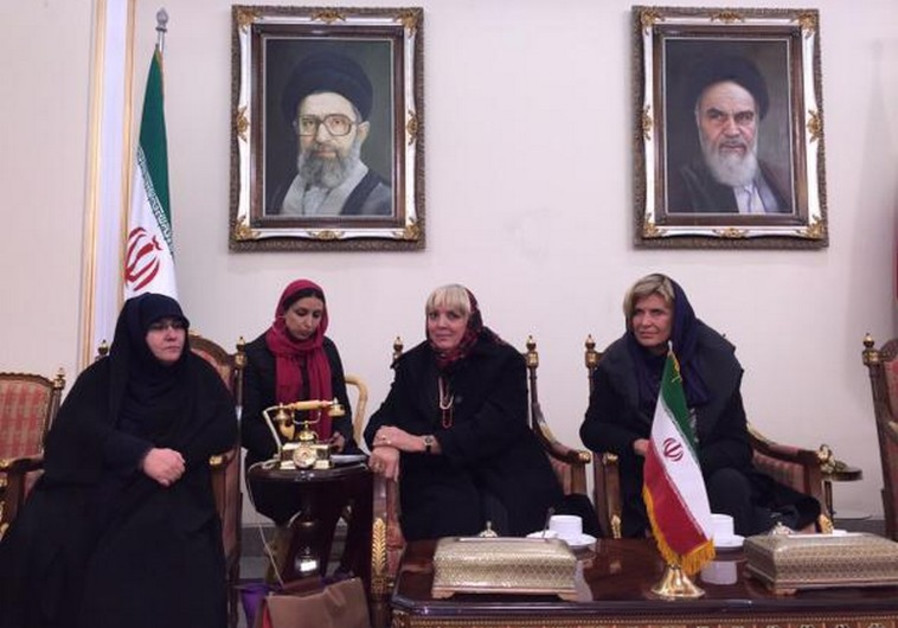
The meeting was an inter-parliamentary gathering that took place in Belgrade.

Bundestag Vice President Claudia Roth (Green Party), Dagmar Wöhrl (Christian Social Union party) are the two women on the right. (photo credit: TWITTER)

Just days after a neo-Nazi terrorist denied the Shoah and murdered two Germans, three members of the German Bundestag are facing charges of hypocrisy for meeting last week with Ali Larijani, an Iranian Holocaust denier who defends the obliteration of Israel.

“Shame on you, The Greens!” British antisemitism expert Julia Lenarz tweeted. “Days after the synagogue attack in Halle, vice president of the Bundestag Claudia Roth met Iranian Holocaust denier Ali Larijani. You can’t have it both, fight antisemitism and embrace notorious Jew-haters.”

The Iranian regime-controlled Tehran Times media outlet shows a picture of Claudia Roth, vice president of the Green Party in the German parliament, greeting Larijani, the clerical regime’s parliament speaker.

A second photograph of Roth show her euphorically welcoming Larijani with open arms and a smile.

The widely-circulated Bild paper reported that MPs Peter Beyer, of Chancellor Angela Merkel’s Christian Democratic Union, was also present at the meeting with Larijani. Dr. Kazem Moussavi, an Iranian dissident living in Germany, wrote on Twitter that “Roth presents herself as a feminist but courts representatives of the Islamic regime that represses women in Iran and wants to destroy Israel.”

The meeting was an inter-parliamentary gathering that took place in Belgrade.

Roth, who is widely considered a pro-Iranian regime MP, has previously met with Larijani. In 2009, Larijani defended the Holocaust denial of former Iranian president Mahmoud Ahmadinejad at the Munich security conference.

The German authorities declined at the time to prosecute Larijani for Holocaust denial. Larijani, who has urged the destruction of the Jewish state, has called Israel “racist” and a threat to the Middle East and “humanity.”

In 2015, Claudia Roth (Green Party), Dagmar Wöhrl (Christian Social Union party) and Stefan Rebmann (Social Democrats) met Larijani in Iran. Larijani traveled to Belgrade with Hossein Amir-Abdollahian, Iran’s former deputy foreign minister and who currently serves as special assistant to Larijani.

Amir-Abdollahian is secretary-general of the International Conference on Supporting Palestine’s Intifada, which includes the terrorist entities Islamic Jihad and Hamas.

Amir-Abdollahian is also involved in financing the terrorist movement Hezbollah. According to Bild, Germany’s parliament issued a statement that Roth “condemned the permanent threats of officers and the so-called revolutionary guards against Israel” during the talks with the Iranians in Belgrade.

The Bundestag statement said the security of Israel has an “absolute priority for Germany’s policies.”

The Bild journalist Antje Schippmann savaged the German MPs for meeting with Larijani in a commentary on Sunday, titled a “Shame for the Bundestag.”

“After the extreme right-wing attack in Halle, all parties asserted that there was no room for antisemitism,” Schippmann wrote. “They invoked the special obligation of Germany in the fight against the hatred of Jews.”

Writing of Roth’s embrace of Larijani, Schippmann wrote “Fortunately, it is unimaginable that she would warmly greet representatives of Nazi gangs in a similar fashion, and only to announce later through her spokesman that their antisemitic threats had been ‘severely condemned.’”

The Bild journalist asked “Where does this insufferable double moral standards come from?”

Schippmann concluded her commentary by asserting that “The fight against antisemitism is all-encompassing or not at all” and said Roth’s statements against antisemitism are not credible due to her hypocrisy.


Zawartość publikowanych artykułów i materiałów nie reprezentuje poglądów ani opinii Reunion’68,
ani też webmastera Blogu Reunion’68, chyba ze jest to wyraźnie zaznaczone.
Twoje uwagi, linki, własne artykuły lub wiadomości prześlij na adres:
webmaster@reunion68.com


THE DAY AFTER – EXAMINING ISRAEL’S REAL ESTATE WOES

THE DAY AFTER – EXAMINING ISRAEL’S REAL ESTATE WOES

AMIT DUBKIN


In 1989, some 75% of the population owned the property in which they lived. Today, the number has fallen to 65%.

New housing units for couples in Jerusalem.. (photo credit: Courtesy)

The past two elections — the last one a repeat of the first — cost the taxpayers a pretty penny. Those billions could have been better used to resolve some of the country’s real estate problems.

The general elections are over, and one hopes this means an end to the rhetoric, an end to promises that cannot be fulfilled. The new housing minister will not have an easy task. In these two last elections, the problems of the real estate industry have taken second place. 

The issues debated were political in nature. Economic matters in general and real estate issues in particular were barely touched. I sincerely hope that once in office, the new government and the housing minister in particular will roll up their sleeves and start tackling the problems of the industry, especially the shortage of housing, because this is an escalating problem.

In 1989, some 75% of the population owned the property in which they lived. Today, the number has fallen to 65%. In the past, the number of homeowners in Israel was among the highest in the world. Today, we are slipping fast. The shortage of housing is a potentially explosive social problem. The sooner the government deals with the issue, the better for all.

So how is it that the country which is considered an economic success has got itself into such a mess in an area of such vital social importance?

The problems

1. During the past four years (2015-2019), the housing industry has undergone a slowdown. The 10 years prior to that period was a decade of plenty, at least for homeowners and developers. During 2005-2015, prices doubled. In 2005, the average price of an apartment was NIS 700,000. By 2015, the cost was about NIS 1.4  million. During those 10 years, the number of real estate transactions increased, and the number of buyers purchasing real estate for investment purposes rose. By 2015, they amounted to 30% to 35% of the total.

2. In the past four years, the main influence on the housing market was finance minister Moshe Kahlon, who was in practice a “supra housing minister.” He held in his hands much of the power that had been the prerogative of the housing minister. Kahlon tried to bring down prices by implementing the Buyer’s Price program (Mehir Le’mishtaken). The program was based on subsidizing the price of building land used for the construction of housing for newlyweds and singles above the age of 35. During Kahlon’s tenure, the program was expanded to thousands of new apartments throughout the country. It was not a success. Many of the building projects did not meet their schedules, and a lot of would-be buyers canceled their contracts. In addition, the program that was meant to increase home ownership became lopsided. Many of the buyers were investors who took advantage of the program to invest in real estate on the cheap.

3. The policy of the finance minster brought about the virtual freeze of the free market. It not only resulted in limiting supply but also decreased demand. In normal circumstances, newlyweds and first-time buyers purchased relatively small, inexpensive apartments from homeowners who moved to more expensive dwellings. During the past four years, potential first-time buyers hoped to purchase a Buyer’s Price apartment below market prices and awaited developments.

4. During the past four years, developers slowed their activities; consequently, housing starts fell from a projected annual 80,000 to less than 50,000. This was due to the uncertainties caused by the government’s housing policies and the rising levels of distrust among developers toward these policies.

5. During the past four years, verbal attacks on real estate investors and planned legislation by Kahlon to penalize investors brought about a steep decline in investor purchases of residential real estate. If in 2015 some 35% of residential real estate transactions were motivated by investors, by 2019 the number had fallen to about 13%. Overseas investors, who in the past had constituted a substantial percentage of investors, have all but disappeared.

Suggested solutions

So what to do?

The new government, like previous ones, will want to stabilize prices. The first thing the new housing minister must do is increase housing starts by restoring the confidence of developers, thereby increasing construction.

The new minister should also seriously reexamine the Buyer’s Price program. It was a failure and should be discontinued. Instead, the policy of targeted grants to the underprivileged sector of the community and to certain locations should be reinstated. When introduced in the 1990s, it was much more effective. 

The new minister should woo back investors by canceling the inflated tax on investment in real estate purchases that stands at up to 10%. It would also be helpful if the minister increased the monitoring of large housing construction projects to ensure that they are started and completed on time. The Housing Ministry should also make sure that in tandem with the construction of large new construction projects on the outskirts of existing towns, the authorities should install the necessary infrastructures such as streets, schools and commercial enterprises. Without them, these new areas would become white elephants. No one would want to live in a neighborhood that didn’t have well-constructed streets or adequate commercial and educational facilities.

Furthermore, steps should be taken to promote urban renewal projects by simplifying legislation and removing bottlenecks. Urban renewal projects should be declared national priority projects and be allocated the necessary resources.

I strongly believe that if the new housing minister took these steps, it would go a long way toward balancing the supply and demand needs of housing and thereby stabilize the real estate market.


Zawartość publikowanych artykułów i materiałów nie reprezentuje poglądów ani opinii Reunion’68,
ani też webmastera Blogu Reunion’68, chyba ze jest to wyraźnie zaznaczone.
Twoje uwagi, linki, własne artykuły lub wiadomości prześlij na adres:
webmaster@reunion68.com


Hebrew Songs – 2018

Israeli Hits | 2018 | – Best Hebrew Songs | 2018 | – Israeli Music Mix | 2018 |

   Dantex Music


Zawartość publikowanych artykułów i materiałów nie reprezentuje poglądów ani opinii Reunion’68,
ani też webmastera Blogu Reunion’68, chyba ze jest to wyraźnie zaznaczone.
Twoje uwagi, linki, własne artykuły lub wiadomości prześlij na adres:
webmaster@reunion68.com


SEND LEIFER BACK

SEND LEIFER BACK

POST EDITORIAL


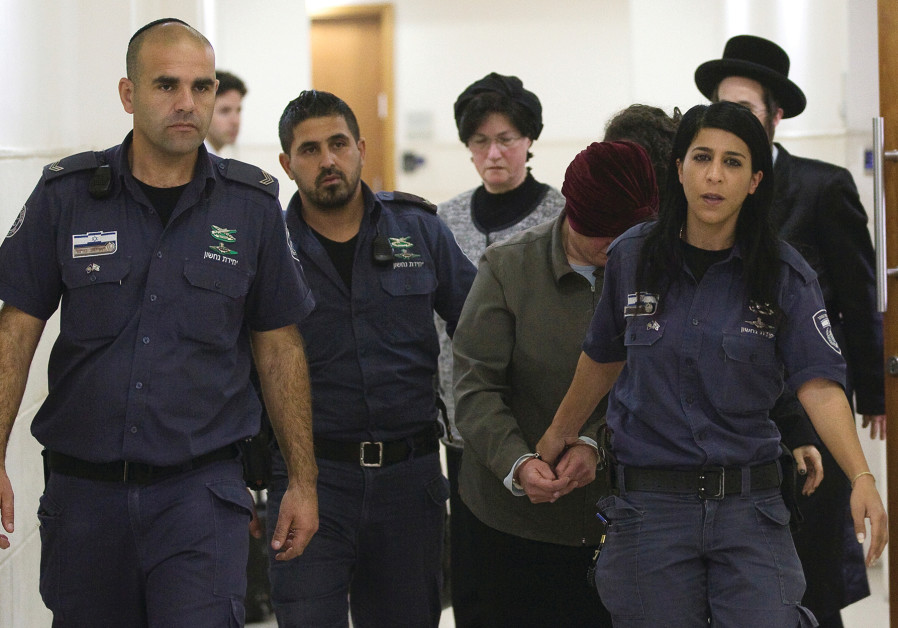
Leifer is on trial for extradition on 74 counts of sexual abuse of children, and specifically against sisters Dassi Erlich, Ellie Sapper and Nicole Meyer.

Malka Leifer is brought to court last week. (photo credit: REUTERS)

The Malka Leifer farce continued last week when the Jerusalem District Court ordered the alleged sex offender released to house arrest.

The Supreme Court temporarily overturned the ruling, ordering Leifer to remain in prison until the court rules on an appeal against the decision to allow her to stay in her sister’s home in Bnei Brak.

The former principal of the Adass Israel girls’ school in Melbourne, Leifer is on trial for extradition on 74 counts of sexual abuse of children, and specifically against sisters Dassi Erlich, Ellie Sapper and Nicole Meyer.

A Kafkaesque back-and-forth has been going on for over five years and nearly 60 hearings on Leifer’s case. She was arrested in Israel in 2014, after fleeing Australia in 2008 to escape justice. Her status as a flight risk is one of the reasons the Supreme Court decided she should stay in prison for now.

Over the years, Leifer has claimed that she is mentally unfit to stand trial, and there have been contradictory assessments from psychiatrists on the matter.

Yet another expert panel was appointed last week – by a different Jerusalem District Court judge than the one who sought to release her to Bnei Brak – to evaluate Leifer’s mental fitness and make a final, authoritative decision by December 10.

What they will discover that is not already known about Leifer is unclear. What is apparent is that this is another example of injustice.

Sadly, the entire Leifer case has been tainted by another police investigation – earlier this year, police recommended that Deputy Health Minister Ya’acov Litzman be indicted on charges of fraud and breach of trust because of alleged interference in Leifer’s case.

Specifically, police accused Litzman of pressuring the Jerusalem District psychiatrist to say Leifer was mentally unfit for extradition.
In addition, police say Litzman threatened other medical professionals in the Health Ministry if they did not write reports favorable to Leifer. Litzman is unlikely to intervene in the new panel’s decision, as doing so could put him in further legal trouble.

In the meantime, the wheels of justice have been turning so slowly that relations between Canberra and Jerusalem seem to have hit an all-time low.

After the house arrest ruling – and before the Supreme Court blocked it – Australian Ambassador to Israel Chris Cannan tweeted: “Australia maintains its consistent position that Malka Leifer should be extradited to face allegations of child sex abuse in Australian courts. Yesterday’s decision to grant bail is concerning. We will continue to put our concerns directly to the Government of Israel.”

The diplomatic ramifications, while disconcerting because Australia is such a reliable ally of Israel, are beside the point here.
What is truly outrageous and infuriating is the depth of the injustice in this case.

Israel is supposed to have a world-class legal system, yet one incident after another has eroded the public’s trust in the judiciary. The allegations of Litzman’s intervention, together with the dragging out of a decision about Leifer over the course of five years and no less than 60 hearings, has further undermined the public’s already shaky trust in our courts.

In this case, the courts and the Health Ministry have been nothing short of abusive, adding further trauma to the sisters who already allegedly faced humiliation and debasement at Leifer’s hands when they were defenseless children.

Leifer should be sent back to Australia where she can stand trial.

She should not be allowed to remain in Israel where she can hide. If she believes she is innocent, she should defend herself in court. If she is guilty, then she deserves to be punished to the full extent of the law, for both sexual abuse and her attempts to avoid its consequences.

Leifer’s alleged victims have been crying out for justice for over a decade. They deserve to see this process come to an end.


Zawartość publikowanych artykułów i materiałów nie reprezentuje poglądów ani opinii Reunion’68,
ani też webmastera Blogu Reunion’68, chyba ze jest to wyraźnie zaznaczone.
Twoje uwagi, linki, własne artykuły lub wiadomości prześlij na adres:
webmaster@reunion68.com