
Archives

ISRAELI RESEARCHERS IDENTIFY BIBLICAL KINGDOM OF EDOM

ISRAELI RESEARCHERS IDENTIFY BIBLICAL KINGDOM OF EDOM

AARON REICH


The biblical kingdom of Edom has always been a significant puzzle for biblical archeology.
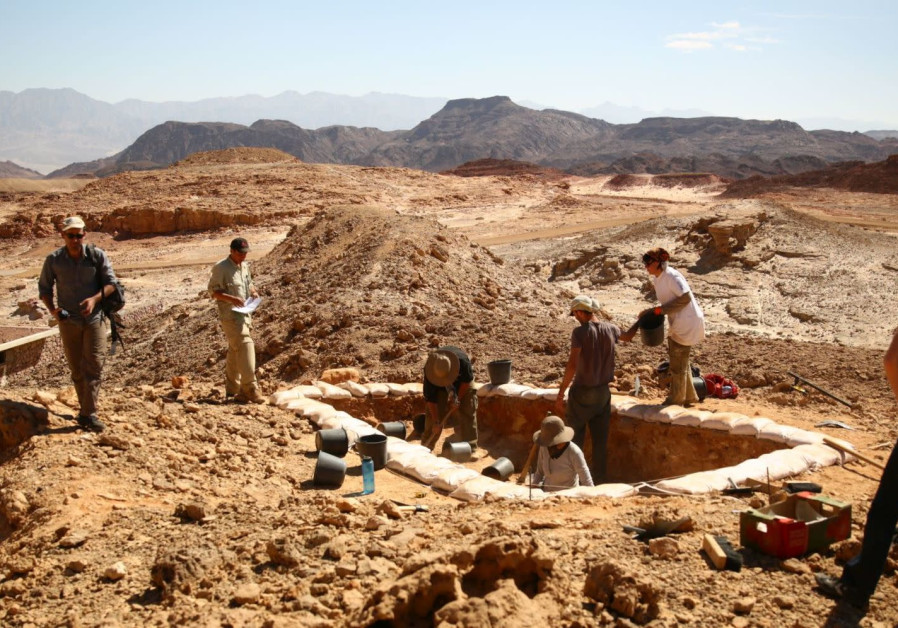
Excavations of ancient copper mines as part of Tel Aviv University’s Central Timna Valley Project. Copper production technologies and the organization of the industry reflect the society responsible for this enterprise. (photo credit: E. BEN-YOSEF AND THE CENTRAL TIMNA VALLEY PROJECT)

The biblical kingdom of Edom has always been a significant puzzle for biblical archaeology. Although evidence is supplied in the Bible, the archaeological record has always had trouble interpreting the text, which said that it existed as a kingdom long before the kings of Israel.

But research has uncovered the untold story of a thriving and wealthy society in the Arava Desert – in parts of Israel and Jordan – that existed during the 12th-11th centuries BCE.
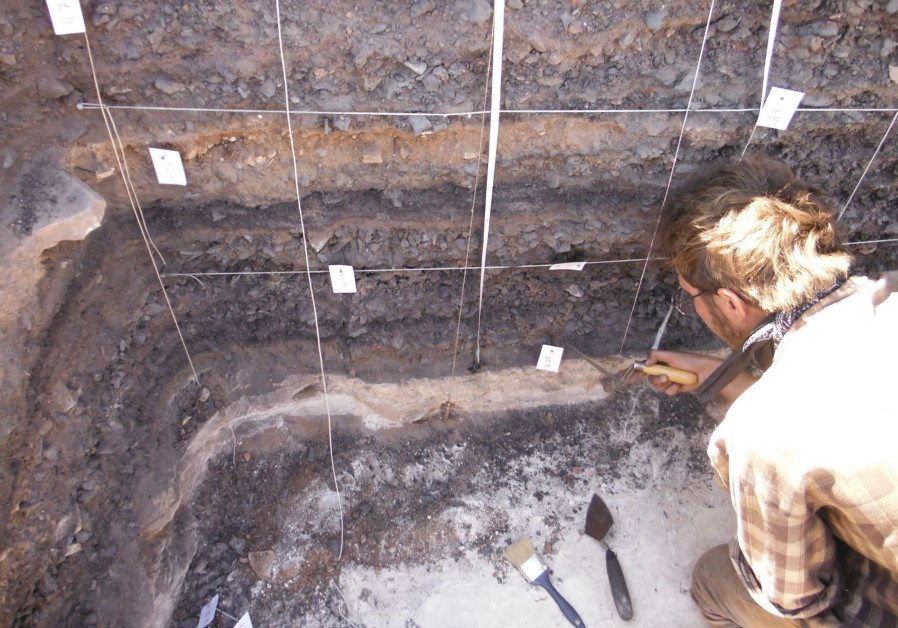
Collecting slag and charcoal samples from “Slaves’ Hill”, Timna Valley, Israel. The fine layers of technological waste – well-dated by radiocarbon – provide a detailed record of technological change in biblical Edom (Credit: E. Ben-Yosef and the Central Timna Valley Project)

“Using technological evolution as a proxy for social processes, we were able to identify and characterize the emergence of the biblical kingdom of Edom,” explained Tel Aviv University’s Prof. Ezra Ben-Yosef, who led the study with Prof. Tom Levy of the University of California, San Diego. “Our results prove it happened earlier than previously thought and in accordance with the biblical description.”

According to the study, which was published on Wednesday on the site of the scientific journal PLOS ONE, the kingdom’s wealth appears to have been built on a “hi-tech network” of copper, the most valuable resource in the region at the time. Copper was used in ancient times to craft weapons and tools, and the production process for copper is incredibly complex.

“Copper smelting was essentially the hi-tech of ancient times,” Ben-Yosef told The Jerusalem Post.

Using a methodology called the punctuated equilibrium model, the research team analyzed findings from ancient copper mines in Jordan and Israel to create a timeline of the evolution of copper production from 1300-800 BCE. The investigation found a significant decrease of copper in the slag – the waste of copper extraction by smelting – at the Arava site, implying that the process became more efficient and streamlined.

Researchers say the more efficient process was a result of the military invasion of Pharaoh Shoshenq I of Egypt (the biblical “Shishak”), who sacked Jerusalem in the 10th century BCE. Rather than result in destruction in the region, the researchers argue that it instead sparked a “technological leap” in copper production and trade.

“We demonstrated a sudden standardization of the slag in the second half of the 10th century BCE, from the Faynan sites in Jordan to the Timna sites in Israel, an extensive area of some 2,000 sq.km., which occurred just as the Egyptians entered the region,” Ben-Yosef said. “The efficiency of the copper industry in the region was increasing. The Edomites developed precise working protocols that allowed them to produce a very large amount of copper with minimum energy.”

However, as Egypt was a weaker power at this time, it is unlikely that it had control over the copper trade, allowing it to remain a local enterprise. Ben-Yosef explained that Egypt was primarily an importer of goods at the time, so it had an interest in streamlining efficiency in the region.

In fact, this was not the only new innovation introduced to the region by the invasion of Shoshenq I – the camel was first introduced to the region at this time as well.

“Our new findings contradict the view of many archaeologists that the Arava was populated by a loose alliance of tribes, and they’re consistent with the biblical story that there was an Edomite kingdom here,” explained Ben-Yosef of TAU’s department of archaeology and ancient Near Eastern cultures. “A flourishing copper industry in the Arava can only be attributed to a centralized and hierarchical polity, and this might fit the biblical description of the Edomite kingdom.”
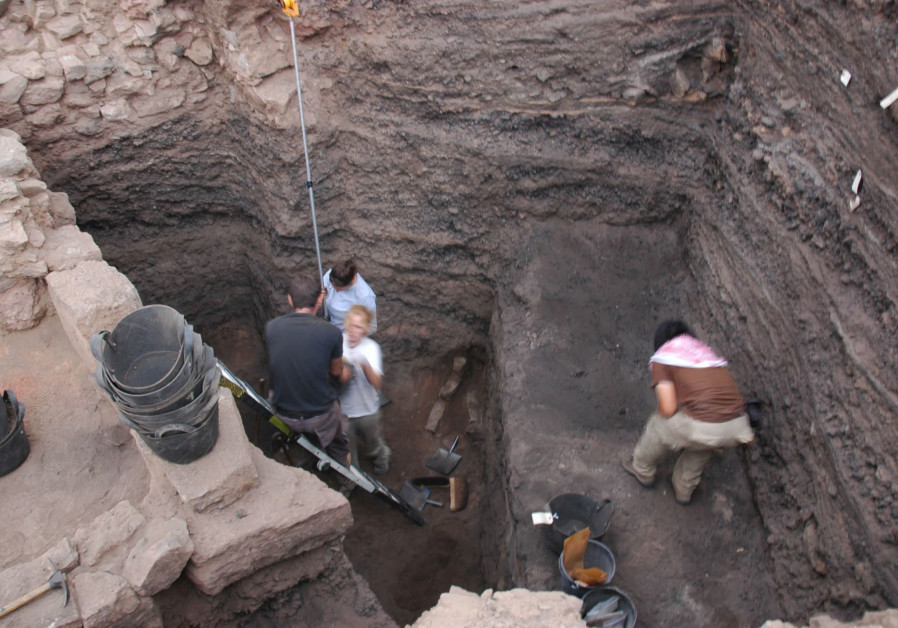
More than 6 m of copper production waste were excavated at Khirbat en-Nahas, Jordan. The excavated materials from here and other sites were used to track more than four centuries of technological and social evolution in biblical Edom (Credit: T. Levy)More than 6 m of copper production waste were excavated at Khirbat en-Nahas, Jordan. The excavated materials from here and other sites were used to track more than four centuries of technological and social evolution in biblical Edom (Credit: T. Levy)

While archaeology had never doubted the existence of the Edomite kingdom, it was widely assumed to have emerged around the late eighth century BCE in the Edomite Plateau, located in Jordan near Petra and southeast of the Dead Sea.

“Before they built their capital in the plateau, the Edomites were a complex and organized kingdom, but they were still nomadic,” said Ben-Yosef. “They dwelled in tents. They didn’t have villages or cities, but they had cemeteries and smelting sites.”

The Edomites eventually did settle in cities on the plateau and built settlements along the trade routes, but these findings prove that they possessed a centralized system of organization long before they settled there.


Zawartość publikowanych artykułów i materiałów nie reprezentuje poglądów ani opinii Reunion’68,
ani też webmastera Blogu Reunion’68, chyba ze jest to wyraźnie zaznaczone.
Twoje uwagi, linki, własne artykuły lub wiadomości prześlij na adres:
webmaster@reunion68.com

UN REPORT ALARMED BY GROWING ANTISEMITISM, CRITICIZES BDS

UN REPORT ALARMED BY GROWING ANTISEMITISM, CRITICIZES BDS

OMRI NAHMIAS,
JERUSALEM POST STAFF


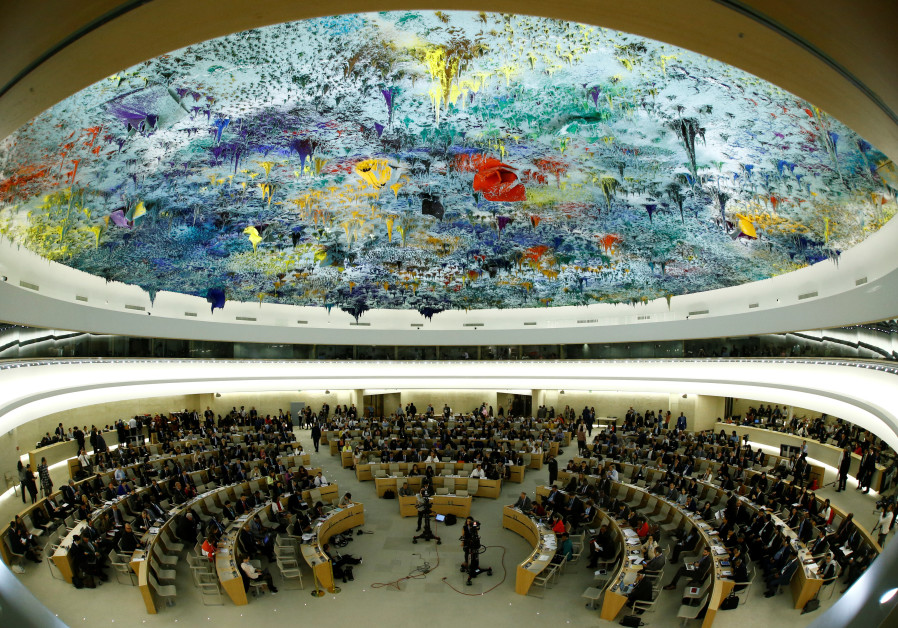
Overview of the United Nations Human Rights Council is seen in Geneva, Switzerland June 6, 2017.. (photo credit: REUTERS)

WASHINGTON – The United Nations released an interim report by the Special Rapporteur on freedom of religion or belief on Monday, in which he says he is “alarmed by the growing use of antisemitic tropes by white supremacists including neo-Nazis and members of radical Islamist groups in slogans, images, stereotypes and conspiracy theories meant to incite and justify hostility, discrimination, and violence against Jews.”

Ahmed Shaheed, the Special Rapporteur on freedom of religion or belief, is an independent expert appointed by the UN Human Rights Council. He submitted his report to the Human Rights Council in accordance with General Assembly resolution.

His report, which the Israeli mission to the UN called “unprecedented,” identified antisemitism from all sides of the political spectrum and called for action.

He raised rare criticism for a UN official regarding the BDS movement, writing that “international law recognizes boycotts as constituting legitimate forms of political expression and that non-violent expressions of support for boycotts are, as a general matter, legitimate speech that should be protected.” However, he stressed that “expression which draws upon antisemitic tropes or stereotypes, rejects the right of Israel to exist, or advocates discrimination against Jewish individuals because of their religion should be condemned.”

“The Special Rapporteur takes note of numerous reports of an increase in many countries of what is sometimes called ‘left-wing’ antisemitism, in which individuals claiming to hold anti-racist and anti-imperialist views employ antisemitic narratives or tropes in the course of expressing anger at policies or practices of the Government of Israel,” Shaheed added.

“In some cases, individuals expressing such views have engaged in Holocaust denial; in others, they have conflated Zionism, the self-determination movement of the Jewish people, with racism; claimed Israel does not have a right to exist and accused those expressing concern over antisemitism as acting in bad faith.”

“The UN system has a vital role to play in engaging with Jewish communities to combat antisemitism,” he concluded. “The Secretary-General should consider appointing a senior-level focal point in the Office of the UN Secretary-General with responsibility for engaging with the Jewish communities worldwide, as well as monitoring antisemitism and the response of the UN there too.”

Shaheed added that he identifies violence, discrimination, and expressions of hostility motivated by antisemitism “as a serious obstacle to the enjoyment of the right to freedom of religion or belief.”

“The Special Rapporteur notes with serious concern that the frequency of antisemitic incidents appears to be increasing in magnitude in several countries where monitors attempt to document it, including online; and that the prevalence of antisemitic attitudes and the risk of violence against Jewish individuals and sites appear to be significant elsewhere, including countries with little or no Jewish population.”

He found that these incidents have created a climate of fear among “a substantial number of Jews, impairing their right to manifest their religion,” and that “discriminatory acts by individuals and laws and policies by governments have also had a negative impact.”

“The Special Rapporteur stresses that antisemitism if left unchecked by governments, poses risks not only to Jews but also to members of other minority communities. Antisemitism is toxic to democracy and mutual respect of citizens and threatens all societies in which it goes unchallenged,” he added.

He urged States, civil society, the media, and the United Nations to follow “a human rights-based approach to combatting antisemitism,” and called for investments in education and training to enhance society-wide literacy about the different ways in which antisemitism manifests itself.

“We welcome the release of this unprecedented report on the subject of Antisemitism,” said Israel’s ambassador to the UN, Danny Danon. “The report reflects the organizational change toward Israel. The assertion that the BDS movement encourages Antisemitism is an important UN statement. As I have said many times, Antisemitism has no place in our society, and must be denounced everywhere and from every platform.”

Anne Herzberg, Legal Advisor and UN Liaison at the Jerusalem-based NGO Monitor said “This report marks one of the first times the UN has addressed the issue of antisemitism in any detail. The Special Rapporteur condemned the use of antisemitic tropes and denial of Israel’s right to exist by BDS activists.”

“Importantly, the Rapporteur also recommends the IHRA definition as a useful tool in combating antisemitism. Hopefully, UN bodies, particularly the Human Rights Council, will follow the Rapporteur’s lead by adopting IHRA and ending their promotion of antisemitic tropes and attacks on Israel’s legitimacy.”


Zawartość publikowanych artykułów i materiałów nie reprezentuje poglądów ani opinii Reunion’68,
ani też webmastera Blogu Reunion’68, chyba ze jest to wyraźnie zaznaczone.
Twoje uwagi, linki, własne artykuły lub wiadomości prześlij na adres:
webmaster@reunion68.com
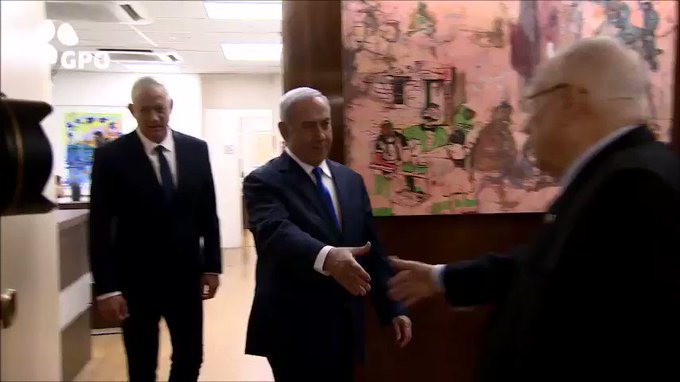

Seeking Unity, Israeli President Rivlin Hosts Gantz-Netanyahu Meeting

Seeking Unity, Israeli President Rivlin Hosts Gantz-Netanyahu Meeting: ‘A Shared and Equal Government Is Possible’

Barney Breen-Portnoy


Israeli Prime Minister Benjamin Netanyahu, President Reuven Rivlin and Blue and White leader Benny Gantz meet in Jerusalem, Sept. 23, 2019. Photo: Haim Zach / GPO.

Israeli President Reuven Rivlin sought on Monday to break the political gridlock besetting his country, hosting the heads of the two largest parties in the Knesset for a meeting at his official residence in Jerusalem.

Following last week’s hotly-contested national election, the second in six months, neither Prime Minister and Likud leader Benjamin Netanyahu nor ex-IDF Chief of Staff and Blue and White head Benny Gantz has a clear path to forming the next government.

While centrist Blue and White won more Knesset seats than right-wing Likud (33-31), Netanyahu holds a slight edge over Gantz in the number of MKs recommending him as prime minister (55-54).

The eight MKs from Avigdor Lieberman’s secular-nationalist Yisrael Beitenu party, as well as the 3 MKs from the Balad faction of the largely-Arab Joint List, did not recommend anyone, preventing either Gantz or Netanyahu from attaining a Knesset majority — 61 of the legislative body’s 120 seats.

Given the lay of the land, Gantz and Netanyahu will likely have to set up a unity government, with a rotating premiership, or there will be a third election early next year.

But the unity scenario is complicated by the questions of who would be prime minister first, which — if any — other parties would join the government and how potential indictments of Netanyahu in the corruption cases he is mired in would affect the arrangement.

On Monday, Rivlin told Gantz and Netanyahu, “The public does not want another election. They came out and voted, and now it is your turn. The responsibility for establishing a government falls on you, and the people expect you to find a solution and to prevent further elections, even if it comes at a personal and even ideological cost.”

“The current situation, where we have an interim government, is gravely harming Israeli citizens and our ability to address the challenges we face,” the president noted.

“A shared and equal government is possible,” Rivlin implored. “It can and it must express the different voices in society.”

“We have taken a significant step forward tonight, and now the first challenge is to establish a channel of direct communication between the sides,” he added.

Monday’s meeting included a period of time in which Gantz and Netanyahu were left alone to speak one-on-one.

Rivlin must decide in the coming days which candidate to first give the mandate to attempt to form a government. The president pointed out on Monday that his discretion regarding this choice was “even greater” than usual, as neither Gantz nor Netanyahu was backed by a Knesset majority.

Following Monday’s three-way sit-down, it was announced that negotiating teams from Blue and White and Likud would meet on Tuesday. Also, Rivlin invited Gantz and Netanyahu to return to his home on Wednesday for further talks.

A joint statement published by Blue and White and Likud said Gantz and Netanyahu had discussed “ways to advance the unity of Israel.”


Watch a video showing Gantz and Netanyahu arrive at Rivlin’s residence on Monday below:

בפתח פגישתם של נשיא המדינה, ראש הממשלה ויו”ר מפלגת הליכוד, ויו”ר מפלגת כחול לבן.

(צילום: עומר מירון, בן פרץ לע”מ)

Embedded video


Zawartość publikowanych artykułów i materiałów nie reprezentuje poglądów ani opinii Reunion’68,
ani też webmastera Blogu Reunion’68, chyba ze jest to wyraźnie zaznaczone.
Twoje uwagi, linki, własne artykuły lub wiadomości prześlij na adres:
webmaster@reunion68.com


Security Establishment Has Always Decided ‘Disadvantages Outweigh Advantages’

Former IDF Intelligence Chief on US-Israel Defense Treaty: Security Establishment Has Always Decided ‘Disadvantages Outweigh Advantages’

Benjamin Kerstein


Former head of IDF intelligence Amos Yadlin. Photo: Wikimedia Commons

A former chief of Israeli military intelligence said on Sunday that the idea of a mutual defense treaty between Israel and the United States has been considered before, but the Israeli security establishment has always rejected it.

Speaking to Israeli news website Mako, Amos Yadlin made the remarks in response to President Donald Trump and Prime Minister Benjamin Netanyahu’s recent discussions of a possible defense treaty. When the issue arose in the past the military and security services repeatedly concluded that the “disadvantages outweighed the advantages,” he said.

The most important misgiving, said Yadlin, is that Israel “could lose its freedom of action and be unable to decide alone on certain activities. If we wanted to go to war or a major operation, we would have to do it in consultation with the US.”

In what appeared to be reference to Israel’s refusal to acknowledge whether or not it has nuclear weapons, Yadlin added, “The loss of ambiguity is also significant.”

Asked whether there would also be advantages to a defense agreement, Yadlin answered, “The major advantage of a defense treaty is the strengthening of deterrence. If a state or terror organization seeks to attack Israel, it would understand that this would involve a war with the US.”

However, he noted, because of “the special relationship between Israel and the US, the deterrence is already strong. There are strategic collaborations between the countries that contribute to deterrence, and the question is if a defense treaty will actually strengthen deterrence or if it will remain as it is.”

In addition, Yadlin said, there would be serious obligations to the US placed on Israel.

“If the United States requests aid, then Israel is obligated to come to its aid, and of course the reverse,” he explained. “It’s like a rental contract, you have to live up to it and pay the landlord, and we know that not everyone pays all the time.”

“It’s a contract with heavy obligations,” he asserted.

Referring to whether the US would even send troops to disputed areas such as the West Bank, Yadlin explained, “One of the problems is that Israel does not have permanent borders, and the US has not recognized the territories as part of Israel. It has recognized western Jerusalem, and the rest of the city is up for negotiation.”

“So the situation is extremely complicated, but at the fundamental level, [the US] is supposed to send [troops] if Israel requests it,” he said.

However, Yadlin said, “If Trump and Netanyahu succeed in reaching an agreement in a unique format that meets our limitations, it could be worth it. If the agreement isn’t directed toward all the Middle East states, but only, for example, toward Iran, then it could be that this is a process worth considering.”

“But in the end, a classic defense agreement is a process that is not recommended for Israel,” he concluded.


Zawartość publikowanych artykułów i materiałów nie reprezentuje poglądów ani opinii Reunion’68,
ani też webmastera Blogu Reunion’68, chyba ze jest to wyraźnie zaznaczone.
Twoje uwagi, linki, własne artykuły lub wiadomości prześlij na adres:
webmaster@reunion68.com


INDIANAPOLIS POLICE INVESTIGATING FLYERS CALLED ‘ANTI-SEMITIC IN NATURE’

INDIANAPOLIS POLICE INVESTIGATING FLYERS CALLED ‘ANTI-SEMITIC IN NATURE’

MARCY OSTER / JTA


Swastika painted on Rio Jewish Club. (photo credit: SCREENSHOT/ GLOBO TV)

Flyers described as “anti-Semitic in nature” were posted on several Jewish institutions in Indianapolis.

The flyers were discovered on Friday morning, according to local reports.

The Indianapolis Jewish Community Relations Council said in a statement that the Indianapolis Metropolitan Police Department was notified of the incident and that it had opened an investigation. The police are classifying it as a “bias crime,” according to the statement.

The Jewish institutions opened as usual and police provided additional patrols, according to the statement.

“The Jewish community in Indianapolis has well-established and open lines of communication with the Office of Homeland Security, IMPD, and the Marion County Sheriff. Organizations remain vigilant and responsible to all incidents regardless of severity,” the statement also said.

The statement and news report did not specify what about the flyers was anti-Semitic.

The JCRC said that it has “noted an increase in anti-Semitism in the greater Indianapolis area.”

In August, a swastika was drawn on the wall of a dorm room at the University of Indianapolis shared by twin Israeli sisters.


Zawartość publikowanych artykułów i materiałów nie reprezentuje poglądów ani opinii Reunion’68,
ani też webmastera Blogu Reunion’68, chyba ze jest to wyraźnie zaznaczone.
Twoje uwagi, linki, własne artykuły lub wiadomości prześlij na adres:
webmaster@reunion68.com