Archives

10 STEPS AMERICANS, ISRAELIS AND PALESTINIANS CAN TAKE

10 STEPS AMERICANS, ISRAELIS AND PALESTINIANS CAN TAKE

ROBERT WEXLER


To work, steps must be taken by Israel and the Palestinian Authority in concert with the US. The sequencing can establish a sense of reciprocity.

Abbas, Trump, Netanyahu. (photo credit: REUTERS)

As Israel’s staunchest ally, the United States must not allow electoral politics – including the tempest of Israel’s regrettable travel ban on two Congresswomen – to distract from the more urgent priority of taking concrete steps to improve the lives of Israelis and Palestinians while minimizing the Israeli-Palestinian conflict. There are two formulas: improve Palestinian quality of life without compromising Israeli security and minimize the conflict by narrowing the disagreements between Israelis and Palestinians.

The goal of resolving the Israeli-Palestinian conflict is laudable, but conditions on the ground are not ripe, including the worsening deadlock in US-Palestinian relations, which could reach the breaking point if a US peace proposal is seen as walking back commitments to Palestinians.

The US president and Congress would do better to take bipartisan steps that substantially improve day-to-day quality of life for Israelis and Palestinians and offer a modicum of hope for both peoples. Doing so will preserve the possibility of a comprehensive agreement until a more favorable political dynamic develops and reduce the risk of renewed, all-out violence.

To work, steps must be taken by Israel and the Palestinian Authority in concert with the US. The sequencing can establish a sense of reciprocity. Here are 10 steps the US could take right now:

1. Reaffirm our commitment to Israel’s Qualitative Military Edge and acknowledge Israel’s security needs in the Jordan Valley.

2. Reaffirm our commitment to confront Iranian aggression and commit to include Iran’s support for terrorism in future negotiations.

3. Reaffirm that Jerusalem is the capital of Israel.

4. Encourage Arab states to advance normalization with Israel and increase economic assistance to the Palestinians.

5. Enhance training and investment in Palestinian security forces.

6. Restore USAID health care, education and democracy promotion programs for Palestinians.

7. Reopen the Palestinian diplomatic office in Washington and reestablish the US consulate-general in Jerusalem, separate from the US Embassy.

8. Acknowledge that Palestinians have a legitimate claim to a capital in east Jerusalem.

9. Invest in Palestinian economic, transportation and technological development and promote joint Israeli-Palestinian projects.

10. Pass the bipartisan Partnership Fund for Peace Act of 2019 to promote people to people relationships and economic cooperation.

PALESTINIANS CAN realize some of the benefits anticipated from the Oslo Accords over 25 years ago and demonstrate that they remain a “partner for peace” by taking these 10 steps:

1. Expand Israeli-Palestinian security cooperation.

2. Acknowledge Judaism’s historical connections to the land of Israel, including the existence of the Temple.

3. End payments to terrorists.

4. Remove language from official media and educational materials which incite violence.

5. Utilize accurate maps in textbooks and the media that acknowledge the State of Israel.

6. Demonstrate commitment to freedom of worship for Jews at holy sites not under Israeli sovereignty.

7. Engage with Israel and the international community on joint economic, environmental, health and transportation projects.

8. Articulate the possibility of Jewish settlements in the West Bank remaining under Palestinian sovereignty.

9. Halt punitive measures against Palestinian civilians in the Gaza Strip, and promote investment in healthcare, infrastructure and long-term development.

10. Pursue the political reintegration of Gaza with the West Bank.

Israel also stands to gain strategic, diplomatic and economic benefits by taking these 10 steps:

1. Expand Israeli-Palestinian security cooperation and complete the security barrier in the West Bank.

2. Develop Palestinian transportation networks to create territorial contiguity and enable technological advances in the West Bank including 4G broadband.

3. Expand Palestinian autonomous zones and refrain from annexation of West Bank territory.

4. Increase the number of permits for Palestinians to work in Israel and encourage joint Israeli-Palestinian business ventures.

5. Continue building Israeli housing in settlement blocs and freeze construction east of the security barrier route.

6. Preserve territorial contiguity between Palestinian areas of east Jerusalem and the West Bank.

7. Enhance electricity and sewage capacity in Gaza and relax export restrictions.

8. Ease Palestinian travel abroad and increase the number of student visas.

9. Facilitate building permits for Palestinian homes in Area C and transfer jurisdiction of Jerusalem neighborhoods beyond the security barrier to the Palestinian Authority.

10. Utilize accurate maps in textbooks and the media that acknowledge the Palestinian territories.

Taking these coordinated steps to improve living conditions and minimize the conflict would break the political impasse between Israelis and Palestinians and strengthen moderate camps in both societies and the Arab states. This tactical approach will engender transatlantic unity and even find common ground with Russia and China. Likewise, it will isolate Iran and put terrorist groups on the defensive. The international consensus that could develop around taking steps to minimize the Israeli-Palestinian conflict can be the catalyst to spur otherwise moribund political leaders to act.


The writer is president of the S. Daniel Abraham Center for Middle East Peace in Washington and previously served as a US representative from Florida from 1997-2010.


Zawartość publikowanych artykułów i materiałów nie reprezentuje poglądów ani opinii Reunion’68,
ani też webmastera Blogu Reunion’68, chyba ze jest to wyraźnie zaznaczone.
Twoje uwagi, linki, własne artykuły lub wiadomości prześlij na adres:
webmaster@reunion68.com


New US Sanctions Target Hamas, Islamic State, Other Terror Groups

On Eve of 9/11 Anniversary, New US Sanctions Target Hamas, Islamic State, Other Terror Groups

Algemeiner Staff and Agencies


Hamas terrorists. Photo: Wikimedia Commons.

The United States on Tuesday announced sanctions on a “wide range of terrorists and their supporters,” including the Palestinian group Hamas and Iran’s Islamic Revolutionary Guards Corps, on the eve of the 18th anniversary of the Sept. 11 attacks.

The targets include 15 leaders, individuals and entities affiliated with groups such as Hamas, al Qaeda, Islamic State and Iran’s IRGC, the US Treasury Department said in a statement.

The sanctions were applied using new tools from an executive order recently updated by President Donald Trump.

“Since the horrific attacks of 9/11, the US government has refocused its counterterrorism efforts to constantly adapt to emerging threats,” Treasury Secretary Steven Mnuchin said in the statement.

“President Trump’s modernized counterterrorism Executive Order enhances the authorities we use to target the finances of terror groups and their leaders to ensure they are as robust as possible,” Mnuchin said.

Sanctioned leaders include Turkey-based Zaher Jabarin, the head of Hamas’s financial office; and Muhammad Sa’id Izadi, the chief of the IRGC-Quds Force’s Palestinian office in Lebanon.

The targets also included a Brazil-based al Qaeda member, a Maldivian national who recruits for the Islamic State branch active in Afghanistan, and an operative of the Islamic State affiliate in the Philippines, the statement said.

Several exchange houses, and a jewelry company in southern Turkey, were also designated by the Treasury.

The sanctions mean any property the targets may have in the United States would be blocked and US persons would generally be prohibited from having business dealings with them.

Israeli Foreign Minister Yisrael Katz tweeted, “I welcome the decision of the United States of America to put additional sanctions on the Islamic Revolutionary Guard Corps, Hamas, ISIS and Al-Qaeda. This is the right way to stop the Terror-State of Iran and its proxies.”


ישראל כ”ץ Israel Katz ✔@Israel_katz

I welcome the decision of the United States of America to put additional sanctions on the Islamic Revolutionary Guard Corps, Hamas, ISIS and Al-Qaeda.
This is the right way to stop the Terror-State of Iran and its proxies.


Israeli Ambassador to the UN Danny Danon tweeted, “@SecPompeo and @stevenmnuchin1 just announced new sanctions targeting Hamas, Islamic Jihad, and Iran’s Revolutionary Guard Corps. This is a great step to increase pressure against terrorist organizations. Time for the international community to do the same.”


Ambassador Danny Danon | דני דנון ✔@dannydanon

.@SecPompeo and @stevenmnuchin1 just announced new sanctions targeting Hamas, Islamic Jihad, and Iran’s Revolutionary Guard Corps. This is a great step to increase pressure against terrorist organizations. Time for the international community to do the same.


Zawartość publikowanych artykułów i materiałów nie reprezentuje poglądów ani opinii Reunion’68,
ani też webmastera Blogu Reunion’68, chyba ze jest to wyraźnie zaznaczone.
Twoje uwagi, linki, własne artykuły lub wiadomości prześlij na adres:
webmaster@reunion68.com


Poll: Right-wing bloc approaches 60 seats

Poll: Right-wing bloc approaches 60 seats

Elad Benar


Israel Hayom and i24NEWS poll: Likud has 31 seats, Blue and White has 30. Yamina has eight seats, and Otzma Yehudit has four.

Binyamin Netanyahu / Esti Desiubov/TPS

An Israel Hayom and i24NEWS poll released on Friday morning finds that if elections were held today, the Likud party would lead the way with 31 seats.

The Likud is followed by Benny Gantz and Yair Lapid’s Blue and White party which wins 30 seats. The Joint List receives 11 seats in the poll – the same number as Yisrael Beytenu, headed by Avigdor Liberman.

Yamina wins eight seats, as does Shas. United Torah Judaism has seven seats.

The Labor-Gesher list wins six seats. The Democratic Union has four seats, as does Otzma Yehudit.

The right-wing camp, without Liberman, has 58 seats. The left-Arab bloc has 51 seats without Liberman.


Zawartość publikowanych artykułów i materiałów nie reprezentuje poglądów ani opinii Reunion’68,
ani też webmastera Blogu Reunion’68, chyba ze jest to wyraźnie zaznaczone.
Twoje uwagi, linki, własne artykuły lub wiadomości prześlij na adres:
webmaster@reunion68.com


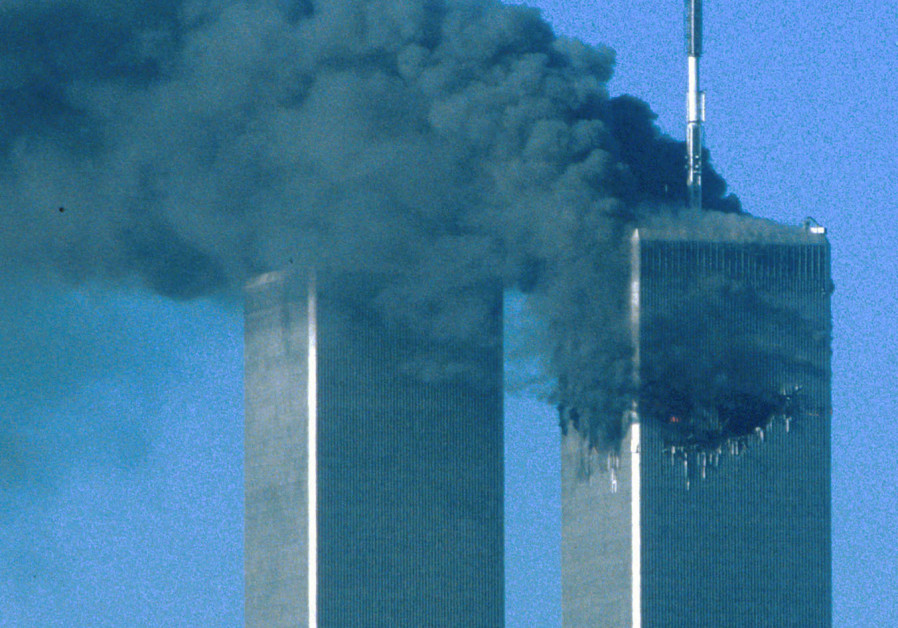
AWAKENING FEELINGS ABOUT 9/11

AWAKENING FEELINGS ABOUT 9/11

DAVID GEFFEN


I recognize that for younger people, maybe even for older people, that terrible tragedy has been forgotten.

The twin towers after being hit, 9/11. (photo credit: SEAN ADAIR/ REUTERS)

I recently at a gathering where Israeli teenagers were present, and asked several of them if they know what occurred on September 11, 2001.

One said that was when one of the Israeli wars concluded. Another said it was when Rosh Hashanah began that year. A third said it was when he was born. The fourth gave me a bit of hope when she said, “That was the day when the twin towers in New York were destroyed.”

I recognize that for younger people, maybe even for older people, that terrible tragedy has been forgotten. My son explained to me why that is so.

“There have been so many terrorist acts since then, how can anyone wade through all the dates, places and descriptions of death and destruction that have occurred since 9/11?”

My son, his wife and their young son were away from their US home on that day. They were fortunate because they worked next to the buildings that fell as if they were tiny toys. He understood what happened that day because of his daily proximity to the modern giant structures which were completely destroyed.

Why does 9/11 sear me so deeply? My wife and I were 250 kilometers away in Scranton, Pennsylvania, at the time, where in great fear and trepidation, we could only watch and listen to the greatest peacetime tragedy in American history on television, Internet or radio. However, something happened to me personally in the wake of the terrible sadness.

How does one deal with a holocaust so immense when it is not THE Holocaust which we Jews endured as a people? For me, it was by davening (praying) in our synagogue. Next, a meeting of the local ministers, priests and rabbis was held. We discussed fervently and  openly what we, as the religious leaders of the city and adjacent small towns, should undertake in order to provide hope to the inhabitants of our particular area. Interestingly, the first group we wanted to reach (were) college students. To me this meant to soothe the inhabitants of our particular area. Interestingly, the first group we wanted to reach was college students. To me this meant that those involved in academic studies to build a future career should understand what had just crashed into their lives.

A former member of the Scranton congregation, Arthur Magida, had been asked by the Belief Network to prepare a statement which would be broadcast throughout the USA. His words were ever so powerful. Moreover, he had sent his statement to me for my own renewal. His words moved me, so I brought them to that clergy gathering and read them for all present.

What impacted on me so was that Magida provided a structure for people of all faiths to deal with those dark and trying days.

“ENGAGE IN tikkun olam, says Judaism. Repair the world. Make it a good world, an honorable world, a decent world, a world worthy of its Creator, Who had such high hopes for it.”

Magida than began to deal with the tragedy which had occurred.

“Don’t inflict injury through act or deed, to any sentient creature,” he wrote. “Engage in good conduct, right conduct, blessed conduct. Recognize the specialness of all of us, our worth, our decency.” There is a uniqueness in each of us which Magida wanted to emphasize so that we would better recognize who we are.

“And now something indecent has happened, and it strikes at the very core, not just of our nation, but at something deeper and more fragile than that; at our sense of who we are and what we are and how we are to live our lives. We try to repair the world and it collapses down on us.” Like the prophets of old he called out, “What can we do at such moments? Be kind and remember that we are not saintly, but pervious to calls for rage and revenge.”

Magida suggested a path on which to tread, and in that calamitous time of 9/11, we needed to hear such suggestions with clarity. “Try to be loyal to the best part of ourselves… the remembrance that we harbor goodness and decency.”

He concluded by briefly comparing the structural and human loss.

“More has been taken from us than two landmarks and yet-to-be counted lives; lacking such remembrance will scourge our humanity and our decency, which are too invaluable to be added to the notches already on the gun handles of those responsible for Tuesday’s frightful carnage.”

As I concluded reading this statement, all the clergy present applauded. They said aloud “What a lift this has given us as we go to address our congregants and others to whom we will speak.”

I copied the statement many times and, initially, took it to the college students with whom I met. They had many questions about God’s involvement, about security failures and about how 9/11 would affect their lives. Not all of their questions could be answered, but the 1,000 or so students in the colleges in the surrounding areas knew that some people, the clergy at least, were really concerned about them. That was the greatest lesson I learned in this tragedy: People want to know that they are not alone, and that there are people who truly want to help and provide solace.

Two services in our synagogue were moving because they were linked with Jewish prayer and the tenets of Judaism. The first was the Shabbat service on the Friday night after 9/11.

THE WORLD was certainly reeling. People were not sure what would be. At our regular Kabbalat Shabbat services, 25 people might be in attendance. I understood that this Shabbat it would be different.

I asked the custodian to bring out 100 chairs in addition to 75 seats in the chapel. The service had not begun. It had to be started a bit later. Our congregants poured in until more than 300 were present. No one was turned away. How necessary, I felt, for them to be present.

As we began Kabbalat Shabbat, I asked everyone to rise and the Cantor led us in the “Star Spangled Banner.” Since our synagogue, like most in the US has an American flag proudly displayed, we all turned and looked at it. Some saluted. Some put their hands over their hearts. Some war veterans wore their caps for the service, and some people cried – both women and men. Those moments were parallel to what was going on the city where almost every block had an American flag flying.

When I took the pulpit, I first asked everyone to rise and recite the Kaddish mourner’s prayer for the nephew of a doctor in our congregation. The young man in his 30s had been killed in the Pentagon where he worked. Most people have forgotten that Washington, DC, was a major target. The only place the first plane was able to hit was the Pentagon. The plane, which the assailants took over before the passengers overpowered them, was headed for the White House. The passengers triumphed over these terrorists.

Sadly, the plane went down and everyone aboard was killed.

I read from President Bush’s address to the nation the night of 9/11. Then I added a few of my own thoughts.

“I feel today that we are one nation – Jews, Christians, Muslims, Buddhists, Hindus, black and white and brown. We are one nation, indivisible, united in our fear and outrage. Our compassion and resolve from now on September 11 will be a second Memorial Day in honor of our civilian casualties of war.

“Each of us is a reservoir of hope and strength. Surely we all saw hope in the firefighters who stood in burning debris, with boots melting, trying so hard to find more survivors. That hope should be a part of all our lives. We must do what we can to help. Ve’im lo achshav, aymatai? If not now, when?”

Then I asked everyone present to rise, and we offered a prayer for America and for all of us. As we stood, we sang “Hatikvah” as we looked proudly at the Israeli flag. On this 9/11 eighteen years later, let us pray that terrorism will be combated and peace will reign.


Zawartość publikowanych artykułów i materiałów nie reprezentuje poglądów ani opinii Reunion’68,
ani też webmastera Blogu Reunion’68, chyba ze jest to wyraźnie zaznaczone.
Twoje uwagi, linki, własne artykuły lub wiadomości prześlij na adres:
webmaster@reunion68.com


60 REALLY IS THE NEW 40

60 REALLY IS THE NEW 40

BATYA L. LUDMAN


Life is short. I sincerely hope that you’ll work on making the most of it. I personally think that it’s worth it.

BE IN the moment.. (photo credit: PIXABAY)

I’v just turned the age my mom was when she died. I had a knee replacement nine months ago and I’ve passed the five-year mark since my breast cancer diagnosis. I bought a Fitbit and discovered that the amount of deep sleep I get each night is much less than I imagined. Wow, have I been driving my husband crazy. I recognize that I have lots of work to do on myself!

Five years ago I became a “one in nine” statistic. I walked into the clinic that I’d been attending for 10 years, because of a previous scare, only to discover that this time I really did have breast cancer. (I wrote two columns about it at the time). I hate statistics, in spite of having had to take a course in it in graduate school. Now they say one in eight women will develop breast cancer. In these past five years I saw myself as neither a statistic nor a survivor. Rather, I had a cancerous lump, I had surgery (it was removed), treatment, and life moved on. None of it was fun, but as I’ve taught my patients who have experienced trauma, the event is now over. It had a beginning, a middle, and thankfully an end. And yes, I had side effects necessitating additional surgeries. Any treatment leaves scars that go far beyond the reach of the surgeon’s knife, but they are what they are. If you are thinking: See, it’s never really over – what in life is?

Where does one go from here? We each have our story. Though I’ve left out other tales of pain and suffering over the years, there are definitely far worse stories than mine. We hear about them daily and know the impact extends far beyond ourselves.
What’s the key takeaway message?

How you choose to view the events in your life will determine how you choose to respond to them. I hope that, in rereading this sentence, you understand that you hold the key to your own well-being. You may have little or no control over the occurrence of an event, but you certainly have a choice as to how you are going to deal with it. You can see yourself as helpless and the situation hopeless, or you, and only you, can empower yourself to deal with it as best as you can.

If 60 is the new 40, it’s wonderful to have recently regained 20 years. I fully expect to live my life with the enthusiasm of someone climbing the hill but in no way over the hill. I intend to live life to the fullest until my last breath. It sure beats the alternative.

Life has many challenges, and no matter how unexpected, we can and do cope, or can certainly learn to do so with help from others. Yes, there will be uncertainties, as there always are in anything, but doing something, whatever you can do, has the ability to change your situation. It’s all about your attitude. With any challenge, the real question is, “How will I let this impact my life and that of others who depend on me?”

HERE ARE eight suggestions for those struggling more than they’d like:

    1. Reach out to someone you trust and let them know what’s going on. You might discover that having someone else there for you, who cares, can make the difficult moments in your life a bit easier and reduce your feelings of being overwhelmed.
    2. Be in the moment – don’t linger in the past or in what could be. Anxiety, for example, may be expected, given your past history, but worrying about the unknown won’t alter the outcome. It simply robs you of enjoying a state of calm now. Unless you know something with certainty, acknowledge that at this moment you are okay. Don’t suspend living.
    3. Focus on things that you can change and make a difference in. It might be what you eat, your weight, exercise, time with a loved one, work.
    4. We have so much to be grateful for. Every morning, say aloud a list reminding yourself of yesterday’s positives. If you’re struggling to come up with things, you’re not paying attention to the small blessings around you. You just may need a walk.
    5. When you don’t feel well, it can be very difficult to get outside of your story and help someone else. You might be surprised to discover that the caring you show for them can actually lessen your own discomfort. Distract yourself by playing a game with someone, visiting a friend, or through reading a book to someone. Paying it forward feels good.
    6. Say thank you. Those caring for you may not have the same discomfort as you, but listening to you complain, helping out and being there when they have their own list of things they’d rather be doing, deserve immense appreciation from you. Caregiving is difficult, and your caregivers need care also. Help them take a break and recharge their batteries.
    7. Take notice of how you act. Start your morning off saying that you won’t complain and then notice just how often you do! Even a minor complaint such as “it’s hot” can carry negativity when paired with yet more grumbling that you may not even be aware of. If you need to vent, acknowledge it, state what’s going on, think of what could possibly change the situation even a bit, let the past go and move on. You have living to do. Check out your words – are you using words like “always,” “never,” “must” or “should have”? Work on yourself through kindness and caring, not through criticism and unreasonable expectations for yourself or others.
    8. Make a decision to take a vacation from your problems. It can be as short as an hour or as long as you’d like it to be, but when the thoughts surface, remind yourself that you can’t control what thoughts jump into your head, but you can control what you do with them, and at this moment, you are putting them in the drawer, and you’ll revisit them when you need to. Do you really want to think about the surgery that you might need, 20 times a day? Assuming that thinking about it a few days prior to the surgery is enough, tug on the imaginary rubber band on your wrist and in an emphatic voice to yourself, say “I am not wasting my time and energy on this right now.” I promise you that it works.

Life is short. I sincerely hope that you’ll work on making the most of it. I personally think that it’s worth it.


The writer is a licensed clinical psychologist in private practice in Ra’anana, and author of Life’s Journey: Exploring Relationships – Resolving Conflicts. She has written about psychology in The Jerusalem Post since 2000. ludman@netvision.net.il; www.drbatyaludman.com

Zawartość publikowanych artykułów i materiałów nie reprezentuje poglądów ani opinii Reunion’68,
ani też webmastera Blogu Reunion’68, chyba ze jest to wyraźnie zaznaczone.
Twoje uwagi, linki, własne artykuły lub wiadomości prześlij na adres:
webmaster@reunion68.com