Archives

IDF reveals: Iran attempted drone kamikaze attacks on Israel

IDF reveals: Iran attempted drone kamikaze attacks on Israel

David Rosenberg


Iranian kamikaze drone attacks were repulsed by Israel Thursday, IDF spokesperson says, prior to attacks on Iranian base.

Iranian copy of MQ-1 Predator drone / REUTERS

Iranian forces stationed in Syria planned to use a number of unmanned aircraft carrying explosive material to crash into targets in northern Israel, the IDF said Sunday, adding that one abortive attempt was made to launch the attacks last week.

On Sunday, IDF spokesperson Lt. Col. Jonathan Conricus spoke with reporters and shared some details of the recent plot by Iranian-backed forces in Syria to attack northern Israel with drone aircraft.

According to the Conricus, Iran’s Quds Force, part of the Revolutionary Guards, had been preparing for the attack for the past several months, and had recently dispatched four Iranian drone operators to Syria to remotely control unmanned Iranian aircraft during an attack on northern Israel.

Each drone was to carry several kilograms of high-explosives, slip into Israeli territory, and then crash into Israeli targets – with each drone assigned to a separate target. The drones would thus serve effectively as unmanned suicide bombers, or “kamikaze drones” as Conricus described them, and would be destroyed in the attacks along with their targets.

But Israeli intelligence had discovered the plot weeks ago, and kept track of the Iranian operation, which is said to have been personally overseen by Quds Force chief Qassem Soleimani.

Conricus added that the Iranian forces in Syria even attempted to launch the attacks last Thursday, but said Israel managed to repulse the attempted infiltration. Conricus declined to specify how the attacks were thwarted.

On Saturday, Israeli aircraft struck Iranian military targets in the village of Aqraba, southeast of Damascus, where the drone operation was centered.

At least five people were killed, including Hezbollah terrorists and at least one Iranian official, the London-based Syrian Syrian Observatory for Human Rights monitor group.


Zawartość publikowanych artykułów i materiałów nie reprezentuje poglądów ani opinii Reunion’68,
ani też webmastera Blogu Reunion’68, chyba ze jest to wyraźnie zaznaczone.
Twoje uwagi, linki, własne artykuły lub wiadomości prześlij na adres:
webmaster@reunion68.com


ON THE 80TH ANNIVERSARY OF THE OUTBREAK OF WORLD WAR II

ON THE 80TH ANNIVERSARY OF THE OUTBREAK OF WORLD WAR II

ANATOLY VIKTOROV


To get an unbiased picture of the true causes and culprits of the bloodiest conflict in human history, Russia’s ambassador to Israel takes a closer look at the period following the Munich Agreement.

THE MUNICH agreement paved the way for the Second World War. (photo credit: REUTERS)

The 80th anniversary of the outbreak of World War II is approaching. Today one can regrettably notice how a politicized propaganda campaign sharing equal responsibility for this global catastrophe between both Nazi Germany and the Soviet Union is gaining momentum. Its ultimate goal is to slander modern Russia, and doubt the legitimacy of its role in international affairs as one of the permanent members of the UN Security Council.

In order to get an unbiased picture of the true causes and culprits of the bloodiest conflict in human history, I suggest taking a closer look at the period which followed the Munich Agreement on the division of Czechoslovakia, signed by Great Britain, Germany, Italy and France on September 29-30, 1938.

The Munich Agreement marked the climax of the policy of appeasement of Hitler conducted by London and Paris in the 1930s, while increasing the international isolation of the USSR, particularly taking into account all non-aggression pacts signed by both Great Britain and France with Nazi Germany (September 30 and December 6, 1938). Nevertheless, the Soviet government was eager to establish a collective security system in Europe along with the British and French in order to retaliate against Nazi Germany.

Up until the second half of August 1939, trilateral Anglo-Franco-Soviet negotiations were held. The draft agreement proposed by the USSR required immediate military assistance to be provided by Great Britain and France in case of a Nazi attack. However, London and Paris followed their own way. Negotiations were being delayed by endless amendments and farfetched discussions regarding the definition of “indirect” and “direct” German aggression. The breakdown of talks was the eventual result. 

Now, 80 years later, one can come to an unambiguous conclusion: These were British and French approaches toward negotiations – considered as a pressure tool to achieve yet another compromise with Germany – which led to such a failure.

The disastrous outcome was also caused by secret Anglo-German contacts, of which the USSR was aware while receiving detailed intelligence information. Britain offered Hitler an agreement at the expense of Poland. On August 22-23, 1939, Hermann Göring was planning to visit London.

The final breakdown of trilateral negotiations was fueled by the Polish factor. Moscow proceeded from the assumption that collective security arrangements in Europe could only make sense if Warsaw was part of them. Soviet representatives tried to convince their allies of this – and especially during the visit of deputy People’s Commissar for Foreign Affairs VP Potemkin to Poland on May 10 –  however, to no avail.

THE ANTI-SOVIET and even Russophobic attitude of the Polish ruling circles, who were ready to negotiate with any country except the Soviet Union, played its role. This is even despite the fact that the existence of an independent Polish state – which severed the USSR from Nazi Germany and therefore excluded direct German aggression – could have been the best option for Moscow. Eventually, the shortsighted position of Warsaw predetermined the development of events according to the well-known scenario.

Under the existing circumstances in early August, the Soviet leadership agreed to begin negotiations with Germany. The Nonaggression Pact between Germany and the USSR turned out to be a stern necessity for the Soviet Union. This decision was made only when the futility of trilateral negotiations with the British and French was fully revealed, and the possibility of rapprochement in London and Paris with Berlin on an anti-Soviet basis became increasingly real.

It is also necessary to take into account the Japanese factor. Military tension in relations between Moscow and Tokyo persisted. The USSR could not afford to wage war on two fronts: in the East with Japan and in the West with Germany.

Whereas the Munich Agreement of 1938 made it possible to slaughter a whole country in Europe – Czechoslovakia, and its population, including Jews, who were subject to mass executions – the Soviet-German Nonaggression Pact of August 23, 1939, on the contrary, removed vast areas of modern Ukraine and Belarus from the German sphere of influence.

On September 17, 1939, the Red Army entered Polish territory and was instructed not to use weapons against the Polish Army until any military actions took place. During the Polish campaign, only the areas occupied by Poland in 1920-21 as a result of the Soviet-Polish war were captured.

In the aftermath of the events of September 1939, the famous British statesman D. Lloyd George emphasized the following: “The USSR captured territories that were not Polish, but were occupied by Poland after the First World War… It would be madness to put Russian advancement on a par with the advancement of Germany.” Not less significant is the statement of Winston Churchill: “In favor of the Soviets, it must be said that it was vital for the Soviet Union to push the initial positions of the German armies as far as possible to the West so that the Russians would gain time and be able to gather forces from all over their colossal empire… If their policy was prudent coldly, then at that moment it was highly realistic.”

I believe that any event of the past should be considered in the context of a particular era. After Hitler came to rule, the USSR remained the only power for a long period of time that insisted on uniting the efforts of European countries in order to maintain peace. For Hitler – who used the principles of Nazism as the basis of his state policy and planned the extermination of Jews, Gypsies and Slavs – Soviet internationalism seemed to be an absolute evil, and the Soviet Union was perceived as the main enemy of the Third Reich. 


The writer is the Russian ambassador to Israel.


Zawartość publikowanych artykułów i materiałów nie reprezentuje poglądów ani opinii Reunion’68,
ani też webmastera Blogu Reunion’68, chyba ze jest to wyraźnie zaznaczone.
Twoje uwagi, linki, własne artykuły lub wiadomości prześlij na adres:
webmaster@reunion68.com


Palestinian Who Assassinated Robert Kennedy for His Support for Israel Stabbed in Prison

Palestinian Who Assassinated Robert Kennedy for His Support for Israel Stabbed in Prison

Reuters and Algemeiner Staff


Robert Kennedy in 1964. Photo: Wikicommons.

Sirhan Sirhan, the Palestinian found guilty of shooting US presidential candidate Robert F. Kennedy to death in 1968, was wounded in a stabbing at a California prison on Friday, according to media reports.

Celebrity website TMZ, citing unnamed sources, was first to report that Sirhan, 75, had been stabbed.

Replying to a request for confirmation that Sirhan was wounded, Jeffrey Callison, a spokesman for the California Department of Corrections and Rehabilitation, said an inmate had been stabbed at the Richard J. Donovan Correctional Facility near San Diego.

The wounded inmate was taken to a hospital outside the prison and is listed in stable condition, Callison said in a statement, and a suspect has been identified in the assault.

In a follow-up email, Callison declined to identify the wounded inmate as Sirhan, citing department policy on not naming victims.

A jury in 1969 found Sirhan guilty of assassinating Kennedy the previous year by opening fire with a .22-caliber pistol into a small crowd surrounding the Democratic candidate in the pantry of the Ambassador Hotel in Los Angeles.

Kennedy, a US senator from New York, was hit three times and died the next day. He was later buried at Arlington Cemetery near his brother President John F. Kennedy, who was assassinated in 1963.

Sirhan has said he murdered Kennedy because he was enraged by Kennedy’s support for Israel.

Sirhan was sentenced to death, but the sentence was changed to life in prison after California banned the death penalty for a time.


Zawartość publikowanych artykułów i materiałów nie reprezentuje poglądów ani opinii Reunion’68,
ani też webmastera Blogu Reunion’68, chyba ze jest to wyraźnie zaznaczone.
Twoje uwagi, linki, własne artykuły lub wiadomości prześlij na adres:
webmaster@reunion68.com


DID FRENCH CARIBBEAN SERVE AS PALESTINIAN TERRORISTS’ ARMS ROUTE?

DID FRENCH CARIBBEAN SERVE AS PALESTINIAN TERRORISTS’ ARMS ROUTE?

SHIMON SAMUELS


That attack was described by then-French prime minister Raymond Barre as “a bomb set for Jews that killed four innocent Frenchmen.”
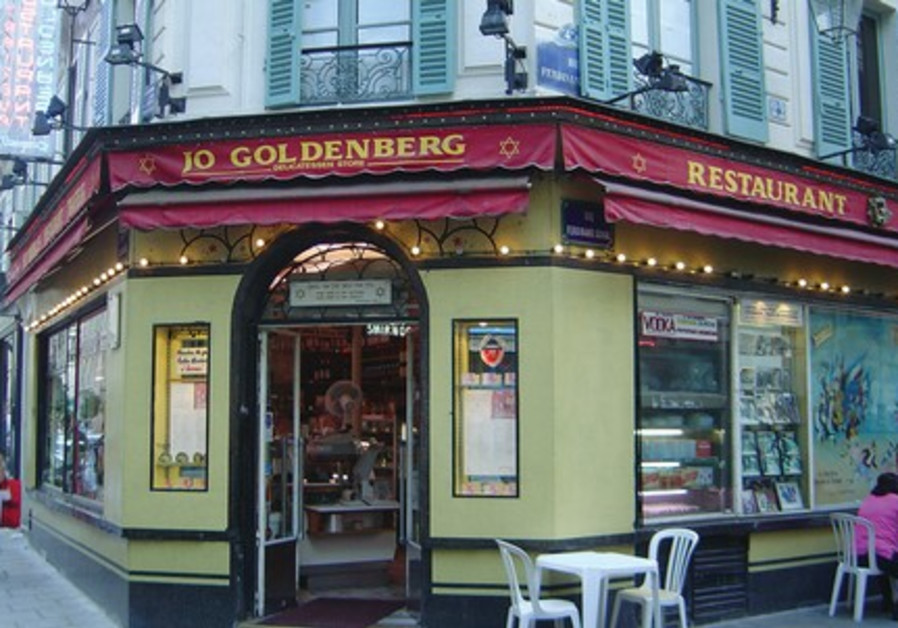
Jo Goldenberg’s restaurant in Paris, site of a 1982 terrorist attack.. (photo credit: Wikimedia Commons)

August 9 marked the 37th anniversary of the Rue des Rosiers terrorist attack in the Paris Jewish Quarter – known as the Goldenberg Restaurant Massacre – which left six dead and 22 wounded. The attack was carried out by the notorious Abu Nidal Organization, the most common name for the Palestinian nationalist militant group Fatah-Revolutionary Council.

Goldenberg’s was the tail-end of 73 shootings and bombings across Western Europe that began with the October 3, 1980, bombing of the Synagogue of Rue Copernic in Paris. This writer accompanied Aliza Shagrir, who was visiting Paris from Israel, to the corner of Copernic. I walked on as she entered the street where she met her death. That attack was described by then-French prime minister Raymond Barre as “a bomb set for Jews that killed four innocent Frenchmen.”

The victims were a Spanish chauffeur, a Portuguese concierge, Aliza and an “innocent Frenchman” passing by on a scooter, plus 46 wounded, many of whom were French Jewish worshipers inside the synagogue.

Then-president Giscard d’Estaing was quoted as saying, “I lost my reelection at Rue Copernic,” as he had refused to return to Paris from a hunting weekend.

The Copernic suspect was identified in Canada and extradited to France for trial. After two years of detention with appeals still pending he was spirited back to Ottawa.

Three Goldenberg suspects were identified – one in Amman, a second in Norway, a third in Ramallah. All these respective jurisdictions have refused extradition.

The Israeli incursion into southern Lebanon in August 1982, in response to several terrorist attacks including the explosion of a bus on the coast, revealed Palestinian training camps for European terrorist groups. On one base, extreme-left French Action Directe had apparently complained against the presence of extreme-right FANE, created by neo-Nazi Marc Fredericksen. All fled back to Europe, where they suspended targeting Jews and, in need of money, began attacking banks, then businesses, political figures, embassies and military bases. Governments cracked down until groups such as French Action Directe, German RAF/Baader-Meinhoff and Italian Red Brigades were neutralized.

Now we learn from the French daily Le Parisien of August 8, of a scandalous revelation that following Goldenberg, the then-head of French Intelligence cut a deal with Palestinian terrorists, reportedly with the most brutal Abu Nidal, the very murderer of Goldenberg’s. The deal was apparently freedom of movement in France in exchange for a moratorium on violence on French territory.

THE SCOOP by Le Parisien has also re-awakened a dormant, closely related issue. After our public condemnation of the Goldenberg atrocity, I received a call from a French commercial pilot. We met. He described how Palestinian arms were reaching Europe.

He claimed that materiel was assembled off the coast of Venezuela, on Isla Margarita – today a free-trade zone controlled by Hezbollah – with a growing presence of Hamas, al-Qaeda and ISIS fugitives among an Arab community of some 12,000. Isla Margarita appeared in a report by the assassinated Argentine prosecutor Alberto Nisman as part of what is now called “Latin Arabia,” from Surinam to Venezuela, Bolivia, Chile, the Argentine-Brazil-Paraguay Triple Frontier Region and Trinidad-Tobago.

The arms would be sent by boat to the French Caribbean islands of Guadeloupe or Martinique, also hosting communities of Lebanese, Syrians and Palestinians, especially those who had fled the Lebanon civil war in the 1970s and ‘80s.

“From these French territories, flights considered as domestic could freely arrive in Paris without security or customs controls,” claimed the pilot.

At the time, we turned to the Élysée Palace and were assured that president François Mitterand himself knew nothing of this deal.

A few days later, we learned that the “delegate general of Palestine” (aka “ambassador of Palestine”) to France, Ibrahim Souss – considered a master concert pianist rather than an agent of terror – was hauled into the Quai d’Orsay Foreign Office, allegedly to discuss the islands’ “traffic” issue.

If Le Parisien and our pilot source are correct, the arms supply to Abu Nidal through France into Europe could have been used in his terrorist organization’s subsequent deadly itinerary resulting in at least 400 murdered victims and many more wounded:

• November 23, 1985: EgyptAir Flight 648 hijacking and stand-off in Malta, 58 killed.

• December 27, 1985: Simultaneous shootings at the El Al ticket counters in Rome and Vienna airports, 20 killed, 138 wounded.

• September 5, 1986: Pan American flight 73 hijacking, 20 killed, 120 wounded.

• September 6, 1986: Attack against the Neve Shalom synagogue in Istanbul, 22 killed.

• July 11, 1988: Attack on a Greek cruise ship, 10 killed, 98 wounded.

• December 21, 1988: Pan American flight 103 explosion over Lockerbie, Scotland, claimed by Abu Nidal among other suspects, 270 killed.

We salute Le Parisien and hope that its investigation will also include the arms-supply route with a call on the appropriate French authorities to consider punitive measures for such deals as a memorial gesture to the victims and their families.


The writer is director for international relations of the Simon Wiesenthal Center.


Zawartość publikowanych artykułów i materiałów nie reprezentuje poglądów ani opinii Reunion’68,
ani też webmastera Blogu Reunion’68, chyba ze jest to wyraźnie zaznaczone.
Twoje uwagi, linki, własne artykuły lub wiadomości prześlij na adres:
webmaster@reunion68.com