Archives

‘A terrorist state is right around the corner’

‘A terrorist state is right around the corner’

Sheva Staff


Massive increase in illegal Arab construction, watchdog group warns, with 28,000 illegal Arab buildings built since 2009.

Illegal Arab buildings / Regavim

The Palestinian Authority has accelerated its efforts to seize land in Area C of Judea and Samaria – which is under full Israeli control – over the past decade, with an orchestrated campaign of illegal construction projects, a watchdog group warned Friday.

In a reported released Friday morning, the Regavim organization, which monitors illegal Arab construction in Israel, detailed the extent of the illegal construction projects carried out in Area C over the last ten years with the support of the Palestinian Authority.

The newly-drawn map of the situation on the ground reflects both illegal construction and land-grabs facilitated by “agricultural use” that takes advantage of the archaic system of law currently in force in these areas. All of these projects – construction and agriculture in the service of the future Palestinian state – are made possible by massive financial support provided by the European Union, individual European governments, and European NGOs, the Regavim report claims.

The master plan for this comprehensive, strategic operation was publicized ten years ago, according to Regavim.

Known as the Fayyad Plan for the Creation of the State of Palestine, then-prime minister of the Palestinian Authority Salaam Fayyad laid out a clear and methodical program for seizing control of territory in Area C to form a broad and viable basis for the Palestinian state, specifically in the areas under Israeli control.

Fayyad’s plan, published and activated only four years after the Palestinians and the Europeans committed to the Oslo framework, actively bypasses all negotiation or compromise with Israel, and simply creates facts on the ground.

The data, culled from analysis of GIS precise aerial photography, indicate that the number of illegal Palestinian structures has doubled over the last decade, during Binyamin’s term as prime minister.

In 2009, the number of illegal structures in Area C stood at 29,784, while in 2018 the number surged to 58,435.

The far more worrying statistic is the area covered by illegal Palestinian Arab construction: In 2009, some 44,538 dunams of land in Area C were being occupied illegally by Arab construction. In 2018, over 78,626 dunams have been overtaken.

The comparison of these figures with the Israeli “settlements” in Area C is instructive: Jewish communities currently cover some 2.5% of Area C. In the past decade, Jewish construction in Area C grew by less than 10,000 dunams, covering 47,327 dunams in 2008 and growing to an area of 56,700 dunams in 2018.

In addition to the illegal Arab construction boom, the program of agricultural land seizure has succeeded in poaching hundreds of thousands of dunams of Israeli-owned state land in Area C: Illegal agricultural projects, carried out on land registered or in the process of registration to the State of Israel, have effectively taken over massive swaths of the open spaces in Area C, taking advantage of a loophole created by the enforcement of the Ottoman legal code in this area that grants rights on the basis of agricultural use.

The data collected and published by Regavim was shared in recent weeks with the mayors of municipalities in Judea and Samaria, who are expected to launch a campaign in the coming days, sharply criticizing the government’s failure to enforce the law which has enabled the continued establishment of facts on the ground by the Palestinian Authority.

The mayors are expected to demand that the government formulate and enact an emergency campaign to halt any further progress toward the unilateral creation of a Palestinian state in Area C, with clear timetables for action, as well as concrete enforcement measures against recent illegal construction.

Meir Deutsch, Director General of Regavim, released a statement following the publication of the data: “Gut feelings and hunches are easily argued, but the hard numbers speak for themselves and they are unequivocal. There is no status quo on the ground – the Palestinian Authority has been working non-stop to create immutable facts in Area C, while the State of Israel and its leadership have been fast asleep on the job. If the Israeli government doesn’t wake up, the citizens of Israel will wake up to a very harsh reality – a terrorist state right around the corner. The data are a wake-up call.”


Zawartość publikowanych artykułów i materiałów nie reprezentuje poglądów ani opinii Reunion’68,
ani też webmastera Blogu Reunion’68, chyba ze jest to wyraźnie zaznaczone.
Twoje uwagi, linki, własne artykuły lub wiadomości prześlij na adres:
webmaster@reunion68.com

BDS: A SUSTAINED ASSAULT AGAINST THE JEWISH STATE

BDS: A SUSTAINED ASSAULT AGAINST THE JEWISH STATE

ABRAHAM COOPER


BDS’s roots trace back to two arenas – the Arab states’ boycott of Israel and the so-called Durban Conference against Racism.
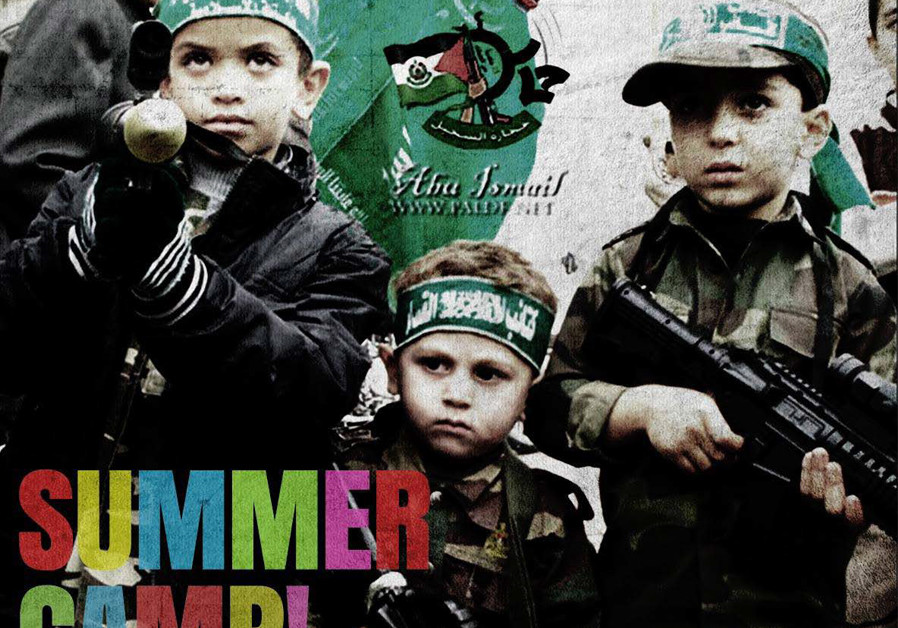
AN ANTI-BDS poster calling on Palestinians to free Gaza from Hamas.. (photo credit: MINISTRY OF STRATEGIC AFFAIRS)

I recently participated in an international conference that brought together activists from 30 countries to discuss the ongoing extreme global anti-Israel BDS campaigns.

As BDS impacts negatively less on Israel’s economy and more on negativity toward Israel and her Zionist supporters around the world, I offer reflections on the history of BDS and how to fight it moving forward.

BDS’s roots trace back to two arenas – the Arab states’ boycott of Israel and the so-called Durban Conference against Racism.

• The longstanding economic boycott of Israel led by Arab nations for decades was simply another front in the war to destroy Israel. In the United States, dating back decades, the US Congress passed legislation against those entities who cooperated or supported the boycott. No one back then defended the boycott as “free speech.” It was and is a tool to weaken the Jewish state and erode its economic viability. In 2019, we should not allow governments, universities, NGOs, or church leaders to use “free speech” as a fig leaf for BDS campaigns that have the same goals as the original Arab boycott.

• BDSers continuously move the goalposts regarding the stated goal of their campaign. We can trace its ideological roots to the ill-fated 2001 United Nations World Conference against Racism that was convened in Durban, South Africa. That continent’s first such conference was hijacked to delegitimize and demonize Israel as the 21t century’s apartheid state. Some 3,900 global NGOs formalized the insidious narrative against the Jewish state within which BDS operates. I know since I had a front row seat at the antisemitic hatefest and served as a spokesman for the outmanned and outgunned Jewish groups who attended. It was there that we learned that so-called civil society was anything but civil when it came to the state of Israel.

Initially BDSers insisted that they were not attacking the Jewish state, that they were only opposing economic activity beyond the Green Line in an effort to bring an allegedly recalcitrant Israel back to the negotiating table with the long-suffering Palestinians. It was their assertion that the tactic of economic pressure was the only nonviolent way of pressuring Israel to negotiate.

In 2019, BDS has shed its initial nuanced stance and pursues a full-fledged war against the Jewish state. It leads the charge to isolate Israel in the cultural, economic and educational domains. This isn’t a matter of free speech but a sustained assault that fulfills Sharansky’s 3Ds (Double Standard, Delegitimization, Demonization).

BDS is antisemitic. It should be unequivocally identified as such in every venue where BDS manifests. You don’t have to believe the Simon Wiesenthal Center. The German Bundestag recently took a vote acknowledging it as such. An amazing admission from a country whose unofficial motto is “exports uber alles.”

IT IS no accident therefore, that there has been a spike in antisemitic activity – including intimidation and hate crimes – on leading US campuses where anti-Israel BDS campaigns have been launched. Jewish students and the Jewish community have every right to press university and government authorities to denounce BDS for what it is and to protect their rights and safety.

To defeat BDS we need support of the full community’s leadership. It makes no difference if your rabbi’s name is Sheila or Shmuel, if you are a progressive or conservative, combating extreme antisemitic/ anti-Israel campaigns is everyone’s concern. We have the right to expect our key organizations from Federations to Hillel to hold the line when the 3Ds are being breached, and we should withhold support for anyone – Jew or Gentile, Israeli or Diaspora Jew – who legitimizes or supports BDS, a campaign designed from day one not to help Palestinians but only to hurt Israel and supporters of Zion.

Every person has the right to say what they want, but there is no obligation for Jewish money to pay for the privilege of being slapped in the face or worse for defending Israel, home to the world’s largest Jewish community.


The writer is associate dean of the Simon Wiesenthal Center and director of Center’s Social Action agenda. 


Zawartość publikowanych artykułów i materiałów nie reprezentuje poglądów ani opinii Reunion’68,
ani też webmastera Blogu Reunion’68, chyba ze jest to wyraźnie zaznaczone.
Twoje uwagi, linki, własne artykuły lub wiadomości prześlij na adres:
webmaster@reunion68.com


Germany Rules ‘BDS is anti-Semitic’ – will others follow suit?

The Jewish World – Germany Rules ‘BDS is anti-Semitic’ – will others follow suit?

ILTV ISRAEL DAILY


Former Ambassador to Poland Zvi Ravner, Senior Fellow at the Menachem Begin Heritage Center Paul Gross, and Dr. Natan Aridan, of the Ben Gurion Research Institute for the Study of Israel and Zionism hold a panel discussion on the German declaration that BDS is anti-Semitic and its implications.


Zawartość publikowanych artykułów i materiałów nie reprezentuje poglądów ani opinii Reunion’68,
ani też webmastera Blogu Reunion’68, chyba ze jest to wyraźnie zaznaczone.
Twoje uwagi, linki, własne artykuły lub wiadomości prześlij na adres:
webmaster@reunion68.com


NO HOLDS BARRED: WITH AMIR OHANA, ISRAEL HAS A JUSTICE MINISTER AT LAST

NO HOLDS BARRED: WITH AMIR OHANA, ISRAEL HAS A JUSTICE MINISTER AT LAST

SHMULEY BOTEACH


I FIRST MET Amir nearly four years ago. I had heard that Israel had just sworn in its first openly gay member of Knesset to be elected in an open primary.

AT LEAST there is a new Justice Minister. (photo credit: REUTERS)

The events of the past few weeks have commented cynically on the Israeli political system. After a bitter and turbulent election season, Prime Minister Benjamin Netanyahu seemed to have defeated rivals on both sides of the spectrum, and the State of Israel seemed ready to depart electoral processes for real government action. During the coalition talks, however, former defense minister Avigdor Liberman decided to cast himself as the wrench to ruin Bibi’s political plans. Out of options and less than two months after Israelis went to the polls, the prime minister initiated yet another round of elections.

Israel’s return to elections promotes the idea of a broken political system populated by politicians who are selfish, cynical and uninspiring.

Which brings me to my friend Amir Ohana, whom Netanyahu has just appointed justice minister.

Americans will never forget the cementing of American ideals in the addresses of Abraham Lincoln; nor the bold and fearless grin of Ronald Reagan in his confrontations with the Soviets; nor the vision-driven eyes of Bobby Kennedy, who some say took a bullet for Israel and whose assassination we marked last week. Moreover, no revisionist historian will ever erase the love and care that beamed forth from the eyes of Menachem Begin, nor the steel-set convictions showing through the war-wrinkled eyes of Rafael Eitan or Chaim Herzog.

These were men for whom the power of political life was a side effect. What drove them was a burning love for their people, an inextinguishable connection to their land, and an intrinsic attachment to the values of the states they served. These were the politicians who imparted hope and not cynicism; leaders who earned the fixed gaze of their followers and not the rolling eyes of their constituents.

I FIRST MET Amir nearly four years ago. I had heard that Israel had just sworn in its first openly gay member of Knesset to be elected in an open primary. I also heard that several MKs, critical of his being openly gay, had skipped his swearing-in ceremony. I blasted these MKs for offending a man who has given his life to the Jewish state.

Amir has spent 12 years in the IDF and the Shin Bet (Israel Security Service) working tirelessly to protect lives from those who would like to see Israeli streets run with Jewish blood. He also ran proudly with Likud, a party known for its warmth to religious communities and defined by potent Jewish pride. That Israel’s first openly-gay public representative would run with Likud, I argued, depicted not only Israel’s political openness, but also Ohana’s decision to use conviction and belief – and not power or popularity – as his own political engines.

Most impressive about the episode was Ohana’s calm response to it. He made no disparaging remarks and reacted not with anger, but with a suggestion: “With regard to the issue of LGBT rights,” he said, “it would be wonderful if their absence would continue.”

Moved by his story, I invited Amir to accept the Defender of Israel Award at our organization’s annual gala in New York City. He delivered a beautiful address: one that touched upon the American ideals of freedom and individuality, and the Jewish ideals of defending our communities, our country and our strong links with our past. All throughout, his voice reflected inner tones of love and authenticity.

In the years since, my respect for Amir – both as man and politician – has grown.

As a politician, Amir has shown himself to be built from the most inflexible moral fiber. When it was announced that the Diaspora Affairs Ministry would be distributing more than $20 million to American Jewish campus groups that do nearly nothing to defend Israel on campus, I struggled to find a partner in the Knesset would who co-write an op-ed with me demanding anti-BDS action from groups receiving Israeli financial support.

Few saw any political opportunity in taking on American Jewish giants Chabad and Hillel, especially over an issue few of their constituents were even aware of. But Ohana saw things differently. Israel and the Jewish people were inseparable, and to promote one while ignoring the other will ensure the failure of both. It was here that I saw a man moved to act by a personal search for truth and justice, and not by sticking his sails into the nearest and quickest political winds.

Another example came to the fore when Israel finally took the critical step of passing a law naming it as the nation-state of the Jewish people. It was Amir who led the team that drafted the bill, which finally provided a firm legal bond between the Jewish people, their government and their land. When, last month, a team of legal experts – among them a former Supreme Court justice – tried to disable the law with a clause on equality, Ohana struck back. Equality, Ohana insisted, would forever exist in Israel as it always has. But on the question of nationality, he simply would not budge. “To include equality in the law means that all nationalities are equal – but that is not the case. Israel is the national homeland of the Jewish people.”

I KNOW AMIR to be a man of humility and integrity; a warm and devoted friend. A few years ago, my children and I went to pray at the grave of Joshua, near Kifl Haris in Samaria. The tomb of Joshua – set in a place that is a death sentence for Jews to pray without an escort of hundreds of IDF soldiers to protect them – attracts die-hard pilgrims. Joining me and my family that night was Amir Ohana. On the way back to Jerusalem, Amir turned to me and asked if we could stop by a beautiful spring not far from the highway. We were surrounded by Palestinian villages, but Amir assured me that everything was safe.

Once we arrived, my children – I have nine, thank God – poured out of the van wondering why we’d stopped. Amir guided us toward some tables, before sitting atop one with an acoustic guitar that someone had brought along. What ensued was one of the most meaningful moments that my children and I have experienced in Israel: a member of Knesset singing classic Jewish hymns at the opening of an ancient spring in the heart of our homeland under a moonlit sky.

As Amir sang these songs, I realized his real influence. It is not – as it is with most politicians – held within his mind, his strength or in his skillfulness at political maneuvering. On the contrary, Amir’s highest credit is far simpler: It is his love – his love for his land, his love for his faith and his love for his people.

When Moses was told by God to choose his own justice ministers, he was given a rubric by which to select them. Absent from the list are law degrees and legislative experience – although, it must be mentioned, Amir has both. Also missing is a demand for academic brilliance, though Amir possesses this as well. What God does tell Moses is that he should appoint “men who fear God, trustworthy men, who hate dishonest gain.”

Integrity and purity of heart frames a true pursuer of justice. As Moses said, “Justice, justice shall you pursue.” Amir will no doubt pursue this double dose of justice.


The writer – “America’s Rabbi,” whom The Washington Post and Newsweek call “the most famous rabbi in America” – is the international bestselling author of 32 books, including his most recent, The Israel Warrior. He served as rabbi at Oxford University for 11 years. Follow him on Twitter @RabbiShmuley.


Zawartość publikowanych artykułów i materiałów nie reprezentuje poglądów ani opinii Reunion’68,
ani też webmastera Blogu Reunion’68, chyba ze jest to wyraźnie zaznaczone.
Twoje uwagi, linki, własne artykuły lub wiadomości prześlij na adres:
webmaster@reunion68.com


SPECIAL NEEDS CHILDREN PLANT TREES IN JERUSALEM

SPECIAL NEEDS CHILDREN PLANT TREES IN JERUSALEM

KKL-JNF


This special event, which brought much joy to the 120 children and their teachers, was made possible by KKL-JNF supporters in Germany.

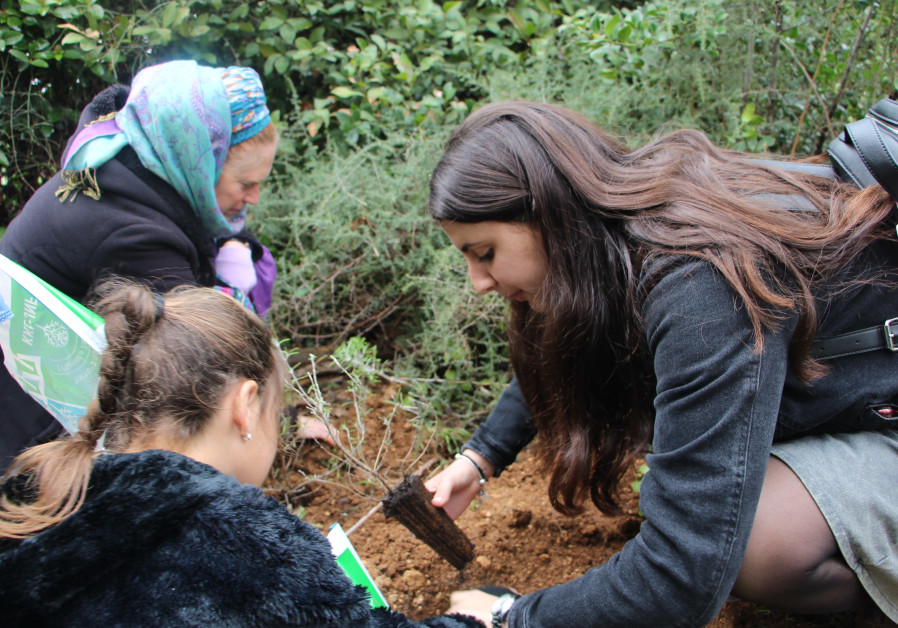
Children with special needs plant trees for Tu Bishvat in Neve Yaakov, thanks to Friends of JNF-KKL Germany. (photo credit: YOAV DEVIR KKL-JNF)

Special needs children from various educational frameworks in Jerusalem went for a tree planting day in the city’s Neve Yaakov neighborhood. Participating in the event, which was made possible thanks to the support of friends of KKL-JNF from Germany, were 120 children, including some with physical disabilities, autism, blindness and mental and developmental limitations.

“It’s important for us that children with special needs do everything that other children do, and what is more typical of the Tu Bishvat time of year than tree planting?” said Hila Ziv, Director of the Jerusalem Municipality Special Needs Department (Tzamid). “The students really enjoy the connection to nature and to the land, and there is also the educational value of contributing to the community and to the environment, along with reinforcing the love of Israel. When the children give of themselves, they get a sense of satisfaction and improve their self-image.” The Tzamid department is responsible for culture, leisure and informal education for children and teenagers with special needs in Jerusalem, and acts with the goal of integrating them into all fields of activity together with the rest of the general public.

The day was organized by KKL-JNF Education Division  Director of Training and Educational Projects Dudu Ashkenazi, who has been responsible for activities with Tzamid over the past twenty years. “The children are given an opportunity to go out into nature and to the forest,” he said. “We sponsor various activities in KKL-JNF forests all year long, not only during Tu Bishvat. You can see in the children’s eyes what a great experience they’re having, and it fills me up with energy.”

Shamai Keinan, a member of the KKL-JNF Board of Directors and also a member of the organization’s educational committee, told the students about KKL-JNF’s work planting forests, building reservoirs and developing the country. He added that “for me, celebrating the tree planting holiday with special needs children is the most important of all our activities. You are demonstrating what love of Israel really means.”

The day began with game and activity stations, and the children learned by experience about Israel, its history, heritage and KKL-JNF’s part in its development. They located places on a giant map of the land of Israel, bounced a ball on a parachute with pictures of the country’s central sites, answered riddles as part of a game of snakes and ladders, and watched a demonstration of how a KKL-JNF firefighting truck works.


Zawartość publikowanych artykułów i materiałów nie reprezentuje poglądów ani opinii Reunion’68,
ani też webmastera Blogu Reunion’68, chyba ze jest to wyraźnie zaznaczone.
Twoje uwagi, linki, własne artykuły lub wiadomości prześlij na adres:
webmaster@reunion68.com