Archives

NIR BARKAT – THE LIKUD’S NEW ACQUISITION AND HIS MESSAGE TO U.S. JEWS

NIR BARKAT – THE LIKUD’S NEW ACQUISITION AND HIS MESSAGE TO U.S. JEWS

GIL HOFFMAN


The Likud’s new acquisition precedes his appearance at the ‘Post’ NY conference with an appeal to the American Diaspora.
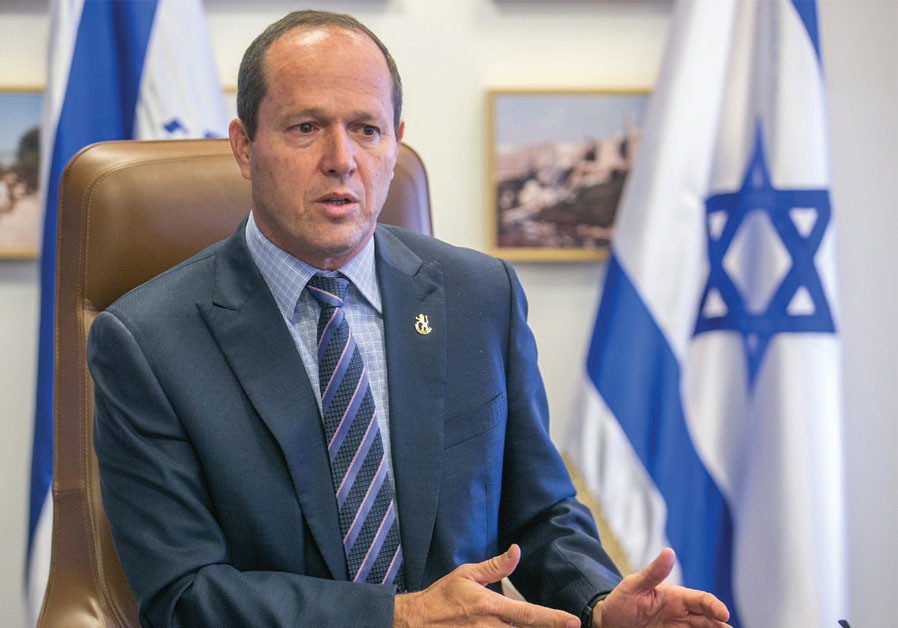
NIR BARKAT: Netanyahu has energy and experience, and for the party and country, the longer he is around is better for us, so I wish him long life as the head of both.. (photo credit: MARC ISRAEL SELLEM)

Ahead of the April 9 election, there were many parties that brought in new talent and gave these candidates reserved slots on their lists. But former Jerusalem mayor Nir Barkat was the only one who had never been an MK and won a high slot in a party primary. He was ninth on the Likud list but is expected to be moved down a couple slots for the September 17 race, due to new acquisitions.

If the Likud forms the next government, Barkat is expected to become a minister. Though his portfolio remains unknown and his success as a hi-tech entrepreneur appears to have him earmarked for an economic ministry, Barkat, who was Jerusalem mayor for a decade, is seen as one of the few potential ministers who are knowledgeable about Diaspora affairs.

He has already been given an office in the Knesset that is reserved for ministers. In an interview in that office ahead of his appearance at the Jerusalem Post Conference in New York Sunday, Barkat tried to explain Prime Minister Benjamin Netanyahu’s policies to American Jewry.

When you meet with American Jews who ask about the Likud’s views on them, what do you say?

This is home for all Jews. It’s the only Jewish state and always will be. Regardless of people’s political opinions, this is beyond every political disagreement. Even in the Knesset, where there are many opinions, there is a consensus that it’s a Jewish state and we have to get along. My experience as mayor of Jerusalem taught me that many of the challenges that we face have to do with setting expectations and using the political system to bring about more unity.

How can your experience as Jerusalem mayor help with that?

Jerusalem is a model. It’s not controversial that the city belongs to everyone: from Jews and non-Jews and secular to ultra-Orthodox, and everyone in between. Managing the city for a decade, there were always conflicts. Conflicts were not a bug but a feature. That is the nature of living in a city that belongs to all. Everyone must remember that we live in a place where no one gets everything they want. That’s why the words “status quo” are so important. It means there are issues we will never agree on, and we make compromises for living together under one roof.

I am a strong believer in the status quo. I can help ease conflicts by zooming in on the meaning of the status quo. If we do, we can zoom in on any conflict we want, and I’ll tell you how to manage it.

What do you say to progressive US Jews who are angry at Netanyahu?

One issue that is up in the air is the Kotel. As mayor, I saw the mismanagement of expectations. There is still work to do. The government passed a solution that it thought was supported by all sides that fell apart due to public opinion in the haredi and religious-Zionist side.

I think we will end up with something similar to that solution, because you have the religious and Supreme Court pushing in opposite directions. You will end up with a solution in which both sides are unhappy and which both sides have to live with, because those are the fundamentals to living in conflict. Both sides have more to lose for not accepting legal compromise. It’s complicated, but we will have to put this behind us. The religious and Reform are both right from where they’re coming from. Don’t explain why both sides are wrong. If there is no third element to the Kotel, the Supreme Court could change the status quo in the women’s section. There is no good solution, and in those situations, you have to live with compromise.

The Diaspora is waiting for Netanyahu to complete this delicate issue. The current Kotel should not be changed. We have to come to some kind of solution on the third section similar to what it is now. In Jerusalem, we residents get along. The problem is with the Diaspora and its expectations. No Jerusalemites complained to the mayor. I only heard about it in the international news.

What did you think about the Pew Research Center study that found that 64% of Americans have a favorable view of Israelis but 51% don’t like our government?

If you ask them about the American government, the responses are probably the same. They dislike both our government and their government.

If it is in part because of Netanyahu’s alliance with US President Donald Trump, how do you fix the impression that Netanyahu has abandoned Israel’s bipartisan relationship with the US?

The political ideologies of [former president Barack] Obama and Netanyahu were practically impossible to bridge. It was too wide a chasm to cross. That made the relationship tense. It wasn’t just personal, it was ideological. That was a big burden.

To credit President Obama, it didn’t affect support and military ties between Israel and the US. That could have happened. The status quo was kept on economy and military ties, when other things were tense.

I had a tough time dealing with Obama’s policies, as mayor of Jerusalem. Then we went from the “front wind” from Obama to wind at our backs from Trump. The ideology of Trump and his team is aligned with Netanyahu, as are their personal relations. That makes things move faster. Interests align when vectors go in the same direction. It’s unfortunate that this is the reality at a time of unfortunate polarization.

How are you preparing for your shift to national government?

I’ve been doing research, creating master plans for what to do as a minister from what I learned as an entrepreneur and mayor of Jerusalem. I hosted a conference on June 5 for economic plans for developing the North, South, and Judea and Samaria with Prof. Michael Porter from Harvard University. Our findings are quite dramatic.

I did this research because I care about my country. Thirty years from now, we will grow from nine to 17 million. If we do nothing, the population will overcrowd the Center, and it will be a strategic problem for the Center.

My goal is to work on elements. The first is economic, making these four regions attractive for families and entrepreneurs. Second: Differential funding for local governments to expand services and compete with the Center. Third: Communal life – groups of communities who want to live together. Fourth: Infrastructure and planning – how to scale cities, towns and moshavim to make them much bigger. All this is high on my agenda.

What is your vision for the Likud?

The party is very strong on the ground in the different regions. It’s grassroots, very ideological, with different threads and thoughts. Seventy thousand voters in the Likud primary created a strong team in the top 10 of very experienced people. I don’t think there’s a party in the world that doesn’t need to be refreshed, including America. It’s very dynamic, and we are ready to continue leading the country.

What happens when Netanyahu goes, whether it’s in six months or six years?

Someone else will lead the country and move on. But Netanyahu has energy and experience, and for the party and country, the longer he is around is better for us, so I wish him long life as the head of both.

What are your views on diplomatic issues ahead of the release of President Trump’s “Deal of the Century”?

What I am proposing may have huge ramifications on Judea and Samaria. I met with US mediator Jason Greenblatt. We spoke about different elements of helping Judea and Samaria: security and separation, civil autonomy and applying Israeli law to allow them to live like any residents. What I want to add to is to aggressively pursue mutual economies, pursuing economic growth with the model of the Barkan industrial zone, of Israelis and Palestinians working together under Israeli control. They will compete well with industrial zones in areas A and B that don’t have Jews. It gives them a competitive advantage and supplies jobs with wages that surpass the other areas. So for Judea and Samaria, we cannot escape the conclusion that we have to work together. We saw it in Jerusalem that when it rains, it rains on everyone.

Hear directly from Nir Barkat on June 16 at The Jerusalem Post annual conference. Watch live at jpost.com


Zawartość publikowanych artykułów i materiałów nie reprezentuje poglądów ani opinii Reunion’68,
ani też webmastera Blogu Reunion’68, chyba ze jest to wyraźnie zaznaczone.
Twoje uwagi, linki, własne artykuły lub wiadomości prześlij na adres:
webmaster@reunion68.com



French, and Israeli Jews Shows Majority Agree on Many Issues, But Sharp Divide Over Trump

New Survey of American, French, and Israeli Jews Shows Majority Agree on Many Issues, But Sharp Divide Over Trump

Benjamin Kerstein


Members of the Ugandan Abayudaya community visit the Western Wall in Jerusalem during their Taglit-Birthright trip. Photo: MAROM.

A new unprecedented survey of the world’s three largest Jewish communities — American, French, and Israeli — showed a majority of the communities agreeing on many issues, but a sharp divide on President Donald Trump’s relationship with Israel.

The American Jewish Committee poll showed that 48 percent of Israelis strongly approve of Trump’s handing of the US-Israel relationship, with another 31 percent somewhat approving and only four percent strongly disapproving.

Among American Jews, on the other hand, the numbers are almost precisely the opposite, with 45 percent strongly disapproving and only 22 percent strongly approving.

In addition, 88 percent of Israelis support Trump’s recognition earlier this year of Israeli sovereignty over the Golan Heights, while only 50 percent of American Jews do.

There was, however, agreement on other issues. On the question of Jewish identity, 59 percent of American Jews, 43 percent of French Jews, and 51 percent of Israelis believe Jewish identity is mainly an issue of ethnicity and culture. Only a quarter of each community believe it is a matter of religion.

On whether Israel is vital to the future of the Jewish people, 91 percent of Israelis, 72 percent of Americans, and 53 percent of French Jews agreed. In regard to a thriving Diaspora, 74 percent of Israelis, 65 percent of Americans, and 51 percent of French Jews felt it was essential to the future of the Jewish people.

The survey showed that 65 percent of French Jews and 41 percent of American Jews have visited Israel at least once.

In regard to antisemitism, half of French Jews felt their security situation was worse now than it was a year ago, 58 percent said they had experienced antisemitism, and 56 percent felt the authorities were not doing enough about the problem. Fifty-five percent have considered emigration as a result. Forty-six percent of Israelis and 17 percent of Americans felt French Jews should leave immediately.

American Jews, surprisingly, had similar views on security, with 65 percent saying they felt less safe now than they did last year. Fifty-seven percent also said that pro-Israel students were facing a more hostile environment on campus.

On the peace process, there was moderate disagreement between Israeli and American Jews. Forty-three percent of Israelis thought the chances of peace with a Palestinian state would decline in the next five years. Fifty-one percent of American Jews said the chances will stay the same.


Zawartość publikowanych artykułów i materiałów nie reprezentuje poglądów ani opinii Reunion’68,
ani też webmastera Blogu Reunion’68, chyba ze jest to wyraźnie zaznaczone.
Twoje uwagi, linki, własne artykuły lub wiadomości prześlij na adres:
webmaster@reunion68.com

Jak odzyskać roztrwoniony dar 1967 roku

Jak odzyskać roztrwoniony dar 1967 roku

Vic Rosenthal
Tłumaczenie: Małgorzata Koraszewska


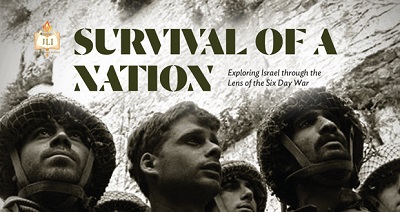
Oglądałem niedawno krótkie (10 minut), bardzo poruszające wideo o zwycięstwie Izraela w Wojnie Sześciodniowej. Ten film sugeruje, że zwycięstwo było dosłownie cudem. Może było, chociaż cuda takie jak zniszczenie sił powietrznych wroga i odebranie Starego Miasta zdarzają się tylko wtedy, kiedy z boską interwencją łączy się staranne przygotowanie, walka i poświęcenia dokonywane przez ludzi.

Ten film wzbudził we mnie olbrzymią dumę z dokonań żydowskiego narodu, państwa i armii. I choć nie wierzę w boską interwencję w sprawy ludzkie, to zwycięstwo – wraz z przetrwaniem narodu żydowskiego od czasów biblijnych – spowodowało, że zacząłem się zastanawiać czy może mylę się w tej sprawie.

Na czym więc polega problem?

Wydaje mi się, że wzięliśmy dar, który dali nam Haszem i Izraelska Armia Obronna, i po trochu przez ignorancję i słabość woli, roztrwoniliśmy go.

Półwysep Synaju, zdobyty w 1967 roku, jest z powrotem w rękach egipskich. Tak, wiem, że zyskaliśmy „pokój” w zamian, ale lepszym opisem tego pokoju byłoby przypomnienie, że USA przekupili Egipcjan, by zostawili nas w spokoju, miliardami w środkach pomocowych, w tym militarnych, co przełożyło się na broń, która mogła być użyteczna tylko przeciwko nam.  Dzisiaj Egipt ma rząd, który widzi korzyść w utrzymywaniu zimnego pokoju; gdyby jednak Bractwo Muzułmańskie, które na krótko (2012-13) doszło do władzy przy pomocy Baracka Obamy, było bardziej kompetentne, stalibyśmy wobec wrogości nie mniej zajadłej niż w czasach Nassera. Za to zrezygnowaliśmy z zasobów naturalnych, włącznie z ropą naftową, ale, co ważniejsze, z jedynej rzeczy, której Izraelowi brak bardziej niż czegokolwiek innego i której brak najtrudniej jest zrekompensować najnowocześniejszą techniką: głębi strategicznej.

Także Strefa Gazy wróciła pod arabskie panowanie. Obecnie jest, praktycznie rzecz biorąc, suwerennym państwem pod panowaniem Hamasu, który zaciekle uciska arabską populację i używa jej jako ludzkiej tarczy w nieustannej wojnie przeciwko Izraelowi. To stało się w wyniku dobrowolnego, jednostronnego porzucenia przez Izrael swoich osiedli i instalacji militarnych w Gazie. Gaza służy jako baza militarnych działań Hamasu oraz pretekst do międzynarodowych potępień Izraela, który od czasu do czasu musi bronić się przeciwko atakom rakietowym, urządzeniom wybuchowym i zapalającym przenoszonym przez latawce i balony oraz próbom wtargnięć terrorystów albo przez płot graniczny, albo przez tunele.

A najświętsze na świecie miejsce narodu żydowskiego? Już w dniu zdobycia Starego Miasta Mosze Dajan rozkazał, by usunąć izraelską flagę z Kopuły na Skale i oddał administrację Wzgórza Świątynnego arabskiemu waqf. Stworzono “status quo”, w którym zarówno muzułmanie, jak Żydzi mieli mieć możliwość odwiedzania swoich miejsc świętych.  W praktyce jednak żydowskie prawa były po trochu ograniczane. Dzisiaj Żydzi mogą odwiedzać Wzgórze Świątynne tylko w ograniczonym czasie, mogą wchodzić tylko przez jedną bramę, mają zakaz modlenia się, niesienia czegokolwiek (nawet butelki z wodą), a nawet używania kranów przeznaczonych do mycia rąk dla muzułmanów. Niewiele jest ograniczeń dla muzułmanów, a arabskie dzieci czasami grają w piłkę na Wzgórzu, mimo wyroku sądowego, który tego zakazuje. Wakf zbudował kilka meczetów na i pod Wzgórzem i w trakcie tego zniszczył lub stracił bezcenne archeologicznie artefakty. Według porozumienia ma być archeologiczny nadzór nad pracami budowlanymi, ale wakf ignoruje ten wymóg.

Jeśli chodzi o pozostałą Judeę i Samarię, „międzynarodowa społeczność”, która śmiertelnie boi się terroryzmu OWP i arabskiej broni naftowej, od wojny 1967 roku pchała i zmuszała Izrael do opuszczenia terytoriów wyzwolonych spod jordańskiej okupacji. Potrzeba jednak było Szimona Peresa, który gonił za chimerycznym „Nowym Bliskim Wschodem”, by głupio ściągnąć z powrotem naszego najgorszego wroga, Jasera Arafata, z wygnania, gdzie jego organizacja starzała się i słabła, i pozwolić mu na założenie bazy terrorystycznej w biblijnym centrum państwa żydowskiego. Nawet daliśmy mu pieniądze i broń! Zapłaciliśmy wysoką cenę za tę fashla podczas drugiej intifady i nadal płacimy ją dzisiaj, kiedy Żydzi mordowani są losowo przez pokolenie młodzieży wychowanej przez system edukacyjny Arafata i jego następcy, wieprzowatego Mahmouda Abbasa.

Chociaż nie możemy winić za Porozumienia z Oslo nikogo poza samymi sobą – nawet prezydent USA, Clinton, był zaskoczony – wroga Unia Europejska uczyniła z Oslo użytek, by  realizować swój cel wypchnięcia Izraela z terytoriów. Pod pozorem pomocy „humanitarnej” dla Autonomii Palestyńskiej UE ignoruje dzisiaj izraelskie przepisy o strefach i zabudowie, i buduje publiczne budynki, by tworzyć w terenie fakty dokonane na obszarach, które – według Oslo – są pod izraelską kontrolą.

Dlaczego pozwoliliśmy na to wszystko?

Jest wiele przyczyn. Jedną jest to, że nie wiemy, jak prowadzić negocjacje. Lubimy myśleć: „jesteśmy silni, stać nas na rezygnację z (czegokolwiek) w interesie pokoju. Druga strona doceni naszą szczodrość”. Błąd. Z czegokolwiek rezygnujemy, Arabowie biorą, a potem żądają więcej. Nie rozumieją „szczodrości” – widzą ją jako słabość. Proces negocjacyjny jest jak zębatka: może iść tylko w jednym kierunku – ku Arabom – ale nie może iść w drugim.

Inną przyczyną, często zauważaną, jest to, że zakładamy, że wszyscy inni są tacy jak my. Chcemy pokoju, więc palestyńscy Arabowie muszą chcieć pokoju. Obchodzi nas bezpieczeństwo, rozwój gospodarczy, dobre życie dla naszych dzieci. Oni, z drugiej strony, chcą się nas pozbyć; nie ma znaczenia, że mieliby lepsze życie, gdyby współpracowali z nami. My chcemy niezależnego państwa narodowego, ale oni są głównie lojalni wobec swoich klanów. My szukamy rozwiązania, w którym wygrywają obie strony, ale dla nich jest zawsze ważniejsze zaszkodzenie Żydom niż pomoc Arabom.

Wreszcie, Arabowie zawsze są gotowi użyć “weto krzykacza”, lub – poprawniej w tym wypadku – „weto terrorysty”: dajcie nam to, co chcemy, albo nie będzie pokoju. Jaki izraelski polityk chce zostać oskarżony za rozruchy, które następują po stanowczej obronie naszej pozycji?

Co możemy robić inaczej? Niestety, musimy być mniej szczodrzy. Musimy stać się twardsi. Musimy ustalić granice i trzymać się ich. UE finansuje nielegalną budowę w Judei i Samarii? Zburzyć ją. Zacznijmy od Chan al Ahmar, o której nawet lewicowy izraelski Sąd Najwyższy powiedział, że musi zniknąć i którą premier Netanjahu obiecał usunąć miesiące temu. Musimy odebrać to, z czego zrezygnowaliśmy, krok po kroku, i ostro uderzyć w „weto terrorysty”. Nie odzyskamy Synaju – i na tym etapie wątpię, byśmy tego chcieli. Ale sytuacja w i wokół Gazy musi zmienić się radykalnie. Musi być wysoka cena za balony podpalaczy, cena tak wysoka, że nie zechcą jej więcej płacić.

To samo dotyczy Wzgórza Świątynnego. Kawałek po kawałku, tak jak je straciliśmy, musimy je odzyskać. Oczywiście, że będą reakcje (tj. rozruchy). Ale reakcje dzieją się dlatego, że Arabowie wiedzą, że może im to ujść na sucho. Wiedzą, że zawsze się cofniemy, jak to zrobiliśmy z wykrywaczami metalu przy bramach. Wiedzą, że boimy się konfrontacji, więc pchają mocniej.

To jest długi proces i będzie bolesny, Arabowie przyzwyczaili się do wygrywania; będzie trudno przyzwyczaić ich do przegrywania. Ale dla Bliskiego Wschodu nie ma rozwiązania, na którym korzystają wszyscy. W tej okolicy wszystkie gry są o sumie zerowej.


Vic Rosenthal – Zajmował się rozwijaniem programów komputerowych. Studiował informatykę i filozofię na University of Pittsburgh. Obecnie Mieszka w Izraelu. Publikuje w izraelskiej prasie. Jego artykuły często zamieszcza Elder of Ziyon.


Zawartość publikowanych artykułów i materiałów nie reprezentuje poglądów ani opinii Reunion’68,
ani też webmastera Blogu Reunion’68, chyba ze jest to wyraźnie zaznaczone.
Twoje uwagi, linki, własne artykuły lub wiadomości prześlij na adres:
webmaster@reunion68.com

Gaza Rocket Strikes School in Southern Israeli City, No Injuries Reported

Gaza Rocket Strikes School in Southern Israeli City, No Injuries Reported

Barney Breen-Portnoy


Israeli women stand next to a damaged building in Sderot that was hit by a rocket fired from the Gaza Strip, June 13, 2019. Photo: Reuters / Amir Cohen.

A rocket fired from the Gaza Strip hit a religious school in the southern Israeli city of Sderot on Thursday night, damaging the building but causing no injuries.

This was the second rocket attack on southern Israel in two days. On Wednesday night, the Iron Dome aerial defense system intercepted a rocket launched from Gaza. In response to that incident, the IAF struck “underground terror infrastructure” in a Hamas compound in southern Gaza early Thursday morning.

Recent days have seen numerous blazes ignited in southern Israel by incendiary balloons sent over the border from Gaza. The wave of fires prompted Israel to impose a full naval closure on the Hamas-ruled coastal enclave, preventing Gazan fisherman from setting out to sea.

In early May, four Israeli civilians were killed by Gaza rockets in a two-day round of violence that was brought to an end by a truce mediated by Egypt, Qatar and the UN.


Zawartość publikowanych artykułów i materiałów nie reprezentuje poglądów ani opinii Reunion’68,
ani też webmastera Blogu Reunion’68, chyba ze jest to wyraźnie zaznaczone.
Twoje uwagi, linki, własne artykuły lub wiadomości prześlij na adres:
webmaster@reunion68.com


POLITICAL POLARIZATION FEEDING ANTISEMITISM

POLITICAL POLARIZATION FEEDING ANTISEMITISM

GINA ROSS


Both sides are unaware of being biased. Ideological media contributes to each side, forming its own isolated (and distorted) truth.

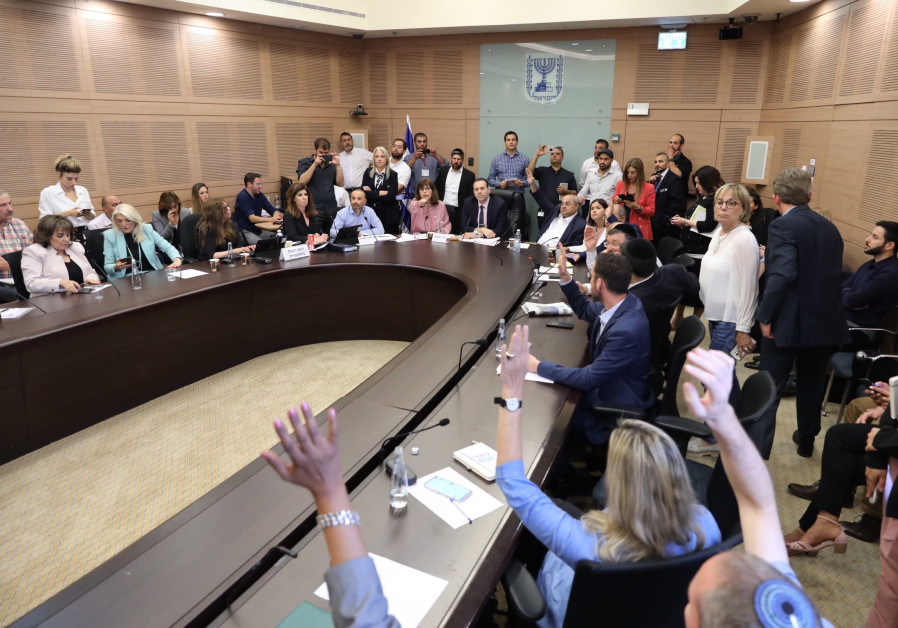
The Knesset House Committee voting on whether to pass Prime Minister Benjamin Netanyahu’s bill to cancel ministers limit. (photo credit: MARC ISRAEL SELLEM/THE JERUSALEM POST)

Polarization has caught up with the Jewish world. Whether separately in the American-Jewish Diaspora and in Israel, or jointly between the two, politics have been polarized beyond the level of normal discourse. It now incorporates anger, reciprocal blaming and demonization, a dangerous rhetoric that weaponizes antisemitism, weakens important bonds and debilitates the political system. Political differences are framed as issues of ethics vs immorality, good vs evil, heroic vs traitorous, even war vs peace, rather than complex issues that need bipartisanship to be resolved.

Yossi Klein Halevi, an Israeli writer and fellow at the Shalom Hartman Institute in Jerusalem, said recently in Los Angeles that the “communities are holding different narratives.”

The communities have moved into new and different narratives, creating political polarization, which in turn creates unnecessary and harmful turmoil. Instead of dialogue, verbal attacks become commonplace, each side believing the other is wrong and extreme. Already strained relationships are further magnified among the different American-Jewish entities and between the Diaspora and Israel.

No one has a monopoly on the truth. We all have a need for humility to promote a civil culture.

Each side uses reports from ideologically sympathetic media and polls to reinforce their one-sided points of view. The media sensationalizes, exaggerates and presents doom, polarizing passions on all sides.

Both in the US and in Israel, one side despairs over their government’s executive, legislative and political directives; the other side believes such directives can finally reestablish control, saving their country and its population from real danger. Both sides feel resentful to see its political victories fiercely opposed.

How upset are we about the polarization and what is its cost? What is the overall damage to Jews when we are all polarized against each other?

This is when antisemites take advantage of our polarizing rhetoric.

Unique to the Jewish world (Israel and the American Diaspora), are polarization issues that no other nations share. They include:

The Jewish democratic state – a unique and complex issue where there are still reactions to its creation and on-going attempts against its existence, including the Iranian threat; laws relating to the nationstate and its Jewish and democratic nature; the settlements and annexation of territories; one-state vs two-state solutions for the Palestinian/Israeli conflict.

The secular versus religious framework – major animosity regarding the haredi (ultra-Orthodox) military conscription, coupled with the movement to create a pluralistic prayer pavilion at the Western Wall; equality for Reform and Conservative rabbis in Israel for conversion and religious marriage.

Equality in the face of danger – between border towns under direct missile threat vs the lesser threat to central population centers; equality of the suffering of Israelis and Palestinians.

In these times of immense opportunity for chaos, Israel needs unification and needs to be in sync with the Diaspora. We must decide if we are at war, in constant danger or just acting as an oppressive bully; decide if our critical discourse is compassionate or harsh because of deep shame over our actions; and whether we are demanding from ourselves more than we demand from others. Responding from existential trauma or from the need to belong and accepted, we need to find a middle ground for the truth and decide which comes first – Jewish or democratic?
The descriptions below can show us to which polarized side we belong.

One side believes: The “others” are racist, morally obtuse and dangerous; they sabotage democracy and its most scared institutions, and compromise freedom and equality. They are callous toward people from other religions. The very religious among them are bigoted, homophobes, zealots, intolerant and misogynists, imposing a theocratic order unto others and discarding humanistic values. Their military interventions are oppressive and take away the dignity of the occupied.

The other side believes: The “others” are dangerously naïve, unrealistic, self-righteous, believing they are the only one to hold the moral ground. Some are self-hating post-Zionists, who question the purity of the State’s birth; atheists who desecrate the meaning of the Jewish nation; secular assimilationists who negate Judaism’s historical rights to the Land and only espouse a national secular identity. They worry about the enemy’s and the migrants’ safety over the Israeli citizens’ security.

Fully polarized people see only the negative; they generalize from the extreme voices of the “other” to the whole group and concentrate on what’s wrong, rejecting any of the other side’s positive qualities, worthwhile point of views or actions. Healthy debates and political discussions are replaced by confrontations and name-calling. When someone disagrees with them, they simply stigmatize them and exclude them from the community. The more polarized and exclusive they become, the more they cause antagonism and sabotage their own safety.

Both sides are unaware of being biased. Ideological media contributes to each side, forming its own isolated (and distorted) truth. They both refuse to see there is a possible more centered position to polemical issues.

There is a whole technology to assist us to get back to our center and regain our moderation and civility. It can help us search for the common ground and develop stamina to handle the tension from the differences. It can help us reach the unity needed to combine the essential items of both sides, devoid of their polarization, to resolve the issues. Both are required for a healthy Jewish world, united in our fight against antisemitism.

The writer is founder/president of the International Trauma-Healing Institutes in the US and Israel, a specialist in individual and collective trauma and an author focusing her analytical work on the collective trauma behind politics.


Zawartość publikowanych artykułów i materiałów nie reprezentuje poglądów ani opinii Reunion’68,
ani też webmastera Blogu Reunion’68, chyba ze jest to wyraźnie zaznaczone.
Twoje uwagi, linki, własne artykuły lub wiadomości prześlij na adres:
webmaster@reunion68.com