Archives

Israeli medical NGO treats its 5,000th child from abroad

Israeli medical NGO treats its 5,000th child from abroad

Naama Barak


Save a Child’s Heart diagnoses, treats and operates on children with life-threatening heart diseases from developing countries, free of charge.

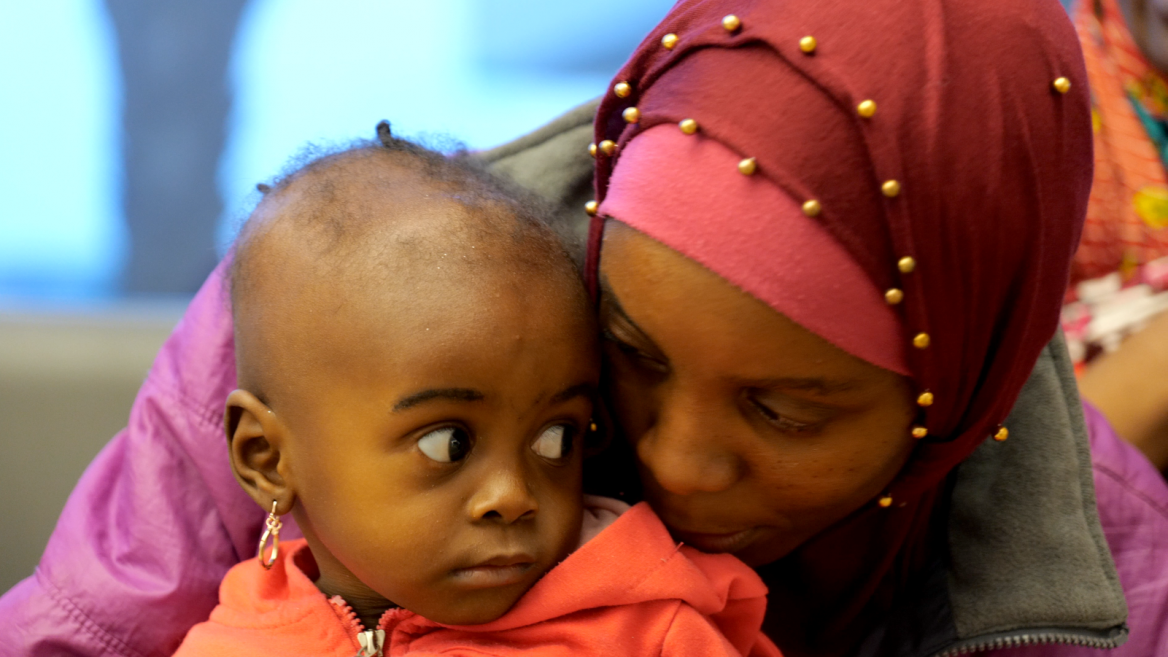
Balkis Makame Haji and her daughter Fatma arrive in Israel with Save a Child’s Heart. Photo by Gil Naor

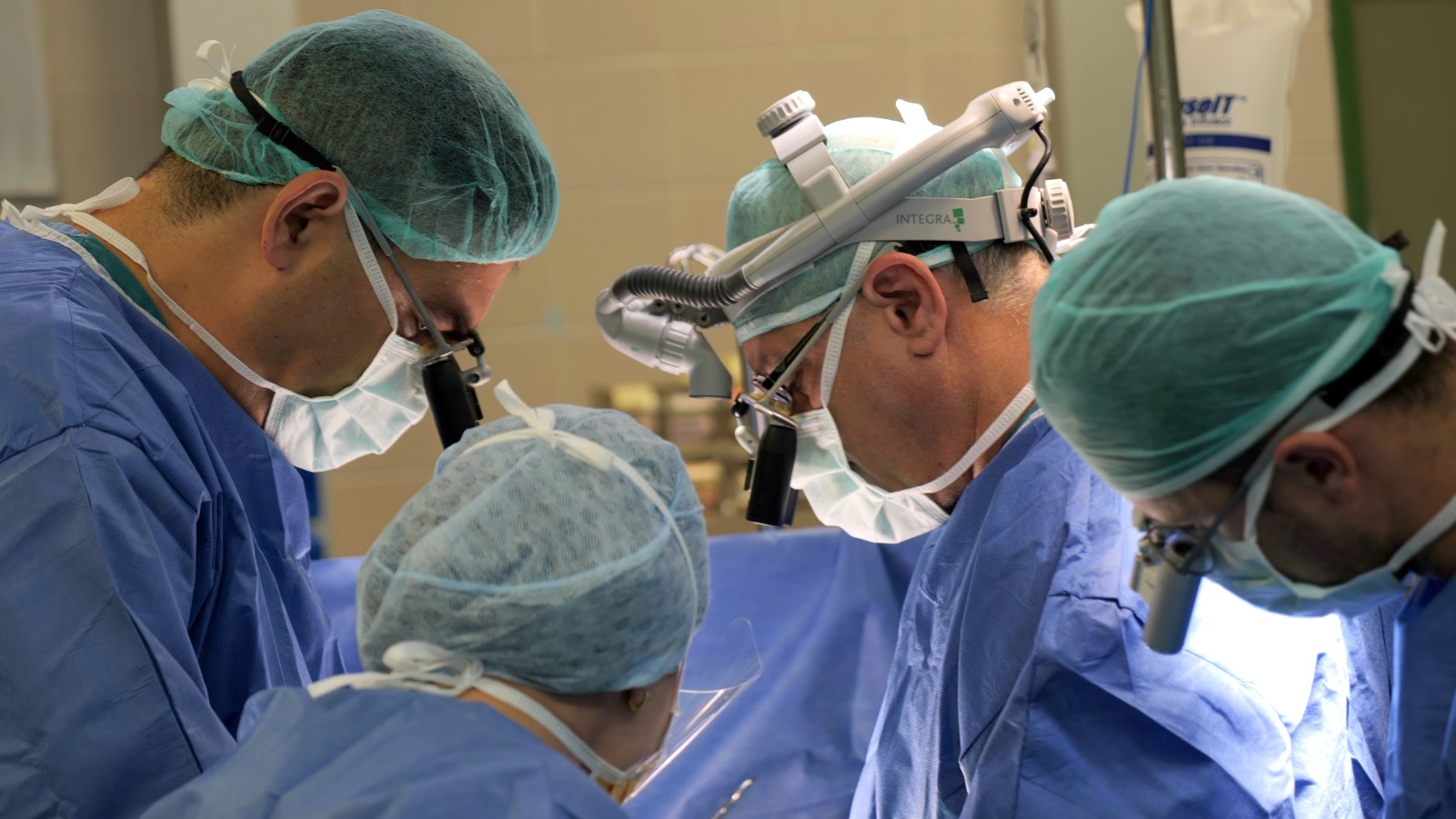
One-year-old Fatma is crying in her hospital bed, and for good reason – she’s hungry. She hasn’t eaten since the evening before, in preparation for the open-heart surgery she’s going to be wheeled into any minute.

Her mother, Balkis, is trying to soothe her. Nineteen years ago, she herself was in a similar position, waiting at the very same hospital — Wolfson Medical Center in Holon, Israel — for lifesaving surgery to repair a heart condition called patent ductus arteriosus.

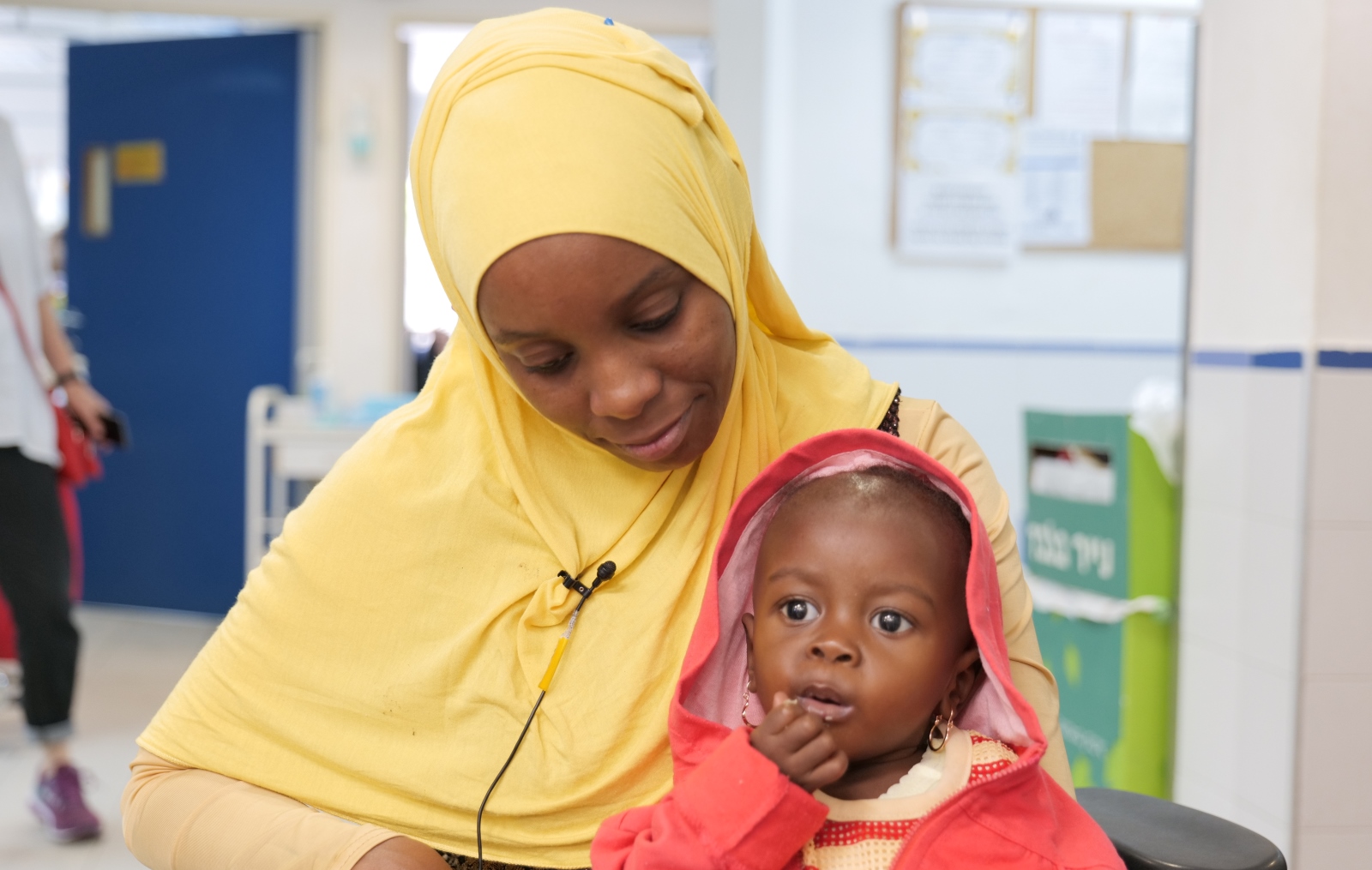
But neither 26-year-old Balkis Makame Haji nor her daughter Fatma are Israeli. They traveled all the way from Zanzibar for the free surgery with the help of the Save a Child’s Heart non-profit organization.

Doctors operating on Fatma at the Wolfson Medical Center. Photo by Gil Naor

Fatma, her mom says, seemed fine at birth, even weighing a hefty seven pounds. “But when she was three months old, she started to have frequent fevers, coughs and pneumonia. We went to the hospital.”

An echocardiogram revealed that the three-month-old suffered from the same condition her mom did as a child. “A lot of children have this problem,” Haji explains. “It’s dangerous because they don’t grow properly.”

Balkis Makame Haji and her daughter Fatma at Israel’s Wolfson Medical Center. Photo by Gil Naor

read more: Israeli medical NGO treats its 5,000th child from abroad


Zawartość publikowanych artykułów i materiałów nie reprezentuje poglądów ani opinii Reunion’68,
ani też webmastera Blogu Reunion’68, chyba ze jest to wyraźnie zaznaczone.
Twoje uwagi, linki, własne artykuły lub wiadomości prześlij na adres:
webmaster@reunion68.com


US deploying Patriot missiles to Middle East

US deploying Patriot missiles to Middle East

Elad Benar


Acting US Defense Secretary approves deployment of Patriot missiles to the Middle East amid growing threat from Iran.

Patrick Shanahan

Acting US Defense Secretary Patrick Shanahan has approved a new deployment of Patriot missiles to the Middle East, a US official told Reuters on Friday.

The move is the latest US response to what Washington sees as a growing threat from Iran.

Earlier this week, Shanahan approved the deployment of a US carrier strike group and a bomber task force to the Middle East, citing “indications of a credible threat” by Iran.

Officials later told CNN that one of the reasons for the deployment was intelligence showing that Iran is likely moving short-range ballistic missiles aboard boats in the Persian Gulf.

Tensions have risen between the US and Iran over the past year, after President Donald Trump withdrew from the 2015 nuclear deal between Iran and world powers.

The US has since imposed two rounds of sanctions on Iran, the latest of which went into effect in early November. Those sanctions aim to reduce Iran’s oil exports to zero in a bid to curb the Islamic Republic’s missile program and regional influence.

On Thursday, President Donald Trump urged the Iranian regime to agree to talks with the US aimed at ending its nuclear program – while hinting that the US could use military force against Iran.

Asked by reporters whether there was a risk of military confrontation with the Islamic Republic, Trump replied, “I guess you could say that always, right? I don’t want to say no, but hopefully that won’t happen. We have one of the most powerful ships in the world that is loaded up and we don’t want to do anything.”


Zawartość publikowanych artykułów i materiałów nie reprezentuje poglądów ani opinii Reunion’68,
ani też webmastera Blogu Reunion’68, chyba ze jest to wyraźnie zaznaczone.
Twoje uwagi, linki, własne artykuły lub wiadomości prześlij na adres:
webmaster@reunion68.com


‘2,000 Jordanian soldiers against 3 IDF soldiers’

‘2,000 Jordanian soldiers against 3 IDF soldiers’

Yehonatan Gottleib


Rabbi Yisrael Ariel tells Temple Mount visitors of his experiences in the IDF during liberation of Jerusalem in 1967.

Temple Mount

Rabbi Yisrael Ariel, the Founder of the Temple Institute arrived Sunday morning at the Temple Mount and told the pilgrims about his experiences during the liberation of Jerusalem and the liberation of the Western Wall and the Temple Mount in the Six Day War.

Rabbi Ariel, who was a reserve soldier in the Paratroopers Brigade and fought for the liberation of Jerusalem in the Six-Day War, said that he saw the battle on the Temple Mount: “Here were cannons, mortars and piles of shells.”

He told of the soldiers who arrived at the Temple Mount for the first time 52 years ago, “followed by Rabbi Tzvi Yehuda Kook and the Nazir on a jeep of the Jordanian army that was here.”

“We saw the Israeli flag hoisted at the top of the Dome of the Rock,” testified Rabbi Ariel, “and then I saw about two thousand soldiers of the Jordanian Legion raising their hands against three or four IDF soldiers.”

Hundreds of Jews ascended the Temple Mount this morning to mark the anniversary of the liberation of Jerusalem Sunday. The headquarters of the various Temple Mount organizations said that the police had fulfilled their obligation to allow Jews to ascend the Temple Mount and to remove the Arab rioters in order to allow Jews to ascend as per routine.

Police said that during the morning hours, “riots broke out on the Temple Mount, including stone throwing, throwing of chairs and various objects, following which the commander of the Jerusalem district, Major General Doron Yedid, ordered the police to enter the Temple Mount and deal with the rioters.”


Zawartość publikowanych artykułów i materiałów nie reprezentuje poglądów ani opinii Reunion’68,
ani też webmastera Blogu Reunion’68, chyba ze jest to wyraźnie zaznaczone.
Twoje uwagi, linki, własne artykuły lub wiadomości prześlij na adres:
webmaster@reunion68.com


NO HOLDS BARRED: 75 YEARS SINCE ELIE WIESEL WAS SENT TO AUSCHWITZ

NO HOLDS BARRED: 75 YEARS SINCE ELIE WIESEL WAS SENT TO AUSCHWITZ

SHMULEY BOTEACH


Elie Wiesel participates in a discussion on Capitol Hill in Washington, on March 2, 2015. (photo credit: REUTERS/GARY CAMERON)

SIGHET, Romania – Seventy-five years ago this week, Elie Wiesel was deported from this small town in the Carpathian Mountains at the age of 15. Within three days he would arrive at Auschwitz, where his mother, Sarah, and baby sister, Tziporah, would be instantly murdered.

Elie’s story of survival in the hell of Auschwitz, along with his father, Shlomo, who would later die at Buchenwald just before war’s end, would become the most famous Holocaust memoir of all time, equaled only by The Diary of Anne Frank.

Visiting Sighet and seeing Elie’s childhood home – today a museum – is a sobering experience. I was here as families of survivors of the four Sighet deportations of May 1944 gathered to commemorate the 75th anniversary of the deportations and subsequent slaughter, which saw 90% of Romanian Jewry annihilated.

Sighet in 1944 had about 27,000 inhabitants. A staggering 12,000 were Jewish. Then, in the space of just four transports taking place between May 16 and 22, 1944 (Elie Wiesel was on the final transport), the entire Jewish community was gone. Disappeared. Vanished. Three days later, upon arriving at Auschwitz, the vast majority went up in smoke, literally.

Over the past few years I have visited much of Europe’s Holocaust death camps and killing fields with my family. I have done so for my children to know what happened to our people and have written a manuscript titled “Holocaust Holiday: One Family’s Descent into Genocidal Memory Hell,” which is being readied for publication.

I have come even though it is immensely painful to my family and causes emotional rebellion among our children. I have come because I am certain the six million want us to come and demand to be remembered. I have come because I am a Jew and part of my identity is understanding the great triumphs and unspeakable tragedy of my people.

And I have come despite how it has made me feel toward God.

UNIQUE AMONG the chroniclers of the Holocaust, Elie Wiesel believed that the victims had the right to spar with God, show defiance at His seeming indifference, express righteous indignation at His apparent abandonment of the Jews of Europe.

Others misguidedly tried to find a reason, a purpose, a meaning behind something so utterly senseless.

Just down the road from Sighet, Rabbi Yoel Teitelbaum, the rabbi of Satu Mare, or Satmar, described the Holocaust as punishment for the Jewish people’s embracing of Zionism. They had no right to try to establish political autonomy without the Messiah.

Teitelbaum was born in Sighet and stemmed from an illustrious line of rabbinic figures. It seems incredible that Elie Wiesel – who would later become one of Israel’s most respected defenders and would leverage his unequaled credibility – stemmed from the same city that produced Zionism’s greatest religious opponent.

Other Orthodox rabbis spoke of the Holocaust as punishment for assimilation and intermarriage, primarily of German Jewry.
Elie Wiesel understood that such talk – blaming the Jews for their own annihilation – was itself an abomination.

Over Shabbat in Sighet, a debate broke out among the families of the survivors as to whether the Holocaust had any meaning.
Is it blasphemy to say it did not? Is it not greater blasphemy to say that it did?

Are we really to accept that God had a reason for the Holocaust that simply transcends our limited mortal understanding? In what universe, on what celestial plane, can a deity require the gassing of 1.5 million children to satisfy some cosmic need? And who would wish to worship a God that had any such requirement?

Is not human sacrifice expressly forbidden by the Torah as reprehensible before the deity? So what kind of God would seek the sacrifice of 1.5 million children?

The more I study about the Holocaust, the less I can come to terms with it. The closer I get to it, the more distant it seems. There is nothing about its scope, its magnitude, its utter comprehensiveness that makes any sense whatsoever. I have visited Auschwitz many times, including on this trip to honor the 75th anniversary of Elie Wiesel’s deportation. Each time I visit the death camp, I learn more and understand less.

I loved Elie Wiesel and had the great honor of his friendship, a privilege I continue today with his family. Beginning nearly 30 years ago, when he first spoke for me at Oxford, I was humbled to share unforgettable moments with him and watched as he gave every ounce of his being to the memory of the six million.

The Jewish community owes him so much, but one thing above all else: a total commitment to Holocaust memory, without brooking any compromise. We in the Jewish community must hold fast to every aspect of Holocaust history, whatever the consequences for Israel’s relations with other nations.

POLAND IS a strong ally of Israel, and there can be no question that the Polish people suffered unspeakably under Hitler’s barbarism. Hillel said, “That which you hate don’t do unto others.” We dare not diminish the suffering of the Polish people during World War II, lest our own suffering be diminished.

But we need not equate their suffering with our own either.

Nothing – absolutely nothing – compares with the Holocaust. The genocide of European Jewry was the single greatest crime in the history of the world and the most extensive mass murder the earth has ever witnessed. Even for the purposes of a closer relationship with the Jewish state, there can be no compromises on historical truths about the Holocaust, even if it means articulating painful facts to essential European allies.

Attacks against Poles as drinking in antisemitism from their mother’s milk is an affront to the thousands of Poles who risked their lives to save Jews during the Holocaust, not to mention the innumerable Poles who work tirelessly today to teach the Holocaust. Yad Vashem recognizes Poland as having produced a quarter of all Righteous Among the Nations.

But equally true is the fact that a great many Poles – far more than the country seems willing to accept – collaborated with the German Nazis in an individual, rather than national, capacity. And then there is Jedwabne and Kielce and other atrocities that were committed by Poles with little to no German instigation, participation or assistance.

Poland is responsible for Holocaust memory at the main extermination camps, and the country is doing an excellent job at preserving the sites where millions of our people were murdered. This is especially true of Auschwitz.

The Jewish people owes Poland gratitude. But recent comments from the Polish leadership that the Poles suffered more during the Second World War than any other group, including the Jews, are an unfortunate provocation and an affront to the six million.
To be sure, suffering is not a game of one-upmanship, and we Jews are in no race for bragging rights to having been the world’s most murdered victims. We wish it were not so. But genocide is genocide, and “the blood of your brother cries out from the grave” for appropriate validation and recognition.

Just as Israeli leaders should not be making the absurd and highly offensive claim that all Poles are antisemites, Polish leaders should not be equating their own country’s horrors at the hands of the Nazis to genocide.

No people has ever been more brutally massacred at any other time in history than the Jews under the Germans.
It behooves our Polish brothers and sisters to state the truth.

It likewise behooves the leaders of both Israel and Poland to de-escalate the current tensions and work together to honor the eternal memory of the men, women, and children whom the Nazis murdered and to whom Elie Wiesel devoted his life to ensure they would never be forgotten.


The writer, “America’s rabbi,” whom The Washington Post and Newsweek call “the most famous rabbi in America,” is the international best-selling author of 32 books, including his most recent, The Israel Warrior. He served as rabbi at Oxford University for 11 years. Follow him on Twitter @RabbiShmuley.


Zawartość publikowanych artykułów i materiałów nie reprezentuje poglądów ani opinii Reunion’68,
ani też webmastera Blogu Reunion’68, chyba ze jest to wyraźnie zaznaczone.
Twoje uwagi, linki, własne artykuły lub wiadomości prześlij na adres:
webmaster@reunion68.com


JERUSALEM DAY: HOW IT ALL BEGAN

JERUSALEM DAY: HOW IT ALL BEGAN

DR. HEZI AMIUR


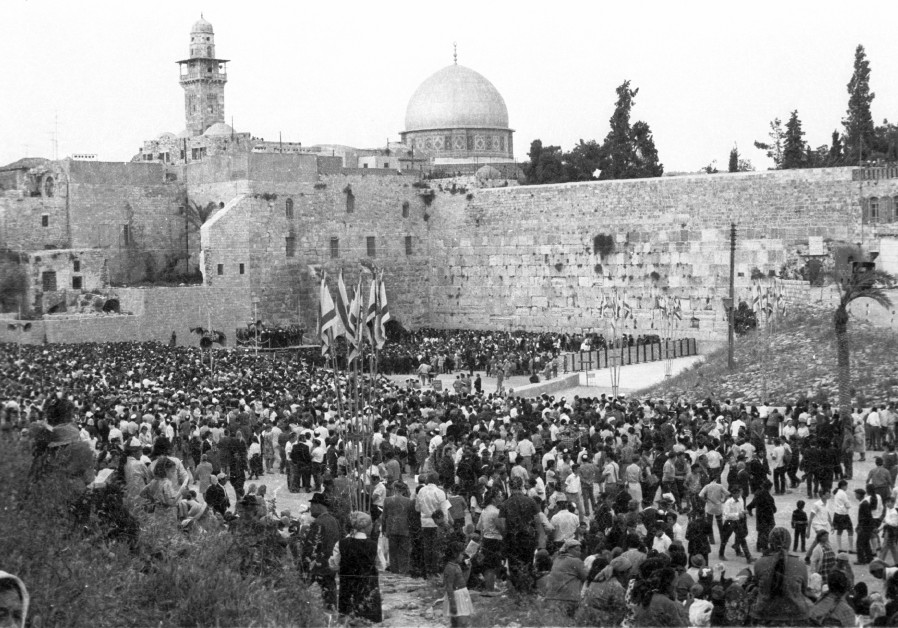
Unlike Independence Day, the first Jerusalem Day celebration took on a more spontaneous character with a mass prayer at the Western Wall, celebrating the liberation of the Old City.

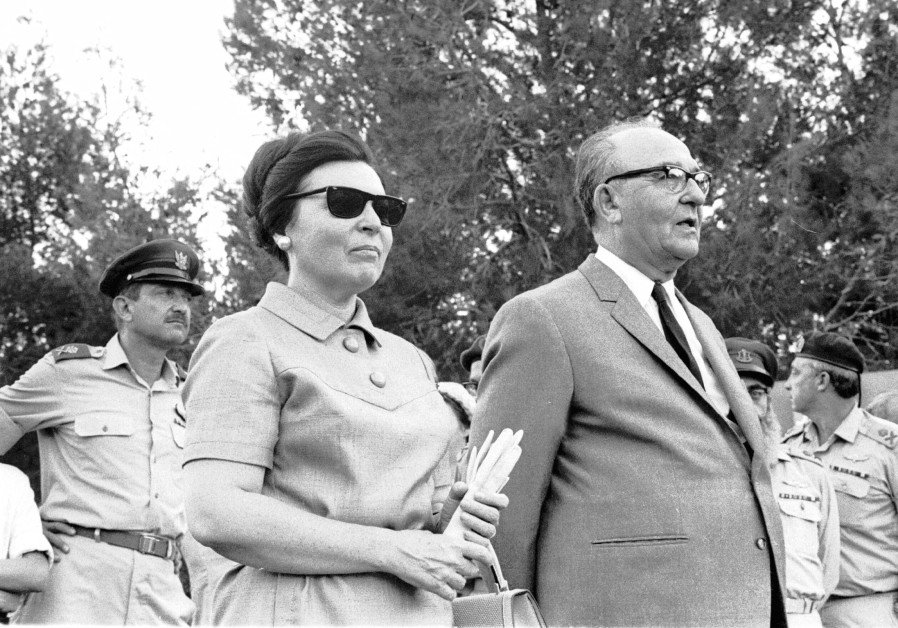
PM Levy Eshkol and wife arriving to the IDF exhibition. (photo credit: DAN HADANI)

“Jerusalem Day,” or “Jerusalem Reunification Day,” is an officially recognized national holiday in Israel which enjoys broad acceptance in the country today. But, it has not always been so. In the year following the reunification of Jerusalem in the Six-Day War, the Prime Minister of Israel and the Mayor of Jerusalem openly objected to the creation of the holiday. It was only after the public itself made its opinion clear in favor of a new national holiday that the municipal and governmental institutions followed suit.

Following Israel’s War of Independence in 1948, Jerusalem was a divided city. For 19 years, West Jerusalem belonged to Israel, while East Jerusalem was held by Jordan. It was only in 1967, or more precisely, on the third day of the Six-Day War, that the soldiers of the IDF Paratroopers Brigade, commanded by Col. Motta Gur (a future Chief of Staff), broke through the Jordanian defenses and took the Old City and East Jerusalem. The reunification of Jerusalem was completed with Motta Gur’s now famous declaration “The Temple Mount is in our hands!”

Following the war, a desire emerged to establish a special day dedicated to the unified city of Jerusalem, the capital of the State of Israel. The first initiative came from the Chief Rabbinate on the first anniversary of the city’s reunification. The heads of the Rabbinate sought to establish the 28th day of the Hebrew month of Iyar as a day of thanksgiving for the miracles that resulted in the city’s unification under Israeli control.

The Jerusalem Municipality followed up on the rabbinical initiative, announcing its celebrations to mark the new Jerusalem Day holiday, but the Israeli government immediately attempted to have the decision cancelled, refusing to offer any funding for the ceremonies being planned.

Even Jerusalem’s mayor, Teddy Kollek, requested that his own municipal authorities cancel their plans for fear that the festivities would offend the Arab population of East Jerusalem. Prime Minister Levi Eshkol was also reluctant to hold the ceremony in its intended format. The Office of the Prime Minister released a statement that Eshkol would decline the “honorary citizenship” that the Jerusalem Municipality intended to award him at the ceremony.

Despite the reluctance shown by Levi Eshkol and Teddy Kollek, the municipal authorities decided to move forward with the ceremony.

A great sense of national joy served as the driving force behind the festivities, which were, in the end, held as planned, including the awarding of an honorary citizenship to the Prime Minister. Jerusalem was illuminated and decorated with an exuberance that rivalled that of the famously uninhibited Independence Day celebrations.

However, unlike Independence Day, the first Jerusalem Day celebration took on a more spontaneous character. Aside from the municipality, one of the only official bodies involved in the preparations was the Chief Rabbinate, which organized a mass prayer at the Western Wall.


The author is the curator of the Israel Collection at the National Library of Israel.


Zawartość publikowanych artykułów i materiałów nie reprezentuje poglądów ani opinii Reunion’68,
ani też webmastera Blogu Reunion’68, chyba ze jest to wyraźnie zaznaczone.
Twoje uwagi, linki, własne artykuły lub wiadomości prześlij na adres:
webmaster@reunion68.com