Archives

Finance firm “OlehPay” now free for Lone Soldiers

Finance firm “OlehPay” now free for Lone Soldiers

Arutz Sheva


American-Israeli finance firm OlehPay to open its services free to Lone Soldiers and Bnot Shirut in light of recent tragedies.

olehpay

Recent events in the news suggesting a trend of suicides among Lone Soldiers due to a lack of proper services and support has fired an uproar among the American community in Israel.

This inspired OlehPay CEO, Joseph Sokol, to open its remittance platform OlehPay, which enables users to inexpensively send money from the US to Israel, to Lone Soldiers and Bnot Shirut. These volunteers can now get completely free transfers on OlehPay while in service.

“After a close friend committed suicide earlier this year, I have become acutely sensitive to the issues of mental health. I’ve learned support of any forms can go a long way” says Sokol.

Sokol was not the first to act on the issue. The director of KeepOlim, an NGO providing support for new immigrants, denounced on Thursday the lack of basic support services for lone soldiers serving in the IDF without family in Israel following the death on Tuesday of the second lone soldier in the last two months.

“The situation of lone soldiers is deplorable, I blame every person who agreed to bring soldiers here and not provide the proper services and support for the needs of the soldiers,” said Keep Olim director LiAmi Lawrence.

The Aliyah and Integration Ministry said it was “aware of this painful topic” and is “working accordingly to provide appropriate solutions for such incidents.”

“It definitely can be a sore topic. It’s only what we understand retrospectively about these individuals who leave their home to serve in the Israeli military that helps us paint a picture of the extent of their mental well-being. Restarting your life in a foreign country may be beneficial for some, but one must ask themselves whether this move in itself is effectively running from a core problem, without addressing the problem directly.” Sokol added commenting on the trend of American Olim that move to Israel each year seeking a change of scenery.

“I believe OlehPay along with other firms should step in to help. Any Jew which contributes to the well-being of our country should be treated by our country inversely for the well-being of that individual. This thinking goes back to the very socialist ethos of the founding of this country. We are here for them as they are here for us.”

OlehPay enables users to transfer money between their US and Israeli bank without bank fees, exchange money at the official Bank of Israel USD/ILS rate, conveniently and entirely online.


Zawartość publikowanych artykułów i materiałów nie reprezentuje poglądów ani opinii Reunion’68,
ani też webmastera Blogu Reunion’68, chyba ze jest to wyraźnie zaznaczone.
Twoje uwagi, linki, własne artykuły lub wiadomości prześlij na adres:
webmaster@reunion68.com


Christian Arab Ex-IDF Soldier Continues Fight for Israel

Christian Arab Ex-IDF Soldier Continues Fight for Israel

  i24NEWS English


NEWS DESK | A terror attack years ago that killed Arab-Israelis showed this Arab-Israeli that the IDF fights for everyone in Israel. He continues the fight to this day, even after his IDF time is over. Our Matthias Inbar has the story.
Story:

Israelis will come to a somber pause on Tuesday evening, as a one-minute siren sounds in honor of the country’s 23,741 fallen soldiers and 3,146 victims of terror –marking the beginning of the annual 24-hour period of mourning during which official and civilian ceremonies will take place nationwide.

Last year, some 1.5 million Israelis went to pay their respects at gravesides of those killed in wars or terror attacks throughout the country’s history.

Israel’s Ministry of Defense last week announced the addition of 96 names to the list of soldiers killed defending the Jewish state since 1860 as well as nine Israeli civilians killed in conflict-related violence in the same period, bringing the total to 3,146 terror victims.

The number has likely increased since last week’s statement, after four Israelis were killed by rocket fire from the Gaza Strip this weekend.

56 of the names added were IDF soldiers and police, while the other 40 were veterans who succumbed to disabilities or injuries sustained during their service.

Israel currently has close to 170,000 soldiers in active duty, with another 460,000 reservists. Military service is compulsory for Israeli Jews, and young conscripts make up two thirds of the standing army.

Memorial day is a solemn day in Israel, where grief is often openly expressed in public ceremonies. In a country where almost everyone has known someone who died fighting, most people are grieving for someone they knew personally.

There will be candle-light ceremonies in schools and public institutions, and mournful programs about Israel’s wars broadcast on public television.

Memorial Day will come to a close at 7:45 p.m. on Wednesday, when Israelis will allow their sadness to give way to mirth as they celebrate Independence Day with patriotic parties and events happening throughout the country.


Zawartość publikowanych artykułów i materiałów nie reprezentuje poglądów ani opinii Reunion’68,
ani też webmastera Blogu Reunion’68, chyba ze jest to wyraźnie zaznaczone.
Twoje uwagi, linki, własne artykuły lub wiadomości prześlij na adres:
webmaster@reunion68.com


Vimeo buys out Israeli video-creation company

Israel21cVimeo buys out Israeli video-creation company

Abigail Klein Leichman


Magisto social-video apps will become part of Vimeo, the NY-based video-platform company that has 90 million-plus users in 150 countries.

Image courtesy of Magisto

Israeli video creation company Magisto of Ness Ziona and Mountain View, California, will be bought out by ad-free open video platform Vimeo in a deal reportedly worth about $200 million.

Founded in 2010, Magisto offers apps that have been used by 13 million people to make 450 million videos in 24 languages.

“To our Magisto family: For nearly a decade, we have focused on building tools that guide both consumers and business owners through the video creation process, so that they can more effectively share their stories with the world. Today we are THRILLED to announce that we’ve agreed to be acquired by Vimeo. Yes, Vimeo – the video community that is home to more than 90 million video creators in over 150 countries,” blogged Magisto founder and CEO Oren Boiman on April 15.

Boiman wrote that the two companies “share a similar belief in the power of technology to lower the barriers to quality storytelling, and we seek to build intuitive user experiences and simple, powerful video tools that are accessible to all.”

Magisto’s apps and service will continue to operate as usual. “By combining forces with Vimeo, we will be able to offer you a more valuable all-in-one video marketing solution that goes way beyond creation to include collaboration, hosting and management, distribution, analytics, monetization, live streaming and more,” said Boiman.


Zawartość publikowanych artykułów i materiałów nie reprezentuje poglądów ani opinii Reunion’68,
ani też webmastera Blogu Reunion’68, chyba ze jest to wyraźnie zaznaczone.
Twoje uwagi, linki, własne artykuły lub wiadomości prześlij na adres:
webmaster@reunion68.com


ILHAN OMAR’S IGNORANCE AND BIGOTRY ON GAZA ROCKETS – COMMENT

ILHAN OMAR’S IGNORANCE AND BIGOTRY ON GAZA ROCKETS – COMMENT

ALAN DERSHOWITZ


To be sure, 30 Palestinians were killed and 154 injured by Israeli efforts to stop the rocket rampage. Many of these were terrorists.

Rep. Ilhan Omar (D-MN) participates in a news conference outside the U.S. Capitol in Washington, US, April 10, 2019. (photo credit: JIM BOURG/ REUTERS)

All decent people should be outraged at the terrorist groups in the Gaza Strip that fired 698 rockets at Israeli civilians – killing four, injuring 234 and traumatizing thousands of innocent children. Imagine what other countries, including the United States, would do if lethal rockets targeted their civilians.

Yet, Israel has responded with restraint. To be sure, 30 Palestinians were killed and 154 injured by Israeli efforts to stop the rocket rampage. Many of these were terrorists, but some were civilians who were put in harm’s way by the terrorists.

These deaths and injuries were caused by the tactic employed by Hamas and Islamic in Jihad: they deliberately place their rocket launchers in densely populated areas – near schools, hospitals and mosques – in a deliberate effort to maximize Arab civilian casualties. This has been called “the dead baby” or “CNN” strategy. The goal is to have CNN and other media show the children and other civilians that Israeli counter-measures have inadvertently killed, while trying to stop the terrorist rockets from killing Israeli children and other civilians.

Tragically, this strategy works, because with the media, “if it bleeds, it leads.” The visual media love to show dead and injured children, without explaining that they are actually encouraging such casualties by playing into terrorist’s hands.

So, too, is US Congresswoman Ilhan Omar encouraging the firing of rockets by Hamas and Islamic Jihad by blaming the Israeli victims for what she calls the “cycle of violence,” instead of blaming those groups for initiating terrorist violence against innocent Israeli civilians.

In a tweet following the rocket barrage, Omar justifies the double war crimes committed by terrorists who target Israeli civilians while using Palestinian civilians as human shields. She asks rhetorically, how many “rockets must be fired, and little kids must be killed until the endless cycle of violence ends?” This implies that these war crimes are justified by what she calls the “occupation and humanitarian crisis in Gaza.”

DOES OMAR not realize that Israel ended its occupation of Gaza in 2005 when it removed every soldier and settler from that area? Gaza could have become the Singapore of the Mediterranean, with its port and location. The Israelis left behind greenhouses and other facilities. Europe and Qatar poured money into the Gaza Strip.

But Hamas – which forcefully took over the area from the Palestinian Authority – decided to turn it instead into a large scale rocket launcher. Instead of using its newly acquired resources to provide humanitarian benefits to its residents, it used them to build terrorist rockets and tunnels that targeted Israeli civilians. This forced Israelis to take counter-measures to protect its citizens. To use the “occupation” – there is no longer any occupation – as a justification for why “rockets must be fired” is to show both ignorance and bigotry.

Nor is Omar alone in blaming Israel for the rocket attacks on its civilians. The ADC (American Arab Anti-Discrimination Committee) issued a statement condemning Israel for “targeting and killing Palestinian civilians, including children and infants.” Irresponsibly, it never once mentioned the firing of 698 rockets by the rulers of Gaza that target Israeli civilians, nor did it ever mention the sad reality that Hamas and Islamic Jihad deliberately use “Palestinian civilians, including children and infants” as human shields in order to increase the number of inadvertent Palestinian casualties.

The conflict in Gaza will only get worse if terrorism is encouraged by the lies of commission and omission told by Omar, ACD and other supporters of Hamas and Islamic Jihad. All decent people must try to discourage the targeting of civilians by terrorist rockets and tunnels. A good beginning would be to tell the truth.    

I write these words from Israel, which is now commemorating the many soldiers who have fallen over its years of fighting against those who would destroy the nation state of the Jewish people. It is also celebrating its 71st year of independence. No nation has contributed so much to humankind in so short a period of time. No nation faced with threats compared to those faced by Israel has ever had a better record of human rights, compliance with the rule of law or concern with avoiding civilian casualties. 

The world should join Israeli in celebrating its 71st year of statehood. The world should also recognize that if Israel’s enemies stopped attacking its citizens, there would be peace – but if Israel stopped defending its citizens, there would be genocide.


Zawartość publikowanych artykułów i materiałów nie reprezentuje poglądów ani opinii Reunion’68,
ani też webmastera Blogu Reunion’68, chyba ze jest to wyraźnie zaznaczone.
Twoje uwagi, linki, własne artykuły lub wiadomości prześlij na adres:
webmaster@reunion68.com


700 ROCKETS, 4 DEAD ISRAELIS

700 ROCKETS, 4 DEAD ISRAELIS: IS THE IRON DOME GETTING WORSE?

SAM SOKOL/JTA


The number of unintercepted rockets and Israeli fatalities sparked inquiry about the effectiveness of Iron Dome.
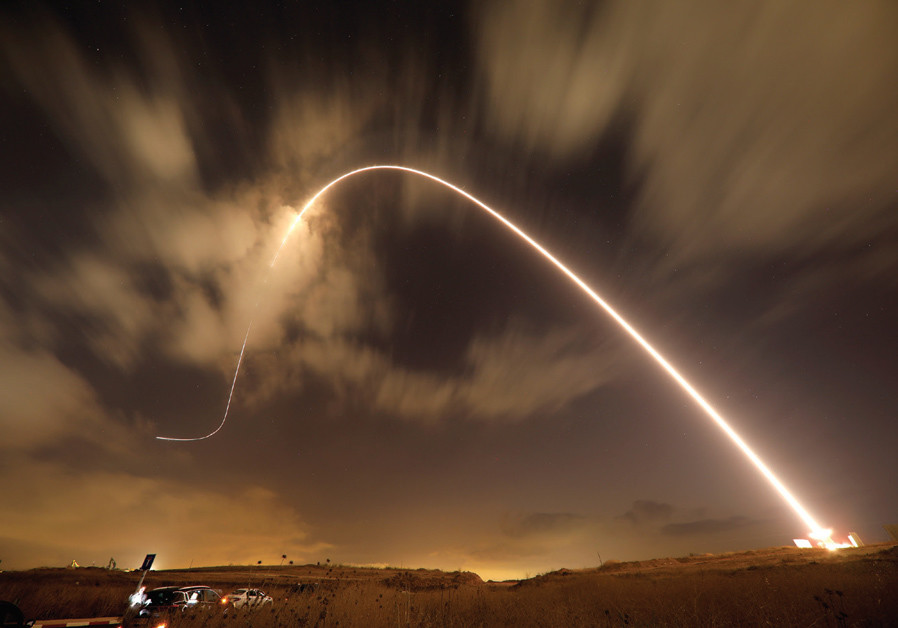
An Iron Dome anti-missile system fires an interceptor missile as rockets are launched from Gaza toward Israel on August 9. (photo credit: AMIR COHEN/REUTERS)

TEL AVIV (JTA) — After the weekend’s fighting between Hamas and the Israeli army, some Israelis have raised questions about the strength of their country’s missile defenses.

Over the course of the weekend, Hamas and Islamic Jihad launched nearly 700 rockets from Gaza at Israel, killing four people and injuring more than 200. According to Haaretz, of the 690 rockets launched from Gaza, Israel’s Iron Dome missile defense system intercepted 240.

The number of unintercepted rockets and Israeli fatalities sparked inquiry about the effectiveness of Iron Dome, and whether Hamas and Islamic Jihad have found a way to thwart the system.

Hamas was quick to declare that it had achieved victory, overwhelming Israeli defenses with concentrated barrages of projectiles.

“The Qassam Brigades, thanks to God, succeeded in overcoming the so-called Iron Dome by adopting the tactic of firing dozens of missiles in one single burst,” a spokesman for Hamas’s Izz ad-Din al-Qassam Brigades said in a social media post quoted by The Times of Israel. “The high intensity of fire and the great destructive ability of the missiles that were introduced by the Qassam [Brigades] … succeeded in causing great losses and destruction to the enemy.”

The number of Israeli civilians killed in the two-day conflict was only one fewer than during 2014’s Operation Protective Edge, a struggle of nearly two months, when Palestinian factions lobbed more than 4,500 projectiles at Israeli cities.

At the time, the Israel Defense Forces said that its Iron Dome batteries had managed to knock down 90 percent of the rockets within their coverage zones — a rate of success disputed by some critics. The IDF claimed a similar level of success this time, too, telling reporters that it had achieved an 86 percent kill rate and that only 35 projectiles landed in populated areas.

However, speaking with The Jerusalem Post, Maj. Gen. Yaakov Amidror, a former national security adviser and retired head of the Military Intelligence’s Research Department, said Iron Dome had gaps in its coverage, especially when it came to short-range rockets landing within a few kilometers of the border.

“We don’t have enough time to intercept it,” he said.

Amidor also said that in the case of a car hit by an anti-tank missile near Kibbutz Yad Mordechai on Sunday, killing its Israeli driver, Iron Dome wouldn’t have helped.

“From the point of view of the system, this was an open area without people. We don’t intercept such rockets,” he said.

A former deputy military intelligence chief, Brig. Gen. Meir Elran, said that while “Iron Dome has proven to be an effective means of saving lives, which also improves the flexibility of decision makers in Israel,” it is clear that the system as currently constituted cannot provide Israel with sufficient protection in the event of a wider conflict.

In an article published by the Institute for National Security Studies in Tel Aviv several weeks before the outbreak of hostilities, Elran warned that “the number of available batteries (some operated by reservists) cannot suffice as a response to the threat, even one characterized by sporadic fire against the Israeli depth. In a full-scale conflict the [Iron Dome] system would be required to cover primarily military installations and vital national infrastructures,” which would mean that there would be gaps in the system’s coverage of residential areas.

“During a broad and protracted conflict,” Elran wrote, there is a “danger of multiple, simultaneous events that stretch the capacity of response systems.”

The IDF has been beefing up its systems. Globes reported that the army has been working on improvements to Iron Dome intended to deal with just the kinds of barrages used over the weekend, as well as against the kinds of short-range projectiles used to target communities along the Gaza border. In mid-April, the IDF concluded an air defense exercise combining its Iron Dome and Patriot missile batteries.

Overall, the presence of Iron Dome has allowed Israel additional flexibility in choosing when it wants to escalate conflicts. The system reduces the need to send infantry troops into Gaza to stop missile fire against population centers.

Despite this weekend’s death toll, Iron Dome acquitted itself well, Times of Israel military correspondent Judah Ari Gross told JTA. The higher than usual level of civilian casualties can be attributed to a combination of bad luck, the intensity of the barrages and Hamas’ use of heavier rockets with larger payloads. Such projectiles can intensify the damage when they do get through.

“In one barrage, they fired 117 rockets toward Ashdod. One got through. Is that overwhelming the system?” he asked. “You can say, yes, it is — especially as that one killed an Israeli civilian — or no, that’s a 99.1 percent success rate.”

The missile that did get through in Ashdod killed Pinchas Menachem Prezuazman, a 21-year old American citizen who was hit while running for cover. Even with a high level of interceptions, with enough metal flying, some are bound to get through, Gross said, adding that it was unclear exactly how the IDF had calculated its claimed 86 percent interception rate.

Uzi Rubin, one of the pioneers of Israel’s earliest attempts at missile defense, told JTA that based on the publicly available data, it appears that the Palestinians “tried to tax the system as much as they could, but the system as a whole held well.”

“Eighty-six percent is not much less than the 90 percent during [Operation Protective Edge], and remember this time most of the fire was concentrated on the area around Gaza, which is short range and harder to defend,” he said.

Israel doesn;t just rely on the Iron Dome to keep its citizens safe. Phone apps warn of incoming missiles, and bomb shelters and “safe rooms” are ubiquitous, if not always well-maintained. In his article Elran suggests that “existing plans for improving public and private shelters should be implemented in other parts of Israel.”

Elran also urged the Home Front Command and municipal leaders to get on the same page when it comes to closing schools and opening public shelters, “issues that continue to be disputed.”

Residents of southern Israel had differing opinions as to the effectiveness of the IDF’s missile defenses.

Raymond Reijnen, a Dutch immigrant whose house in Kibbutz Nahal Oz was hit by a rocket as he hid in its bomb shelter with his wife and children on Saturday, said Iron Dome’s effectiveness has been exaggerated.

“Everybody thinks [it’s] great, but every mortar they fired at the kibbutz landed and didn’t got intercepted,” he said. “Iron Dome is a bandage to keep the people feeling safe and protected. Don’t get me wrong, it’s a great system, but its capabilities are highly overestimated.”

On the other hand, Adele Raemer, a resident of Kibbutz Nirim on the Gaza border, said she did feel safer than in previous escalations.

“We’ve only had Iron Dome for about a year,” she said. “As a resident, I do feel more protected now that we have [it].”

Asked for comment, the IDF said that it was unable to provide information on Iron Dome’s performance or how it calculates interception rates because it was short-staffed due to Tuesday evening’s Yom Hazikaron, or Memorial Day, commemorations.


Zawartość publikowanych artykułów i materiałów nie reprezentuje poglądów ani opinii Reunion’68,
ani też webmastera Blogu Reunion’68, chyba ze jest to wyraźnie zaznaczone.
Twoje uwagi, linki, własne artykuły lub wiadomości prześlij na adres:
webmaster@reunion68.com