Archives

COURT RESUSCITATES PALESTINIANS’ GENOCIDE CASE AGAINST ADELSON IN US

COURT RESUSCITATES PALESTINIANS’ GENOCIDE CASE AGAINST ADELSON IN US

YONAH JEREMY BOB


Sheldon Adelson, a casino magnate and major backer of pro-Israel causes.. (photo credit: REUTERS)

A US court of appeals has resuscitated a civil damages lawsuit by a group of Palestinians claiming support for genocide against tycoon Sheldon Adelson, the Trump administration’s envoy Elliot Abrams, megachurch pastor John Hagee and a range of banks, companies and NGOs. The Palestinians claim these people and institutions are linked to the settlement enterprise and to alleged war crimes in the last three Gaza wars.

The $34.5 billion case was previously dismissed by the lower US district court for the District of Columbia based on the idea that it implicated political and foreign policy questions of which the judiciary traditionally stays out.

The appeals court’s late Tuesday decision was not close to a final victory for the plaintiffs and the case may still be dismissed before it reaches a trial. But the appeals court did say that the lower court had applied the political question doctrine too broadly and could not dismiss the case simply on those technical grounds.

There is speculation about whether the defendants will appeal to a broader panel of the US Court of Appeals for the District of Columbia, appeal to the US Supreme Court or try to beat the case on other jurisdictional grounds back at the lower court.

The allegations may present some complex challenges for the defendants. But some more sensational ones, like characterizing when Abrams’ condemned Palestinian violence before Congress or communicated with Israeli government officials as “overt acts” to “promote the settlement enterprise” which “meant the theft of… Palestinian property,” seem to be intended just to grab headlines.

The group is led by Palestinian activist Bassem Tamimi and appears to likewise include about 17 other Palestinians. The case seeks to turn the tables in US courts on Israel and financial supporters of the settlements and the Friends of the Israeli Defense Forces.

By attempting to characterize the settlement enterprise as organized crime, and the IDF as a group prone to war crimes – while completely ignoring the opposing Israeli narrative or even the likely US view on those issues – the plaintiffs seem to want to score either financial or public relations points with the lawsuit.

Some of the other prominent defendants include Bank Hapoalim, Bank Leumi, several NGOs linked to settlements, Hewlett-Packard, Motorola, the UK-based firm G4S, FIDF, Haim Saban and Irving Moskowitz.

Tamimi and his group allege four claims of conspiracy, trespassing, aiding and abetting and war crimes and abuses.

The alleged organized criminal activity they refer to is what they characterize as the violent expulsion of Palestinians from their land and the ruining of their businesses to make room for further Jewish settlements.

The Palestinians have developed a graph that they say shows how Adelson, Moskowitz, Hagee and other donors are tied to funding certain settlements and likewise have ties the establishment of those settlements, from which they claim Palestinians were forcibly expelled.

However, the original complaint lacked details such as dates and who specifically was involved, making it difficult to even begin to evaluate many of the claims.

The alleged war crimes referred to included: the alleged killing of 14 members of Doa’a Abu Amer’s family in the 2008-2009 Gaza war, the alleged beating and disabling of Ahmed al-Zeer by settlers, and a range of other alleged violent acts, including the alleged “extrajudicial” shooting of a Palestinian who tried to stab Israeli soldiers.

Besides the particular issues alleged, the playing field for the Palestinian-American lawsuits will be far different than for the Israeli-American ones at a global level.

The Israeli-American lawsuits were nearly exclusively focused on variations of wrongful death in suicide and other bombings, even as the allegations against specific defendants were for financing or providing logistical support for the attacks.

In contrast, the new Palestinian-American suit is for financing or connections to the settlement enterprise and to the IDF.

While arguing that US policy viewed the settlements as illegal, the plaintiffs tried to claim that anyone who supported the settlement enterprise also supported violence against Palestinians and the loss of land.

US policy on the settlements issue has varied from administration to administration.

According to Shurat Hadin Director Nitsana Darshan-Leitner, who has represented other defendants against similar lawsuits brought by some of the same plaintiffs, “It’s unfortunate the Court’s technical ruling rejected the political question doctrine finding and reinstated what is obviously a frivolous harassment suit brought by Palestinians affiliated with the radical groups against largely Jewish and Israeli parties.”

She added that while ultimately all these claims will eventually be tossed out, they do suck up huge amounts of time and resources, “which is the intended goal of baseless lawfare actions like this.”

Lawyer Eric Sherby, who has been a top ABA official, previously told The Jerusalem Post that there are also a range of jurisdictional issues that could blow the case out of the water on motions to dismiss, before it even gets to the details. While there are many issues, two could include a lack of standing to sue and the fact that the incidents in question occurred outside the US.


Zawartość publikowanych artykułów i materiałów nie reprezentuje poglądów ani opinii Reunion’68,
ani też webmastera Blogu Reunion’68, chyba ze jest to wyraźnie zaznaczone.
Twoje uwagi, linki, własne artykuły lub wiadomości prześlij na adres:
webmaster@reunion68.com


New Israeli-US investment fund for cannabis technology

Israel21cNew Israeli-US investment fund for cannabis technology

ISRAEL21c Staff


Jerusalem-based OurCrowd and Boulder-based 7thirty Opportunity Fund to invest in early-stage companies revolutionizing the cannabis industry.

Image via Shutterstock.com

A $30 million cannabis technology venture capital fund is under establishment by Jerusalem-based global investment platform OurCrowd and the 7thirty Opportunity Fund of Boulder, Colorado.

The new fund will invest in emerging companies involved in med-tech, ag-tech, retail, e-commerce, marketplaces, SaaS solutions, and deep-tech research related to cannabis. It will be headquartered in Boulder with activities in Israel, Canada and the United States.

OurCrowd CEO Jon Medved noted that Canada recently legalized cannabis nationwide and Israel is in the final stages of legalizing cannabis export. Approximately 95 percent of US citizens live in states where cannabis is legal for recreational and/or medical purposes. The United Kingdom legalized medical cannabis in 2018.

“The amount of serious medical research in cannabis is booming. This market will generate unprecedented global investment activity and returns for cannabis-focused startups,” Medved said. “Together with 7thirty, we plan to lead investments for serious companies that will pioneer technology for this important and growing market.”

OurCrowd has already invested in Israeli cannabis technology companiessuch as Syqe Medical (which recently raised $50 million) and ag-tech company EdenShield.

The 7thirty Opportunity Fund is led by veteran cannabis technology investor Micah Tapman, formerly a cofounder at CanopyBoulder, where he led investments in some 90 cannabis-related companies. He was recently named one of 20 rising stars in the cannabis investment world by Business Insider.

Tapman said “Israel is a recognized leader and pioneer in cannabis technology, and OurCrowd has a demonstrated track record as a value-added investor. Together we plan to bring institutional discipline and rigor to the cannabis technology investment market.”


Zawartość publikowanych artykułów i materiałów nie reprezentuje poglądów ani opinii Reunion’68,
ani też webmastera Blogu Reunion’68, chyba ze jest to wyraźnie zaznaczone.
Twoje uwagi, linki, własne artykuły lub wiadomości prześlij na adres:
webmaster@reunion68.com


WHO TAKES RESPONSIBILITY FOR THE COUNTRY DURING WAR?

WHO TAKES RESPONSIBILITY FOR THE COUNTRY DURING WAR?

TZVI JOFFRE


A former senior official said, “The IDF cannot worry about distributing food to citizens when rockets are falling in Tel Aviv or distribute money to ATMs around the country.”

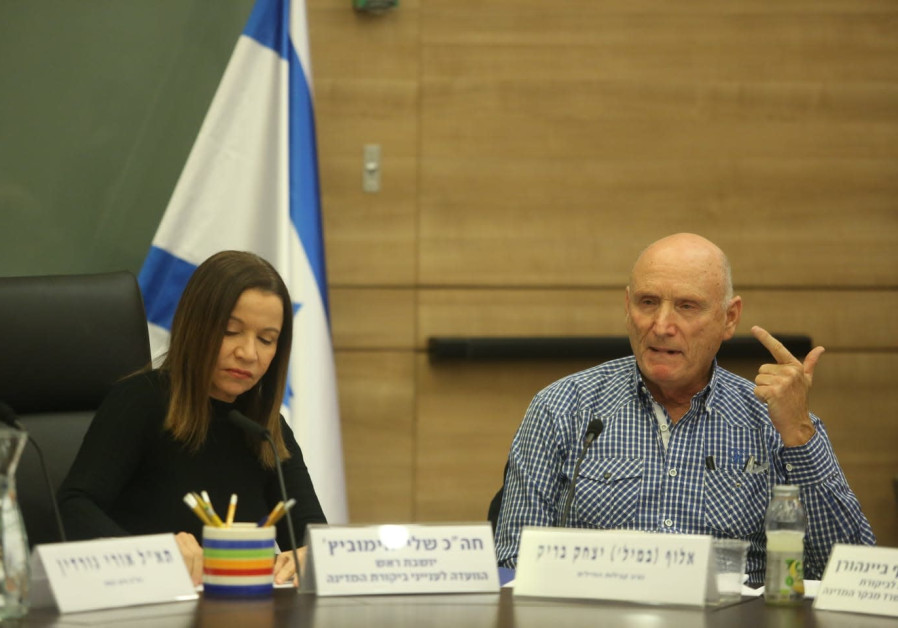
Maj.Gen.(Res.) Yitzhak Brick in National Criticsm Committee, December 12th, 2018.. (photo credit: MARC ISRAEL SELLEM)

Former IDF ombudsman Maj.-Gen. (res.) Yitzhak Brick has written a report criticizing the readiness of IDF Ground Forces, Walla News has reported. Brick also said there are gaps in readiness of the Home Front Command, the report said, adding that behind the scenes, there is a raging argument between the IDF and the National Emergency Management Authority (NEMA) concerning responsibility over management of the economy during war.

“We’re talking about nothing less than a scandal,” Brick was quoted as saying. “It’s unlikely that the IDF will manage the civilian economy in war. The IDF cannot worry about distributing food to citizens when rockets are falling in Tel Aviv or distribute money to ATMs around the country. The IDF cannot tell the Electric Corporation to save reserves or times of emergency.”

The head of NEMA, Brig.-Gen. Zev Tzuk-Ram, recently wrote to chief of staff Lt.-Gen. Aviv Kochavi about responsibility and readiness for the civilian economy in wartime.

In it, he noted that former defense minister Avigdor Liberman appointed a committee headed by Maj.-Gen. Avi Mizrachi to investigate cooperation between NEMA and the IDF Home Front Command. NEMA was then defined as the authority which would receive “chief responsibility” for evaluations and preparation of the home front.

In May 2018, the “Mizrachi Committee” presented its recommendations. The Home Front Command was designated as the operative body for saving lives, while NEMA was given full responsibility for: preparing government offices for emergency situations; functional continuity of the economy; determining policy for the assessment and preparation of the home front; and acting on these policies in emergency situations.

The committee also determined that NEMA would be responsible for the strategy needed to implement these policies, and prioritizing between the IDF and civilian infrastructure in support of the war effort.

The Mizrachi Committee recommended that the Home Front Command prepare and operate the infrastructure of the civilian economy in regional councils and with local authorities. That recommendation was accepted by Liberman.

However, the letter submitted to the chief of staff said, “The process which the Defense Ministry requests isn’t legal, and contradicts the order of government and law, and the military establishment does not need to engage in the civilian economy.”

In the letter, Tzuk-Ram said the head of the IDF’s Logistical Division told him there was no direction or planning procedure by which the IDF can assist the civilian authority in wartime. 

“Is the IDF the one that needs to engage in these issues during wartime?” Tzuk-Ram wrote. “In my professional opinion, no! According to the definition of the defense minister, the Home Front Command’s objective is saving lives, and NEMA is responsible for the preparation and operation of government offices, as support in the continuity of the functioning of the economy. NEMA establishes the public policies for assessment and preparation of the civilian establishment and sets priorities, including those of the Home Front Command.”

A similar letter was submitted to Attorney-General Maj.-Gen. Avichai Mandelblit. Sources in the defense establishment have claimed that details of the matter have been sent to the state comptroller.

Brick – who is familiar with the fundamental dispute over the legislation, and issues of authority and responsibility between NEMA and the IDF – said, “If the chief of staff Lt.-Gen. Aviv Kochavi sets up a fundamental and professional discussion on the subject, he’d understand after a minute that he isn’t prepared to be responsible for this.” 

Brick added that the defense establishment will wait for election results to see who is appointed public security minister, and whether a decision will be made to transfer responsibility of NEMA and the Home Front Command to that person from the Defense Ministry and the IDF.

An IDF spokesperson said, “The subject is being discussed by the former defense minister and has not yet come to the chief of staff’s desk. And like another series of issues related to the implementation of the work plan of 2019, [it] will be discussed soon.”


Zawartość publikowanych artykułów i materiałów nie reprezentuje poglądów ani opinii Reunion’68,
ani też webmastera Blogu Reunion’68, chyba ze jest to wyraźnie zaznaczone.
Twoje uwagi, linki, własne artykuły lub wiadomości prześlij na adres:
webmaster@reunion68.com

ISRAEL STRIKES 100 GAZA TARGETS AFTER HAMAS AIMS ROCKETS AT TEL AVIV

ISRAEL STRIKES 100 GAZA TARGETS AFTER HAMAS AIMS ROCKETS AT TEL AVIV

MAAYAN JAFFE-HOFFMAN


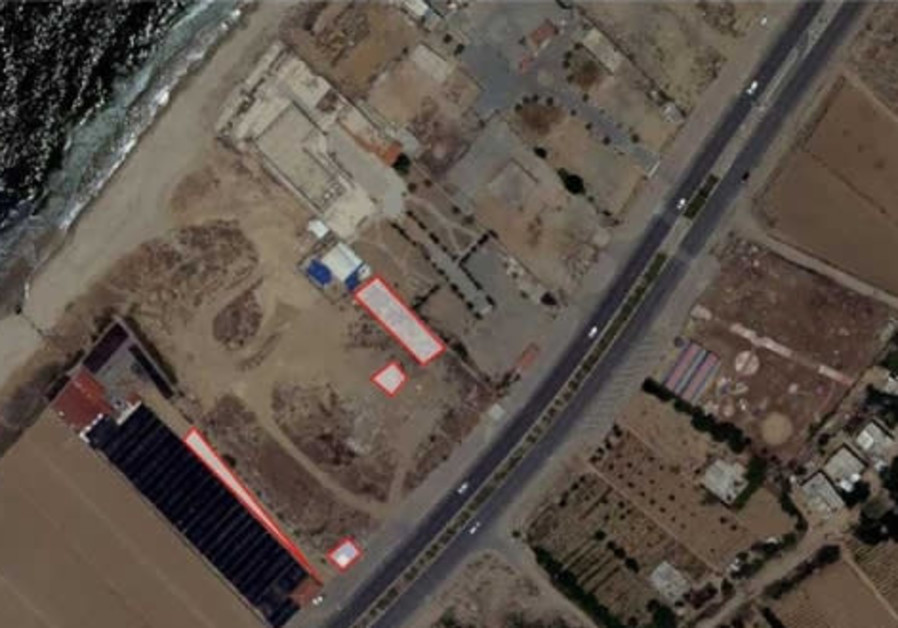
Underground rocket production site. (photo credit: IDF)

IDF fighter jets and combat helicopters attacked around 100 Hamas terrorist targets throughout the Gaza Strip in the predawn hours of Friday, in retaliation to the launching of two rockets at Tel Aviv the night before.

According to the IDF, one of the targets was the Hamas headquarters in the Rimal neighborhood in central Gaza City which the military said was responsible for directing Hamas terrorist operatives in the West Bank. The headquarters, the IDF said, was from where Hamas helped facilitate – with logistic and financial assistance – terrorist operations in the West Bank.

Another target, the IDF said, was Hamas’s main rocket production facility. This was an underground site which Hamas used to independently manufacture sophisticated rockets in the Gaza Strip.

In addition, several military compounds were attacked, including a Hamas naval force post that the IDF said was also used to manufacture weapons. Outposts and a number of underground infrastructures were likewise attacked.

“The IDF views with great severity any attempt to harm Israeli civilians and will continue to act vigorously against these terrorist acts,” the IDF spokesperson said.

The Israeli Air Force began striking targets in Gaza overnight Friday in retaliation for  two rockets that had been fired at Tel Aviv  Thursday night. This was the first such attack since the 2014 war.

Palestinian sources told international media outlets that the attacks were taking place in the southern Gaza Strip and focused on Hamas targets in Rafah and Khan Yunis.

The army confirmed that it was Hamas that launched the rockets at the center of the country. Though, according to Palestinian sources, the IDF struck several Islamic Jihad targets, as well.

“Hamas carried out the rocket fire against Tel Aviv yesterday evening,” said Lieutenant-Colonel Avichay Adraee, the IDF spokesman for the Arabic language media.

Hamas denied involvement, saying the launches took place as its leaders met Egyptian delegates about efforts to secure a long-term ceasefire with Israel.

A red alert was heard in the Eshkol Regional Council at around the same time that the overnight airs strikes began. A second red alert was activated in the Sha’ar HaNegev Regional Council and Sdot Negev Regional Council soon after. The Iron Dome defense system intercepted one of the rockets.

Many more red alerts sounded Friday morning as rockets were aimed at the Sha’ar HaNegev Regional Council, Ashkelon beach and Sderot. The Iron Dome intercepted some of the rockets. There were no reported casualties.

There was no immediate word of casualties in the air strikes that hit the Gaza buildings either. Further, it was reported that those buildings had been used by the dominant Islamist group’s security forces, but that they had been evacuated as a precaution before the strikes.

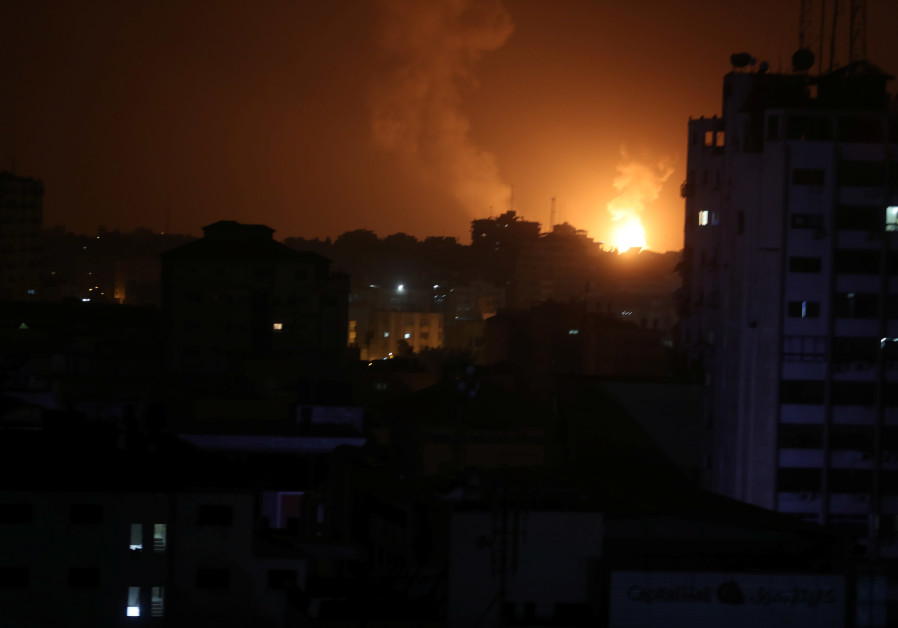
Witnesses said powerful explosions from the air strikes rocked buildings in Gaza and lit the skies over targeted sites.
The Israeli military said it was targeting “terror sites” in Gaza.

On Palestinian social media, residents of Gaza were posting sarcastic comments, such as, “Welcome to the morning of the boom.”

Late Thursday, Prime Minister Benjamin Netanyahu convened an emergency meeting of the security cabinet at the Kiriya in Tel Aviv to discuss Israel’s response. Among those participating were Chief-of-Staff Lt.-Gen Aviv Kochavi, National Security Council head Meir Ben-Shabbat, Israel Security Agency (Shin Bet) head Nadav Argaman, and other senior security establishment officials.

Hours before, sirens howled in Tel Aviv, set off by what the military said were two incoming, longer-range rockets from Gaza.

That salvo caused no casualties or damage, missing built-up areas. But it rattled Israeli nerves ahead of an April 9 election in which Netanyahu is seeking a fifth term on the strength of his national security credentials.

According to the IDF, although the Iron Dome missile defense system was activated, but there were no interceptions as both rockets fell in open territory.

Several Israelis were treated for shock.

As the retaliation began, politicians and supporters from around the world reacted in support of Israel.

US Senator Ted Cruz (R-TX) slammed the Hamas terrorist group, for example, saying it is responsible for “unceasing attacks on Israeli civilians launched from the Gaza Strip.

“Our Israeli allies have an absolute right to self-defense, “ he said. “The United States should do whatever possible to bolster that defense.”

US special envoy to the Middle East Jason Greenblatt likewise blasted Hamas in a series of tweets.

“More attempted rockets from Gaza-reports say rockets fell short-inside Gaza,” he wrote. “Presumably all responsible countries/international orgs will condemn attacks/confirm Israel’s right to defend. Anything else is tone deaf – to Israelis, Palestinians & to peace. Time to wake up folks!”

He followed that tweet with another one, noting that “Hamas, PIJ and PFLP are all running for the hills (tunnels) denying responsibility for the rockets tonight. Separately, Hamas violently put down anti-Hamas demonstrations today in Gaza with live bullets, beatings and detentions. Hamas causes much suffering in Gaza!,” Greenblatt wrote.

The European Union’s Ambassador to Israel, Emanuele Giaufret, condemned the Hamas rocket attack on Tel Aviv.

“Following developments with grave concern,” he wrote on Twitter, adding that “targeting civilian areas [is] unacceptable.”

Despite the air strikes, Palestinians report they are planning to protest at the border fence on Friday.

Israeli media said Egypt will likely try to broker a ceasefire on Friday between Israel and Hamas.

Hagay Hacohen and Reuters contributed to this story.


Zawartość publikowanych artykułów i materiałów nie reprezentuje poglądów ani opinii Reunion’68,
ani też webmastera Blogu Reunion’68, chyba ze jest to wyraźnie zaznaczone.
Twoje uwagi, linki, własne artykuły lub wiadomości prześlij na adres:
webmaster@reunion68.com


Israel In Songs

Israel In Songs Part 5 | Israeli Folk Songs English Phonetics titles

  Music From Israel


The fifth part of the vintage movie: “Israel in Songs” that takes you on a journey in Israel – through music and songs from the land and the people ( Including retro footage & Historical archives)

Since all times many songs have been written by Israeli poets on the land and its scenery: these songs have become classics and are forever linked with the term:”beautiful Israel”

In this part you can find:

1. Halleluyah sung by the Gevatron Singers
2 Hoi Artzi Moladeti (Oh my Country, my Homeland) sung by the Gevatron Singers
3. Eretz (The Land of Israel) sung by Ilanit
4. Eli Eli (Ha’licha Le-Keisaria) The way to Caesarea sung by the Gevatron Singers
5. Ein Gedi sung by the Gevatron Singers
6 Yam Hashibolim Sea of grains sung by the Gevatron singers
7 Pram Pam Pam
8. Le’an noshevet ha’ruach (Where does the wind blow)
9. Mal’u Asameinu Bar (Fill up our granaries)
10. Shuru Habitu U’reu (Sing, look and see)
11. Od Nashuv Machar (We’ll come back tomorrow)
12. Shibolim Golden grains


Zawartość publikowanych artykułów i materiałów nie reprezentuje poglądów ani opinii Reunion’68,
ani też webmastera Blogu Reunion’68, chyba ze jest to wyraźnie zaznaczone.
Twoje uwagi, linki, własne artykuły lub wiadomości prześlij na adres:
webmaster@reunion68.com