Archives

IDF’s Merkava IV crowned one of the world’s best tanks

IDF’s Merkava IV crowned one of the world’s best tanks

Itamar Eichner


Thanks to its armor, National Interest magazine crowns the Israeli Merkava Mark IV as one of the world’s best tanks; tank ‘has excellent armor’ and firepower; in first place is the Russian T-90 A.

The conservative American magazine National Interest, which deals with foreign relations and defense, has chosen the five best army tanks in the world, each of which has a unique quality making it a dangerous adversary on the battlefield. In fourth place is the Israeli tank Merkava Mark IV.

The magazine praised the armor system of the Israeli tank, which protects the crew from injuries in the event it is hit by enemy fire. “The sensitivity to human life in Israel, a small country in which the loss of life is strongly felt, has led the Israeli military to build a tank, which places top priority on its protective armor capability as well as firepower,” they wrote.

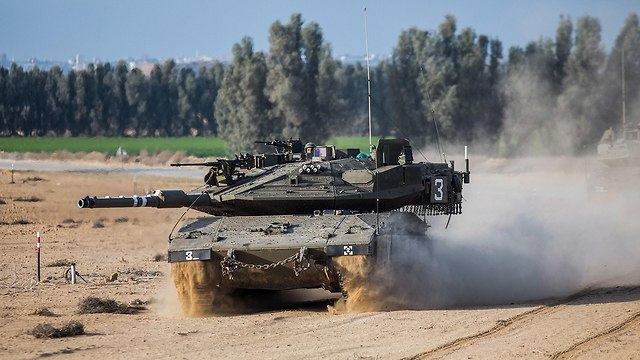
Merkava Mark 4 near Gaza (Photo: MCT)

“The Merkava has excellent armor; its turret and the sharply angled front of the tank are designed to present maximum armored defense at all angles, so that the turret has a knife-like edge. The tank’s engine is situated in the front, creating a dense mass between the enemy fire and the crew.

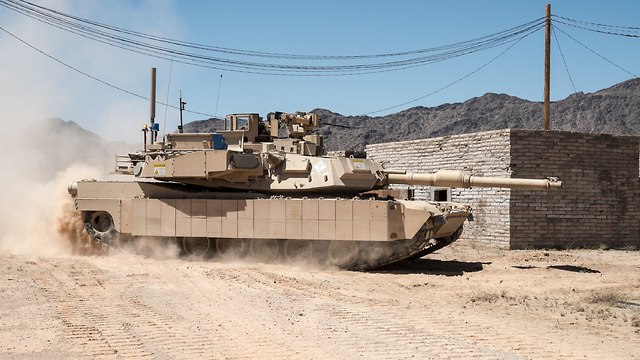
US Abrahams M1

 The tank’s armor can also be rapidly replaced (on the battlefield), if necessary. However, the most important feature is its active protection “Trophy” system, which can intercept rockets and anti-tank missiles.”

Who else made the list? In first place is the Russian T-90 A, “the best of its kind in long-range killing capability;” In second place: the American Abrahams M1, the US Army and Marines standard battle tank, “which sets the standard for the ideal combination of firepower, armor and mobility;” In third place: the German Leopard 2, the “best European tank” and fifth, the British Challenger 2, “one of the best armored tanks in the world.”


Zawartość publikowanych artykułów i materiałów nie reprezentuje poglądów ani opinii Reunion’68,
ani też webmastera Blogu Reunion’68, chyba ze jest to wyraźnie zaznaczone.
Twoje uwagi, linki, własne artykuły lub wiadomości prześlij na adres:
webmaster@reunion68.com


Amazing New Hebrew Worship with English Subtitles Music Video from Israel!

Amazing New Hebrew Worship with English Subtitles Music Video from Israel!

   ONE FOR ISRAEL Ministry


music: Fire of Your Spirit (Esh Ruchacha)
Artist: Sarah Liberman


Zawartość publikowanych artykułów i materiałów nie reprezentuje poglądów ani opinii Reunion’68,
ani też webmastera Blogu Reunion’68, chyba ze jest to wyraźnie zaznaczone.
Twoje uwagi, linki, własne artykuły lub wiadomości prześlij na adres:
webmaster@reunion68.com


New computer vision tech fights distracted driving

Israel21cNew computer vision tech fights distracted driving

Brian Blum


A single camera near the infotainment system or above the instrument cluster, plus proprietary algorithms and AI, determine if the driver is alert.

Driver drowsiness detection is one job Eyesight has covered. Photo: courtesy

Here’s a secret about self-driving cars: They won’t be entirely autonomous for quite some time. The near future belongs to semi-autonomous vehicles, which do most of the driving but pass over control to a human behind the wheel at certain points
But how will the car know if the driver is ready and alert for the transfer?

Israeli computer vision company Eyesight uses a single camera located near the infotainment system or above the instrument cluster, plus proprietary algorithms and artificial intelligence (AI), to judge if the driver is prepped to take the wheel.

Even in a standard vehicle equipped with Eyesight technology, if you’re not paying attention your steering wheel will vibrate or beep. It’s like Mobileye for distracted driving.
There’s a big opportunity here: In 2020, new Euro NCAP (New Car Assignment Program) rules come into effect, requiring any manufacturer wishing to receive a 5-star safety rating on its models to have a driver-monitoring system installed.

Eyesight just raised $15 million to drive the expansion of its vehicle AI computer-vision system. All told, the company has raised nearly $50 million, CEO Gideon Shmuel tells ISRAEL21c, including a $20 million investment in 2016 from Chinese investor Kuang-Chi.

China’s carmakers are prominent on Eyesight’s client prospect list. In June, Eyesight joined forces with Soling Industrial, a Shenzhen-based automotive integrator with sales in more than 60 countries and clients including Mazda, Toyota and Fiat.

Eyesight initially integrated its technology into consumer electronics. On the company’s website, you can see images of people gesturing with their hands rather than clutching a mouse or a keyboard to operate PCs and smart TVs. Eyesight’s facial analysis can also souse out details like age and gender to present relevant content (read: ads) to viewers.

In the consumer space, Eyesight has deals with NTT Docomo and Sony in Japan. Sony is launching a portable projector called the Xperia Touch with eyeSight gesture controls built in.

That’s what Eyesight was working on originally in cars too – the ability to control entertainment and telephone system touch-free.

“With your finger, you can do a small circle motion to the right or left to turn volume up and down,” Shmuel says. You could flash one finger to call home, two fingers to call your office or hold your palm flat to answer an incoming call.

But as the Euro NCAP rules loomed, “the market came to us,” Shmuel explains. “Sometimes, a market requires a long education for a new technology. Here, the market said, ‘Don’t educate us, we know what’s coming.’ We need driver monitoring systems to understand the state of the driver.”

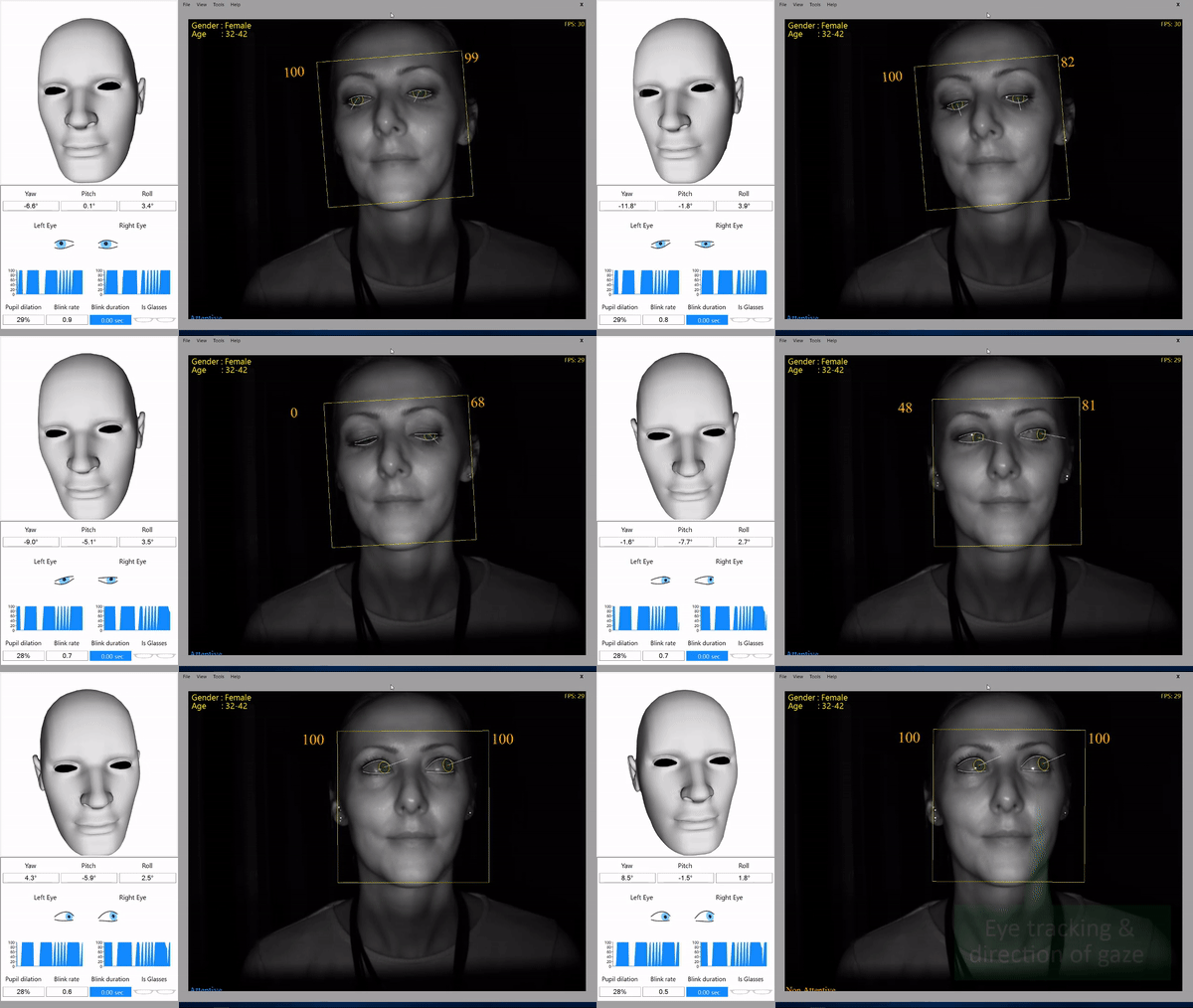
That includes detecting the direction of a driver’s gaze, pupil dilation, eye openness and head position to gauge drowsiness vs. attentiveness.
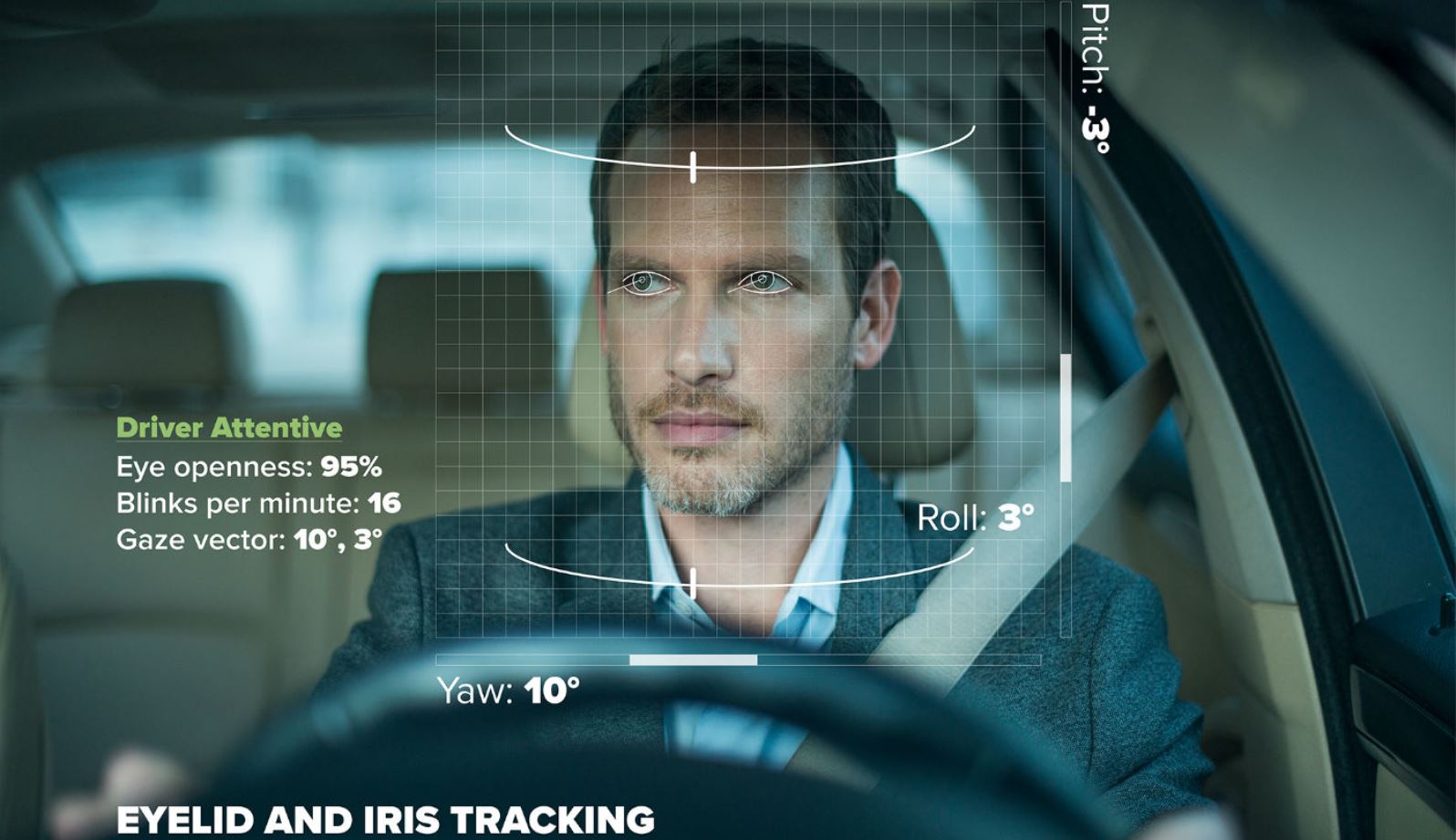
Eyesight sensors track drivers’ eyelid and iris movement. Photo: courtesy

A Chinese bus company is interested in having Eyesight monitor whether its drivers are eating, smoking, talking on the phone or doing anything else that could put passengers in jeopardy.

Eyesight’s system can handle less critical details as well, such as automatically adjusting a driver’s seat and mirrors or selecting a driver’s favorite playlist. As car-sharing takes off, this may make all the difference in crafting a user-friendly experience.

By calculating a passenger’s size, Eyesight can also help a car’s computer understand how to more safely deploy an airbag.

Privacy is an important concern for drivers, and Eyesight’s got that covered, too. All the AI processing is done in the car itself, and images are not sent for comparison on the cloud. Once the images are processed for the task at hand, they are discarded.
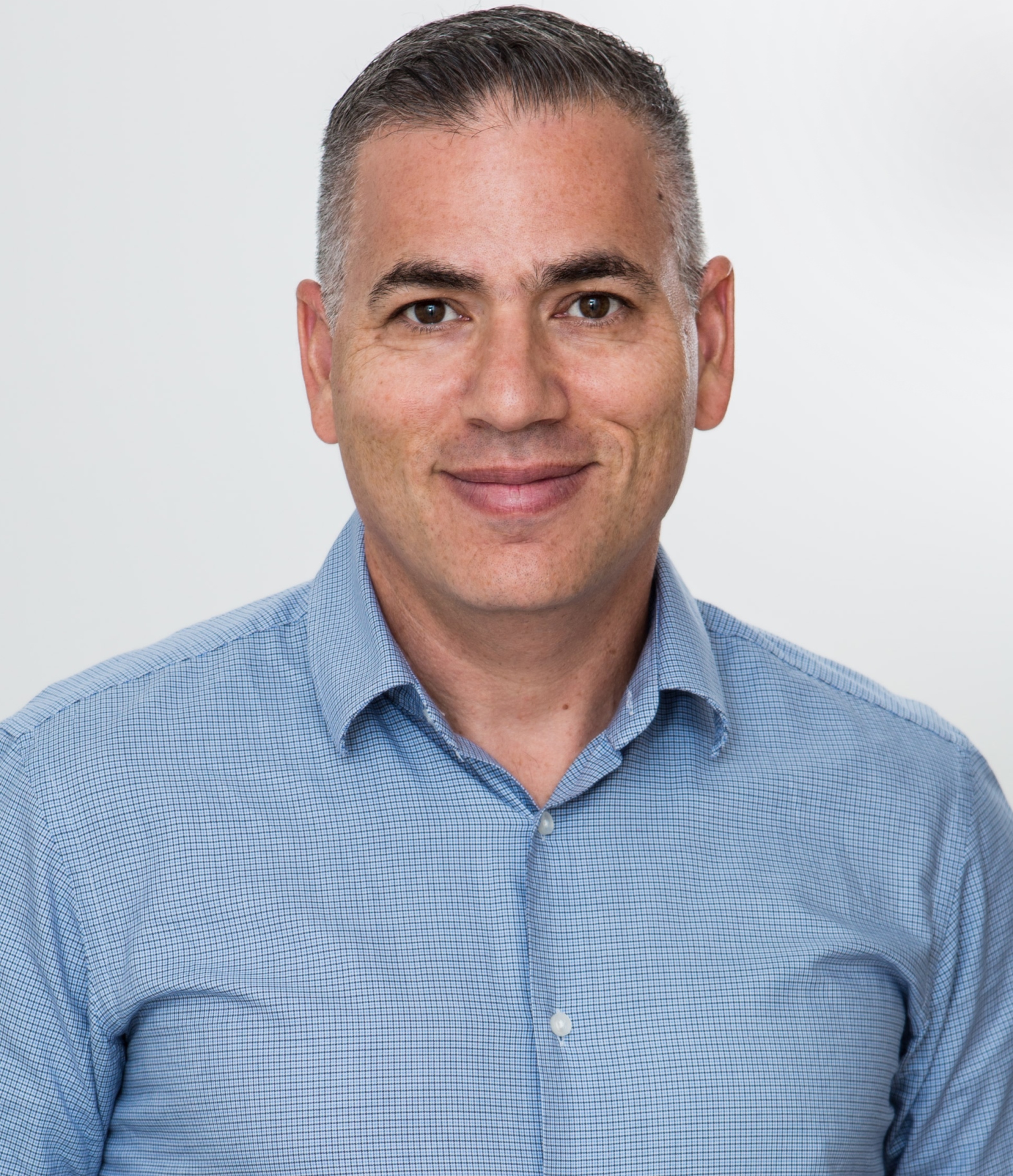
Gideon Shmuel, CEO of Eyesight. Photo: courtesy

Compared with the data collected and used by, say, Facebook, Instagram or your iPhone, “We’re totally private,” Shmuel says.

Eyesight can do this in part because it requires very low processing power. This is known in the industry as “edge computing” on distributed nodes (“edge devices”) as opposed to a centralized cloud environment. And Eyesight’s cameras are simple 2D infrared sensors, not sophisticated 3D sensors like Apple has on board for facial recognition.

That same technology powers a separate Eyesight division for smart homes. Two applications in development are smart thermostats that sense how many people are in a room and adjust the temperature accordingly; and surveillance and security systems. If three 18-year-old males suddenly show up at Grandma’s house, that could trigger an alert, Shmuel says.

Eyesight has its headquarters and R&D center in Herzliya, with satellite offices in Detroit, Silicon Valley and Seattle. It has representatives in Europe and China as well. The company employs 55 people. And with Eyesight’s cameras around, we bet nobody is falling asleep on the job!


Zawartość publikowanych artykułów i materiałów nie reprezentuje poglądów ani opinii Reunion’68,
ani też webmastera Blogu Reunion’68, chyba ze jest to wyraźnie zaznaczone.
Twoje uwagi, linki, własne artykuły lub wiadomości prześlij na adres:
webmaster@reunion68.com


Fantasticcc Jew Boy… Fantastic Song In Hebrew.

Fantasticcc Jew Boy… Fantastic Song In Hebrew.

Magda Magdalena


O Rugaciune cantata de un Baiat Evreu in Ebraica…Nu stiu ce zice dar am plans cu el.


Zawartość publikowanych artykułów i materiałów nie reprezentuje poglądów ani opinii Reunion’68,
ani też webmastera Blogu Reunion’68, chyba ze jest to wyraźnie zaznaczone.
Twoje uwagi, linki, własne artykuły lub wiadomości prześlij na adres:
webmaster@reunion68.com


Destruction of Hezbollah Tunnels ‘Great Achievement’ for Israel

Ex-IDF Intel Chief: Destruction of Hezbollah Tunnels Under Lebanon Border ‘Great Achievement’ for Israel

Algemeiner Staff


The Israel-Lebanon border, Dec. 4, 2018. Photos: Reuters / Aziz Taher.

The discovery and destruction of tunnels dug by Hezbollah under the Israel-Lebanon border marked a “great achievement” for the Jewish state, a former IDF Military Intelligence chief said on Tuesday.

 Amos Yadlin  @YadlinAmos   GREAT achievement to the IDF for thwarting Hizbullah’s attack tunnels into the Galilee and Israeli civilians. Discovering tunnels is a vast challenge, and the time for National Security Awards and decorations will come, social-media cynicism aside.1/10


Referring to “Operation Northern Shield,” which was launched by the IDF on Tuesday, Maj. Gen. (ret.) Amos Yadlin — now the director of the Tel Aviv University-affiliated Institute for National Security Studies (INSS) — tweeted, “Discovering tunnels is a vast challenge, and the time for National Security Awards and decorations will come, social-media cynicism aside.”

“The tunnels are one component of a comprehensive Hizbullah offensive design, seeking a surprise ground operation in Israel in the next war or for separate terror attacks,” Yadlin continued. “Nasrallah is talking about it since 2011.”

“IDF is long aware of the option and since 2014 devoted many intelligence and engineering efforts to expose it,” he added. “If someone was caught by surprise, it is Hizbullah.”

“The tunnels’ exposure carries a message to Hizbullah, who based its operations on secrecy, covert action and surprise,” Yadlin noted. “It needs to consider that it is in fact, exposed and vulnerable to Israel’s Intel. Its safe and secret posts may prove as death traps to his terrorists.”

“A second strategic message is to the UN and the P5 : the tunnel network was dug under UNIFIL’s feet and under UNSCR 1701 supervision regime,” he said. “he routine UN reporting of ‘no evidence’ verifying Israel’s ‘allegations’ has again crashed on the (under-)ground of reality. “

“The Lebanese Government: it is a reminder that Hizbullah conducts its own foreign and security policy, guided by Iran,” Yadlin pointed out. “GoL’s ongoing acquiescence and cover to Hizbullah’s operations only stress its responsibility to the events and their ramifications in a future conflict.”

Yadlin went on to say:

“The main question now: is ESCALATION expected? Hizbullah has no interest in a conflict and no legitimacy, after it was caught red handed in a blunt and continuous violation of 1701 and Israel’s sovereignty.”

“Yet, history, including Nasrallah’s, is fraught with miscalculations and mistakes. This is why the IDF also need to be ready to possible escalation.”

“Israel should expose international states persons, diplomats, military leaders and media to the tunneling threat, to challenge UNIFIL with the now rock-piercing evidence, and push it to expose the illicit infrastructure north of the Blue Line and to destroy them.”

“Last word: the MORE CRITICAL CHALLENGE, stopping the ‘Precision Project’ is still ahead, with legitimacy issues and escalation risks at a totally different level.”


Zawartość publikowanych artykułów i materiałów nie reprezentuje poglądów ani opinii Reunion’68,
ani też webmastera Blogu Reunion’68, chyba ze jest to wyraźnie zaznaczone.
Twoje uwagi, linki, własne artykuły lub wiadomości prześlij na adres:
webmaster@reunion68.com