
Archives

Israeli Soldiers Share Their Stories on College Campuses, Face Some Protests

Israeli Soldiers Share Their Stories on College Campuses, Face Some Protests

Shiri Moshe


My Truth members Naftali Gross and Aviad Yisraeli speak at Mercer University in Georgia. Photo: Naftali Gross.

Former Israeli soldiers are touring US college campuses in an effort to raise awareness of the realities of their service, drawing both interested students and occasional protests.

Chen and Aviv, whose last names were withheld for security purposes, spoke on Monday at Stanford University in California, at the invitation of the school’s Israel Association. “Ask the tough questions, and learn what it is actually like to live in a country that is the subject of so much discussion in the media and on campus,” organizers advertised.

The duo is part of the 11th Israeli Soldiers Tour sponsored by StandWithUs, an Israel advocacy and education organization, which brought six pairs of Israeli reservists to present on college campuses, high schools, synagogues, and churches nationwide from October 14 to October 28.

The group hopes that the young Israelis’ personal stories will help put a “human face” on the country’s military, which anti-Zionist groups often accuse of war crimes.

The tour includes stops at 44 colleges, the majority of which proceed without incident, according to StandWithUs. Yet some draw protests, as was the case recently at Stanford, where some 11 members of the anti-Zionist group Jewish Voice for Peace staged a demonstration. They stood in the back of the room with signs including, “the IDF =/= democracy,” and handed out fliers denouncing Israeli forces for using “excessive force against peaceful protesters” engaged in the “March of Return” in the Gaza Strip, which is organized by the Islamist terrorist group Hamas.

The incident comes on the heels of another protest on Wednesday at Oregon State University, where members of the school’s Students United for Palestinian Equal Rights (SUPER) club blocked Chen and Aviv’s presentation with signs calling for a “free Palestine” and an end to US military aid to Israel.

“This event is part of Israel’s efforts to minimize and erase the ongoing human rights violations against Palestinians,” SUPER argued.

Members of Jewish Voice for Peace protest Israeli reservists speaking at Stanford University on Oct. 22, as part of StandWithUs’ Israeli Soldiers Tour. Photo: StandWithUs.

Similar opposition has at times faced Aviad Yisraeli and Naftali Gross, members of My Truth, a group of Israeli reserve soldiers who seek to challenge those “who promote political agendas by cynically slandering” the IDF around the world.

The pair — currently on a tour that has included stops at Penn State, Mercer University, Wake Forest University, and Drake University, among others — spoke at the University of Minnesota on Thursday, at the invitation of the school’s Students Supporting Israel (SSI) group. They were greeted by about a dozen protesters organized by the Minnesota Anti-War Committee, who congregated on the steps of the building where their event was held.

Ilan Sinelnikov — a founder of SSI who attended the lecture — filmed one protester raising her middle finger while repeatedly calling the group “f*cking Zionists,” before another man derided them as “war criminals.”

“We tried to invite them in to hear us, and have a conversation,” My Truth said in a statement on Friday, “but they avoided any eye contact with the Zionists (aka- us), yelled and screamed, cursed and ignored our invitation.”

“We truly feel bad for people who are so afraid of hearing something that might compromise their one sided perspective, that the only way they could protect their world view is to ignore and avoid any conversation,” the group continued.

Their lecture nonetheless took place as planned in a classroom with some 15 students in attendance. “I didn’t choose to become a combat soldier because I have a gun fetish,” Yisraeli explained in his opening remarks, after recounting the personal impact Palestinian terrorism had on him as a child, including through the deaths of his classmates. “I chose to become a combat soldier because that meant protecting myself, protecting my values, protecting my family — and coming here as part of this organization to share these experiences with you is part of what we do to tell you that we do share the same values.”

“We all want peace, we all want safety, we all want freedom,” he continued, “and we just need to fight to protect those values.”


Zawartość publikowanych artykułów i materiałów nie reprezentuje poglądów ani opinii Reunion’68,
ani też webmastera Blogu Reunion’68, chyba ze jest to wyraźnie zaznaczone.
Twoje uwagi, linki, własne artykuły lub wiadomości prześlij na adres:
webmaster@reunion68.com



KREMLIN ACCUSES U.S. OF DRONE ATTACK ON RUSSIAN AIR BASE IN SYRIA

KREMLIN ACCUSES U.S. OF DRONE ATTACK ON RUSSIAN AIR BASE IN SYRIA

SETH J. FRANTZMAN


Drone employment threatens to upset delicate cease-fire agreement in nearby Idlib

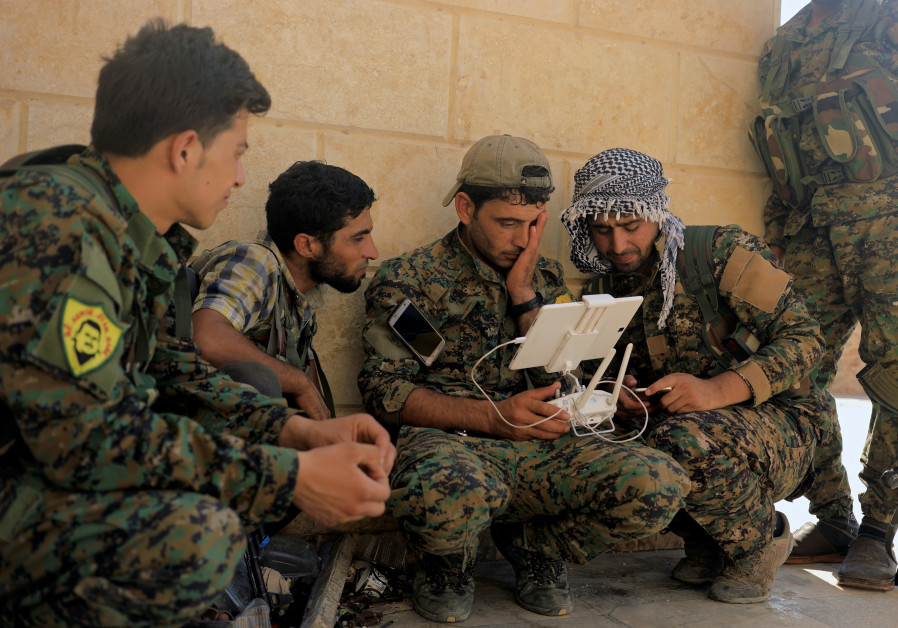
Members of the Syrian Democratic Forces control the monitor of their drone at their advanced position, during the fighting with Islamic State’s fighters in Nazlat Shahada, a district of Raqqa, Syria August 16, 2017.. (photo credit: ZOHRA BENSEMRA/REUTERS)

Russia’s deputy defense minister Aleksandr Fomin accused a US airplane of manually controlling 13 drones that attempted to attack Russia’s Khmeimim air base in Syria. The surprising allegations were made at a plenary session of the Beijing Xiangshan Forum on Thursday. A Russian diplomatic source elaborated on the comments, alleging that some Syrian militants in Idlib are being used by the US to create instability in northern Syria.

According to a report at TASS, Russia’s news agency, the official said that thirteen drones have “moved according to common combat battle deployment, operated by a single crew.” He linked their movements to the presence of an American Poseidon-8 reconnaissance plan patrolling in the Mediterranean Sea. He alleged that as the drones approached the sensitive Russian air base, the Russians used electronic countermeasures against them. The drones then began to use “manual guidance,” which he said could not have been done by local Syrian “villagers,” but was in fact done by the Poseidon-8 “which has modern equipment.” The drones were destroyed, according to Fomin.

“This should be stopped as well, in order to avoid fighting with the high-technology weapons of terrorists and highly-equipped terrorists it is necessary to stop supplying them with equipment,” Fomin said. He went on to note that in January, Syrian rebel groups had first used a large number of drones “in the attack on the Russian Khmeimim air base and the Russian naval base in Tartus.”

He said the latest attack was thwarted as Russia downed seven drones and “took control” over six others. Moscow’s evidence is based on the view that the technology necessary to coordinate the drones came from a “technologically advanced country.” Russia warned against a repeat of the incident.

The report comes on the heels of new satellite images from ImageSat International, which showed the presence of the S-300 systems Russia supplied Syria in the wake of downing of the Russian IL-20 in September during an Israeli air strike on Syria. Russia blamed Israel for creating the events that led to the downing, even though Syrian air defense shot the Russian plane down.

The recent news of the drones is one of many allegations in Russian media over the years that has sought to link the US to extremist groups. For instance in March, April and June, Sputnik news, which is close to the Kremlin, claimed the US had evacuated Islamic State fighters and commanders in Syria using helicopters.

This is a way to spread rumors in the region that the US is working with ISIS, even as the US leads a 70-nation coalition against ISIS. Russian sources have previously accused the US of working with the Nusra front, or al-Qaeda in Syria. Alleging that the US was supplying technology to Syrian rebels of extremist groups in Idlib would be in line with the previous accusations.

According to RT television network, which is also affiliated with Moscow, the Kremlin is now concerned by the report from its own deputy defense minister.

“This is undoubtedly a very alarming report,” Dmitry Peskov, a Kremlin spokesman, was quoted as saying.

Russia has documented more than 50 attempts to launch drones from Idlib at the Khmeimim air base since August, according to a Russian diplomatic source. This comes amid the Idlib agreement signed in mid-September between Russia and Turkey that halted a planned Syrian-regime offensive to retake Idlib province from the rebels and extremists. Instead heavy weapons are being withdrawn from part of the rebel enclave and the extremist Hayat Tahrir al-Sham is supposed to be removed from a demilitarized zone.

Idlib Province is near the Khmeimim air base and the drone attacks have come from there over the last months. That the rebels have used drones is not disputed, but Moscow’s allegations that the US is behind these attacks is a new claim.

“These groups are used by the US so that the situation in Idlib remains unsettled,” the diplomatic source said. “Drones are launched by militants from several groups which do not adhere to truce terms.”

The allegation at the forum in China therefore is a way to warn the US about any provocations in Syria, either from the sea or Idlib and also could be used as a pretext if Moscow responds. The deputy minister’s comments were made in such a way as to allude to US directly coordinating the drone attacks, as opposed to presenting clear evidence of the coordination, such as showcasing the drones themselves and where they originated, or documented radio communications. This allows Moscow some climb-down and allows Washington time to respond. It may also be a way to pressure Turkey to crack down on any new drone attacks from Idlib.

An inquiry to the US Coalition and Centcom regarding these allegations went unanswered as of press time.


Zawartość publikowanych artykułów i materiałów nie reprezentuje poglądów ani opinii Reunion’68,
ani też webmastera Blogu Reunion’68, chyba ze jest to wyraźnie zaznaczone.
Twoje uwagi, linki, własne artykuły lub wiadomości prześlij na adres:
webmaster@reunion68.com


Democratic Senator Kirsten Gillibrand: ‘She Turned Her Back on Israel’

New York GOP Candidate Chele Farley Ahead of Debate With Incumbent Democratic Senator Kirsten Gillibrand: ‘She Turned Her Back on Israel’

Ben Cohen


Chele Farley, New York’s Republican candidate for the US Senate. Photo: chelefarleyforsenate.com.

On Sunday night, Chele Farley will take the stage for a televised debate with her opponent, the incumbent New York Democratic Party Senator Kirsten Gillibrand, in what will be the best opportunity she has to persuade New York voters to do what they haven’t done in a generation: elect a Republican candidate to the US Senate.

When Farley spoke with The Algemeiner on Friday morning, as she prepared for her showdown with Gillibrand, she was unfazed by suggestions that Capitol Hill veteran Gillibrand — who won a statewide record 72 percent of the vote in 2012, and who has served as the junior senator from New York since 2009 — was too formidable an opponent.

“During her 12 years in DC (Gillbrand was first elected to the US Congress in 2006), she’s forgotten about the people of New York,” Farley charged. “She’s gotten one bill passed in that entire time. The people of New York needs someone who will fight for them, and that’s what I will do when I go to Washington.”

Farley’s optimism is partly based on her projections of a lower voter turnout compared to 2012 — when New Yorkers voted in record numbers to elect President Barack Obama to a second term. “This election will be a far more level playing field between the Democrats and the other parties,” she predicted.

On the “dollars and cents” concerns that weigh on the minds of midterms voters, Farley highlighted the $60 billion that New York sends annually to the federal government — Exhibit “A” in her case for putting, in a nod to President Donald Trump’s 2016 election slogan, “New York First.”

“We send so much more than we get back, and we need to send less,” Farley — who spent 28 years on Wall Street after graduating from Stanford University with a degree in engineering — said emphatically. One of her proposals is to extend the tax breaks enjoyed by homeowners to the 4 million New Yorkers who rent their homes — an annual tax saving of $36,000 each. She also wants to reduce property taxes, which she argued disproportionately hit New York. “Nine out of 10 counties with the highest property taxes are all in New York State,” she pointed out.

Farley also stressed the substantive differences on foreign policy between her platform and Gillibrand’s, no more so than on the matter of Israel.

“She has turned her back on Israel to appeal to the liberal activist coalitions,” Farley said of her opponent. “She voted for the Iran nuclear deal, she voted against approving [David] Friedman as ambassador to Israel, and she voted against the Taylor Force Act.” Passed in March 2018, and named for the former US army officer murdered by a Palestinian terrorist in Tel Aviv two years earlier, the Taylor Force Act withholds aid to the Palestinian Authority until it ends its policy of paying salaries and other benefits to imprisoned or dead terrorists and their families.

Farley also attacked Gillibrand over her ongoing association with Linda Sarsour, the Muslim-American activist whose profile looms large in New York’s progressive circles. Gillibrand, she said, “has been a very vocal supporter” of Sarsour, who is in turn known for her uncompromising support of the boycott campaign against Israel, as well as her insistence that “Zionists” are unwelcome in the feminist and broader progressive movement.

“Last week, Sarsour said that Senator Gillibrand was one of their ‘people on the inside’ in DC,” Farley stated. Gillibrand had also “quietly taken her name off” anti-BDS legislation before the Senate — “legislation I absolutely support, would vote for, and would get passed,” Farley added.

Farley credited Israeli Prime Minister Benjamin Netanyahu for opposing the 2015 nuclear deal with Iran, which the Trump administration withdrew from in May. “Netanyahu showed that Iran wasn’t honoring the deal,” Farley said. “I supported the president getting out of the Iran deal, which effectively allowed Iran to develop nuclear weapons in the relatively near future.” Those weapons, she said, “would be pointed at Israel, they’d be pointed at the United States, they’d be pointed at New York. That’s why getting out of the deal was a good idea and why the sanctions on Iran are a good idea.”

Finally, what did Farley make of outgoing UN Ambassador Nikki Haley’s remark during a speech on Thursday night, that growing up as an Indian American in rural South Carolina had prepared her for the lonely experience of being a Republican in New York?

“I actually feel that there are Republicans out there, they are just quiet about it,” Farley said. Even so, she volunteered that her husband, Richard, came from a prominent family of New York Democrats. “His great-uncle was Jim Farley, FDR’s campaign manager in 1932 and 1936,” she said. “My husband is the one who encouraged me to run, because he wants more bipartisanship.”

In the final analysis, “I don’t feel like I am running as the Republican candidate against the Democratic candidate,” Farley reflected. “I am running as someone who can get things done, versus someone who in 12 years has managed to get only one bill passed, to rename a post office in New York.”


Zawartość publikowanych artykułów i materiałów nie reprezentuje poglądów ani opinii Reunion’68,
ani też webmastera Blogu Reunion’68, chyba ze jest to wyraźnie zaznaczone.
Twoje uwagi, linki, własne artykuły lub wiadomości prześlij na adres:
webmaster@reunion68.com


THERE IS A PATH FOR GAZA, JASON GREENBLATT WRITES

THERE IS A PATH FOR GAZA, JASON GREENBLATT WRITES

JASON GREENBLATT


“The United States, as we have said many times, cares for the Palestinian people and wants to help, but we will not empower a regime that launches attacks on Israeli kindergartens.”

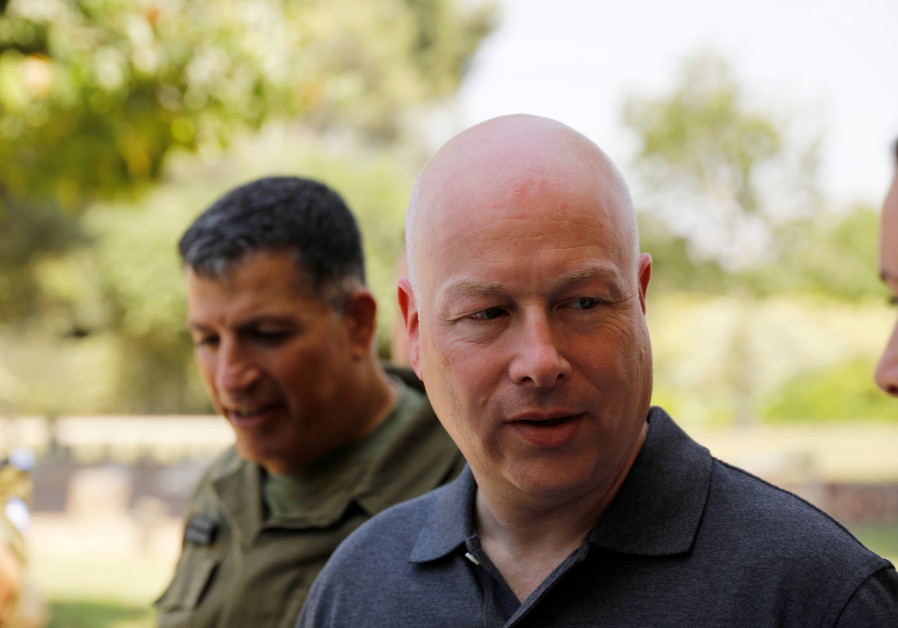
U.S. Envoy for Middle East negotiations Jason Greenblatt on a visit in Israel. (photo credit: AMIR COHEN/REUTERS)

This Administration vehemently opposes everything Hamas, a terrorist organization that targets and hides behind innocents, stands for. But, judging by Yahya Sinwar’s interview published on October 5, 2018, it would appear that he agrees with the Administration’s position on some things: we agree that Palestinian children should have every opportunity to become doctors or pursue any other profession they choose and we agree that they should be able to see “what the world looks like on the other side.” We share the desire to see a thriving economy in Gaza with jobs for all those who strive to work. We both understand that war will not bring a better life to Palestinians in Gaza; in fact it will create more misery, suffering, and loss for all.

We completely disagree, however, on how to bring that better life to Palestinians. Hamas chooses terrorism, rationalizing violence as a means of achieving their political objectives. But even Mr. Sinwar points out, this has no chance of succeeding. Hamas will never defeat Israel, and each rocket, flaming swastika-displaying kite, and terror tunnel brings Gaza closer to destruction, not to prosperity.

In that same vein, the old tactic of threating violence to elicit international aid has failed. The United States, as we have said many times, cares for the Palestinian people and wants to help, but we will not empower a regime that launches attacks on Israeli kindergartens. The threats and violent behavior of Hamas prevent the international community from being able to ease the humanitarian situation in Gaza.  The rocket attacks from Gaza on October 17, which hit Israeli homes and closed schools in Be’er Sheva once again have set back the world’s efforts to better the lives of Palestinians in Gaza.

Hamas must realize that the world has passed it by. The civilized world does not accept violence and terrorism as a legitimate form of resistance. Hamas must renounce these tactics and admit that Gaza needs help it cannot provide. It needs the Palestinian Authority (working with countries willing to help) to establish strong institutions and provide services to the populace. Gaza needs international engagement and support to keep the lights on and to bring safe drinking water, and it needs the United States to help Palestinians and Israelis find a way to achieve a comprehensive and lasting peace.

If, as Mr. Sinwar says, Hamas wants Gaza to be like Singapore or Dubai, it’s time for its actions to align with that goal. Hamas needs to embrace change, to embrace the values Mr. Sinwar professes to revere: democracy, pluralism, cooperation, human rights, and freedom. These do not exist in Gaza. There’s no question that violence, corruption, and suppression of freedom of speech are completely inconsistent with these values under any circumstances. These are also completely inconsistent with the peace agreement we are trying to develop. How is Hamas helping its youth realize their vast potential? Peace will give the youth an opportunity to develop their talents, which Mr. Sinwar rightly points out are stifled by the situation in Gaza.

Palestinians in Gaza have suffered growing hardship and poverty since Hamas seized power. If Hamas no longer wants to be regarded as an armed terrorist organization, we and others around the world have made it clear what Hamas’ next steps must be: renounce violence, recognize Israel, and accept previous agreements. Show the world Hamas actually cares for the
Palestinians and allow the Palestinian Authority to return so that all Palestinians can be united under one leadership. Commit to peace and the improvement of Palestinian lives.

If Mr. Sinwar’s interview was more than a marketing stunt, if Hamas genuinely wants change and peace with its neighbors, the peace plan that the Trump Administration is developing will offer a path to a change that will be the most significant gift Mr. Sinwar could ever give to his children and the children that he and Hamas claim to care for. If Mr. Sinwar’s words were just a clumsy ploy to garner attention and sympathy and distract from Hamas’ own failings, nothing will change. Hamas will continue to drive Gaza from one dreadful cycle to another.


Jason D. Greenblatt is an Assistant to the President and Special Representative for International Negotiations.


Zawartość publikowanych artykułów i materiałów nie reprezentuje poglądów ani opinii Reunion’68,
ani też webmastera Blogu Reunion’68, chyba ze jest to wyraźnie zaznaczone.
Twoje uwagi, linki, własne artykuły lub wiadomości prześlij na adres:
webmaster@reunion68.com


ENCOUNTERING PEACE: NO MILITARY OPTION FOR GAZA

ENCOUNTERING PEACE: NO MILITARY OPTION FOR GAZA

GERSHON BASKIN


There is no military option that can erase normal people’s desire to live with dignity and with hope of a better future

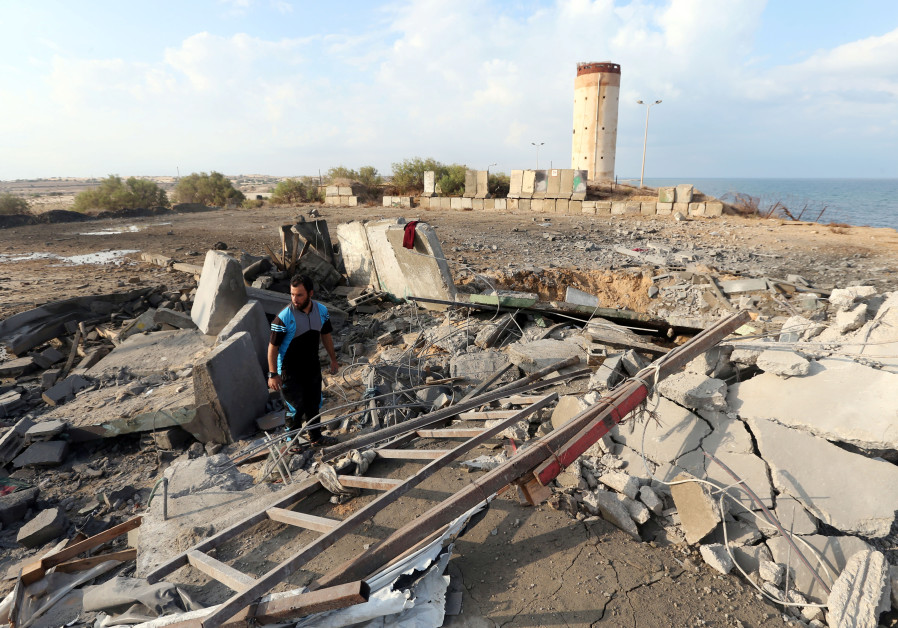
A Palestinian man inspects the scene of an Israeli air strike on a Hamas security forces site in the southern Gaza Strip October 17, 2018. (photo credit: IBRAHEEM ABU MUSTAFA / REUTERS)

The “March of Return” that began in Gaza on March 30 as a civil society initiative has gone on way beyond its initially planned climax on Nakba Day on May 15.

Despite more than 220 (mostly young) Palestinians killed by IDF snipers, the weekly demonstrations along the Israel-Gaza border have increased their intensity in numbers, locations and frequency. Although the official title of the demonstrations is about the right and the dream of Palestinian refugees in Gaza to return to their homes now inside of Israel, the real impetus and power driving them is the more than reasonable demand of two million people to end the Israeli-Egyptian siege on Gaza and to enable them to live a normal and decent life.

Putting the rhetoric aside, even the leaders of Hamas state that their primary goal is the end of the siege and the implementation of the understandings that were reached at the end of the summer war of 2014. Those understandings included the opening of borders for the movement of people and goods (after comprehensive security checks by Israel and Egypt), and launching discussions to advance the construction of an airport and seaport in Gaza in exchange for a cessation of attacks by Hamas and Israel against each other.

The 2014 understandings were never implemented and the failure of the reconciliation process between Hamas and Fatah, sponsored by the Egyptians, has led to a deterioration of the situation in Gaza. The already horrendous humanitarian situation in Gaza – with unclean water for two million people, more than 60% youth unemployment, three hours of electricity daily (on good days), no hope and no future – has worsened as the Ramallah-based Palestinian Authority has increased sanctions on Hamas and Gaza for failing to agree to the PA’s dictates to transfer all authority to Ramallah.

Israel has been more than a passive participant in enabling the situation in Gaza to deteriorate. Senior Israeli officials have argued that making a separate deal with Gaza and Hamas would weaken Mahmoud Abbas and the PA. This argument is laughable at best. Israel has done everything in its power to keep a weakened PA in power since the end of the Second Intifada in 2006. Israel’s strategic goals have also included keeping a weakened Hamas in power in Gaza.

The increased separation between Gaza and the West Bank authorities is exactly what the governments of Prime Minister Benjamin Netanyahu have desired, planned for and implemented. Netanyahu, Education Minister Naftali Bennett and Defense Minister Avigdor Liberman have never hidden their agenda on the divide-and-rule modus operandi of Israel vis-à-vis the Palestinians.

Israel has no desire to conquer Gaza and dismantle the Hamas regime. Israel has no desire to conquer and dismantle the PA. Israel has no real desire to unify the Palestinian people and to negotiate a peace treaty with them that would cost Israel the need to withdraw from territory in the West Bank and allow Palestinians in Gaza to enjoy a normal life of freedom and a chance of hope for a better future.

IT IS EASY to place the blame on the other side and to make speeches that say if the Palestinians would recognize Israel as the nation-state of the Jewish people, or if they would lay down their weapons and accept Israeli control over their borders, and a number of other Israeli demands, then Israel would open the borders and embrace them as good neighbors. The lessons of the failed peace process have demonstrated that this is not true and that Israeli intentions are not to allow for a reasonable free Palestinian state to ever be established – at least, not under the watch of Netanyahu and the right-wing religious camp in Israel.

There is no doubt that reaching understandings for a cease-fire with Hamas – including the return of the bodies of Hadar Goldin and Oron Shaul and the return of the alive civilians Avera Mengistu and Hisham Al-Sayed in exchange for several hundred Palestinian prisoners (of the almost 6,000 in Israeli jails) – would empower and strengthen Hamas. The strengthening of Hamas is also undoubtedly at the expense of Fatah and the PA, and that is why Abbas is opposed to any separate Israel-Hamas understandings.

Abbas has appealed to the Egyptians to not enable Hamas to reach separate understandings with Israel that do not go through Ramallah. Abbas is right from his perspective, and from a wider Israeli view that the reunification of Gaza and the West Bank would create better conditions for a possible renewed peace process. From the point of view of the current Israeli government, there is no real interest in a renewed peace process. The majority of the members of the Israeli coalition, including those from the Likud, are opposed to Palestinian statehood and therefore, to paraphrase former prime minister Yitzhak Shamir, “We are opposed to negotiations with the PLO not because they are terrorists, but because those negotiations could lead only to a Palestinian state.”

The situation in Gaza continues to worsen, as demonstrated by those who knowing that they are likely to die and who continue to challenge Israel’s complete closure of Gaza. Life has little value for those young people in Gaza, so they will continue to find value in their death. Mr. Liberman can use the mighty forces of the IDF to hit hard once again on the people of Gaza. It will not produce five years of quiet. The change that is required in Gaza is not another war, more destruction and more death. Deterrence cannot be created in a place where so many people are willing to die because their lives are so bad and meaningless. Palestinians in Gaza will not surrender, their will to resist will only increase.

Without any genuine Israeli-Palestinian negotiations in sight; with the view that another round of war in the South must be prevented, knowing that it would not lead to any strategic changes on the ground; and out of sincere concern for the welfare of Israel’s two million Palestinian neighbors in Gaza, the urgency of reaching Israel-Hamas understandings far outweigh the reasons not reach such agreements.

That is how to bring back the calm and security to the South. There is no military option that can erase normal people’s desire to live with dignity and with hope of a better future.


The writer is the founding co-chairman of IPCRI, the Israel Palestine Center for Research and Information.


Zawartość publikowanych artykułów i materiałów nie reprezentuje poglądów ani opinii Reunion’68,
ani też webmastera Blogu Reunion’68, chyba ze jest to wyraźnie zaznaczone.
Twoje uwagi, linki, własne artykuły lub wiadomości prześlij na adres:
webmaster@reunion68.com