Archives

UNIVERSITY OF MICHIGAN AND BDS OF ISRAEL

UNIVERSITY OF MICHIGAN AND BDS OF ISRAEL

JESSE ARM


Stop trying to restrict students.
BDS activists in Berlin. (photo credit: REUTERS)

This week, a professor at the University of Michigan rescinded his offer to write a letter of recommendation for a student who wished to study abroad in Israel.

In a screenshot of an e-mail that was shared thousands of times on social media, John Cheney-Lippold, a lecturer in the university’s American Culture department, explained his decision by writing: “Many university departments have pledged an academic boycott against Israel in support of Palestinians living in Palestine. This boycott includes writing letters of recommendation for students planning to study there… For reasons of these politics, I must rescind my offer to write your letter.”

First and foremost, it is important to note that Cheney-Lippold is unequivocally wrong as to the status of such an academic boycott. The University of Michigan and its leadership have made statements in 2013 and 2017 citing their unambiguous opposition to any boycott of Israeli institutions of higher education. “No academic department or any other unit at the University of Michigan has taken a position that departs from this long-held university position,” the university wrote in an additional clarifying statement released this week.

I am myself a recent alumnus of both the University of Michigan and Tel Aviv University’s overseas study program. If the student in question’s study abroad experience is anything like that of the majority of Michigan students I studied alongside in Israel, it will be decidedly apolitical. A lighter course load, a better climate, and some sweet nightclubs on the Tel Aviv port seemed to be the primary motivation for the majority of Wolverines who joined me in the Middle East – not politics.

That said, perhaps the student’s motivation for studying in Israel is exploring the diplomatic complexities of the region. Perhaps she is a fervent Zionist who is looking to strengthen her ties to the land of Israel by studying there. Or perhaps she is a vocal critic of the state, its policies, and its very existence. In either case, she will be welcomed openly in institutions of higher learning across Israel, where Arab enrollment in universities has grown by 78.5% over the past seven years and millions of taxpayer dollars are dedicated to raising that number even higher. Or perhaps she’s just going for the beaches and bars; I know I was.

The point is that it really doesn’t matter. The student clearly performed well enough in Cheney-Lippold’s American Culture course to secure a positive testament to her academic capabilities. He stated in his e-mail that he’d be happy to go through with his offer to write her a letter of recommendation for any other purpose. But because of Cheney-Lippold’s political qualms with the State of Israel, or perhaps those of his entire department, he reneged on his offer.

This is not an expression of Cheney-Lippold’s constitutionally protected right to free speech. Instead, it is a failure to perform his duties to his students as a university professor. If Cheney-Lippold is only interested in vouching for the academic credentials of students who embrace his precise geopolitical outlook, he is not qualified to work at a public institution of higher learning.

As a fierce defender of free expression, I will take that one step further. Cheney-Lippold is absolutely entitled to despise the State of Israel. He is entitled to teach his courses at the University of Michigan with that world view in mind – some professors already do. He is entitled to label Israel racist, genocidal, evil, or whatever he wishes to call it without fear of termination from his public employer. But when he allows his partisan aversions to prevent him from handing his students the praise he openly acknowledges they’ve earned, that is a terminable offense.

Cheney-Lippold’s actions are entirely worthy of the outrage they stirred up on social media. That same outrage would be in order if a professor had refused to sign a letter attesting to their student’s academic credentials because they sought to study abroad in China, Russia, Iran, or any American adversary sporting a loathsome record on human rights.

And yet, none of the aforementioned abysmal regimes ever seem to trigger the racially charged boycott hullabaloo that Israel, a Western-allied liberal democracy, regularly finds itself at the center of on college campuses. The callous and unhesitating fashion in which Cheney-Lippold delivers his discrimination is a testament to how deeply entrenched anti-Israel bigotry is within academia.

This incident comes as the University of Michigan is readying itself for a major legal battle over restricting what their students are entitled to say. Perhaps this episode will make things a bit clearer for professors at my alma mater and at campuses across the country.

Stop trying to restrict students. Stop trying to restrict what they say. Stop trying to restrict what they think. And for goodness sake, stop trying to restrict where they travel to study abroad.

The author is a very recent alumnus of the University of Michigan who works in political consulting and data analytics based out of New York City. Previous articles by him have appeared in The New York Times, the Times of Israel and the Michigan Daily.


Zawartość publikowanych artykułów i materiałów nie reprezentuje poglądów ani opinii Reunion’68,
ani też webmastera Blogu Reunion’68, chyba ze jest to wyraźnie zaznaczone.
Twoje uwagi, linki, własne artykuły lub wiadomości prześlij na adres:
webmaster@reunion68.com


JEWISH COMMUNITIES IN UNEXPECTED FORMS

JEWISH COMMUNITIES IN UNEXPECTED FORMS

FAYDRA L. SHAPIRO


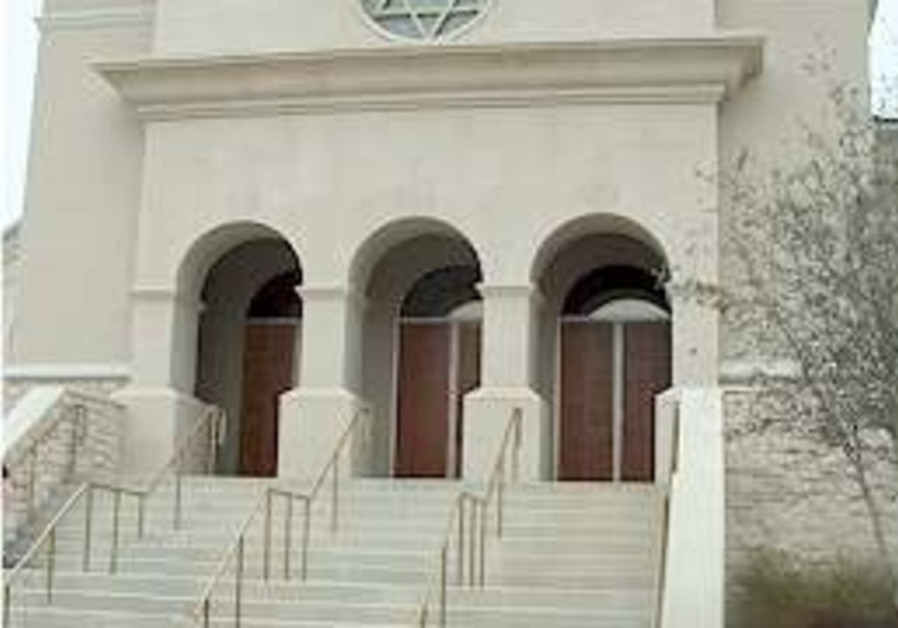
Baruch Hashem Messianic Synagogue in Dallas, Texas. (photo credit: Wikimedia Commons)

Recently, I received a strange invitation to be an outside observer at a conference of Jews in Dallas, Texas, who gathered to talk about Jewish issues. That admittedly does not, in and of itself, sound all that strange. These, however, were not exactly run-of-the-mill Jews. They were Jewish Christians. 

Because of my work in Jewish-Christian relations, my research on Messianic Jews, my book project on Jewish-Catholics, and thanks to my long-time academic friendships with some of the leaders of this meeting, I was invited as a trusted outsider. 

I grew up in a committed Conservative Jewish family in Toronto. I remember receiving those Jews-for-Jesus tracts as a teenager and being at first amused, then shocked, and finally furious. My own life path brought me to increased Jewish observance, aliyah and a vibrant committed life of Torah and mitzvot. I am, as I’ve said elsewhere, a Jewish Jew for Judaism. But a doctorate in religious studies, a passionate ongoing interest, day-to-day work in Jewish-Christian relations and a general sense of adventure have taken me to some fascinating and perhaps unorthodox places on the Jewish-Christian border that I’ve been investigating and writing about in one way or another for over a decade. 

Thus I found myself sitting in on the deliberations of about 50 men and women with only two things in common: They were all Jews and all were ardent, serious, passionate Christians from across the denominational spectrum. They included Messianic Jews, Anglican Jews, Catholic Jews, Presbyterian Jews, Eastern Orthodox Jews – but all Jews. These were Christians who would under normal circumstances find it extremely challenging if not impossible to pray, speak, study and consult together. There were kippot and bare heads. There was a nun in habit and priests in collar. Vegetarian food was served so no one would have to eat non-kosher meat. There was plenty of Yiddish and Hebrew. They came from Canada, from Russia, from Israel, from France and from America. They celebrated a Catholic mass in Hebrew each morning and a Messianic Jewish mincha-maariv prayers in the early evening. 
Unsurprisingly, most Jews are pretty uncomfortable with the idea of Jews who believe in Jesus. Yet I found myself wondering if there was anything in this gathering for us in the mainstream Jewish community, beyond the obvious and understandable responses of loss, harm, threat and anxiety. Was there anything here for us to learn? 

They came together as Jewish Christians from across the globe to ask one core question, shockingly unexceptional from this rather exceptional group – a question that was completely ordinary and non-distinct, notwithstanding the assuredly unordinary nature of the gathering. They gathered to ask precisely the same question that tops the agenda of every Diaspora Jewish communal organization today. They came together as Jewish priests, Jewish pastors, Jewish theologians and Jewish ministers to ask the same seemingly banal question: How to ensure Jewish survival?

Three days of conversation centered on how to make sure that despite their active and committed Christian lives, their Jewishness – their own and that of others – does not disappear; how to make sure they have Jewish grandchildren; how to be more actively Jewish; how to keep Jews – even Jewish-Christians – Jewish.

UNDOUBTEDLY THESE are pretty out-of-the-ordinary Jews. But they are most certainly Jews: Jews whose lives would in fact be much easier if they were to assimilate; Jews who have suffered for their Judaism. Some were Christians whose Jewishness is still not public knowledge, who hide their Jewishness and yet are desperately eager to live more authentic Jewish lives. There were Jews whose active Jewish identities are perceived as threatening to their churches. Many there were Jews who faced rejection from their Jewish families and were not welcomed by the mainstream Jewish community. Yet they came together absolutely committed to their Jewishness in order to be together with other Jews, and to invest in and commit to Jewish survival in their own corner of the Jewish people. 

In some ways, one test of their commitment lay in how I was understood, how I was treated by this group as an outsider. There’s no question I was a bit of a curiosity, this clearly Orthodox Jewish woman in a head covering and long skirt. Sure, someone was concerned that I might be a spy from an anti-missionary organization. (I’m not.) 

Many people wanted to know what I was doing there. When a group of us went out to dinner before the conference officially began, I was a little embarrassed to be the Jew who insisted on “a salad please, just cold fresh vegetables, no croutons, no dressing, yes really JUST vegetables.” 

So, “Yes, I keep kosher,” I explained, a little awkwardly in this context. “Good!” boomed a Jewish priest next to me. “May you always do so!” No one evangelized me. No one offended me or tried to change me. But they did make sure that I ate kosher and they brought in special food just for me without my asking. They made sure that I felt welcome. My Jewishness, no matter how distinctive from theirs, was respected, accepted and encouraged. 

Jews might not like the idea of Jewish Christians. We might find them threatening, impossible or disingenuous. Fair enough. But at a time when the mainstream Jewish community finds it so challenging to get Jews to live active and committed Jewish lives, this gathering was an unexpected inspiration. We should take note of these people with no need to stay Jewish, who gain no friends, who have no advantage by insisting on their Jewishness, for whom it would have been so much easier to ignore, forget, hide and walk away from their identities. Despite all that, something in them insists on who they are. They are Jews. And we need them, as we need every Jewish soul. 

And so – perhaps strangely – it was there, in an overly air-conditioned room in Dallas in August, surrounded by practicing Christians, people who used big Christian words like “transubstantiation” and “supersessionism” that this Orthodox Jew understood as never before that truly and mysteriously, Am Yisrael chai – the people of Israel live. 


The writer is the director for the Israel Center for Jewish-Christian Relations and senior fellow at the Philos Project. She also holds a research fellowship at the Center for the Study of Religions at Tel Hai College in Israel and can be contacted at faydra@philosproject.com. 


Zawartość publikowanych artykułów i materiałów nie reprezentuje poglądów ani opinii Reunion’68,
ani też webmastera Blogu Reunion’68, chyba ze jest to wyraźnie zaznaczone.
Twoje uwagi, linki, własne artykuły lub wiadomości prześlij na adres:
webmaster@reunion68.com


Israel liberated land, don’t believe the lies of occupation.

Israel liberated land, don’t believe the lies of occupation.

  Jerusalem Jane


Truth, fact and history is everything, changing history to fit a fake Palestinian narrative is simply pathetic!
There has never been an Arab Palestinian state nor do the Arabs want a two-state solution! Every single map from Fatah is showing all of Israel turned into a Palestinian state.
Here is a few words of truth before we close down for a peaceful Shabbat!
Shabbat Shalom from Jerusalem 💙🇮🇱
Please watch and share this message! Thanks


Zawartość publikowanych artykułów i materiałów nie reprezentuje poglądów ani opinii Reunion’68,
ani też webmastera Blogu Reunion’68, chyba ze jest to wyraźnie zaznaczone.
Twoje uwagi, linki, własne artykuły lub wiadomości prześlij na adres:
webmaster@reunion68.com


Gush Etzion terrorist’s bag was searched before attack, but pockets weren’t

Gush Etzion terrorist’s bag was searched before attack, but pockets weren’t

Inbar Tvizer


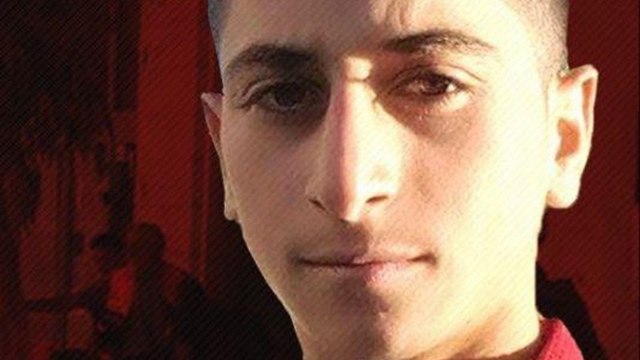
Guards who grew suspicious of 16-year-old Khalil Jabarin who murdered Ari Fuld, prevented him from entering a shopping mall, but one guard, after checking his bag, failed to search his pockets where the knife was concealed.

A security guard whose suspicion was aroused by the terrorist who murdered the American-Israeli Ari Fuld on Sunday in a stabbing attack in Gush Etzion searched the attackers bag before the stabbing, but failed to search his pockets where the knife was concealed.

Moments before the attack on the 45-year-old from Efrat, his killer, 16-year-old Khalil Jabarin from the Palestinian village of Yatta, had decided not to enter a Rami Levy supermarket adjacent to where he carried out the attack after seeing security guards at the entrance, and sitting outside the supermarket.

Khalil Jabarin

After a brief scuffle with Fuld, who cahsed him and shot at him, Jabarin was neutralized by a passerby and taken to hospital. His remand was extended Monday evening by 10 days.

One of the security officers of the Gush Etzion junction, identified as A, said “The terrorist was walking around attempting to enter several stores. Our security guards removed him from the premises. The guards did their work and managed to intimidate the terrorist, who therefore decided not to enter the supermarket.”

“Several civilians, cashiers and security guards spoke with the terrorist. One of the guards suspected something was up and tried to check his bag, but he didn’t check his pockets. He didn’t see the knife so he returned to where he was guarding,” the security guard explained.

“We saw him arriving with a bag, putting it aside and walking around without it. The minute we heard about the stabbing attack one of our security guards ran to the (shopping center entrance) to assist,” he added.

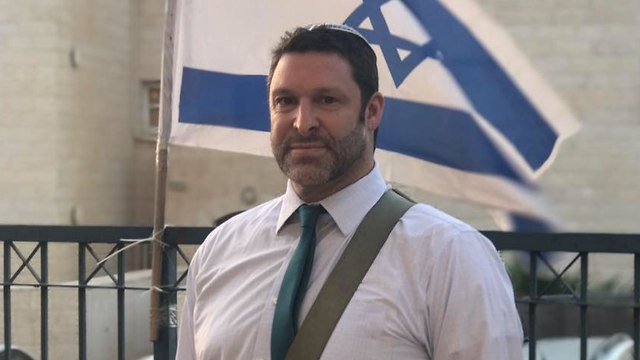
Ari Fuld

According to the shopping center’s employees, Jabarin was circling the mall for a long time before carrying the attack. Footage of the moments leading up tp the attack show him eating

He spoke with several security guards in an area without security cameras before committing the deadly stabbing attack.

Meir, the chief security officer of the supermarket chain in the Gush Etzion junction told Ynet, “I can certainly say that our security prevented the terrorist from entering our premises. Our security guards’ performance and their presence at the supermarket’s entrance and exit impeded him from coming inside.”

“Once a guard is stationed at the entrance it makes all the difference,” he opined.


Zawartość publikowanych artykułów i materiałów nie reprezentuje poglądów ani opinii Reunion’68,
ani też webmastera Blogu Reunion’68, chyba ze jest to wyraźnie zaznaczone.
Twoje uwagi, linki, własne artykuły lub wiadomości prześlij na adres:
webmaster@reunion68.com


Monitor your metabolism on the phone with a single breath

Israel21cMonitor your metabolism on the phone with a single breath

Abigail Klein Leichman


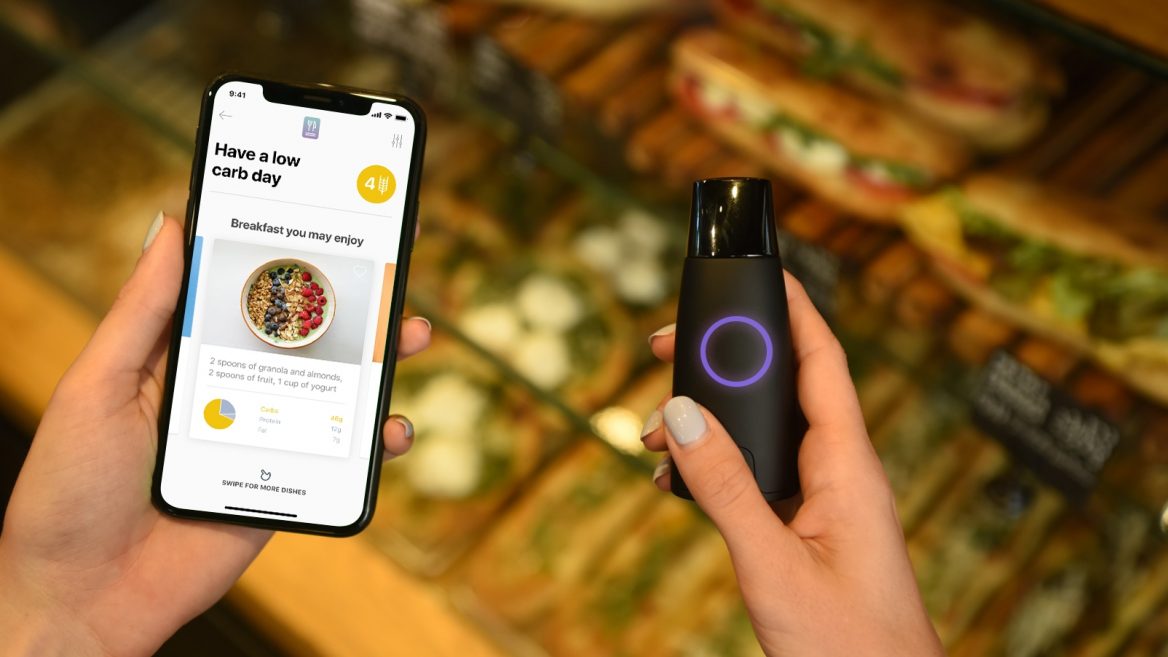
Lumen breath-analysis device and app hacks your metabolism to give you actionable insights on food choices for fitness or weight loss.

The Lumen device and app monitor your metabolism through breath. Photo: courtesy

Identical twins Michal and Merav Mor have more than looks in common: both earned PhDs in physiology at Ben-Gurion University, both compete in triathlons, both are health researchers and mothers.

Wanting to manage their nutrition scientifically, the Mor sisters came across a metric called respiratory quotient (RQ), the ratio of carbon dioxide (CO2) to oxygen (O2) in the breath. Measuring RQ after sleeping, eating or working out reveals whether the body is producing energy from fat or carbohydrates.

Hospitals and clinics worldwide offer RQ measurement to help athletes adjust diet and activity for peak levels of fitness. However, the process involves sophisticated equipment, professional analysis of results and an hour’s worth of time – not something that could be done at home or on a daily basis.

Lumen, the company cofounded by the Mor sisters and three partners in January 2014, is launching a neat little device that works with an app to analyze breath within seconds and provide a personalized RQ along with suggestions to help you lose weight and optimize workouts.

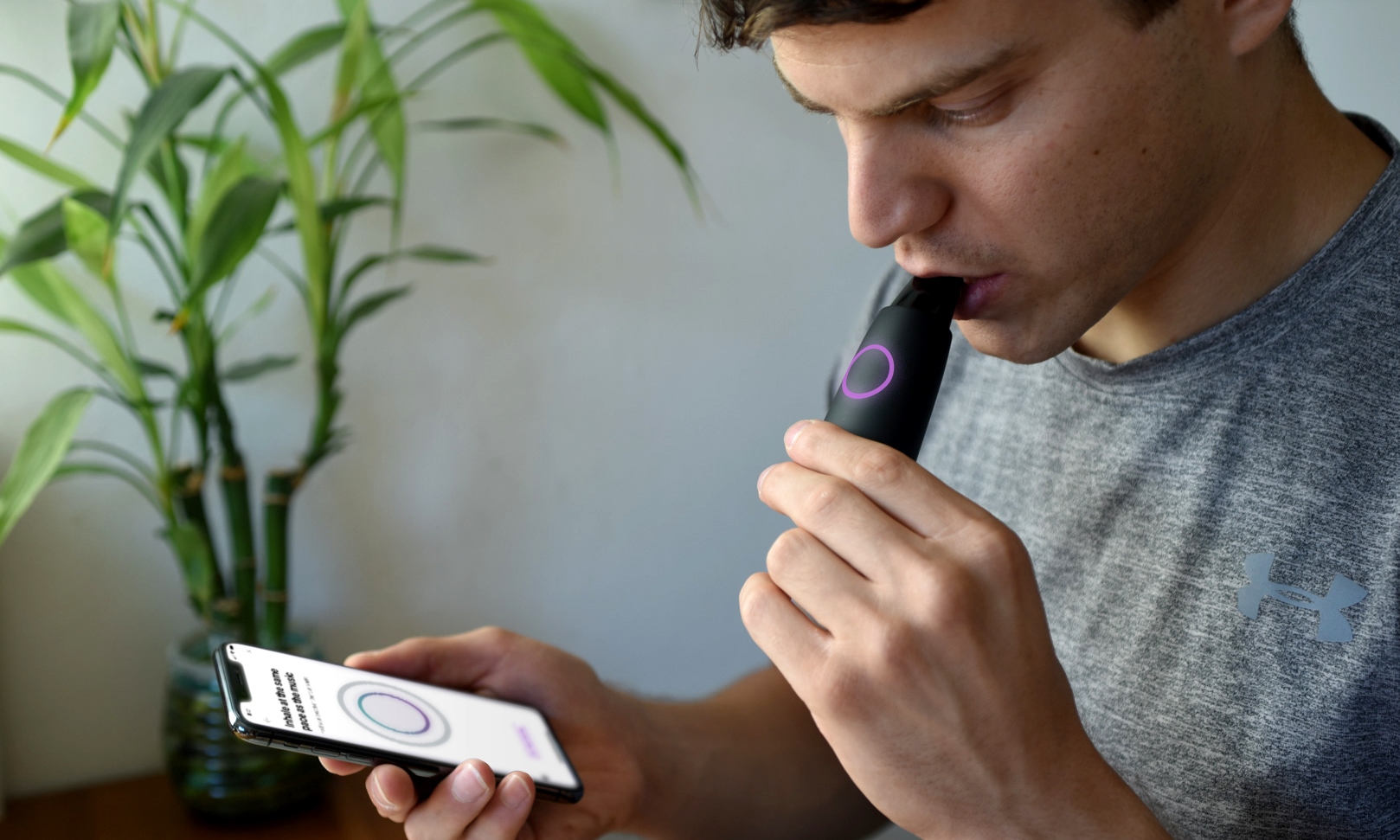
Users inhale and exhale into the Lumen device to set the analysis in motion. Photo: courtesy

When you wake up in the morning, you take Lumen out of its charging dock and remove its magnetic dust cap, open the app on your phone, and begin the two-step process guided by the app: Inhale a single breath with Lumen in your mouth, hold your breath until prompted and then exhale into the device.

In half a minute, you’ll know if you should plan a high-carb or low-carb day depending on your planned level of activity. Using machine learning, the device gets to know you better with repeated use, automatically. There’s no food tracking or guesswork involved.


“You may think you have a fast or slow metabolism, but it changes every day based on what you eat, how much you sleep and if you work out,” says Lumen cofounder and CPMO Dror Ceder.

“Your body is constantly producing energy from carbs or fat. Your fat storage can grow indefinitely, but your carbs storage – glycogen — which is mostly in your muscle tissue and liver, is quite small and can’t grow unless you work out and build muscle. When that storage is full your body prefers to use carbs, and when it’s depleted your body will burn fat.”

Because burning carbs produces more C02 than burning fat, the sensors inside Lumen measure the concentration of CO2 in your breath to reveal where your cells are sourcing their energy.

“Breath-analysis research is increasing hugely because there are a lot of biomarkers you can find through breath and it’s a noninvasive way to find out what’s going on in the body,” says Ceder. “But the technology is very complex.”


Lumen (the name signifies the way it illuminates what’s happening in your body) has several years of research, development and testing behind it.

The Mor sisters took their idea of a quick, at-home automated RQ test to Michal’s husband, Daniel Tal, and his business partners Dror Ceder and Avi Smila. The three entrepreneurs had worked together for 14 years. Their second startup, Wibiya, was sold to Conduit for $45 million in 2011. By the end of 2013 they were looking for their next challenge.

Ceder recalls with a laugh that they “naively jumped into” the Lumen project.

“We put in our own money and saw if we could crack it. What followed was a really tough year of blood, sweat and tears – literally, since we did so many finger pricks. But we did crack it. Then we brought in outside investors and filed the patents.”

Ceder says some other startups are testing a different breath biomarker to measure fat-burning but he does not see them as competitors. Firstly, Lumen researchers found issues with that particular biomarker, and secondly these companies don’t have the companion app with actionable insights, he claims.

Tweaked based on beta feedback

The Tel Aviv-based Lumen opened an office in New York and gave the beta device (designed by the Milan branch of industrial design house Frog) to more than 300 New Yorkers to try in September 2017, following initial validation studies completed at several prominent hospitals and universities.

Lumen was tweaked many times based on the beta users’ reactions. External validation studies at San Francisco State University and Tel Aviv Medical Center, among other places, proved Lumen reached results equivalent to current gold-standard RQ measurement.

“We are still iterating and will continue to do so for the life of the company,” Ceder tells ISRAEL21c.

Following an Indiegogo crowdfunding campaign whose $50,000 goal was far surpassed, breaking the $1 million mark, the company expects to start shipping Lumen in February (US) and March (international) 2019. Early adopters are getting Lumen for well below its $299 retail price.

Now that a tool will be available to the masses, how can users be encouraged to change their behavior based on the data it reveals?

“We took a lot of time and hundreds of beta users to see how to do that,” says Ceder. “The secret is not to change people’s lives completely but to create sustainable habit change that will last, discovering what is preventing them from reaching their goals and making it easy to follow the suggestions.”

“Everybody thinks their metabolism cannot be changed, but in fact it changes every day and you can control it. Once you know that, it really changes your life.”

For more information, click here


Zawartość publikowanych artykułów i materiałów nie reprezentuje poglądów ani opinii Reunion’68,
ani też webmastera Blogu Reunion’68, chyba ze jest to wyraźnie zaznaczone.
Twoje uwagi, linki, własne artykuły lub wiadomości prześlij na adres:
webmaster@reunion68.com