
Archives

Poles’ Shoah law is antisemitic

Poles’ Shoah law is antisemitic

Yehuda Bauer and Havi Dreifuss


In this exclusive article for the JC, leading Holocaust historian Professor Yehuda Bauer, with his colleague Professor Havi Dreifuss, warns that this legislation is “a return to Bolshevik methods of suppressing freedom of thought”.
FILE PHOTO: A Jewish cemetery in Wysokie Mazowieckie, Poland desecrated with anti-Semitic graffiti, March 2012 (Jedrzej Wojnar/AP)

The current Polish government, led by the right-wing Law and Justice Party (PiS), is about to pass a legal amendment that threatens to prosecute anyone in the world who accuses Poles or the Polish nation of participating — even partly — in the crimes committed by Germans on occupied Polish soil during the Holocaust.

Such a person, who, according to the amendment, will contradict “facts”, will face three years in prison. The new law includes a paragraph exempting “a perpetrator” committing the act “within the framework of his or her artistic or scientific activity”.

Yet, the “exemption” of academics is hardly watertight, not only because “truthful facts” will be determined by the Institute of National Remembrance (IPN), a government institution; nor because of the very thin line between academics, educators, journalists and others.

The “exemption” was far from convincing because even before the amendment was accepted, Polish authorities were trying to limit academic discourse.

Professor Jan T Gross is a well-known historian of Polish and Jewish origin teaching in Princeton in the United States. His book, Neighbors (Princeton, 2001; published originally in Polish in 2000), dealt with the murder of several hundred Jews in the Polish town of Jedwabne, and described in detail how they were burned to death in a barn — or killed by other horrific means — by their Polish neighbours on July 10, 1941.

In an interview in Die Welt in September 2015, Mr Gross said that during the war the Poles were busier murdering Jews than killing Germans.

After long investigation into Mr Gross’s statement by Polish legal authorities, the case was almost closed. But then, unsurprisingly, the first prosecutor’s decision was overturned. It will now be the same IPN that will decide whether the well-known scholar has “defamed” the Polish nation and thus should be prosecuted and punished.

It should be emphasised: even if Mr Gross were wrong — and he is not — it is his right to express and publish his views and understandings which stem from his historical investigation. In a democratic country, that is.

The problem is one of basic principles. It is not the job of any government (in a democratic country) to determine historical facts, beyond very obvious ones; the fact of the Holocaust, for instance, or the fact of the persecution of Poles by Nazi Germany. To question such facts is indeed outside acceptable discourse.

There are countries, like the US, where even denial of such obvious facts is not prosecuted, in the name of freedom of expression. Others, such as France and Germany, have criminalised Holocaust denial.

If the Polish government wants to similarly criminalise Holocaust denial or justifications of German murder of Poles, that could — perhaps — be defended. But Polish attempts to clear all Poles of anti-Jewish acts, with the exception of what Polish officials call regrettable misbehaviour by marginal elements, are illegitimate in a democratic state. More than that: to threaten a historian with incarceration because of his findings and views is to repeat what one thought Poland had overcome: a return to Bolshevik methods of suppressing freedom of thought.

Polish involvement in the persecution of Jews during the Holocaust is an undeniable part of those dark days.

A group of excellent Polish historians, sociologists and psychologists have shown in detailed research that a very large number of Jews — maybe up to 200,000, a figure Mr Grabowski arrived at — were killed by Polish peasants, the collaborationist so-called Polish Blue Police, and by some units of the mutually hostile Polish anti-German undergrounds. They have also shown how an extremely courageous minority of Poles, peasants and townspeople, risked their very lives — and some of them lost them — to save their Jewish compatriots.

The current atmosphere jeopardises this path-breaking Polish scholarship. In this atmosphere, no wonder young undergraduate students who want to deal with Polish behaviour towards the Jews during the German occupation may well desist from their projects because the government has decided what the “facts” are and they will be threatened and possibly incarcerated.

Despite worldwide condemnations and objections of leading scholars and organisations, the Polish government, which enjoys an absolute majority in the Sejm (parliament), seeks approval of the amendment.

Protests also came from the International Holocaust Remembrance Alliance, which, with its 31 member governments (including Poland) and 11 observer/candidate states, provides Holocaust education, remembrance and research with a political umbrella.

A delegation, led by a well-respected Austrian diplomat, went to Warsaw to persuade them of the folly and undemocratic nature of this legislation and reach some kind of a solution. The Polish authorities were very polite, very obstinate and pretended not to understand — or perhaps actually did not comprehend — the problem. They refused to budge.

This is not just a matter of the past. We feel it reflects a deep-seated antagonism on the part of important segments of Polish society towards the Jews, past and present, despite denials by officials and opposition to antisemitism by many Poles.

The anti-Jewish trend is opposed by parts of the intellectual elite, and by an important group of Polish scholars. It is they more than others who are threatened (not so much the small Jewish community).

The Polish government should be told that the honour of the Polish people and the history of courageous resistance to Nazi Germany is being sullied by this kind of behaviour.


Yehuda Bauer is Professor Emeritus of History and Holocaust Studies at the Avraham Harman Institute of Contemporary Jewry at the Hebrew University of Jerusalem and Academic Advisor to Yad Vashem

Havi Dreifuss is associate professor of Jewish history at Tel Aviv University


twoje uwagi, linki, wlasne artykuly, lub wiadomosci przeslij do: webmaster@reunion68.com



IDF general talks about Israel’s scrapped plan to use nuclear weapon in 1967

IDF general talks about Israel’s scrapped plan to use nuclear weapon in 1967

Yitzhak Yaakov


New details emerge about a last-resort contingency plan prepared by Brig. Gen. Yitzhak Yaakov to detonate a nuclear device in the middle of the Sinai desert as a warning to Egyptian President Nasser; ‘The goal was to plant a nuclear device on a hilltop in the Abu-Ageila area, and to blow it up when the prime minister gives the order to do so,’ Yaakov says in series of interviews that were banned for publication by Israeli Military Censorship, but excerpts of which have been made public by a US think tank.

Brig. Gen. Yitzhak Yaakov, one of the founders of the IDF’s weapons development program, was in Washington in May 1967 to take part in a war games exercise at the RAND Corporation, a military research think tank.
“At the end of the war games, Israel used a nuclear weapon against Egypt, as a response to Egyptian surface-to-surface missiles that hit Tel Aviv,” Yaakov said.

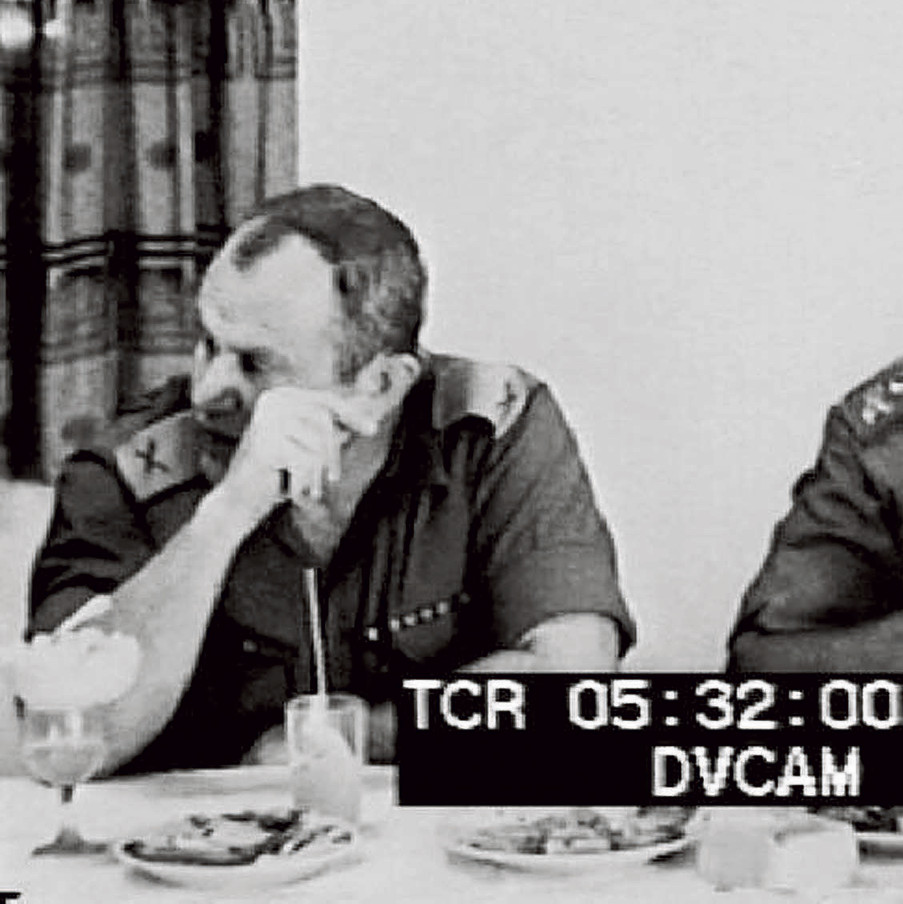
(Photo: Yedioth Ahronoth)

“All of the other participants, who knew what I do for a living, had puzzled expressions on their faces. I told them Israel doesn’t have nuclear weapons and that this whole scenario was completely imaginary, a wild fantasy,” Yaakov continued.

But such a scenario was not entirely farfetched. As tensions mounted in the run-up to the 1967 Six-Day War, Yaakov was asked to return to Israel from the US posthaste and prepare a last-resort contingency plan for Israel to detonate a nuclear device in the Sinai Peninsula as a warning to Egyptian President Gamal Abdel Nasser to end hostilities against Israel in the event it found itself losing the war.

Brig. Gen. Yaakov revealed the details of that contingency plan, codenamed Operation Samson, in a series of interviews between 1999 and 2001 with Dr. Ronen Bergman and nuclear policy researcher Dr. Avner Cohen.

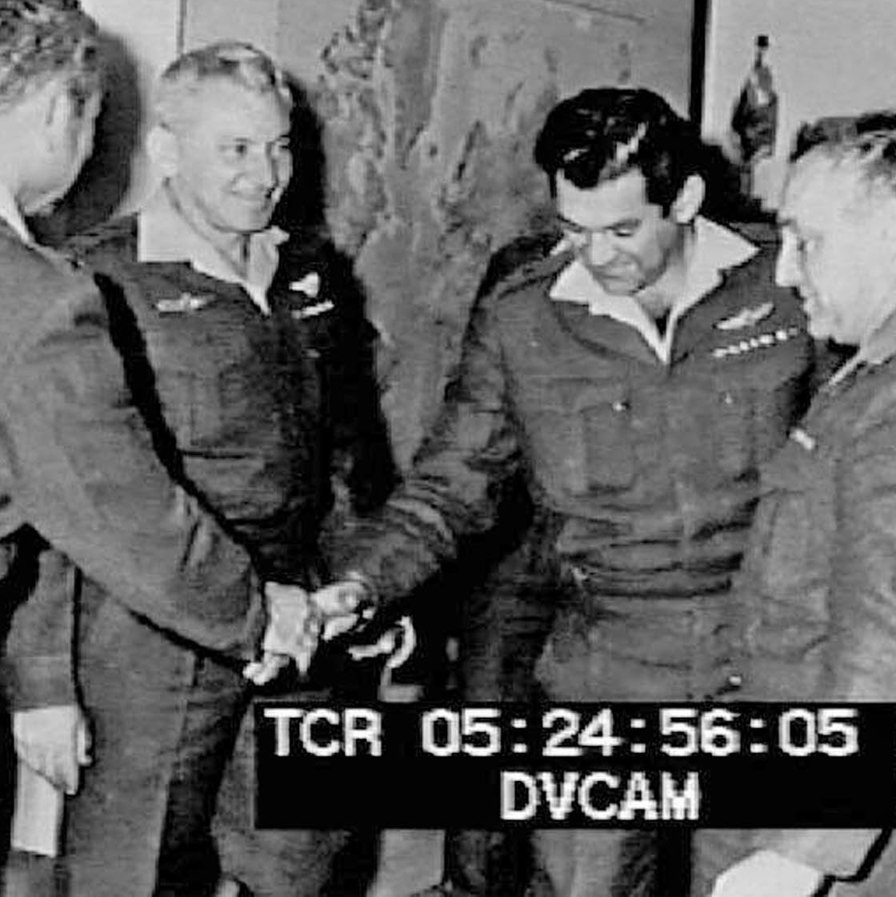
Yaakov and Elazar

The IDF censor barred the publication of the interview in Yedioth Ahronoth in 2001, but on Saturday the New York Times published excerpts from the interviews, while additional transcripts have been made public by the Woodrow Wilson Center for Scholars on Sunday as part of the think tank’s Nuclear Proliferation International History Project.

Over the course of these interviews, Brig. Gen. Yaakov admitted that before 1967 “nobody thought that we were close to using” the nuclear device that was being developed in Dimona and the idea to detonate the device in the Sinai Peninsula was “spontaneous rather than planned.”

“I don’t think that we thought that we are ready to start working on a bomb. There was even no fuse… I don’t think that anyone thought in terms of ‘we might need it anytime soon,'” he said.

Nevertheless, the use of unconventional weapons was not entirely alien to the IDF. “We prepared multi-year plans which also encompassed unconventional weapons. We presented those plans in General Staff discussions at least once a year, and there were discussions on these issues,” Yaakov said. “There were those who thought we were wasting money… The discussions were very substantive.”

According to Brig. Gen. Yaakov, the scenario was even drilled. “I may be wrong (about the exact date) because it may not have been before 1967… (but) at a certain point we did a command and control exercise… in which we went over the entire process, from the moment of issuing the order to its implementation. It took about two hours… It was a telephone exercise,” he recounted.

Still, he said, “We didn’t think about it in operational terms at all, since we all understood it was a kind of a ‘doomsday weapon’… You won’t have a conventional war after using such a weapon.”

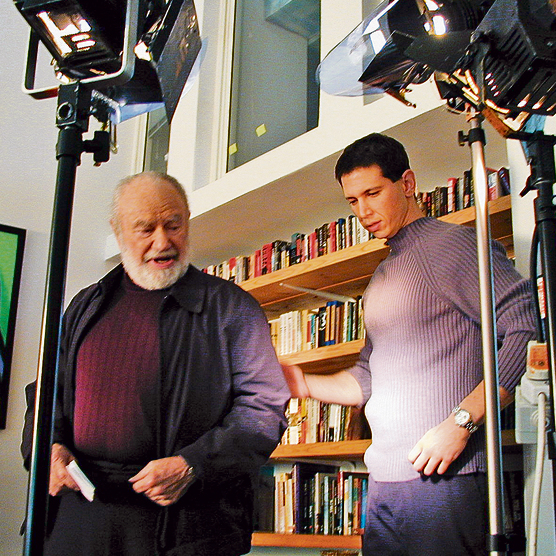
L-R Yaakov, Bergman

read more: IDF general talks about Israel’s scrapped plan to use nuclear weapon in 1967


twoje uwagi, linki, wlasne artykuly, lub wiadomosci przeslij do: webmaster@reunion68.com


LOOKING BEHIND THE CUR TAIN OF THE ACADEMIC CODE OF ETHICS

LOOKING BEHIND THE CUR TAIN OF THE ACADEMIC CODE OF ETHICS

DOUGLAS ALTABEF


Let’s be intellectually honest and accept that the real opposition to the code is about holding on to levers of power and influence.

Students sit in a library at the Ariel University Centre in the West Bank settlement of Ariel. (photo credit:REUTERS/Ronen Zvulun)

The release of a proposed Academic Code of Ethics, authored by Prof. Asa Kasher (who drafted the IDF’s code of ethics), has unleashed an unsurprising and expected firestorm of criticism, largely from those who believe they will be repressed or stifled by the new code.

But how would such repression actually work? The code reflects the glaring reality that Israeli academia is hardly a balanced universe in which a multiplicity of perspectives are constantly being shared and where students have the ongoing opportunity to hear differing points of view in the quest to shape their own opinions and judgments.

Instead, academia is something of a Greek chorus of groupthink, an intellectual echo chamber hardly resembling a marketplace of ideas.

Prof. Kasher sought to provide the fresh air of intellectual diversity and balance, and to reduce the possibility of professors as mere polemicists speaking to a captive audience.
The dirty little not-so-hidden secret is that the code is perceived to be an incursion on the hegemony currently enjoyed by an overwhelmingly dominant left wing, and often post-Zionist, faculty in the social sciences and humanities.

The arguments made by opponents of the code invoke appeals to free speech and academic freedom. But are free speech and academic freedom merely smokescreens for a resistance to the loss of hegemonic control? Let’s test that proposition by positing a diametrically different scenario.

What would the clamor sound like if an overwhelmingly religious Zionist faculty of the social sciences was exclusively and relentlessly teaching that the only acceptable way for Israel to conduct itself was to immediately assume sovereignty over Judea and Samaria and encourage all non-Jews living there to leave? Furthermore, what if students who disagreed with this point of view did so at their peril: grade-wise, and in terms of how they would be treated in the class? Do we really think that an enraged Left would be assuaged or placated by a rejoinder of “free speech” or “academic freedom”? No, of course not. They would focus on content, on results, rather than on process.

Let’s be intellectually honest and accept that the real opposition to the code is about holding on to levers of power and influence.

There is no interest in playing in the sandbox of ideas, nor in intellectual balance and diversity.

The real question is, what is in society ’s interest? Is it beneficial to our society to have a singular approach to many of the pressing issues t hat our next generation will have to confront? Does this educate them, let alone prepare them for struggles of their own to come? Conversely, doesn’t society, not to mention the students that will someday lead it, benefit from experiencing competing perspectives, so that students can make reasoned judgments based on a broader and more accurate reality?

As an undergraduate at Columbia during the tumultuous late 1960s, everything was being viewed through a political prism. I had many brilliant professors, with loads of their own opinions, who realized that they were doing us an important service by not injecting themselves into any given fray. Rather, they played the classic role of educators, forcing us to turn issues over rather than reaching presumptive conclusions, with the goal of making us discerning and open-minded students for life.

I can think of no more worthy goal for the Academic Code of Ethics. A democracy that refuses to allow for free and varied discourse is frittering away its greatest treasure: an empowered, engaged and discerning citizenry.


The writer is an executive board member of Im Tirtzu, and a board member of The Israel Independence Fund. He can be reached at dougaltabef@gmail.com


twoje uwagi, linki, wlasne artykuly, lub wiadomosci przeslij do: webmaster@reunion68.com


CHILE EXPOSES SECRET NAZI SPY RINGS

CHILE EXPOSES SECRET NAZI SPY RINGS

REUTERS


The state secret of how Nazi supporters labored to bring the Reich to Latin America that was kept for decades.

Books of Chile’s Civil Police with declassified files relating to Nazi espionage. (photo credit:REUTERS/CARLOS VERA)

Chilean police made public on Thursday archive documents relating to its investigation during World War Two that uncovered how Nazi supporters aided the Third Reich, including supplying information and plans to bomb mines in Chile.

Young members of families of German descent in southern Chile underwent paramilitary training, while Nazi supporters in the country routinely sent Germany information about the routes of Allied merchant vessels, the documents showed.

The discovery comes the same week that a cache of Nazi artifacts was found hidden behind a bookcase in Buenos Aires, the Argentine capital.

There was significant support within Chile and Argentina of the Axis powers during World War Two. After the war, many leading Nazi officials fled justice in Europe to hide out in South America.

Chilean police had arrested around 40 people as a result of their investigation, the documents showed, and found code books, radios and weapons, as well as plans to bomb mines in northern Chile.

The 80 files of documents were officially handed over to the country’s national archives office on Thursday and will be available for public viewing.

“Until yesterday, this was a state secret,” center-left lawmaker Gabriel Silber said after a ceremony to hand over the files. “Maybe, from today, we are going to recognize an uncomfortable truth that unfortunately some political and business figures in Chile supported the Nazis.”


twoje uwagi, linki, wlasne artykuly, lub wiadomosci przeslij do: webmaster@reunion68.com


THE SECRET BEHIND BESTSELLER ON PALESTINIAN HISTORY

THE SECRET BEHIND BESTSELLER ON PALESTINIAN HISTORY

JOY BERNARD


Sometimes it’s really important not to judge a book by its cover.

A history of the Palestinian people. (photo credit:screenshot)

Israeli publicist and editor Assaf A. Voll’s book, “A History of the Palestinian People: From Ancient Times to the Modern Era,” just ranked the respectable second spot on Amazon’s list of best-selling books in the category of ‘Israel and Palestine History’ and has become a huge Internet sensation, but not for the reasons you would imagine.

The lengthy paperback, which can be purchased via Amazon for $7.99, is described on the site as “a fruit of many years of research,” and is proclaimed to be “the most comprehensive and extensive review of some 3,000 years of Palestinian history, with emphasis on the Palestinian people’s unique contribution to the world and to humanity.”

The catch? This lauded historical account that is also available in Arabic and in Hebrew and was penned by the Israeli writer offers no real insight, let alone content. Yes, that’s right- “History of the Palestinian People” is a book whose every single page (and there are 120 of them) is a blank.

As Amazon offers no disclaimer on the site to explain that the novel is not the deeply-researched account it appears to be, it remains unclear if the book’s multiple buyers were duped by the promising title or were in on Voll’s sardonic joke.

Voll himself reacted to the success of his book by saying that “it feels great, but now I feel bad for Grossman.” Voll was jokingly referring to acclaimed Israeli writer David Grossman, who was awarded the prestigious Man Booker Prize last week for his recent work “A Horse Walks Into a Bar,” a moving and amusing tale about a man who wanders into a dive bar one night to perform a standup routine and ends up divulging a traumatic childhood moment that changed him forever.

While Grossman is far from being out-shadowed by the success of the misleading “A History of the Palestinian People,” the viral gimmick has piqued the interest of many in what could be seen as a joke that went too far or actually a thought-provoking critique about the bias and intrigue revolving the Arab-Israeli conflict.


twoje uwagi, linki, wlasne artykuly, lub wiadomosci przeslij do: webmaster@reunion68.com
