Z. Harel
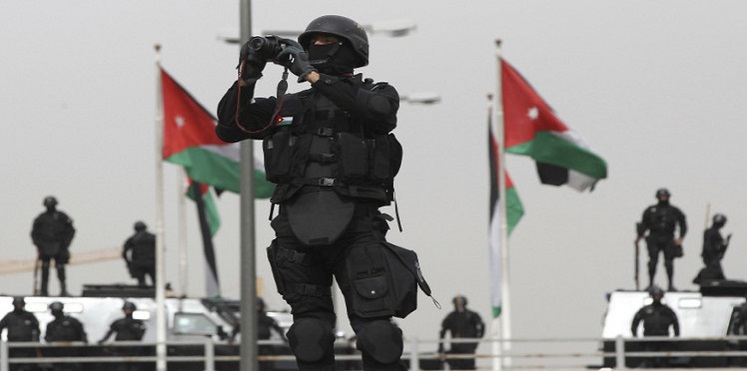
Rosnąca liczba zamachów terrorystycznych dokonywanych przez związanych z ISIS obywateli jordańskich, wraz z rosnącą liczbą młodych Jordańczyków wstępujących do organizacji salaficko-dżihadystycznych, które walczą w Syrii i w Iraku[1], powoduje wielki niepokój w Jordanii.
Jordania stała się ostatnio celem wielu zamachów terrorystycznych. Najnowszy atak miał miejsce 18 grudnia 2016 r., kiedy komórka czterech obywateli jordańskich uderzyła w szereg celów w mieście Karak; uzbrojeni ludzie strzelali do patrol i budynku bezpieczeństwa w mieście, zaszyli się w X-wiecznym zamku krzyżowców Karak i prowadzili wielogodzinną wymianę ognia z jordańskimi siłami bezpieczeństwa aż zostali zabici. Podczas walki zginęło czterech funkcjonariuszy sił bezpieczeństwa, oraz dwóch cywilów i turysta kanadyjski[2]. Podczas przeszukania wynajętego mieszkania członków komórki w mieście Al-Katraneh znaleziono pięć pasów samobójczych wypełnionych materiałami wybuchowymi i gotowych do użycia oraz inne materiały wybuchowe. Państwo Islamskie (ISIS) przyjęło na siebie odpowiedzialność za ten atak[3]. Dochodzenie pokazało, że trzech członków komórki odsiedziało kary więzienia za próbę dołączenia do Państwa Islamskiego (ISIS)[4].
Po ataku rozpoczęto pościg, by złapać poszukiwanych mężczyzn w prowincji Karak, podczas którego zginęło dalszych czterech funkcjonariuszy oraz jeden z poszukiwanych. Jeden z aresztowanych przyznał podczas przesłuchania, że to on zdobył broń i fundusze dla komórki terrorystycznej[5]. Później były dowódca Jordańskiego Departamentu Bezpieczeństwa Publicznego, ‚Atef Al-Saudi, ujawnił, że komórka planowała operację terrorystyczną na dużą skalę przeciwko kilku celom w Jordanii, którą miano przeprowadzić 31 grudnia 2016 r.[6]
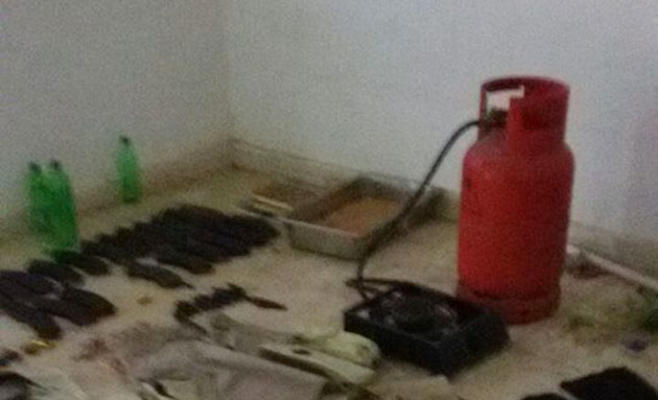 Materiały wybuchowe znalezione w mieszkaniu terrorystów w Al-Katraneh. Źródło: Al-Ghad (Jordania), 19 grudnia 2016.
Ten atak jest jednym w serii operacji terrorystycznych przeprowadzonych w ostatnich latach przez Jordańczyków. Poprzednio, w listopadzie 2015 r. jordański oficer armii otworzył ogień w bazie szkoleniowej Al-Muwakkar w pobliżu stolicy Ammanu i zabił trzech kolegów oraz trzy osoby personelu bezpieczeństwa z USA i Afryki Południowej[7]. W marcu 2016 r. ujawniono inspirowaną przez ISIS komórkę terrorystyczną w obozie dla uchodźców w pobliżu Irbid i udaremniono atak na dużą skale, który był na etapie planowania do przeprowadzenia w Jordanii[8]. W czerwcu 2016 r. aktywista salaficko-dżihadystyczny, który przyjął ideologię ISIS, zastrzelił pięciu członków Departamentu Wywiadu Ogólnego Jordanii w obozie dla uchodźców Al-Baka na północ od Ammanu[9]. W lutym 2017 r. U.S. Congressional Research Service opublikowała raport podający statystyki, gdzie Jordania zajmowała drugie miejsce, za Tunezją, na liście państw o największej liczbie swoich obywateli w ISIS, a od 2011 r. około 4 tysiące Jordańczyków dołączyło do tej organizacji w Syrii i Iraku[10].
Po wydarzeniach w Karak stało się jasne, że Jordania zaostrza kary dla tych, którzy biorą udział w działalności terrorystycznej. Na przykład, w styczniu i lutym 2017 r. aktywiści jordańscy skazani za należenie do ISIS i szerzący jego idee, otrzymywali dłuższe wyroki więzienia niż wydawane poprzednia za to samo przestępstwo. Źródło z jordańskiego wymiaru sprawiedliwości ujawniło, że sąd zdecydował narzucać ostrzejsze kary w próbie walki z ideologią ekstremistyczną i terroryzmem i wzmocnić element odstraszania[11]. 5 marca 2017 r. kilku członków komórki terrorystycznej w Irbid i strzelec z incydentu w obozie dla uchodźców Al-Baka zostali powieszeni[12]. Rzecznik rządu jordańskiego, Muhammad Al-Moumini powiedział, że egzekucje miały na celu wysłanie komunikatu odstraszającego oraz wyrażenia pragnienia Jordanii walki z terroryzmem i ekstremizmem[13].
Po zamachu terrorystycznym w Karak prasa jordańska opublikowała kilka artykułów stwierdzających, że w Jordanii działa wiele komórek terrorystycznych i nie można ich dłużej określać jako „uśpione”. Napisali, że kręgi populacji popierające ISIS wzrosły i rozszerzyły się i uaktywniły w dokonywaniu zamachów. Poważni dziennikarze jordańscy ostrzegali, że kraj nie traktuje sytuacji poważnie – aż do zarzutu niedbalstwa – i dodali, że jeśli państwo nie wypracuje poważnej strategii do opanowania tego, sytuacja tylko się pogorszy. W kilku artykułach argumentowano, że aparaty bezpieczeństwa zajmują się tym problemem w sposób niewystarczający i że istniej potrzeba reformy ideologicznej i moralnej oraz rozwinięcia umiarkowanego dyskursu religijnego. Równocześnie prasa opublikowała także artykuły zalecające egzekucję tych, którzy zostają skazani za terroryzm, bo taka ostra kara będzie stanowić odstraszenie.
Niniejszy raport [nie spolszczony] jest przeglądem dyskusji w tej sprawie w prasie jordańskiej.
Al-Ghad Editor-In-Chief: There Are Active Terrorist Cells In Jordan, But Authorities Are Lax In Dealing With Them
Jumanah Ghanimat, editor-in-chief of the daily Al-Ghad, argued that there are terrorist cells in Jordan inspired by takfiri ideology, and called for combatting extremism by reforming values and ideology. She wrote: „The dangers Jordan faces from takfiri ideology are real and visible, [so the attack] in Karak is not surprising… In truth, these are not ‚sleeper cells,’ as they are often called, but rather ‚active cells’ that plan and constantly seek to terrorize, murder, and destroy society’s ideology and values… This danger is spreading, and this is well known.
„However, what is even worse is that this is being dealt with using traditional means, which often border on leniency or laxity. Jordan has withstood this test as well, but this reminds us that 2016 saw more than one terrorist incident. There are no assurances that this won’t happen again, seeing as how public opinion polls show that hundreds of thousands of people in our society are sympathetic to this stream, even subconsciously. This requires [us] to begin a long process of reforming our ideology and values.”[14]
Senior Journalist: Terrorist Brigades Will Move Freely Among Us
Senior Al-Ghad writer Fahd Al-Khitan warned about what Jordan could face when young people who left to join ISIS return to the country, and called for „paralyzing these savage brigades and uprooting them from society.” He wrote: „The small circle of terrorists killed during the incident at Karak Castle or apprehended during the investigation includes some who fought with ISIS and returned to Jordan, or some who tried to join the group but were arrested. No fewer than 400 Jordanian young people in both these categories are currently in Jordanian prisons, and their numbers are only expected to increase… Hundreds of Jordanians are currently fighting with ISIS, and it is not inconceivable that they are considering returning to Jordan, especially if Mosul and Al-Raqqa are liberated from the organization’s control.
„According to current legal procedures, anyone [who left to join ISIS and] returns to Jordan will be prosecuted; this has happened, and is still happening, with their [returning] comrades, among them members of the Al-Qatraneh terrorist cell [that carried out the Karak attack]. Two or even five years [later,] they will be released from prison and once again engage in their terrorist activities.
„This is what happened to most of those who were prosecuted for being members of or joining terrorist organizations in Syria, and to the extremists who are currently out of prison, of whom there are no fewer than 500. If we add to that the hundreds [predicted] to return from Syria, who are highly skilled fighters, we will have terrorist brigades moving freely in society…
„The recent developments are a warning sign for the future, unless we immediately formulate a new strategy to deal with the threats on our doorstep – and, too, formulate a comprehensive method to paralyze these savage brigades and uproot them from society.”[15]
Educator: Many Jordanians Feel That Governments Tolerate The Hotbeds Of Terrorism
Zulikha Abu Risha, a journalist, educator, and columnist for Al-Ghad, implicitly accused successive Jordanian governments of tolerating religious extremism in society – thus allowing hotbeds of terrorism to spring up. She discussed whether any lesson would be learned from the events in Karak: „Against the backdrop of the serious and despicable crime in Karak, outraged social media users have accused [successive Jordanian] governments’ long-term tolerance towards the hotbeds of terrorism… Social networks have condemned the governments, and some state institutions, for the tolerance that they showed in dealing with these hotbeds, where violence against the state in the name of Islam is incited… [Users on] these [social] networks also condemned the dangerous role that has been played by propagandists and preachers in mosques, as well as in religious associations, youth camps, schools and universities, satellite TV channels, and social media.
„Now there is a new trend: Under the watchful eye of the Education Ministry, schools invite young propagandists to teach the [next] generation memorization of everything that requires the elimination of the mind, and inculcate obedience. No one invites authors, poets, pundits, musicians, and artists, who will ask questions and cultivate brainstorming. While scientific research in other countries is at its peak, some of our universities offer lectures for the general public dealing with demons, spells, and other such nonsense. What is catastrophic is that all this is done in the name of Islam! …
„Can we learn [a lesson] from the red card that the crime in Karak has held up to us all? Is it possible?”[16]
Expert On Islamist Groups: ISIS Supporters In Jordan Once Provided Ideological Support To Action; The State’s Handling Of The Situation Is Superficial And Ineffective; We Must Strengthen The Moderate Religious Discourse
Following the Karak attack, Muhammad Abu Rumman, a researcher at the Center for Strategic Studies at the University of Jordan who specializes in Islamist groups and is also a columnist for Al-Ghad, wrote in a series of columns about a turning point among some ISIS supporters in Jordan – as marked by the evolution of shows of support for ISIS to actual terrorist activity. Calling for reexamining the methods for dealing with ISIS supporters before it is too late, he noted: „There is a worrying change among ISIS circles [in Jordan]… manifested by a move from supporting, sympathizing with, and agreeing ideologically with ISIS to action by groups and cells that directly serve the organization’s agenda… Part of this group of ISIS supporters and sympathizers, which once limited itself to the philosophical, informational, and ideological levels, has now moved on to the practical level. This does not necessarily require direct orders or guidance [from ISIS], but only believing in the group’s ideas, in accordance with [its] new action dynamic, and carrying out ‚lone wolf’ or ‚sleeper cell’ [terrorist] operations… It is important to thoroughly understand these signs and developments, in a way that will trigger a change in how [we] tackle the challenge of terrorism and extremism…”[17]
In a follow-up column, Abu Rumman stated: „We cannot settle for the security approach alone in tackling [extremism]… The approach [we take] requires protecting the younger generation from falling into the trap of extremism, and, later, into the trap of terrorism. This is a challenge that the state has begun to address, but its steps are still slow, superficial, and ineffective. On the other hand, there is a need to assess our strategies and methods of addressing those who have [already] been ensnared by the organization [ISIS]. We are talking about thousands of youths… How will we take care of them?!
„The important question is: Is prison alone sufficient? I think the complete opposite. Also, the current plan of dialogue in prisons is weak and ineffective. Even worse is the possibility that prisons will become centers for recruiting, training, teaching, and indoctrinating members of the organization – as is already happening, especially among the newer [recruits] – instead of being rehabilitation centers.
„If the events of Karak pass and we do not learn from them and ponder the question of how to deal with the important challenges and questions they pose, we will have made a grave error. These people carry the attributes of an ISIS society, which includes families. The fear is that tomorrow we will face women and children who have joined this ideology, as has happened in other societies and countries.
„The national plan to fight terrorism is unconvincing, and the efforts [in this direction] that are currently invested in the cultural, social, and civil areas are not serious. This makes the danger that many young people will fall into the trap [of extremism] a real concern.”[18]
In a third column, Abu Rumman wrote: „We must redefine the phenomenon itself, since we are discussing a phenomenon with two aspects – sociopolitical and religious-cultural-ideological – and we must address both. Regarding the first [sociopolitical] aspect, it is vital not to isolate the issue of the young people from the political, social, and cultural circumstances… [and it is vital] to create the political and social conditions and atmosphere that are needed to develop a culture of moderation instead of one of extremism…
„It is important to develop the public space, which in recent decades has been pushed aside, and has collapsed. There should be informal activities in schools and universities to strengthen civil society and its role in incorporating young people [into society], and sports and youth clubs and so on should be bolstered.
„On the religious-cultural level… we must strengthen the linchpins of enlightenment and moderate religious discourse, strengthen the modern understanding of Islam, and cultivate independent national religious leaders – whether by formulating an independent and reliable view of official religious institutions and esteeming these institutions, or by conducting dialogue with moderate Islam and providing opportunities and platforms for it in the media and political arenas.
„The most important thing is to reexamine the strategy of dealing with those involved in [terrorist] activities, classify them by [social] stratum and group, and provide them with a ‚exit point.’ through which they can rebuild their lives and break free of the chains of extremist culture.
„Extremism, terrorism, and violence are a system of views related to frustration, disappointment, nihilism, and religious stagnation. We face a long and arduous historic task, but it is a necessary ‚rescue mission’ for the coming generation and societies.”[19]
Journalist: We Have Not Taken The Necessary Steps To Deal With The Extremism That Is The Source Of Terrorism; Executing Terrorists Will Deter Terrorist Supporters
Al-Dustour columnist Hussein Al-Rawashdeh addressed a report by the U.S. Congressional Research Service that cited data on the number of Jordanians who joined ISIS in Syria and Iraq. Al-Rawashdeh contended that Jordan has not taken the necessary steps to deal with extremism, even though this is easier than dealing with its results. He wrote: „If 4,000 Jordanians have joined ISIS in Syria and Iraq since 2011… then how many have joined other organizations like Jabhat Al-Nusra? And more importantly, how many of the extremists who identify with these organizations have remained in our country?… As part of diagnosing [the problem], we must admit that we have environments that produce and export extremism. These environments… have one thing in common, which is the extremism that can suddenly become terrorism, and this raises questions regarding the way we have chosen to handle [this problem, questions] that require clear and decisive answers…
„[In this context] we made two mistakes: First, we have not established centers to monitor extremist ideology in order to map it and examine its trends and the ways it attracts and recruits [people], and how it hides and spreads; and we have not unlocked the mystery of the methods used by [those who preach] this ideology, the groups [in society] it targets, and the tools it uses. The second mistake was not presenting convincing answers and narratives in order to debunk the ideas [of extremist ideology] and then deal with it…
„We have not taken the necessary steps to deal with the phenomenon of extremism, as we did to deal with terrorism, despite the fact that extremism is the chief producer of all terrorist actions, and despite the fact that nipping it in the bud is easier and more promising than dealing with its results. In fact, not only were the policies and tools we adopted to deal with extremism inadequate; sadly, they have actually increased extremism, simply because they were unconvincing and were not closely examined.”[20]
One month earlier, Al-Rawashdeh wrote about Jordan’s execution of several terrorists and the message this execution sent: „Condemning those involved in terrorism and holding them to account have become necessary, not just for the victory of justice and law, but also to prove that the country is serious about dealing with this threat that assaults our society and about blocking the path for those who identify with [terrorism]… Among the stern messages sent by the country with this wave of executions was a warning to terrorist organizations that are trying to expand their activity in order to reach us. This message reflects the state’s serious desire to continue its war against terrorism outside our borders and to combat [terrorism] aggressively if it tries to infiltrate [our country]… [Another message] was addressed to supporters of terror in [Jordan]… Its purpose is deterrence, and its point is that the fate of anyone who considers committing a crime is now known and clearly defined, and there is no place to be remiss and lax in addressing this matter… The executions bolstered the ability of the state and society to wage war on terrorism and its supporters.”[21]
*Z. Harel is a research fellow at MEMRI.
[1] See MEMRI Special Dispatch No. 6380, Jordanian MP Whose Son Carried Out An ISIS Suicide Bombing Joins Fight Against Extremism, April 7, 2016.
[2] Al-Ghad (Jordan), December 19, 2016.
[3] See MEMRI JTTM report ISIS Claims Responsibility For Attack In Karak, Jordan, December 20, 2018.
[4] Al-Ghad (Jordan), December 21, 2016.
[5] Al-Ghad (Jordan), December 21, 2016.
[6] Al-Dustour (Jordan), January 2, 2017.
[7] Al-Quds Al-Arabi (London), November 10, 2015.
[8] Al-Rai (Jordan), February 2, 2017.
[9] Aljazeera.net, June 7, 2016; Al-Rai (Jordan), June 7, 2016.
[10] Fas.org/sgp/crs/mideast/RL33546.pdf.
[11] Al-Quds Al-Arabi (London), January 24, 2017, February 22, 2017.
[12] Al-Rai (Jordan), March 4, 2017.
[13] Al-Ghad (Jordan), March 5, 2017.
[14] Al-Ghad (Jordan), December 20, 2016.
[15] Al-Ghad (Jordan), December 24, 2016.
[16] Al-Ghad (Jordan), December 20, 2016.
[17] Al-Ghad (Jordan), December 20, 2016.
[18] A-Ghad (Jordan), December 21, 2016.
[19] Al-Ghad (Jordan), December 23, 2016.
[20] Al-Dustour (Jordan), April 3, 2017.
[21] Al-Dustour (Jordan), March 5, 2017.
 ‘You’re a Liar,’ Israeli Soldiers Tell Breaking The Silence Activist in Hard-Hitting New Video
 Members of the IDF’s Caracal battalion in training. Photo: Wiki Commons.