Archives

Krav Maga: How to Defend Against a Stabbing Attack

Krav Maga: How to Defend Against a Stabbing Attack

Israel Defense Forces   Israel Defense Forces


Krav Maga is an Israeli self-defense system practiced worldwide. It teaches you to protect yourself using one weapon – your own body. Learn some moves from our soldiers!


twoje uwagi, linki, wlasne artykuly, lub wiadomosci przeslij do: webmaster@reunion68.com


Hamas supporters call for ‘revenge’ against Israel

Hamas supporters call for ‘revenge’ against Israel

AFP


Thousands attend funeral of Hamas terrorist, call for ‘revenge’ against Israel after unknown Gaza gunmen kill Hamas leader.

Hamas funeral in GazaHamas funeral in Gaza” alt=”Hamas funeral in Gaza

Thousands of Hamas supporters on Saturday called for “revenge” during the Gaza funeral of an official from the Palestinian Islamist movement gunned down the previous day.

“Revenge, revenge!” called participants at the procession for Mazen Faqha, 38, who was shot dead by unknown gunmen in the Gaza Strip on Friday.

Hamas-nominated attorney general Ismail Jaber on Saturday blamed Israel for the killing.

“This assassination has the clear marks of Mossad,” he said, referring to the Israel’s spy agency.

According to Israeli media, Faqha was responsible for cells of Hamas’s military wing, the Ezzedine al-Qassam Brigades, in Judea and Samaria.

Israel arrested Faqha and sentenced him to prison over suicide attacks which killed hundreds of Israelis during the second intifada, or uprising, between 2000 and 2005.

He was released in 2011 along with more than 1,000 other terrorists in exchange for Gilad Shalit, and transferred to Gaza.

Palestinian Authority leader Ismail Haniyeh and Gazan Hamas leader Yahya Sinwar headed the procession from the Shifa morgue to the Omari mosque, an AFP photographer said.

Khalil al-Haya, a deputy to Sinwar, promised retaliation.

“If the enemy thinks that this assassination will change the power balance, then it should know the minds of Qassam will be able to retaliate in kind,” he said.


twoje uwagi, linki, wlasne artykuly, lub wiadomosci przeslij do: webmaster@reunion68.com


Iran trying to build port in Syria, PM warns Moscow

Iran trying to build port in Syria, PM warns Moscow

Mati Tuchfeld, Erez Linn


Iran is “seeking to build its military forces in order to establish itself in Syria,” Netanyahu tells Putin during Moscow visit • “There cannot be a peace deal in Syria when Iran is there and declares its intention to destroy Israel,” PM asserts.

Prime Minister Benjamin Netanyahu met with Russian President Vladimir Putin in Moscow, Thursday | Photo credit: Reuters

Amid international efforts to strike a diplomatic arrangement in Syria, Prime Minister Benjamin Netanyahu met with Russian President Vladimir Putin in Moscow on Thursday to stress Israel’s unequivocal objection to a permanent Iranian presence there.

After their meeting, Netanyahu told reporters that Putin had “internalized” his warning.


Credit: Reuters


“There is a reason that I came to this meeting with the head of the IDF Military Intelligence Directorate,” Netanyahu said. “I wanted to tell President Putin that we see a turning point, with things [in Syria] possibly shifting from hostilities to an arrangement. It’s not over yet, and it’s unclear whether the fighting has ceased, but this is now being discussed in Kazakhstan; and that is why it was important for me to convey several critical points from the perspective of Israel’s security.”

“We discussed at length the matter of Iran, its objectives and intentions in Syria, and I clarified that there cannot be a peace deal in Syria when Iran is there and declares its intention to destroy Israel,” Netanyahu said. “They say it in the clearest terms possible; they engrave it into their ballistic missiles.”

Iran is “seeking to build its military forces, military infrastructure, in order to establish itself in Syria, including an attempt to build a seaport there,” the prime minister said.

“There cannot be peace when they continue the war and therefore [the Iranians] have to be removed,” he said. “If the goal here is to create a peaceful border or a peaceful arrangement, it runs contrary to the idea of a country that is trying to destroy us from inside Syria.”

On the matter of Israel’s presence on the Golan Heights, Netanyahu said he told Putin that Israel will never withdraw from the area. “He already knows this issue,” the prime minister said, indicating the two leaders have already discussed the matter.

The prime minister also thanked Putin for Russia’s role in the fight against radical Islam.

“Of course, in the past year, there was significant progress in the fight against the radical Sunni Islamic terrorism led by [Islamic state] and al-Qaida,” Netanyahu said. “Russia has made a very important contribution.”

“Naturally,” he added, “we do not want this terrorism to be replaced by the radical Shiite Islamic terrorism, led by Iran.”

Incidentally, Netanyahu’s remarks on the Iranian threat came on the same day that Iran’s Revolutionary Guards Corps announced it had successfully test-fired a naval missile earlier in the week.

The Iranian-built Hormuz 2, according to reports in the Iranian press, is capable of destroying moving targets at sea at ranges of up to 300 kilometers (200 miles).

“The naval ballistic missile called Hormuz 2 this week has successfully destroyed a target which was 250 kilometers [160 miles] away,” commander of the IRGC’s Aerospace Force, Amir Ali Hajizadeh, said Thursday.

The missile test is the latest event in a long-running rivalry between Iran and the United States in and around the Strait of Hormuz, which guards the entrance to the Persian Gulf. About 20% of the world’s oil passes through the waterway, which is less than 40 kilometers (25 miles) wide at its narrowest point.

According to Netanyahu, Putin also promised to give a portion of the grant it provides Russian veterans of V-Day, which it marks May 9, to Russian World War II veterans living in Israel.

Also discussed in the meeting were the fates of two IDF soldiers, St. Sgt. Oron Shaul and Lt. Hadar Goldin, whose bodies are still being held captive by Hamas in Gaza, along with civilian Avera Mengistu, who errantly crossed the Israel-Gaza border in 2014.


twoje uwagi, linki, wlasne artykuly, lub wiadomosci przeslij do: webmaster@reunion68.com


LIVING SUBMERGED: JEWS HIDING AS NON-JEWS IN NAZI GERMANY

LIVING SUBMERGED: JEWS HIDING AS NON-JEWS IN NAZI GERMANY

BERNARD EDINGER


To avoid the death camps, Marie Jalowicz went to great lengths amid harrowing circumstances, and barely survived.
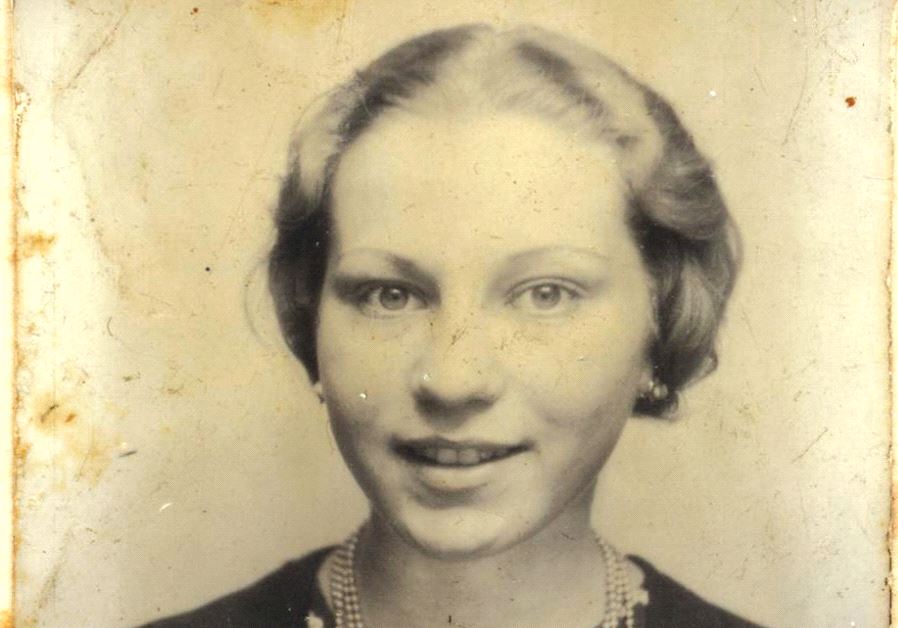
Marie Jalowicz eluded the Gestapo by using false identities and avoiding the neighborhoods where she grew up Photo By: COURTESY DR. HERMANN SIMON

I WAS born in occupied France during the Second World War, and there was not a single family meal in the decades which followed during which my mother or father did not bring up the subject of the Holocaust at least once.
Countless books have been written about the Shoah and I have read a good number of them.
But one of the most memorable memoirs of the period that I have read is “Underground in Berlin” by Marie Jalowicz Simon.

Born into an educated middle- class Jewish family in Berlin (her father was a lawyer), the author was a “U-boat” or submarine – living “Untergetaucht” (submerged). These were both terms for Jews hiding as non-Jews, in the German capital during World War II.

There were 163,000 Jews in Berlin when the Nazis took power in 1933. Many left before the war but 75,000 were still in the city in 1939. When the war ended, just 6,000 were still alive. Three-quarters of these were married to non-Jews and they were spared – but only just – by Hitler’s maniacal racial purity laws that sent some to their deaths while letting others live. And then there were about 1,500 “U-boats.” Marie Jalowicz was one of them and her story is told in her memoir.

Initially drafted for compulsory factory labor, she decided in 1941, when she was 19, that she would never survive if she lived within the law. She left her place of compulsory work and her home after her father’s death from natural causes that year (her mother had died before the war), but still lived under her real identity until June 1942, when she narrowly escaped arrest by the Gestapo.

In order to survive, she went further underground. She avoided the neighborhoods where she had grown up, and where she could have been recognized, and lived under false identities in rough, working-class districts, changing her accent and manner of speech to blend in.

She was helped by people who generally did not know she was Jewish, though they often suspected that she was avoiding the law.

Some protected her for ideological reasons – mostly hardened communist working-class folk to whom she would be eternally grateful.

One of those who helped shelter her, and who knew she was Jewish, passed her off to fellow communists as a “Russian girl parachutist” to win their sympathies.

Others protected her for more selfish reasons: She served them in return as housekeeper, cook, carer of the elderly and sex slave. “When reading her story we realize that history was not black or white but gray,” her son Hermann Simon said at the recent launch of the French edition of the book, titled “Clandestine.” The original German edition, “Untergetaucht,” was published in 2015.

“No one helped her for nothing. They did not ask this good-looking young woman for money because she had no money,” Mr. Simon, a historian and the director of the New Synagogue Berlin Foundation, told an audience at the Paris Mémorial de la Shoah, France’s central Holocaust museum and archive.

His mother’s experiences included escaping from the Gestapo when they came to arrest her in her room, and undergoing a painful self-induced abortion sitting on a bucket in a secluded outdoor garden.

She was engaged to a Chinese man and then a Bulgarian in failed efforts to get out of Nazi Germany. She did reach Bulgaria, but was rapidly deported back to Nazi Germany because Bulgarian authorities rightly suspected that her papers were faked.

She lived for a while with a syphilitic, half-mad Nazi who fortunately had no sexual demands, and claimed as his most prized possession a hair from Hitler’s dog.

She lived for two years with a tough Dutch blue-collar worker who saved her.

But he beat her regularly when he caught her reading books because he thought it distracted her from what he saw as her domestic duties toward him.

She wrote that having a black-eye blended in well in the rough-and-tumble areas where she hid.

Finally, she became one of the tens of thousands of women raped by the Soviet soldiers who captured Berlin in 1945.

After the war, she suffered a mental and physical breakdown and decided she did not have the strength to begin a new life elsewhere.

In 1948, she married Heinrich Simon, a classmate from her Berlin Jewish high school who had immigrated to prewar Palestine and joined the British Army. He came to see her in Berlin after the war and ultimately moved back there where they had two children, Hermann Simon and his sister.

She went to university and became a noted professor of the literary and cultural history of classical antiquity at East Berlin’s Humboldt University.

Perhaps in recognition of the Communists who helped to save her life, she joined the East German Communist Party.

In an afterword to her book, Hermann Simon writes, “I never asked her whether she thought of herself as a Communist. She would probably have replied that politically she was on the Left. Being a member of the Jewish community and running a fundamentally kosher household did not represent any contradiction to her.”

She nearly never spoke of her past.

But in a letter to a friend shortly after the war, she explained how she rationalized her decision to stay in Berlin. “I want to defuse the usual argument that pride doesn’t allow us to live in the land of the gas chambers. Do you think that the mob anywhere else in the world, if their worst instincts had been clearly aroused, would have behaved any worse than the mob in Germany? Germans have murdered millions of Jews. But many Germans, risking their lives, made great sacrifices to help me.”

Marie Jalowicz Simon dictated her memoirs to her son in the very last year of her life. She died in September 1998, at age 75.

Hermann Simon said his mother dictated 77 tapes of 60 to 90 minutes each and it took him years to put together the result, laboriously checking dates and names, and finding, he said, that his mother’s memory had been absolutely crystal clear.

The mind boggles at some of the incidents recounted by the author. She tells of a Jewish woman household helper held in a Berlin train station just before being put aboard a train bound “eastwards,” i.e. to death by gassing.

While there, the woman suffers from acute diarrhea and policemen allow her to go to the toilet. When she emerges, the train is gone.

The Gestapo agents escort her home, break the seals on the apartment door to let her in and tell her to report back to the station the next day.

The woman, not knowing what else to do or who could help her, returns as ordered and is sent to her death.

Then, there are the “greifers” (catchers), Jews to whom the Gestapo promised immunity from deportation in exchange for them prowling Berlin looking for fellow Jews to turn in.

Several of them became notorious, including Stella Goldschlag, nicknamed “The Blonde Ghost,” who was probably responsible for hundreds of deaths but who survived a Soviet prison term after the war. Marie kept clear of other Jews because she suspected that some worked with the authorities.

There are very few light-hearted moments in these memoirs but the author recalls staying in her flat and trying to listen to foreign radio stations one morning when all the neighbors went down to shelters because of an Allied bombing raid.

“Suddenly, I heard a distant voice [in Hebrew]: Po Yerushalayim (This is Jerusalem). I knocked on the wall above the receiver and cried, “Chaverim (comrades), I’m shut up here with an impossible Dutchman in an apartment full of bugs belonging to a Nazi woman… But I want to live! I’m fighting. I’m doing my best to survive. Shalom, shalom!”


twoje uwagi, linki, wlasne artykuly, lub wiadomosci przeslij do: webmaster@reunion68.com


No, Poland’s Elites Didn’t Try to Save the Jews During the Holocaust

Opinion:// No, Poland’s Elites Didn’t Try to Save the Jews During the Holocaust

Jan Grabowski


A Holocaust scholar responds to a Polish historian’s critique of his claims, in a recent Haaretz interview, about the extent of Polish collaboration in the persecution of Jews during World War II.

A Polish police officer checks a Jewish man’s documents at the Kraków Ghetto, 1941. The Polish national archive, from ‘Hunt for the Jews.’

In a piece published in Haaretz on February 27, Dr. Grzegorz Berendt, a historian and an employee of the Polish Institute of National Remembrance – a state-appointed “custodian” of historical memory – expressed his reservations regarding Ofer Aderet’s February 10 article discussing the role of certain segments of Polish society in the extermination of Polish Jewry during the Holocaust. Since the article in question dealt for the most part with my book “Hunt for the Jews,” which was recently published in Hebrew by Yad Vashem, and since the article drew extensively on an interview with me – I feel obligated to respond to Berendt’s allegations and misrepresentations.

Dr. Berendt’s rather emotional polemic is divided into three parts. In the first, he deals with the suffering of the Polish nation under Nazi occupation. The oft-repeated and well-known historical facts he cites are undisputed and obvious: The level of terror directed at the Poles by the Germans was much higher than that directed at the people of other nations in occupied Western Europe. Granted. The relevance of Berendt’s assertion to the topic at hand, however, remains unclear. Ofer Aderet’s article (and my own work) do not focus on the suffering of the Poles (something that has been well documented), but on the much-less-studied crimes perpetrated by the Poles upon their helpless Jewish fellow citizens. Berendt seems to suggest that the existence of German genocidal policies directed at the Poles somehow deflect and defuse “inconvenient” findings about the Polish involvement in the destruction of the country’s Jews. This, of course, makes little sense, and comes off as disingenuous.

The second part of Berendt’s polemic suggests the existence of a large-scale effort undertaken in Poland to save the Jews. This, unfortunately, flies in the face of painstaking historical research conducted both in Poland and abroad over at least the past decade. Berendt argues that both Polish elites and the leadership of the Polish state (in exile, in London) were sympathetic to the Jews’ plight. What he fails to mention, however, is that the rare public declarations of support from the Polish government-in-exile were met by the Polish resistance, and by the population in Poland, with outright hostility. Gen. Stefan Rowecki, commander-in-chief of the Polish resistance, went so far as to warn the authorities in London to remain silent about the Jews, lest they alienate the Polish masses. Jan Karski – the oft-quoted underground courier – went even further and alerted authorities that “the solution of the Jewish question” was perhaps “the only bridge on which the German occupier could meet the majority of Polish society.”

Claiming – as Berendt does – that the few known declarations from members of the Polish “elites” had an impact on the ground is, to put it simply, a historical fallacy. The attitude of the decision-makers toward the Jews in occupied Poland can be described as indifferent at best, and openly hostile at worst. To wit: Roman Knoll, one of the highest members of the underground civil authorities, stated, as late as the summer of 1943, that there would be no room for the Jews in an independent Poland – even for the few who managed to survive the Holocaust, writing, “The mass murder of Jews in Poland carried out by the Germans will diminish the Jewish problem but it will not remove it altogether.” Knoll’s declaration was echoed in the Polish underground press from left to right – examples are far too numerous to cite. From the point of view of the dying Jews, the rare expressions of support emanating from London carried no weight; what counted was the attitude of the leaders of the local resistance, as well as that of high officials of the Polish Catholic church. On both counts, the Jews were severely disappointed. The silence of the Catholic Church was overwhelming.

Equally false is Berendt’s assertion regarding the alleged universality of the “helping-hand” phenomenon. Helping the Jews, argues Berendt, was a particularly risky pursuit, and the death penalty introduced by the Germans had a powerful dissuasive force. Once again, the IPN historian obfuscates the historical realities: The death penalty was a particularly potent deterrent because there was no social permission for harboring the Jews. The death penalty had been introduced, to far lesser effect, for a variety of crimes and breaches of the German order. Why were so many people willing to risk their lives breaking various other German regulations, but for a Jew it was so difficult to find shelter? After all, there was no shortage of those who kept unlicensed livestock, owned a radio receiver, told “political” jokes, or read the underground press – not to mention being involved in resistance. And all of these pursuits carried with them a very real threat of a death sentence.

The fact that until very recently, many Poles – recipients of the prestigious Righteous Among the Nations honor – pleaded with Yad Vashem to remain anonymous, fearing their neighbors, is telling. (Consequently, some of the decorated received their medals during quiet ceremonies held at the Israeli embassy in Warsaw or in other, equally “secure” ways.)

Dr. Berendt admits that certain rogue elements of Polish society assisted the Germans in their genocidal designs, but he states at the same time that the deadly actions of the Polish police were undertaken only at German behest. That’s wrong: One of the significant findings of my research was the surprising degree of own agency among Polish policemen, who killed Jews on their own, without any direct German involvement – and often without the knowledge of the Germans. Another, even more significant finding (absent, not surprisingly, from Berendt’s rebuttal), was the degree of involvement of other Polish actors – thousands of volunteer firefighters, youth from the “Construction Service” (Baudienst) or countless “bystanders” who took part in the brutal liquidations of the local ghettos and in the hunts for the Jewish survivors that followed.

Finally, Berendt takes issue with the historical data presented in my research and with the level of complicity of Poles in the German plan of extermination. He is dismissive of my quoting of Szymon Datner in order to prove that about 10 percent of Jews were successful in their attempts to flee the liquidated ghettos, but that, once outside, the vast majority of them were been either hunted down and killed by Poles or delivered by them to the Germans. Berendt writes that Datner’s numbers are not reliable and that this Polish-Jewish historian did not conduct any concrete research into this question.

That claim, coming from a historian who has yet to author his first book about the Holocaust, is simply galling. Berendt should know that Szymon Datner acquired his statistics firsthand – first as a Jew under occupation, later as a fighter in the 1943 uprising in the Bialystok Ghetto and, finally, after the war, during more than 40 years of work as a historian. But Datner was not alone in demonstrating the scale of complicity of certain segments of Polish society in the extermination of the country’s Jews. Emanuel Ringelblum, the founder of the Oneg Shabbat, the underground archive of the Warsaw Ghetto – estimated the number of Jewish victims of Polish policemen alone in the “hundreds of thousands.” Sadly, Ringelblum did not conduct as thorough a study as Berendt would have liked – he was caught by the Polish Criminal Police hiding in his bunker, in Warsaw, on March 7, 1944, 73 years ago, and was subsequently shot to death by the Nazis. Furthermore, were Berendt up to date with the current scholarship, he would know that Datner’s numbers have been corroborated by recent research, which takes account of studies and documents produced by the Polish resistance during the war.

In the end, Dr. Berendt states forcefully that, “There is no agreement concerning the extension of responsibility for their crimes to tens of millions of people who committed no crime. In the civilized world the principle of guilt by conjecture is not respected.” Indeed, there is no such agreement, because such numbers have been cited neither by me nor by Ofer Aderet in his article. Unfortunately, indignation fueled by ignorance is a recipe for very poor history.

Should Berendt decide to turn his indignation to a good use, if he is truly concerned about the state of research in the field of Polish-Jewish history, he might want to enlighten his superior, Dr. Jaroslaw Szarek, director of the IPN, regarding the true identity of those who carried about the mass murder of Jews in Jedwabne. Dr. Szarek, as we learned from his declaration last year, believes that it was the Germans who were responsible for that crime. Berendt could also look into the disgraceful exhibition of the recently opened Museum of Poles Saving Jews in Markowa, which is a product of his institution, and which shamelessly distorts the history of the Shoah. Finally, he could enlighten the Polish education minister, who to date has been unable to acknowledge that Poles were responsible for murdering Jews in the notorious 1946 Kielce pogrom. Or a number of other outrageous allegations, misrepresentations and outright lies that litter the media in Poland today. Such an attempt, however – given the present political climate in Poland – would require a certain degree of courage.


Jan GrabowskiJan Grabowski is Professor of History at the University of Ottawa and Senior Invitational Scholar at the Advanced Holocaust Studies Center at the United States Holocaust Memorial Museum. He received the 2014 Yad Vashem International Book Prize for Holocaust Research for his book Judenjagd.


twoje uwagi, linki, wlasne artykuly, lub wiadomosci przeslij do: webmaster@reunion68.com