Archive | January 2020

Hebrew Inscription on a 3,000-year-old Jar Could Redraw Borders of Ancient Israel

Hebrew Inscription on a 3,000-year-old Jar Could Redraw Borders of Ancient Israel

Ariel David


The inscribed jar in situ, in a destroyed Iron Age building in Abel Beth Maacah Robert Mullins

Archaeologists were surprised to find Hebrew writing in Abel Beth Maacah, which some don’t think was part of the ancient kingdom

Nearly 3,000 years ago, a scribe inked a single Hebrew word on a large jar filled with wine or something else, which had been stored in a building at Abel Beth Maacah, an ancient settlement at the northern tip of today’s Israel. Now archaeologists have found it. That one word in an “unexpected” place could redraw the map of the ancient kingdom of Israel in the 10th-9th century B.C.E., showing it may have stretched farther north than is currently supposed.

There is a big debate among archaeologists on whether Abel Beth Maacah, which is mentioned in the Bible three times, was under the control of Israel, the Phoenicians, the Arameans, or was independent during this period.

This discussion, and questions raised by the discovery of that one word on a jar, also touch on the broader debates on the historicity of the Bible, especially the true extent of the territory of the Kingdom of Israel and the belief system of the ancient Israelites.

The Hebrew word came to light last summer after archaeologists unearthed five smashed storage jars in a large Iron Age building, say Dr. Naama Yahalom-Mack and Dr. Nava Panitz-Cohen of the Hebrew University of Jerusalem, who are leading the dig jointly with Prof. Robert Mullins of Azusa Pacific University in Los Angeles.

“I’ll admit that we didn’t see the inscription when we washed the finds,” Yahalom-Mack tells Haaretz, shuddering at the thought of the near miss. But when restorer Adrianne Ganor began piecing together the broken shards, she noticed faint traces of ink on one of them.

Multispectral imaging brings out the faint “leBenayau” inscription on the jar found at Abel Beth Maacah Courtesy of the Leon Levy Dead Sea Scrolls Digital Library, Israel Antiquities Authority / Shai Halevii

Multispectral images taken at the same lab in the Israel Museum that studies the Dead Sea Scrolls gave experts a clearer view of the text, enabling them to decipher the five-letter word written in ancient Hebrew script, Yahalom-Mack says.

The inscription reads “leBenayau,” simply meaning that the storage jar and its contents “belong to Benayau.”

While the inscribed jar was found empty, one of the broken jars unearthed next to it contained a single grape pip and possible wine residue, leading archaeologists to suspect they may have stumbled upon Benayau’s wine cellar.

Labeling goods with the prepositional “le” (meaning “to” in Hebrew) followed by the owner’s name was a typical administrative practice throughout the ancient Levant. But while the text would have been mundane to its writer, its significance to archaeologists today is anything but.

This is the first inscription unearthed at Abel Beth Maacah, Panitz-Cohen says. Crucially, the archaeologists date the writing to more than 2,900 years ago. This was a tumultuous time in the history of the early Israelites and particularly for the northern reaches of the Kingdom of Israel, which changed hands numerous times, hence the uncertainty about control over the town.

Divination by bones

Abel Beth Maacah is a tel – a mound containing the stratified remains of multiple settlements over millennia of habitation. Since 2013 it has been excavated under license from the Israel Antiquities Authority and the Israel Nature and Parks Authority, with support from the Israel Science Foundation and private donors.

The site is located at the tip of the Galilee, near the modern-day town of Metula and Israel’s borders with Lebanon and Syria.

Some 3,000 years ago, its situation was much the same, and the then bustling trading town was sandwiched between Tyre and Sidon, prosperous Phoenician city-states on the coast; the powerful Aramean kingdom centered on Damascus;and the Kingdom of Israel with its capital in Samaria.

Ancient Israel in Iron Age IIa , Institute of Archaeology, Hebrew University of Jerusalem

Because of its location, researchers have long been debating the identity of Abel Beth Maacah’s inhabitants and the geopolitical affiliation of the town and its surrounding region during different eras.

“The allegiance of this city and the identity of the population in the 10th-9th centuries B.C.E. are a big debate,” says Yahalom-Mack. “What was their connection to Israel? Were the religion, the language, and the culture the same as in Israel? We are looking for evidence of Abel belonging politically to one entity or another, while it is also possible that it was an independent city-state.”

When the Bible first mentions Abel Beth Maacah, in 2 Samuel 20, it does so in connection with King David, and makes it clear that the city was part of Israel at that time, which would have roughly been in the middle of the 10th century B.C.E. But most scholars today agree that the Bible was written centuries after the time of King David and should not be taken literally, particularly when describing David and Solomon’s united monarchy, whose very existence and extent are still the subject of acrimonious debate.

The dig at Abel Beth Maacah has so far painted a complex picture of the town’s cultural identity. Archaeologists have unearthed beautifully colored Phoenician pottery alongside pots that are more typical of areas to the south; animal knucklebones (also known as astragali) that were used for divination and a one-of-a-kind figurative sculpture, possibly depicting the head of a king.

Into this mosaic of material culture enters the newly discovered “leBenayau” inscription.

One question that the archaeologists want to clarify is whether the jar was imported or produced locally. For this they are conducting a petrographic analysis of the vessel, which could help them determine the origin of the clay. “When we find storage jars at sites like this, they are usually for local goods, although the possibility that this was a storeroom for jars that reached it via trade cannot be ruled out,” says Panitz-Cohen.

While the archaeologist cautions that a single inscription does not an Israelite town make, it still “connects Abel Beth Maacah to the Israelite sphere,” she says.

From Dan to Beersheba

Benayau’s jar and other finds at the site may prove that an archaeologist named Aviram Biran, who since the 1960s researched the ancient city of Dan – just six kilometers from Abel Beth Maacah – was right all along.

Biran concluded that the Dan area was well populated from nearly 3,000 years ago. This, to some extent, confirmed the biblical narrative that repeatedly describes Israelite territory as stretching “from Dan to Beersheba” (for example, in 1 Kings 4:25) already in the time of David and Solomon, that is, about 3,000 years ago.

Later researchers challenged that, finding little evidence of habitation in this border town until the conquest by the Aramean king Hazael around 2850 years ago.

In other words, recent thinking has been that not only wasn’t northern Israel “Israelite:” it was mostly empty and the Israelite control “from Dan to Beersheba” was a later invention.

The inconsistency has led some scholars, like leading Israeli archaeologist Israel Finkelstein, to theorize that the biblical descriptions of the vast United Monarchy were historical anachronisms and were actually inspired by the later expansion of the northern Kingdom of Israel in the 8th century B.C.E.

During this time, mainly under the Israelite king Jeroboam II, Israel vanquished the Arameans and demonstrably controlled the Dan-Abel area, within a vast territory ranging from Syria to the Sinai desert, including the Kingdom of Judah and its capital Jerusalem.

But before that, this theory goes, the Israelites were nowhere to be seen in the vicinity of Dan and Abel.

Now the pendulum may be swinging back in favor of Biran’s views. In Abel Beth Maacah, over the last couple of years the ongoing excavation has uncovered not only the “leBenayau” inscription but a bevy of other finds dated to the time when the region was supposedly empty.

At least two large public buildings, including the one where the jars were found, as well as a massive casemate fortress have surfaced so far and organic finds therein have been carbon-dated to the 10th-9th centuries B.C.E., Yahalom-Mack and Panitz-Cohen say.

So, Abel Beth Maacah was certainly not uninhabited at the time, which may speak of the region in general, they say.

A key to challenging the prevailing paradigm on the status of this region at that time will be confirming and refining the dating of the inscription, says Dr. Eran Arie, curator for archaeology of the Iron Age and Persian Period at the Israel Museum in Jerusalem. Arie did not take part in the Abel dig but is keenly aware of the issue at hand since in 2008 he published a landmark article that identified the proposed settlement gap in nearby Dan.

“If the inscription is from the 8th century B.C.E. then it’s still important but not a big surprise, because we know that in that period, the Kingdom of Israel reached until Dan,” he says. “But if it’s really from the 9th century B.C.E. it reopens questions on the connection of this area to Israel and may force us to rethink some of our conclusions. This is not a bad thing: it’s always important to adjust our interpretation when new evidence emerges.”

The inscription itself cannot be carbon-dated but Panitz-Cohen avers that she is “very comfortable in saying that these kind of jars are from the 9th century, maximum the very beginning of the 8th century B.C.E.”

The “Benayau” inscription was also analyzed by Prof. Shmuel Ahituv of Ben Gurion University and Prof. Christopher Rollston, a renowned epigraphist from George Washington University, who gave the same range of dates for the type of script used, Panitz-Cohen says.

Again, she and Yahalom-Mack caution that the discovery of the inscription and other remains are not enough to say that this was Israelite territory as early as around 3,000 years ago – but they do suggest that archaeologists may have to revisit their theory about the Galilee panhandle being depopulated at the time.

The inscribed jar found at Abel Beth Maacah Tal Rogovski

Clearly, thousands of people were living in Abel Beth Maacah, including, possibly, at least one Hebrew man named Benayau.

What’s in a Yahwistic name?

Speaking of Benayau, what can be said about the hero of this story? In order to acquire or receive large quantities of goods he was likely someone of means or power, but his name is not known from other records. Some additional important information however can be gleaned from the find itself.

The jar bearing his name is unusual in that its handle carries a seal impression in the form of a cross or star.

Stamping a seal onto a clay vessel was a common way of marking it as property in the ancient world. Many different kinds of seal impressions have been found across the Levant. But this particular imagery doesn’t have any known parallels, Yahalom-Mack says.

It is also uncommon for texts during this period to be written in ink rather than inscribed into the clay, the archaeologist says.

These aspects of the find are certainly intriguing for researchers, but the most interesting and telling part is the name of the man himself.

Benayau means “God has built” and derives from the root of the Hebrew verb banah (to build) and the suffix yod-waw (יו), which refers to YHWH, the God of the Bible. This makes it a theophoric name, because it includes the name of the divinity worshipped by its bearer – or, at least, by his or her family.

Unique cross-shaped incision on the handle of the inscribed jar found in Abel Beth Maacah Tal Rogovski

Theophoric names were common in the ancient Near East and invoked the protection of multiple Levantine deities, such as Ba’al, Hadad, Chemosh and so on. Benayau’s is what experts call a Yahwistic name, and marks him as an Israelite and a worshipper of YHWH.

It also identifies him as a subject of the northern Kingdom of Israel, as opposed to the southern Kingdom of Judah.

Judahite Yahwistic names used the suffix yod-hey-waw (יהו). Had he hailed from, say, Jerusalem, his name would have been Benayahu.

If indeed the inscription dates to 2,900 to 3,000 years ago, his is one of the first appearances of a Yahwistic name in the archaeological record, says Dr. Mitka Golub-Ratzaby, an archaeologist from the Hebrew University and an expert on ancient Hebrew names. (Yahwistic names were also identified in inscriptions found at Kuntillet Ajrud in the Sinai, dating to a roughly similar time.)

It is here that Benayau’s story intersects with another burning question in the history of Judaism: when and how did the ancient Israelites come to abandon paganism and become worshippers of YHWH?

Drawing from Kuntillet Ajrud, an Israelite outpost in Southern Negev, 8th century B.C.E. Alamy

The Bible implies that the twelve tribes of Israel turned into a Yahwistic people pretty much overnight after escaping bondage in Egypt and receiving the Law on Mount Sinai. Of course, they frequently sinned by making idols or turning to pagan deities, but overall they are described as a monotheistic people since the time of Moses, centuries before the birth of the kingdoms of Israel and Judah.

No monotheists they, the earliest Jews

Restorer Adrienne Ganor poses with the inscribed jar found at Abel Beth Maacah Nava Panitz-Cohen

However, archaeology and biblical scholarship tell a very different story. The very word Israel, itself a theophoric name, indicates that these people were initially worshippers of El, the main deity in the Canaanite pantheon. Also, there are very few Yahwistic names in the biblical stories of the early Israelites: think of Saul, David, Solomon or the prophet Samuel (there’s that El again) – none are Yahwistic.

Only in biblical chapters that are set from the 9th century B.C.E. onwards do Yahwistic names become a common motif. The first Israelite kings to bear Yahwistic names were Jehoshaphat of Judah and Ahaziyah of Israel, both of whom are supposed to have reigned in the 9th century B.C.E.

Archaeologically, the first certain extrabiblical mention of the god YHWH himself occurs in the Mesha stele, a Moabite inscription dated to the late ninth century B.C.E.

And indeed it is only at the end of this century that Yahwistic names begin to appear in ancient Hebrew inscriptions, even as theophoric names invoking other gods remained common, explains Golub-Ratzaby.

Up to the end of the 8th century B.C.E., only about half of theophoric Hebrew names reference YHWH. That percentage grew to 70 percent in the 7th-6th century B.C.E., says the archaeologist, who has created an online database of Hebrew names from the Iron Age found in inscriptions across the Holy Land.

All this suggests that the spread of Yahwism was a slow process that took centuries, during which YHWH progressively assumed a greater importance in the national pantheon but continued to be worshipped alongside other deities, such as Asherah, who was probably believed to be YHWH’s spouse.

In other words, until the destruction of the First Temple by the Babylonians in 586 B.C.E., the Hebrews were not monotheists. They adopted a belief system focused on a single, universal god only after the exile in Babylon, during the Second Temple period.

All this of course happened centuries after Benayau’s death, but the discovery of his name in Abel Beth Maacah, so far from the heartland of the Israelite nation, is certainly powerful testimony to the slow but inexorable spread of Yahwism, which, for reasons still unknown, probably began to pick up not long before his own lifetime.

The theophoric component of Benayau’s name further strengthens the link between Abel Beth Maacah and ancient Israel, while still not being enough to clinch the argument that this was an Israelite town, say the archaeologists behind the find.

“This inscription could be evidence that the city’s administration was in the hands of people who spoke Hebrew with Yahwistic names,” concludes Yahalom-Mack. “It was found in a warehouse that apparently belonged to a local and he had a Yahwistic, Israelite name: this can give us a hint of who this city belonged to at this time.”


Ariel David is an editor at Haaretz English, and a Tel Aviv-based foreign correspondent for Italian and English-language publications. He worked for five years as AP’s correspondent in Rome, covering Italy and the Vatican.


Zawartość publikowanych artykułów i materiałów nie reprezentuje poglądów ani opinii Reunion’68,
ani też webmastera Blogu Reunion’68, chyba ze jest to wyraźnie zaznaczone.
Twoje uwagi, linki, własne artykuły lub wiadomości prześlij na adres:
webmaster@reunion68.com


Your News From Israel – Jan. 9, 2020

Your News From Israel – Jan. 9, 2020

   ILTV Israel News


President Trump sees a surge in Israeli popularity, a new Israeli invention is completely changing the future of war and later, we’ll reveal the newest desert hot-spot that everyone is going to want to see.

Zawartość publikowanych artykułów i materiałów nie reprezentuje poglądów ani opinii Reunion’68,
ani też webmastera Blogu Reunion’68, chyba ze jest to wyraźnie zaznaczone.
Twoje uwagi, linki, własne artykuły lub wiadomości prześlij na adres:
webmaster@reunion68.com


Groźna prawda o BDS i antysemityzmie na kampusach

Groźna prawda o BDS i antysemityzmie na kampusach

Jonathan S. Tobin
Tłumaczenie: Małgorzata Koraszewska


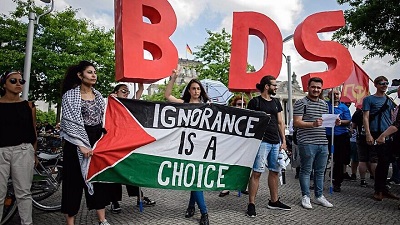
Donald Trump podpisał dekret prezydencki o stosowaniu Title VI 1964 Civil Rights Act do ochrony żydowskich studentów narażonych na antysemityzm na uniwersyteckich kampusach, a z wielu stron słychać próby zdyskredytowania tego posunięcia. Zarówno lewicowe grupy, jak media głównego nurtu, takie jak „New York Times”, starają się stworzyć wrażenie, że determinacja rządu, by chronić studentów przed nienawiścią ze strony ruchu BDS, jest kontrowersyjnym planem, który zdławi wolność słowa i zaszkodzi żydowskim studentom bardziej niż im pomoże.

Dekretowi otwarcie sprzeciwiły się antysyjonistyczne grupy, takie jak IfNotNow i Jewish Voices for Peace, jak również J Street, która nadal twierdzi, że jest proizraelska, ale której związki z opozycją wobec Trumpa zobowiązują ją do sprzeciwiania się właściwie wszystkiemu, co robi prezydent. W ciągu kilku dni „New York Times” opublikował dwa artykuły na ten temat, co pokazuje, jak zdecydowani są ludzie w mediach, by przedstawiać BDS na uniwersyteckich kampusach jako idealistyczny aktywizm zagrożony przez represyjną administrację. Zwolennicy BDS byli przedstawiani życzliwie i w artykułach cytowano więcej żydowskich oponentów Trumpa niż zwolenników tego dekretu.

Zdaniem wielu krytyków Trumpa, mówienie o antysemityzmie na kampusach przez zarówno rząd, jak żydowskie grupy głównego nurtu, które popierają ten dekret (włącznie z takimi, które są głęboko krytyczne wobec Trumpa, jak Anti-Defamation League) jest podstępem, którego prawdziwym celem jest zdławienie głosów krytykujących Izrael. Nowy raport jednak, zatytułowany “The New Anti-Semites,” autorstwa Marca Greendorfera z Zachor Legal Institute i opublikowany przez StopAntisemitism.org, jest silnym antidotum na dezinformację o BDS szerzoną przez tych, którzy pragną podważyć starania Departamentu Edukacji USA do egzekwowania prawa i chronienia żydowskich studentów.

Ten raport jest lekturą obowiązkową dla wszystkich, których cały pogląd na tę sprawę jest wypaczony przez ich niesmak wobec Trumpa. Jest tam bardzo szczegółowe badanie licznych incydentów antysemickiego podżegania związanego z ruchem BDS na całym świecie i w Stanach Zjednoczonych, włącznie z tymi, w których zaangażowana jest organizacja Students for Justice in Palestine, którą to grupę „New York Times” próbuje wybielać.

To będzie przerażająca lektura dla każdego żydowskiego rodzica, który właśnie ma wysłać swoje dziecko na uczelnię. Tym jednak, co czyni ten raport tak ważnym, jest to, że badania Greendorfera dowodzą, że dekret Trumpa jest, jak pisałem w zeszłym tygodniu, nie tylko produktem prawnego konsensusu, z którym zgadzały się administracje i George’a W. Busha, i Baracka Obamy, ale niezbędną reakcją na rosnącą falę antysemityzmu, który szerzy się na kampusach Ameryki Północnej.

Ten raport pokazuje także bezpośredni związek między antysemickimi działaniami grup takich jak SJP a definicją antysemityzmu International Holocaust Remembrance Alliance. Ta definicja, którą Trump cytował – i którą zaakceptowały dziesiątki państw i Departament Stanu USA – mówi wyraźnie, że demonizowanie Izraela i jego zwolenników oraz osądzanie Izraela według podwójnych standardów, jakich nie stosuje się wobec żadnego innego kraju, jest klasycznym antysemityzmem. A to właśnie ruch BDS robi codziennie, wraz z innymi przykładami siania nienawiści, co jest sprzeczne z ich czyściutkim, fałszywym obrazem działania na rzecz praw człowieka, jaki „New York Time” przypisuje jego członkom.

Ale w raporcie Greendorfera jest więcej niż tylko znana litania znanych okropności ruchu BDS. Raport “The New Anti-Semites” jest bezcenny, ponieważ ilustruje także trzy kluczowe punkty, które obalają starania o obronę niedającego się obronić sojuszu żydożerców.

Pierwszym punktem jest zdemaskowanie mitu, że BDS jest zakorzeniony w braku przemocy i wysiłkach na rzecz pokoju. Są ci, którzy racjonalizują twierdzenie BDS, że jego założyciel, palestyński aktywista Omar Barghouti, ma za cel pracę na rzecz koegzystencji, nie zaś przemoc między Izraelczykami a Palestyńczykami. To jest fałsz. Celem Barghoutiego zawsze była eliminacja żydowskiego państwa z powierzchni planety. Jego celem nigdy nie był wyłącznie nacisk na Izrael, by wycofał się z Zachodniego Brzegu lub by izraelski rząd zmienił swoją politykę. Mimo twierdzeń, że aktywiści BDS pracują na rzecz praw człowieka, ci, którzy popierają BDS, pracują na rzecz celu, który jest formułą na niekończącą się wojnę, nie zaś pokój.

Po drugie, raport przedstawia niepokojące nakładanie się na siebie palestyńskich grup, które finansują i popierają BDS, z tymi, które także propagują terroryzm. Nie jest tylko tak, że amerykańscy aktywiści BDS angażują się w antysemickie obelgi i pracują na rzecz antysemickich celów, stowarzyszyli się także z palestyńskimi grupami, które zarówno stosują przemoc, jak same szerzą nienawiść do Żydów.

Trzecim i dość otrzeźwiającym faktem, który Greendorfer wyciąga na światło dzienne, jest sposób, w jaki ruch BDS znalazł dziwnych towarzyszy na skrajnej prawicy politycznego spektrum. Nie jest to naprawdę zaskakujące, ponieważ ekstremiści lewego i prawego skrzydła zawsze w historii znajdowali wspólny grunt w antysemityzmie. Jest to jednak niemała ironia w tym wypadku, ponieważ ci, którzy starają się zdyskredytować starania Trumpa przeciwdziałania antysemityzmowi na kampusach, często twierdzą, że uwaga zwracana na lewicowy antysemityzm jest odwracaniem uwagi od groźby przychodzącej z prawej strony. Niemniej ruch BDS otrzymuje silne poparcie od prawicowych siewców nienawiści, takich jak David Duke, rasistowskie witryny internetowe, takie jak Stormfront i neonazistowskie grupy w Stanach Zjednoczonych i w Europie.

Ruch BDS jest najdalszy od potępiania nienawiści płynącej z prawicowego skrzydła, dostarcza mu tylko argumentów i wzmacnia jego starania o delegitymizację Żydów i państwa Izrael.

Raport “The New Anti-Semites” powinien stanowić otrzeźwiającą lekturę dla Żydów i innych Amerykanów, którzy mogą nie lubić Trumpa, niemniej nadal chcą popierać walkę z antysemityzmem. Nie można bronić lub racjonalizować celów ruchu BDS bez świadomego zacierania jego antysemickiego celu, dyskursu i zachowań jego członków. Ci, którzy sprzeciwiają się dekretowi Trumpa, mogą twierdzić, że bronią wysokiej pozycji moralnej, ale w rzeczywistości tarzają się w błocie z najgorszego rodzaju antysemitami i zwolennikami terroryzmu.


Jonathan S. Tobin – Amerykański dziennikarz, redaktor naczelny JNS.org, (Jewish News Syndicate). Komentuje również na łamach National Review, New York Post, The Federalist, w prasie izraelskiej m. in. na łamach Haaretz.


Zawartość publikowanych artykułów i materiałów nie reprezentuje poglądów ani opinii Reunion’68,
ani też webmastera Blogu Reunion’68, chyba ze jest to wyraźnie zaznaczone.
Twoje uwagi, linki, własne artykuły lub wiadomości prześlij na adres:
webmaster@reunion68.com


‘For the first time, I’m ashamed to be a politician’

‘For the first time, I’m ashamed to be a politician’

Gideon Allon


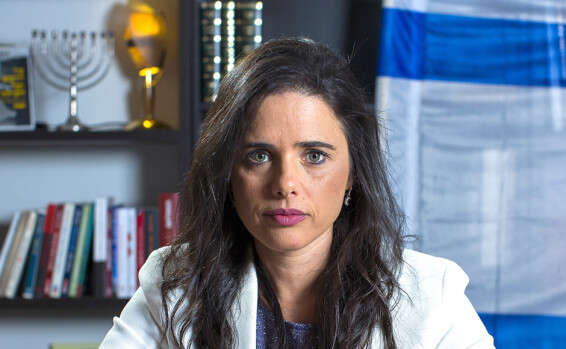
Yamina leader Ayelet Shaked | Photo: Yehoshua Yosef

Two years running, (2018 and 2019), Yamina MK Ayelet Shaked has been ranked No. 1 on a list of the most influential women in Israel. In her four years as justice minister, she spearheaded wide-reaching reforms to the legal system, and unlike current Justice Minister Amir Ohana, she enjoyed good relations with the attorney general and the state’s attorney rather than fighting with them in public.

“We knew how to respect each other,” Shaked says.

Q: Recently, you argued that the legal system is too involved in government affairs and in the authorities of ministers in the transitional government. What did you mean?

“The legal system has castrated the transitional government. Transitional governments used to approve appointments, pass budgets, and function like governments in every aspect, because that is the law. Today, people want to put a legal counselor on every decision by a minister in a transitional government, and that is unacceptable. A government is a government, and its job is to govern. Just like there’s no such thing as a “half-pregnancy,” there can’t be a “half-government” – so why don’t they let it do its job?

“The law doesn’t discuss transitional governments at all, so there is no need to assign interpretations to the law that don’t exist. One of the absurd things is that [former Chief Justice] Dorit Beinisch was appointed to the Supreme Court by the Judges Selection Committee under a transitional government.”

Q: If Prime Minister Netanyahu wins the next election, can he assemble a government, even with three indictments against him?

“Because the legislative branch decided that a prime minister can stay in office and be on trial while under indictment, no court has the authority to interpret the law differently. The legislative branch never decided that an MK under indictment cannot be given the mandate to form a government. To prevent Netanyahu from forming a government after the election, there would have to be some fancy legal footwork, and that’s dangerous for democracy. The public will decide on March 2 whom it wants to lead the people, not the judges.”

Q: Who is responsible for us having to hold a third election?

“The responsibility lies with Blue and White. I don’t understand why they didn’t accept the president’s compromise deal. There was no argument about any fateful issue. Blue and White were willing to join a government with the entire religious/right-wing bloc. They had a problem of principle to serve under a prime minister who was indicted.

Q: Were you part of the effort to avoid a third election?

“I tried to do what little I could … I had a few meetings with [Yisrael Beytenu] leader Avigdor Lieberman and [Blue and White leader] Benny Gantz to convince them that Netanyahu would honor the deal, that there was no chance he wouldn’t, because of the guarantees that he as well as the rest of the factions in the bloc were offering.”

Q: How does a third election in under a year influence the public’s attitude toward politics?

“It’s terrible. This is the first time that I’m ashamed of being a politician. The political system is harming the public. Because the legal system paralyzed transitional governments, people are now being hurt. The health care system is suffering because budget funds aren’t being transferred, and the nonprofit sector is being harmed, as a result of which a lot of nonprofit organizations aren’t getting their money.”

According to a poll published by the religious Zionist website Kipa, if a united religious Zionist party were to hold primaries, Shaked [who is secular] would have the support of 84% of the voters for the top spot on the list – putting her ahead of Naftali Bennett, Bezalel Smotrich, or Rafi Peretz. When asked if she would support a united religious party, Shaked responds: “We need to see what is best, running as one national-religious list, like we did as Yamina, or running as two separate lists in order to expand the bloc. I definitely tend to support the idea of one large list, and in the next few days we’ll need to make a decision.”

Q: Do you support the proposal that the government annex the Jordan Valley? Does a transitional government have the authority to do so, and aren’t you afraid that the move will cause a diplomatic crisis with Jordan?

“A transitional government has the authority because the governments under [Ehud] Barak and [Ehud] Olmert held negotiations about Israeli territory and dividing Jerusalem, too. As for the concern that such a step might lead to a diplomatic crisis with Jordan, I want to remind people that when Menachem Begin was prime minister and he wanted to apply Israeli law to the Golan Heights, people threatened him that it would cause a war with Syria. Recently, when Naftali Bennett approved the construction of a [new] Jewish neighborhood in Hebron, people threatened him it would cause a war with the Palestinians. Every time, there are threats. If there is support from the American administration to apply Israeli law to the Jordan Valley, we have to do it.”

Q: Was it frustrating to go from being justice minister to just another Knesset member?

“Political life is like a wheel. Everyone in politics needs to know that it’s a marathon. There are better times, and there are worse times. I could have been a minister now, since Netanyahu offered us two portfolios or the defense portfolio. I preferred for Bennett to take the defense portfolio because it seemed more important. Even after I was a very influential justice minister … I can go back to work as a regular MK in the Knesset because all parliamentary work is important.”

Q: Are you worried that the Right might be voted out of power in the next election?

“I’m very worried about the future of the right-wing government. We are facing a very difficult election campaign. We’ll do everything to ensure the Right stays in power.”

In her four years as justice minister, Shaked made considerable accomplishments. When she is asked what her most important achievement was, she answers, “One of my biggest achievements was appointing judges … In my term as chair of the Judges Committee for Legislation, 334 judges were appointed or promoted. Six of the 15 justices on the Supreme Court were appointed during my term. It was very important to appoint patriotic, conservative judges, and that was the crowning glory of my achievements.”

Q: The current justice minister claims there are leaks from the State Attorney’s Office. Did you encounter that?

“There are a lot of leaks, mainly from defense attorneys, after they get material from the investigations. But there are leaks from the prosecutors and the police, as well, and that is something we must fight to stop. It’s nothing new. There have always been leaks, and in the past there were more than there are now. If the top officials in the system wanted to wage war on leaks, they could.”

Q: How did you go against the opinions of senior officials in the legal system to find and approve the appointments of patriotic, conservative judges?

“Every judge arrives with his own worldview, and we cannot ignore the fact that everyone has their own views, and that eventually it influences the law.”

Q: Did you initiate the regulation of Judea and Samaria settlements?

“Definitely. When I arrived at the Justice Ministry, I took on the matter immediately, and with the help of the attorney general, we developed legal tools to regulate settlement outposts. In addition, we changed all the government’s responses to the High Court on the matter of settlement regulation, because before that, the government tended to inform the High Court that it intended to evacuate an outpost because it was located on problematic land. I changed the custom, and a representative of the state would inform the High Court that we would be looking for solutions rather than evacuating outposts.

“In addition, in my time [as justice minister] there was a reform to the tabu [land registry] on the matter of registering ownership of land, because until I arrived the process would take three months. Today, almost everything is done online. That saves 600 million shekels [$172 million] and thousands of hours of work.”

Q: What plans did you fail to promote?

“I didn’t manage to make the override bill [which said that the Supreme Court could not cancel laws passed in the Knesset unless done so by a full panel] part of the Basic Bill: The Knesset. I think that all the tension between the branches of government could have dissipated if we had passed the [amended] basic bill in our previous term, but unfortunately, Kulanu did not allow me to move forward with it.”


Zawartość publikowanych artykułów i materiałów nie reprezentuje poglądów ani opinii Reunion’68,
ani też webmastera Blogu Reunion’68, chyba ze jest to wyraźnie zaznaczone.
Twoje uwagi, linki, własne artykuły lub wiadomości prześlij na adres:
webmaster@reunion68.com


UK Soccer Pundit Apologizes for Saying Player Had ‘a Holocaust of a Game’

UK Soccer Pundit Apologizes for Saying Player Had ‘a Holocaust of a Game’

Shiryn Ghermezian


Perry Groves. Photo: Screenshot.

A British media pundit and former Arsenal winger has apologized for saying during a live radio show that a soccer player was having “a Holocaust of a game.”

On the TalkSPORT show “The Warm Up” on Sunday, Perry Groves was discussing Sheffield United’s win over Brighton the previous day with co-host Max Rushden, and when talking about goalkeeper Mat Ryan’s performance in the match, he said the player “had a Holocaust of a game.”

Shortly after he made the comment, Groves apologized live on air saying, “I’d just like to sincerely apologize for my misuse of words earlier. I didn’t mean to offend anybody and if I have offended anybody I’m truly, genuinely sorry and that is from my heart.”

Despite his apology, outraged listeners quickly took to Twitter to call out Groves’ “disgusting use of words,” describing the comparison as “unbelievably offensive.”

One Twitter user wrote, “that’s a really, really s*** choice of language!!” while another said, “Perry Groves describes a goalkeeping performance just now as ‘an absolute holocaust.’ Was the goalie and his family gassed and his bones used as fertilizer?”

Joseph Reiselson, 72, a London taxi driver who heard Groves made the comparison live on the radio, said, “I was in total shock — he could have used any words, anything else to describe the performance, but to use those words is just disgusting. I lost half of my family to the Holocaust and it really upset and angered me hearing him use those comments to describe a football game of all things.”

“I phoned up to complain immediately and the man at talkSPORT who spoke to me said that I wasn’t the only one to call up about his comments,” he added. “Groves should never ever be back on a sports show ever again and yet nobody at talkSPORT has phoned me back like they said they would and he’s due on the radio later today! It’s disgraceful and he shouldn’t be allowed on.”


Zawartość publikowanych artykułów i materiałów nie reprezentuje poglądów ani opinii Reunion’68,
ani też webmastera Blogu Reunion’68, chyba ze jest to wyraźnie zaznaczone.
Twoje uwagi, linki, własne artykuły lub wiadomości prześlij na adres:
webmaster@reunion68.com