Archive | February 2020

Jeremy Corbyn’s place in the history of antisemitism

Jeremy Corbyn’s place in the history of antisemitism

MANFRED GERSTENFELD


To define Corbyn’s antisemitism one can best say that he is a major post-modern antisemite, which expresses itself through many diverse acts and statements.

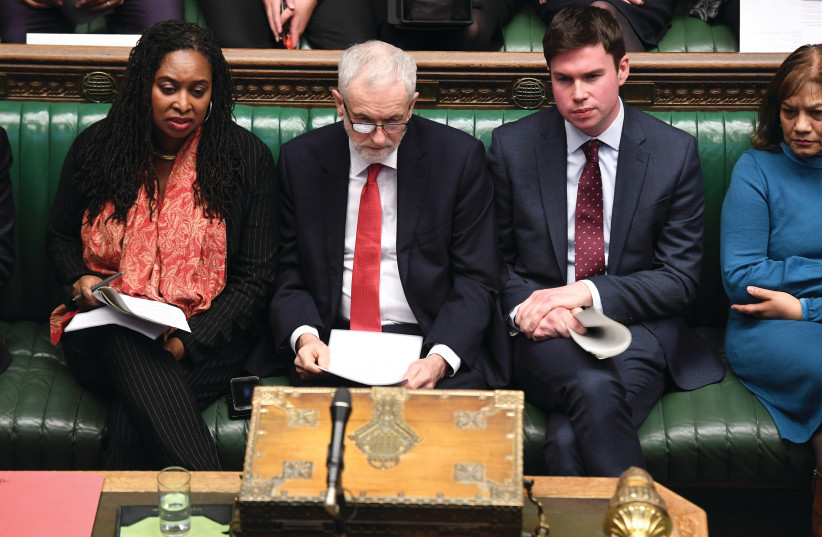
Jeremy Corbyn / (photo credit: REUTERS)

In August 2015, Jeremy Corbyn was only a candidate for the chairmanship of the Labour Party. The Guardian at that time already published that Corbyn had welcomed the extreme terrorist and genocidal antisemitic organizations Hamas and Hezbollah at the House of Commons. When Corbyn was elected chairman in September of that year, he did not feel the need to apologize for associating in a friendly way with people who desire to mass murder Jews.

Labour MPs did not revolt and protest that theirs was a mainstream party which cannot have a leader who calls terrorists who want to murder Jews his “brothers” and “friends.” With such a man at its head, Labour became almost by definition an institutionally antisemitic party. It was already somewhat tainted before as under previous leaders it had not expelled Corbyn in spite of his associations with terrorists, including the Irish IRA. This was a typical example of a radically wrong “Big Tent” approach, where people who are beyond the pale remain inside.

The history of progressive perversity goes back centuries. Under Corbyn’s leadership, Labour would write an important section of its large contemporary chapter.

In May 2016, prime minister David Cameron during question time in parliament asked Corbyn four times to withdraw his friendly remarks about Hamas and Hezbollah. Cameron said, “Those organizations in their constitutions believe in persecuting and killing Jews, they are antisemitic organizations, they are racist organizations. He must stand up and say they are not his friends.” Corbyn avoided apologizing in a straightforward way for his pro-terrorist statements.

In March 2019, scholar Alan Johnson, a Labour member, published a 135-page report which detailed the ways in which the party is institutionally antisemitic. He divided antisemitism in Labour into three categories: socialism of fools, classic racial antisemitism, and antisemitism as anti-Zionism.

In December 2019, The Daily Mail published an article on Corbyn’s 50 infamous moments of shame. It mainly listed his multiple associations with terrorists. A few weeks later the Labour chairman came out against the United States – and thus again in favor of a terrorist – saying, “The US assassination of Iranian General Qasem Soleimani is an extremely serious and dangerous escalation of conflict in the Middle East with global significance.”

Although Corbyn will resign formally only when a new Labour chair is elected in April, one can already assess his important place in the contemporary history of antisemitism. Yet it is far from simple to define it. A comparison with the leading antisemite in the United States, Louis Farrakhan, the leader of the Nation of Islam, makes this clearer. Farrakhan often expresses hatred toward Jews, and his rhetorical manifestations of antisemitism are directed at Jewish individuals.

FARRAKHAN echoed Nazi language when he used the word “termites” to describe Jews. Farrakhan has said that “satanic Jews had infected the modern world with poison and deceit.” He has called Jews “poisoners and absolute evil.”
One only has to put these statements next to the most common definition of antisemitism – that of the International Holocaust Remembrance (IHRA) – to understand that Farrakhan is an antisemite. One can do the same with British politicians who are (part-time) antisemites such as George Galloway and Lady Tonge.

Doing so with statements and acts of Corbyn doesn’t get us very far. His antisemitism is greatly different, yet far more important than Farrakhan’s in view of the position he holds. That the act of calling two Arab movements which aim to commit genocide against Jews his “brothers” and “friends” is hugely antisemitic requires little explanation. Yet none of the definitions of antisemitism includes explicitly such extreme cases.

Upon becoming Labour chairman, Corbyn almost immediately appointed the Hamas supporter Seumas Milne as executive director of strategy and communications. His leadership led rapidly to an explosion of antisemitic statements by various elected party officials.

Corbyn nominally condemned antisemitism, yet Labour greatly underperformed in dealing with the complaints about it. From a BBC Panorama program one learned that he and his immediate staff even protected people who had made antisemitic remarks.

In order to understand Corbyn’s huge contribution to the contemporary history of antisemitism, one has to comprehend a basic issue about current times that are known as “post-modernity.” In it, many themes have fragmented in a multitude of tiny parts.

So has antisemitism. To define Corbyn’s antisemitism one can best say that he is a major post-modern antisemite, which expresses itself through many diverse acts and statements. Scholars of antisemitism will have to familiarize themselves with this new concept as it is recurring.

Corbyn’s indirect antisemitic impact is far larger than seems from the above. Telegraph columnist Zoe Strimpel, who is Jewish, recently wrote about the British chattering classes, “What no dinner party-attending Jewish person can now avoid noticing is that at elite social gatherings in Britain and the US, dressing up brazen antisemitism as a form of political morality has become cool, acceptable and easy.” Jeremy Corbyn is indirectly to a substantial extent at the origins of this disastrous development in the UK.


Zawartość publikowanych artykułów i materiałów nie reprezentuje poglądów ani opinii Reunion’68,
ani też webmastera Blogu Reunion’68, chyba ze jest to wyraźnie zaznaczone.
Twoje uwagi, linki, własne artykuły lub wiadomości prześlij na adres:
webmaster@reunion68.com


Join Arab List lays out conditions for joining Blue and White government

Join Arab List lays out conditions for joining Blue and White government

Arutz Sheva Staff,


Joint List chief Ayman Odeh says his party will back formation of Blue and White government – but only if Liberman is not included.

Gantz (c) with Ahmed Tibi (r) and Ayman Odeh (l) / Ofek Avshalom

The Joint Arab List party laid out a list of demands Monday for supporting a coalition government led by the Blue and White party after next month’s election.

Joint Arab List chairman MK Ayman Odeh said the party would not give its backing to any government which includes Avidgor Liberman’s Yisrael Beytenu, Galei Tzahal radio reported.

“We have nothing in common,” said Odeh. “Liberman is a right-winger, he backs the idea of transferring the [Arab] residents of the [Wadi Ara] Triangle, he is against Arab voting, and we are as far away from him as possible.”

“There is no situation in which we could support any government that includes Liberman – we will vote against. We aren’t just about ‘Never Bibi’, we are against Bibi’s ideas and the path of the Right.”

In addition, Odeh said that for Gantz to receive his party’s endorsement after the election, Blue and White must publically vow not to apply Israeli sovereignty in parts of Judea and Samaria, despite US support for such a move.

“We recommended Gantz [after the last election], but we didn’t hear anything from him against the annexation or transfer [plans]. There is no way that we will support him again or recommend him [as prime minister] if he does not come out against this. There is no way we will endorse him if he maintains the positions he’s had in recent weeks. I want to hear from Gantz that he is against transfer.”

The recently released US peace plan backs Israeli sovereignty over roughly 30% of Judea and Samaria, while also calling for land swaps from pre-1967 Israel to a new Palestinian state. The plan suggests Israel transfer the Wadi Ara region – a strip of land adjacent to Samaria with a large Israeli Arab population – to the new Palestinian state; an idea backed in the past by Avidgor Liberman.

“Blue and White is silent in the face of Netanyahu’s attacks on the Arab population,” Odeh continued. “We won’t accept this situation. We can get to 61 seats without Liberman – the Joint List can get 16 seats. I am the most consistent person there is, and I want to replace the Right, and not just Netanyahu. We need a real Left with values that says these things.”


Zawartość publikowanych artykułów i materiałów nie reprezentuje poglądów ani opinii Reunion’68,
ani też webmastera Blogu Reunion’68, chyba ze jest to wyraźnie zaznaczone.
Twoje uwagi, linki, własne artykuły lub wiadomości prześlij na adres:
webmaster@reunion68.com


Francja: Wypal trawkę, zabij Żyda, uniknij procesu, idź wolny


Francja: Wypal trawkę, zabij Żyda, uniknij procesu, idź wolny

Guy Milliere Tłumaczenie: Małgorzata Koraszewska


Francuski sąd orzekł niedawno, że Kobili Traoré nie stanie przed sądem za torturowanie i zamordowanie Sarah Halimi, 66-letniej Żydówki, mówiąc, że Traoré miał „chwilowe zniesienie poczytalności” z powodu palenia marihuany. Francis Kalifat (na zdjęciu), prezes Przedstawicielskiej Rady Żydowskich Instytucji we Francji, powiedział, że „antysemicki morderca może stać się jedynym mordercą uwolnionym przez sąd na podstawie spożycia narkotyków, podczas gdy we wszystkich innych wypadkach narkotyki są okolicznością obciążającą” (Zdjęcie: Ludovic Marin/AFP via Getty Images)

Paryż, 4 kwietnia 2017 roku. Sarah Halimi, 66-letnia Żydówka zostaje wyrzucona z balkonu na trzecim piętrze. Jej ciało ląduje na podwórku budynku. Jej morderca najpierw ją torturował. Sąsiedzi słyszeli krzyki i wezwali policję. Przybyło dziewięciu policjantów, kiedy jednak usłyszeli przez drzwi mężczyznę krzyczącego “Allahu Akbar”, zbiegli na dół, by poczekać na posiłki. Kiedy Kobili Traoré wreszcie poddał się, powiedział „Zabiłem szejtan” (szatana po arabsku). Powiedział, że kiedy torturował swoją ofiarę, recytował wersety Koranu i Koran „nakazał mu zabić Żydówkę”. Powiedział, że poprzedni dzień spędził w pobliskim meczecie. Umieszczono go w szpitalu psychiatrycznym, gdzie powiedział badającym go psychiatrom, że palił marihuanę.

Gazety przez pierwsze dni nie wspomniały morderstwa. Organizacje francuskich Żydów mówiły o „przygnębiającej, antysemickiej zbrodni” i zorganizowały milczącą demonstrację przed budynkiem Halimi. Dopiero wtedy napisano kilka artykułów. Właśnie miały się odbyć francuskie wybory prezydenckie i dziennikarze z mediów głównego nurty widocznie nie chcieli mówić o antysemickim morderstwie popełnionym przez muzułmanina.

Wyznaczona do sprawy sędzia, Anne Ihuellou, najpierw odmówiła uznania, że morderstwo było zbrodnią nienawiści. Prawnikom rodziny Halimi zabrało ponad sześć miesięcy skłonienie jej, by w końcu przyznała – 27 lutego 2018 roku – że motywem tego morderstwa istotnie był antysemityzm.

Sędzia odmówiła także rekonstrukcji wydarzeń w tej sprawie i zgodziła się tylko na krótkie przesłuchanie Traoré. Wezwała eksperta psychiatrę, Daniela Zagury’ego, który powiedział, że w momencie popełniania czynu morderca był w stanie „ostrego delirium” z powodu konsumpcji marihuany, ale że jest „w pełni dostępny dla sankcji karnych”. Sędzia Ihuellou, widocznie niezadowolona z wniosków dra Zagury’ego poprosiła o jeszcze dwie opinie ekspertów – obaj nie zgodzili się z wnioskami dra Zagury’ego i powiedzieli, że Traoré jest niezdolny do stanięcia przed sądem.

12 lipca 2019 roku sędzia odrzuciła raport dra Zagury’ego i orzekła, że istnieją „przekonujące powody skłaniające do wniosku, że morderca nie jest odpowiedzialny karnie” i powiedziała, że atak nie był antysemicki.

Prawnicy rodziny Halimi, rozumiejąc, że Traoré może wkrótce zostać uwolniony bez procesu, zażądali natychmiastowego wniesienia sprawy do sądu apelacyjnego.

Ten sąd, w decyzji z 19 grudnia, orzekł, że Kobili Traoré “z własnej woli zabił” Sarah Halimi i tym samym popełnił morderstwo, ale dodał, że z powodu „chwilowego zniesienia poczytalności” morderca nie jest „odpowiedzialny karnie”, nie może być sądzony i dlatego musi zostać uwolniony.

Francis Kalifat, prezes Przedstawicielskiej Rady Żydowskich Instytucji we Francji, powiedział, że „antysemicki morderca może stać się jedynym mordercą uwolnionym przez sąd na podstawie spożycia narkotyków, podczas gdy we wszystkich innych wypadkach narkotyki są okolicznością obciążającą”.

Prawnik rodziny Halimi, Francis Szpiner, powiedział, że „została stworzona praktyka sądowa ‘Sarah Halimi’”: „każdy, kto cierpi z powodu chwilowych urojeń, bo używał nielegalnych lub niebezpiecznych substancji, nie będzie ponosił odpowiedzialności karnej”.

Inny prawnik rodziny ofiary, Gilles-William Goldnadel, wyraził “odrazę” i powiedział, że „gdyby ofiara nie była Żydówką, a morderca nie był muzułmaninem, decyzja byłaby inna”.

Członek parlamentu, Meyer Habib, komentował, że decyzja sądu jest „prawnym skandalem, jakiego nigdy nie widziano we Francji” i dodał, że istnieje „oczywiste dążenie francuskiego systemu sądowego, by uwolnić od odpowiedzialności antysemickiego islamskiego mordercę”. „Uwolnienie antysemickiego mordercy bez procesu wysyła koszmarny sygnał do francuskich Żydów” – powiedział. Przypomniał, że w niedawnej przeszłości Traoré był skazywany ponad dziesięć razy za napady z użyciem przemocy i powiedział, że gdyby francuski system sądowniczy wykonał swoje zadanie przed zamordowaniem Sarah Halimi, mogłoby nie dojść do morderstwa.

Psychiatra Claude Bloch napisał, że to orzeczenie może „pozwolić każdemu z zaciekłą nienawiścią do Żydów na bezkarne mordowanie ich”.

Wybitny historyk, Georges Bensoussan, powiedział w wywiadzie dla „Le Figaro”:

“… francuski system sądowniczy wybrał uniknięcie procesu, żeby nikt nie mówił o imigrantach, którzy nie są dobrze zintegrowani, a w pewnych wypadkach dzisiaj zachodzi proces ponownej islamizacji.

… proces pokazałby dezintegrację narodu, ujawniłby ociąganie się władz, które nie wydały rozkazu interwencji podczas męki tej kobiety, która trwała niemal godzinę, i kwestionowałby milczenie mediów w kolejnych dniach. Wszystko to wepchnęło Żydów z powrotem w samotność i czyni antysemityzm (Żydzi stanowią 0,7% populacji Francji i są celem połowy rasistowskich ataków we Francji) sprawą tylko żydowską.

… decyzja sędziów robi wrażenie, że osoby na wysokich szczeblach władzy są gotowe poświęcić najbardziej bezbronne jednostki, by uratować pozory społecznego pokoju. Taka kapitulacja wskazuje Żydom jeden kierunek – ucieczkę. Pokazuje także zwolennikom teorii spiskowych, którzy fantazjują dniami i nocami o ‘żydowskiej władzy’, pustkę ich teorii w kraju, gdzie 62% współobywateli Żydów mówi, że są obojętni wobec ich odejścia”.

5 stycznia francuskie organizacje żydowskie zorganizowały protest, by żądać zmiany decyzji sądu. Wszystkie francuskie organizacje polityczne zachowały milczenie; żadna nie dołączyła do protestu. Media głównego nurtu zachowały praktycznie całkowite milczenie. Tylko Żydzi przyszli demonstrować.

Brat Sarah Halimi, William Attal, zwracając się do protestujących na Place de la République w Paryżu, opowiadał szczegółowo o tym, co przecierpiała Halimi. Szczegóły raportu z autopsji były potworne: wszystkie kości jej twarzy zostały złamane – żuchwa, szczęka górna, kość czołowa, kości nosa i kości policzkowe – jakimś twardym przedmiotem, być może młotkiem, a jej ciało było dźgnięte nożem 22 razy. Attal potępił bierność policji, tchórzostwo sędziów i milczenie mediów. Podał fakty, które do tego czasu nie zostały ujawnione: jeden z policjantów, który był na miejscu zbrodni, nie zszedł z powrotem ze swoimi kolegami. Chociaż był uzbrojony, pozostał za drzwiami. Nie ruszył się. Po prostu słuchał tego, co mówił morderca i krzyków bólu ofiary.

Sędzia odmówiła przesłuchania tego policjanta. Chociaż Traoré powiedział psychiatrycznym ekspertom, że dzwonił do ludzi, kiedy torturował Halimi, sędzia odmówiła także prawa przeszukania jego telefonu. Meczet, do którego uczęszczał morderca, był także miejscem, w którym bywało wielu z tych, którzy poszli na dżihad do Syrii.

Tylko żydowskie gazety i magazyny poinformowały o tym, co powiedział Attal.

W otwartym liście do minister sprawiedliwości Nicole Belloubet naczelny rabin Francji Haim Korsia, prosił ją o interwencję, żeby nie „pozbawiać obywateli jednego z najcenniejszych praw w demokracji: prawa zwracania się do wymiaru sprawiedliwości, by rzucić światło na akt przemocy i nienawiści”. Powiedział, że „normalnie nie komentuje decyzji sądowych”, ale w tym wypadku zaszło jego zdaniem „poważne złamanie zaufania”. Dodał: „Czy powinniśmy wyciągnąć wniosek, że każda osoba pod wpływem narkotyków ma licencję na zabijanie Żydów?”

Jest wątpliwe, czy Nicole Belloubet w ogóle odpowie. Sędziowie i prawnicy natychmiast oznajmili, że są oburzeni otwartym listem Haima Korsia i twierdzili, że chciał on „podważyć niezależność sądów”. Philippe Bilger, znany, emerytowany sędzia pokoju, oskarżył Korsię o „podżeganie do naruszenia fundamentalnej reguły rządzącej zorganizowanym porządkiem naszych władz”.

W artykule opublikowanym przez „Haaretz”, Shirli Sitbon napisała:

“We Francji sprawcy antysemickich ataków zasłaniają się chorobą psychiczną, by uniknąć sprawiedliwości. Obrona na chorobę psychiczną stała się coraz powszechniejsza w sprawach o przestępstwa nienawiści we Francji. I to zdaje się działać”.

Następnie, cytując precedensy, napisała, że ta złowroga seria wydarzeń zaczęła się od zamordowania Sebastiena Sellama w 2003 roku. Chociaż morderca, Adel Amastaibou, powiedział policji: „Jeśli on nie żyje, jestem szczęśliwy, ten pie…ny Żyd, ten brudny Żyd”, uznano, że Sellam nie ponosi odpowiedzialności z powodu „problemów psychicznych”.

W 2006 roku Ilan Halimi, 23-letni francuski Żyd i daleki krewny Sarah Halimi, został porwany, był torturowany przez 24 dni, a następnie zamordowany przez muzułmańskiego antysemitę, Youssoufa Fofanę i „gang barbarzyńców”, któremu przewodził. Jego cierpienia i śmierć pod torturami wywołały wielki szok emocjonalny we Francji. Jego matka, Ruth Halimi, powiedziała w telewizji: „Chcę, by śmierć mojego syna była dzwonem alarmowym”. Jak się wydaje, alarmu nie usłyszano.

Potem były podobne wypadki.

Mniej niż rok po zamordowaniu Sarah Halimi, 23 marca 2018 roku, inna Żydówka, Mireille Knoll, została zamordowana w Paryżu. Główny podejrzany, Yacine Mihoud, został oskarżony przez swojego wspólnika, Alexa Carrimbacusa, o dźganie Knoll nożem z okrzykami „Allahu Akbar”, ponieważ „Żydzi mają pieniądze”. Adwokat Mihouda powiedział, że jego klient nie był w „normalnym stanie” w czasie popełniania zbrodni, ale dodał, że to było antysemickie morderstwo. Nie wyjaśnił, jak Mihoud mógł być wystarczająco świadomy swoich czynów, by pójść do mieszkania swojej matki po zamordowaniu Knoll i poprosić ją o umycie noża, którego użył do zabicia swojej ofiary. (Matka Mihouda jest teraz oskarżona o wspólnictwo przy morderstwie).

Muzułmański antysemityzm jest od dawna ignorowany we Francji. Jedyna książka po francusku poświęcona temu tematowi – Badanie muzułmańskiego antysemityzmu: od jego początków do dnia dzisiejszego autorstwa Philippe Simonnot – właściwie usprawiedliwiała muzułmański antysemityzm twierdzeniem, że Żydzi, którzy żyli w świecie muzułmańskim, popierali europejskich kolonizatorów, jak też twierdzeniem, że Żydzi popierają Izrael, „nowe kolonialne przedsięwzięcie oparte na kradzieży muzułmańskiej ziemi”.

21 kwietnia 2018 roku, niespełna miesiąc po zamordowaniu Knoll, „Le Parisien” opublikował „manifest przeciwko nowemu antysemityzmowi” napisany przez dziennikarza Philippe Vala, który podpisało 250 polityków, pisarzy i artystów. Być może powodowany pragnieniem oszczędzenia islamu i nie powiedzenia wyraźnie, że ofiarami muzułmańskiego antysemityzmu są Żydzi, Val napisał „muzułmański antysemityzm jest największym zagrożeniem dla islamu XXI wieku”.

Kilka dni później „Le Monde” opublikował tekst podpisany przez trzydziestu imamów, mówiący, że „islam nie jest winny” i że problem powstaje z powodu „szkodliwej ignorancji”. W tekście dodano, że jest na to rozwiązanie: czytanie Koranu.

Od tego czasu nic się nie zmieniło. W niedawno wydanej książce, Francja bez Żydów, socjolog Danny Trom, analizował narastający brak bezpieczeństwa Żydów we Francji, świadome zamykanie oczu kolejnych rządów i sądów i – rok po roku – wyjazdy Żydów z Francji:

“Obecnie możliwość koniczności wyjazdu któregoś dnia jest wbudowana w świadomość każdego Żyda, niezależnie od tego, jak definiuje siebie i jaki jest jego stosunek do syjonizmu. Te wyjazdy odzwierciedlają nie tylko narastające i bardzo realne poczucie braku bezpieczeństwa, ale także uczucie samotności i porzucenia w obliczu przeciwności”.

W niedawnym artykule w „Le Figaro” Celine Pina pisała:

“Kiedy ktoś zabija w imię Allaha, wymówka nierównowagi psychicznej nie utrzymuje się. Jeśli jest coś wspólnego w całej tej krwi, która nie przestaje płynąć, to jest tym wszczepienie islamistów na naszą ziemię, ich sieć meczetów, ich propagandowe książki, anteny satelitarne, ich mowy, które przenikają wiele dzielnic i terytoriów, ich pokaz siły… sytuacja nie jest pod kontrolą”.


Guy Millière – Francuski eseista, profesor literatury francuskiej na uniwersytecie w Paryżu, autor 27 książek na temat Europy, Stanów Zjednoczonych i Bliskiego Wschodu.


Zawartość publikowanych artykułów i materiałów nie reprezentuje poglądów ani opinii Reunion’68,
ani też webmastera Blogu Reunion’68, chyba ze jest to wyraźnie zaznaczone.
Twoje uwagi, linki, własne artykuły lub wiadomości prześlij na adres:
webmaster@reunion68.com


Inauguration of Beit Dakira marks renaissance of Jewish life in Morocco

Inauguration of Beit Dakira marks renaissance of Jewish life in Morocco

IRINA TSUKERMAN


According to UNESCO General-Secretary Audrey Azoulay, Beit Dakira is built “around a synagogue, one of the 37 synagogues that adorned the city until the 1950s.

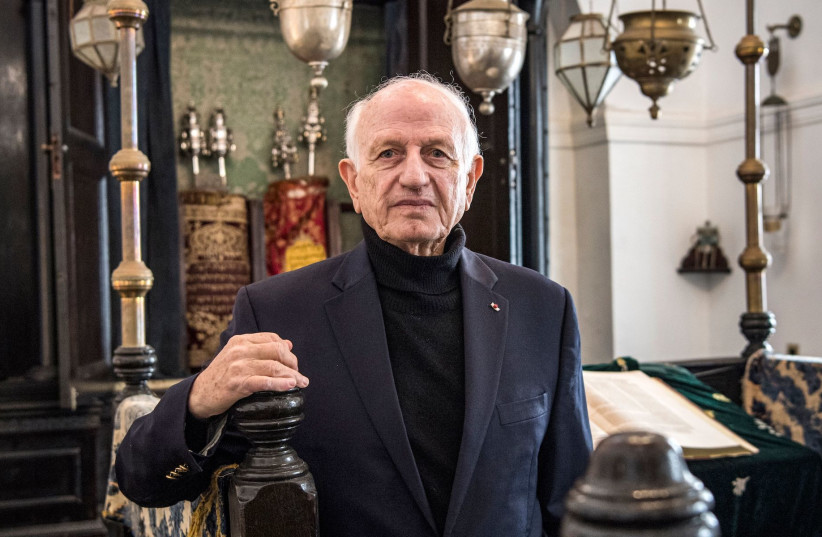
Andre Azoulay, adviser to the Moroccan king, poses for a picture at the Bayt Dakira Jewish museum in Essaouira, Morocco, Dec. 14, 2019 / (photo credit: FADEL SENNA/AFP VIA GETTY IMAGES/JTA)

Essaouira, Morocco’s Beit Dakira (“House of Memory”), a 19th-century home, received a new lease on life as a place for preserving Jewish heritage in Morocco, thanks to the extensive efforts of King Mohammed VI’s senior counselor André Azoulay and his Essaouira-Mogador Association. Beit Dakira will host cultural events, conferences, scholars-in-residence, and lively interfaith Shabbat dinners, bringing together local community members and Jewish visitors who increasingly flock to Essaouira from abroad.

King Mohammed VI inaugurated Beit Dakira on January 15 in a ceremony attended by Moroccan Jewish leaders and rabbis; UNESCO General-Secretary Audrey Azoulay; celebrities Gal Elmaleh and Raymonde Abecassis; European officials, including the German ambassador to Morocco and a Konrad Adenauer Foundation representative; participants of Moroccan Muslim-led interfaith efforts; as well as the executive director of the American Sephardi Federation, Jason Guberman.

Essaouira once had a Jewish majority. The Jewish community dwindled over time, but the spirit of mutual respect and genuine friendship has never left the port city. Each year, Essaouira hosts the traditional Moroccan Mimouna, a post-Passover holiday where Muslims and Jews jointly celebrate a special meal with sweets and music. Thanks to Azoulay, Essaouira, which is a UNESCO World Heritage Site, has been transformed from a quiet town to a cultural force as the host of 17 musical festivals throughout the year, ranging from classical and Islamic liturgical to Gnaoua (an indigenous “Moroccan Blues” repertoire) and Andalusian.

According to Azoulay, Beit Dakira is built “around a synagogue, one of the 37 synagogues that adorned the city until the 1950s. And it expresses this singularity of Essaouira, which is particularly dear to me. It was probably the only urban space from Morocco to Indonesia that for a very long time embodied for centuries this intimacy, this proximity, this porosity, or this capillarity that Islam and Judaism had in the land of Islam.”
More than just a distant memory of the rich cultural past, before the mass migration of Zionist Jews to Israel and waves of economic immigrants to Europe and North America, Essaouira is pointing in the direction of a bright new future filled with possibilities for the blossoming of Jewish culture in Morocco.

These prospects have the full backing of King Mohammed VI. Moroccan Jewish heritage is enshrined in the 2011 Moroccan Constitution, alongside African, Amazigh, Andalusian and Arab cultures. While to many young Moroccan Muslims, the Jewish history of the city exists only in their grandparents’ stories, the Essaouira-Mogador Association and Association Mimouna (a national and increasingly international initiative founded by ElMehdi Boudra) ensure that Jewish memory is realized in life through cultural events, humanitarian projects, and educational campaigns.

Still, skeptics point to the trend of young Moroccan Jews (and Moroccans in general) seeking opportunities overseas. Others discount Morocco’s exceptional integration and mutual respect for its diverse faith and ethnic communities by cynically citing antisemitic instances and claiming that all positive developments are PR moves.

Does this mean, then, that the “House of Memory” is nothing more than a nostalgic reminder of an illusory past and that the future of Morocco will resemble much the rest of the MENA region: monochromatic, clashing and without Jews? As someone who witnessed the vivacious scene during the inauguration, I would argue to the contrary that the Western notion of “nostalgia,” of longing for the past that cannot be, is not applicable here. Instead, the Japanese concept of “natsukashii” is much more relevant. A recent BBC coverage of the concept put it best:

“Natsukashii is a Japanese word used when something evokes a fond memory from your past. It’s a word you exclaim as a smile creeps across your face. For instance, when you hear a song you loved as a teenager, or when you come across an old train ticket stub in your pocket.

“In some cultures, nostalgia is often full of sadness. But natsukashii – which derives from the verb ‘natsuku,’ which means ‘to keep close and become fond of’ – indicates joy and gratitude for the past rather than a desire to return to it. In Japan, natsukashii is a reminder that you are fortunate to have had the experiences you’ve had in life.”

Nothing can ever be exactly as it once was, but it can certainly grow in a new direction and create a better future, taking into the account the legal, social and political mistakes that contributed to the need for rebirth. Some of these issues are already being addressed.

Essaouira was consecrated by King Mohammed VI as Morocco’s city of arts, culture and handicrafts, while the king’s inauguration of Beit Dakira affirms its pluralistic, multifaceted and multi-faith identity. A cultural complex – including a museum, library, tea house, 1,000-seat theater and an outdoor performance stage – are being built to reinforce Essaouira’s role as the vanguard of the Moroccan renaissance.

At the same time, the revival of its cultural identity will make it even more attractive to Moroccan Jews in other cities and abroad who are rediscovering their roots and traveling to Morocco in ever-growing numbers, including for pilgrimages.

King Mohammed VI dedicated part of a $300 million investment in Essaouira to the restoration of the city’s historic Medina, where the Jewish community had resided for centuries. This step comes after prior restorations of Jewish street signs in Marrakesh’s Mella, historic synagogues, and 167 Jewish cemeteries, for which the commander of the faithful took full responsibility.

Thanks to these developments, young Jews seeking to build families can increasingly find a welcoming Moroccan alternative to communities besieged in Europe, where antisemitism proliferates, synagogues require advance appointments even for Jews to visit, and Jews are wary of wearing kippot outside or attending mainstream educational institutions. What is needed now are opportunities for young Moroccan Jews to engage in communal life (the king has called for the Jewish community to hold elections).

Beit Dakira represents how Morocco’s present is progressively catalyzed toward achieving its full potential. In December 2018, young Moroccan Muslims (Maroune El Idrissi’s Moroccan millennium leaders) organized the first global energy school, a conference at Beit Dakira that featured business leaders, technical experts and talented young Moroccan Muslim engineers and entrepreneurs.

Azoulay delivered the keynote address and both ASF’s Jason Guberman and I spoke and conducted workshops. The next day Beit Dakira’s Haim and Célia Zafrani Research Center on the History of Relations between Judaism and Islam hosted the “Third Scientific Colloquium on Doctrine, Jurisprudence and Evolution of Hebraic Law in Morocco,” which was all the more extraordinary because the 30 senior scholars and graduate students participating were Moroccan Muslims.

This unheralded Moroccan reality was reflected in Azoulay’s remarks at the inauguration. “Allow me, your majesty, to express our immense pride, our infinite happiness, our gratitude to his majesty. This historic day bears the mark of our millennia-old, secular Morocco, which has always protected the great diversity that is the core resource of our country.”
Azoulay then presented King Mohammed VI with a Torah and a Koran, and conducted a tour of the exhibitions, including a collection of Arabic letters by Jewish merchants in Timbuktu (the Mali Jewish community hearkens back to the Sahara).

Asked afterward to comment on the inauguration, ASF’s Guberman invoked “Morocco’s culture of coexistence as embodied by the matrouz, in which ideas, languages and genres are combined and remixed. Beit Dakira, in a word, is matrouz.”

He also announced how “the Essaouira-Mogador Association and the American Sephardi Federation are working on a host of initiatives – festivals, conferences, lectures, workshops – including the 23rd New York Sephardi Jewish Film Festival, Festival des Andalousies Atlantiques, and (with Association Mimouna) the second Jewish Africa Conference and David Yulee Levy Fellowship.”

Beit Dakira is a house of memory wherein remembrance gives rise to new, present and future beginnings and limitless possibilities.


The writer is a member of Moroccan Americans in New York and has been working on relationship building with the Moroccan community for the past four years.


Zawartość publikowanych artykułów i materiałów nie reprezentuje poglądów ani opinii Reunion’68,
ani też webmastera Blogu Reunion’68, chyba ze jest to wyraźnie zaznaczone.
Twoje uwagi, linki, własne artykuły lub wiadomości prześlij na adres:
webmaster@reunion68.com


The Aleph-bet song (Hosha’ana) Official video

Victoria Hanna – The Aleph-bet song (Hosha’ana) Official video

Victoria Hanna


Lyrics From the Hoshana Prayer
Concept, music, vocals: Victoria Hanna
Produced and arranged: Tamir Muskat
Drum, Keyboards and sampling: Tamir Muskat
Oud: Yarden Erez
Children Vocal: Zohar Moshe Chai Biran
Recorded and edited at Vibromonk East TLV
Technical Assistant: Omri Amado
Mastering: Shmulik Daniel at Hook & High

Video Clip:
Production company: ZOA Productions
Directed by: Asaf Korman
Script and concept: Victoria Hanna and Asaf Korman
Producers: Roei Zioni and Aviv Ben shlush


Zawartość publikowanych artykułów i materiałów nie reprezentuje poglądów ani opinii Reunion’68,
ani też webmastera Blogu Reunion’68, chyba ze jest to wyraźnie zaznaczone.
Twoje uwagi, linki, własne artykuły lub wiadomości prześlij na adres:
webmaster@reunion68.com