Archive | August 2020

Henryk Wujec nie żyje.

Henryk Wujec nie żyje. Rafał Grupiński: Zawsze z ludźmi. Wszędzie, gdzie trzeba było bronić demokracji

Rafał Grupiński


Fot. Jakub Orzechowski / Agencja Gazeta

Pierwsze skojarzenie powszechne u tych, którzy Henia znali? Zaskakująco proste: wspaniały przyjaciel, dobry współpracownik, dobry, dobry, dobry dla wszystkich. Dobry, jak to dalej powiedzieć? Dobry, gdyż szlachetny, słuchający, nieznający gniewu, nigdy nawet w najpoważniejszych polemikach politycznych nieagresywny w żadnym słowie.

Henryk działał w opozycji demokratycznej w latach 70. od samego początku. Działał nie tylko w Komitecie Obrony Robotników, także w Wolnych Związkach Zawodowych.

Jak wspominał Adam Michnik, to Henryk Wujec zaprosił go do udziału w pracach MZK przy Lechu Wałęsie.

Skromny, dyskretny i zawsze tam, gdzie ludzie potrzebowali pomocy.

***

Więzień PRL-u, a potem poseł na Sejm RP i działacz Unii Demokratycznej i Unii Wolności. Historycy szczególarze, badający politykę lat 90. wiedzą doskonale, jak czasami napięte i niechętne były, mimo koniecznego połączenia, wewnętrzne stosunki w UW po połączeniu jej z KLD.

Henryk nigdy nie angażował się w żadne kuluarowe rozgrywki, co najwyżej lojalny wobec Tadeusza Mazowieckiego przekonywał nas do swojego zdania.

Znaliśmy się kilkadziesiąt lat, ostatnio nasze spotkania miały miejsce na demonstracjach w Warszawie: Marsze Wolności, protesty przed sejmem, pałacem prezydenckim, przed Sądem Najwyższym. Heniu z żoną, Ludką, zawsze byli z ludźmi, wśród nich. Wszędzie tam, gdzie wymagała tego obrona demokracji, ludzkiej godności i państwa prawa. Kochający się, można powiedzieć, od zawsze razem.

Gdy Heniu został doradcą prezydenta Bronisława Komorowskiego, spotykaliśmy się regularnie w sobotnim Śniadaniu w Trójce. Jak Heniu traktował uczestników spotkań? Wszyscy bez wyjątku zostali obdarowani po zakończeniu kolejnego sezonu słoikami miodu jego własnej produkcji… Bo dodajmy, Henryk, jako jeden z nielicznych w gronie opozycyjnej inteligencji, pełnej uniwersyteckich humanistów, znał się na rolnictwie i jego problemach.

***

Historia współczesnej Polski, dzieje opozycji demokratycznej to zarazem historia skromnego, cichego i niezwykle pracowitego Henryka Wujca. Bez jego poświęcenia, odwagi niesienia ludziom pomocy w najciemniejszych czasach, i tej niezwykłej umiejętności łączenia różnych stron sporu, być może nie zaznalibyśmy do dzisiaj smaku prawdziwej wolności i otwartej przestrzeni demokracji. Choć zapewne obecna sytuacja wciąż kazałaby Heniowi być aktywnym i nie odpoczywać jeszcze, jak nakazał mu nagle jego cierpliwy Anioł Stróż. Lecz Jego postać, dobry uśmiech i serdeczny uścisk dłoni zawsze przecież będzie z nami.

Inne artykuly

Zmarł Henryk Wujec. Trzy lata temu świętował urodziny KOD-u w Piekarni Cichej Kobiety

Henryk Wujec to był mój poseł. Nigdy się na nim nie zawiodłam

Henryk Wujec nie żyje. “To jest model życia dla polityka – nie tchórzyć”


Rafał Grupiński poseł Platformy Obywatelskiej, szef struktur tej partii w Wielkopolsce. W latach 80. działacz „Solidarności” – współzałożyciel Komisji Koordynacyjnej NSZZ „Solidarność” Pracowników Oświaty i Wychowania w Wielkopolsce, założyciel i redaktor czasopism drugiego obiegu, m.in. niezależnego miesięcznika literackiego „Czas Kultury”,


Jewish mysticism meets the Sabbath

Jewish mysticism meets the Sabbath

ALAN ROSENBAUM


Author Eduard Shyfrin discusses how the ideas of the Jewish mystics have influenced and affected the customs, rituals and ideas surrounding the Sabbath and its observance.

Eduard Shyfrin: I realized that I had to answer certain questions for myself about life and death and God / (photo credit: Courtesy)

“We can connect to God every day, but the Sabbath is a special opportunity to connect to God,” says Eduard Shyfrin, author, businessman, and student of Jewish mysticism. “It is a great privilege that was given to the Jewish people.”

Shyfrin, the author of From Infinity to Man: The Fundamental Ideas of Kabbalah Within the Framework of Information Theory and Quantum Physics, spoke with The Jerusalem Post from his Moscow home, and discussed how the ideas of the Jewish mystics have influenced and affected the customs, rituals and ideas surrounding the Sabbath and its observance.

Shyfrin, who holds a PhD in metallurgy and who was a star physics student in his youth, has termed the Kabbalistic belief that God created the world using the 22 letters of the Hebrew alphabet together with the 10 sefirot – the 10 attributes and emanations of God – as a type of information code. Shyfrin explains that modern science is gradually coming to the conclusion that the basis of our perceived reality is not matter and energy but information.

Utilizing this understanding of the sefirot and letters as God’s information code, and Nahmanides’s concept that God created primordial matter at the beginning and nothing else and gave it shape and form, Shyfrin explains that the meaning of the verse in Genesis (2:2) “On the seventh day God finished the work that He had been doing, and He rested on the seventh day from all the work that He had done” can be understood in the sense of God not generating any new information but, rather, sustaining the world as it was.

“The purpose of the prohibition of work on the Sabbath,” says Shyfrin, “is to limit as much as possible the generation of any kind of new information. For example, we can light a candle before the Sabbath, and we can have it on during the Sabbath, because it is no longer considered new information.”

Shyfrin next considers the diagram of the sefirot, of God’s attributes and emanations. The sefira known as Malchut (Kingdom) represents the feminine, harmonious Shabbat, representing the state of being. In mystical terms, he explains, it is the final receiver of information from the world above and, at the same time, the first provider of information to the world below, acting as a form of mystical connector between the worlds and sefirot.

When we connect to God and fulfill the commandments, it is called in Kabbalah “raising female waters.” The “female waters” travel upward and meet the “male waters,” thus reconnecting the Divine attributes. By observing the prohibition of doing labor on the Sabbath, as well as the positive commandment to connect with God, says Shyfrin, we reconnect with God and repair the connections between the sefirot, replicating the perfect state of the world before the sin of Adam and Eve.

Shyfrin explains that it is for this reason that “Lecha Dodi,” the traditional liturgical song recited at Friday night services, is a combination of both the male sefira known as Yesod meeting his bride, the Sabbath queen (the sefira of Malchut), thus coupling and connecting the masculine with the feminine.

Shyfrin next explains the meaning of the verse in Genesis (2:3) “And God blessed the seventh day and declared it holy, because on it God ceased from all the work of creation that He had done.”

“The Hebrew word for blessing is ‘bracha,’” notes Shyfrin, “which comes from the same Hebrew root as the word ‘bereicha’ or water channel. If a person is blessed, he can receive abundant godliness. God’s blessing of the Sabbath means that all of the spiritual channels are open at that time.”

Shyfrin says that there are two ways to fulfill the commandments. One way is to fulfill the laws of the Torah without understanding their deeper meaning and significance. The preferred method is to follow the laws with understanding.

The Kabbalistic explanations of the Sabbath, he says, provide us with the reasons why and how we should observe the Sabbath. “We are obliged to observe the Sabbath commandments, but at the same time, we should remember that it is a great privilege given to us.”


This article is part of a collaboration for the Kabbalat Shabbat Project with Eduard Shyfrin.


Zawartość publikowanych artykułów i materiałów nie reprezentuje poglądów ani opinii Reunion’68,
ani też webmastera Blogu Reunion’68, chyba ze jest to wyraźnie zaznaczone.
Twoje uwagi, linki, własne artykuły lub wiadomości prześlij na adres:
webmaster@reunion68.com


Gliwice. Puste krzesła. Historie Żydów ze Śląska

Gliwice. Puste krzesła. Historie Żydów ze Śląska

*****


Tytuł zdjęcia: Gliwice. Okładka książki Puste Krzesła. Historie Żydów ze Śląska.

Opis zdjęcia: Okładka książki Leszka Jodlińskiego “Puste krzesła. Historie Żydów ze Śląska”, wydanej przez Wydawnictwo Azory, Kraków – Gliwice 2020.
Autor zdjęcia: Wydawnictwo Azory
Data wykonania zdjęcia: 2020
Miejsce wykonania zdjęcia: Gliwice
Źródło: Wydawnictwo Azory
ID: 104556
Artykuł: Gliwice. Puste krzesła. Historie Żydów ze Śląska
Gliwice. Puste krzesła. Historie Żydów ze Śląska

Puste krzesła to zbiór tekstów historycznych napisanych w formie reportażu historycznego.

Książka zawiera także eseje związane z historią Żydów pochodzących z obszaru Śląska oraz podejmuje wątki dziedzictwa materialnego pozostałego na tym terenie. Cezurą czasową jest rok 1945, choć niektóre z wątków poprowadzone są do współczesności. Zainteresowanie autora koncentruje się na środowisku Żydów niemieckich (niemieckojęzycznych).

Wybór tematów nawiązuje do tekstów, które Leszek Jodliński napisał w latach 2005-20018. W artykułach tych odniósł się do spraw o istotnym znaczeniu dla środowiska Żydów niemieckojęzycznych na Śląsku, ale też do historii, które posiadają niezwykłą wymowę symboliczną i emocjonalną. Są to opowieści, które nie odnoszą się wprost do Holocaustu, są jego zapowiedzią, zbliżaniem się Zagłady lub ukazują losy Żydów śląskich, w przeddzień zinstytucjonalizowanej eksterminacji.

Każda z tych historii to prowadzone od lat małe śledztwa i poszukiwania, spajanie wątków i postaci. Odrzucanie legend od faktów. Niektóre z tekstów były publikowane pierwotnie w prasie, w wersjach skróconych. Po wielu latach w wyniku zmian i uzupełnień stały się już zupełnie nowymi tekstami. Są nowe i poprawione, a przede wszystkim rozszerzone.


Zawartość publikowanych artykułów i materiałów nie reprezentuje poglądów ani opinii Reunion’68,
ani też webmastera Blogu Reunion’68, chyba ze jest to wyraźnie zaznaczone.
Twoje uwagi, linki, własne artykuły lub wiadomości prześlij na adres:
webmaster@reunion68.com


Popłoch wśród uzależnionych od wojny z syjonizmem.

Popłoch wśród uzależnionych od wojny z syjonizmem


Jonathan S. Tobin
Tłumaczenie: Małgorzata Koraszewska


W dniu, w którym dzieje się coś historycznego i w oczywisty sposób pozytywnego, zawsze pouczające może być słuchanie tych, którzy nie przyłączają się do aplauzu. Choć nawet wielu krytyków prezydenta Donalda Trumpa i izraelskiego premiera Benjamina Netanjahu oklaskiwało sponsorowaną przez USA umowę między Izraelem a Zjednoczonymi Emiratami Arabskimi o „pełnej normalizacji stosunków” nadal są tacy, którzy ją potępiają.

Autonomia Palestyńska i ich rywale z Hamasu jednogłośnie określili porozumienie jako “zdradę” i “czarny dzień w historii Palestyny”. Są wściekli na decyzję rządu państwa arabskiego, że nie będzie dłużej zakładnikiem trwającej od stu lat wojny Arabów z syjonizmem.

Równie wystraszeni są niektórzy ludzie na żydowskiej lewicy. Antysyjonistyczne grupy, takie jak Jewish Voice for Peace i IfNotNow oznajmiły o swojej solidarności z palestyńskimi negacjonistami. Reprezentantka Rashida Tlaib (D-Mich.), kongresmenka, która popiera antysemicki ruch BDS, tweetowała, że jest to “cicha zmowa” i, używając języka bardzo podobnego do oświadczenia wydanego przez Hamas, powiedziała, że to tylko przedłuży izraelski “apartheid” i “kradzież ziemi”.

Także niektórzy z tych, którzy aprobują gotowość Zjednoczonych Emiratów Arabskich do normalizacji stosunków z Izraelem, nie potrafili zrobić tego całym sercem. J Street powiedziała, że choć ucieszyła ją decyzja Netanjahu zawieszenia planu rozciągnięcia suwerenności na części Zachodniego Brzegu, złe jest „wyłączenie Palestyńczyków”. W innych miejscach na lewicy słyszymy tę samą retorykę o “okupacji” i “apartheidzie” ze strony, na przykład, przedstawicieli byłej administracji Obamy.

Mimo całego poruszenia wokół planu błędnie określanego jako “aneksja” (kraj nie może przecież anektować ziemi, która nie należy prawnie do żadnego innego kraju lub do której naród tego kraju ma prawo, jak to jest w wypadku Żydów i Zachodniego Brzegu), nie zmieniłoby to niczego w terenie. Ani też chwilowe odroczenie tego niczego nie zmieni.

Tymczasem formalne uznanie istnienia Izraela przez państwo z Zatoki, które zrobiło to jako pierwsze państwo arabskie po Egipcie i Jordanii, jest trzęsieniem ziemi. Podczas gdy większość świata arabskiego już ma silne, choć ukryte, stosunki z Izraelem w sprawach bezpieczeństwa i ekonomii, sformalizowanie ich jest kolejnym wyłomem w formalnie solidnym murze odrzucenia żydowskiego państwa przez świat islamski.

Przez dziesięciolecia Autonomia Palestyńska przypisywała sobie prawo nie tylko odmowy pójścia na jakikolwiek kompromis z Żydami; żądali także i otrzymywali zgodę na to stanowisko od reszty regionu i od innych muzułmanów. Rezolucja z Chartumu podjęta po wojnie sześciodniowej 1967 roku (często nazywana konferencją “Trzech NIE”) umocniła podejście świata arabskiego, mówiąc „nie dla pokoju, nie dla uznania, nie dla negocjacji” z Izraelem. Czyniło to jasnym, że ich wojna nie może zakończyć się niczym innym poza zniszczeniem żydowskiego państwa i wygnaniem lub wymordowaniem jego obywateli.

Egipt był pierwszym krajem arabskim, który odzyskał rozsądek i zrozumiał, że dalsze wojny dlatego, że Palestyńczycy odmawiają zaakceptowania werdyktu historii, są bezsensowną utratą krwi i majątku. Egipski prezydent, Anwar Sadat, tworzył historię, kiedy w 1977 roku przybył do Jerozolimy, by zawrzeć pokój ze swoim sąsiadem.

Wydawało się, że Palestyńczycy doszli do tego samego wniosku, kiedy podpisali Umowy z Oslo w 1993 roku, lub tak sądziła większość obserwatorów. Izraelczycy wkrótce jednak dowiedzieli się, że palestyński przywódca, Jaser Arafat, nie miał najmniejszego zamiaru zawarcia autentycznego pokoju. Jego nieustanne wspieranie terroryzmu i odmowa uznania prawomocności żydowskiego państwa, niezależnie od tego, gdzie miały być jego granice (co okazało się jasne przez odrzucenie przez Arafata i jego następcę, Mahmouda Abbasa, terytorialnych ofert, które dałyby im niepodległe państwo), przekonały większość Izraelczyków, że pokój nie jest możliwy w dającej się przewidzieć przyszłości.

Wtedy właśnie wielu w świecie arabskim zaczęło dochodzić do tego samego wniosku: że Izrael jest i pozostanie. Ponadto, militarna siła Izraela nie była dla nich zagrożeniem, ale mogła służyć jako pomoc w odstraszeniu coraz bardziej agresywnego i wrogiego Iranu. Państwa Zatoki zrozumiały także, że odrzucanie najbardziej rozwiniętej gospodarki w regionie po prostu jest głupie.

Choć świat arabski jest nadal głęboko skażony antysemityzmem i mogą być tam niektóre kraje (jak Arabia Saudyjska, która uważa się za strażnika islamskich miejsc świętych), które prawdopodobnie nigdy otwarcie nie uznają Izraela, większość z nich zdecydowała, że ich interesy nie muszą być dłużej podporządkowane palestyńskim urojeniom o zniszczeniu Izraela.

Ta umowa jest także głębokim szokiem dla żydowskiej lewicy, która głosi, że Izrael nigdy nie może zaznać dobrobytu, bezpieczeństwa i pokoju, dopóki nie uzyska zgody Palestyńczyków na kontynuowanie swojego istnienia. Nienormalna sytuacja na Zachodnim Brzegu, w której Palestyńczycy mają autonomię nad większością ziemi, ale nie mają suwerenności ani nie panują nad bezpieczeństwem, nie zadowala nikogo. Przeciwnicy Izraela, jak również część spośród tych, którzy twierdzą, że są jego przyjaciółmi, prorokowali od 1967 roku, że Izrael jest skazany na izolację i zniszczenie, jeśli nie uda mu się przekonać Palestyńczyków, by zaakceptowali rozwiązanie w postaci dwóch państw.

Te proroctwa okazały się jednak błędne. Mimo braku pokoju z Palestyńczykami Izrael był coraz silniejszy.

W regionie jest militarnym supermocarstwem i rozwinął gospodarkę do poziomu pierwszego świata – osiągnięcia, które w 1967 roku uważano by za fantazje. Obecnie, ze światem arabskim odmawiającym podążania za palestyńskim negacjonizmem, amerykańska polityka zaprojektowana do ciągłego wywierania presji na Izrael, by czynił samobójcze ustępstwa dla własnego dobra – by „uratować Izrael przed samym sobą” (jak wierzył prezydent Barack Obama), jest w równym stopniu zbankrutowana.

Izrael może sobie teraz pozwolić na czekanie, niezależnie od tego jak długo to potrwa, by któregoś dnia Palestyńczycy odzyskali rozsądek i ogłosili pokój.

Czy Palestyńczycy zrozumieją – wbrew ich zadawnionej i głębokiej wierze o tym, że żydowskie państwo zostanie w końcu wymazane z mapy – że czas nie jest po ich stronie? Niestety, palestyńskie poczucie narodowej tożsamości jest nierozerwalnie związane z wojną z syjonizmem. Nie mogą zakończyć konfliktu, ponieważ cała ich koncepcja palestyńskiej narodowości nie ma sensu, jeśli oznacza życie w pokoju obok państwa żydowskiego.

I czy lewicowi Żydzi zrozumieją, że realia konfliktu obaliły ich krytykę? Niestety, oni także tyle zainwestowali we własny mit o dwóch państwach i tak źle ocenili palestyńskie kierownictwo jako ludzi chcących pokoju, że będą czepiać się swojej wiary, mimo że tych bardzo niewielu Izraelczyków, którzy podzielają ich poglądy, to polityczny margines.

Nie jest też prawdopodobne, że uznają zasługi administracji Trumpa w propagowaniu wizji regionu, która podkreśla dobre stosunki między Izraelem i światem arabskim, która to wizja doprowadziła do tego porozumienia. Można tylko mieć nadzieję, że jeśli Demokraci pokonają Trumpa w listopadzie, nie będą starali się sabotować tego przez powrót do prowadzącej do ślepego zaułka polityki Obamy nacisków na Izrael, która tylko wzmacniała palestyński negacjonizm, jak też do polityki ugłaskiwania Iranu.

Jest tragedią, że palestyńskie kierownictwo, jak również ich zagraniczni cheerleaderzy i pomagierzy, są zamroczeni ideologiami i błędnym postrzeganiem rzeczywistości, które podsycały ten konflikt przez całe stulecie. Można mieć nadzieję, że z czasem uwolnią się od uzależnienia od wojny z syjonizmem. Czy jednak zrobią to, czy nie, i kiedy mogłoby się to zdarzyć, fakt, że ludzie na Bliskim Wschodzie rozumieją, że pokój z Izraelem jest dobry dla wszystkich w regionie, jest czymś, co warto świętować.


Jonathan S. Tobin

Amerykański dziennikarz, redaktor naczelny JNS.org, (Jewish News Syndicate). Komentuje również na łamach National Review, New York Post, The Federalist, w prasie izraelskiej m. in. na łamach Haaretz.


Zawartość publikowanych artykułów i materiałów nie reprezentuje poglądów ani opinii Reunion’68,
ani też webmastera Blogu Reunion’68, chyba ze jest to wyraźnie zaznaczone.
Twoje uwagi, linki, własne artykuły lub wiadomości prześlij na adres:
webmaster@reunion68.com


Gaza Disengagement: Memories and lessons 15 years on

Gaza Disengagement: Memories and lessons 15 years on

YAAKOV KATZ


‘The Jerusalem Post’s editor-in-chief remembers his experiences as a reporter for the paper during this tumultuous time.
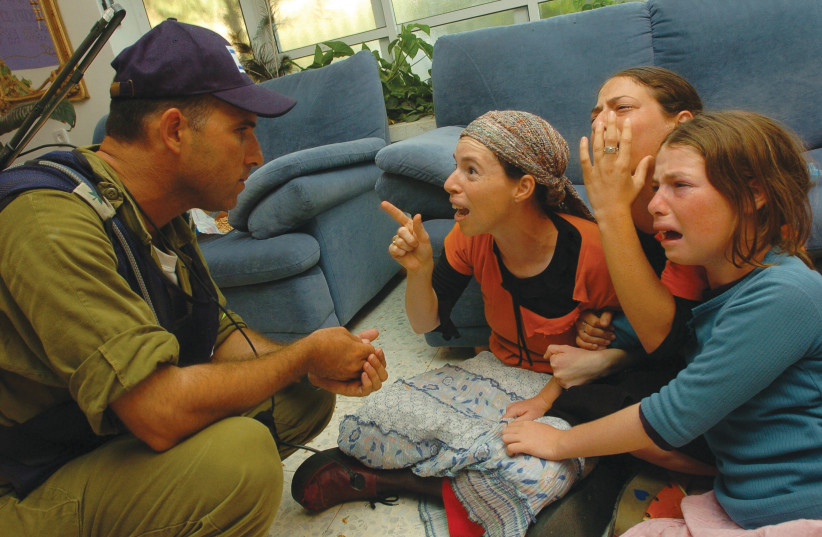
AN IDF soldier evicts residents from their Neveh Dekalim home on August 18, 2005 / (photo credit: FLASH90)

On Monday, August 16, 2005, I was in Morag. Together with a group of journalists, we had been bused into the Gaza Strip settlement the night before, just ahead of the distribution of eviction orders planned for the following day.

We spent the night sleeping on some cardboard boxes in a home whose owners had left early, apparently to spare themselves the trauma of being forcefully evicted.

In the morning, the soldiers came – dozens of them, led by Col. Erez Zukerman, then the commander of the Golani Brigade. The soldiers were unarmed, and in addition to issuing the eviction orders – set to go into effect within 48 hours – they had come to offer their assistance to the residents of Gush Katif, law-abiding citizens who had been sent to build homes they were now being ordered to leave.

“We didn’t come here to clash with you, but to offer assistance and to help the people we once protected and worked hand-in-hand with,” Zukerman called out to the residents.

Out of the crowd emerged a young man with tears streaming down his face.
“I was an officer under your command,” he called out to Zukerman. “You taught me what it was to be an officer and protect the Israeli people. We are not your enemy, but you have turned us into your enemy. Just six months ago, I was wearing an army uniform and serving side by side with you.”

Recognizing his former subordinate, Zukerman wrapped his arms tightly around him, evoking cries of anguish and sadness from the crowd.

Zukerman told the assembled people he loved them and that no matter what was happening, Israel had to remain united. The crowd broke out in “Hatikva.”
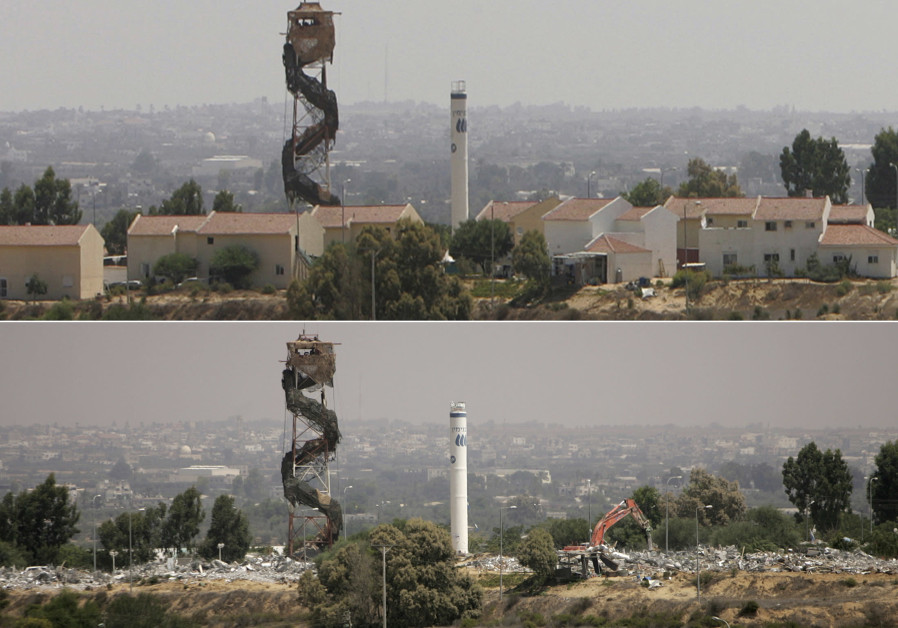
THIS COMBINATION picture shows the settlement of Morag before and after it was demolished. Top – before: August 12, 2005; bottom, Israeli heavy equipment destroys houses, August 23, 2005. (Suhaib Salem SJS/KS/Reuters)

Peduyim Junction

The atmosphere grew tense as thousands of marchers suddenly emerged from the thick dust-filled dark road into police-erected spotlights just two kilometers west of Ofakim.

Southern Police chief Cmdr. Uri Bar-Lev straightened his police cap and uniform and took several steps forward to greet the first of the marchers. Behind him were 6,500 policemen and soldiers, 20 police horses and three water-canon trucks.

The marchers, many of them wearing orange shirts – the color of their struggle – had come from Kfar Maimon, a nearby national-religious moshav where they had been holed up for three days as they tried to make their way to Gush Katif to stop the eviction and break through the IDF-imposed blockade over the Gaza Strip.

For close to an hour, the sides scuffled. Columns of disengagement opponents were rushing the human wall of soldiers and police, and more were coming. The activists, in their last-ditch effort to thwart the pullout, were determined to break through and reach the sealed-off settlement bloc which they hoped they could then physically save from prime minister Ariel Sharon’s Disengagement Plan.

Fighting to regain control of the situation, the police chief ordered his men to move back. The situation seemed on the verge of an explosion. Israeli was fighting Israeli. Protester against soldier. Policeman against settler.

Suddenly, Rabbi Shlomo Aviner, head of the Ateret Kohanim Yeshiva in Jerusalem, climbed onto the roof of a nearby car unnoticed with his orange-decorated bag slung over his shoulder.

As fisticuffs continued, Aviner grabbed a megaphone and in his high-pitched voice and French accent, managed to distract the crowd with a Torah lesson. Before long, he had calmed the tense atmosphere.

Neveh Dekalim

Everyone cried – the Border Police, the IDF soldiers, the settlers and the journalists. They cried as the Gaza Strip’s largest synagogue, shaped like a Star of David and located in the center of the Gush Katif settlement of Neveh Dekalim, was evacuated.

Hundreds of youth had gathered in the synagogue for one last stand against the withdrawal. They were completely outnumbered, but it was their final attempt. Men were in the Ashkenazi sanctuary and women were in the Sephardi sanctuary. They prayed, they chanted Psalms, they sang and they cried. But when the policemen came inside, they stood no chance.

Many shook and cried as they sat on the floor or on pews, unable to move when the police told them to leave. One by one they were pulled apart and carried out of the building.

I stood right outside, talking to Moshe Karadi, Israel’s police commissioner at the time.

“The police proved their might and that they were unstoppable,” Karadi told me that day. “At last month’s standoff at Kfar Maimon we demonstrated our might, and that helped deter the settlers today.”

Within a few weeks, the synagogue would be burned down by Palestinian rioters. Israel’s presence in Gaza was now officially over.
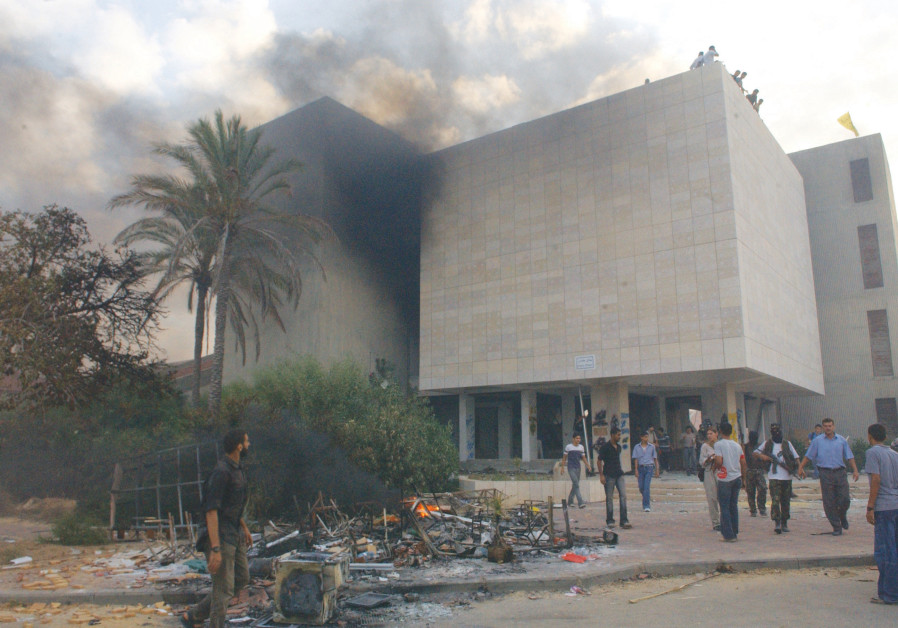
Palestinians burn the yeshiva in evacuated Neveh Dekalim on September 13, 2005. (Yossi Zamir/Flash90)

LOOKING BACK on the events of 15 years ago, it is hard not to feel a sense of sadness. It is a sadness for the trauma experienced by the thousands of families evicted from homes that consecutive Israeli governments had sent them to build, as well as for the way the withdrawal was carried out, unilaterally without coordination.

All of this seems to be connected. On one hand, the Disengagement sent a bad message to Israel’s enemies that the Jewish state is weak and unsure of itself. That it is willing to uproot people and give land to its enemies without receiving anything in return. Why, Hamas legitimately learned that summer, would that ever change? Why not keep up the resistance against Israel until it decides to surrender something once again? That erodes deterrence.

On the other hand, that doesn’t mean it wasn’t right for Israel to leave Gaza. The continued sustainability of a small settlement bloc inside a sea of Palestinians was always going to be limited in time.

For most Israelis, leaving the Gaza Strip didn’t mean much. The majority of Israelis thought of Gaza as a place that cost lives, a piece of land that didn’t bring security but on the contrary, cost a heavy price in human life. For most people, the Disengagement was a short battle that pitted commanders against former soldiers, kipot against payot, uniformed soldiers against women in headscarves. Pulling out, these people argued, actually made Israel stronger, letting the country and its military focus on missions that are essential – not on operations that appeared at the time to be useless and without real purpose.

The fact is, these supporters point out, that no one in government today advocates for Israel to return to Gaza and to rebuild settlements inside that piece of land.

THE WEEKS running up to the withdrawal, as well as the evacuation itself, were an emotional time for this country. There were fears that it would lead to a mass refusal of orders by IDF soldiers, extreme violence between right-wing activists and security forces or a civil war. Thankfully, they were all wrong. Israel got through it.

But after 15 years, Israel continues to fall short by failing to figure out what it wants to do with the Gaza Strip. The pullout went smoothly, but the IDF plan at the time was only good until the day the last soldier stepped out of the Gaza Strip and locked the gate behind him. Not enough thought was given to the day after that or the nearly 5,500 days that have passed since then.

On one hand, due to this lack of an overarching strategy, Israel has been smart in its approach, usually doing what it can to avoid big operations in Gaza. Except for Cast Lead in 2009 and Protective Edge in 2014, Israel has mostly worked to contain Gaza and Hamas and never let it blow too much out of control. In short, Israel prefers to end each flare-up of violence as quickly as possible.

But this is not a strategy. Hamas will continue to use violence and attacks as long as it feels that doing so will help advance its cause. Just last week, after a period of quiet, incendiary balloons were flown across the Gaza border into Israel and Hamas fired a dozen rockets toward the sea in a warning to Israel. In response, the Israeli Air Force struck some targets someplace in Gaza.

Will this tit-for-tat really change anything? Doesn’t this continued situation do an injustice to the price the Israelis who lived there paid? Isn’t this a disservice to the country that kept itself together and didn’t let extremists – on either side – pull it apart?

There is no clear answer what will work, but there are steps that Israel hasn’t tried yet. One option is to fight back hard against any act of terror, but also to try to ease the economic and humanitarian crisis in Gaza. One way would be to finally launch a plan floated by the Likud in recent years to build an artificial island off the Gaza coast that would serve as a port, or to construct a new power plant so Palestinians can have continuous electricity. Sewage treatment plants need to be repaired and industrial zones need to be built to create jobs.

There is no shortage of ideas. There is only a shortage in someone willing to take the steps needed to make things move. Calculated risks combined with a tough stance on security.

None of the above will guarantee that war won’t break out again. But after trying the same thing for so long – or truthfully, trying no real strategy at all – would it hurt to try something new?

These measures might not stop war, but they have the potential to improve the quality of life in Gaza and force Hamas to think a few extra times before setting off a new round of violence with Israel.

Fifteen years after uprooting peoples’ lives and dreams from Gaza, Israel owes itself a chance to try to change the outcome of the Disengagement. It is not too late.


The writer was The Jerusalem Post’s police reporter, then military reporter and defense analyst from 2003 until 2013, becoming editor-in-chief in 2016.


Zawartość publikowanych artykułów i materiałów nie reprezentuje poglądów ani opinii Reunion’68,
ani też webmastera Blogu Reunion’68, chyba ze jest to wyraźnie zaznaczone.
Twoje uwagi, linki, własne artykuły lub wiadomości prześlij na adres:
webmaster@reunion68.com